Two different balls
A small, soft ball you squeeze or rest under your back, and a large gym ball (also called a Swiss, exercise, stability or yoga ball) that you sit, lie or balance on.
Pilates guide
"Pilates ball" can mean two things: a small, soft ball you squeeze between your knees or slip under your back, or a large gym ball you sit, lie or balance on. Both are optional extras that change how a move feels. A wobbly ball makes your trunk muscles work a little harder while you use it, but studies show the move and where the ball sits matter more than the ball, and balancing on a ball isn't a shortcut to strength.
This guide covers what each ball is for, how to choose a gym ball for your height, what the studies found for muscle activity, strength, balance and back pain, why sitting on a ball at your desk isn't core training, how to stay safe, and the moves for each ball. It ends with a free 20-minute routine using a small ball and a gym ball, with swaps if you have only one.
A small, soft ball you squeeze or rest under your back, and a large gym ball (also called a Swiss, exercise, stability or yoga ball) that you sit, lie or balance on.
Sitting on a gym ball, your hips and knees should be at right angles with your feet flat. An NHS trust's leaflet matches the ball's size to your height.
Source 2
Across 86 studies, unstable surfaces raised trunk muscle activity by a small to moderate amount, but not leg muscle activity, and some ball moves lowered it.
Roll-outs and pikes on a gym ball drew the most tummy muscle activity and a seated march the least. A ball under the lower back doubled crunch activity compared with a ball under the shoulder blades, and Pilates back extensions worked the back muscles less on a ball than on the floor.
Unstable surfaces reduce the force you can produce, so the Canadian Society for Exercise Physiology (CSEP) says they shouldn't be athletes' main training, though they have a place in rehabilitation and for people who don't lift weights. Squats and deadlifts work the trunk as hard or harder.
In lab studies, sitting on a ball changed little or made the lower back work harder, it was less comfortable, and getting used to it didn't improve posture.
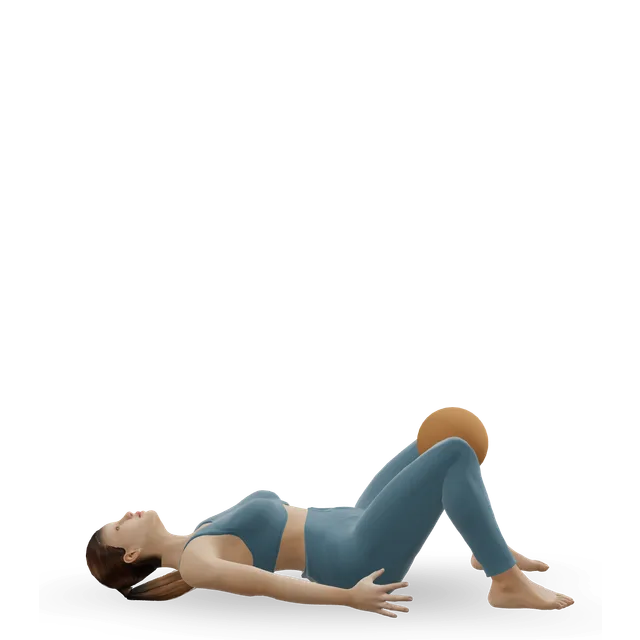
Teachers call the small, squashy ball one of the most versatile props in a Pilates studio. Between the inner thighs, ankles or palms, it "invites the engagement of the surrounding muscles"; under the spine or hips, it gives support; and pregnant women can use it behind the mid-back to avoid lying flat on their back for long.
Sizes on sale vary and no health source gives one; our adductor squeeze uses a soft ball about the size of a football. A cushion, a clean soft football or a yoga block can stand in.
An NHS physiotherapy leaflet describes it as "a large ball made of plastic vinyl and elastic and filled with air", also called a Swiss ball, exercise ball, yoga ball or stability ball. NHS physiotherapists use it for seated exercises, bridges, crunches and back lifts.
CSEP's position stand says core and limb muscles work harder on unstable surfaces than on stable ones during similar exercises, but that free-weight lifts such as squats and deadlifts can match or beat that activity. Because unstable surfaces cut force, power, speed and range of movement, they aren't recommended as athletes' main training, but they can play a part in rehabilitation, in planned training cycles and for people who prefer not to lift free weights.
It also says bracing your tummy (tightening it all round) has been shown to keep the spine more stable than hollowing (drawing it in).
A later review by the same lead author is warmer, finding training on unstable surfaces gives similar results to stable training in recreational exercisers and recommending it for young people, older adults and regular exercisers. A lab study in trained men found squats and deadlifts worked the back muscles harder than three ball exercises and questioned the ball's role in strength training. Both can be true: the ball adds a balance challenge at a low load, but it doesn't replace getting stronger.
On a reformer, a lighter spring makes the carriage less stable: in 18 women, a low-resistance spring raised core muscle activity in basic exercises compared with a fixed platform. Our reformer guide has more.
Source 18
An NHS trust's physiotherapy leaflet gives these sizes. The bands overlap, so if you're between two, sit on the ball: your hips and knees should be at right angles with your feet flat on the floor.
Source 2
"The ball should be burst resistant", and "The firmer the ball the more difficult the exercise will be". A slightly softer ball is easier while you learn (our suggestion).
Source 2
Use a ball that holds your weight without rolling, on a floor where it can't slide, with space around you (the advice on our ball move pages). NHS physiotherapists' ball leaflet adds: "If you feel dizzy, experience pain or any new symptom during exercise, please stop immediately and seek advice from your Doctor".
Source 15
A 2024 meta-analysis of 86 studies (1,783 people) found higher activity on unstable surfaces in the straight tummy muscle (standardised mean difference 0.51), the outer and inner obliques (0.44 and 1.04) and two back muscles (0.37 and 0.35), but not in the leg muscles. A 2025 meta-analysis of 28 studies (579 people) agreed. These are small to moderate effects on muscle activity during an exercise, not results of training.
The 2025 meta-analysis found less activity in the back muscles during a shoulder press on a Swiss ball, and in the muscle that holds the shoulder blade against the ribs when working on a Swiss ball. A ball made no difference to trunk activity in a face-up bridge, and in 15 women with Pilates experience, back extension exercises worked the back muscles less on the ball than on the floor.
In 18 adults, the Swiss ball roll-out and pike drew the most tummy muscle activity and a seated march the least, and the lower back muscles stayed below 10% of their maximum in every ball tummy exercise. In 41 adults, a crunch with the ball under the lower back beat a floor crunch, which beat a crunch with the ball under the shoulder blades. The ball raised tummy muscle activity in a face-down bridge, and in a single-leg hold and the top of a press-up in 8 adults, but not in a face-up bridge.
In 42 untrained adults, a crunch on a Swiss ball against an elastic band worked the straight tummy muscle harder than a crunch machine (104% against 84% of its maximum) with much less work from the hip flexors.
Source 21
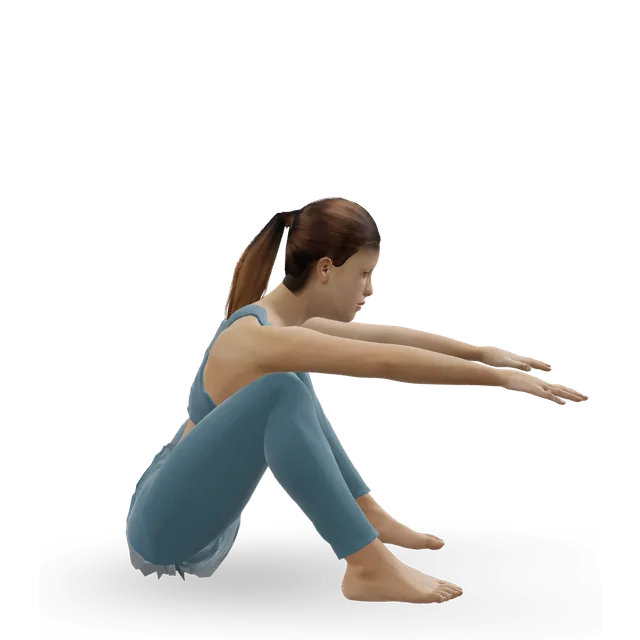
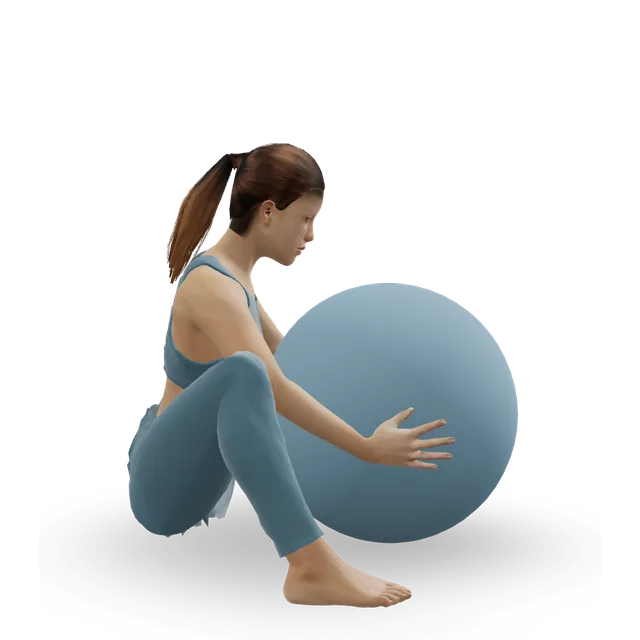
In 40 adults, a roll-up holding a ball worked the tummy muscles as much as a standard curl-up. In 28 men doing the Hundred, a small soft ball raised core activity above no prop, though less than a Pilates ring. Both were single-session studies.
CSEP says unstable surfaces reduce force, power, speed and range of movement, and its review says they aren't recommended as the main exercises for building strength, muscle size or power. They suit rehabilitation, and people who prefer not to lift free weights.
In 9 trained men, squats and deadlifts near their maximum worked the back muscles harder than three ball exercises. In 16 highly trained people, standing on a Swiss ball raised muscle activity, but a BOSU (a half ball) and an inflatable disc didn't. Both were small lab studies.
Short trials in untrained people found benefits: 5 weeks of ball curl-ups and back extensions improved balance more than the same moves on the floor in 30 women, though strength didn't differ, and 10 weeks twice a week raised back endurance from 149 to 195 seconds and side-bridge time from 45 to 71 seconds in 20 sedentary adults, with no change in those who didn't train. In 18 young athletes, 6 weeks improved a core stability test but not running economy. Two other positive studies had no comparison group.
In 60 people with fibromyalgia, strengthening on a Swiss ball eased pain and improved quality of life more than stretching. After childbirth, ball training and floor exercises helped back pain equally in 30 women, and a BOSU and a Swiss ball did equally well on the main outcomes in 36 students with back pain. For period pain, Pilates beat gym ball exercises in 30 young women, and Pilates ball exercises improved balance in 62 preschool children. All were small single trials.
In 42 older women, step aerobics improved two balance and mobility tests, while a stability ball programme didn't, though both improved how healthy the women felt. So don't count on ball work for balance; our balance exercises train it directly.
Source 35
In 12 studies of athletes, core training on unstable surfaces improved trunk strength and sprinting more than core training on stable ground. An earlier review by the CSEP lead author advised using both: stable exercises for force and unstable ones for balance.
In 24 women after the menopause, 8 weeks of Pilates with an elastic band and a gym ball, and of Pilates on a reformer and Cadillac (Pilates apparatus), both improved fitness and mood scores; blood pressure and grip improved only on the apparatus. It was one small trial with no group that didn't exercise.
Source 38
In 10 women typing for an hour, sitting on a ball meant more trunk movement but 78% higher average lower-back muscle activity and more spinal shrinkage (the spine losing a little height under load). In 14 adults it brought slightly more upper-back muscle activity and more discomfort, and in 8 men it made no difference to muscle use or modelled spine load. In 12 adults, 9 days of getting used to the ball eased discomfort in women, but the researchers found no evidence that using a ball as a chair improves trunk strength or posture. Our sitting guide covers chairs.
The Hypermobility Syndromes Association lists sitting on a gym ball among ways to exercise while seated, and NHS physiotherapists use short seated ball exercises. Short bouts of movement on the ball are a different use from sitting on it all day.
The NHS says to try to avoid lying flat on your back for more than a few minutes in later pregnancy. Teachers use a small ball behind the mid-back so you can do Pilates without lying flat for long.
In 7 trials of 533 women, using a birth ball in labour lowered pain scores by 1.7 points on average, with no difference in the type of birth. Our Pilates in pregnancy guide covers pregnancy and birth.
Source 41
The NHS says not to do sports or activities where there's a risk of falling or bumping your tummy. Our suggestion: in pregnancy, sit on the ball rather than balancing on it, with a wall or chair within reach.
Source 40
Kent and Medway NHS physiotherapists give these exercises and numbers. There are no trials of this programme, so treat the numbers as a guide.
Source 15
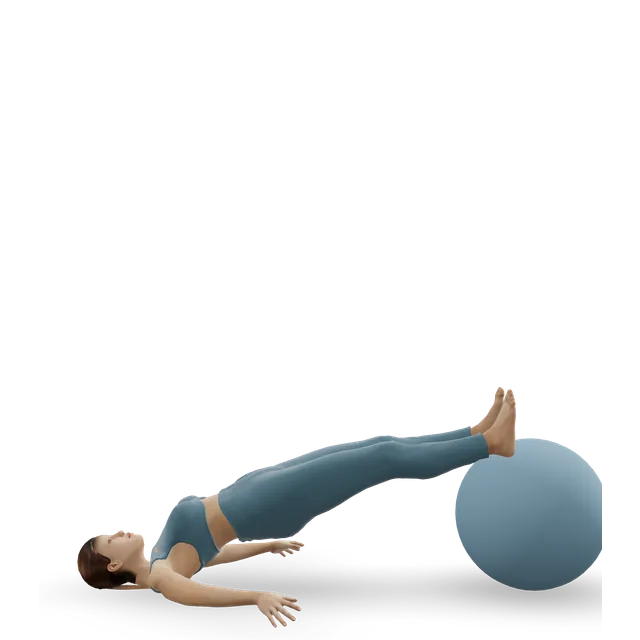
The stability ball hip bridge and leg curl move pages' dose: 2 to 3 sets of 8 to 12, stopping with 2 or 3 reps in reserve (their editorial starting point). For crunches and back extensions over the ball, 8 to 15 slow repetitions is our editorial starting point, up to the NHS leaflet's 15.
The ball training trials used 2 or 3 sessions a week. Using the ball in 2 or 3 of your sessions a week is our suggestion.
Our placements: a soft ball between your knees for the squeeze, bridge and Hundred, behind your lower back to roll onto in the half roll back, and in your hands for the roll-up.
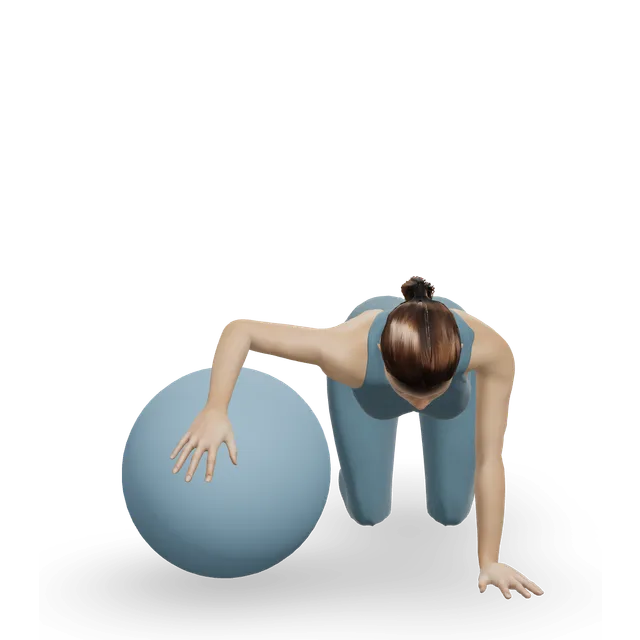
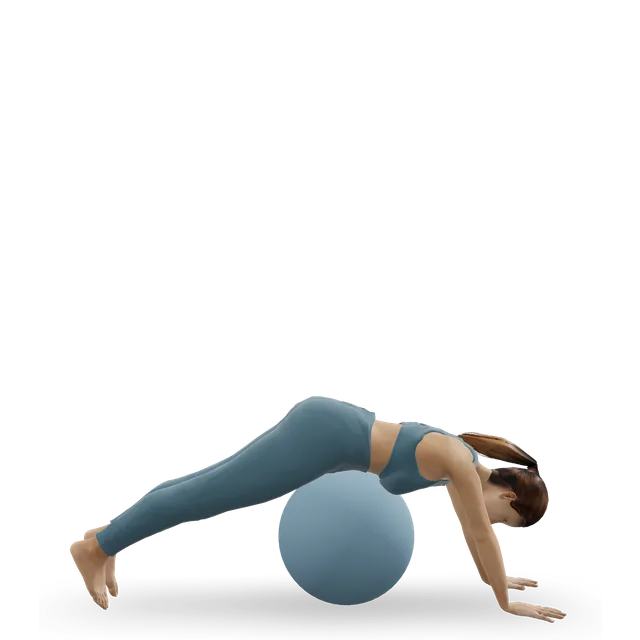
Start with the bridge, crunch and back extension; the knee tuck, the push-up with your feet on the ball and the downward balance are harder.
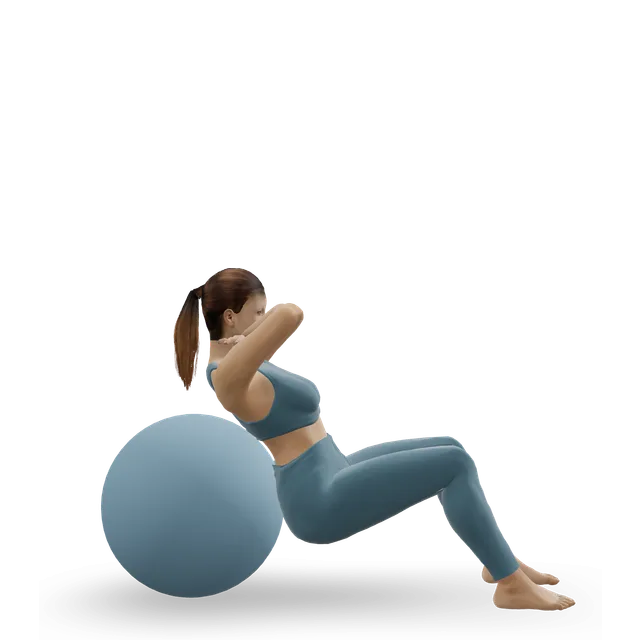 3D demoStability ball hip bridgeBeginner · Exercise ball
 3D demoStability ball leg curlIntermediate · Exercise ball
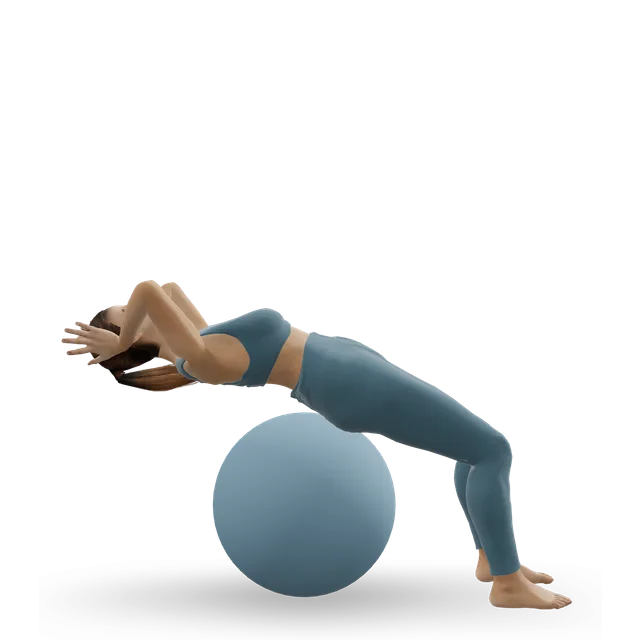 3D demoExercise ball crunchBeginner · Exercise ball
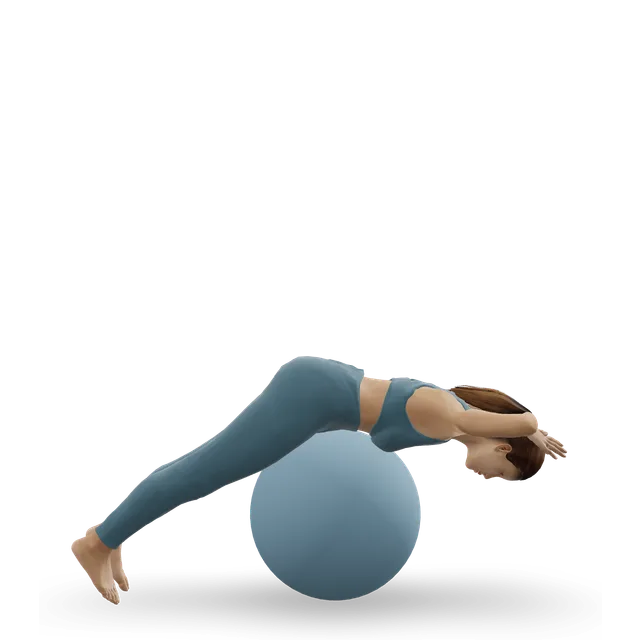 3D demoBall back extensionBeginner · Exercise ball
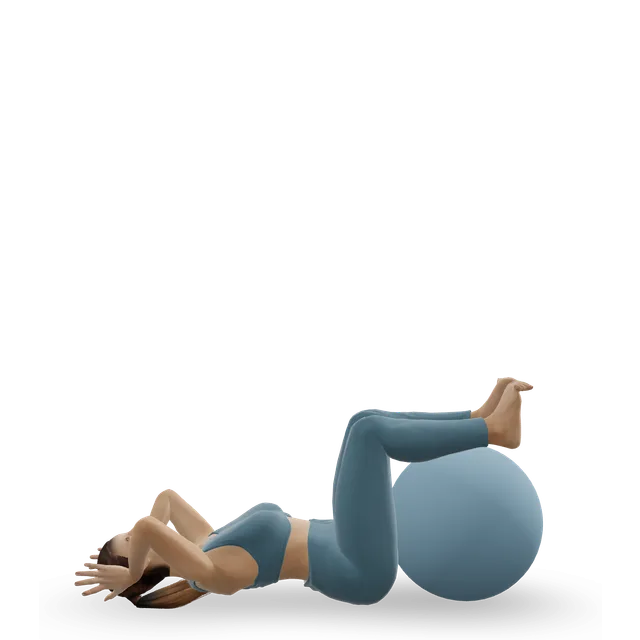 3D demoCrunch with the legs on a ballBeginner · Exercise ball
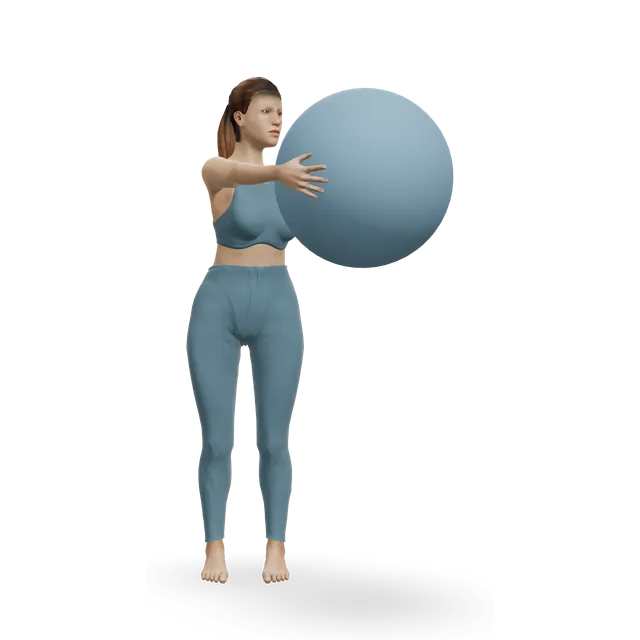 3D demoStanding trunk rotation with a ballIntermediate · Exercise ball
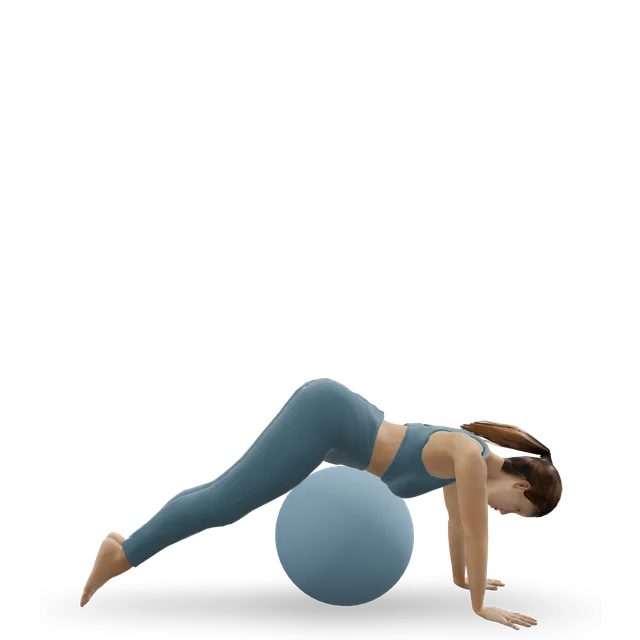 3D demoDownward-facing ball balanceIntermediate · Exercise ball
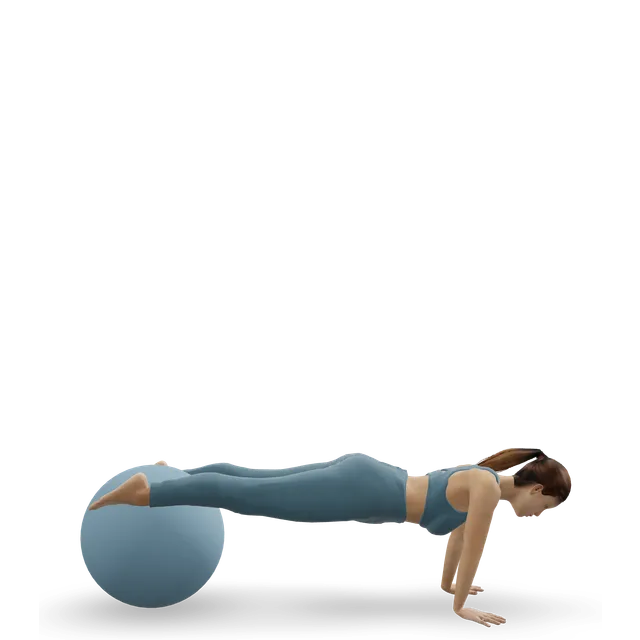 3D demoStability ball knee tuckAdvanced · Exercise ball
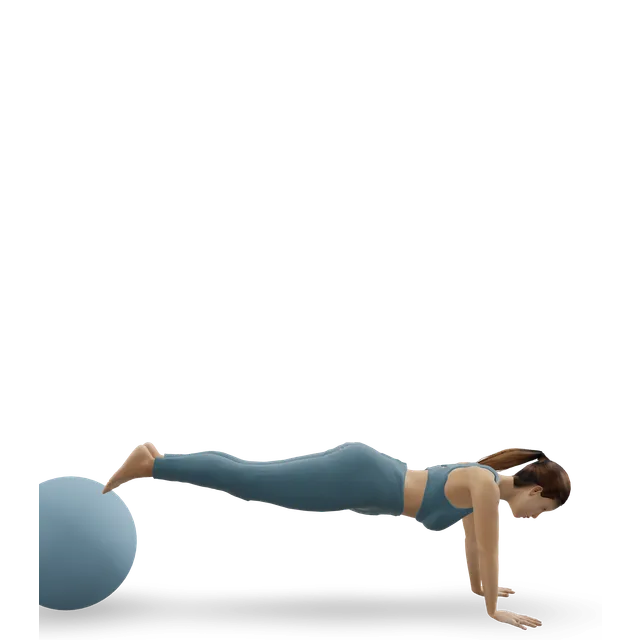 3D demoPush-up with the feet on an exercise ballAdvanced · Exercise ball
The pyramid drape is head-down: come up slowly, and leave it out if you feel light-headed.
The Pilates ball workout uses a small ball, then a gym ball; without a gym ball, do the first half twice. The beginner classes work with a small ball between your knees too.
A 20-minute Pilates ball workout: small-ball squeezes and rolls on the mat, then gym ball bridges, curls and stretches, with no-ball swaps.
20 minBeginner12 movesOther / check instructions, Exercise ballA 15-minute beginner core workout on the floor: dead bugs, bird dogs, knee planks, side planks and curl-ups.
15 minBeginner6 movesNo equipmentA 20-minute mat Pilates workout for complete beginners. It covers breathing, spine position and the foundation moves, each with an easier option.
20 minBeginner13 movesNo equipmentA 30-minute PoTS session that never asks you to exercise standing: easy intervals on a bike and rowing machine, lying leg strength, then legs up the wall.
30 minBeginner8 movesCardio machine, Other / check instructionsA 20-minute Pilates workout for any trimester: seated, standing, all-fours and side-lying moves, with no lying on your back or front and no jumping.
20 minBeginner15 movesA wall, A bench or boxUse the ball in 2 or 3 sessions a week once the moves feel familiar.
NHS physiotherapists' ball leaflet: stop if you feel dizzy, get pain or any new symptom, and seek advice.
Source 15
If someone faints while exercising, call 999. Call 999 or go to A&E too if back pain comes with pain, tingling, weakness or numbness in both legs, a loss of feeling around your genitals or anus, or changes in your bladder or bowels.
Our suggestions, from the sources here:
Unstable surfaces raise trunk activity a little on average, but some ball moves lower it, the ball made no difference in a face-up bridge, and Pilates back extensions worked the back less on a ball. More activity also isn't more strength: force and range drop, and squats and deadlifts work the trunk as hard.
In highly trained people, a BOSU and an inflatable disc didn't raise muscle activity, and in older women a ball programme didn't improve the balance tests that step aerobics did.
In lab studies it changed little or raised the load on the lower back, it was less comfortable, and getting used to it didn't improve trunk strength or posture.
A TV fitness page says so, but we found no study. Teachers use the ball under the back as a support, which can make some moves more comfortable.
Source 1
Training one area doesn't remove fat from it: across 13 studies there was no spot reduction, and 6 weeks of abdominal exercises didn't change belly fat in 24 adults.
Usually a small, soft, squashy ball that you squeeze between your knees, ankles or palms, or rest under your back for support. Some people mean a large gym ball (also called a Swiss, exercise, stability or yoga ball), which you sit, lie or balance on.
Small balls have no standard size; a soft ball about the size of a football works for squeezes between the knees, and smaller ones are sold. For a gym ball, an NHS trust suggests 55 cm if you're 150 to 165 cm tall, 65 cm for 162 to 183 cm and 75 cm for 180 to 200 cm, and when you sit on it your hips and knees should be at right angles.
No: a small Pilates ball is squeezed or used as a cushion on the mat, while a stability ball is big enough to sit or lie on and adds a balance challenge. Both are optional extras.
A little, while you do them: across 86 studies, unstable surfaces raised trunk muscle activity but not leg muscle activity. The move and where the ball sits matter more: a crunch with the ball under your lower back worked the tummy muscles about twice as hard as with it under your shoulder blades.
Not on its own. A wobbly surface reduces the force you can produce, so Canadian exercise physiologists don't recommend it as the main way to build strength, though it suits rehabilitation and people who don't lift weights. Squats and deadlifts work the trunk at least as hard.
They can be part of the mix, but they aren't better than other exercise: after childbirth, ball training and floor exercises eased back pain equally. Pick moves that don't increase your pain, and check the NHS warning signs on our back pain pages.
You can, but it won't strengthen your core or improve your posture: in lab studies it changed little or raised the load on the lower back, and people found it less comfortable. Use the ball for exercise and a supportive chair for sitting.
Mat and seated small-ball moves suit most people. A ball programme didn't improve balance tests in older women while step aerobics did, so don't count on ball work for your balance; our balance exercises train it directly. If you sit on a gym ball, do it next to a wall or support.
A small ball behind your mid-back lets you do Pilates without lying flat for long, which the NHS advises against in later pregnancy. Using a birth ball in labour eased pain by about 1.7 points in trials; our Pilates in pregnancy guide covers this.
A cushion or pillow, a clean soft football or a yoga block all work for squeezes and support. For gym ball moves there's no real substitute, so do the mat versions instead.
Sit on it: your hips and knees should be at right angles with your feet flat on the floor. A firmer ball is harder to balance on, so a slightly softer one is easier while you're learning.
Generally, if the ball is burst-resistant, the right size and on a floor where it can't slide. Stop if you feel dizzy, get pain or any new symptom, and come up slowly from moves where your head is down.
Exercise education, not a personal prescription, and clinical review of these guides is pending. If you are pregnant, have a health condition or have had recent surgery, check with a doctor, midwife or physiotherapist before starting, and stop for sharp or increasing pain. Health disclaimer.