Sports training
Pole conditioning workout: hangs and pulls, shoulders, inverts, hamstrings, inner thighs and grip, off the pole
In the one study that followed pole dancers for a year, the shoulder was the commonest injury site, a third of shoulder injuries came from moves that load the arm while it's turned inwards, and every hamstring injury came from front-split moves; that study was read as an abstract, and only 25 of its 66 dancers completed the year. More experienced dancers grip harder. No programme has been tested on pole injuries, but strength training cut injuries to under a third in other sports. This session builds hanging and pulling strength for climbs, trunk strength to lift your hips over your head, rotator cuff strength in both directions, slow hamstring strength, inner-thigh strength for sits and holds, and grip. You need a pull-up bar, a light resistance band and an anchor, a pair of dumbbells or kettlebells, a bench or step, and a mat.
Warm-up
- Shoulder CARs (controlled articular rotations)3 slow circles each armBeginner · Shoulders, Back · 3D demoBig and slow; work around any pinchEasier: Arm circlesHarder: Sleeper stretch
- Beginner · Forearms · 3D demoCircles, then palm turnsEasier: Wrist circlesHarder: Wrist flexor stretch
- Beginner · Shoulders, Chest, Abs · 3D demoPush the floor awayEasier: Dumbbell shoulder-blade punchHarder: Push-up
- Cat-cow6 slow roundsBeginner · Back, Abs · 3D demoThe whole spineHarder: Half lord of the fishes (Ardha Matsyendrasana)




Hang and pull
Rest 60 to 90 s
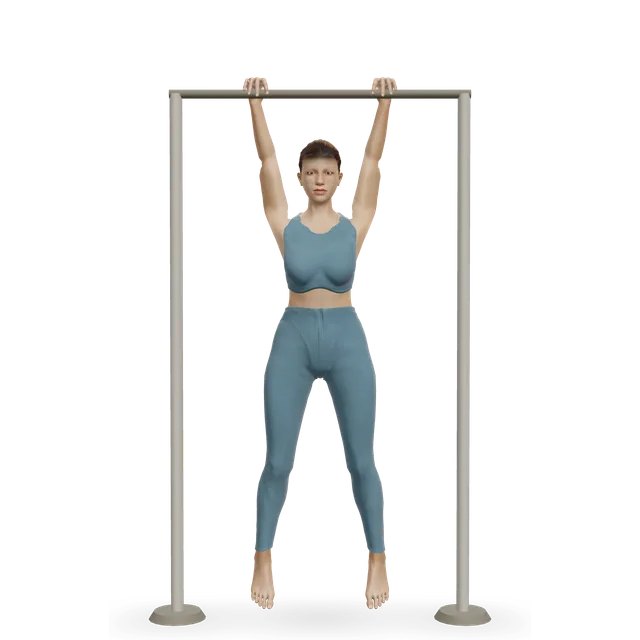
- Bar hang2 × 20 to 30 sIntermediate · Forearms, Back, Shoulders · 3D demoShoulders active, feet ready to take your weight. Leave it out after a recent shoulder dislocationEasier: Exercise ball pyramid drapeHarder: One-arm dead hang
- Scapular pull-up2 × 6 to 8Intermediate · Back, Shoulders, Forearms · 3D demoShoulder blades down, elbows straight; hold the top for a secondEasier: Assisted pull-up (machine)Harder: Pull-up
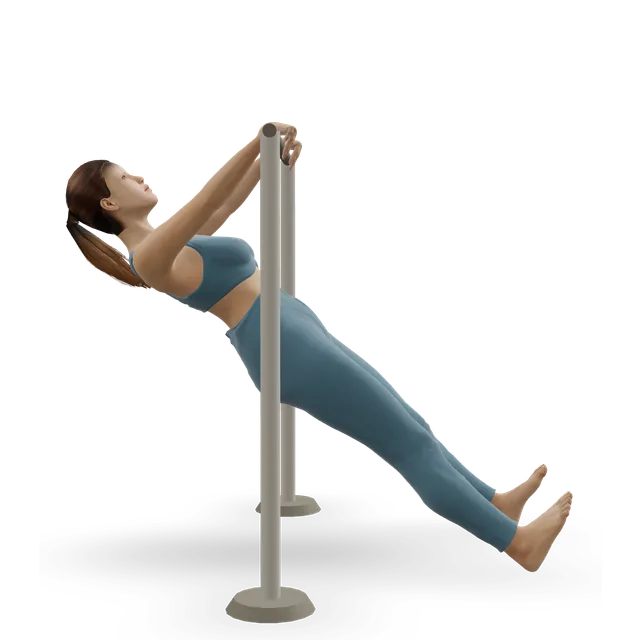
- Inverted row3 × 6 to 12Intermediate · Back, Biceps, Shoulders · 3D demoBody in one line; raise the bar to make it easierEasier: Incline ring rowHarder: Bent-over barbell row
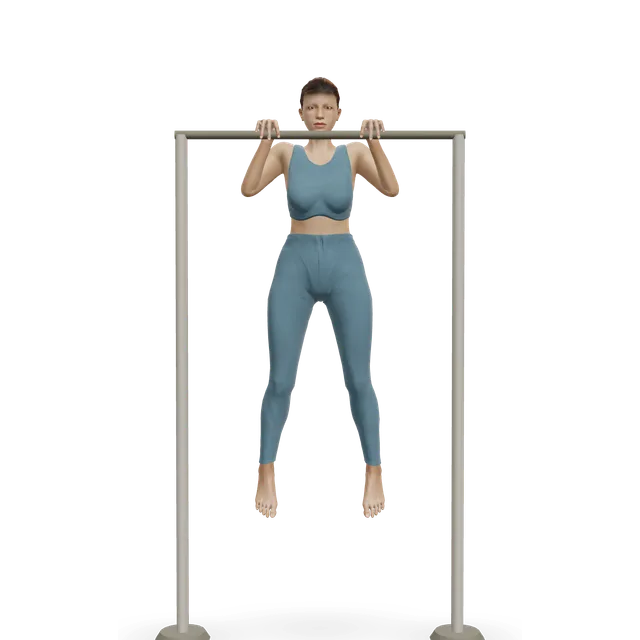
- Negative pull-up3 × 3 slow lowersIntermediate · Back, Biceps, Forearms · 3D demoStep up and lower for 3 to 5 seconds. Once you can do 3 strict pull-ups, do pull-ups instead, 3 × 3 to 8Easier: Assisted pull-up (machine)Harder: Pull-up

Inverts and trunk
Rest 60 s
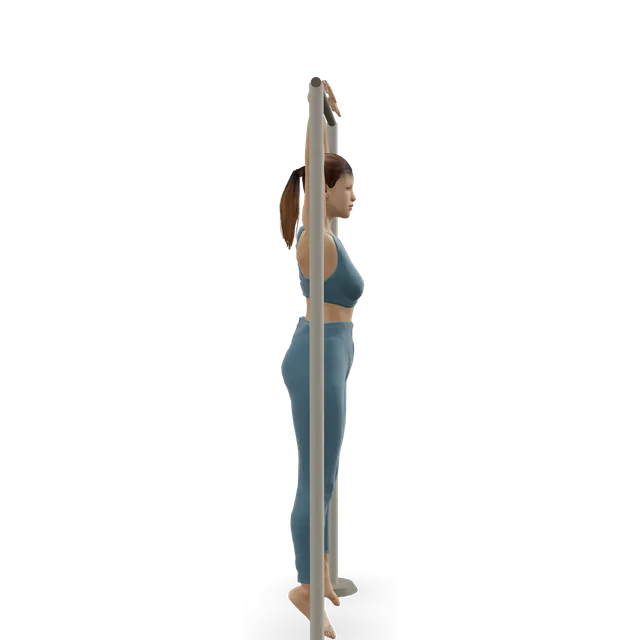
- Hanging knee raise2 to 3 × 6 to 10Intermediate · Abs, Hip flexors, Forearms · 3D demoCurl your hips up, not just your knees: the first part of an invertEasier: Reverse crunchHarder: Hanging straight-leg raise
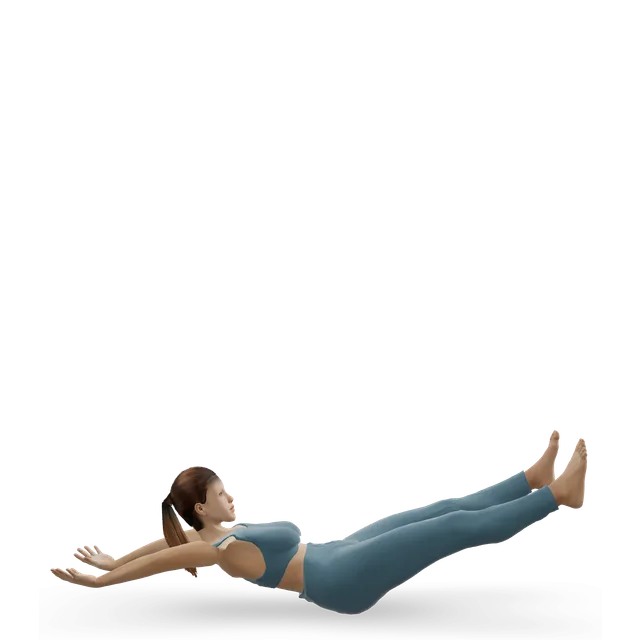
- Hollow body hold3 × 20 sIntermediate · Abs, Hip flexors · 3D demoLower back pressed downEasier: Dead bugHarder: Dragon flag
- Side plank2 × 30 s each sideIntermediate · Abs, Hip abductors, Shoulders · 3D demoHips highEasier: Knee side plankHarder: Side plank with leg lift

Rotator cuff and shoulder blades
2 rounds · Rest 45 s between rounds
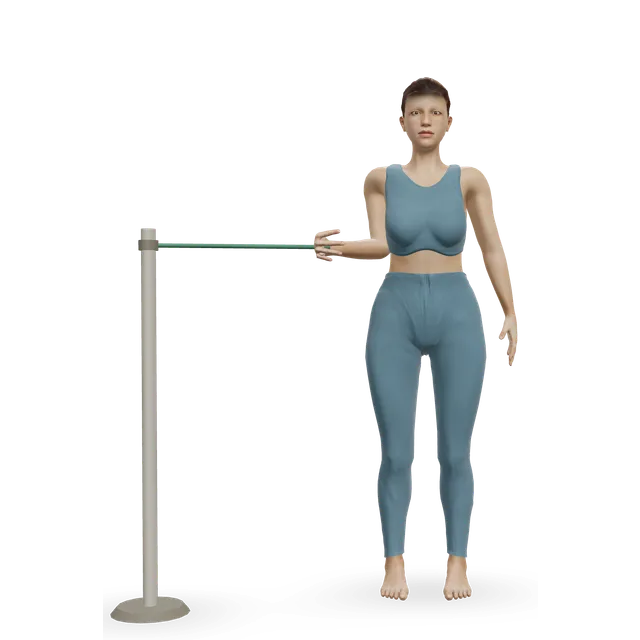
- Standing band external rotation12 to 15 each armBeginner · Shoulders, Back · 3D demoElbow at your sideEasier: Stick-assisted external rotation (lying)Harder: Side-lying external rotation
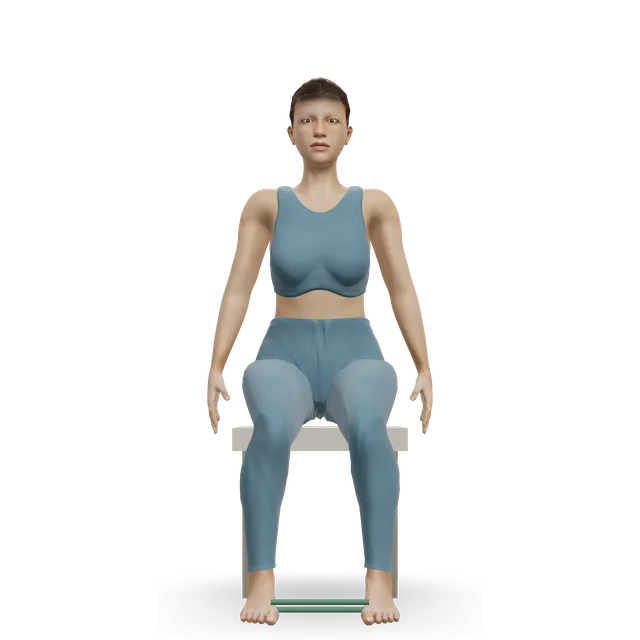
- Band internal rotation12 to 15 each armBeginner · Shoulders · 3D demoElbow at your side: turning the arm inwards is the direction loaded in a third of the study's shoulder injuriesHarder: Side-lying external rotation
- Prone Y-T-W raises5 of each shapeBeginner · Back, Shoulders, Neck · 3D demoForehead on a folded towelEasier: Wall angelHarder: Bent-over reverse fly


Hamstrings and inner thighs
Rest 60 to 90 s
- Nordic curl2 × 3 to 6Advanced · Hamstrings, Glutes · 3D demoLower as slowly as you can and catch yourself on your handsEasier: Slider hamstring curlHarder: Full Nordic curl
- Copenhagen plank1 set each side, 3 to 15 repsAdvanced · Adductors, Abs, Shoulders · 3D demoShort lever, top knee on the bench, first: the inner thighs squeeze the pole in sits and holdsEasier: Hip adduction machine


Grip and wrists
- Farmer's carry2 × 20 to 30 mBeginner · Forearms, Abs, Shoulders · 3D demoHeavy enough that your grip worksHarder: Suitcase carry



Tips
- Twice a week on non-consecutive days, away from your hardest pole class (our suggestion). The NHS asks every adult for muscle-strengthening activity on at least 2 days a week.
- If your shoulders are very flexible or have slipped out before, keep the rotations with your elbow by your side, stop short of any feeling of slipping, and keep your shoulders active in hangs rather than sinking to the end of their range.
- A sore shoulder: pain up to about 5 out of 10 during the exercises is acceptable if it's back to normal by your next session; if it isn't, go lighter, as our shoulder routine says.
- Work on your splits separately, warm, and never forced or pushed by someone else: every hamstring injury in the study came from front-split moves.
- Under 16? Bodyweight and light loads, with a qualified adult watching.
The doses are suggested starting points, not a prescription. Choose a range you can control and stop for sharp or increasing pain, numbness or tingling. Get individual advice after an injury or surgery, or if you are pregnant or managing a health condition.
Guides that recommend it
Find more moves like these
More sports training

Injury prevention exercises for runners
Foot, calf, balance and hop exercises taken from the running trials with positive results, in a 25-minute home routine for 3 or 4 days a week.
25 minBeginner11 movesOther / check instructions, A bench or box



Plyometrics for runners
A 20-minute hop and bound session for runners: ankle bounces to pogo hops, one-leg hops and bounding, building foot contacts slowly over 10 weeks.
20 minIntermediate8 movesCardio machine



Strength workout for cyclists (gym)
A 50-minute gym session for cyclists: heavy squats, one-leg presses, hip flexion and calf raises as in the cycling trials, plus jumps for bone.
50 minIntermediate13 movesCardio machine, A barbellQuestions people ask
How long does the pole conditioning workout: hangs and pulls, shoulders, inverts, hamstrings, inner thighs and grip, off the pole take?
About 45 minutes, including any warm-up and cool-down listed. Shorten it by doing fewer rounds; lengthen it by adding one.
What equipment do I need?
You need: Pull-up bar, A step, A band, An anchor point, A bench or box, A dumbbell, A kettlebell. Each move links to its guide, where you can find an alternative if you are missing something.
Is it suitable for me?
It is written at intermediate level. 16 of its 19 moves have an easier option listed beside them; use them freely.
How do I make it easier or harder?
Use the easier or harder option listed under each move, change the number of rounds, or adjust the rest. Progress one change at a time.