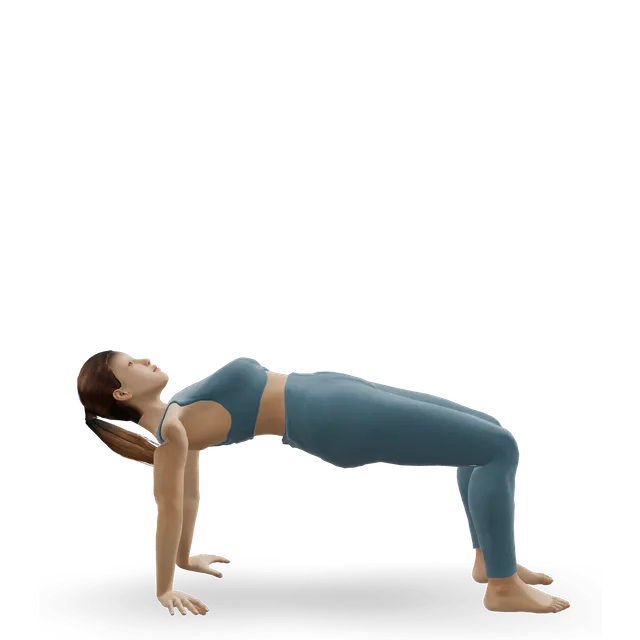
Pain guide · Foot pain

Iselin's disease: pain on the outer edge of the foot in active children, and keeping them playing

Iselin's disease is pain and swelling at the bump halfway along the outer edge of the foot, the base of the fifth metatarsal, in active children aged about 8 to 14. A tendon that turns the foot outwards pulls on a growth area there, and running, jumping, cutting and tight boots make it sore. Like Sever's disease at the heel, it stops once the growth area joins the bone, by about 13 in girls and 15 in boys in a scan study.

No treatment has been tested in a trial. A short break from what hurts, well-fitting shoes, ice, and calf and ankle exercises are the usual advice, and in one series of 27 young athletes, return to play took 38 days on average. After a twist or fall, tenderness on that bump needs an X-ray, and the normal growth area is easily mistaken for a break. This guide covers the warning signs, how it's told apart from a fracture, and a staged plan with 3D demos back to sport.

When to get help first

Exercise is for pain that has been checked or is clearly mild and settling.

Get urgent medical help if

  • Call 999 or go to A&E: after an injury, you heard a crack, the foot or ankle has changed shape or points at an odd angle, a bone is sticking out, there is a bad cut over it, you're in severe pain, or the toes look blue or white, feel numb or are cold to touch. These can mean a broken bone. Don't drive yourself.
  • Same day (urgent GP appointment or NHS 111): after an injury, you can't put weight on it or walk more than a few steps, the pain is very bad or getting worse, there is a lot of swelling or bruising or it is getting worse, or it feels very stiff. If you think it's broken, don't treat it yourself.
  • A child who has hurt their foot or may have broken a toe: don't treat it yourself; take them to an urgent treatment centre or A&E.
  • Pain, swelling, redness and warmth over a bone, or a very high temperature with feeling generally unwell: ask for an urgent GP appointment or contact NHS 111. It could be a bone infection. Take your child to a GP if they don't want to use a leg and seem irritable: young children don't always get a high temperature with a bone infection.
  • Same day: a sudden, very painful, hot, swollen, red joint, often the big toe, especially with a high temperature, feeling shivery or being unable to eat. It may be gout, but it could be a joint infection (septic arthritis), which is urgent.
  • Same day: in a cast or boot, pain that is getting worse, toes that are numb or burning, a cast that feels too tight, toes that are swollen, blue or white, or a bad smell from under the cast.

See a doctor or physiotherapist if

  • A twist or roll of the ankle with tenderness on the bump halfway along the outer edge of the foot: get it checked the same day or the next for a fracture, even if your child can walk.
  • Pain at the bump on the outer edge of the foot that keeps coming back with sport: see a GP or physiotherapist once, to confirm what it is. If an X-ray is done, ask whether the growth area has been looked at, because it can be mistaken for a fracture.
  • One spot on a foot bone that hurts with every step and later at night: a possible stress fracture.
  • Leg or foot pain in the morning or at night, pain bad enough to stop your child walking, a limp that carries on away from sport, a rash, swelling or unusual bruising, a high temperature, unusual tiredness, or not eating or losing weight: see a GP.
  • See a GP for bone pain or tenderness, particularly if it's worse at night, or a lump or swelling that is growing.
  • No better after about 6 weeks of the advice on this page, or still sore after several months, or after about 13 in girls or 15 in boys, when the growth area should have joined: see a GP or physiotherapist again. Rarely, the growth area doesn't join and needs a specialist.

Understand it

What it is

The peroneus brevis tendon, which turns the foot outwards, attaches to the bump at the base of the fifth metatarsal, the long bone on the outer edge of the foot. In growing children that bump has a separate growth area (an apophysis), joined to the bone by softer cartilage. Repeated pulling from running, jumping and cutting, or a twist onto the outside of the foot, makes it sore.

It was first described in 1912, and it belongs to the same family of growth-area strains as Sever's disease at the heel and Osgood-Schlatter disease below the knee. It is an overuse problem in growing children, not an illness.

Sources 1, 2, 3, 4, 5, 6

Who gets it

Active children and young teenagers, usually about 8 to 13. In a US series of 27 young athletes, the average age was 11.5 (9.2 to 15), and all of them played sport. Sports with running, jumping and cutting, such as football and basketball, and gymnastics and dance are often mentioned, along with tight or narrow boots and spikes, tight muscles and growth spurts.

Nobody has measured how common it is: a 2026 Cochrane review found no figures for it, and it is reported rarely and probably often missed.

Sources 1, 7, 6, 8, 9, 10, 4, 11

How it shows

Pain on the outer edge of the foot at the bump, worse with running, cutting and jumping and better with rest; a tender bump that is sometimes swollen or red; sometimes a limp or walking on the inside of the foot; and pain from tight boots. A 15-year-old kickboxer's pain was worse with side and round kicks. There is usually no injury, though it can start after a twist.

Sources 1, 7, 12, 13, 2

The growth area: when it appears and joinsEmerging evidence

In a study of computed tomography (CT) scans of 295 Australian children, the growth area first appeared at an average of about 9.7 in girls (from 7) and 10.9 in boys (from 8), began to join the bone at about 10 and 12, and had joined in everyone older than 13 (girls) and 15 (boys). In about 3 in 10 children whose growth area had appeared, it was in several separate pieces, which is a normal variant.

So Iselin's disease is limited to a window of a few years, which is why it settles.

Sources 14, 3

What the X-ray does and doesn't meanEmerging evidence

It is usually diagnosed from the story and a tender bump. One children's hospital says an X-ray isn't needed to make the diagnosis, and the inflammation itself doesn't show on it; another says X-rays are needed to look for fractures.

The normal growth area shows on an X-ray as a thin fleck of bone beside the base of the metatarsal in most children of this age, so seeing it only means Iselin's disease if the bump is also tender. Its line runs along the length of the bone, while fracture lines usually run across it. Even so, the normal growth area is easily mistaken for a break, and a break for it, which is one reason a sore bump after an injury needs a proper look. A magnetic resonance imaging (MRI) scan can show swelling around the growth area, but it isn't needed to make the diagnosis.

Sources 7, 8, 3, 2, 13, 4, 15

Look-alikes

A broken fifth metatarsal is the commonest metatarsal fracture in children. After a rolled ankle or a fall, clinicians use the Ottawa ankle rules to decide on an X-ray: tenderness at the base of the fifth metatarsal, or not being able to take 4 steps. In a review of 12 studies (3,130 children over 5), the rules picked up 98.5% of ankle and midfoot fractures. Breaks through the growth area heal fastest; breaks a little further along the bone heal more slowly, and in 238 children's fractures, those 20 to 40 mm from the tip needed surgery more often (18.8% against 4.9%). Our broken foot guide covers them.

Other look-alikes: a stress fracture (pain at one spot that builds with training and later at night), the os vesalianum (a rare extra bone beside the base of the fifth metatarsal, in about 6 in 1,000 feet), and pain from the peroneal tendons behind the outer ankle bone, which have their own guides.

Sources 16, 17, 18, 19, 20

How it usually goesEmerging evidence

It settles by itself and stops when the growth area joins the bone. In one series of 27 young athletes, treatment lasted 24 days on average, return to play took 38 days on average (14 to 53), all healed, and 3 had a flare-up; that is one series, not a rule. In a case report, the pain settled within 3 weeks of cutting back activity, and the child was back to her previous level by 6 months.

Rarely, the growth area doesn't join (a non-union): 1 of 4 children in an early series still had pain on and off at 20, and a case report describes another. A non-union that keeps hurting may need the fragment removed by a surgeon.

Sources 5, 2, 9, 11, 15, 3

What helps, and how strong the evidence is

No treatment has been tested in a trialStrong evidence

The 2026 Cochrane review of non-surgical treatments for growth-area injuries of the leg found no trials in Iselin's disease. The evidence for its relatives, Sever's disease and Osgood-Schlatter disease, is mostly low or very low certainty, and children improve as they grow. A US review lists stretching, relative rest, ice after activity and short spells of anti-inflammatory painkillers as the usual care for these growth-area strains.

Sources 10, 5

Relative rest, ice and shoes: sensible, untestedEmerging evidence

Children's hospitals advise a short break from the running, jumping and cutting that hurts, to take pressure off the growth area, and a US sports medicine society says young athletes can usually keep training with relative rest: staying active in sport, but resting the area when pain rises.

Ice for 10 to 15 minutes after activity that makes it worse, or as often as every hour when sore but not just before activity; anti-inflammatory medicine if rest, ice and stretching don't help; shoes that fit well with good arch support; and no tight or narrow boots or spikes. In severe cases, 2 to 4 weeks in a walking boot or cast. None of these has been tested on its own.

Sources 7, 8, 1, 6, 12

Return to play: one series of 27 young athletesEmerging evidence

In one series of 27 young athletes, treatment included rest, changes of footwear, a controlled ankle movement (CAM) boot and a post-operative shoe. Treatment lasted 24 days on average, and return to play took 38 days on average (14 to 53). All 27 healed, 3 had a flare-up, and none failed to join.

One US children's hospital says return to sport can follow once the pain has gone and there is no limp, and calls 4 to 6 weeks a reasonable estimate. There are no better figures, so these aren't promises.

Sources 9, 8

Stretching and strength: advised, with doses borrowed from Sever's diseaseEmerging evidence

Children's hospitals advise stretching tight calf muscles to ease the pull on the growth area and help stop it coming back, and building flexibility and strength around the foot, often with a physiotherapist. A US sports medicine society describes gentle stretching, basic strength work and a step-by-step weekly return to sport.

No Iselin's source gives doses, so the plan borrows them, with the back-to-sport checks, from an NHS children's hospital booklet for Sever's disease, as our Sever's and accessory navicular guides do.

Sources 7, 8, 1, 6, 21

Surgery only for a painful growth area that never joinsEmerging evidence

Surgery isn't part of normal care. Case reports describe it only when the growth area hasn't joined and keeps hurting into adulthood, when the fragment may be removed.

Sources 11, 15, 3

How much pain is OK while you exercise?

No more than 3 out of 10 during sport (borrowed from Sever's disease)Emerging evidence

During sport and play, keep pain to 3 out of 10 or less, where 0 is no pain and 10 is severe pain. A little discomfort during the exercises is normal if it settles after stopping, and on the way back to sport, a little pain is fine if it settles quickly afterwards. This is an NHS children's hospital's rule for Sever's disease; no Iselin's source gives a rule, so it is borrowed, as in our Sever's and accessory navicular guides.

The exercises that turn the foot outwards pull on the sore growth area through the peroneus brevis tendon, so start with gentle holds and stop at the first sharp pain at the bump (our reasoning).

Rubbing is different: pain from a boot, spike or shoe pressing on the bump means changing the shoe or padding, not pushing through.

A twist with tenderness on the bump, one spot of bone pain that hurts with every step, or a hot, red, swollen foot isn't covered by the rule: see the warning signs.

Sources 21, 1, 2

The exercise plan: 3 stages

Start at the first stage. Each move opens a full guide with a 3D demo.

Stage 1

Settle: ease the outer foot and keep moving (the first week or two)

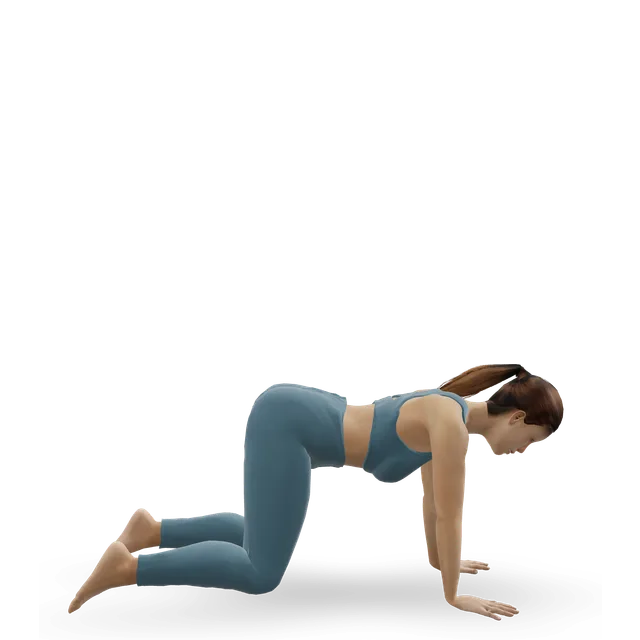
Cut back the running, jumping and cutting that hurts, not all activity, and swim or cycle instead. Shoes that don't press on the bump, and ice for 10 to 15 minutes after activity if it helps. If a clinician has put the foot in a boot, do only what they allow.

Wall calf stretch (gastrocnemius) demonstrated on the 3D figure3D demoWall calf stretch (gastrocnemius)Beginner · A wall

Hold for at least 30 s, 3 times each side, every day · NHS Lothian's Sever's disease dose (borrowed); children's hospitals advise calf stretches for Iselin's

Easier: Seated calf stretch with a towel · Harder: Heel-on-step calf and hamstring stretch

Soleus wall stretch demonstrated on the 3D figure3D demoSoleus wall stretchBeginner · A wall

Hold for at least 30 s, 3 times each side, every day · The same booklet's bent-knee calf stretch (borrowed)

Easier: Seated calf stretch with a towel · Harder: Toes-tucked kneeling (toe squat)

Seated bent-knee calf raise (soleus raise) demonstrated on the 3D figure3D demoSeated bent-knee calf raise (soleus raise)Beginner · A bench or box

2 sets of 15 · A gentle start. Editorial, as in our Sever's disease guide

Harder: Slow calf raise

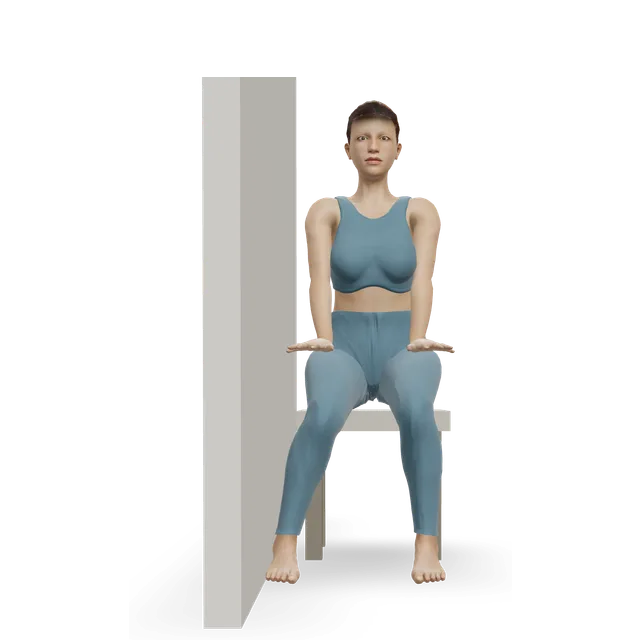
Isometric ankle eversion against a wall demonstrated on the 3D figure3D demoIsometric ankle eversion against a wallBeginner · A wall + A bench or box

Press the outside of the foot gently into a wall: hold 5 to 10 s, 5 to 10 times, once or twice a day · Editorial. No sharp pain at the bump: this tendon pulls on the sore growth area

Harder: Band ankle eversion

Stationary cycling demonstrated on the 3D figure3D demoStationary cyclingBeginner · Cardio machine

15 to 30 min, easy, or a bike ride outside · Cycling while sore is NHS Lothian's suggestion for Sever's disease (borrowed). Editorial time

Easier: Recumbent exercise bike · Harder: Air bike intervals

Move on when: Walking and school PE are comfortable, and the bump isn't sore with everyday walking.

Follow along: a timer, a cue and the next move, one step at a time.
Stage 2

Build calf and outer-ankle strength

Strength work most days while sport builds back within the 3 out of 10 rule (borrowed). Keep the stretches going daily.

Band ankle eversion demonstrated on the 3D figure3D demoBand ankle eversionBeginner · A band + A bench or box

2 sets of 10 to 15 with a light band, once a day · Editorial. Slowly, and pain-free at the bump

Easier: Isometric ankle eversion against a wall · Harder: Single-leg stand

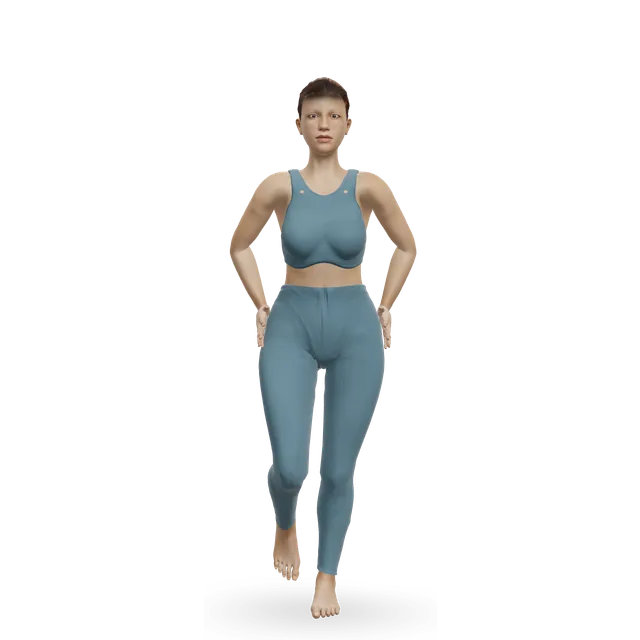
Slow calf raise demonstrated on the 3D figure3D demoSlow calf raiseBeginner · A wall

About 1 minute at a time, on both feet · NHS Lothian's Sever's disease dose (borrowed)

Easier: Seated bent-knee calf raise (soleus raise) · Harder: Standing dumbbell calf raise

Single-leg calf raise from a step demonstrated on the 3D figure3D demoSingle-leg calf raise from a stepIntermediate · A step + A wall

Build to just under double your child's age in a row on each leg (about 20 at age 11) · NHS Lothian's target (borrowed). Flat ground first, then off a step

Easier: Slow calf raise · Harder: Single-leg pogo hops

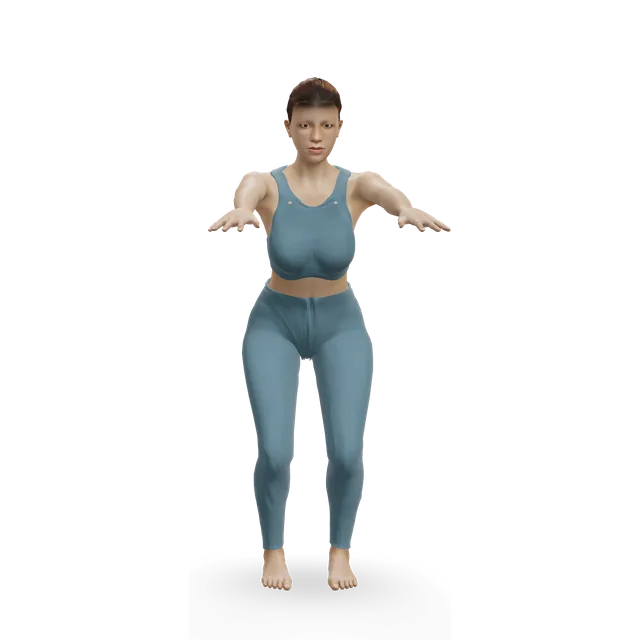
Single-leg stand demonstrated on the 3D figure3D demoSingle-leg standBeginner · A wall

3 holds of 20 to 30 s on each leg, then with eyes closed or on a cushion · Editorial

Easier: Tandem stance and heel-to-toe walk · Harder: Single-leg reach matrix

Single-leg reach matrix demonstrated on the 3D figure3D demoSingle-leg reach matrixIntermediate · No equipment

3 rounds of 5 reaches in each direction on each leg · The move page's dose. Shallow reaches first

Easier: Standing crossed-leg side reach · Harder: Single-leg Romanian deadlift

Move on when: Close to the single-leg heel-raise target, and your child can hop, skip and jump quietly without pain: NHS Lothian's check for being ready for sport (borrowed).

Follow along: a timer, a cue and the next move, one step at a time.
Stage 3

Back to running, cutting and sport (once the checks are met)

Add back one sport session a week. No more than 4 high-intensity sessions a week, not on 2 days in a row, and weekly hours of organised sport no more than your child's age (NHS Lothian's limits for Sever's disease, borrowed).

Ankle bounces (mini pogo) demonstrated on the 3D figure3D demoAnkle bounces (mini pogo)Beginner · No equipment

2 sets of 20, with quiet landings · NHS Lothian's hop check (borrowed). Editorial dose, as in our Sever's guide

Harder: Pogo hops

Skipping demonstrated on the 3D figure3D demoSkippingBeginner · No equipment

3 runs of 20 m · The booklet's skip check (borrowed). Editorial dose

Easier: Ankle bounces (mini pogo) · Harder: Alternate-leg bounding

Pogo hops demonstrated on the 3D figure3D demoPogo hopsIntermediate · No equipment

2 sets of 10 to 20 · The booklet's jump check (borrowed). Editorial dose

Easier: Ankle bounces (mini pogo) · Harder: Single-leg pogo hops

Lateral cone hops demonstrated on the 3D figure3D demoLateral cone hopsIntermediate · Other / check instructions

2 sets of 10 side to side · Editorial. Cutting and side-to-side movement are what it finds hardest

Easier: Lateral bound (skater jump) · Harder: Single-leg cone hops

Single-leg hop and stick demonstrated on the 3D figure3D demoSingle-leg hop and stickIntermediate · No equipment

3 sets of 5 on each leg, small hops in one direction first · Editorial

Easier: Standing broad jump with stuck landing · Harder: Alternate-leg bounding

Treadmill jogging demonstrated on the 3D figure3D demoTreadmill joggingIntermediate · Cardio machine

Gentle running, then training · Walking, swimming and cycling first, then gentle running: the booklet's order (borrowed)

Easier: Treadmill walking · Harder: Sprint intervals

Move on when: Full training stays within the pain rule and settles soon after. If it flares in a growth spurt, drop back a stage. If the bump is still sore after several months, or after about 13 in girls or 15 in boys, ask for a review.

Follow along: a timer, a cue and the next move, one step at a time.

What to change for now

Shoes and padding

Children's hospitals list tight or narrow shoes as a risk and advise well-fitting, supportive shoes. The details below are our suggestions.

  • 1. Check that football boots, spikes and school shoes aren't tight across the outside of the foot: tight or narrow shoes are a listed risk.
  • 2. Choose shoes that fit well, with good arch support, for everyday wear.
  • 3. A ring-shaped pad around the bump, not over it, can stop rubbing (our suggestion).
  • 4. Ask a podiatrist or physiotherapist before buying custom insoles. One children's hospital suggests them depending on foot shape, but no study has tested them.

Sources 1, 7, 12, 10

Back to sport: an NHS booklet's checks for Sever's disease (borrowed)

These checks come from an NHS children's hospital booklet for Sever's disease, another growth-area strain in active children's feet. No Iselin's source gives return-to-sport steps, so they are borrowed. If your child's physiotherapist has a plan, follow theirs.

  • 1. Your child can do single-leg heel raises in a row on each leg, building towards just under double their age (about 20 at age 11).
  • 2. They can hop, skip and jump quietly without pain.
  • 3. Restart one activity or training session a week.
  • 4. Keep pain during sport at 3 out of 10 or less, settling soon after.
  • 5. No more than 4 high-intensity sessions a week, not on 2 days in a row, and weekly hours of organised sport no more than their age.

Source 21

A boot for a bad flare

For a bad flare, a clinician may put the foot in a walking boot or cast for 2 to 4 weeks. Do only what they allow while it's on, and pick the plan up at stage 1 once it's off.

Sources 7, 8, 9

Ice and painkillers

Ice wrapped in a towel for 10 to 15 minutes after activity can ease it, but not just before sport. A children's painkiller such as ibuprofen can help in a bad spell if rest, ice and stretching aren't enough; follow the dose on the packet, and don't give aspirin to anyone under 16 unless a doctor prescribes it.

Sources 1, 7, 22

Positions to swap, and why

Habit or positionWhy it mattersInstead
Tight or narrow boots, spikes or shoes that press on the bumpTight or narrow footwear is a listed risk, and rubbing irritates the bump.Well-fitting shoes and a ring-shaped pad around the bump.
Playing through pain above 3 out of 10That's above the limit an NHS booklet uses for Sever's disease, borrowed here.Cut back running, jumping and cutting for now, and cycle or swim instead.Try: Stationary cycling
Lateral cone hops and other cutting drills while it's soreCutting and jumping bring on the pain.Stage 2 strength work first, then small, quiet ankle bounces.Try: Ankle bounces (mini pogo)
Band ankle eversion against a strong band while the bump is soreThe tendon that turns the foot outwards pulls on the sore growth area (our reasoning).Gentle holds against a wall first.Try: Isometric ankle eversion against a wall
Calling a twist just a sprain when the bump is tenderA fracture needs ruling out, and the Ottawa ankle rules apply in children.An X-ray check the same day or the next.
Hard sessions on 2 days in a row, or more weekly hours of organised sport than your child's ageNHS Lothian's weekly limits for growing athletes, borrowed from Sever's disease.No more than 4 high-intensity sessions a week, with rest days between.
Stopping all sport for monthsRelative rest is usually enough, and children in one series were back playing after 38 days on average.A staged return, within the pain rule.

Routines to follow

More moves for this area

Questions people ask

What is Iselin's disease?

Pain and swelling at the bump halfway along the outer edge of the foot, where a tendon pulls on a growth area at the base of the fifth metatarsal. It's an overuse strain in a growing child, like Sever's disease at the heel.

Who gets it?

Active children of about 8 to 14, especially in sports with running, jumping and cutting, such as football and basketball, and in gymnastics and dance. Tight boots and growth spurts make it more likely.

How is it different from a broken bone?

A fracture usually follows a twist or fall, while Iselin's disease usually comes on with sport and no injury. After a twist with tenderness on that bump, an X-ray is needed, and the normal growth area can be mistaken for a break, and a break for it.

Does my child need an X-ray?

Not always: it's often diagnosed from the story and a tender bump. An X-ray is needed after an injury, or if the pain doesn't fit the usual pattern.

How long does it last?

In one series of 27 young athletes, return to play took 38 days on average (14 to 53 days). It stops for good once the growth area joins the bone, by about 13 in girls and 15 in boys in a scan study.

Can my child keep playing sport?

Usually, with less of the running, jumping and cutting that hurts. Keep pain during sport to 3 out of 10 or less, a rule borrowed from an NHS Sever's disease booklet, and cycle or swim while it's sore.

What helps?

A break from the painful activity, ice after sport, a children's painkiller in a bad spell, shoes that don't press on the bump, and calf stretches and strength work. A clinician may use a walking boot for 2 to 4 weeks if it's very painful.

Which exercises help?

Calf stretches, calf raises building to a single-leg target, gentle outer-ankle strength and balance work, then hops and skips before sport. None has been tested in Iselin's disease, so the plan borrows from Sever's disease.

Do insoles help?

Well-fitting shoes with good arch support help most. Some clinicians suggest custom insoles depending on foot shape, but they haven't been tested.

Can it cause lasting problems?

Rarely. Occasionally the growth area doesn't join and stays sore into adulthood, and a specialist may remove it.

Related exercise guides

Other pain guides

Sources

  1. Nationwide Children's Hospital · Apophysitis of the 5th metatarsal (Iselin's disease)
  2. Deniz 2014 · Iselin's disease in a child (case report, BMJ Case Rep)
  3. Kishan 2016 · Iselin's disease, a rare cause of outer foot pain (case report, Med J Armed Forces India)
  4. Forrester 2017 · Iselin's disease (systematic review, J Foot Ankle Surg)
  5. Achar 2019 · Apophysitis and osteochondrosis: common causes of pain in growing bones (review, Am Fam Physician)
  6. AOSSM STOP Sports Injuries · Apophyseal injuries in youth (tip sheet, 2025)
  7. Lurie Children's Hospital of Chicago · Iselin disease (apophysitis of the fifth metatarsal)
  8. Rady Children's Health · Iselin's syndrome
  9. Sylvester 2015 · Treatment outcomes in 27 young athletes with Iselin's disease (case series, J Pediatr Orthop B)
  10. Williams 2026 · Non-surgical treatment for growth-area (apophyseal) injuries of the leg (Cochrane review)
  11. Canale 1992 · Iselin's disease in 4 children (case series, J Pediatr Orthop)
  12. Nicklaus Children's Hospital · Iselin's disease
  13. Gupta 2017 · Iselin's disease in a kickboxer, and its MRI appearance (case report, Transl Pediatr)
  14. Blythe 2026 · When the growth area of the fifth metatarsal appears and fuses: CT scans of 295 children (imaging study, Foot Ankle Int)
  15. Ralph 1999 · Iselin's disease that didn't fuse, and the look-alikes (case report and review, J Foot Ankle Surg)
  16. Herrera-Soto 2007 · Fifth metatarsal fractures in 103 children and teenagers (case series, J Pediatr Orthop)
  17. Dowling 2009 · The Ottawa ankle rules in children: 12 studies, 3,130 children (meta-analysis, Acad Emerg Med)
  18. Lee 2024 · Healing of 305 proximal fifth metatarsal fractures in children (cohort, J Foot Ankle Surg)
  19. Mahan 2015 · How often 238 children's fifth metatarsal fractures needed surgery (cohort, J Pediatr Orthop)
  20. Osiowski 2025 · The os vesalianum, an extra bone on the outer foot: 22 studies, 21,312 feet (meta-analysis, Foot Ankle Surg)
  21. NHS Lothian · Sever's disease (Royal Hospital for Children and Young People booklet, 2023)
  22. NHS · Growing pains
  23. NHS · Pain in the top of the foot
  24. NHS · Broken toe
  25. NHS · Osteomyelitis
  26. NHS · Septic arthritis

Exercise education, not a diagnosis or treatment plan. It is written from the guidelines and studies listed above; review by a clinician is pending. If your pain follows an injury, is severe, is getting worse, or comes with any warning sign listed on this page, get it assessed. Health disclaimer.