Deep friction on points away from the pain
The therapist tests how you move, then rubs deeply by hand on specific points, called centres of coordination, that are away from where it hurts. Sessions are generally weekly.
Fascia guide
Fascial manipulation, or the Stecco method, is a hands-on technique developed by an Italian physiotherapist, Luigi Stecco. The therapist tests how you move, then rubs deeply by hand on specific points, often well away from where it hurts, to undo what the method calls densification: the slippery layer in the fascia turning thick and sticky. Its trials mostly favour it, but all are small, several are by the method's own developers, and we found none against a fake treatment.
A 2026 review pooled 15 trials and found less pain than with other treatments, but its own authors rated the evidence very low certainty.
This guide explains what happens in a session, what's known about densification, what the trials found for back, neck and jaw pain, the claims for internal problems, and safety, with a mobility move for a stiff upper back shown in 3D.
The therapist tests how you move, then rubs deeply by hand on specific points, called centres of coordination, that are away from where it hurts. Sessions are generally weekly.
The method says pain comes from densification: the slippery hyaluronan layer in and under the fascia turning thick and sticky. It aims to make that layer glide again. Densification is a reasonable hypothesis, but we found no study testing whether friction reverses it in people.
A 2026 review of 15 trials found less pain than with other treatments, but its authors rated the evidence very low certainty, citing small samples, a lack of blinding and other limitations. We found no trial against a fake treatment.
Source 5
Added to physiotherapy, it helped chronic low back pain more in 24 people, and it did better than standard physical therapy in a study of 102. For neck pain it did about as well as another fascia method, and for jaw muscle pain about as well as botulinum toxin injections.
The method's association says it can address problems such as asthma, gastritis, a racing heart, constipation and period pain. We found no trials for any of them.
Source 2
The friction is painful at the point at first, and the association describes a reaction lasting up to 48 hours. A review of 26 studies found no serious side effects.
Luigi Stecco, an Italian physiotherapist, developed the method, with English editions of his textbooks in 2004 and 2009. His children, Carla and Antonio Stecco, worked with him, and they're authors of many of the studies on this page.
The method sees the deep fascia as grouping muscle fibres into 'myofascial units', linked into sequences and spirals across the body. It places pain-causing 'densifications' at 'centres of coordination', away from the painful spot, where it says normal fascial tensions converge.
The steps, from the association and one study:
The association says the friction 'will at first be locally painful, easing at the end', and that a 'reactive inflammatory phase' afterwards 'can last up to 48 hours'. A review by the developers suggests the soreness comes from hyaluronan broken into fragments; that's a hypothesis.
The association says sessions are generally weekly, and that the number depends on the problem. Trials used 2 sessions, 3 sessions about a week apart, or 8 sessions over 4 weeks.
The association's courses are for doctors, physiotherapists, chiropractors and others with at least six semesters of study after school, including anatomy, physiology and biomechanics, and a state licence. Levels 1 and 2 take 48 hours each, over two weekends. In the UK, check that a physiotherapist is chartered and registered with the Health and Care Professions Council (HCPC); osteopaths and chiropractors must be registered by law.
In cadavers, the developers found a layer of hyaluronan, a slippery molecule, between deep fascia and muscle and between the fascia's own sublayers, made by cells they called 'fasciacytes'. They proposed that if the hyaluronan packs more tightly, the layers can't glide, which may underlie muscle pain. A review notes that how thick hyaluronan is depends on how concentrated it is, and that keeping still can make it thicker. Our glide-layer essay explains more.
The developers separate densification, a change in the runniness of the loose tissue inside fascia caused by diet, exercise and overuse, which they call 'easily reversible', from fibrosis, true scarring after injury, surgery, diabetes or ageing. Our densification essay covers the difference.
Source 4
The method's authors propose that the extra blood flow brought by deep friction 'could modify the extracellular matrix and restore gliding'. A hyaluronan review notes that temperature 'can also have an effect' on how runny it is, and a mathematical model found that pressing and oscillating raise the fluid pressure under fascia and could widen the gap. We found no study measuring heat or hyaluronan changing in people during treatment, and dense fascia itself doesn't change shape at the forces hands can apply.
In 28 people with chronic neck pain, the fascia over two neck muscles was thicker on ultrasound than in 25 healthy people, and pain and the thickness of its loose layer fell after treatment. In a pilot in healthy adults, brief treatment thinned ultrasound 'densifications' and eased their tenderness. In 5 people with elbow pain, a special magnetic resonance imaging (MRI) measure of water in the fascia changed after 3 weekly sessions. These are small studies, mostly by the developers, and they don't show that the changes cause the relief.
In 71 people with hip osteoarthritis, two physiotherapists agreed well on the method's movement and touch tests. In healthy people, spots that felt restricted were thicker on ultrasound than the same spot on the other side. Each is a single study.
We read the trials below as abstracts (their published summaries), so some details, such as how carefully groups were blinded, may be missing. Developers of the method are authors of several of them, including a back pain trial and a jaw trial. One large study doesn't say whether people were allocated at random, and we found no trial against a fake treatment.
A 2026 meta-analysis of 15 randomised trials in adults with musculoskeletal pain found less pain than with comparison treatments, a standardised difference of 0.8 that would usually count as large, but the results varied widely. Its authors rated the certainty of the evidence very low, 'given the small sample sizes, lack of blinding, and significant limitations in the intervention', and called for more blinded studies.
A 2021 review of 13 studies called the evidence low to moderate quality, and noted that most of its trials used the method on its own. A 2026 review of 16 studies found pain fell by 20% to 50%, with little follow-up. A scoping review of 26 studies found most came from Italy and India, and called the research 'still scarce'.
In 24 people with chronic low back pain, adding 8 sessions over 4 weeks to guideline-based physiotherapy improved pain, disability and well-being more than physiotherapy alone, at the end of treatment and at follow-up; a developer of the method was an author.
In a pragmatic study of 102 people, pain fell by 4.3 points out of 10 with fascial manipulation against 1.5 with standard physical therapy, and its summary doesn't say whether people were randomised. In 69 people with damaged lumbar discs on a scan, two sessions eased pain and improved movement more than conventional physical treatments such as electrical currents, heat lamps, massage and mobility exercises.
In 52 people with chronic neck pain, fascial manipulation and another fascia method, called fasciatherapy, both added to conventional physiotherapy, did about equally well; the other method did better for two neck movements.
Source 8
In 30 people with jaw muscle pain, several sessions did about as well as one session of botulinum toxin injections: slightly better for pain and slightly worse for jaw movement, with no clinically relevant difference at 3 months; developers were authors. In 28 people with jaw joint disorders, it eased pain about as much as conventional care and restored mouth opening faster.
After hip replacement, two sessions in place of two standard ones improved hip movement and function scores more in 51 people. In 54 young adults with recent muscle pain, the standard protocol eased pain by about 3.4 points out of 10 at 30 days, while an untreated group didn't change. In 20 footballers with unstable ankles, the untreated group had 5 ankle injuries in a year and the treated group none, far too few players to show that it prevents injury.
The association says it can address difficulty swallowing, chest tightness, a racing heart, asthma, gastritis, constipation, bloating, cystitis, period pain and skin inflammation (dermatitis), among others. We found no trials for any of these. Symptoms like these need a doctor's assessment first: chest pain or tightness, for example, can be a sign of a heart attack.
Both are hands-on fascia methods. Fascial manipulation uses deep friction on a set map of points, usually away from the pain; myofascial release uses slow, sustained pressure and stretch, often on the painful area itself (our description). Neither has been shown to change dense fascia, which needs far more force than hands can apply, and pressure seems to work mainly through the nervous system.
In small trials it did about as well as another fascia method and as botulinum toxin injections, and the pooled advantage over other treatments is very low certainty. We found no trial comparing it with myofascial release, active release technique or massage.
Doses are starting points, not prescriptions.
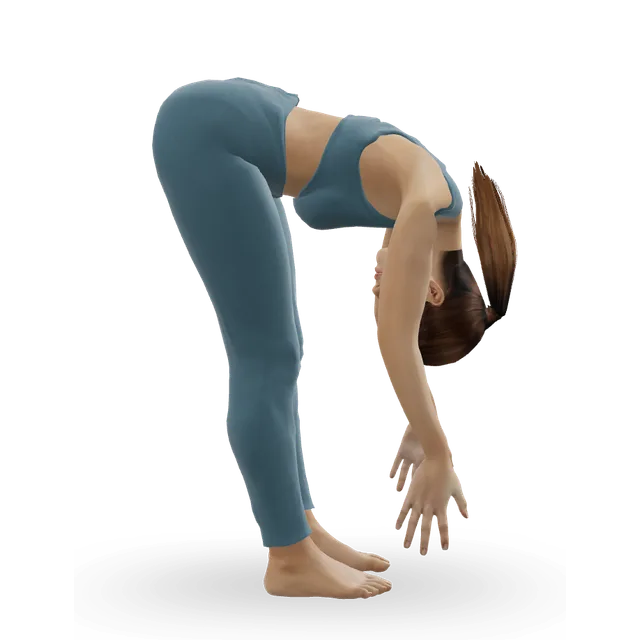
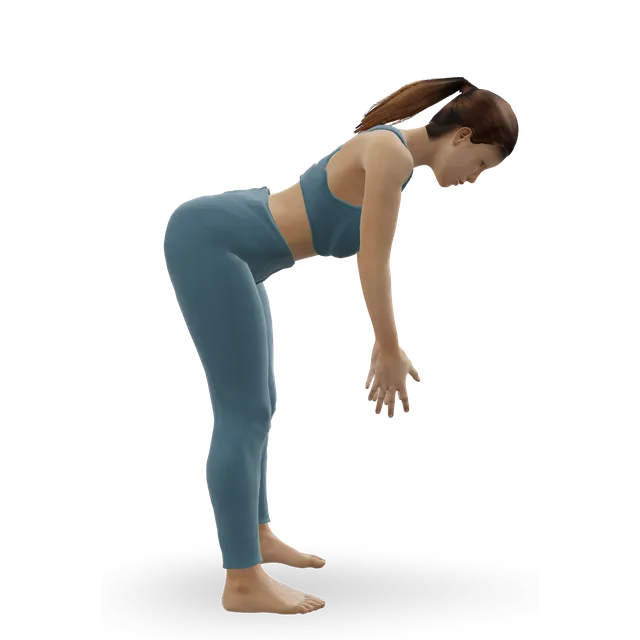
Thoracic rotation for a stiff upper back: 6 rotations each way, moving with the breath, the move page's dose. Our densification essay suggests varied movement through the day for fascia that feels sticky.
Some trials added fascial manipulation to physiotherapy or exercise, and others used it on its own. For long-term pain with no clear cause, the National Institute for Health and Care Excellence (NICE) recommends a supervised group exercise programme and staying active. Follow your physiotherapist's plan, or each move page's dose for the moves below.
The association says a reaction can last up to 48 hours. Gentle movement the same day is usually fine (our advice), and pain that's still worse after 2 days needs checking.
Source 2
Steps and dose from the move's page. Our densification essay suggests varied movement through the day for fascia that feels sticky, and much of the trial evidence is in back and neck pain. Stop for sharp or increasing pain, numbness or tingling.
Loading the 3D figure…
The movement on the figure: Thoracic rotation
Built from the sources:
Use each move page's dose where it gives one; varied movement through the day is what our densification essay suggests for fascia that feels sticky.
These core and back moves come from our back pain guides; use each move page's dose where it gives one, or your physiotherapist's plan.
For a stiff back, start with the spine mobility routine; for the neck, the strength routine.
A 15-minute routine that moves your neck, upper back and lower back through bending, arching, side bending and twisting, then holds the spine steady.
15 minBeginner12 movesNo equipmentA 12-minute routine to move every joint through its range under control: slow neck, shoulder, hip and ankle circles, spine and hip rotation, and deep squats.
12 minBeginner10 movesA wallA 12-minute, no-equipment routine of slow long-line stretches, side bends and rotations, moving in many directions.
12 minBeginner10 movesNo equipmentA gentle 15-minute Pilates-based routine for ongoing low back pain, built from neutral-spine moves with options for backs that dislike bending or arching.
15 minBeginner10 movesNo equipmentDeep neck holds and shoulder-blade strength in under 20 minutes: one of the best-supported kinds of exercise for a stiff, sore neck.
18 minBeginner11 movesA band, An anchor pointPain at the point during friction, and a reaction lasting up to 48 hours afterwards, according to the association. The developers link the soreness to hyaluronan fragments, a hypothesis.
A scoping review of 26 studies found no serious side effects. In 10 healthy young people, a session had virtually no effect on blood clotting tests.
The NHS cautions for chiropractic and osteopathy fit deep friction too (our reading): ask first if you take blood-thinning medicines or have a raised risk of bleeding or stroke, have bones or joints that are very weak or seriously damaged, or have a nerve condition such as peripheral neuropathy. Blood thinners can cause severe bruising.
Throbbing pain and swelling in one leg, with red, blue or darkened skin, can be a deep vein thrombosis (DVT), a blood clot. Don't have the leg treated: ask for an urgent GP appointment or call NHS 111, and call 999 if you're also short of breath or have chest pain.
Source 36
Source 37
Source 2
That's the developers' hypothesis, supported by modelling and lab reasoning. We found no study measuring heat or hyaluronan changing during treatment in people, and dense fascia doesn't change shape at the forces hands apply.
Small studies, mostly by the developers, report thicker fascia that thins after treatment. They don't show that the change causes the pain relief.
We found no trial against a fake treatment, so it isn't known whether the points chosen matter. Trials compared it with other care, often with developers among the authors.
That's the association's claim, and we found no trials. Chest symptoms need medical help first.
It did about as well as another fascia method and as botulinum toxin injections in small trials, and the pooled advantage over other treatments is very low certainty.
The friction is painful at first, the association says, but we found no trial comparing gentler and harder friction.
Source 2
A hands-on method developed by Luigi Stecco, an Italian physiotherapist. The therapist tests how you move, then rubs deeply by hand on specific points, often well away from where it hurts. It's also called the Stecco method.
The idea that the slippery fluid layer in and under deep fascia becomes thick and sticky, making movement stiff and painful. It's a reasonable hypothesis, explained in our densification essay, but it hasn't been shown to cause pain.
It may ease pain a little. A 2026 review pooled 15 small trials and found less pain than with other treatments, but its authors rated the evidence very low certainty, partly because of a lack of blinding, and we found no trial against a fake treatment.
It can: the method's association says the friction is painful at first, easing by the end, and that a reaction can last up to 48 hours afterwards. Tell the therapist if it's too much.
The association says sessions are usually weekly and the number depends on the problem, and trials used 2 to 8 sessions. If nothing has changed after 3, it's reasonable to ask what else is in the plan (our suggestion).
Both are hands-on fascia methods, but fascial manipulation uses deep friction on a set map of points away from the pain, while myofascial release uses slow, sustained pressure and stretch. Neither has been shown to change dense fascia.
Small trials found it helped low back pain more when added to physiotherapy, and more than standard physical therapy in a larger study whose summary doesn't say if it was randomised. None compared it with a fake treatment, and NICE recommends exercise for long-term pain.
In small trials, it did about as well as botulinum toxin injections for jaw muscle pain, and about as well as another fascia method for neck pain. None of these trials compared it with a fake treatment, so it's hard to know how much of the effect comes from the method itself.
The method's association says it can help problems such as asthma, gastritis and constipation, but we found no trials. Chest tightness, a racing heart or difficulty swallowing need a doctor's assessment first.
It's done by doctors, physiotherapists, chiropractors and similar professionals who've taken the association's courses. In the UK, check that a physiotherapist is chartered and registered with the Health and Care Professions Council.
Ask first if you take blood thinners or have very weak bones or a nerve condition, as the NHS advises for other hands-on treatments. Never have a leg treated that could have a blood clot: a throbbing, swollen leg needs an urgent GP appointment or NHS 111.
Movement education, not medical advice. Stop for sharp or increasing pain, numbness or tingling, and get individual advice if you are pregnant, after an injury or surgery, or managing a health condition. Health disclaimer.