Pain guide · Wrist and hand pain

Thumb pain: the base of the thumb, the wrist side, a thumb that catches, an injury, and what helps

Thumb pain usually comes from one of a few places, and where it hurts is the best clue: the joint at the base of the thumb (arthritis, usually from about 45), the thumb side of the wrist (de Quervain's), the palm side at the base with clicking (a trigger thumb), or the thumb's knuckle after it was bent back (a torn ligament). Heavy phone use can make the thumb and wrist ache, but the studies haven't linked it to arthritis.

After an injury, go to an urgent treatment centre or accident and emergency (A&E) if the thumb has changed shape or colour, you can't move it or hold things, or you heard a snap; a hot, red thumb with a very high temperature needs a call to the National Health Service's 111 line (NHS 111). Otherwise most new thumb problems begin to settle within 6 weeks; see a general practitioner (GP) if it hasn't improved after 2 weeks of looking after it at home. This guide maps the causes by the exact spot, explains what helps (for thumb base arthritis, exercise and a self-management programme come first, and a UK trial found a splint added nothing to them), and gives a three-stage plan with 3D demos and written thumb exercises.

When to get help first

Exercise is for pain that has been checked or is clearly mild and settling.

Get urgent medical help if

  • Call 999 or go to A&E after an injury (don't drive yourself) if the arm, wrist or hand is numb, tingling or has pins and needles; a bone is sticking out or a bad cut is bleeding heavily; or the wrist, thumb or a finger has changed shape, is at an odd angle, or has turned blue, grey, white or cold.
  • Go to an urgent treatment centre or A&E if, after an injury, you have severe pain; you feel faint, dizzy or sick from the pain; you heard a snap, grinding or popping noise at the time; you can't move your thumb or hold things; your thumb has changed shape or colour; or you've lost the feeling in part or all of your hand. These might be signs of a broken thumb.
  • Same day (NHS 111, an urgent treatment centre or an urgent GP appointment): a thumb injury that is very painful, swollen and bruised, stiff or difficult to move. It may be broken, dislocated or a torn ligament, and you'll probably need an X-ray.
  • Within days: after the thumb was bent back or away from the hand, pain and swelling at the base of the thumb on the index-finger side, especially with a weak or painful pinch, a loose or wobbly feeling, or a lump there. Ask to be seen in a hand clinic: a complete tear needs a decision on treatment within 2 weeks of referral, and it is easily missed in A&E.
  • Same day: after a fall onto an outstretched hand, pain or tenderness at the base of the thumb on the back of the wrist (the hollow called the snuffbox), even if the wrist moves well or the first X-ray was normal. A broken scaphoid can hide on the first X-ray and is slow to heal if it's missed, so ask what follow-up is planned.
  • Same day: a joint or lump that is hot, red and swollen, or hand or wrist pain with a high temperature or feeling hot, cold or shivery. It could be an infection or gout.
  • Phone 111 if you have a very high temperature, feel hot and shivery, and have redness or heat around your wrist, hand, finger or thumb: this can be a sign of infection.
  • Same day: you have lost the feeling in part or all of your hand.
  • Call 999 or go to A&E: sudden, severe pain in a muscle of the forearm or hand, which may be worse when you stretch it, with swelling, numbness, weakness or pins and needles, or tightness or difficulty moving the fingers. This can be acute compartment syndrome, which needs surgery as soon as possible. It usually follows an injury, a crush, or a cast or bandage that is too tight. Do not drive yourself to A&E.
  • Call 999, even if it passes: sudden weakness or numbness in one arm, with a drooping face or slurred speech. These are signs of a stroke.

See a doctor or physiotherapist if

  • See a GP if the pain in your thumb is stopping you doing normal activities, is getting worse or keeps coming back, or hasn't improved after treating it at home for 2 weeks; if you have any tingling or loss of feeling in your hand; or if you have diabetes, because hand problems can be more serious if you have diabetes.
  • Contact your GP practice if you have pins and needles or numbness in your hand, fingers or thumb, pain and stiffness in the small joints, or a wrist, hand, finger or thumb that is hot, swollen or tender, especially if you can't recall an injury.
  • Swollen, stiff joints in several fingers or both hands, with morning stiffness lasting more than 30 minutes. The National Institute for Health and Care Excellence (NICE) asks GPs to refer suspected rheumatoid arthritis urgently when the small joints of the hands are affected, even if blood tests are normal.
  • Carpal tunnel symptoms that are getting worse, not going away, or not helped by treatment at home; sooner if the thumb is weak or the muscle at the base of the thumb looks thinner.
  • See a GP if the skin around your nail has become sore, red, swollen and warm (paronychia), which can be a sign of an infection. A very high temperature with redness or heat around the thumb is the 111 line above.
  • You suddenly can't lift your thumb off a flat table, weeks after a broken wrist or with rheumatoid arthritis: tell your fracture clinic or GP. The long tendon that straightens the thumb may have torn; hand surgeons say surgery usually isn't urgent, but it needs planning.
  • See a GP if you think you have a trigger thumb and it doesn't get better, or it stops you doing your usual daily activities.
  • A young child's thumb that is stuck bent or clicks: speak to a healthcare professional if your child has significant pain, or if they're over 3 and it's stopping them using their hands as normal. It is rarely painful and usually gets better on its own.

Where does it hurt?

Location narrows the likely causes; it does not diagnose.

The base of the thumb, worse pinching, gripping or turning a key

An ache at the joint where the thumb meets the wrist, often in both hands, from about 45, sometimes with a bump and short morning stiffness: usually thumb base arthritis.

Read: Thumb arthritis →
The thumb side of the wrist, worse lifting the thumb or wringing

Sometimes with swelling, often after a new baby or a lot of hand use: de Quervain's tenosynovitis, where two thumb tendons run through a tight tunnel.

Read: De Quervain's tenosynovitis →
The palm side of the base of the thumb, with clicking or catching

Worse in the morning; the thumb may stick bent and need pushing straight: a trigger thumb.

Read: Trigger finger →
The thumb's knuckle after it was bent back or sideways

A fall holding a ski pole, a ball or a tackle; swelling, bruising and a weak pinch: possibly a torn ligament (skier's thumb). Get it assessed within days.

Read: Skier's thumb →
After a fall, a punch or a jammed thumb, with severe pain or a changed shape

A snap at the time, a thumb you can't move or hold things with, or a change of colour: possibly a broken thumb. Go to an urgent treatment centre or A&E.

Read: Broken thumb →
The hollow at the base of the thumb on the back of the wrist, after a fall on your hand

Even if the wrist moves well: a broken scaphoid can hide on the first X-ray, so it needs checking the same day.

Read: Scaphoid fracture →
Tingling or numbness in the thumb and first two fingers, worse at night

Sometimes with a weak thumb or dropping things: carpal tunnel syndrome.

Read: Carpal tunnel syndrome →
An ache after long spells on a phone, tablet, keyboard or controller

No catching, swelling or injury: usually overuse, which eases with shorter spells. Pain on the thumb side of the wrist is often de Quervain's.

Read: Wrist pain from typing →
Stiff, sore finger joints with bony bumps as well

Hand osteoarthritis, which often affects the thumb base and the end finger joints together.

Read: Hand and finger arthritis →
Several finger and thumb joints swollen and stiff, often in both hands

Morning stiffness well over 30 minutes: see a GP soon. It can be rheumatoid arthritis, which needs an urgent referral.

Red, swollen, warm skin around the nail

Possibly an infection (paronychia): see a GP. A very high temperature with redness or heat around the thumb needs a call to 111.

A thumb you suddenly can't lift off a table, weeks after a broken wrist

The long tendon that straightens the thumb may have torn: tell your fracture clinic or GP.

Read: Broken wrist →
Pins and needles, burning or shooting pain into the thumb that changes as you move your neck

A nerve in the neck can cause hand symptoms even without neck pain.

Read: Pinched nerve in the neck →
A young child's thumb that is stuck bent or clicks

A trigger thumb in a child is rarely painful and usually gets better on its own; see a healthcare professional if it hurts, or if it limits hand use after age 3.

Understand it

Where it hurts is the best clueStrong evidence

The NHS sorts thumb pain by its pattern: pain, swelling and bruising after an injury points to a sprain or a break; pain, swelling and stiffness at the base that lasts, sometimes with a lump, to de Quervain's or arthritis; aching that is worse at night, with numbness or a weak thumb, to carpal tunnel syndrome; and pain at the base on the palm side with clicking to a trigger thumb. It asks you not to self-diagnose, and the map above is a guide to the likely cause, not a diagnosis.

NHS inform adds that pins and needles, or sharp, hot or burning pain, in the hand or thumb can come from the neck, even when the neck doesn't hurt.

Sources 1, 2, 3

Thumb base arthritis: common on X-rays, a problem for fewer peopleStrong evidence

The base of the thumb, where it meets a small wrist bone, is one of the commonest places for osteoarthritis. On X-rays it is common and rises with age: in 16 population studies, about 5.8% of men and 7.3% of women had it at 50, and 33.1% and 39.0% at 80; in 7,792 Dutch adults aged 55 and over, 25.3% had it. Far fewer see a doctor about it: in southern Sweden, 1.4% of adults (2.2% of women and 0.62% of men) had a doctor's diagnosis, most often women aged 70 to 74 (5.3%).

Women are 2 to 3 times more likely to get it, US orthopaedic surgeons say. In a Finnish study of 3,595 adults, a higher body weight went with it and heavy physical work didn't, though a study like this shows a link, not a cause. Many people with these changes on an X-ray have little or no pain, UK and US hand surgeons say. The NHS describes a bump at the base of the thumb and trouble writing, opening jars or turning keys.

Sources 4, 5, 6, 7, 8, 9, 10

De Quervain's, a trigger thumb and a torn ligamentEmerging evidence

De Quervain's affects two thumb tendons in a tunnel on the thumb side of the wrist. Pain is worse lifting the thumb, as in the hitchhiker position, or using scissors; mothers of small babies seem particularly prone, and there is little evidence that it is caused by work, though hand use aggravates it, UK hand surgeons say. In the 30 treatment trials, 80% of people were women, with an average age of 46.

In a trigger thumb, a thickened tendon catches at the mouth of its tunnel, so the thumb clicks, sticks bent or needs pushing straight, often worse in the morning. The NHS says it is more likely over 40, with diabetes or with rheumatoid arthritis, and hand surgeons add that it isn't caused by arthritis.

Skier's thumb is a tear of the ligament on the index-finger side of the thumb's knuckle, usually from a fall onto the thumb while gripping something, such as a ski pole. Less often the ligament stretches slowly over years (gamekeeper's thumb), with a weak pinch. The NHS lists the thumb among the commonest places for sprains.

Sources 11, 12, 13, 14, 15, 16, 17, 18

Phones, gaming and repeated thumb use: what the studies showEmerging evidence

In 18 studies of university students, 19.2% to 68.7% reported wrist, hand or thumb pain, linked with time on the phone, how it is held, frequent thumb movements and the screen's size and weight. Across 42 studies of over 67,000 mostly young people (average age 24.6), phone use was linked with de Quervain's, carpal tunnel syndrome and tendon problems. In 7,092 young Swedish adults, texting predicted new hand and finger symptoms a year later (an odds ratio of 2.0, roughly double the odds), mostly short-lived.

In 477 students followed for 6 months, those who no longer met a threshold for smartphone addiction had less pain and fewer tendon changes on ultrasound, while those who stayed hooked didn't improve despite some cut in screen time. All these studies are observational: they show links, not cause and effect. No study we read links phone use to thumb arthritis, which is uncommon before 50. The NHS calls pain from repeated movements repetitive strain injury.

Sources 19, 20, 21, 22, 23, 4

Other causes, each with its own clues

These are less common, but they need a different kind of help:

  • Carpal tunnel syndrome: numbness, tingling or pins and needles in the thumb and first two fingers, a weak thumb or difficulty gripping, usually worse at night.
  • Rheumatoid arthritis: several swollen, stiff joints, often in both hands, with long morning stiffness. NICE asks GPs to refer it urgently when the small joints of the hands are affected, even if blood tests are normal.
  • Gout or a joint infection: a sudden, hot, red, swollen joint, with a high temperature in an infection.
  • Paronychia: sore, red, swollen and warm skin around the nail, which can be an infection.
  • A torn thumb tendon: weeks after a broken wrist, or with rheumatoid arthritis, the thumb suddenly can't be lifted off a flat table, sometimes after a 'ping'.
  • A young child's trigger thumb: a thumb stuck bent, rarely painful, which usually gets better on its own within up to 2 years.

Sources 24, 25, 26, 27, 28, 29, 30, 31, 2

Tests and scansStrong evidence

NICE diagnoses osteoarthritis without an X-ray in people aged 45 or over with joint pain on activity and morning stiffness of 30 minutes or less, and doesn't use imaging to guide treatment. US orthopaedic surgeons use a grind test (pressing and turning the thumb base) and say X-rays can confirm arthritis, though some people with advanced changes have no symptoms.

After an injury it's different: the NHS says you'll probably need an X-ray, because a break, a dislocation and a bad sprain are hard to tell apart. For a possible torn ligament, the UK hand surgeons' guideline asks for a history, an examination and X-rays, and found too little evidence to recommend routine ultrasound or magnetic resonance imaging (MRI). A nerve test may be used for carpal tunnel syndrome, and blood tests and a specialist referral for possible rheumatoid arthritis.

Sources 32, 8, 33, 17, 24, 26

How it usually goesEmerging evidence

New thumb problems, or a flare-up of an old one, should begin to settle within 6 weeks, NHS inform says; the NHS asks you to see a GP if it hasn't improved after 2 weeks of treating it at home. Osteoarthritis doesn't necessarily get worse and can sometimes gradually improve, the NHS says, and thumb base arthritis may become less bothersome over time, with symptoms often settling over the long term.

Some mild trigger thumbs recover over a few weeks without treatment, and an injection relieves a trigger thumb or de Quervain's in about 7 in 10, hand surgeons say. A broken thumb usually heals in 6 to 8 weeks, with full strength by 3 to 4 months. Phone-related pain eased in students whose heavy phone habit eased. No one can promise a timescale.

Sources 2, 1, 34, 8, 9, 14, 11, 33, 35, 22

What helps, and how strong the evidence is

Thumb base arthritis: exercise and self-management come first, with modest gainsMixed evidence

NICE says offer therapeutic exercise to everyone with osteoarthritis, and warn that pain may rise at first. For the thumb base, a 2024 review of 14 trials (1,280 people) found exercise reduced pain more than no treatment in the short term, by about 22 points on a 0 to 100 scale, with no differences in the medium and long term (low to moderate certainty). Across hand osteoarthritis, a Cochrane review of 7 trials found exercise cut pain by about 0.5 points out of 10, a small effect, on low-quality evidence.

Adding exercise therapy to a splint didn't reduce pain at 3 months in 166 people, but improved daily activities, work ability, satisfaction and grip, and cost less. Six weeks of education, a splint, exercises and an anti-inflammatory gel improved hand function more than education alone in 204 people. The 2025 UK hand surgeons' guideline puts a self-management package first, and a UK review suggests about 20 minutes, 3 times a week, with rest days between, as a well-tolerated dose. The plan uses the exercise levels from the UK OTTER II trial's booklet.

Sources 32, 36, 37, 38, 39, 40, 41, 42

A splint added nothing to self-management in a UK trialMixed evidence

In the OTTER II trial (349 people with thumb base arthritis, 17 NHS hospital departments), adding a real or a placebo thumb splint to a therapist-supported self-management programme of education and exercise made no difference to hand pain at 8 weeks; all three groups improved. NICE says don't routinely offer splints or supports unless the joint is unstable, exercise alone isn't working and the device is likely to help.

An earlier review of 12 studies (1,353 people) found splints gave moderate to large pain relief over 3 to 12 months, on low-quality evidence. So the 2025 UK hand surgeons' guideline suggests considering a splint for people who haven't responded to a self-management package alone. NHS inform says a splint may help during repetitive activities, not all the time, often for just a few weeks.

Sources 43, 32, 44, 40, 45

Joint protection made more people betterEmerging evidence

In a UK trial of 257 adults with hand osteoarthritis, joint protection taught by occupational therapists in four group sessions (bigger grips, two hands, gadgets and pacing) made more people better at 6 months: 33% against 21%. The hand exercise programme on its own didn't reach significance in that trial (28% against 25%). The NHS points to an occupational therapist and gadgets such as tap turners, and NHS inform suggests changing hand position to make tasks easier.

Sources 46, 47, 45, 1

Gels, tablets and injectionsEmerging evidence

NHS inform says a gel containing ibuprofen is the most effective painkiller for hand osteoarthritis, and NICE suggests considering an anti-inflammatory gel for osteoarthritis outside the knee. The NHS says capsaicin cream may be prescribed for hand arthritis if anti-inflammatory gels haven't helped, and ibuprofen tablets aren't suitable for everyone.

NICE says steroid injections give short-term relief, for 2 to 10 weeks, and can support exercise. At the thumb base, a review of 9 trials (504 people) found no injection shown to be better than a placebo, another injection or no injection. NICE doesn't offer glucosamine or acupuncture for osteoarthritis.

Sources 45, 32, 47, 48, 1

De Quervain's and a trigger thumb: splints and injections do most of the workEmerging evidence

For de Quervain's, a review of 30 trials (1,663 people) found a steroid injection plus 3 to 4 weeks in a thumb splint had the best support, though the extra benefit of the splint was statistically but not clinically significant (moderate certainty). An injection relieves the pain in about 70%, and surgery to open the tunnel is for pain that persists.

For a trigger thumb in adults, the steps are a splint at night to hold the thumb straight, then an injection, which relieves it in about 70% (less often with diabetes), then a small operation if it keeps triggering. No trial has tested exercise for either condition; gentle movement keeps the hand from stiffening while the splint or injection works. In young children, NHS inform says there is no evidence that splints or exercise help a trigger thumb, and it usually settles on its own.

Sources 12, 11, 14, 15, 13, 31

A torn thumb ligament: a specialist decision within 2 weeksEmerging evidence

The UK hand surgeons' guideline asks for a shared decision on treatment within 2 weeks of referral to a specialist service, and says early surgery or a cast or rigid splint are both reasonable for a thumb that is loose, on very low-quality evidence. Their patient page says a complete tear is usually repaired and a partial tear treated in a splint or cast for about 6 weeks. The decision belongs to the hand team, which is why the first check matters.

Sources 17, 16, 33

Phone use: cutting down may help, though no trial has tested itEmerging evidence

The only follow-up evidence is one 6-month study of 477 students, in which pain eased and tendon changes regressed in those whose addictive phone use eased. The other studies are surveys and cohorts showing links, not effects. The NHS's advice for repetitive strain is to cut down the activity that causes it at first, then build activity back up. The phone changes on this page are sensible but untested, so they're labelled our suggestion.

Sources 22, 19, 21, 23

How much pain is OK while you exercise?

The wrist and hand pain rule, with three exceptionsEmerging evidence

Some discomfort during these exercises is fine and doesn't mean you are doing damage. Keep it to about 5 out of 10 or less. It should settle within half an hour or so, and your hand should be no worse the next morning. If it is, do fewer, smaller or lighter next time, not nothing. This is the site's wrist and hand rule. NHS inform's hand exercise pages use the same scale: 0 to 3 is minimal pain, 4 to 5 acceptable and 6 to 10 too much, and your pain should be no worse the morning after.

For thumb base arthritis, the OTTER II booklet adds that slight discomfort after the exercises is not unusual and should stop within 24 hours. In trials of long-lasting muscle and joint pain, exercise that allowed some pain did no worse than pain-free exercise.

Three exceptions. Tingling or numbness that an exercise brings on and that doesn't fade quickly, or a thumb or grip that gets weaker, means stop and get advice. A thumb that catches (a trigger thumb) means leave hard squeezing until it stops catching. Pain on the thumb side of the wrist (de Quervain's), or a recent injury, means keep the thumb exercises pain-free and follow the hand clinic's limits, with no sideways stress on a healing ligament.

Don't rest it completely for long, either: the NHS says resting a repetitive strain for more than a few days makes the area weaker and less flexible, and NHS inform says use the hand more after the first 48 hours. A joint that becomes hot, red and swollen is a warning sign, not a pain-rule question.

Sources 49, 50, 42, 51, 23, 2

The exercise plan: 3 stages

Start at the first stage. Each move opens a full guide with a 3D demo.

Stage 1

Settle: keep the hand and thumb moving

About the first 2 weeks, daily, little and often. Follow the NHS's first steps (below), and move the hand gently for 10 to 20 seconds every hour in the first 48 hours, then use it more, as NHS inform advises. Add the OTTER II level 1 thumb exercises as written steps (below): two thumb lifts, each held 10 seconds up to 10 times, and the O-sign. With de Quervain's, use the assisted thumb lift instead, 10 times and pain-free, as our de Quervain's guide does.

Tendon glides (hand tendon gliding exercises) demonstrated on the 3D figure3D demoTendon glides (hand tendon gliding exercises)Beginner · No equipment

4 to 6 of each position, holding each for 5 s, up to 4 times a day · The move page's dose, from an NHS hand-therapy leaflet. With a trigger thumb, use our trigger finger guide's shorter set: hook, tabletop and a gently assisted fist, 5 to 10 of each, 4 times a day

Harder: Ball squeeze

Wrist & forearm flow demonstrated on the 3D figure3D demoWrist & forearm flowBeginner · No equipment

2 or 3 slow reps every hour, adding 1 or 2 every few days; then a set of 8, a minute's rest and another 8, 2 or 3 times a day · NHS inform's hand exercise pacing

Easier: Wrist circles · Harder: Wrist flexor stretch

Wrist circles demonstrated on the 3D figure3D demoWrist circlesBeginner · No equipment

2 or 3 slow circles each way at a time, built up the same way · NHS inform's pacing

Harder: Wrist flexor stretch

Wrist flexor stretch demonstrated on the 3D figure3D demoWrist flexor stretchBeginner · A wall

A gentle stretch held 20 to 30 s, 2 or 3 times, 2 or 3 times a day · NHS inform's stretching dose. Ease off if the fingers tingle, as the move page says

Easier: Wrist circles · Harder: Quadruped wrist rocks

Move on when: The hand and thumb move comfortably, daily tasks hurt less, and the level 1 thumb exercises are easy, with any discomfort gone within 24 hours and nothing worse the next morning.

Follow along: a timer, a cue and the next move, one step at a time.
Stage 2

Build: light thumb and grip strength

About weeks 2 to 6, at least 3 sessions a week of about 20 minutes, with rest days between, as the OTTER II booklet and a UK review suggest. Add the second level 2 thumb exercise as written steps: lift the thumb towards the opposite shoulder, away from the palm, against a rubber band; hold 5 seconds, up to 10 times.

Band finger extension demonstrated on the 3D figure3D demoBand finger extensionBeginner · A band

Thumb only: a rubber band round the hand and the middle of the thumb; lift the thumb against it with its joints slightly bent, hold 5 s and lower slowly, up to 10 times · The OTTER II booklet's level 2. Change to a stronger band when it's easy

Easier: Ball squeeze · Harder: Plate pinch

Ball squeeze demonstrated on the 3D figure3D demoBall squeezeBeginner · Other / check instructions

A soft ball: 2 or 3 gentle squeezes at first, building to 2 sets of 8, then up to 2 sets of 15 · NHS inform's pacing. Leave it out while a thumb still catches, and use a soft ball with thumb base arthritis, as the move page says

Easier: Tendon glides (hand tendon gliding exercises) · Harder: Band finger extension

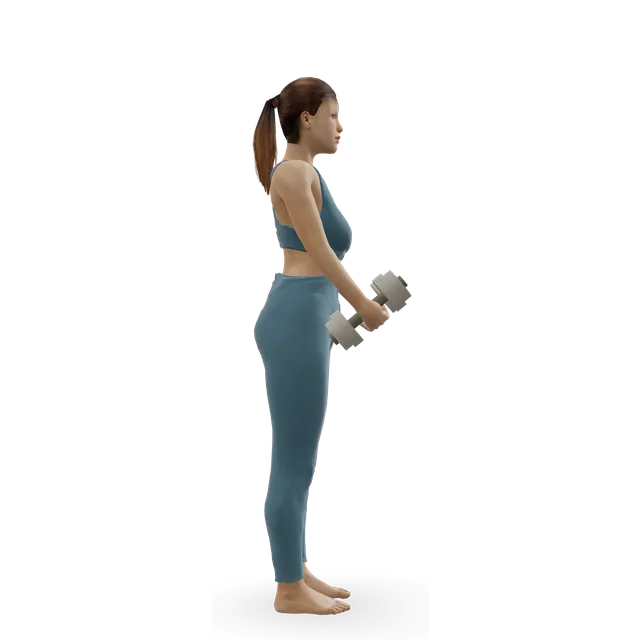
Dumbbell forearm rotation demonstrated on the 3D figure3D demoDumbbell forearm rotationBeginner · A dumbbell + A bench or box

2 sets of 8, building to 2 sets of 15, with about 0.5 kg · NHS inform's pacing; the weight is editorial

Easier: Wrist-extensor eccentrics · Harder: Plate pinch

Wrist curls demonstrated on the 3D figure3D demoWrist curlsBeginner · A dumbbell

2 sets of 8, building to 2 sets of 15, very light · NHS inform's pacing; keep the lowering slow

Easier: Wrist-extensor eccentrics · Harder: Plate pinch

Reverse wrist curl demonstrated on the 3D figure3D demoReverse wrist curlBeginner · A dumbbell + A bench or box

2 sets of 8, building to 2 sets of 15, very light · NHS inform's pacing

Easier: Wrist-extensor eccentrics · Harder: Plate pinch

Move on when: Level 2 is easy, pain is no higher the next day, and pinching and gripping in daily tasks are getting easier.

Follow along: a timer, a cue and the next move, one step at a time.
Stage 3

Strengthen, then pinching, gripping, phones, tools and sport come back

From about week 6, 2 or 3 sessions a week, ongoing. OTTER II level 3, as written steps: pinch and grip-and-turn tasks with the thumb slightly bent and the wrist slightly back. Then bring back phones, keyboards, tools, gardening and sport by the written steps below; NHS inform says avoid sport or heavy lifting until there is less discomfort and good movement.

Band finger extension demonstrated on the 3D figure3D demoBand finger extensionBeginner · A band

Up to 10 holds of 5 s with a stronger band · OTTER II level 2, kept going

Easier: Ball squeeze · Harder: Plate pinch

Farmer's carry demonstrated on the 3D figure3D demoFarmer's carryIntermediate · A dumbbell + A kettlebell

3 walks of 20 m, light, with thick or padded handles · Our thumb arthritis guide's dose (editorial). The move page asks for thick or padded handles with thumb base arthritis

Harder: Suitcase carry

Wall push-up demonstrated on the 3D figure3D demoWall push-upBeginner · A wall

2 sets of 8 to 12, hands flat with the thumbs relaxed · Editorial: weight through the hands comes back before push-ups, yoga or getting up from the floor

Harder: Push-up

Hammer curl demonstrated on the 3D figure3D demoHammer curlBeginner · A dumbbell

2 sets of 10, light, last · Our thumb arthritis and de Quervain's guides' dose (editorial). With de Quervain's, thumb-up lifting comes back last, as the move page says

Easier: Seated dumbbell curl · Harder: Alternating hammer curl

Move on when: Our suggestion: pinching, gripping, phone use, tools and your sport stay within the pain rule, with nothing worse the next morning. Keep 2 or 3 sessions a week, and drop back a stage for a few days if it flares.

Follow along: a timer, a cue and the next move, one step at a time.

What to change for now

The NHS's first steps (written steps)

The NHS and NHS inform give the same first steps for most thumb pain. These aren't tested treatments, but they are consistent health-service advice.

  • 1. Rest your thumb when you can, and stop or cut down what brings it on, such as typing, vibrating tools or playing an instrument.
  • 2. An ice pack (or a bag of frozen peas) in a towel for up to 20 minutes every 2 to 3 hours. Don't use heat packs or hot baths for a few days after an injury or if the thumb is swollen.
  • 3. Paracetamol or ibuprofen gel, or ibuprofen tablets if needed; ibuprofen tablets aren't suitable for everyone, so check with a pharmacist.
  • 4. Take off rings if the thumb looks swollen.
  • 5. A splint to support the thumb, especially at night; a pharmacist can advise, and flexible rubber splints let you keep using the thumb. A lollipop stick taped on can do until you get one.
  • 6. Gadgets for jars and chopping, and don't lift heavy things or grip anything too tightly.
  • 7. In the first 48 hours, move the hand gently for 10 to 20 seconds every hour while you're awake; after that, use it more (NHS inform).

Sources 1, 2

The OTTER II thumb exercises (written steps)

The 3D figure can't show the thumb's separate joints, so these come as written steps, from the UK OTTER II trial's exercise booklet. Do them at least 3 times a week for at least 20 minutes, and move up a level only when the current one is easy. Keep the thumb joints slightly bent, never bent backwards: the booklet notes that pressure at the tip of the thumb in a pinch is multiplied about 12 times at its base.

  • 1. Warm-up: put your hand in a bowl of warm water and gently circle your thumb one way for a minute, then the other way, for at least 2 minutes.
  • 2. Level 1, thumb lift: rest your forearm and hand on a table on the little-finger side, thumb on top. Without help from the other hand, lift the thumb up as far as you can, joints slightly bent. Hold 10 seconds; repeat up to 10 times.
  • 3. Level 1, lift away: in the same position, keep the thumb as far from your palm as you can while lifting it towards the ceiling. Hold 10 seconds; up to 10 times.
  • 4. Level 1, the O-sign: with your elbow or the back of your hand on the table, touch your thumb to each fingertip in turn, making an O, thumb joints slightly bent.
  • 5. Level 2, against a band: with the strongest rubber band you can comfortably stretch around your hand and the middle of your thumb, lift the thumb up without bending the wrist forwards; hold 5 seconds and lower slowly, up to 10 times. Then lift the thumb towards your opposite shoulder, away from the palm; hold 5 seconds, up to 10 times.
  • 6. Level 3, pinch and turn tasks, thumb slightly bent and wrist slightly back: write your name and address 5 times; tear a sheet of paper in half 20 times; squeeze a clothes peg or clip 5 times; pick up and hold a serving plate 5 times; turn a key as if unlocking a door 10 times; undo and do up a bottle top 5 times.
  • 7. With de Quervain's, start with the assisted lift instead: the other hand lifts the thumb away from the index finger and lowers it, then the thumb returns on its own, 10 times, never into pain (our de Quervain's guide). With a trigger thumb, ease a stuck thumb straight gently, ideally after warming the hand, and never force it.

Source 42

Phones, tablets and controllers (written steps)

Time on the phone, how it's held, frequent thumb movements and the screen's size and weight all go with thumb and hand pain in students, and texting predicted new hand symptoms over a year. No trial has tested phone changes, so these steps are our suggestion.

  • 1. Shorter spells: put the phone down every 15 to 20 minutes and open and close your hand a few times.
  • 2. Share the work: hold the phone in both hands, or rest it on a stand or a table, and swap the scrolling thumb.
  • 3. Use voice typing or a finger for long messages, and a keyboard for long writing.
  • 4. A phone grip or ring can take the weight off the thumb.
  • 5. Bring longer sessions back gradually, as long as the thumb is no worse the next morning.

Sources 19, 22, 21

Grips, gadgets and splints (written steps)

Joint protection made more people with hand arthritis better in a UK trial, and the NHS suggests gadgets. The exact list below is our suggestion, built on those sources.

  • 1. Bigger grips: foam tubing on handles, thicker pens, larger cutlery and padded tool handles.
  • 2. Two hands, and the load close to your body, instead of one hand pinching.
  • 3. Gadgets: jar openers, a key turner, tap turners and an electric tin opener.
  • 4. Pace the heavy hand jobs: spread them through the day and the week.
  • 5. A splint for the tasks that hurt, or at night, rather than all day. For thumb base arthritis, a self-management programme comes first; a splint is a next step if that alone hasn't helped.

Sources 46, 1, 47, 45, 43, 40

Pinching, gripping, tools and sport come back (written steps)

No trial has tested how to bring these back after thumb pain. These steps are our suggestion unless a source is named.

  • 1. Daily pinching and turning: the OTTER II level 3 tasks are the practice (the booklet).
  • 2. Writing and keyboards: a thicker pen, and a break every 30 to 60 minutes.
  • 3. Kitchen, DIY and gardening: gadgets and two hands first, padded handles, and the heaviest jobs last.
  • 4. Gym and sport: carries and curls come back last, with thick handles; NHS inform says avoid sport or heavy lifting until there is less discomfort and good movement, and warm up fully first.
  • 5. After a ligament injury or a break, contact sport, skiing and ball sports follow the hand clinic's timing (our skier's thumb and broken thumb guides).

Sources 42, 2, 46

Positions to swap, and why

Habit or positionWhy it mattersInstead
Squeezing a stress ball or grip trainer hard while it hurtsThe NHS says don't grip anything too tightly while your thumb hurts, and with a trigger thumb, hard squeezing can bring on catching.The OTTER II thumb exercises first, then a soft ball in stage 2.Try: Tendon glides (hand tendon gliding exercises)
Pinching with the thumb joints bent backwardsThe OTTER II booklet: keep the thumb joints slightly bent, because pinch pressure at the tip is multiplied about 12 times at the base.Practise the level 3 pinch tasks with a slightly bent thumb.
Thin handles, tight jar lids, keys and tapsJoint protection with bigger grips, two hands and gadgets made more people with hand arthritis better in a UK trial.Thicker or padded handles, a jar opener, a key turner and two hands.
Long phone, tablet or controller sessions with one thumbTime on the phone and thumb-heavy use go with thumb and wrist pain in students.Shorter spells, both hands or a stand, and voice typing (our suggestion).
Hammer curls and lifting with your thumbs pointing up, with pain on the thumb side of the wristLifting with the thumb up is among the movements that bring on de Quervain's.Light palm-up or palm-down wrist work first; scoop a baby or a kettle with your palms up; thumb-up lifting last.Try: Wrist curls
Wearing a splint all day, every dayNHS inform says a splint may help during repetitive activities, not all the time, and in the OTTER II trial a splint added nothing to self-management.A splint for the tasks that hurt, or at night, and keep the thumb moving.Try: Tendon glides (hand tendon gliding exercises)
Resting the hand completelyThe NHS says resting a repetitive strain for more than a few days makes the area weaker and less flexible.Keep using the hand within the pain rule, and move it gently every hour at first.Try: Wrist & forearm flow
Heat on a freshly injured or swollen thumbThe NHS says don't use heat packs or hot baths for a few days after an injury or if the thumb is swollen.An ice pack in a towel, for up to 20 minutes every 2 to 3 hours.
Strapping a thumb that was bent back and carrying onA complete ligament tear needs a decision on treatment within 2 weeks of referral, and it is easily missed.Get it assessed within days.
Push-ups and yoga poses on your hands with a sore thumb basePushing through an open hand loads the thumb base (editorial).Wall push-ups with flat hands and relaxed thumbs first; fists or handles for floor push-ups later.Try: Wall push-up

Routines to follow

More moves for this area

Questions people ask

Why does the base of my thumb hurt?

Most often it's thumb base arthritis, especially from about 45 and in women: an ache where the thumb meets the wrist when you pinch, grip, turn a key or open a jar, sometimes with a bump. Pain just below that, on the thumb side of the wrist and worse lifting the thumb, is more likely de Quervain's, and pain on the palm side with clicking is a trigger thumb. After a fall or a bent-back thumb, think of a sprain, a torn ligament or a break first.

Can using my phone cause thumb pain?

It can. In studies of students and young adults, heavy phone use goes with thumb and wrist pain and with irritated thumb tendons, and texting predicted new hand symptoms that were mostly short-lived. In one study, students whose heavy phone habit eased had less pain 6 months later. The studies we read didn't link phone use to arthritis.

When should I worry about thumb pain?

After an injury, go to an urgent treatment centre or A&E for severe pain, a snap or popping at the time, a thumb you can't move or hold things with, a change of shape or colour, or lost feeling in your hand. Phone 111 if you have a very high temperature, feel hot and shivery, and have redness or heat around the thumb. See a GP if it isn't improving after 2 weeks, keeps coming back, stops you doing normal things or comes with tingling, or if you have diabetes.

Is thumb pain always arthritis?

No. Arthritis at the base of the thumb is common on X-rays with age, about 7% of women at 50 and 39% at 80, but many people with these changes have little pain, and tendons, ligaments and nerves cause thumb pain too. NICE diagnoses osteoarthritis from the symptoms in people aged 45 or over, without a scan.

What exercises help thumb pain?

For thumb base arthritis: thumb lifts and the O-sign, then lifts against a rubber band, then pinch and turning tasks, at least 3 times a week, as in the UK OTTER II programme; across 14 trials, exercise reduced pain more than no treatment in the short term. Tendon glides and wrist movements keep the hand moving. With de Quervain's or a trigger thumb, a splint or an injection does most of the work, and exercise stays gentle.

Should I wear a thumb splint?

For arthritis, a splint added nothing to a self-management programme of education and exercise in a UK trial of 349 people, so UK hand surgeons suggest one if self-management alone hasn't helped, and NHS inform says use it for the tasks that hurt, not all the time. For de Quervain's, a thumb splint for 3 to 4 weeks alongside an injection has the best evidence. For a trigger thumb, a splint at night holds it straight.

How long does thumb pain take to go away?

Most new thumb problems begin to settle within 6 weeks, and a broken thumb usually heals in 6 to 8 weeks, with full strength back by 3 to 4 months. Arthritis doesn't necessarily get worse and can become less bothersome over time. No one can promise a timescale.

Should I rest my thumb?

For a day or two, ease off whatever brings it on. After that, use the hand more, as NHS inform advises, because long rest makes a repetitive strain weaker and stiffer. Keep pain during exercise at about 5 out of 10 or less, and no worse the next morning.

What's the best painkiller for thumb arthritis?

NHS inform says an anti-inflammatory gel such as ibuprofen gel is the most effective painkiller for hand osteoarthritis, and NICE suggests trying a gel like this first. Steroid injections give short-term relief at most. Ask a pharmacist which is right for you.

I hurt my thumb skiing or in a fall, and it's weak when I pinch. What now?

Get it checked within days: the ligament at the thumb's knuckle can tear, and UK guidance asks for a decision on a splint or surgery within 2 weeks of referral to a specialist. Go the same day if it's very painful, swollen, bruised or hard to move, because you'll probably need an X-ray.

Why does my thumb click or lock?

Usually a trigger thumb: the tendon catches at the base of the thumb on the palm side, often worse in the morning, and it's more common over 40 and with diabetes. A night splint, an injection, which works in about 7 in 10, or a small operation can help. In a young child, a thumb stuck bent is rarely painful and usually settles on its own.

Related exercise guides

Other pain guides

Sources

  1. NHS · Thumb pain
  2. NHS inform · Wrist, hand and finger problems
  3. NHS · Wrist pain
  4. van der Oest 2021 · How common thumb base arthritis is on X-ray, by age and sex: 16 studies (meta-analysis, Osteoarthritis Cartilage)
  5. Teunissen 2022 · Thumb base arthritis on X-ray in 7,792 adults aged 55 and over: the Rotterdam Study (population cohort, Osteoarthritis Cartilage)
  6. Moriatis Wolf 2014 · Doctor-diagnosed thumb base arthritis in southern Sweden (population health care records, Arthritis Care Res)
  7. Haara 2004 · Thumb base arthritis on X-ray in 3,595 Finnish adults aged 30 and over (population study, J Bone Joint Surg Am)
  8. American Academy of Orthopaedic Surgeons (AAOS, OrthoInfo) · Arthritis of the thumb
  9. BSSH · Basal thumb arthritis (patient information)
  10. NHS · Osteoarthritis: symptoms (past its review date: reviewed March 2023, review due March 2026)
  11. BSSH · De Quervain's syndrome (patient information)
  12. Challoumas 2023 · Treatments for de Quervain's: 30 trials, 1,663 people (systematic review and network meta-analysis, JAMA Netw Open)
  13. NHS · Trigger finger
  14. British Society for Surgery of the Hand (BSSH) · Trigger finger/thumb (patient information)
  15. NHS inform · Trigger finger or trigger thumb in adults
  16. BSSH · Skier's thumb (patient information)
  17. BSSH · Acute ulnar collateral ligament injuries of the thumb (BEST guideline, April 2023)
  18. NHS · Sprains and strains
  19. Varmazyar 2026 · Smartphone use and hand pain in university students: 18 studies (systematic review, BMC Musculoskelet Disord)
  20. Braud 2026 · Hand problems linked with mobile phone use: 42 studies, over 67,000 people (systematic review, Work)
  21. Gustafsson 2017 · Texting and neck and arm symptoms in 7,092 young Swedish adults over 5 years (cohort study, Appl Ergon)
  22. Bozca 2026 · Smartphone addiction, thumb and wrist symptoms and tendon changes on ultrasound in 477 students over 6 months (prospective study, Int Orthop)
  23. NHS · Repetitive strain injury (RSI)
  24. NHS · Carpal tunnel syndrome
  25. NHS · Rheumatoid arthritis (past its review date: reviewed March 2023, review due March 2026)
  26. NICE · Rheumatoid arthritis in adults: management (NG100, guideline)
  27. NHS · Gout (past its review date: reviewed August 2023, review due August 2026)
  28. NHS · Septic arthritis
  29. NHS · Nail problems
  30. BSSH · Thumb extensor tendon (EPL) rupture (patient information)
  31. NHS inform · Trigger thumb or finger in children and young people
  32. NICE · Osteoarthritis in over 16s: diagnosis and management (NG226, guideline)
  33. NHS · Broken finger or thumb
  34. NHS · Osteoarthritis (past its review date: reviewed March 2023, review due March 2026)
  35. NHS inform · Thumb fracture
  36. Karanasios 2024 · Exercise for thumb base arthritis: 14 trials, 1,280 people (systematic review and meta-analysis, Healthcare)
  37. Østerås 2017 · Exercise for hand osteoarthritis: 7 trials (Cochrane systematic review)
  38. Wouters 2026 · Adding exercise therapy to a splint for thumb base arthritis in 166 people (RCT, Osteoarthritis Cartilage)
  39. Deveza 2021 · Education, a splint, exercises and a gel against education alone for thumb base arthritis in 204 people (RCT, JAMA Intern Med)
  40. Gangopadhyay 2025 · Managing thumb base osteoarthritis: the BSSH BEST findings and recommendations (guideline, J Hand Surg Eur Vol)
  41. Watt 2025 · Practical management of hand osteoarthritis (review, Rheumatol Adv Pract)
  42. Adams 2019 · The OTTER II trial protocol, with its thumb base pain exercise booklet (trial protocol, BMJ Open)
  43. Adams 2021 · A thumb splint added to a self-management programme in 349 people with thumb base arthritis: the OTTER II trial (RCT, Rheumatology)
  44. Buhler 2019 · Splints for thumb base arthritis: 12 studies, 1,353 people (systematic review and meta-analysis, Osteoarthritis Cartilage)
  45. NHS inform · Osteoarthritis of the hand
  46. Dziedzic 2015 · Joint protection and hand exercise for hand osteoarthritis in 257 people (factorial RCT, Ann Rheum Dis)
  47. NHS · Osteoarthritis: treatment and support (past its review date: reviewed March 2023, review due March 2026)
  48. Riley 2019 · Injections for thumb base arthritis: 9 trials, 504 people (systematic review and meta-analysis, BMJ Open)
  49. NHS inform · Exercises for wrist, hand and finger problems (including how to tell if you're exercising at the right level)
  50. NHS inform · Exercises for osteoarthritis of the hand
  51. Smith 2017 · Should exercise be painful? 7 trials of long-lasting muscle and joint pain (systematic review and meta-analysis, Br J Sports Med)

Exercise education, not a diagnosis or treatment plan. It is written from the guidelines and studies listed above; review by a clinician is pending. If your pain follows an injury, is severe, is getting worse, or comes with any warning sign listed on this page, get it assessed. Health disclaimer.