Middle splits (side splits)
Facing forward, you slide your feet apart sideways with straight legs and the pelvis stacked over them until your inner thighs approach the floor, taking weight through your hands. The shape of the hip limits it as well as the inner thighs, so the floor is out of reach for some people. In MRI studies of ballet dancers, the splits shifted the ball of the femur about 2 mm in its socket, and the dancers had more cartilage and labral damage than non-dancers.
Movement guide
Middle splits (side splits)
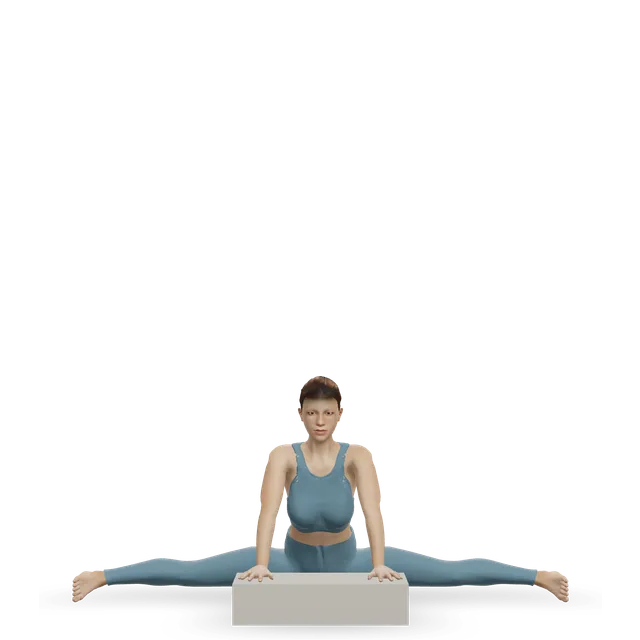
Loading the 3D figure…
Make it easier or harder
Choose a version that fits your control and comfort.
Easier option
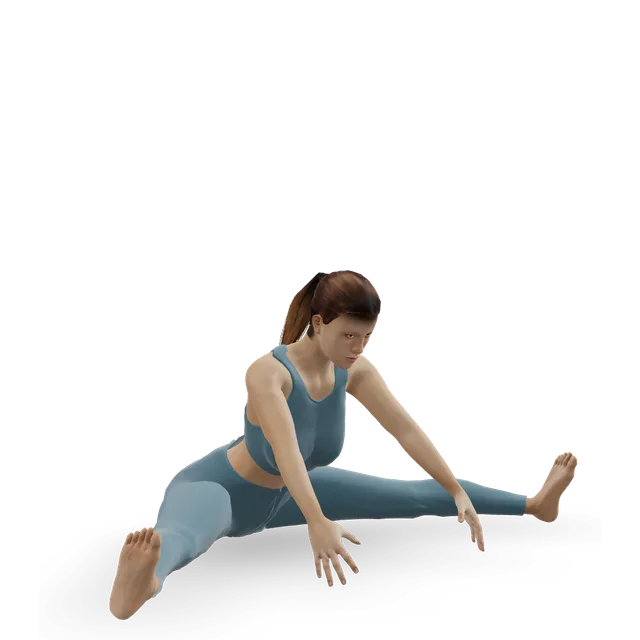 3D demoPancake good morningIntermediate · No equipment
Suggested next step, intermediate grade.
Harder option
Keep a comfortable range and follow any technique and timing given in the guide. A deeper stretch or more complex pose is optional, not a required next step. Ingram 2025 review of stretching and range of motion
Source-researched guide.
How to move
- Stand with your feet wide apart and your toes forward, hands on blocks or a chair in front of you.
- Keep your legs straight and your kneecaps facing forward, and slowly slide your feet further apart, lowering your hips straight down between them.
- Take as much weight through your hands as you need, and stop at a strong, painless stretch along the inner thighs.
- Hold, then walk your hands forward, bend your knees and bring your feet together to come up.
Form cues
- Keep your pelvis stacked over your feet.
- A straddle lying on your back with your legs up a wall works the same range with less load.
- Avoid: bouncing into the stretch.
Practice and cautions
Hold 30 to 60 seconds at a strong but painless stretch, 2 or 3 times, on 3 or 4 days a week (our editorial starting point), and expect progress over months to years. The ACSM suggests about 60 seconds of stretching in all per exercise, on at least 2 days a week.
Strain on the inside of the knee, rather than in the thigh, means bend your knees slightly and come up a little. Hip shape sets a hard ceiling for many adults, and forcing past it irritates the labrum and groin. Have any pinching at the front of the hip assessed. This is movement education, not an assessment or treatment prescription. Stop for sharp or increasing pain, dizziness, numbness or tingling; seek individual guidance for symptoms, injury or restrictions.
Sources and review status
Sources support the educational description; they do not establish that this exercise is suitable for you.
- Dance Teacher · How can I improve my middle splits? (hip structure limits it; straddle and wall straddle stretches, one leg at a time; Deborah Vogel) ↗
- Kolo 2013 · Ballet dancers' hips on MRI: the ball of the femur shifted about 2 mm in the splits, and cartilage and labral damage was commoner than in non-dancers (Skeletal Radiol) ↗
- Charbonnier 2011 · Four extreme ballet movements, the two splits among them, pinched the hip at the rim of its socket and shifted the ball of the femur by up to 6 mm (motion capture of 11 dancers' hips, Am J Sports Med) ↗
No variation is labeled clinically validated.
What it works
Workouts that use it
Guides that use it
Similar moves
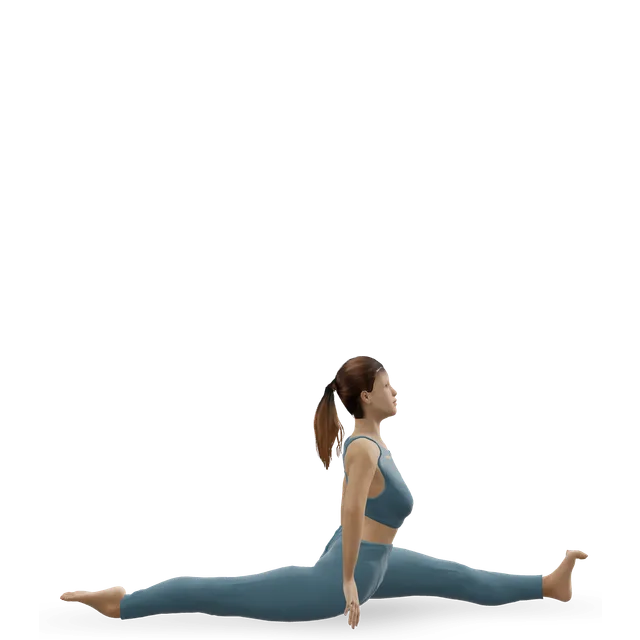 3D demoFront splits (Hanumanasana)Advanced · No equipment
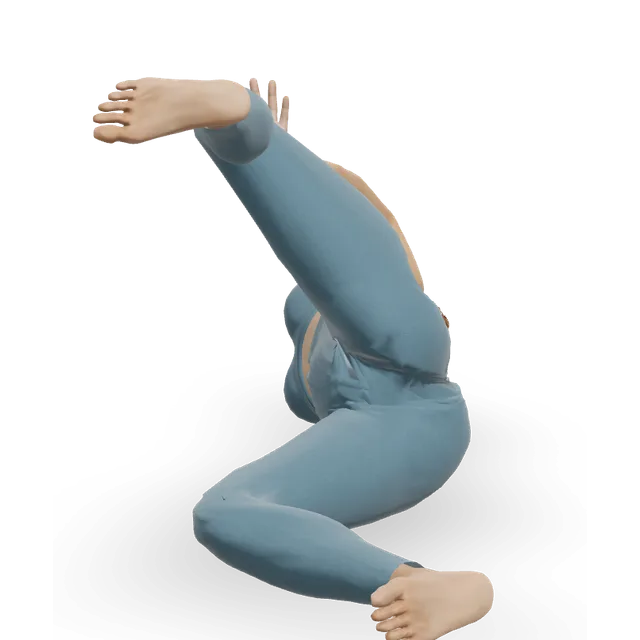 3D demoSide-lying groin stretchBeginner · No equipment
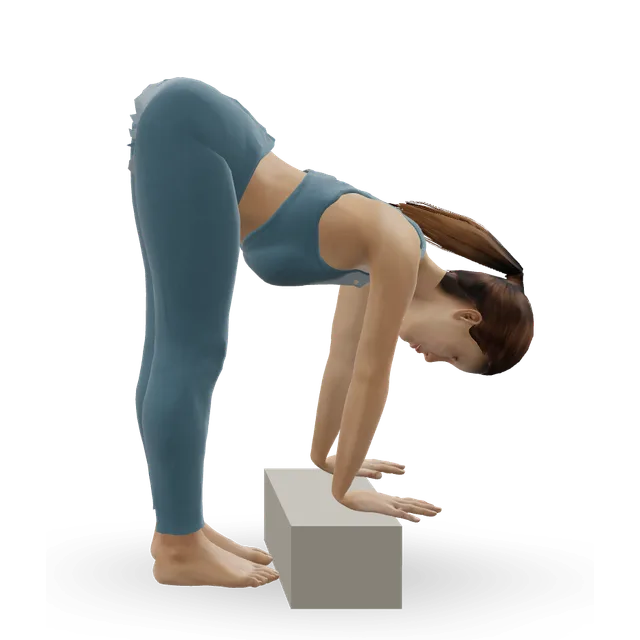 3D demoStanding splits (Urdhva Prasarita Eka Padasana)Advanced · No equipment
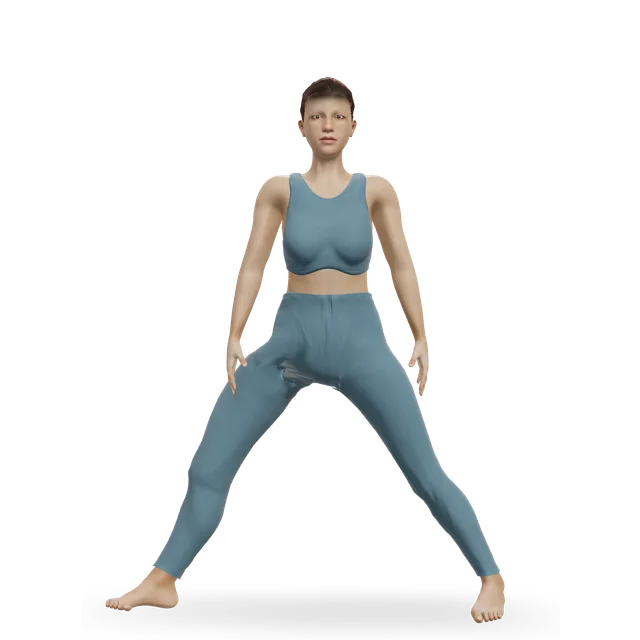 3D demoTriangle pose (Utthita Trikonasana)Intermediate · A step
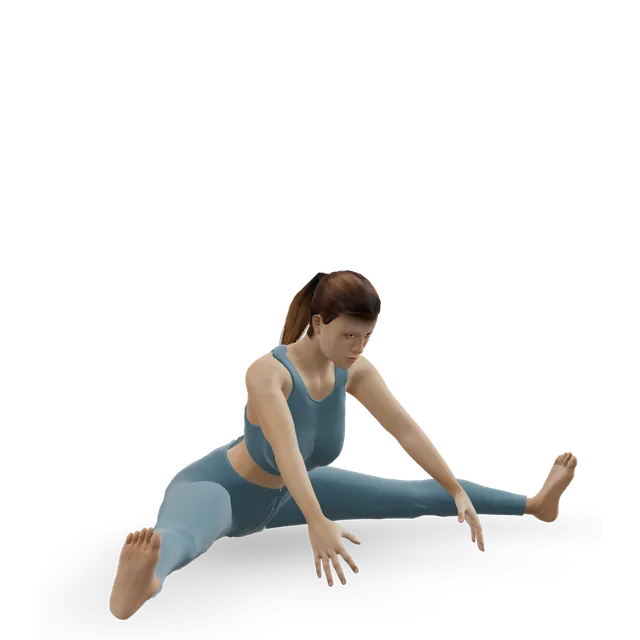 3D demoWide-angle seated forward fold (Upavistha Konasana)Intermediate · No equipment
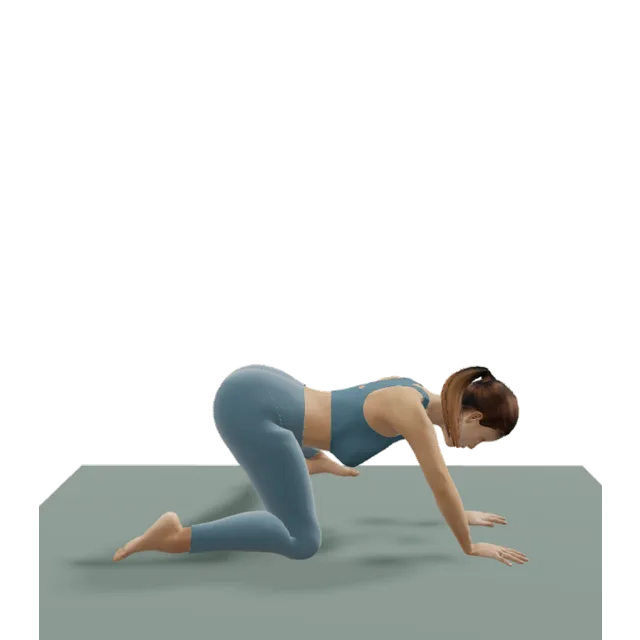 Adductor rock-backBeginner · No equipment
Browse more
Questions people ask
What muscles does the Middle splits (side splits) work?
Mainly the adductors, with help from the hamstrings.
What equipment do I need for the Middle splits (side splits)?
No equipment: your body weight and a little floor space.
Is the Middle splits (side splits) good for beginners?
It is an advanced move. Build up to it with the Pancake good morning first.
What is an easier alternative to the Middle splits (side splits)?
Try the Pancake good morning or the Wide-legged standing forward fold (Prasarita Padottanasana). It is the suggested step down from this move.