3D demo
Upper-arm foam roll (brachialis)
Stretching · Biceps
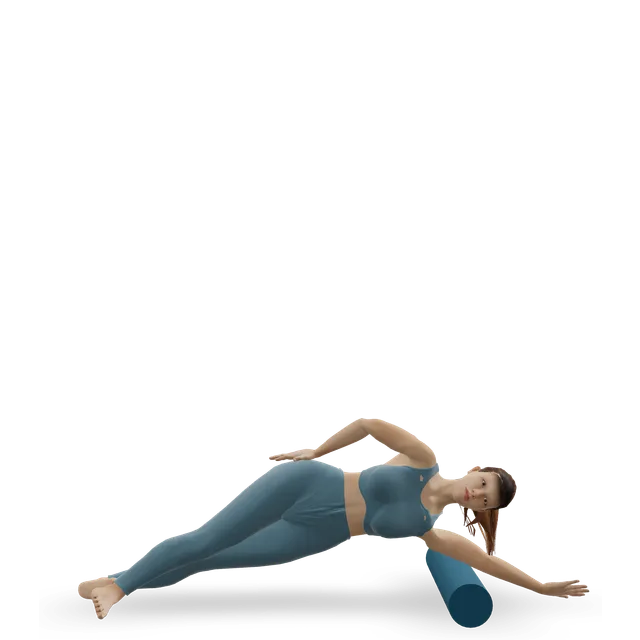
Loading the 3D figure…
The figure repeats the movement from its starting position. Drag to turn it; the arrows open the demos either side.
Lying on your side with the outside of your upper arm on a foam roller, you lift your hips so your weight presses the arm into the roller, then hold. It works the outside of the upper arm, where the brachialis lies beneath the biceps. Reviews find foam rolling gives small, short-term gains in range of movement without loss of performance, though the studies rolled mostly the legs.
Movement guide
Upper-arm foam roll (brachialis)
Make it easier or harder
Choose a version that fits your control and comfort.
Easier option
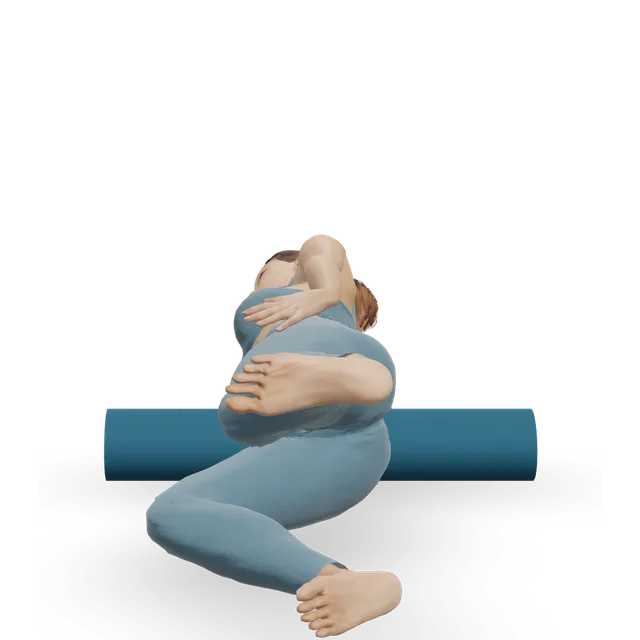 3D demoLat foam rollingBeginner · A foam roller
Suggested next step, beginner grade.
Harder option
Adjust support to keep the pressure comfortable. A more painful roll is not a required next step. Foam rolling review: pressure is not a standardised progression
Source-researched guide.
Form cues
- Take some weight through your feet to control the pressure.
- Breathe slowly and let the arm relax.
- Avoid: rolling over the elbow joint.
Practice and cautions
30 to 60 seconds each side, pausing 10 to 30 seconds on tender spots (our editorial starting point).
Use a foam roller here, never a ball: the radial nerve runs around the back and outer side of the upper arm. Keep the pressure on muscle, away from the elbow and the bony point of the shoulder, and skip it over a recent bruise or if it brings on tingling in the hand. Stop at once for numbness on the back of the hand or a weak wrist: in a single case report, a radial nerve injury needing surgery followed lacrosse-ball pressure on the upper arm, which shows it can happen, not how often. This is movement education, not an assessment or treatment prescription. Stop for sharp or increasing pain, dizziness, numbness or tingling; seek individual guidance for symptoms, injury or restrictions.
Sources and review status
Sources support the educational description; they do not establish that this exercise is suitable for you.
- Cheatham 2015 · Foam rollers and roller massagers (short-term gains in range of movement without loss of performance; the studies rolled mostly the legs; systematic review, IJSPT) ↗
- Wiewelhove 2019 · Foam rolling before and after exercise (small gains in flexibility, less muscle pain; meta-analysis of 21 studies, Front Physiol) ↗
- Schafer 2026 · A radial nerve palsy after self-massage of the upper arm with a lacrosse ball (case report and literature review, Annals of Plastic Surgery) ↗
- Free Exercise DB · community text ↗
Unlicense · Free Exercise DB contributors; derived from wrkout/exercises.json. Text import; no photographs or media. · Revision f00c92c7dcf1216a928a52c3706c7ce8e2f71ed5
No variation is labeled clinically validated.
What it works
Equipment
A foam roller
Level
Intermediate. See the easier and harder options above.
Guides that use it
Similar moves
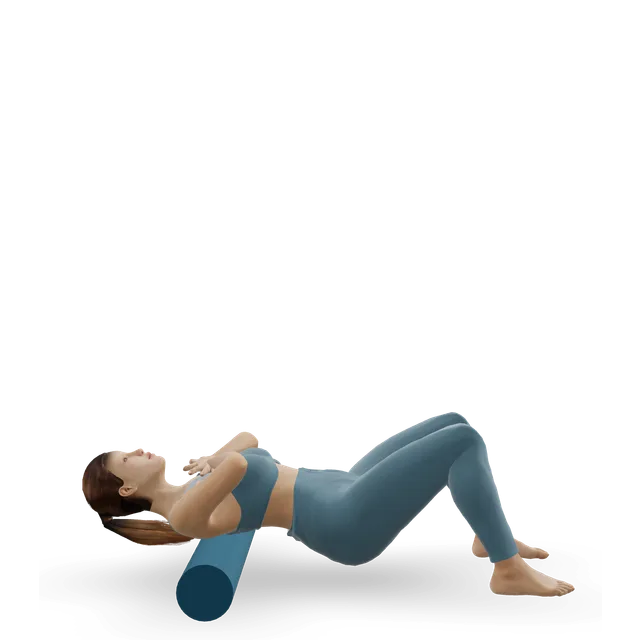
Browse more
Questions people ask
What muscles does the Upper-arm foam roll (brachialis) work?
Mainly the biceps.
What equipment do I need for the Upper-arm foam roll (brachialis)?
A foam roller.
Is the Upper-arm foam roll (brachialis) good for beginners?
It is graded intermediate. If it is too hard right now, start with the Lat foam rolling.
What is an easier alternative to the Upper-arm foam roll (brachialis)?
Try the Lat foam rolling or the Forearm ball roll. It is the suggested step down from this move.