Ring fly
In a push-up position on rings set just above the floor, kneeling at first, you let your arms open out to the sides with a slight bend in the elbows so your chest sinks between the rings, then squeeze them back together along the same arc. It is the bodyweight cousin of the dumbbell fly; because the rings move freely, your shoulders also have to steady them. Unstable surfaces raised chest muscle activity in a meta-analysis of 86 studies.
Movement guide
Ring fly
Make it easier or harder
Choose a version that fits your control and comfort.
Easier option
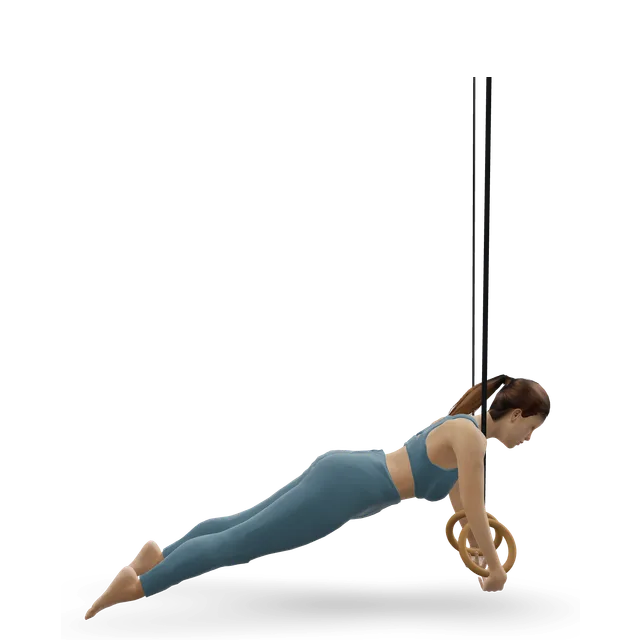 3D demoRing push-upIntermediate · Gymnastic rings
Similar move, intermediate grade.
Harder option
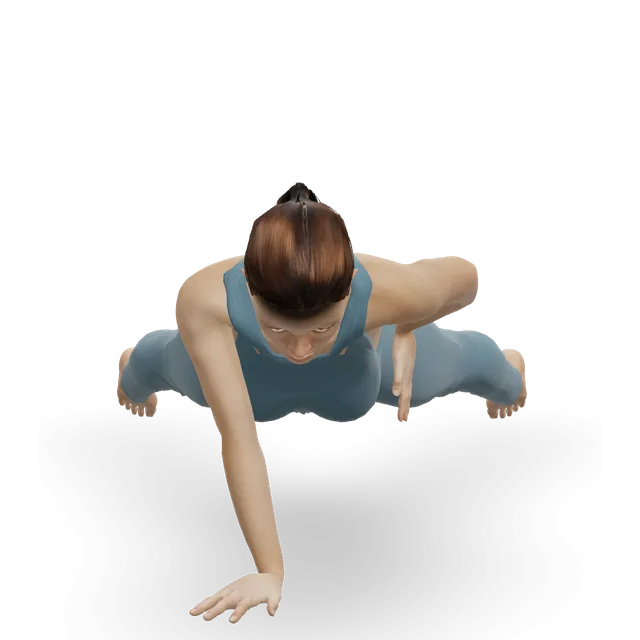 3D demoOne-arm push-upExpert · No equipment
Similar move, expert grade.
Source-researched guide.
How to move
- Set the rings just above the floor, shoulder-width apart, and take a push-up position on them from your knees, palms facing each other and arms straight under your shoulders.
- Fix a slight bend in your elbows and brace your trunk so your lower back doesn't sag.
- Let the rings slide out to the sides in a wide arc, lowering your chest between them only as far as you control without pain at the front of the shoulder.
- Squeeze the rings back together along the same arc until they meet under your chest, without letting them clash.
Form cues
- Hug a tree: your elbows stay softly bent.
- Move only at the shoulders.
- Avoid: letting your hips sag as you open.
Practice and cautions
2 to 3 sets of 5 to 8 from the knees with a shallow range at first (our editorial starting point), adding depth over weeks rather than within a session.
The bottom position stretches the pec and biceps tendons under close to full body weight, the same territory where pec tears happen in pressing sports. Never let the arms straighten fully at the bottom, and end the set the moment control fades. This is movement education, not an assessment or treatment prescription. Stop for sharp or increasing pain, dizziness, numbness or tingling; seek individual guidance for symptoms, injury or restrictions.
Sources and review status
Sources support the educational description; they do not establish that this exercise is suitable for you.
- Muscle & Strength · Ring fly (advanced; rings at about knee height, a slight bend in the elbows, no lowering into pain at the front of the shoulder) ↗
- Batista 2024 · Unstable surfaces raised chest, triceps and trunk muscle activity (meta-analysis of 86 EMG studies, Sports) ↗
- ElMaraghy & Devereaux 2012 · 365 pectoralis major tears reviewed: most from indirect force, about half during weight training (systematic review, J Shoulder Elbow Surg) ↗
No variation is labeled clinically validated.
What it works
Muscles
Main: Chest. Also: Shoulders, Abs, Biceps.
Anatomy: Pectoralis major, Pectoralis minor, Serratus anterior.
Equipment
Gymnastic rings
Level
Advanced. See the easier and harder options above.
Similar moves
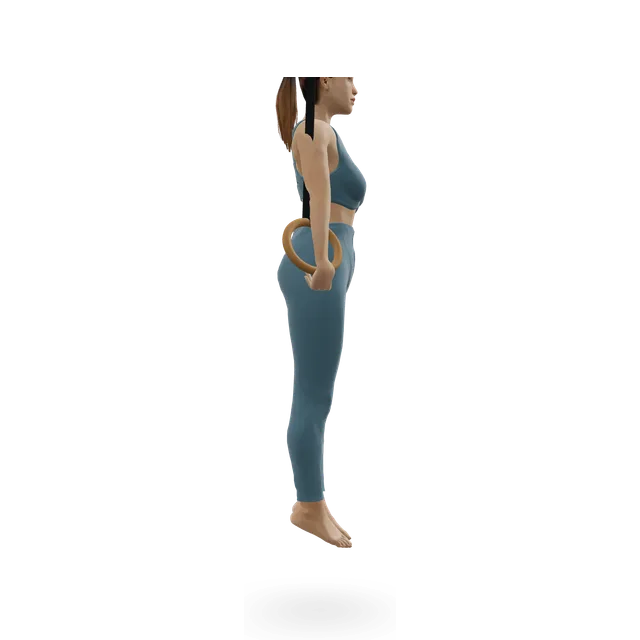 3D demoRing dipAdvanced · Gymnastic rings
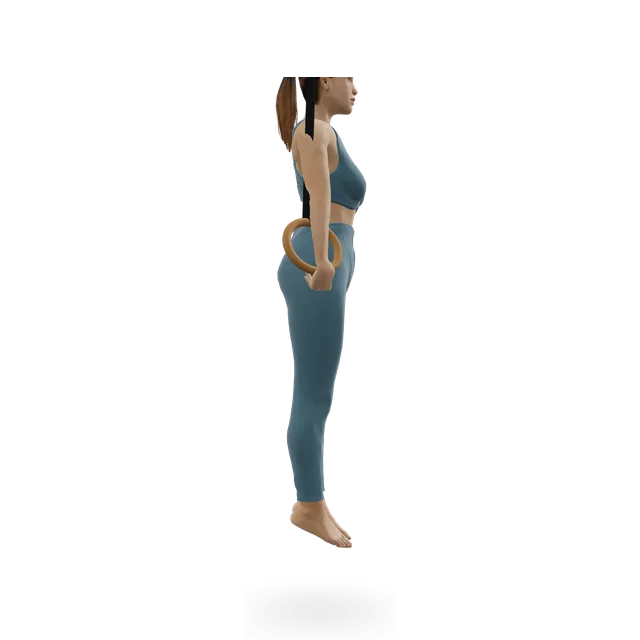 3D demoRing dip (jump to support)Advanced · Gymnastic rings
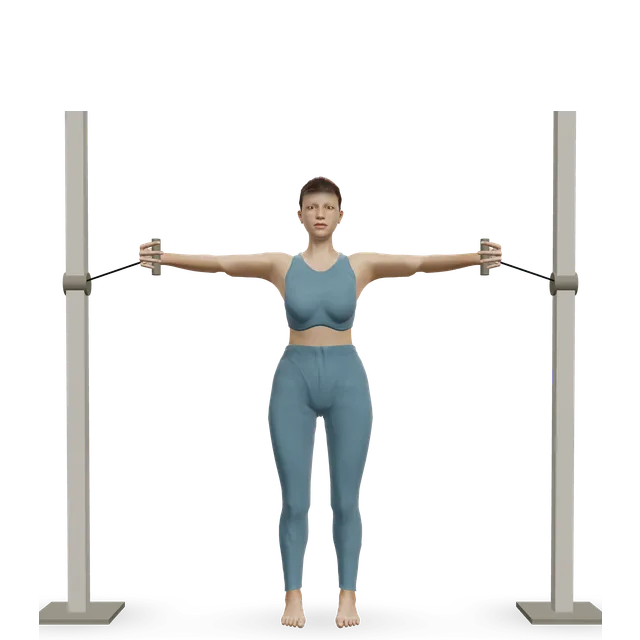 3D demoCable flyIntermediate · A cable machine
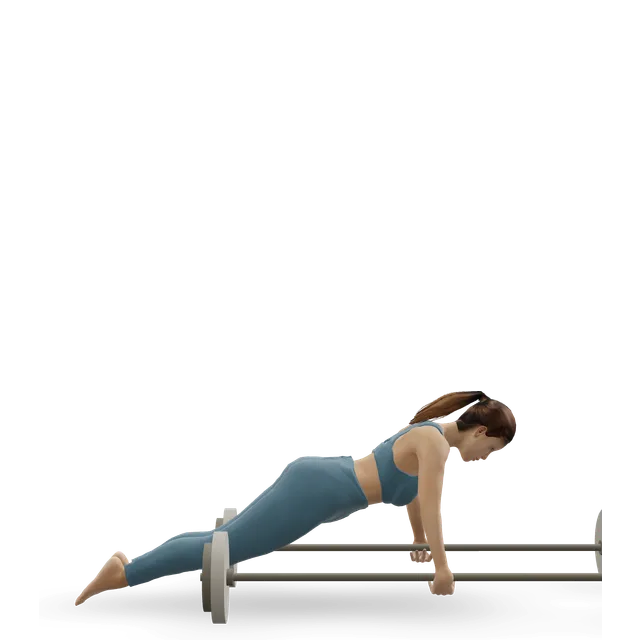 3D demoBodyweight fly on rolling barsAdvanced · EZ curl bar + Weight plates
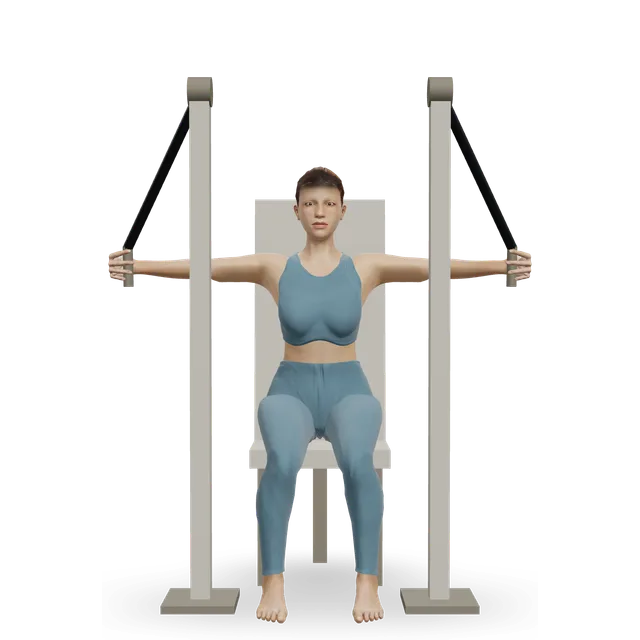 3D demoMachine chest fly (pec deck)Beginner · Strength machine
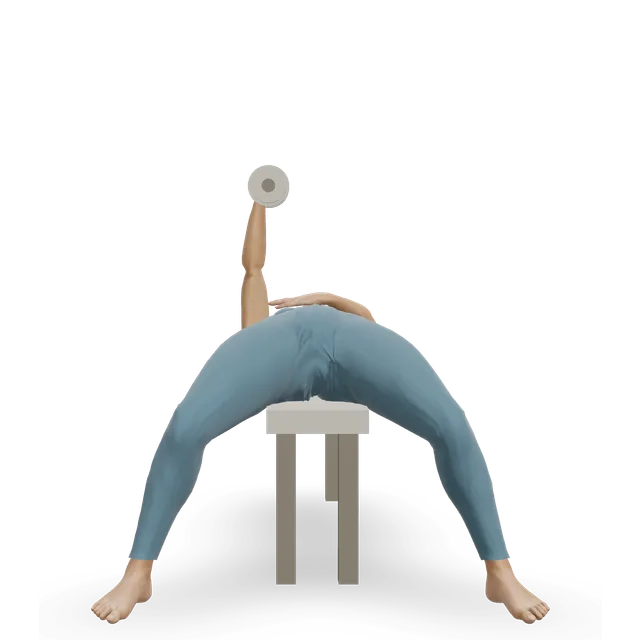 3D demoOne-arm dumbbell flyIntermediate · A dumbbell + A bench or box
Browse more
Questions people ask
What muscles does the Ring fly work?
Mainly the chest, with help from the shoulders, abs and biceps.
What equipment do I need for the Ring fly?
Gymnastic rings.
Is the Ring fly good for beginners?
It is an advanced move. Build up to it with the Ring push-up first.
What is an easier alternative to the Ring fly?
Try the Ring push-up or the Standing band chest fly. It works similar muscles at a lower grade.
How do I make the Ring fly harder?
Progress to the One-arm push-up or the Ring muscle-up (strict). Follow that guide’s technique and any stated timing.