Small differences are normal
On accurate X-rays, about 9 in 10 people have legs of slightly different lengths, about 5 mm on average. The American Academy of Orthopaedic Surgeons says more than half of people have a subtle difference.
Posture guide
Leg length discrepancy means one leg is longer than the other. Small differences are normal: on accurate X-rays about 9 in 10 people have one, around 5 mm on average, and for most people they aren't linked with back pain. A difference can be structural, in the bones themselves, or functional, when the pelvis, the spine or a stiff joint makes one leg act shorter.
A measured difference that causes problems can be helped with a shoe lift, and specialists manage larger differences in growing children. Exercise can't change the length of your bones, but it builds the hip strength that keeps your pelvis level when you stand on one leg.
This guide covers how much is normal, measuring, children, hip and knee replacements, back, hip and knee pain, shoe lifts, the moves with 3D demos, and when to get checked.
On accurate X-rays, about 9 in 10 people have legs of slightly different lengths, about 5 mm on average. The American Academy of Orthopaedic Surgeons says more than half of people have a subtle difference.
Hands and tape measures are rough guides: feeling the hip bones missed the true difference by about 4 to 5 mm. Blocks under the shorter foot are the most useful clinic test, and a standing X-ray of the whole leg is the reference.
People with and without back pain have the same small differences. People who stand all day with a difference of 6 mm or more may be an exception.
In the best trial, insoles that corrected most of a measured difference eased back pain in people who stand at work, but the evidence overall is low quality. Most people with a small difference don't need one.
About 1 in 3 people feel a difference after a hip replacement, but only about a third of them have one on X-ray, and most felt differences improve within a year.
The bones of one leg are shorter, and almost always one leg is short rather than the other long. In children, causes include conditions present from birth, nerve conditions such as cerebral palsy, and an injury, infection or tumour affecting a growth plate. In adults, a fracture that healed short or a joint replacement can do it.
Something above or below makes one leg act shorter: a tilted pelvis, a curve in the spine, muscle tension, or a stiff hip or knee. After a hip replacement, about two thirds of the people who feel a difference have this kind.
Standing evenly on both feet, the pelvis tips towards the shorter leg and the lower back bends sideways a little. On one leg, the hip muscles level the pelvis, and the authors of one review estimate most people spend only about half an hour a day standing evenly on both feet. Children with larger differences may tilt the pelvis, bend the knee of the longer leg or rise onto the toes of the shorter one.
In X-ray studies of 573 people, about 90% had a leg length difference, averaging 5.2 mm. The American Academy of Orthopaedic Surgeons says more than half of people have a subtle difference, and that these usually cause no problems.
In pooled X-ray studies, 15.5% of people without back pain had a difference of 10 mm or more, and 20.1% of a wider group that included people with back pain. A review gives a higher estimate of one in three, citing studies we couldn't check.
A difference over 20 mm affects about 1 in 1,000 people, and in a French study about 1 in 1,000 had treatment for a difference over 2 cm.
On X-rays of 134 healthy adults, the pelvis tilted about 2 degrees to one side on average, and up to 5.6 degrees fell within the normal range.
Source 18
A review of 37 clinical and 15 imaging studies found blocks the most useful clinic test: you stand on blocks of known height under the shorter leg until your pelvis is level. A full-length standing X-ray was the most valid and reliable measure. Specialists also use a CT (computed tomography) scan of the legs, called a scanogram.
Feeling the hip bones and levelling them with books gave repeatable answers but missed the true difference by 3.8 to 5.1 mm on average in 34 people. A hand-held palpation meter measured pelvic height well and leg length less well. In clinics, leg length can be measured to about 1 cm either way.
A mirror or a friend's hands can't tell a short leg from a tilted pelvis or a curve in the spine, and the two halves of most pelvises are a little different in shape anyway. If a difference matters to you, have it measured.
In 475 children, differences under 1 cm didn't change how they walked; from 1 cm, walking became measurably uneven. In 51 children with differences up to 3 cm, the pelvis tilted more as the difference grew, and the longer leg did the adjusting.
In babies, legs that look different lengths can be a sign of developmental dysplasia of the hip, a loose hip joint, along with a clicking hip, one leg moving differently or dragging a leg when crawling. It's often found at the newborn check, treatment usually works well, and a GP can arrange a check.
Source 24
A child's difference can stay the same, grow steadily or change pace, depending on the cause. Specialists predict the difference at the end of growth from growth charts, with an uncertainty of about 2 cm.
After a broken thigh bone between ages 7 and 13, the leg grew about 1 cm longer. A break through a growth plate can slow growth on that side, so children are followed up for at least a year, and until growth ends after thigh and shin bone fractures.
Under 2 cm, specialists usually watch, or suggest a shoe lift. For 2 to 5 cm expected when growth ends, a small operation slows growth in the longer leg so the shorter one catches up, and over 5 cm the shorter leg can be lengthened. Growth usually stops at about 14 in girls and 16 in boys.
Five to 8 years after a hip replacement, 30% of 1,114 people felt their legs were different lengths, but only 36% of them had a difference on X-ray. A review puts measured differences after the operation at 3% to 30% of cases, and says people tend to notice more than 10 mm.
In two cohorts, 63% of 22 people and 73% of 62 people who felt a difference had improved or resolved within a year, and most of those who still felt one were satisfied with their hip.
Less than 10 mm is broadly accepted, and lengthening causes more problems than shortening; in registry comparisons, both went with more limping and lower satisfaction. Most mild cases do well without more surgery, and an operation to correct it is a last resort that helps about half of the people who have it.
The replaced leg can end up slightly longer than the other. Often the difference is too small to notice, and sometimes a raised heel on the other side is needed.
Source 30
Straightening the knee usually makes the leg a little longer: about 6 mm on average across 5 studies, 7 mm in 100 knees and 10 mm in 237 knees, and more in knock-kneed knees. People noticed changes from about 6.6 mm, and a difference of 10 mm or more went with worse function.
Across X-ray studies, the average difference was the same in people with and without back pain (5.1 and 5.2 mm). In 247 working-age adults it was 5.5 mm in those who'd never had back pain and 5.3 mm in those with disabling back pain, and neither a case-control study nor a study of 600 adults found a link.
In 148 workers, a difference of 6 mm or more went with more intense back pain in those who stood to work, but not in those who sat.
Source 6
In 3,026 adults aged 50 to 79, a difference of 1 cm or more went with knee arthritis in the shorter leg (53% against 36%) and with new painful arthritis in both legs. In a community study, a difference of 2 cm or more went with knee arthritis, and over about 6 years with knee arthritis getting worse.
In 4,593 adults, a difference of 2 cm or more went with new hip arthritis in the shorter leg, though only 1% had a difference that large and the estimate was uncertain. A community study found no clear link with hip arthritis, and in 220 people over 65, hip arthritis was worse on the shorter side.
These studies show links, not cause, and no trial has tested whether a lift prevents arthritis. A review called the link with back pain questionable and a slightly higher rate of knee arthritis likely.
A difference can make the lower spine curve sideways when you stand, and that curve straightens when the pelvis is levelled. The Scoliosis Research Society says scoliosis doesn't come from a minor leg length difference, and a review found too little evidence to say a difference makes adolescent scoliosis worse. For people who have scoliosis, another review suggests a lift only when the hips, sacrum and pelvis all tilt the same way, which is a specialist's call.
Small differences are normal and don't change how people walk. There's no guideline on when to treat, so treatment is a choice, not a must.
In 42 meat cutters with back pain and a difference of 5 mm or more, insoles correcting 70% of it reduced pain by 2.6 points out of 10 more than plain insoles, with fewer days off sick. In 33 people with differences of 10 mm or less, correcting inserts eased pain and disability over about 10 weeks, and 12 people fitted with lifts improved too, without a comparison group. A review of 10 studies, only 1 of them randomised, called the evidence low quality and found no agreed threshold for when a lift is worth it.
Have the difference measured first. Full equalisation isn't the aim: the best trial corrected 70%, and for larger differences specialists accept about 1 cm left over in growing children and 2 cm in adults. A heel insole can correct up to about 2 cm and a raised sole up to about 5 cm. Lifts are cheap and easy to stop if they don't help.
For low back pain in general, NICE (the National Institute for Health and Care Excellence) advises against foot orthotics. It doesn't cover a measured leg length difference, which is one more reason to have it measured before you buy a lift (our editorial reading).
Source 50
Exercise can't change the length of your bones. In 48 people with back pain and a functional difference, 6 weeks of gluteal control training (10 holds of 10 seconds per exercise, 3 times a week) reduced the measured difference from 0.9 to 0.3 cm, and pain, more than trunk exercise. It's one small trial, measured by hand, with heat and traction given to both groups and no follow-up after 6 weeks.
Source 51
Side-hip and single-leg strength work 2 or 3 times a week, the same on both sides (our editorial starting point). The wall press at its move page's dose, 3 to 5 holds of 5 to 15 seconds each side, twice a day, and the lying belt press at its move page's dose, 3 to 5 holds of 5 to 10 seconds at a light effort, twice a day. Side-lying leg raises and band walks, starting with 2 sets of 10 and building to 3 sets of 15; single-leg bridges and step-ups, starting with 2 sets of 8; one-leg stands, 3 holds of 20 to 30 seconds; suitcase carries, 2 to 3 walks of 20 to 30 m each side (our editorial starting points, as on the lateral pelvic tilt guide).
Children with a small difference don't need exercises for it; active play is what they need (our editorial advice). Specialists decide on lifts or surgery for larger differences.
Give it time and keep up the exercises from your surgical team, ask them to measure it if it doesn't settle, and try a small lift if a true difference is confirmed. That order is our editorial reading of the studies above.
Exercise can't change bone length; these train the side-hip muscles that keep your pelvis level on one leg. The wall press and the lying belt press at their move pages' doses, the rest at the editorial doses above, 2 or 3 days a week, both sides the same.
 3D demoStanding wall-press hip abductionBeginner · A wall
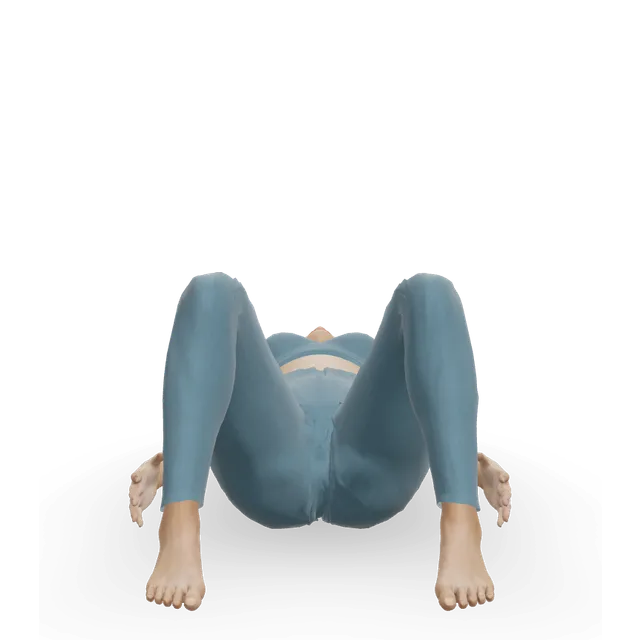 3D demoSupine isometric hip abduction (belt press)Beginner · A band
 3D demoSide-lying leg raiseBeginner · No equipment
 3D demoClamshellBeginner · No equipment
 3D demoLateral band walkBeginner · A band
 3D demoSingle-leg glute bridgeIntermediate · No equipment
 3D demoStep-upBeginner · A step
 3D demoSingle-leg standBeginner · A wall
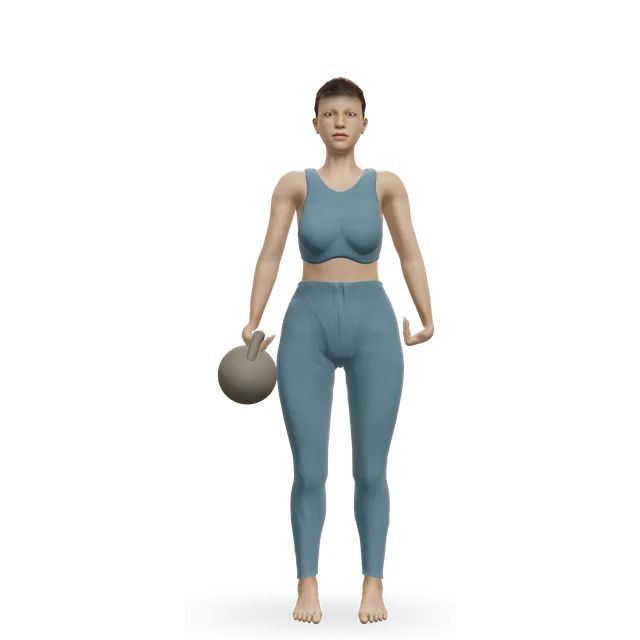 3D demoSuitcase carryIntermediate · A dumbbell + A kettlebell
The lateral pelvic tilt routine is the best fit: side-hip holds, strength and single-leg control, 3 times a week for at least 6 to 8 weeks. The arthritis and knee routines are for hip or knee pain whatever your leg lengths.
A 25-minute routine for uneven hips: side-hip holds, leg raises, single-leg bridges, step-ups, side planks and balance, for hip strength and pelvic control.
25 minBeginner10 movesA wall, A stepA 25-minute glute workout with bodyweight and a mini band: bridges, clamshells, band walks, kickbacks and lunges.
25 minBeginner9 movesA wall, A bandBalance practice in 10 minutes: tandem stance, single-leg stands, marches, heel walks, tree pose and floor transfers.
10 minBeginner7 movesA wall, A bench or boxA 30-minute joint-friendly circuit built like the GLA:D and ESCAPE-pain programmes: a gentle warm-up, chair, step and band strength moves, balance, then stretches.
30 minBeginner14 movesA bench or box, A stepA 25-minute session for knees that don't currently hurt: thigh and hamstring strength, single-leg control, then an optional full-range block with knees over toes.
25 minBeginner13 movesA bench or box, A wallA small difference found at a check-up, or one trouser leg that needs taking up, isn't a warning sign.
Source 1
See a GP if you notice any of these:
Source 24
If your child:
Source 52
See a GP if your child has a limp and you're not sure why. Also get a difference checked if it seems to be growing, if your child walks on tiptoe on one side, or after a broken leg, a growth plate injury or a bone infection (our editorial reading of the specialist pages).
A hip replacement can dislocate, which is painful. Severe hip pain with a leg that suddenly looks shorter or is turned unusually far in or out can be a dislocation: our hip replacement guide says to go to A&E straight away without walking on it. The NHS says to call 999 for pain and swelling in your hip or leg with difficulty breathing or chest pain, which can be a blood clot in the lungs.
Source 30
See a GP for a new difference after an injury, or for hip or back pain that is stopping your normal activities, getting worse, or not improving after a couple of weeks of looking after it at home.
About 9 in 10 people have a small difference, under 1 cm doesn't change how people walk, and small differences aren't linked with back pain. Lifts helped some people with a measured difference and pain, on low-quality evidence.
People with and without back pain have the same small differences. People who stand all day with 6 mm or more may be an exception.
Feeling the hip bones missed the true difference by 3.8 to 5.1 mm, and a leg that looks short on a couch can reflect an uneven pelvis. Blocks and standing X-rays are the reliable methods.
Exercise can't change bone length. In one small trial, measured by hand, it reduced a functional difference, where the bones are equal, and it builds strength around the hips whatever your leg lengths.
It can make the spine curve while you stand, and that curve straightens when the pelvis is levelled. Scoliosis doesn't come from a minor difference, and there's too little evidence that a difference makes it worse.
About 1 in 3 people feel a difference, only about a third of them have one on X-ray, most felt differences settle within a year, and the NHS lists a small difference as a known possibility.
Under 2 cm, specialists usually watch or suggest a lift, and under 1 cm didn't change how children walked.
Yes. On accurate X-rays about 9 in 10 people have legs of slightly different lengths, about 5 mm on average. The American Academy of Orthopaedic Surgeons says more than half of people have a subtle difference that usually causes no problems.
Differences under about 1 cm are very common and don't change how people walk. About 15% to 20% of people have 1 cm or more in pooled X-ray studies. Over 2 cm affects about 1 in 1,000 and is the usual point at which treatment is considered.
Structural means the bones themselves are different lengths. Functional means the bones are equal, but something such as a tilted pelvis, a curve in the spine or a stiff hip makes one leg act shorter. Treatment differs, so it's worth knowing which you have.
Mirror and tape-measure checks are rough guides only: feeling the hip bones missed the true difference by about 4 to 5 mm. A clinician can use blocks under the shorter foot until your pelvis is level, and a standing X-ray of the whole leg is the most accurate test.
For most people, small differences aren't linked with back pain: studies found the same differences in people with and without it. People who stand all day with a difference of 6 mm or more may be an exception. Sciatica comes from an irritated nerve, and our sciatica guide covers it.
Large studies link a difference of 1 cm or more with knee arthritis in the shorter leg, and 2 cm or more with new hip arthritis, but they can't show cause. No trial has tested whether a lift prevents arthritis. Exercise is the first treatment for hip and knee pain whatever your leg lengths.
Only if a difference has been measured and it bothers you. In the best trial, insoles that corrected 70% of the difference eased back pain in people who stand at work, but the evidence overall is low quality. A heel insole can correct up to about 2 cm, full equalisation isn't the aim, and lifts are cheap and easy to stop if they don't help.
Exercise can't change the length of your bones. For a functional difference, gluteal training reduced the hand-measured difference and back pain in one small trial. Side-hip and single-leg exercises build the strength that keeps your pelvis level when you stand on one leg.
It's common: about 1 in 3 people feel a difference, though only about a third of them have one on X-ray. Most people's felt difference improves or goes within a year. If it doesn't, ask your surgical team to measure it; a raised heel on the other side sometimes helps.
Yes, slightly. The operated leg usually ends up about 6 to 10 mm longer, more if the knee was very bowed or knock-kneed. Talk to your surgical team if a difference bothers you.
Small differences are common and usually need nothing. See a GP if your baby's legs look different lengths, a hip clicks, or they drag a leg or limp, or if your child limps without a clear reason. Children with larger differences see a specialist, who plans treatment around the expected difference when growth ends.
A difference can make the lower spine curve sideways while you stand, and that curve straightens when the pelvis is levelled. The Scoliosis Research Society says scoliosis doesn't come from a minor leg length difference. A functional difference can change, but a structural difference in an adult stays the same.
Exercise education, not a diagnosis or treatment plan, and clinical review of these guides is pending. Get a curve or hunch that is new or getting worse checked, above all in a growing child or after a fall, and get urgent help for numbness or weakness in the legs or a change in bladder or bowel control. Health disclaimer.