A label from a hand test
A 'rotated' or 'twisted' pelvis usually means a therapist has judged, by feeling bony points, that one hip bone tips further forward or back than the other. It's a hand-test finding, not something seen on a scan.
Posture guide
A rotated or twisted pelvis usually means a therapist has judged, by feeling bony points, that one hip bone tips further forward or back than the other. Most pelvises are slightly asymmetric, the hand tests behind the label are unreliable, and the joints at the back of the pelvis barely move.
So there's nothing to put back in place. If you have pain, exercise that builds strength and control around your pelvis, the same on both sides, is the best-supported help.
This guide explains the terms, the sacroiliac (SI) joints and leg length, pregnancy, what hands-on treatment can and can't do, the exercises with 3D demos and a 25-minute routine, and when to get checked.
A 'rotated' or 'twisted' pelvis usually means a therapist has judged, by feeling bony points, that one hip bone tips further forward or back than the other. It's a hand-test finding, not something seen on a scan.
Bone shape alone can make the landmarks on the two sides differ by up to 11 degrees, and 95% of healthy athletes in one study had some asymmetry.
Two examiners checking the same person agree little better than chance.
The sacroiliac (SI) joints at the back of the pelvis move about 2.5 degrees and less than a millimetre, and manipulation didn't change their position on precise X-rays.
In 282 people, pelvic asymmetry had no meaningful link with back pain; a smaller study found weak links.
Stabilising exercises eased pelvic girdle pain after pregnancy, and the European guideline recommends exercise. The aim is strength and control around the pelvis, the same on both sides, not realignment.
In manual therapy, one hip bone (the innominate) is judged by touch to tip further forward or back than the other, called anterior or posterior innominate rotation. Studies measure it as the difference between the two sides in the slope of a line from the bony point at the front of each hip bone (the anterior superior iliac spine, or ASIS) to the one at the back (the posterior superior iliac spine, or PSIS).
One hip bone judged by touch to sit higher than the other. A real upward shift of half the pelvis is a kind of pelvic fracture, called a vertical shear fracture, and an emergency.
The sacrum, the triangle of bone at the base of the spine, judged to be twisted between the hip bones. We found no study of how reliable this judgement is, beyond reviews of feeling the pelvis and spine, which find poor agreement between examiners.
Your pelvis turns forwards and back on each side with every step. That's normal walking, not a problem. Pelvic rotation in a golf swing is a different thing, a skill this guide doesn't cover.
In 30 pelvises from donated bodies, held in the same position, the slope between the front and back hip-bone points ranged from 0 to 23 degrees, and the two sides differed by up to 11 degrees in slope and 16 mm in height, from bone shape alone.
Source 4
In 12 specimens measured in 3D, the asymmetry followed a spiral: the upper part of the pelvis turned one way and the front of the pelvis the other.
Source 18
In 44 college athletes without symptoms, 95% had some asymmetry between the hip bones, and in 73% the right side tipped further forward. Nearly all had legs of slightly different lengths, only weakly related to the asymmetry.
Source 5
In 323 people having CT (computed tomography) scans, the two halves of the pelvis differed in height by more than 5 mm in 5.3%, and by more than 10 mm in 0.6%.
Source 19
Most pelvises are a little asymmetric, so a 'rotation' found at a check-up can just be the shape of your bones.
Examiners feel bony points at the front and back of the pelvis, compare the two sides, and watch how the points move in tests such as the standing forward bend (the standing flexion test).
Agreement between examiners is scored with a statistic called kappa, where 0 is chance and 1 is perfect agreement. For feeling the back of the pelvis it averaged 0.27 (8 studies), for uneven landmarks 0.09 to 0.13, 'slightly above chance' (10 studies), and for a set of 4 SI joint tests 0.11 to 0.23 (65 patients), so those authors advised against using the tests.
Feeling for landmarks reached acceptable agreement in a third of studies. Tests that bring on pain did best, in about two thirds.
Source 15
Hands can sense differences of about 0.2 mm, yet pelvic palpation tests don't give the same answer from one examiner to the next.
Source 3
Examiners agree poorly on it without standardised training, and what it shows reflects the hips, pelvis and lower back together rather than SI joint movement.
Source 20
The European guideline on pelvic girdle pain recommends tests that bring on your pain. It doesn't recommend palpation tests of movement, X-rays or CT scans to diagnose it.
Source 12
The sacroiliac joints join the sacrum to the two hip bones. In 25 people with SI joint problems, measured with a precise X-ray method, they turned about 2.5 degrees on average (0.8 to 3.9) and shifted 0.7 mm, the same in painful and pain-free joints.
Source 7
In 10 people, manipulation didn't change the joint's position on precise X-ray analysis, even though the hand tests went from 'positive' to normal afterwards. An older trial in 20 people, measuring from the outside, reported changes in hip bone tilt.
SI joint pain is diagnosed with tests that press on or stress the joint to see whether they bring on your usual pain. When 3 or more of 6 such tests were positive, they picked out 94% of people whose pain was eased by an anaesthetic injection into the joint, and correctly cleared 78% of those whose pain wasn't. Our SI joint pain guide covers it.
A leg that looks shorter on a treatment couch, with bones the same length, is a functional difference, and it's often blamed on an uneven pelvis. In 44 healthy athletes, pelvic asymmetry and leg length were only weakly related, and feeling the hip bones misses the true difference by several millimetres. Our leg length discrepancy guide covers measuring.
In 144 people with back pain and 138 without, pelvic asymmetry had no meaningful link with pain. A study of 28 young adults with back pain and 28 without found small links with two asymmetry measures.
In 126 healthy people, pelvic asymmetry wasn't related to the activity of the tummy muscles at the side of the trunk.
Source 25
It affects about 1 in 5 pregnant women. The NHS describes 'a stiffness of your pelvic joints or the joints moving unevenly', and the specialist physiotherapy network, Pelvic Obstetric and Gynaecological Physiotherapy (POGP), lists 'the pelvic girdle joints moving unevenly' among its causes. Neither says bones are out of place.
The NHS says physiotherapy aims to 'improve your pelvic joint position and stability', with exercises for the pelvic floor, stomach, back and hip muscles, and POGP describes manual therapy to make sure joints 'are moving normally, or to correct their movement'. Because these joints move so little, we read this as control and stability from the muscles around the pelvis, not putting bones back (our editorial reading).
In 81 women, 20 weeks of physiotherapy built around specific stabilising exercises lowered evening pain by 30 points on a 100-point scale and more than halved disability, compared with physiotherapy without them, and the women still did better 1 year after the birth.
Source 11
In 51 people with SI joint pain, exercise, manipulation and both together all reduced pain and disability. Manipulation was ahead at 6 weeks and exercise at 12, and by 24 weeks there was no difference.
Source 28
In 48 people with back pain and a functional leg length difference, 6 weeks of gluteal control training (10 holds of 10 seconds per exercise, 3 times a week) eased pain more than trunk exercise. A hand-held measure of the difference in forward tilt between the two hip bones fell from 3.9 to 0.7 degrees, against 3.8 to 2.3. It's one small trial, measured by hand, with heat and traction given to both groups and no follow-up after 6 weeks, so it doesn't show that exercise makes a pelvis symmetrical.
Source 13
The European guideline recommends information, reassurance and individualised exercise for pelvic girdle pain in pregnancy. For low back pain, NICE (the National Institute for Health and Care Excellence) recommends exercise, and manual therapy only as part of a package that includes exercise.
Manipulation and mobilisation eased SI joint pain in the short term in small studies of low to average quality, and muscle energy technique had a small effect, too small to matter, on chronic low back pain (11 studies). Some small studies measured by hand report better pelvic alignment afterwards, but on precise X-rays manipulation didn't change the joint's position. A trial of manual therapy aimed at 'pelvic deviation' was a 30-person feasibility study, too small to show whether it works.
Being told to come back again and again to have your pelvis 'put back in' isn't supported, and no study shows that home 'pelvic reset' or muscle energy routines reposition the pelvis. They may ease pain like any movement, so treat them as optional, not a fix (our editorial advice).
In pregnancy, NICE suggests considering physiotherapy for exercise advice, a non-rigid pelvic support belt, or both, and the NHS mentions support belts and crutches. Outside pregnancy, NICE says not to offer belts or corsets for low back pain.
The 25-minute routine below, 2 or 3 times a week for at least 6 weeks, the same on both sides, is our editorial starting point; the trials behind it ran for 6 to 20 weeks. The exercise lists below give the doses.
Follow your midwife or pelvic health physiotherapist. Keep moves that spread your knees small if they hurt, and skip single-leg work that hurts at the front of your pelvis: the NHS lists standing on one leg and moving your legs apart among the things that can make the pain worse.
3 sets of 6 to 8 each side is our editorial starting point, as on the SI joint pain guide. If your pelvis twists, go back to one limb at a time.
See the movement on the 3D figure: Bird dog
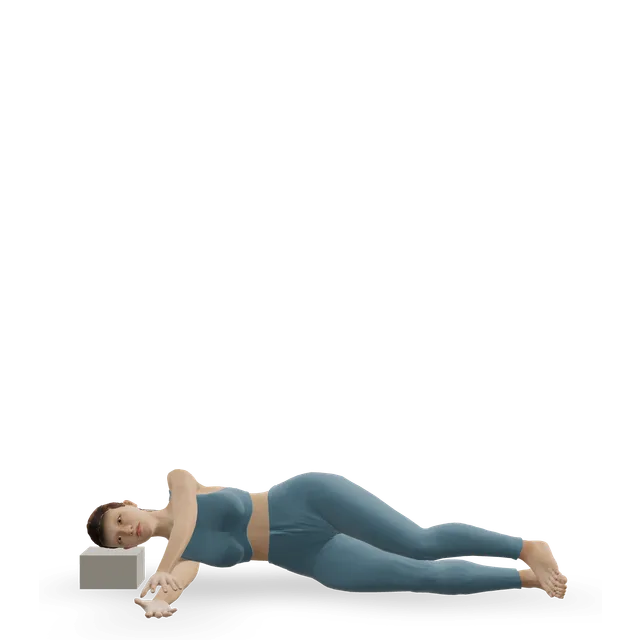
Windshield wipers at their move page's starting point, 10 slow passes side to side, 2 rounds, and cat-cow at its move page's dose, 8 waves; the hip circles and 90/90 switches are optional, and keep the range small if spreading your knees hurts.
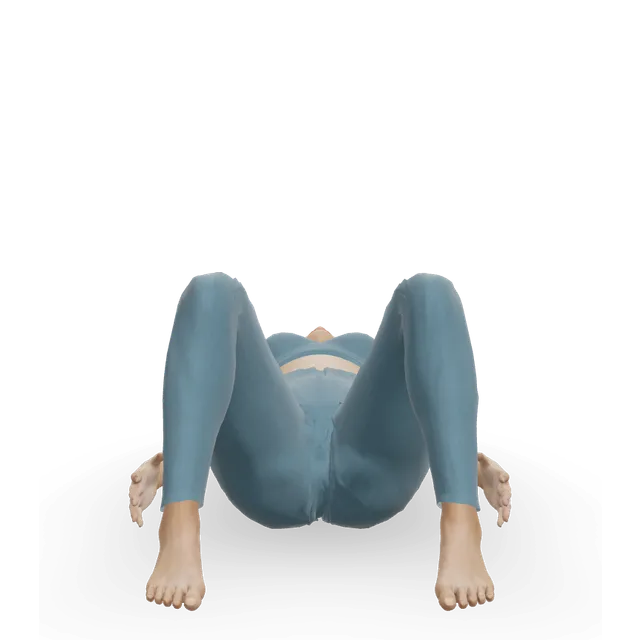
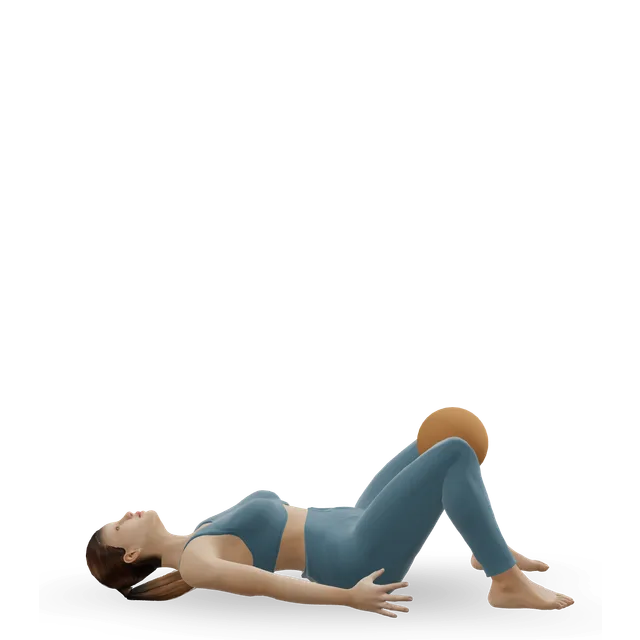
The belt press at its move page's dose, 3 to 5 holds of 5 to 10 seconds at a light effort, twice a day, and the ball squeeze, 5 gentle holds of 5 to 10 seconds (editorial), work the outer and inner hips on both sides at once.
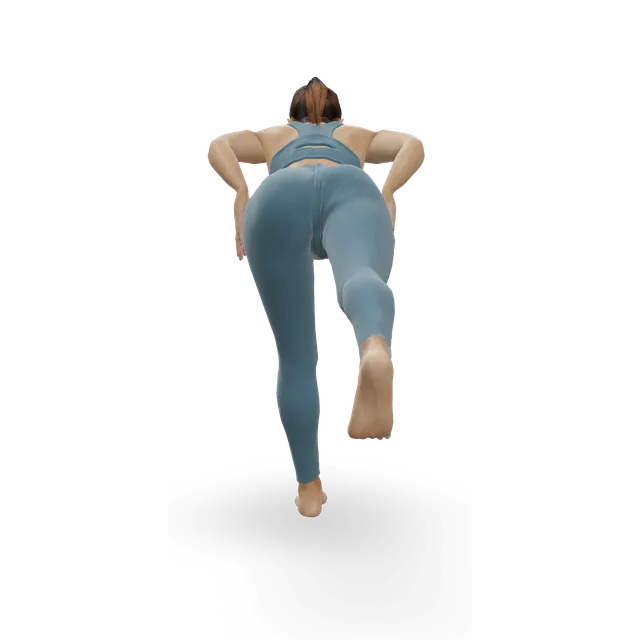
The staggered-stance bridge at its move page's dose, 5 slow repetitions each side once a day, building to 2 sets of 5 to 10; the rest at our editorial starting points, as on the SI joint pain guide: 2 to 3 sets of 6 to 10 each side, or 3 side plank holds of 10 to 20 seconds.
 3D demoGlute bridgeBeginner · No equipment
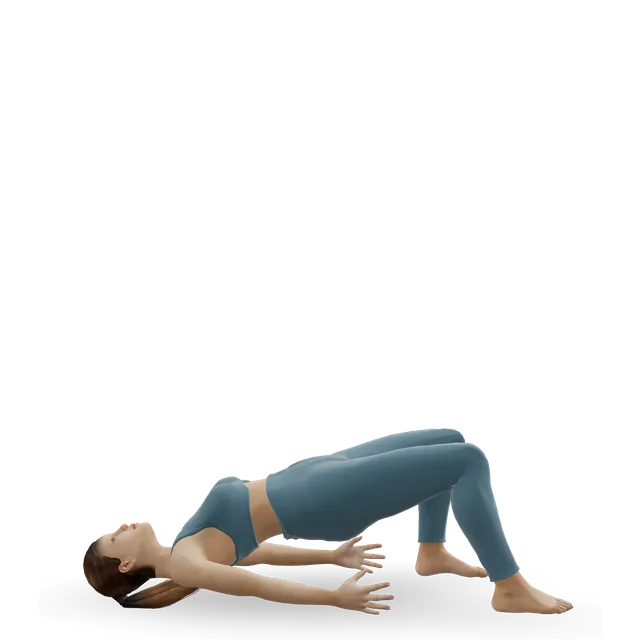 3D demoStaggered-stance bridge (offset bridge)Beginner · No equipment
 3D demoBird dog, one limb at a timeBeginner · No equipment
 3D demoBird dogBeginner · No equipment
 3D demoDead bugBeginner · No equipment
 3D demoKnee side plankBeginner · No equipment
 3D demoSide-lying leg raiseBeginner · No equipment
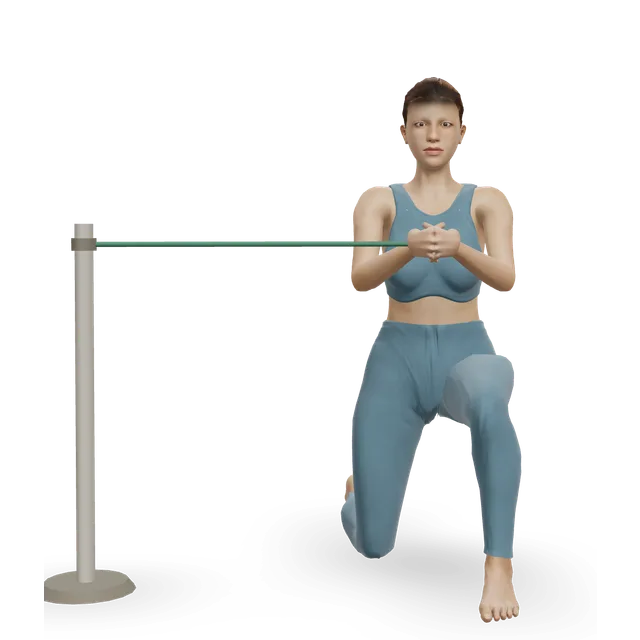 3D demoHalf-kneeling Pallof pressBeginner · A band + An anchor point
Hip airplanes at their move page's starting point, 2 sets of 5 slow turns each leg; one-leg stands, 2 to 3 holds of 20 to 30 seconds; step-ups, 2 to 3 sets of 8 each side; suitcase carries, 3 walks of 20 m each side (editorial), holding a support at first.
Start with the hip and core control routine 2 or 3 times a week; the others build the same strength in other ways, and the postnatal routine is for the months after a birth.
A 25-minute routine for a pelvis that feels twisted or uneven: gentle holds, bridges, bird dogs, side planks and single-leg balance, the same on both sides.
25 minBeginner11 movesA band, Other / check instructionsA 25-minute routine for uneven hips: side-hip holds, leg raises, single-leg bridges, step-ups, side planks and balance, for hip strength and pelvic control.
25 minBeginner10 movesA wall, A stepA 25-minute glute workout with bodyweight and a mini band: bridges, clamshells, band walks, kickbacks and lunges.
25 minBeginner9 movesA wall, A bandA 15-minute beginner core workout on the floor: dead bugs, bird dogs, knee planks, side planks and curl-ups.
15 minBeginner6 movesNo equipmentA 20-minute Pilates class for hip pain: bridges, outer-hip holds, standing leg work and balance, without deep bends, crossed legs or lying on the sore side.
20 minBeginner14 movesA band, A wallA gentle 25-minute routine for the first weeks after birth: pelvic floor, breathing, tummy and hip exercises on the floor, sit-to-stands and a walk.
25 minBeginner12 movesA bench or box, Cardio machineOn their own, these aren't warning signs:
In people with thin bones (osteoporosis), even a fall from standing height can break the pelvis. Call 999 or go to A&E if:
If you have back pain and any of these. In the US, call 911.
Source 36
If you have hip or back pain and:
If hip pain stops your normal activities or sleep, keeps coming back, or hasn't improved after 2 weeks of looking after it at home, or your hip is stiff for more than 30 minutes after you wake up. For back pain, see a GP if it:
Call your midwife or GP if you have pelvic pain and it's hard to move around, it hurts to get out of a car or turn over in bed, or it's painful going up or down stairs. Contact them urgently for back pain in the second or third trimester, or with a fever, bleeding from the vagina or pain when you pee, and call 999 if you lose feeling in one or both legs, your bottom or your genitals. Our pelvic girdle pain guide has more.
If pelvic pain goes on after your baby is born, ask your midwife, health visitor or GP about a referral to a pelvic health physiotherapist.
Source 26
See a GP if your child has a limp and you're not sure why. Call 999 or go to A&E if a child gets sudden pain in the hip, knee or thigh, can't put any weight on the leg, or is unwell with a high temperature.
Source 38
The SI joints move only about 2.5 degrees and less than a millimetre. Manipulation didn't change their position on precise X-rays, even though the hand tests 'normalised', and the European guideline doesn't recommend the movement tests used to find it.
Examiners agree little better than chance, and bone shape alone can make the landmarks differ by up to 11 degrees between sides.
Asymmetry wasn't meaningfully linked with back pain in 282 people, and a smaller study found only weak links.
Pelvic asymmetry and leg length were only weakly related in 44 athletes, and feeling for leg length is inaccurate. Blocks under the foot or a standing X-ray measure it.
Manual therapy can ease pain for a while, but not by moving bones. Exercise did as well by 6 months in a head-to-head trial, and NICE advises manual therapy for back pain only alongside exercise.
The NHS and POGP describe joints that are stiff or 'moving unevenly', not bones out of place, and their talk of joint position is best read as control and stability. The NHS says the pain tends not to get completely better until the baby is born, but treatment can ease it during pregnancy.
In manual therapy it's a hand-test finding, and those tests are unreliable. A real upward shift of half the pelvis is a pelvic fracture after a serious injury, and an emergency.
It usually means a manual therapist has judged, by feeling bony points, that one hip bone tips further forward or back than the other. It's a hand-test finding, not a diagnosis seen on a scan. Most pelvises are slightly asymmetric anyway.
You can't tell reliably by looking or feeling: even trained examiners agree little better than chance. Bone shape alone can make the landmarks differ by up to 11 degrees between sides. What matters is how you feel and move, not the landmarks.
Not from everyday movement. The SI joints at the back of the pelvis move only about 2.5 degrees and less than a millimetre, and manipulation didn't change their position on precise X-rays. Real displacement is rare, for example in a pelvic fracture after a serious injury.
Usually it's normal asymmetry in the shape of the pelvic bones, which is very common. A feeling of being 'twisted' can come with back, pelvic or hip pain, which has many causes. The pain is what needs attention, not the landmarks.
Pelvic asymmetry wasn't meaningfully linked with back pain in a study of 282 people, and a smaller study found only weak links. Sciatica and hip pain have their own causes. If you have pain, our back pain, SI joint pain, sciatica and hip pain guides can help.
It can make one leg look shorter on a treatment couch while the bones are the same length, which is called a functional difference. In healthy athletes, pelvic asymmetry and leg length were only weakly related. A true difference is measured with blocks or a standing X-ray, not by feel.
There's nothing to put back, so the aim is strength and control around your pelvis, worked the same on both sides. Stabilising exercises eased pelvic girdle pain after pregnancy in a good trial, and gluteal training eased back pain in a small one. The 25-minute routine on this page puts these together.
Hands-on treatment can ease pain for a while, but not because it moves the pelvis: on precise X-rays, the joint's position didn't change. In a head-to-head trial, exercise did as well as manipulation by 6 months. Guidance on low back pain says manual therapy should only be used alongside exercise.
In manual therapy, it means one side of the pelvis has been judged by touch to sit higher, and the tests behind it are unreliable. A real upward shift of half the pelvis is a type of pelvic fracture, called a vertical shear fracture, usually after a serious injury, and it's an emergency.
Pelvic girdle pain affects about 1 in 5 pregnant women, and the NHS describes joints that are stiff or 'moving unevenly', not bones out of place. A physiotherapist can help with exercises and sometimes a support belt. Our pelvic girdle pain guide has more.
They're manual therapy terms. The innominate is each hip bone, and 'rotation' means one is judged to tip more than the other; sacral torsion means the sacrum is judged to be twisted between them. Both rest on hand tests with poor reliability.
Yes. Your pelvis turns forwards and back on each side with every step. In a treadmill study, that turning added less than 3% to step length. It's part of normal walking, not a problem.
Exercise education, not a diagnosis or treatment plan, and clinical review of these guides is pending. Get a curve or hunch that is new or getting worse checked, above all in a growing child or after a fall, and get urgent help for numbness or weakness in the legs or a change in bladder or bowel control. Health disclaimer.