Pilates
Wake-up Pilates: a 15-minute morning routine, lying down, then all fours, then standing
A short routine for the start of the day. It begins on your back with breathing and small movements, moves to your side and all fours, and finishes standing, with a gentle roll-down at the wall saved for last, because your back is stiffer first thing. You need a mat (the lying part also works on a firm bed), a wall and a sturdy chair. No trial has tested this routine, so its order is our editorial choice. Morning isn't proven better than evening: do it when you'll keep doing it.
Wake up lying down (about 5 minutes)
- Beginner · Abs · 3D demoOn your back, knees bent: breathe into the sides of your ribs, no holdsHarder: Roll-up (Pilates)
- Pelvic tilt into bridge6 slowBeginner · Glutes, Abs, Hamstrings · 3D demoA small lift only; peel up a little further each time if it feels easyHarder: Glute bridge
- Knee fold5 each sideBeginner · Abs, Hip flexors · 3D demoLift one knee to above your hip and lower it slowly; keep your pelvis stillEasier: Supine heel slideHarder: Dead bug heel taps
- Supine heel slide10 each sideBeginner · Hip flexors, Hamstrings, Quads · 3D demoSlide the heel away and back, slowlyHarder: Hip windshield wipers
- Hip windshield wipers10 slow passesBeginner · Glutes, Adductors · 3D demoFeet wide; keep it small if your back is stiffEasier: Supine heel slideHarder: 90/90 switch
- Single-leg circle (Pilates one leg circle)5 circles each direction, each legBeginner · Abs, Hip flexors, Adductors · 3D demoSmall circles; the other knee bent, foot downHarder: Corkscrew (Pilates)






On your side and all fours (about 4 minutes)
- Side kick (Pilates side kick series)8 each sideBeginner · Hip flexors, Glutes, Hip abductors · 3D demoHead on your arm; glide the top leg forward and backHarder: Side-lying leg circles (Pilates side kick series)
- Side-lying open book5 each sideBeginner · Back, Chest, Shoulders · 3D demoOpen the top arm only as far as is comfortableHarder: Thoracic rotation
- Cat-cow8 wavesBeginner · Back, Abs · 3D demoSlower than feels natural; keep the rounding small if your back is soreHarder: Half lord of the fishes (Ardha Matsyendrasana)
- Swan (Pilates swan dive)5 small liftsIntermediate · Back, Glutes, Triceps · 3D demoLift your chest a little, hands under your shoulders; skip it if arching pinchesEasier: Mermaid (Pilates seated side bend)Harder: Double-leg kick (Pilates double kick)




Stand up slowly, then standing (about 5 minutes)
- Standing march1 minBeginner · Hip flexors, Abs, Glutes · 3D demoRoll to your side, sit, then stand up slowly first; march with your arms swingingEasier: Seated marchHarder: Standing band hip flexion
- Slow calf raise12 to 15Beginner · Calves · 3D demoA hand on the wall; up for 2, down for 3Easier: Seated bent-knee calf raise (soleus raise)Harder: Standing dumbbell calf raise
- Sit to stand from a chair8 to 10Beginner · Quads, Glutes, Hamstrings · 3D demoA firm chair against a wall; stand up tallEasier: Sit to stand, pushing on the thighsHarder: Bodyweight squat
- Wall angel8 slow repsBeginner · Back, Shoulders · 3D demoSlide your arms only as high as you can keep contact with the wallEasier: Table slide (seated forward reach)Harder: Prone Y-T-W raises
- Breath reach5 breathsBeginner · 3D demoArms rise as you breathe in and lower as you breathe out, a little longerHarder: Slow breathing (6 breaths a minute)





Last, when you're warm (about 1 minute)
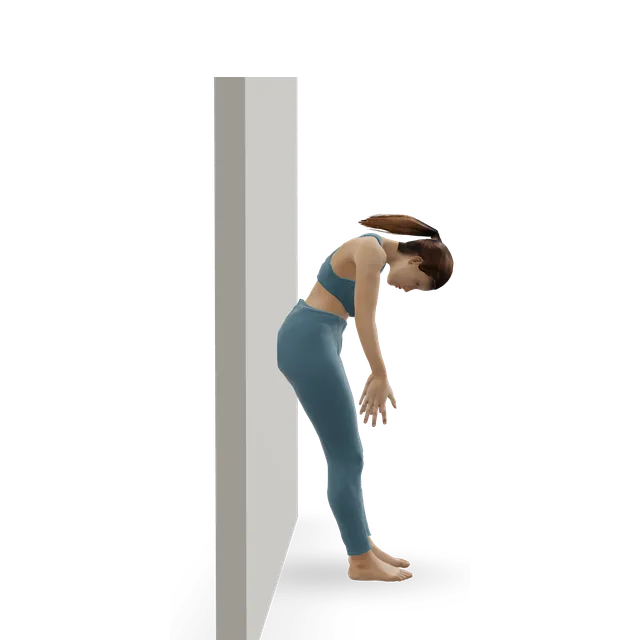
- Wall roll-down (wall Pilates)3 slow repsBeginner · Abs, Back, Hamstrings · 3D demoBack against the wall; roll down only as far as is comfortable. With osteoporosis, keep your hands on your thighs; if your back is sore first thing, keep it small or skip itHarder: Roll-up (Pilates)
Tips
- Do it at the same time each day, straight after something you already do, such as brushing your teeth. Daily habits took about 66 days on average to feel automatic, and missing a day didn't undo them.
- Eat first if you feel faint on an empty stomach, if you're pregnant, or if you take insulin or a sulfonylurea.
- Get up from the floor slowly: roll onto your side, sit for a few breaths, then stand with a hand on something steady.
- If getting down to the floor first thing is hard, do the lying block on a firm bed, then stand (our suggestion).
- In a hurry: lateral breathing, the pelvic tilt, heel slides, cat-cow, the standing march, calf raises and the breath reach make an 8-minute version (our suggestion).
- If your back is stiff in the morning, leave the roll-up and other rounding moves for later in the day (our suggestion, from one trial of cutting down early-morning bending).
The doses are suggested starting points, not a prescription. Choose a range you can control and stop for sharp or increasing pain, numbness or tingling. Get individual advice after an injury or surgery, or if you are pregnant or managing a health condition.
Guides that recommend it
Find more moves like these
More pilates



Beginner Pilates workout
A 20-minute mat Pilates workout for complete beginners. It covers breathing, spine position and the foundation moves, each with an easier option.
20 minBeginner13 movesNo equipment

10-minute Pilates abs
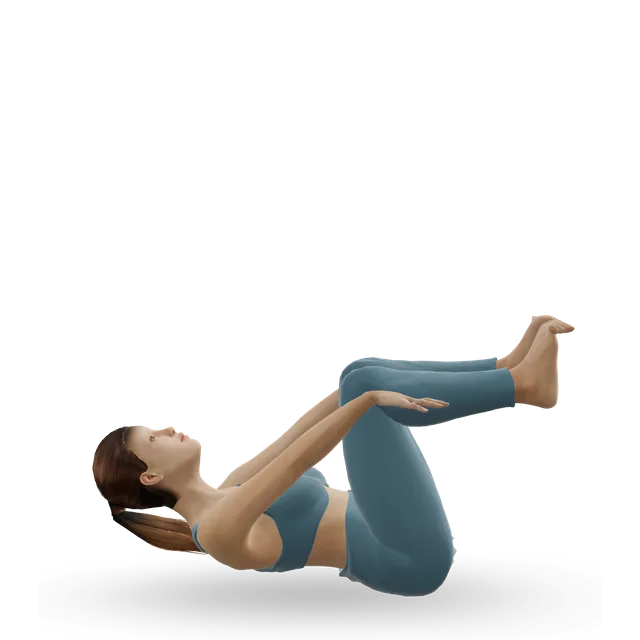
Ten minutes of the classic Pilates abdominal series: the hundred, the roll-up and the series of five, with a plank to finish.
10 minIntermediate11 movesNo equipmentFull-body mat Pilates workout
A 30-minute intermediate mat Pilates class that follows the classical order, from the hundred to the push-up, with prep versions of the hardest moves.
30 minIntermediate22 movesNo equipmentQuestions people ask
How long does the wake-up pilates: a 15-minute morning routine, lying down, then all fours, then standing take?
About 15 minutes, including any warm-up and cool-down listed. Shorten it by doing fewer rounds; lengthen it by adding one.
What equipment do I need?
You need: A wall, A bench or box. Each move links to its guide, where you can find an alternative if you are missing something.
Is it suitable for beginners?
It is written for beginners. 7 of its 16 moves have an easier option listed beside them if you need one.
How do I make it easier or harder?
Use the easier or harder option listed under each move, change the number of rounds, or adjust the rest. Progress one change at a time.