Strength at home
Kettlebell back workout: hinge, rows, high pulls and carries with one or two bells
Your back, with one or two kettlebells at home. You learn the hinge first, row with a hand on a bench before you row bent over, then add a high pull and a carry. A kettlebell row is much like a dumbbell row: nobody has studied kettlebell rows on their own, and bands, free weights and machines built strength alike in reviews. No trial has tested this session; the order follows our back workout at home and bent-over row technique workout, and the doses are our editorial starting point. Our kettlebell row guide shows each row step by step.
Warm-up
- Hip-hinge practice2 × 8, then a 20 to 30 s holdBeginner · Glutes, Hamstrings, Back · 3D demoTorso at about 45 degrees, back flatHarder: Kettlebell deadlift
- Band pull-apart15 repsIntermediate · Shoulders, Back · 3D demoA light band, arms straight. No band? 10 slow shoulder circles each wayEasier: Prone Y-T-W raisesHarder: Tuck back lever
- Kettlebell deadlift1 light set of 8Beginner · Glutes, Hamstrings, Back · 3D demoLifting the bell from the floor with a hinge, as every row here startsEasier: Hip-hinge practiceHarder: Dumbbell Romanian deadlift



Supported row
Rest 60 to 90 s between sets
- Supported single-arm dumbbell row3 × 8 to 12 each sideIntermediate · Back, Biceps, Shoulders · 3D demoRow the kettlebell with one hand, the other hand and one knee on a bench or sturdy chair. Stop 2 or 3 reps shortEasier: Incline ring rowHarder: Bent-over barbell row

Bent-over rows (pick one)
Rest 90 s to 2 min between sets
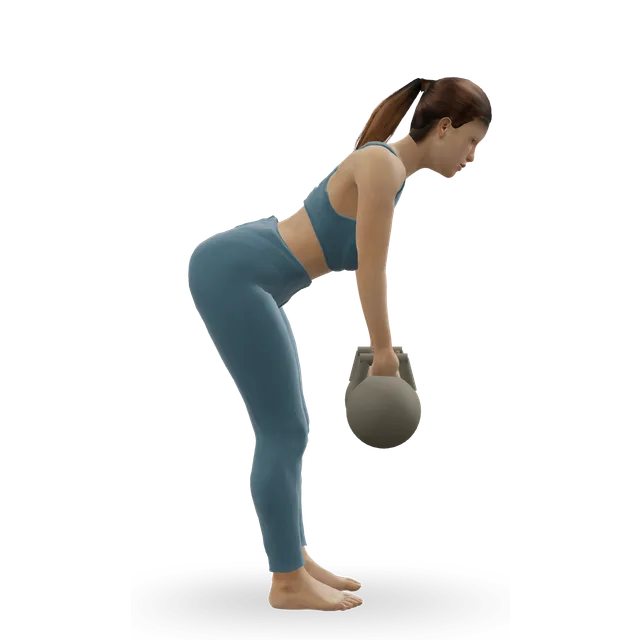
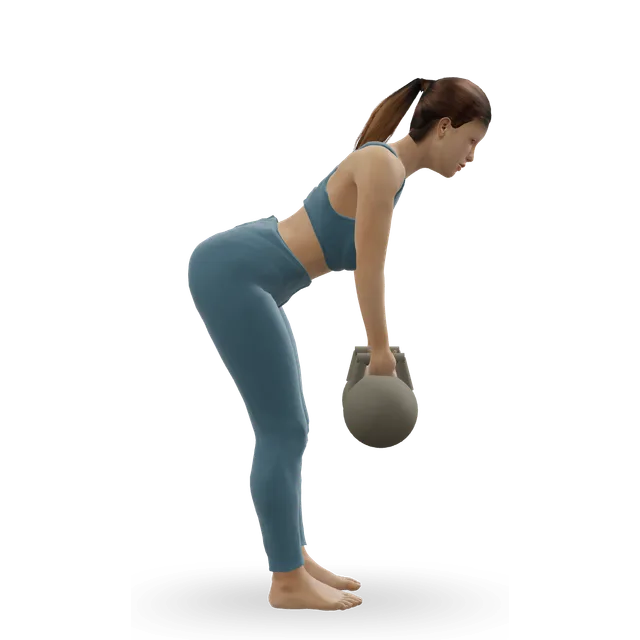
- Bent-over two-kettlebell row3 × 8 to 12Intermediate · Back, Biceps · 3D demoA bell in each hand, hinged to about 45 degrees with a long back. Stop 2 or 3 reps short, or when your torso starts to riseEasier: Supported single-arm dumbbell rowHarder: Bent-over barbell row
- Alternating bent-over kettlebell row3 × 8 to 10 each sideIntermediate · Back, Biceps, Abs · 3D demoRow one bell, lower it, then the other, hips and shoulders square. From the floor with your feet wide, it's the gorilla row (no demo of that set-up)Easier: Supported single-arm dumbbell rowHarder: Bent-over barbell row
Upper back and hips
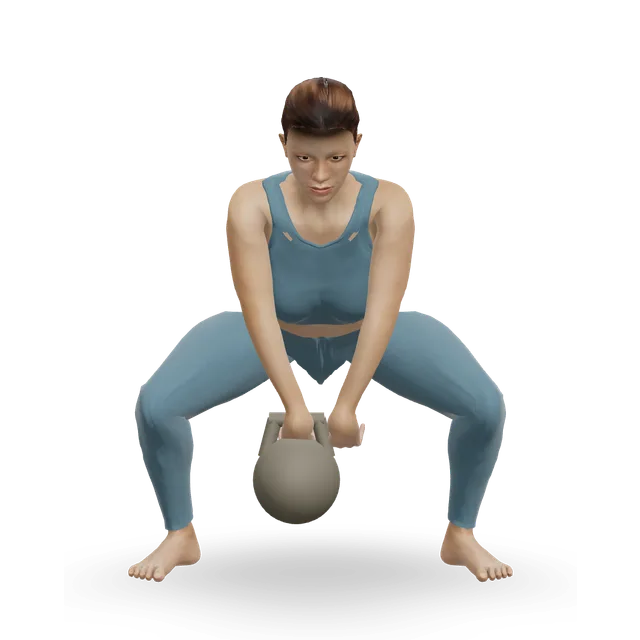
- Kettlebell sumo high pull2 to 3 × 8 to 12Intermediate · Back, Shoulders, Glutes · 3D demoElbows no higher than your shoulders; stop 2 or 3 reps shortEasier: Seated band pull-down (from shoulder height)Harder: Barbell rear-delt row
Advanced (optional)
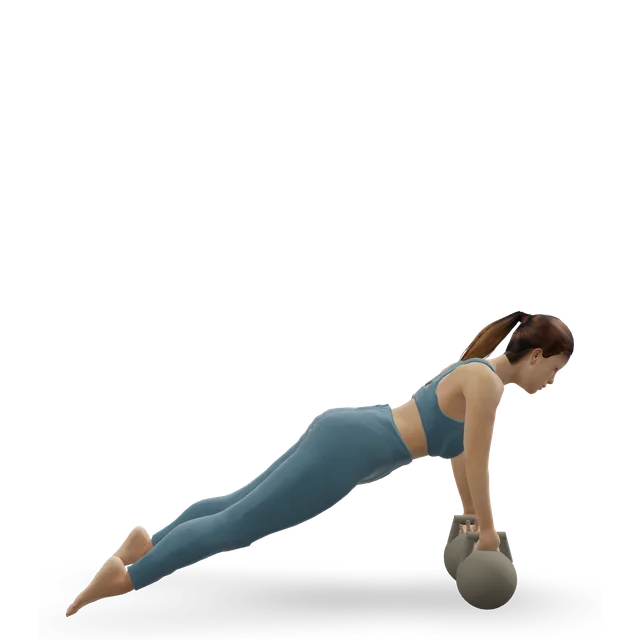
- Renegade row2 × 6 to 8 each sideAdvanced · Back, Abs, Biceps · 3D demoOnly with a steady 30 s straight-arm plank: bells that sit flat, feet wide, hips level. End the set when your hips turnEasier: Supported single-arm dumbbell row
Carry
- Suitcase carry2 × 20 to 30 m each sideIntermediate · Abs, Forearms, Back · 3D demoStand tall, without leaning towards the bellEasier: Farmer's carryHarder: Overhead carry (waiter's walk)

Cool-down (optional)
- Child's Pose (Balasana)45 to 60 sBeginner · Back, Shoulders, Glutes · 3D demoHarder: Extended puppy pose (Uttana Shishosana)

Tips
- Once or twice a week, at least 2 days apart. Add reps until every set reaches the top of its range, then take a heavier bell; if that's a big jump, add a set or slow the lowering first.
- Your row bell will usually be heavier than your press bell and lighter than your deadlift bell. One bell only? Do the supported and alternating rows with it, one side at a time.
- Lower back tiring before your upper back? Go back to the supported row. Keep back discomfort to about 5 out of 10, settled within an hour or so and no worse the next morning; pain, pins and needles or numbness down a leg means stop, and see our sciatica guide.
- With osteoporosis or a past spinal fracture, keep your back long in every row and don't round under load.
- Breathe out as you row rather than holding your breath, especially with high blood pressure. With a pacemaker or defibrillator, check with your doctor before upper-body strength training.
- Leave out the renegade row in the first weeks after a birth, when the NHS advises avoiding planks, and with heart failure, as our renegade row guide says. After heart surgery through the breastbone, follow your surgeon's limits first.
- In pregnancy, the supported row is the comfortable version if you already train with weights; stop if you feel uncomfortable, too hot or unwell.
The doses are suggested starting points, not a prescription. Choose a range you can control and stop for sharp or increasing pain, numbness or tingling. Get individual advice after an injury or surgery, or if you are pregnant or managing a health condition.
Guides that recommend it
Find more moves like these
More strength at home




Beginner bodyweight workout
A 20-minute full-body workout with no equipment: squats, knee push-ups, bridges, lunges and planks.
20 minBeginner10 movesNo equipment


Full-body bodyweight workout
An intermediate no-equipment workout: push-ups, split squats, single-leg bridges, pike push-ups and core work.
30 minIntermediate11 movesNo equipment
Full-body dumbbell workout
A 35-minute full-body strength workout with dumbbells: goblet squats, presses, rows, Romanian deadlifts and carries.
35 minIntermediate9 movesA band, A dumbbellQuestions people ask
How long does the kettlebell back workout: hinge, rows, high pulls and carries with one or two bells take?
About 35 minutes, including any warm-up and cool-down listed. Shorten it by doing fewer rounds; lengthen it by adding one.
What equipment do I need?
You need: A band, A kettlebell, A dumbbell, A bench or box. Each move links to its guide, where you can find an alternative if you are missing something.
Is it suitable for me?
It is written at intermediate level. 8 of its 10 moves have an easier option listed beside them; use them freely.
How do I make it easier or harder?
Use the easier or harder option listed under each move, change the number of rounds, or adjust the rest. Progress one change at a time.