King dancer pose (full Natarajasana, both hands overhead)
The full form of dancer pose: standing on one leg, you reach both arms up and back over the head, elbows pointing up, and hold the lifted foot with both hands as the spine arches. Dancer pose holds the foot with one hand while the other arm reaches forward. Yoga International teaches it with a strap round the foot, walking the hands down the strap, and asks for an even backbend rather than trying to touch the foot to the head.
Movement guide
King dancer pose (full Natarajasana, both hands overhead)
Make it easier or harder
Choose a version that fits your control and comfort.
Easier option
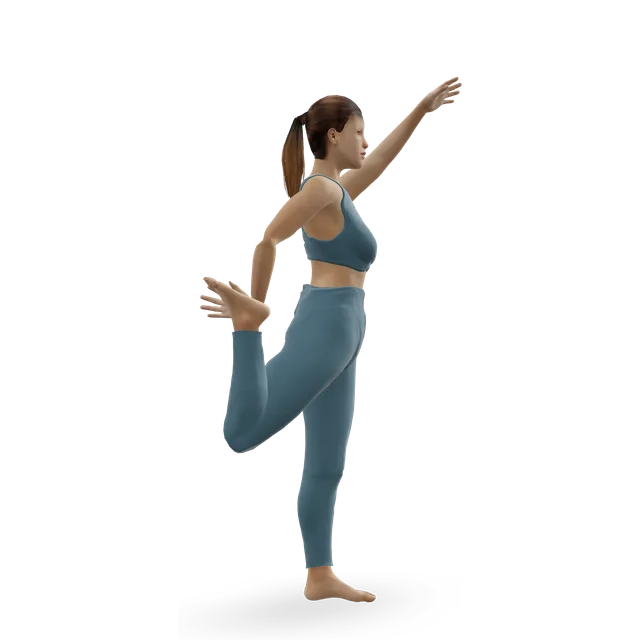 3D demoDancer pose (Natarajasana)Advanced · No equipment
Similar move, advanced grade.
This move
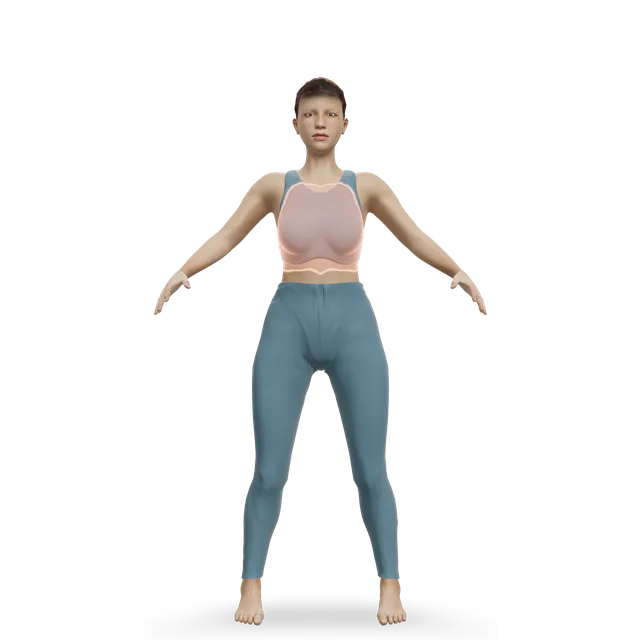 King dancer pose (full Natarajasana, both hands overhead)Expert · No equipment
Expert grade.
Harder option
Keep a comfortable range and follow any technique and timing given in the guide. A deeper stretch or more complex pose is optional, not a required next step. Ingram 2025 review of stretching and range of motion
Source-researched guide.
How to move
- Stand on the left leg. Bend the right knee and loop a strap round the ball of the right foot, holding it in the right hand, palm up.
- Turn the right upper arm out and lift the right elbow until it points at the ceiling.
- Reach the left arm up, bend the elbow and take the strap with the left hand too, both elbows pointing up and drawn in toward the head.
- Press the foot back into the strap, lift the chest and walk the hands down the strap toward the foot, keeping the pelvis square and the right knee in line with the hip. When you can reach, hold the foot itself with both hands.
- To come out, loosen the grip and let the strap slide out slowly, lower the foot and stand on both legs. Change sides.
Form cues
- Keep the backbend even through the whole spine; the head follows the chest.
- Fix the gaze on a point ahead to steady the balance.
- Avoid: letting the lifted knee splay out to the side, which strains the sacrum.
Practice and cautions
Hold 3 to 5 slow breaths each side, once or twice, only after a full warm-up (our editorial starting point).
Learn it with a teacher watching, and stop at once for dizziness or blurred vision: in case reports, arching the neck back in yoga has squeezed or blocked a vertebral artery, one of the arteries to the back of the brain. Come out slowly, as the strap can sling the leg out. Meaningful risk to the low back and shoulders. Not for anyone with disc problems, spondylolisthesis or shoulder instability, and never worth rushing. This is movement education, not an assessment or treatment prescription. Stop for sharp or increasing pain, dizziness, numbness or tingling; seek individual guidance for symptoms, injury or restrictions.
Sources and review status
Sources support the educational description; they do not establish that this exercise is suitable for you.
- Yoga International · King dancer (how-to: a strap round the foot, both elbows up, the hands walking down the strap; an even backbend rather than the foot to the head) ↗
- Yoga Journal · Challenge pose: king dancer (a strap lasso, then both hands on the foot; keep the pelvis square and the knee from splaying; slide out slowly) ↗
- Shenouda 2026 · Dizziness and blurred vision during yoga, worst in upward-facing dog, traced to a squeezed vertebral artery; neck arching or turning the likely cause (case report, Case Rep Ophthalmol) ↗
- Cramer 2013 · 76 published cases of harm linked to yoga; headstand, shoulderstand, feet-behind-the-head postures and lotus variations most often involved (systematic review of case reports, PLoS One) ↗
No variation is labeled clinically validated.
What it works
Muscles
Main: Back, Quads, Shoulders. Also: Hip flexors, Glutes, Triceps.
Anatomy: Latissimus dorsi, Teres major, Trapezius, Rhomboids, Erector spinae, Multifidus.
Equipment
None: body weight and floor space.
Level
Expert. See the easier and harder options above.
Similar moves
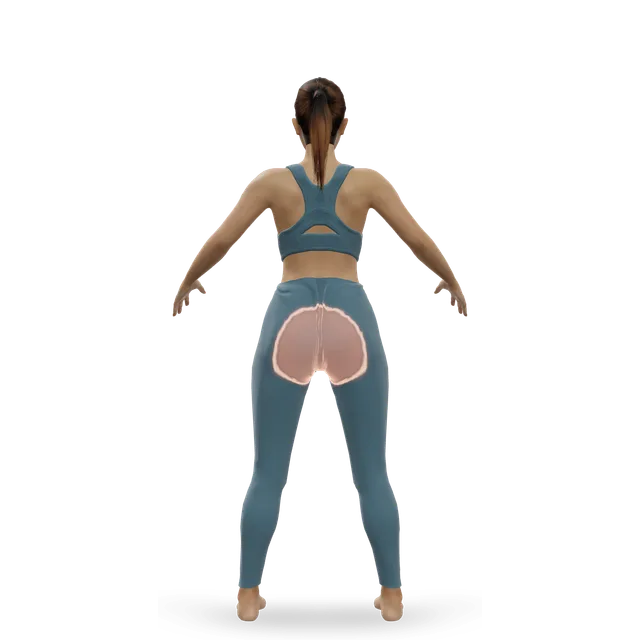 One-legged king pigeon (Eka Pada Rajakapotasana, full)Expert · No equipment
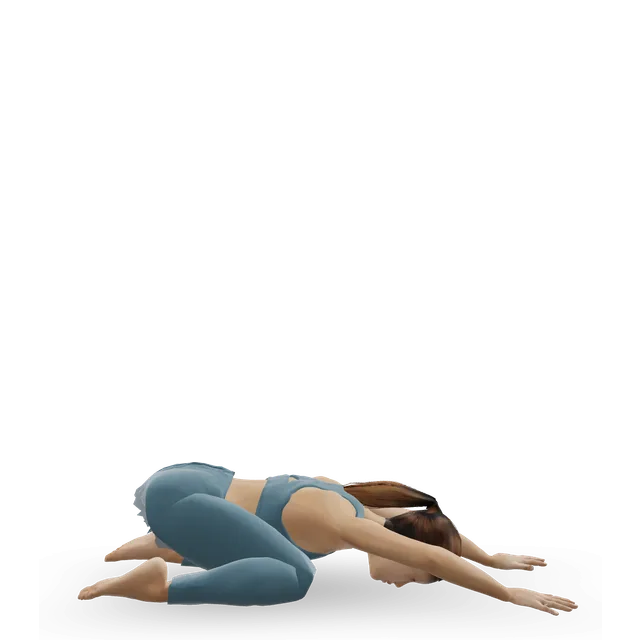 3D demoChild's Pose (Balasana)Beginner · No equipment
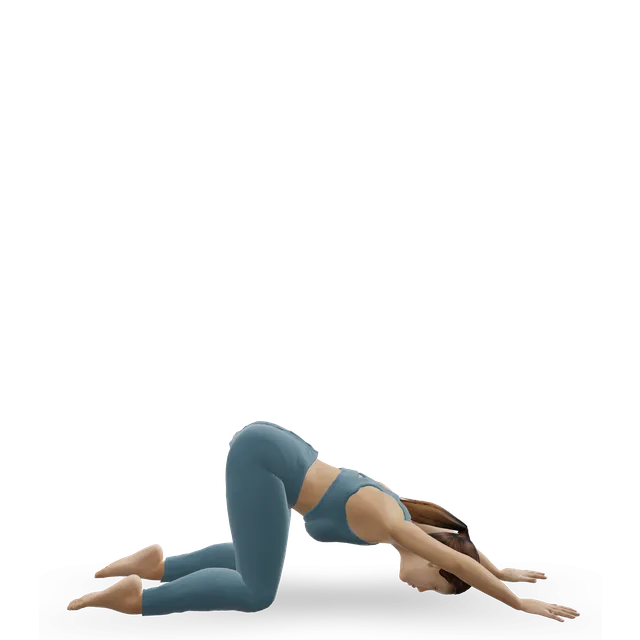 3D demoExtended puppy pose (Uttana Shishosana)Beginner · No equipment
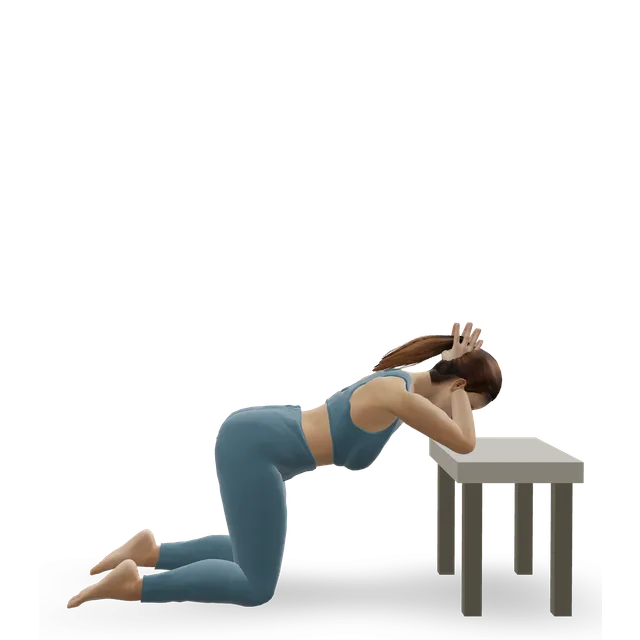 3D demoOverhead lat stretch at a bench (elbows on the bench)Intermediate · A bench or box
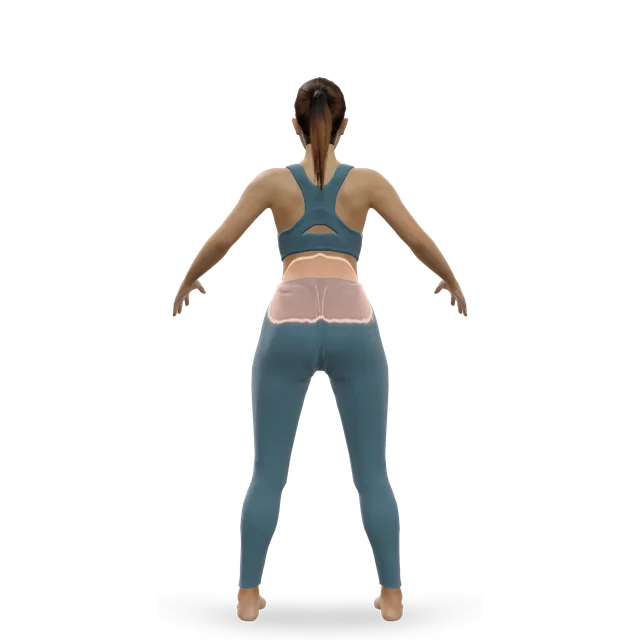 Drop-back to wheel (Urdhva Dhanurasana from standing)Expert · A wallEagle pose (Garudasana)Intermediate · No equipment
Browse more
Questions people ask
What muscles does the King dancer pose (full Natarajasana, both hands overhead) work?
Mainly the back, quads and shoulders, with help from the hip flexors, glutes and triceps.
What equipment do I need for the King dancer pose (full Natarajasana, both hands overhead)?
No equipment: your body weight and a little floor space.
Is the King dancer pose (full Natarajasana, both hands overhead) good for beginners?
It is an advanced move. Build up to it with the Dancer pose (Natarajasana) first.
What is an easier alternative to the King dancer pose (full Natarajasana, both hands overhead)?
Try the Dancer pose (Natarajasana) or the Wheel pose (Urdhva Dhanurasana). It works similar muscles at a lower grade.