Losing fat and gaining muscle together
That's body recomposition: your shape changes even if your weight barely moves. It comes from progressive strength training, enough protein and, if you have fat to lose, a small calorie cut.
Training guide
Body recomposition, or body recomp, means losing fat and building muscle over the same months, so your shape changes even if the scales barely move. It's what usually happens when people start lifting, especially with some fat to lose. It can happen in experienced lifters too, more slowly and less reliably.
This guide covers who it works for, how much to eat (your maintenance calories, or a small cut), protein, the training and cardio, sleep, how to measure progress when your weight stays the same, being "skinny fat", and whether to recomp or bulk and cut. To follow it week by week, our 12-week body recomposition workout plan puts it into practice.
That's body recomposition: your shape changes even if your weight barely moves. It comes from progressive strength training, enough protein and, if you have fat to lose, a small calorie cut.
In 114 trials of 4,184 people with overweight or obesity, strength training alone added about 0.8 kg of lean mass and took off about 1 kg of fat compared with not training, across ages and sexes. Older women training 3 times a week for 24 weeks gained 2 to 5% more muscle and lost 2 to 4% of their fat.
It can happen in trained lifters, but the evidence is thinner: a narrative review and one 8-week trial with wide differences between people. Strength athletes grew no muscle in 21 weeks of training, and most lean athletes on a diet lost some lean mass.
A deficit of about 500 calories a day stopped muscle gain on average, though strength still rose. Athletes losing 0.7% of their body weight a week gained lean mass, while those aiming for 1.4% didn't.
Use our protein calculator's building-muscle setting, 1.6 to 2.2 g per kg a day. Strength train at least 3 times a week if you can, adding reps and then weight.
About 150 minutes of cardio a week helps the fat loss and doesn't cost muscle. Sleep 7 to 9 hours. Judge progress by your waist, photos and lifts: bathroom body-fat readings were kilos out.
Our 12-week body recomposition plan puts this guide into practice: three full-body strength days, two cardio days, daily steps, a small calorie cut or none, and check-ins every 4 weeks.
Gaining muscle and losing fat over the same period, so your body composition improves even if your weight stays much the same. Researchers use the same definition, and they measure it with body scans.
Training and protein drive muscle growth, while eating a little less draws on your fat. A small calorie cut doesn't stop muscle gain on average, but a bigger one does. Fat doesn't turn into muscle; the two can change in opposite directions at the same time.
A search term rather than a diagnosis: a healthy or low weight with little muscle and some fat, often around the middle (our description). For most people it's a recomposition case: eat at maintenance, get enough protein and train every muscle progressively.
Source 3
In 114 trials of 4,184 people with overweight or obesity, strength training alone cut body fat by 1.6 percentage points and fat mass by 1.0 kg, and added 0.8 kg of lean mass, against no training. With a calorie cut as well, fat mass fell by 5.3 kg while lean mass held steady. The results held across ages and sexes.
Source 3
In 130 untrained older women (average age 69) training 3 times a week for 24 weeks on their usual diets, muscle rose by 2.3% in those eating the least protein and by about 5% in the others, while fat fell by 2 to 4%. It's a pooled analysis of 6 studies.
Source 2
Lean athletes who kept or gained lean mass on a diet mostly had more body fat, a smaller cut or new training. But in 99 older women on the same 24-week programme, those with the least fat at the start recomposed the most. So "more fat, more recomposition" isn't a rule.
A narrative review lists several trials in resistance-trained people that showed recomposition, mostly with high protein; two fitness businesses paid its open-access fee. In one 8-week trial of 48 trained adults, eating 2.3 or 3.4 g of protein per kg both added 1.5 kg of fat-free mass, and the higher-protein group lost 1.7 kg of fat, but some people gained up to 7 kg of fat-free mass while others lost some. Strength athletes didn't grow at all in 21 weeks of training, and most lean athletes on a diet lost some lean mass.
Strength comes back quickly. In 6 women, muscle fibres kept much of their size through 30 to 32 weeks off and regrew fast; in 19 adults, a previously trained leg didn't regrow faster than an untrained one after 20 weeks off. Whether "muscle memory" speeds things up is unsettled.
In pooled trials, training while eating less than your needs held back lean-mass gains but not strength gains, and a deficit of about 500 calories a day stopped lean-mass gain.
Source 7
In 24 elite athletes lifting 4 times a week, those losing about 0.7% of their body weight a week gained 2.1% lean mass and lost 31% of their fat; those aiming for 1.4% a week gained no lean mass.
Source 8
In 119 adults over 8 months, aerobic training took off more fat, strength training added more lean mass, and both together did both. Strength training cut the lean mass lost while dieting by about 0.8 kg in an overview of reviews, and prevented about 93% of it in 6 trials in older adults with obesity.
Against no exercise, strength training cut body fat by about 1.5 percentage points and fat mass by about half a kilo, including some deep belly fat. The review looked at 58 studies and pooled 54.
Source 24
On calorie-restricted diets, higher protein kept about 0.4 kg more lean mass and took off about 0.9 kg more fat across 24 trials. In 40 young men on a 40% calorie cut training hard 6 days a week, 2.4 g of protein per kg gained 1.2 kg of lean mass and lost 4.8 kg of fat in 4 weeks, against 0.1 kg and 3.5 kg on 1.2 g. That was a proof of principle, not a plan.
In 10 adults on the same 14-day diet, sleeping 5.5 rather than 8.5 hours cut the fat lost from 1.4 to 0.6 kg and raised the lean mass lost from 1.5 to 2.4 kg.
Source 14
Across 43 studies, adding aerobic exercise didn't reduce muscle growth or maximal strength. Each extra 30 minutes a week took off about 0.5 kg and half a centimetre of waist in 116 trials.
If you mainly want more muscle and less fat, eat at your maintenance calories; the training does the work. Our calories per day calculator gives the figure.
About 300 to 500 calories a day below maintenance, aiming to lose about 0.5% of your body weight a week or less. That's our editorial range, as our recomposition plan uses, smaller on purpose than the NHS's 600 calories a day and 0.5 to 1 kg a week for weight loss. Our calories calculator takes 600 off for weight loss, so take less for recomposition.
Use our protein calculator's building-muscle setting rather than its weight-loss setting: 1.6 to 2.2 g per kg of body weight a day under 65, spread over 3 to 5 meals. Lean, trained people eating less may keep more muscle with 2.3 to 3.1 g per kg, which is above what the calculator gives and more than most people need.
Train every major muscle at least 3 times a week if you can, building towards 10 or more hard sets per muscle a week, stopping 2 or 3 reps short on big lifts and adding reps and then weight. Our full-body gym workouts A and B do this.
Aim for about 150 minutes a week of moderate activity, counting brisk walks, at a pace where you can talk but not sing. Our recomposition plan holds it there rather than building higher, so you recover for the strength days.
That's what adults need, and short sleep shifted what people lost on a diet from fat to muscle.
The structure of our body recomposition plan, whose check-in rules are editorial; the 0.7% is the slower rate of loss in a trial in which athletes gained lean mass.
Loading the 3D figure…
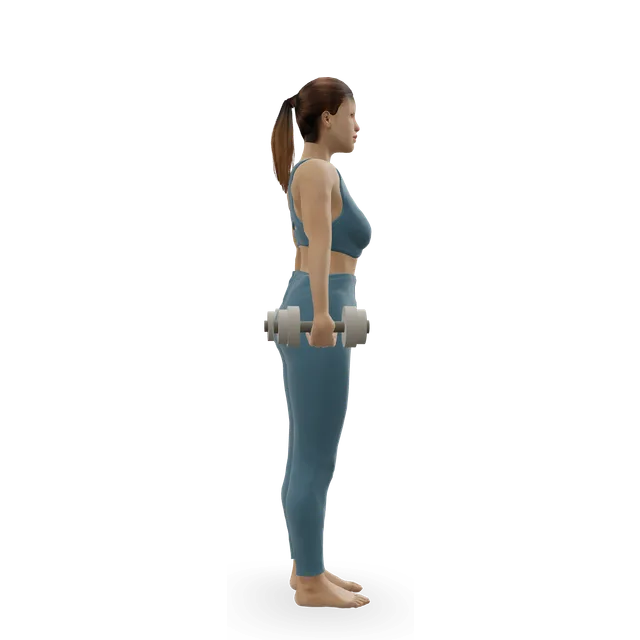
The movement on the figure: Dumbbell Romanian deadlift
The moves of our full-body gym workouts A and B, which the recomposition plan uses three times a week. The workouts give the sets and reps; the how-to guides show the technique.
 3D demoDumbbell goblet squatIntermediate · A dumbbell
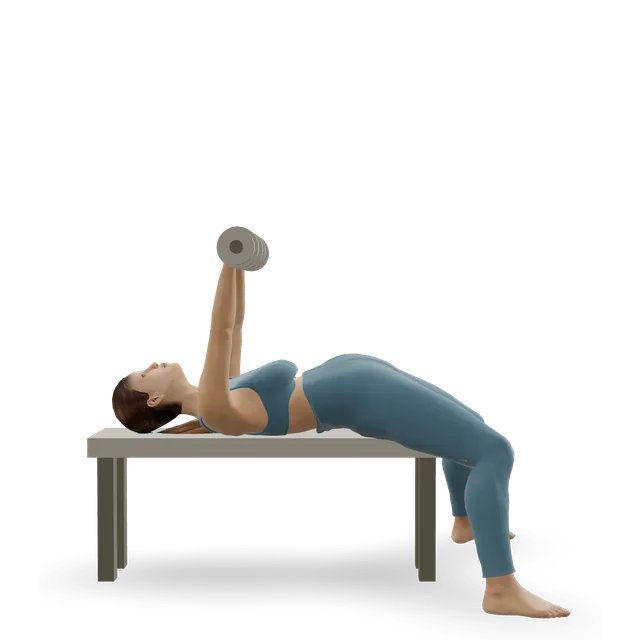 3D demoDumbbell bench pressIntermediate · A dumbbell + A bench or box
 3D demoLat pulldownBeginner · A cable machine
 3D demoDumbbell Romanian deadliftIntermediate · A dumbbell
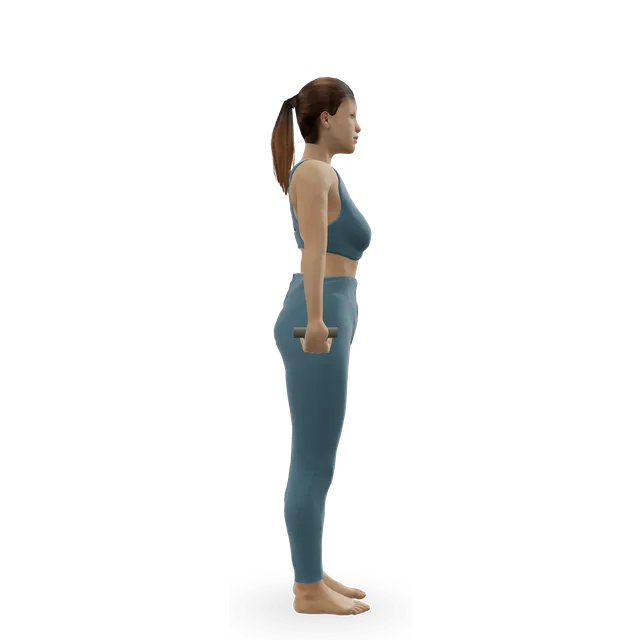 3D demoTrap bar (hex bar) deadliftIntermediate · Other / check instructions
 3D demoSeated cable rowBeginner · A cable machine
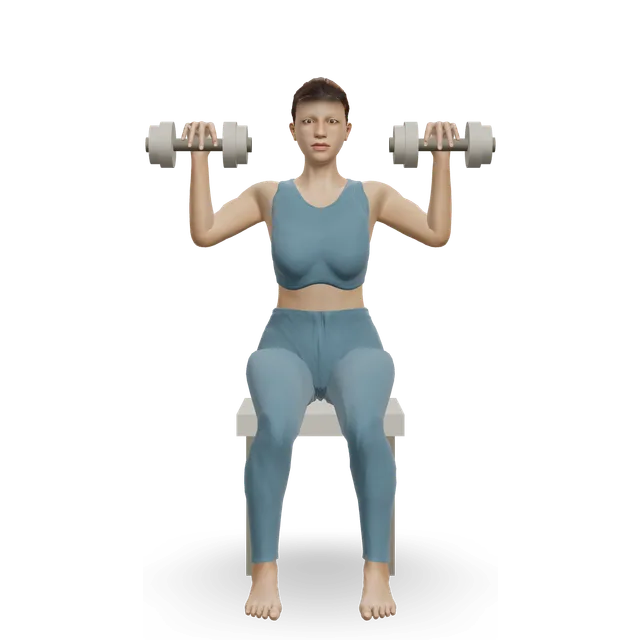 3D demoSeated dumbbell shoulder pressIntermediate · A dumbbell + A bench or box
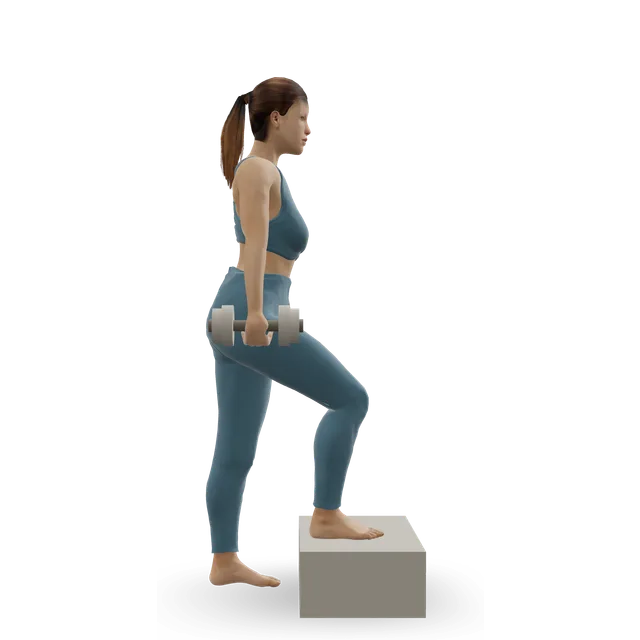 3D demoDumbbell step-upIntermediate · A dumbbell + A step
 3D demoPush-upIntermediate · No equipment
 3D demoDead bugBeginner · No equipment
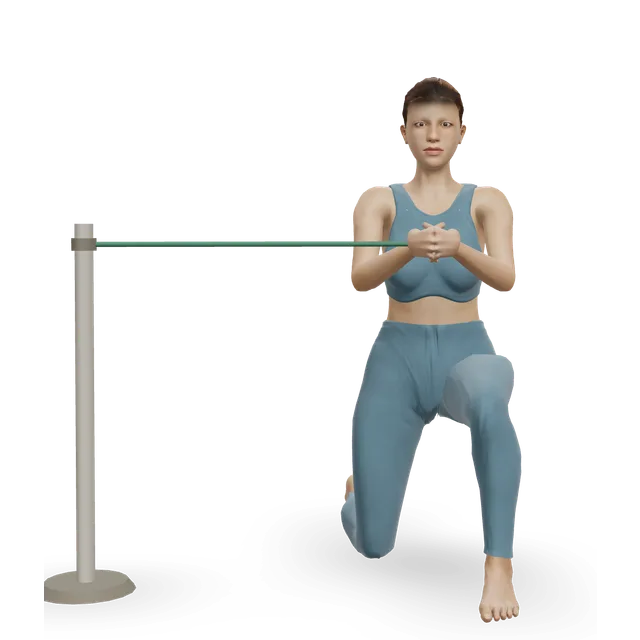 3D demoHalf-kneeling Pallof pressBeginner · A band + An anchor point
 3D demoFarmer's carryIntermediate · A dumbbell + A kettlebell
Build towards about 150 minutes a week, counting brisk walks. Indoor rowing and the cross-trainer have starting doses on their move pages; for the others, start with 20 to 30 minutes at a pace where you can talk but not sing (our editorial starting point).
Find the bottom of your ribs and the top of your hips, wrap a tape midway between them (usually just above your belly button), breathe out naturally and read it, every 4 weeks. NICE counts a waist under half your height as healthy for adults with a BMI under 35.
Photos from the front, side and back in the same light and pose, and the weights and reps you lift (our suggestion).
Three smart scales were 2.2 to 4.4 kg of fat out against a body scan, and 15 bioimpedance devices read from 3.5 percentage points too low to 11.7 too high, though some tracked change over 12 to 16 weeks better. NICE says not to use bioimpedance instead of BMI.
A DEXA scan's error for body fat is about 1.6 percentage points, so some changes reported in recomposition studies are within it, and different measures of muscle growth often disagree. Judge by the trend over months.
Trials ran from 4 to 24 weeks. More typical results were just under a kilo of lean mass over a programme in people with overweight or obesity, and a few per cent more muscle over 24 weeks in older women; the fastest change came from 4 extreme weeks of six hard sessions a week and a 40% calorie cut.
Fat comes off more slowly than with a bigger cut, and muscle grows more slowly than when you eat enough, because a deficit held back muscle gains in pooled trials. That's the trade.
Source 7
People differ hugely, so compare yourself with your own week 1. Nobody can promise you a date or a look.
Our suggestions, matching our recomposition plan; no trial has compared these choices.
Recompose: it's what usually happens anyway when people start strength training.
Source 3
A focused muscle-building phase with a small surplus, then a separate slow fat-loss phase, is likely faster; recomposition for you will be slow. Our bulk-up guide covers the first half.
Fat loss comes first for your health, with strength training to keep your muscle.
The recomposition plan's sessions: full-body strength three times a week, with steady cardio, interval walks and short walks after meals.
A beginner full-body gym workout: goblet squats, dumbbell bench press, lat pulldowns, Romanian deadlifts and dead bugs, with sets, reps and rest.
45 minBeginner12 movesCardio machine, A bandFull-body gym workout B: trap bar deadlifts, cable rows, seated dumbbell press, step-ups, leg curls, push-ups and a Pallof press.
50 minBeginner13 movesCardio machine, Other / check instructionsA 35-minute full-body strength workout with dumbbells: goblet squats, presses, rows, Romanian deadlifts and carries.
35 minIntermediate9 movesA band, A dumbbellHome dumbbell workout B: reverse lunges, push-ups, bent-over rows, single-leg glute bridges, lateral raises and side planks.
35 minIntermediate11 movesA wall, A dumbbellA 20-minute full-body dumbbell workout: two supersets of squats, rows, Romanian deadlifts and push-ups. Twice a week covers the minimum dose.
20 minBeginner8 movesA dumbbell, A bench or boxA 40-minute full-body gym workout in supersets: squats with pulldowns, presses with rows, Romanian deadlifts with overhead presses, then arms.
40 minBeginner13 movesCardio machine, A bandA steady 30 to 45 minute cardio session at talk-but-not-sing pace: walk, cycle, row or cross-train, counting toward weekly activity guidelines.
40 minBeginner3 movesCardio machine, A wallA 40-minute walk alternating 3 minutes fast and 3 minutes easy, five times over: the interval walking tested in Japanese trials, built up from three rounds.
40 minBeginner3 movesCardio machine, A wallA 10-minute routine for straight after a meal: an easy walk, a few simple standing moves from blood sugar trials, then a short walk to finish.
10 minBeginner6 movesCardio machine, A bench or boxFat loss first: the weight-loss plan. Muscle first: the muscle-building plan. A lighter start: the toning plan.
A 12-week workout plan for weight loss: three strength days, two cardio days and daily steps, building to 200 minutes a week, with honest results.
3 training days45 minBeginner4 days a weekA 12-week gym plan to build muscle after your first months of lifting: upper and lower days, sets that rise in three phases, lighter weeks, food and sleep.
4 training days55 minIntermediate3 days a weekAn 8-week toning workout plan: three full-body strength sessions and two cardio sessions a week, light and heavier weights, gym or home, without the myths.
3 training days40 minBeginner3 days a weekA 3-day workout plan: three full-body gym sessions a week, alternating workouts A and B, with sets, reps, rest and an 8-week progression.
3 training days45 minBeginner3 days a weekThree full-body home workouts a week with dumbbells or no equipment at all, plus walks and an 8-week plan to keep progressing.
3 training days35 minBeginner3 days a weekA 12-week plan for women over 40: three strength days, impact for bone, cardio and recovery through the perimenopause, in a gym or at home, with a 4-day option.
3 training days45 minBeginnerWomen gain a similar share of muscle to men from the same training, and older women gained muscle and lost fat over 24 weeks. Our plans for women over 40 and 50 add bone and pelvic floor work.
Don't cut calories if you're pregnant: the NHS says pregnancy isn't the time to go on a diet, so use our pregnancy plan, and if you're breastfeeding, the calories calculator's breastfeeding setting with no cut. Don't cut if you're underweight or losing weight without trying, which needs a GP first, or if you're under 18, unless a professional advises it.
If you take insulin, or diabetes tablets such as gliclazide or glimepiride, eating less and exercising more can bring on low blood sugar (feeling hungry, sweaty, shaky or dizzy), so agree the plan with your diabetes team first. Exercising too much, or spending a lot of time worrying about your weight and body shape, are among the NHS's signs of an eating disorder; it says to see a GP as soon as you can.
Losing weight much faster than planned, with dizziness or exhaustion, means eating more, and seeing a GP if it carries on (our suggestion).
If you get chest pain or pressure, feel faint or dizzy, are unusually breathless, or your heart races or beats irregularly during exercise, as our plans advise.
For chest pain that comes on suddenly and doesn't go away, feels tight or like squeezing, spreads to your arms, neck, jaw, stomach or back, or comes with sweating, feeling sick, light-headedness or breathlessness; severe difficulty breathing; someone who faints while exercising; palpitations that don't go away, or come with chest pain, shortness of breath or feeling faint; or a headache that starts suddenly and is extremely painful, especially while lifting or straining, or comes with numbness or weakness, difficulty speaking or loss of vision. The NHS says a bleed on the brain may be more likely when lifting something heavy. Don't drive yourself to A&E.
Ask for an urgent GP appointment or get help from NHS 111 for a headache that's triggered or made worse by coughing, sneezing, bending down or exercising. In the US, contact your doctor or urgent care.
Source 39
Call 999 or go to A&E: loss of feeling or numbness around the genitals or bottom, new trouble peeing or controlling your bladder or bowels, changes in genital sensation during sex or problems with erections or orgasm, or pain, tingling, weakness or numbness in both legs. These are signs of cauda equina syndrome, which needs treating in hospital urgently. Don't drive yourself.
Source 40
See a GP if you think you have a hernia, a bulge or lump that may get bigger when you strain and smaller when you lie down. Get help from NHS 111 if you have a hernia and pain in or around it, a bloated tummy, you feel or are sick, you're vomiting blood or your vomit looks like coffee grounds, you're constipated, you have a high temperature or feel hot, cold or shivery, or you've suddenly become confused. Call 999 or go to A&E for a femoral hernia (a small lump at the top of your thigh, in your groin) with very bad tummy pain, sickness, being unable to fart or poo, a high temperature or sudden confusion.
Speak to your GP first if you haven't exercised for some time or have medical conditions or concerns, as the NHS advises. Get advice before heavy lifting or hard straining work if your blood pressure is uncontrolled, or you have heart disease or chest pain when you're active, a pacemaker or defibrillator, diabetic eye disease, glaucoma, a hernia, recent eye or tummy surgery, or you're pregnant, as our breathing guide lists. After a recent shoulder dislocation or shoulder surgery, follow our shoulder dislocation guide or your surgical team first.
The NHS suggests seeing a GP if your BMI is in the overweight or obese range and you want help to lose weight, your waist is more than half your height, or you have conditions such as diabetes, high blood pressure or sleep apnoea.
Source 27
The NHS lists spending a lot of time worrying about your weight and body shape, eating very little food, exercising too much, and having very strict routines around food among the signs of an eating disorder, and says to see a GP as soon as you can. Worrying a lot about one area of your body can be body dysmorphic disorder. Beat's helpline in England is 0808 801 0677, and our eating disorders guide has the other numbers.
Across 114 trials, strength training added lean mass and took off fat together, older women gained muscle and lost fat over 24 weeks, and young men in a large calorie cut gained 1.2 kg of lean mass while losing 4.8 kg of fat. It's most reliable in beginners and people with fat to lose.
A narrative review lists trials in trained people that showed it, and trained adults gained fat-free mass in 8 weeks on high protein. But strength athletes grew no muscle in 21 weeks, and most lean dieting athletes lost some lean mass. It works for trained lifters, more slowly and less reliably.
They're different tissues. They can change in opposite directions at once, which is what recomposition is.
Source 18
A deficit of about 500 calories a day stopped lean-mass gains, and faster weight loss cost athletes their lean-mass gains.
Recomposition can leave your weight much the same. Your waist, photos and lifts tell you more, and bathroom body-fat readings were kilos out.
Across 43 studies, cardio didn't reduce muscle growth or maximal strength.
Source 13
Strength and fibre size came back quickly in one small study of women, but in another, a previously trained leg didn't regrow faster than an untrained one.
Losing fat and building muscle at the same time, so your shape changes even if your weight barely moves. It comes from progressive strength training, enough protein and, if you have fat to lose, a small calorie cut.
Yes, especially if you're new to lifting or have fat to lose: in 114 trials, strength training alone added about 0.8 kg of lean mass and took off about 1 kg of fat. It's slower and less certain in lean, trained lifters.
It can, but the evidence is thin: a narrative review of trials in trained people, mostly with high protein, and one 8-week trial in which people's results ranged widely. It's slow and unreliable for the very lean and experienced, so a lean bulk and a slow cut may get you there faster.
At maintenance if you're a healthy weight. With fat to lose, about 300 to 500 calories a day less is our suggested range: a deficit of about 500 calories a day stopped muscle gain on average, and athletes losing 0.7% of their weight a week kept gaining lean mass.
Use our protein calculator's building-muscle setting, 1.6 to 2.2 g per kg of body weight a day. Lean, trained people eating less may keep more muscle with 2.3 to 3.1 g per kg, but that's above what most people need.
Months, not weeks. Trials ran from 4 to 24 weeks, and the typical gains were modest; measure every 4 weeks and compare yourself with your own week 1.
Your waist going down and your lifts going up is the sign. Bathroom body-fat readings were 2.2 to 4.4 kg of fat out against a scan, so use them for a rough direction at most.
It isn't essential, but it helps the fat loss and your heart: each 30 minutes a week took about half a kilo and half a centimetre of waist off in trials, and it doesn't cost muscle. Aim for about 150 minutes a week, counting brisk walks.
Usually by recomposition: eat at maintenance, get enough protein, and train every muscle progressively three times a week. Strength training on its own trimmed body fat by about 1.5 percentage points in trials, and beginners build muscle fastest.
New, coming back or with fat to lose: recompose. Lean and experienced: a focused muscle-building phase and a separate slow fat-loss phase are likely faster.
Yes: women gain a similar share of muscle to men, and older women gained muscle and lost fat over 24 weeks of training. Our plans for women over 40 and 50 add bone and pelvic floor work.
Yes: on the same diet, 5.5 hours in bed instead of 8.5 cut the fat lost by more than half and raised the lean mass lost. Adults need 7 to 9 hours.
Exercise education, not a personal prescription, and clinical review of these guides is pending. Check with a GP before starting hard training if you have a heart condition, chest pain, dizziness or breathlessness when active, and stop for sharp or increasing pain. Health disclaimer.