Cellulite is normal
It affects 80 to 90% of women after puberty, at every size, and about 2% of men. It comes from fibrous bands that tie the skin down while fat pushes up between them; women's bands are fewer, run straight up and break more easily.
Pilates guide
Cellulite is the dimpled skin most women have on their thighs, bottom and hips: 80 to 90% of women after puberty, of every size. It's normal, not a disease. No study has tested Pilates on cellulite, and exercise alone hasn't removed it in any trial we found: in one, 12 weeks of daily glute strengthening left it unchanged. Pilates is still worth doing for strong legs and how you feel; it just isn't a cellulite treatment.
Our fascia and cellulite guide covers rolling, massage and fascia blasting, and our thigh fat guide covers fat loss. This guide explains what cellulite is and why women have it more than men, what exercise, weight loss and Pilates can and can't change, what dermatologists can offer and how long it lasts, how to tell cellulite from cellulitis and lipoedema, and a routine for your legs and glutes.
It affects 80 to 90% of women after puberty, at every size, and about 2% of men. It comes from fibrous bands that tie the skin down while fat pushes up between them; women's bands are fewer, run straight up and break more easily.
We found none in the medical databases or trial registries. One preprint compared Pilates with massage but never measured cellulite.
In a small trial with blinded assessors, 12 weeks of daily glute strengthening left the cellulite score unchanged. In other trials, only women who added a device (shock wave therapy, or a pressure suit while cycling) saw cellulite improve.
Most women's cellulite improved when they lost weight, but it got worse for some, more often those who started lighter and lost less. The bands stretch when weight goes on and don't shrink back.
The American Academy of Dermatology says more muscle makes skin look smoother and firmer, but no trial has shown it, and the one blinded strength trial found no change. Pilates builds stronger legs and glutes, which is worth having whatever your skin looks like. This page promises no smoother skin and no particular shape.
Reviews of cellulite treatments found none with clear, lasting evidence. Medical procedures that cut or release the bands last longest; an enzyme injection was stopped by its maker in 2022 because of bruising and skin discolouration.
Cellulite isn't cellulitis or lipoedema, and dimpling on the breast is a different sign. This is general information, not a diagnosis. A&E means accident and emergency; in the US, call 911 for 999, and use your doctor's urgent line or urgent care for NHS 111.
Source 16
Same day (urgent GP appointment or NHS 111): throbbing pain in one leg (rarely both), usually the calf or thigh; swelling in one leg (rarely both); red, blue or darkened skin around the painful area, which may be harder to see on brown or black skin; or swollen veins. This can be a deep vein thrombosis (DVT). It is more likely after surgery, a hospital stay, 3 or more days in bed, a journey of over 4 hours, pregnancy or a recent birth, cancer, a previous clot, or contraception or hormone replacement therapy (HRT) that contains oestrogen.
Source 17
The NHS says to see a GP if you have symptoms of lipoedema: a build-up of fat, usually equal on both sides, that can make your bottom, thighs, lower legs and sometimes your arms look out of proportion with the rest of your body, with pain, tenderness or heaviness, and bruising easily. The skin may feel soft and cool and look dimpled, a bit like orange peel, which is easy to mistake for cellulite. Ask for an urgent GP appointment or get help from NHS 111 if your leg or legs become swollen, red, hot and painful and you have flu-like symptoms: it may be cellulitis.
Source 18
The NHS lists a change in the skin of your breast, such as dimpling that may look or feel like orange peel, among the symptoms of breast cancer in women, and says to see a GP if you have any changes in your breasts or nipples that are not normal for you. Many of these changes have other causes, but it's important to get them checked by a GP.
Source 19
The dimpled, uneven look of the skin, mostly on the thighs, buttocks and hips, in 80 to 90% of women after puberty, in all ethnic groups. It's rare in men (about 2%, usually with low male hormones or on hormone treatment). In 1978, the authors of the first cellulite grading scale wrote of "the essential normality and inevitability of it in women".
Fat under the skin sits in pockets held by fibrous bands that tie the skin to deeper layers. On magnetic resonance imaging (MRI) scans, thick bands running straight down lay under 96.7% of dimples. In 20 body donors, men had more bands and theirs took more force to break (about 38 against 23 newtons). In women with cellulite, fat pushed further up into the skin, and scans found no extra water in the fat.
The female hormone oestrogen likely plays a big part, which fits cellulite appearing after puberty. Thinner skin with age isn't the main cause, since "Young adult female skin commonly presents with cellulite".
Severity tracks body fat: in 72 people scanned in 3D, "Cellulite severity was predicted by the percent fat" and the shape of the border between skin and fat. In 184 Brazilian girls aged 12 to 18, 77.7% had cellulite, and it was more common with a higher BMI (body mass index) and a family history. But women of every size have it.
Trials mostly grade photographs on a scale, such as the Cellulite Severity Scale, which scores 5 features from 0 to 3. A review found "only 2-dimensional and 3-dimensional digital photography have been adequately validated", so a casual before-and-after photo is a weak test: light, posture and skin temperature change how dimples look.
Cellulitis is a skin infection, with skin that turns painful, hot and swollen, and it needs a doctor. The names are similar; the conditions aren't.
Source 16
Lipoedema is a build-up of fat in both legs, and sometimes the arms, that is often painful, tender or heavy and bruises easily, and usually spares the feet. An international consensus says "Lipedema is not an obesity-related comorbidity." Its skin can look dimpled too, which is one reason people mix the two up; our Pilates for lipoedema guide covers it.
Every exercise and cellulite trial we found was small and short, and most tested a device with exercise as the comparison.
We found no trial or study that measured cellulite after Pilates, in English, Portuguese or Spanish medical databases or in trial registries. One preprint compared a Pilates group with women who had anti-cellulite massage once, and didn't measure cellulite.
In a German double-blind trial, women did two glute exercises "Twice a day (in the morning and the evening)", 15 repetitions each leg, for 12 weeks, with either real or dummy shock wave sessions. With the dummy device, the Cellulite Severity Scale went from 10.0 to 10.1; with real shock wave, from 10.9 to 8.3. The trial was small, the number of women analysed isn't stated, and the device maker paid its publication charges.
In Portugal, 45 women were randomised and 42 finished: 6 aerobic sessions over 3 weeks, with or without shock wave therapy, or no treatment; only the shock wave group's cellulite eased more than the others. In 86 women with obesity, all diet groups lost weight, but only the group that cycled in a lower-body pressure suit improved how their cellulite looked. Treadmill training alone kept body fat from rising in 20 women; the cellulite benefit was reported for the group that added infrared light.
"The majority of subjects had an improvement in cellulite with weight loss, but the condition worsened for others." Improvement went with a higher starting weight and more fat lost. Very large weight loss can loosen the skin and make cellulite more visible.
The American Academy of Dermatology says "Having more muscle makes your skin look smoother and firmer", and a 2024 clinical guide suggests lifestyle changes for mild cellulite. Neither is backed by a trial, and the one blinded strength trial found no change.
These are medical or cosmetic treatments; a dermatologist can explain the options and their limits. Our fascia and cellulite guide covers massage, rolling and fascia blasting.
Of 67 studies of cellulite treatments, "No clear evidence of good efficacy could be identified". In 24 trials (2,084 people, with an average follow-up of 3.3 weeks), shock wave therapy, radiofrequency and an enzyme injection looked promising, but "none are definitively established". A 2023 review: "There is no effective treatment for cellulite".
Most device trials are of poor quality, and devices applied over the skin "produced real but decaying change", fading within 3 to 6 months.
Reviewers argue that targeting the bands is most likely to give lasting change. A procedure that cuts the bands with a needle or blade kept its benefit for 3 years in 45 women, in an open study with company-linked authors, and a sound-wave version helped most of 42 women after one visit.
In two placebo-controlled trials of 843 women, collagenase injections made more women look at least a little better (37.1% against 17.8%, and 41.6% against 11.2%), but few looked clearly better (7.6% against 1.9%, and 5.6% against 0.5%). Bruising affected 89% in pooled studies, and one woman injected in the thighs tore both front thigh muscles. Its maker announced in December 2022 that it would stop making and selling the injection because of bruising and possible long-lasting skin discolouration; it remains approved by the US Food and Drug Administration (FDA).
Six months of retinol cream barely changed "The lumpy-bumpy appearance of the skin" in 15 women, and in a 2026 caffeine cream trial the placebo legs improved too. Machine massage made no measurable difference in 52 women.
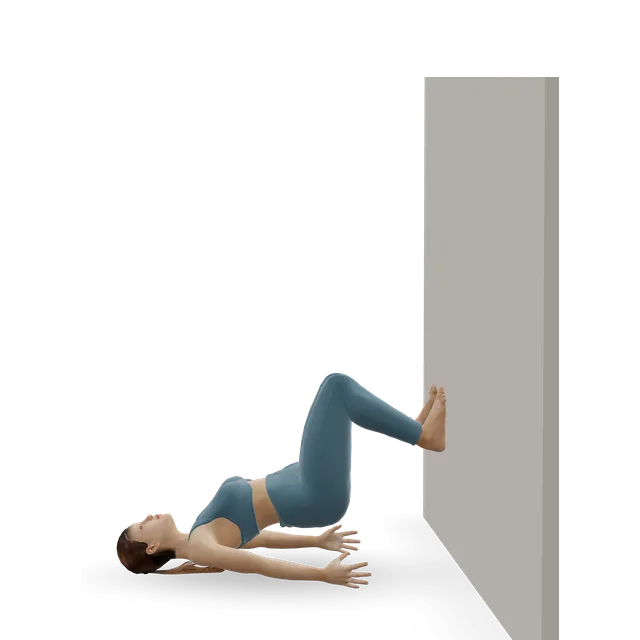
For strength, not to erase dimples: the side kick (8 to 10 each side), side-lying leg circles (8 each direction, each side), the inner thigh lift (10 to 12 each side), the shoulder bridge (3 to 5 kicks each leg) and the single-leg kick (6 to 8 each leg), all from the move pages' doses, and the single-leg glute bridge (6 to 8 each side, our Pilates glute workout). With pain on the outside of the hip, never lie on the sore side, as the side-lying move pages say.
 3D demoSide kick (Pilates side kick series)Beginner · No equipment
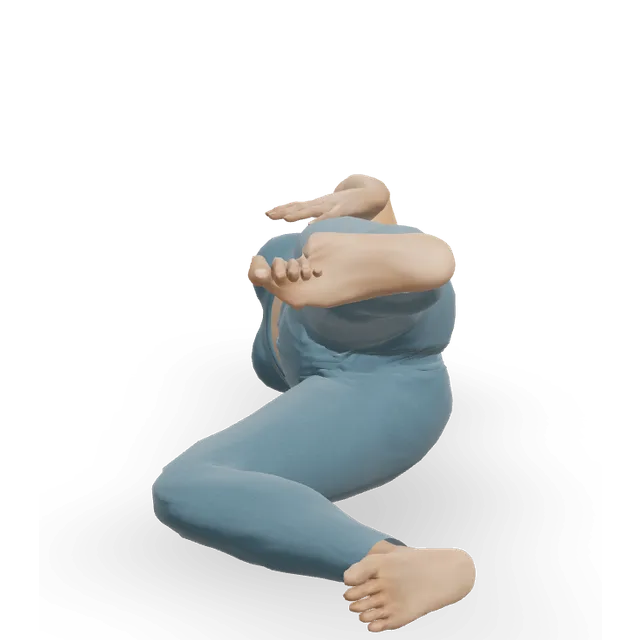 3D demoSide-lying leg circles (Pilates side kick series)Beginner · No equipment
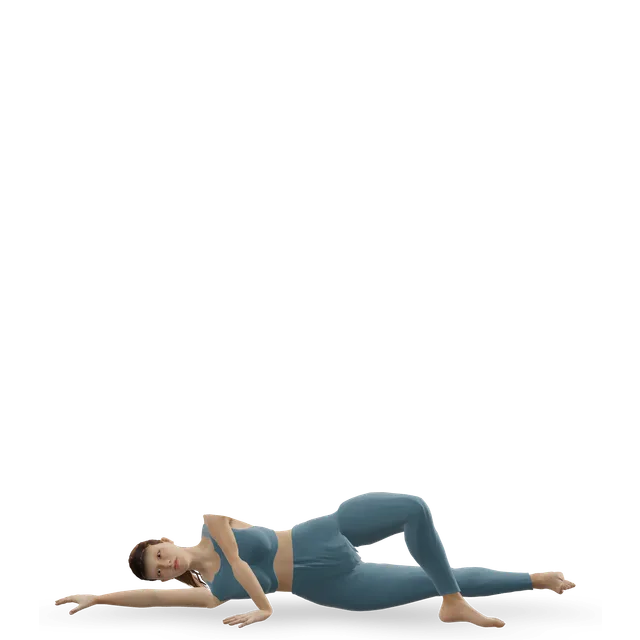 3D demoSide-lying inner thigh lift (Pilates side kick series)Beginner · No equipment
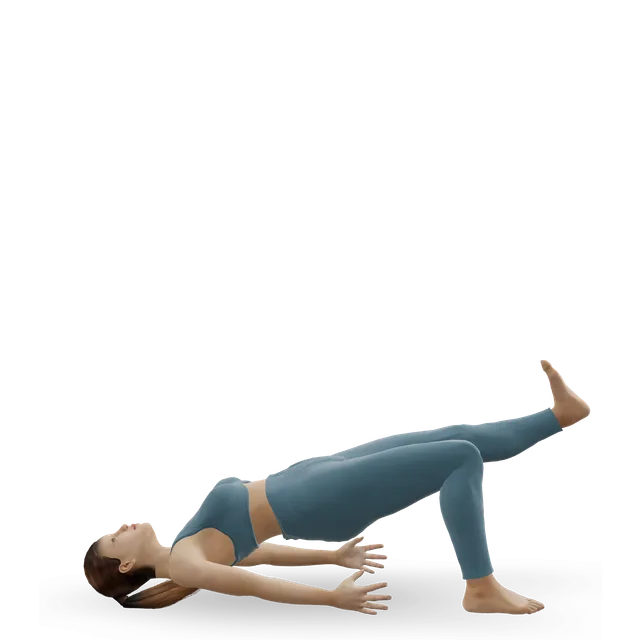 3D demoShoulder bridge (Pilates)Intermediate · No equipment
 3D demoSingle-leg glute bridgeIntermediate · No equipment
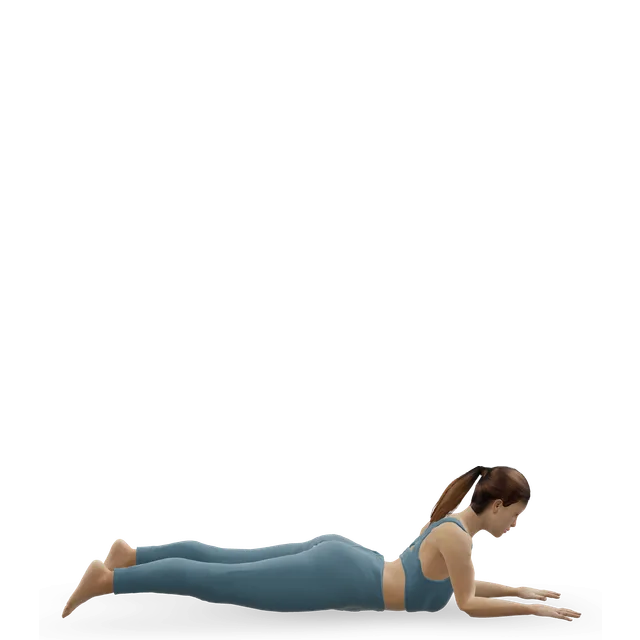 3D demoSingle-leg kick (Pilates one leg kick)Beginner · No equipment
Bodyweight squats (2 sets of 10 slow reps) and reverse lunges (8 each side), both our Pilates leg workout's; the wall side leg lift (10 to 12 each side, from the move page's dose), the option if lying on your side hurts; then goblet squats (3 sets of 8 to 12, our Pilates strength workout) and dumbbell Romanian deadlifts (3 sets of 8 to 12, our strength and balance workout) to add load.
A brisk walk (20 minutes, our walk and Pilates workout) or marching on the spot (2 minutes to warm up, the same class) helps with overall fitness and fat, building toward the NHS's 150 minutes a week.
Our editorial starting point, following the NHS activity guidelines. It builds strength and fitness; no exercise has been shown to remove cellulite.
The leg and glute classes build strength, the walk and Pilates workout adds brisk walking, and the strength workout adds weights or a band. If your legs are painful and bruise easily, the Pilates for lipoedema class is gentler and padded.
A 25-minute Pilates class for your legs: reformer footwork without the machine, leg circles, the side kick series, inner-thigh squeezes and stretches.
25 minBeginner15 movesWall, other / check instructionsA 25-minute Pilates class for your glutes: bridges, the side kick series, face-down kicks and standing work at a wall, with a band to make it harder.
25 minBeginner16 movesWall, bandA 45-minute session for weight loss and health: a 20-minute brisk walk, which does more for the scales, then a short-rest Pilates circuit for strength.
45 minBeginner11 movesCardio machineA 30-minute Pilates strength class with dumbbells or a band: Pilates trunk work plus squats, lunges, rows and push-ups, each set taken until it is hard.
30 minIntermediate15 movesDumbbell, bandA 25-minute low-impact Pilates class for lipoedema: leg and hip strength lying with your legs raised, on your side and at a wall, with no jumping and no kneeling.
25 minBeginner16 movesWall, bench or boxFor strength and fitness, not for cellulite.
A free 8-week walking plan for beginners: build to 150 minutes of brisk walking a week, with intervals, hills and two short strength sessions.
6 training days40 minBeginner4 days a weekAn 8-week glute workout plan: two glute days and two upper-body days a week, with hip thrusts, squats, hinges and side-hip work, plus a home option.
4 training days50 minIntermediate3 days a weekA free 4-week, 3-day Pilates plan for complete beginners. Two mat days and one wall day, with clear rules for when to move each exercise to its harder version.
3 training days25 minBeginnerUse our Pilates for lipoedema class: it pads the floor, keeps bands and balls off tender legs, and adds reps only when a session leaves you no more sore or bruised than usual.
Swap the side-lying moves for the wall side leg lift, as their move pages say.
After the first trimester, keep time flat on your back short and prop yourself up, and skip face-down moves later in pregnancy, as the move pages say.
Stop and use the cellulitis advice near the top of this page before exercising.
The skin, leg and breast signs are near the top of this page. This is general information, not a diagnosis. A&E means accident and emergency; in the US, call 911 for 999, and use your doctor's urgent line or urgent care for NHS 111.
Call 999 if:
Call 999 or go to A&E (accident and emergency) straight away for severe difficulty breathing (gasping, choking or not able to get words out), a chest that feels tight or heavy, pain that spreads to your arms, back, neck and jaw, lips or skin turning very pale, blue or grey, or sudden confusion. If you're more short of breath than usual, or your heart is racing, fluttering or skipping beats, contact NHS 111.
Source 43
You feel any pain or become unwell, as the NHS advises for its Pilates videos, and especially for chest pain or pressure, unusual breathlessness, dizziness or fainting. If you have a health problem, an injury or any symptoms, get advice from a healthcare professional, such as a GP, before you start.
Source 44
The NHS lists signs such as spending a lot of time worrying about your weight and body shape, exercising too much, and having very strict habits or routines around food. If that sounds like you, see a GP as soon as you can. You can also talk in confidence to the eating disorder charity Beat: 0808 801 0677 (England), 0808 801 0432 (Scotland), 0808 801 0433 (Wales) or 0808 801 0434 (Northern Ireland), 3pm to 8pm, Monday to Friday.
In a survey of 2,287 young adults, women who did yoga or Pilates had disordered eating as often as those who didn't, and men who did them reported more extreme weight-control behaviours (18.6% against 6.8%). Set goals for strength, control and how you feel, not calories burned.
The NHS advises getting advice from a healthcare professional first if you have a health problem, an injury or symptoms, or have recently had a heart attack or an operation.
Source 44
No study has measured cellulite after Pilates, so there's no evidence either way.
Source 4
In one small blinded trial, 12 weeks of daily glute strengthening left the cellulite score unchanged, and in other trials only groups that added a device improved.
Most women have it, at every size. It depends on the bands under the skin and on hormones; severity tracks body fat, but it isn't a disease.
Scans found no extra water in the fat of women with cellulite. One snapshot study linked drinking less water with cellulite in teenagers, which can't show that drinking more treats it, and no trial has tested water or detox.
No study shows exercise or stretching changes the bands. Reviewers say only treatments that target the bands give lasting change, and our fascia and cellulite guide explains why rolling and blasting can't reach them.
Light, posture and skin temperature change how dimples look, and only standardised photography has been validated for grading cellulite.
Source 26
It improved for most women who lost weight in one study and got worse for some.
Source 9
Retinol barely changed the lumpy look, and in a 2026 caffeine cream trial the placebo legs improved too.
No trial of any kind of Pilates has measured cellulite.
Source 4
No study has tested it. In a small blinded trial, 12 weeks of daily glute strengthening didn't change cellulite, so Pilates is worth doing for strength and fitness, not to erase dimples.
No exercise has been shown to remove it. Nothing removes it for good: reviews of cellulite treatments found none with clear, lasting evidence.
There aren't any proven ones. The side kick, bridges and leg kicks, plus squats and lunges, build leg and glute strength, and our Pilates leg and glute classes put them together.
Yes: 80 to 90% of women have it after puberty, at every size. It comes from how fibrous bands hold the fat under the skin, which differs between women and men.
It improved for most women who lost weight in one study and got worse for some, more often those who started lighter and lost less. The bands stretch when you gain weight but don't shrink back.
No study has measured cellulite after reformer or mat Pilates. Either builds strength, which is a good reason to do it.
Lighting, posture, skin temperature and angle all change how dimples look, and only standardised photography has been validated for grading cellulite. A casual photo can't tell you much.
Treatments aimed at the bands under the skin give the longest-lasting results, but they are medical procedures with modest results and side effects such as bruising. Shock wave therapy and radiofrequency help a little for a short time, and creams do little. A dermatologist can explain the options.
No. Cellulitis is a skin infection: skin that is painful, hot and swollen needs an urgent GP appointment or NHS 111, and 999 with signs such as a very high temperature, a fast heartbeat or confusion.
Lipoedema is fat in both legs, and sometimes the arms, out of proportion with the rest of the body, often painful, heavy and quick to bruise; its skin can look dimpled too. See a GP if that sounds like you.
Scans found no extra water in the fat of women with cellulite, and no trial has tested drinking more water. Drink to thirst for your health, not for your skin's dimples.
No study has looked. Like Pilates, it's good for you, but it isn't a cellulite treatment.
Exercise education, not a personal prescription, and clinical review of these guides is pending. If you are pregnant, have a health condition or have had recent surgery, check with a doctor, midwife or physiotherapist before starting, and stop for sharp or increasing pain. Health disclaimer.