Pilates guide

Pilates for lipoedema (lipedema): what it can and can't change, tender legs and sore knees, compression, and a 25-minute low-impact class

Pilates suits lipoedema (lipedema in the US) because it builds leg and hip strength with no impact, much of it lying down with your legs raised against a wall, and you can do it in your compression garment. It won't remove lipoedema fat or change the shape of your legs: lipoedema fat is largely resistant to diet and exercise, and that isn't a failure of effort. What exercise can do, in small studies, is ease pain and heaviness and help you stay strong and mobile.

No Pilates study in lipoedema has been published. One trial, in 60 women in Egypt, finished in 2026 with no results posted, and it added a diet, so it couldn't show what Pilates alone does.

This guide covers what lipoedema is and how it differs from obesity and lymphoedema, what the evidence shows, compression in class, how to adapt Pilates for tender, easily bruised legs, sore knees and loose joints, which moves to swap, a 25-minute low-impact class, and the warning signs that need a GP.

The short version

Pilates won't change the fat, and that isn't your fault

The National Institute for Health and Care Excellence (NICE) says lipoedema fat "is usually resistant to diet modification and exercise". Pilates won't slim your legs or change their shape. It isn't meant to.

Sources 1, 2, 3

What it can do: ease pain and keep you strong

In 6 small studies of 115 women, exercise seemed to ease pain and other symptoms and help function, more so with compression. Women with lipoedema had weaker legs than women of the same age and body mass index (BMI) in a 2026 study, so strength is worth building.

Sources 4, 5

The guidance fits Pilates

UK best practice guidelines list "walking, water-based exercises, yoga, pilates and the use of resistance bands" among low-intensity options. The NHS lists Pilates among muscle-strengthening activities.

Sources 6, 3, 7

No Pilates study has been published

The only Pilates trial in lipoedema, of supervised and online Pilates with a low-carbohydrate diet in 60 women, finished in March 2026 with no results posted.

Sources 8, 9

Wear your compression garment

A German guideline says movement in compression or a training programme "shall be included" for pain relief. Compression eases pain and heaviness but won't change the size or shape of your legs.

Sources 10, 4, 11

Low impact, and swap what hurts or bruises

Lipoedema UK says high-impact exercise and contact sports "are not recommended, as they may exacerbate joint pain and lead to bruising". Pad the floor, keep straps off tender areas, and skip kneeling if your knees hurt.

Sources 12, 6

What lipoedema is

A build-up of fat, not fluid

The NHS describes lipoedema as "an abnormal build-up of fat in your legs and sometimes arms". It is "more common in women", usually equal on both sides, and the feet and hands aren't usually affected. The legs can be painful, tender and heavy, and bruise easily. "It's not caused by being overweight", the NHS says.

Sources 13, 3

How common it is

Nobody knows. A 2026 international consensus says estimates in adult women range "from less than 1% to up to 12%", and a 2020 consensus found no evidence for the often-quoted 11%.

Sources 3, 14

Lipoedema or lymphoedema?

The Lymphoedema Support Network compares them: lipoedema is "bi-lateral and symmetrical", the feet are "usually not affected", the skin doesn't keep a dent when pressed, and the risk of infection is "no greater than normal". Lymphoedema is fluid swelling that is often in one limb, affects the feet and leaves a dent. The International Society of Lymphology says pure lipoedema isn't a lymphatic disease, at least in the early stages, though fluid swelling can come later.

Sources 15, 16

Lipoedema or obesity?

The two often go together, but "Lipedema is not an obesity-related comorbidity", the 2026 consensus says, and NICE calls it "a different condition from obesity and from lymphoedema". BMI can mislead, so experts suggest your waist-to-height ratio instead.

Sources 3, 1

The body around it

In 24 women with lipoedema and 20 of the same age and BMI, leg strength, a 30-second sit-to-stand test, walking distance and pain on pressing were all worse in lipoedema. Lipoedema UK lists pain, heaviness, easy bruising, tiredness, joint problems, fat pads around the knees and changes in the way you walk.

Sources 5, 17, 18

Living with it

The NHS offers counselling or cognitive behavioural therapy (CBT) if you're finding it hard to cope. Repeated diets that don't touch lipoedema fat can harm your relationship with food, Lipoedema UK warns, which is one reason this page never treats lipoedema as a weight problem.

Sources 13, 18

What Pilates can and can't change

It can't change the fatStrong evidence

NICE, a US standard of care and the 2026 consensus agree that lipoedema fat is largely resistant to diet and exercise. Training one part of the body doesn't remove the fat over it in anyone, as our Pilates for legs guide explains.

Sources 1, 2, 3

It may ease pain and heavinessEmerging evidence

Small studies found less pain and better function with exercise, especially with compression. None tested Pilates.

Sources 4, 19, 20

It builds strength without impactEmerging evidence

Leg strength is often lower in lipoedema, and "Exercising with weights is good for all women", Lipoedema UK says. Pilates works the legs and hips lying down, on your side and at a wall, with no jumping.

Sources 5, 12, 7

It can help you feel at home in your body

Fear of movement was high in 78% of 40 women with lipoedema, against 55% of women without it. A slow, controlled class you can do at home is a gentle way in (our suggestion).

Source 21

What the evidence says

No published Pilates study exists in lipoedema. The evidence below is for exercise in general, and for the guidance.

Every guideline recommends exerciseStrong evidence

In the 2026 consensus, 93.3% of experts agreed that care "should include lifestyle and nutritional optimization, compression therapy, and exercise", and 91.5% agreed that tailored exercise such as water activity, walking and yoga can help. The UK, US, German and Italian guidance all recommend exercise. The grade reflects how consistent the advice is: the studies behind it are few and small, and the consensus rated its own evidence only moderately strong.

Sources 3, 6, 2, 10, 22, 13

Only the UK guidelines name Pilates

UK best practice guidelines (2017) name Pilates among low-intensity activities. A US standard of care says, at its weakest grade, that people with lipoedema "may benefit from postural and core exercises" and deep tummy breathing, which is close to Pilates. The Italian exercise consensus gives no doses and doesn't mention Pilates.

Sources 6, 2, 22

The exercise studies: small and variedEmerging evidence

A 2026 review found 6 studies with 115 women; exercise seemed to improve pain, symptoms, quality of life, leg size and function, "greater when combined with ongoing compression therapy". We read its summary, which gives no pooled numbers. In 33 women with severe lipoedema, everyone improved with 30 sessions of exercise, and adding decongestive therapy helped most. In 22 people, 6 weeks of supervised exercise twice a week improved pain, walking and strength within the group, but not significantly more than education alone.

Sources 4, 19, 20

No Pilates study publishedStrong evidence

Our searches of PubMed, Europe PMC and ClinicalTrials.gov (October 2026) found no published Pilates, yoga or mind-body study in lipoedema. One registered trial gave 60 women aged 35 to 45 supervised or online Pilates with a 12-week low-carbohydrate diet; the registry lists it as a single group, and it finished in March 2026 with no results posted. Even when it reports, the diet means it can't show what Pilates alone does. A trial of trunk stabilisation exercise, registered in 2019, has never reported.

Sources 9, 8, 23

Compression with exerciseEmerging evidence

A German guideline strongly recommends movement in compression for pain. In a 6-woman pilot, adding compression leggings to exercise reduced bruising and pain on pressing, and the 2026 review found exercise seemed to work better with compression. Compression "does not reduce the amount of fatty tissue", the 2020 consensus says.

Sources 10, 24, 4, 14

Combined care over 6 monthsMixed evidence

In 86 women given manual lymphatic drainage, compression and exercise advice for 6 months, lipoedema-specific quality of life improved meaningfully in 56%. There was no comparison group.

Source 25

How Pilates compares with other exercise

No study compares them in lipoedema. Water exercise has the most consensus support, walking and cycling are on every list, and Lipoedema UK backs strength training. Pilates belongs with the low-impact strength options; it isn't cardio, so pair it with walking, cycling or water exercise.

Sources 3, 6, 12

Compression and Pilates

What it does, and doesn't do

The NHS says compression stockings or bandages can "reduce pain and discomfort, and make it easier for you to walk". Lipoedema UK says "Compression garments will not change the size or shape of the areas affected by lipoedema."

Sources 13, 11, 14

Wearing it to class

Our suggestion: if you've been given a garment, wear it for mat and reformer Pilates. In a 2026 survey of 373 people with lipoedema, most used class 1 or 2 garments, and some specialists suggest compressive sportswear first to see what you can tolerate. A US standard of care says a higher compression class doesn't mean better results. If it hurts in floor work, take it off and tell your clinician.

Sources 10, 26, 2

When it isn't safe

Lipoedema UK says "sometimes compression is contraindicated", so a clinician who knows your medical history should assess you first, especially if you have poor circulation in your legs, as the NHS advises.

Sources 11, 13

Tender legs, bruising, sore knees and loose joints

Pain and bruising on pressure

Pain on pressure and easy bruising are core symptoms, and UK guidelines say "High intensity exercise or activities that cause or aggravate pain or bruising should be avoided". Pad the mat and anything you lie on, and keep rings, balls, bands and straps off tender areas (our suggestion).

Sources 13, 18, 6

Sore knees

Fat pads around the knees and joint problems are common. Skip kneeling moves or kneel on a thick cushion, and use the standing and side-lying versions instead (our suggestion).

Source 18

Loose jointsEmerging evidence

A US standard of care estimates that about half of people with lipoedema have hypermobile joints. That is an expert estimate: in an online survey, 44% reported joint hypermobility, and only 75.4% of experts in the 2026 consensus agreed that lipoedema "might be associated with connective tissue disorders, such as hypermobility spectrum disorders". If your joints are loose, keep moves controlled and in the middle of your range; our Pilates for hypermobility guide explains how.

Sources 2, 27, 3

Heat

No study has tested hot Pilates in lipoedema. Fluid swelling can come with lipoedema, and the NHS says heat from saunas, steam rooms and sun beds "may increase the swelling" in lymphoedema, so we'd skip heated classes (our suggestion).

Source 28

Breathe and settle

Lateral breathing: "5 to 8 breaths at the start of every session." (the move page's dose). Slow breathing: 5 breaths at the start and end (our Pilates for lymphoedema class; adapted from the move page's dose).

Legs raised and moving, on your back

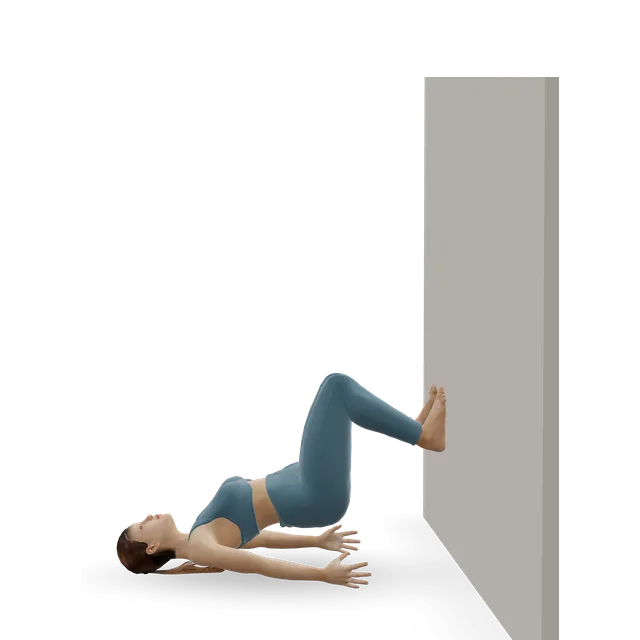
Wall bridge: "8 to 10 reps; one-leg version, 5 each side" (the move page's dose), feet on the wall so your legs are raised. Heel slides: 8 each side (our Pilates for lymphoedema class; adapted from the move page's dose). Knee folds: 6 each side (the class; adapted from the move page's dose). Single-leg circles: "5 circles each direction, each leg (the classical sequence uses 5)." (the move page's dose), kept small. Ankle circles: 10 pumps, then 5 circles each way, legs up the wall or on a cushion (the class; adapted from the move page's dose). Bridges: 2 sets of 8 (our editorial starting point).

On your side, padded

Clamshells: 10 each side, a pillow under your head and between your knees (our Pilates for lymphoedema class). Side kicks: 8 each side, moving rather than held (the class; adapted from the move page's dose). Side-lying leg raises: 8 each side, heel leading (our editorial starting point). If the side you lie on is tender, swap to the wall side leg lift.

Standing, at a wall or chair

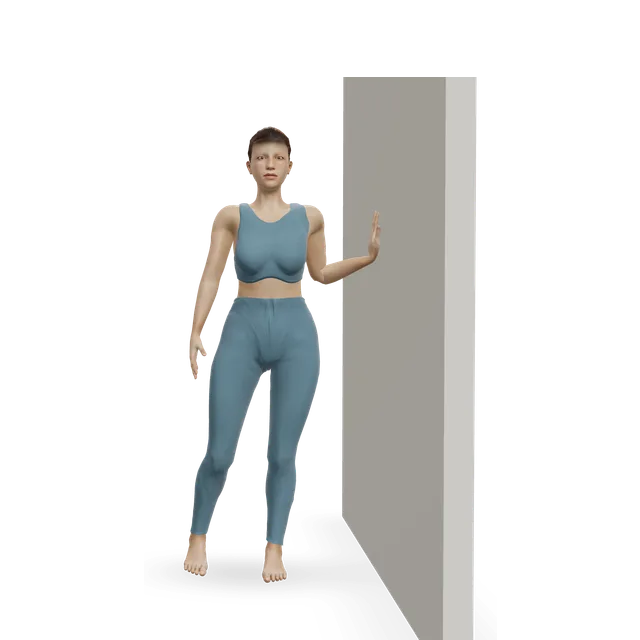
Sit to stand: 8, from a sturdy chair (our Pilates for lymphoedema class). Wall side leg lift: 10 each side (our editorial starting point; adapted from the move page's dose). Slow calf raises: 10, a hand on the wall (the class). Wall push-ups: 8 (the class). Band row: 1 set of 8 to 10 with the lightest band, building up (the class; adapted from the move page's dose).

Finish

Mermaid: "3 each direction, each side." (the move page's dose), sitting on a chair if the floor is hard to get down to. Legs up the wall: 2 to 3 minutes, or legs on cushions, for comfort (our PoTS starter session's dose). A US standard of care says raising the legs doesn't improve lipoedema swelling, so it's for rest, not treatment.

Moves to change or leave out

Jumping and impact

Leave out reformer jump-board work and jumping "Pilates cardio". Lipoedema UK advises against high-impact exercise because it may worsen joint pain and bruising. UK guidelines add that people already doing high-intensity exercise "should not be discouraged", so this is advice, not a ban.

Sources 12, 6

Kneeling with sore knees

The knee hover, bird dog, leg pull front, kneeling side kick and reformer kneeling work: kneel on a thick cushion, or swap to the standing and side-lying versions (our suggestion).

Source 18

Squeezes and straps on tender areas

A ball or ring squeezed between the thighs, a belt or band round the thighs, and reformer foot straps pressing on the calves or ankles can hurt and bruise. Use a soft cushion, move the strap, or leave the move out on sore days (our suggestion).

Sources 13, 18

Lying on a tender side

Pad it with a folded blanket, or swap to the wall side leg lift (our suggestion, from the side kick's own caution about padding a sore hip).

End-range stretching if you're hypermobile

The spine stretch forward, the saw and splits on the reformer: stop before the end of your range. Their move pages already say "work in the middle of your range" with hypermobility.

Sources 2, 27

Pregnancy

In pregnancy, after the first trimester, keep time flat on your back to a few minutes: prop your upper body up, or use a side-lying or all-fours version.

Mat, wall, chair or reformer?

No study compares them

Choose the set-up you can get to and keep doing. The mat and the wall cost nothing; the wall lets you work with your legs raised (our suggestion).

Source 9

If getting down to the floor is hard

Use the chair and standing parts of the class, or our chair Pilates workout, and add floor work later if you want to (our suggestion).

On the reformer

Lying footwork and side-lying work suit lipoedema. Pad or move any strap that presses on tender skin, skip the jump board, and get on and off the carriage carefully if your knees are sore (our suggestion).

Classes to follow

Start with our 25-minute low-impact class, twice a week, with walking, cycling or water exercise on other days. With fluid swelling as well, the Pilates for lymphoedema class suits. The chair class is for days when the floor is hard to get to.

A plan to follow

The 4-week beginner plan, swapping in our lipoedema class on its strength days if you prefer, and leaving out any move that hurts or bruises.

Warning signs: when to get help

These are the warning signs from our exercise for lipoedema and Pilates guides, word for word. This is general information, not a diagnosis. A&E means accident and emergency; in the US, call 911 for 999, and use your doctor's urgent line or urgent care for NHS 111.

Call 999 (911 in the US)

Call 999, and don't drive yourself to A&E, if:

  • You have cellulitis with a very high temperature or feel hot, cold or shivery, a fast heartbeat or fast breathing, purple patches on your skin, dizziness or faintness, confusion, or cold, clammy or pale skin.

Sources 29, 30

A clot in the lungs

Call 999 or go to A&E if breathing suddenly becomes difficult, if pain in your chest or upper back comes on suddenly with breathlessness or a very fast heartbeat, or if someone passes out. Do not drive yourself. It can be a blood clot that has reached the lungs.

Sources 31, 32

A swollen, painful leg

Same day (urgent GP appointment or NHS 111): throbbing pain in one leg (rarely both), usually the calf or thigh; swelling in one leg (rarely both); red, blue or darkened skin around the painful area, which may be harder to see on brown or black skin; or swollen veins. This can be a deep vein thrombosis (DVT). It is more likely after surgery, a hospital stay, 3 or more days in bed, a journey of over 4 hours, pregnancy or a recent birth, cancer, a previous clot, or contraception or hormone replacement therapy (HRT) that contains oestrogen.

Source 32

Get an urgent GP appointment or call NHS 111

  • Your leg or legs become swollen, red, hot and painful and you have flu-like symptoms: it may be cellulitis.
  • You have swelling in one ankle, foot or leg and don't know why, or signs of a blood clot: throbbing pain or swelling in one leg, red, blue or darkened skin around the painful area (harder to see on brown or black skin), or swollen veins.
  • The swelling is severe, painful or starts very suddenly, or you have swelling elsewhere, such as your face or tummy.
  • You have diabetes and your feet, ankles or legs are swollen.

Sources 13, 29, 30, 32

See a GP

  • You have symptoms of lipoedema.
  • Your legs, ankles or feet are swollen and it hasn't improved after a few days.
  • You're finding it hard to cope or you feel depressed: counselling or CBT can help.
  • Before starting compression if you have poor circulation in your legs.

Sources 13, 30

During and after a class

If anything brings on pain or bruising, swap it for something gentler.

Macmillan says you should not exercise if you have a skin infection (cellulitis), and the NHS says not to wear compression stockings until you're better. Our exercise for lymphoedema guide covers what to do.

Source 6

Chest pain or fainting while exercising: call 999

Call 999 if:

  • You get sudden pain or discomfort in your chest that doesn't go away; it can feel like squeezing or pressure, burning or indigestion.
  • The pain spreads to your left or right arm, or your neck, jaw, stomach or back.
  • You have chest pain and feel sweaty, sick, light-headed or short of breath.
  • Someone faints while exercising, can't be woken within 1 minute, or has chest pain or a pounding, fluttering or irregular heartbeat.

Sources 33, 34

Unusual breathlessness

Call 999 or go to A&E (accident and emergency) straight away for severe difficulty breathing (gasping, choking or not able to get words out), a chest that feels tight or heavy, pain that spreads to your arms, back, neck and jaw, lips or skin turning very pale, blue or grey, or sudden confusion. If you're more short of breath than usual, or your heart is racing, fluttering or skipping beats, contact NHS 111.

Source 35

Stop the session if

You feel any pain or become unwell, as the NHS advises for its Pilates videos, and especially for chest pain or pressure, unusual breathlessness, dizziness or fainting. If you have a health problem, an injury or any symptoms, get advice from a healthcare professional, such as a GP, before you start.

Before you start

The NHS advises getting advice from a healthcare professional first if you have a health problem, an injury or symptoms, or have recently had a heart attack or an operation.

Myths

"Lipoedema is just fat you can exercise away"Strong evidence

Lipoedema fat "is usually resistant to diet modification and exercise", NICE says, and the NHS says "It's not caused by being overweight".

Sources 1, 13

"So exercise is pointless with lipoedema"Emerging evidence

Small studies found less pain and better function with exercise, and every guideline recommends it.

Sources 4, 3

"Pilates will slim your legs: look at the before and after photos"Strong evidence

The fat doesn't respond to exercise, and no exercise slims one area in anyone. Stronger, less painful legs are the realistic goal.

Sources 1, 2

"Pilates drains lipoedema"Strong evidence

Lipoedema isn't a lymphatic disease in its early stages, and the 2020 consensus found no evidence that it is an oedema problem or that drainage works on it.

Sources 16, 14

"You need a reformer for Pilates to help"Mixed evidence

No study compares mat and reformer in lipoedema. The guidance asks for low-impact movement and strength, which the mat, a wall and a chair all give.

Sources 9, 6

"Compression in class will shrink lipoedema"Strong evidence

Compression garments "will not change the size or shape" of the affected areas, though they ease pain and heaviness.

Sources 11, 13

Questions people ask

Is Pilates good for lipedema?

It's a good fit: low impact, much of it lying down with your legs raised, and good for leg and hip strength. UK best practice guidelines name Pilates among suitable low-intensity activities. It won't remove lipoedema fat, but exercise in general seems to ease pain and heaviness and help you move.

Will Pilates get rid of lipoedema fat or slim my legs?

No. Lipoedema fat is usually resistant to diet and exercise, NICE says, and that isn't a sign you're doing it wrong. What Pilates can change is how your legs feel and work: strength, comfort and how far you can walk.

Is there any research on Pilates for lipoedema?

Not published yet. One trial of supervised and online Pilates with a low-carbohydrate diet, in 60 women, finished in 2026 with no results posted, and the diet means it couldn't show what Pilates alone does. The wider exercise studies are small but point the same way.

Should I wear compression for Pilates?

If you've been given a garment, yes, unless your clinician says otherwise. A German guideline recommends movement in compression for pain relief, and exercise seemed to work better with compression in a review. It eases pain and heaviness but won't reduce the fat.

Is reformer Pilates good for lipedema?

It can be, but no study has tested it. Pad or move any foot straps that press on tender skin, skip the jump board, and take care getting on and off the carriage if your knees are sore. Mat and wall Pilates do the same job.

Is wall Pilates good for lipedema?

Yes, for many people: the wall supports your legs raised while you work, and standing work at a wall helps your balance. Pad or skip the wall sit if your knees are tender.

Is hot Pilates good for lipedema?

We'd avoid it. No study has tested heated classes in lipoedema, fluid swelling can come with it, and the NHS says heat from saunas, steam rooms and sun beds may increase lymphoedema swelling. Sweating doesn't remove fat.

Which Pilates moves should I avoid with lipoedema?

Jumping, anything that presses on tender or bruised areas (ring squeezes between the thighs, bands round the legs, tight straps), and kneeling if your knees hurt. Lipoedema UK advises against high-impact exercise because it may worsen joint pain and bruising.

Pilates bruises my legs. What should I change?

Pad the mat and anything you lie or kneel on, move straps and bands off sore areas, and swap the move for a standing or lying version. UK guidelines say to avoid activities that cause or aggravate pain or bruising. If bruising is new or you can't explain it, see a GP.

Is yoga or Pilates better for lipedema?

Either. The 2026 international consensus names yoga, walking and water exercise, and UK guidelines name both yoga and Pilates. Pilates adds more leg and hip strength work; choose the one you'll keep doing.

I'm hypermobile as well. Is Pilates still OK?

Yes, with control rather than stretch: keep moves in the middle of your range and avoid locking your knees and elbows. Loose joints seem common in lipoedema, though the figures are estimates and self-reports. Our Pilates for hypermobility guide has more.

How often should I do Pilates with lipoedema?

Twice a week works well as your strength days, with walking, cycling or water exercise on most other days, building towards 150 minutes of activity a week. That is our suggestion, following UK activity guidelines. Start small and build up slowly.


Sources

  1. NICE HTG618 · Liposuction for chronic lipoedema (2022; a review has started)
  2. Herbst 2021 · Standard of care for lipedema in the United States (consensus guideline, Phlebology; read in full)
  3. Kruppa 2026 · Lipedema World Alliance consensus on defining and managing lipedema: 59 statements (Delphi consensus, Nat Commun; read in full)
  4. Lanzi 2026 · Exercise training in women with lipedema: 6 studies, 115 women (systematic review, Vasa)
  5. Haspolat 2026 · Leg strength, function and pressure pain in 24 women with lipedema and 20 without (case-control study, Physiother Theory Pract)
  6. Wounds UK 2017 · Best practice guidelines: the management of lipoedema
  7. NHS · Physical activity guidelines for adults aged 19 to 64
  8. ClinicalTrials.gov NCT06695403 · Supervised and online Pilates with a diet in 60 women with lipedema (registration, Egypt; finished March 2026, no results posted)
  9. PubMed, Europe PMC and ClinicalTrials.gov · Our searches for Pilates, yoga, mind-body and core training studies in lipoedema (October 2026)
  10. Faerber 2024 · S2k guideline for lipedema (German guideline, J Dtsch Dermatol Ges; read in full)
  11. Lipoedema UK · Compression therapy for lipoedema
  12. Lipoedema UK · A guide to the best exercises for lipoedema
  13. NHS · Lipoedema (past its review date: reviewed July 2023, review due July 2026)
  14. Bertsch 2020 · Lipoedema: a paradigm shift and consensus (international consensus document, J Wound Care; read in full)
  15. Lymphoedema Support Network · Lipoedema (past its review date: reviewed October 2022, review due October 2025)
  16. ISL 2023 · The diagnosis and treatment of peripheral lymphoedema (International Society of Lymphology consensus document, Lymphology; read in full)
  17. Åström Malm 2026 · Physical activity and physical capacity in lipedema: 6 studies (scoping review, BMC Womens Health)
  18. Lipoedema UK · Lipoedema symptoms
  19. Atan 2021 · Decongestive therapy, pneumatic compression or exercise alone in 33 women with severe lipedema (RCT, Lymphat Res Biol)
  20. Sakizli Erdal 2026 · A 6-week exercise programme in 22 people with lipedema (RCT, Phlebology)
  21. Kasap 2026 · Fear of movement in 40 women with lipedema and 40 without (case-control study, Phlebology)
  22. Annunziata 2024 · Physical exercise to improve lipedema: an Italian consensus statement (consensus statement, Curr Obes Rep; read in full)
  23. ClinicalTrials.gov NCT04166084 · Trunk stabilisation exercise in lipoedema (registration, Turkey; status unknown since 2019, no results)
  24. Czerwińska 2023 · Compression leggings with exercise in 6 women with lipedema (pilot study, Int J Environ Res Public Health; read in full)
  25. Fernandes 2026 · Quality of life after 6 months of conservative care in 86 women with lipedema (cohort study, Phlebology)
  26. Murden 2026 · Compression garments: a survey of 373 people with lipoedema and 24 practitioners (survey, Br J Community Nurs)
  27. Fiengo 2025 · Lipedema and hypermobility: self-reported joint hypermobility in an online survey (cross-sectional study, J Clin Med)
  28. NHS · Lymphoedema: prevention (past its review date: reviewed March 2023, review due March 2026)
  29. NHS · Cellulitis
  30. NHS · Swollen ankles, feet and legs (oedema)
  31. NHS · Pulmonary embolism
  32. NHS · DVT (deep vein thrombosis)
  33. NHS · Chest pain (past its review date: reviewed August 2023, review due August 2026)
  34. NHS · Fainting
  35. NHS · Shortness of breath

Exercise education, not a personal prescription, and clinical review of these guides is pending. If you are pregnant, have a health condition or have had recent surgery, check with a doctor, midwife or physiotherapist before starting, and stop for sharp or increasing pain. Health disclaimer.