Cellulite is normal
It affects 80 to 90% of women after puberty, mostly on the thighs, buttocks and hips. Women's fibrous bands under the skin are fewer and break more easily than men's, which is why it's so much commoner in women.
Fascia guide
Cellulite is the dimpled skin most women have on their thighs, bottom and hips: 80 to 90% of women after puberty, of every size. It's normal, not a disease. A popular idea says it's caused by tight or stuck fascia that you can break up with a fascia blaster, a foam roller or deep massage. Fascia is part of the picture, because fibrous bands tie the skin down while fat pushes up between them, but nothing a tool does at home reaches those bands.
The honest headline: fascia blasting has one study, written with its inventor, and many reports of bruising and other harms; massage and rolling change little that lasts; and nothing removes cellulite for good.
This guide explains what cellulite is, what each approach did in studies, what strength training and weight change can and can't do, and when sore, swollen or bruised legs need checking.
It affects 80 to 90% of women after puberty, mostly on the thighs, buttocks and hips. Women's fibrous bands under the skin are fewer and break more easily than men's, which is why it's so much commoner in women.
Thin bands tie the skin to a layer of fascia within the fat, and thicker bands lay under almost every dimple on scans. But fat in cellulite holds no extra water, and dense tissue doesn't change shape at the forces hands or tools apply, so "tight" or "dehydrated" fascia isn't the cause.
In 33 women, 12 weeks of FasciaBlaster use reported thinner fat under the skin on ultrasound, in a study whose authors included the tool's inventor; we could read only its summary, which leaves the design unclear. We found no independent trial.
The US Food and Drug Administration (FDA) holds 140 voluntary reports naming the FasciaBlaster, most from 2017, describing bruising, pain, swelling, tissue damage and skin infection among other problems. The reports are unverified and can't show how often harm happens.
Source 8
Of 67 studies of cellulite treatments, none showed clear evidence of working well, and a review of 24 trials with about 3 weeks of follow-up found only a few treatments promising. "There is no effective treatment for cellulite," a 2023 review concludes.
We found no trial of exercise alone removing cellulite. Weight loss improved it for most women in one study and made it worse for some, so train for strength and health, not to erase dimples.
A&E means accident and emergency.
Bruising is bleeding under the skin, not therapy, as our fascia blasting verdict says. Bruising easily, especially on blood thinners, is a reason to stop and ask a doctor.
Source 12
Source 13
Calf or leg pain or swelling with breathlessness or chest pain. It could be a clot that has reached the lungs. Do not drive yourself to A&E.
Source 14
The dimpled, uneven surface of the skin, mostly on the thighs, buttocks and hips, in 80 to 90% of women after puberty. Its causes are many and not fully understood. It isn't a disease, and our thigh fat guide notes that it affects women of every size.
Source 1
In the buttock, the tissue under the skin has five layers: the skin's deep layer, superficial fat, the superficial fascia, deep fat and the deep fascia, with fibrous bands running between them. In 20 body donors, men had more bands tying the superficial fascia to the skin, and their bands took more force to break (about 38 against 23 newtons). On scans, thicker bands running straight down lay under 96.7% of dimples. In women with cellulite, fat pushed further up into the skin, and the fat held no extra water.
Short, thin bands connect the superficial fascia to the skin, and long, thick bands connect the deep fascia to the skin. That is the grain of truth in "fascia causes cellulite". But the dimples come from the balance between bands pulling in and fat pushing out, and reviewers argue the bands are the main cause. Dense tissue doesn't change shape at the forces of hands or tools.
The female hormone oestrogen likely plays a big part, which fits cellulite appearing after puberty. In men it is rare, and in the few who have it (about 2%) it usually comes with low male hormone levels.
Source 1
Cellulitis is a skin infection, with skin that turns painful, hot and swollen, and it needs a doctor. The names are similar; the conditions aren't.
Source 13
Lipoedema is a build-up of fat in both legs that is often painful, tender or heavy and bruises easily. Our lipoedema guide covers it, including the National Institute for Health and Care Excellence (NICE) view that treatments such as drainage massage are ineffective at removing its fat.
Our fascia blasting verdict covers the claims in full.
Thirty-three women used FasciaBlaster tools 5 days a week for 12 weeks. Fat under the skin of the thigh measured thinner on ultrasound at 4, 8 and 12 weeks than at the start, and the authors concluded that cellulite looked better. The summary mentions a control group but doesn't say how many people were in it or whether the groups were randomised, and the tool's inventor was among the authors. We could read only the summary, as the full text was blocked. It is not independent evidence, and it can't show fascia "releasing".
Source 6
The FDA's database of device problem reports holds 140 voluntary reports naming the FasciaBlaster. Of the first 100, 98 arrived in 2017. Their coded problems included injury (88 reports), weight changes (76), pain (54), bruising (42), tiredness (36), inflammation (26), swelling (16), tissue damage (12), skin infection (cellulitis, 10) and tissue breakdown (8). The reports are voluntary, and the FDA warns that they are unvalidated, so they can't show how often harm happens or that the tool caused it.
Source 8
A bruise is bleeding from small blood vessels damaged under the skin. Repeatedly injuring the skin and the fat beneath it isn't the same as changing fascia, and skin that splits, stays discoloured or turns hot and swollen needs a doctor.
We read most studies' summaries (abstracts), not their full texts.
In 52 of 69 women who finished 12 weeks, twice-weekly machine massage (Endermologie) on one thigh, or aminophylline cream, made no measurable difference between legs; by the women's own judgement, 10 of 35 massaged legs and 3 of 35 creamed legs looked better. Three kinds of massage each thinned fat measurements a little in 60 women, with no untreated group to compare. In 40 women, a handheld vibrating massager reduced cellulite on the outer thigh at 12 weeks, in a study with an author from its maker; in those who then stopped, the cellulite soon returned to where it started, while in those who carried on it stayed reduced.
We found no trial of foam rolling, massage balls, massage guns or cupping for cellulite; our rolling, gun, cupping and gua sha guides say the same.
Of 67 studies, only 19 were randomised and placebo-controlled, most had serious flaws, and none showed clear evidence of working well. In 24 randomised trials (2,084 people, with an average follow-up of 3.3 weeks), shock wave therapy, radiofrequency and an enzyme injection looked promising. A 2023 review: "There is no effective treatment for cellulite", and improvements "are short lived".
In two placebo-controlled trials of 843 women, injections of an enzyme that loosens the bands made more women look at least a little better (37.1% against 17.8%, and 41.6% against 11.2%), but few looked clearly better (7.6% against 1.9%, and 5.6% against 0.5%); most side effects were at the injection site. Reviewers argue that only treatments aimed at the bands can give lasting change. These are cosmetic medical treatments, not home tools.
We found no trial of exercise alone removing cellulite. In 42 women who finished a trial, shock wave therapy added to aerobic exercise reduced cellulite more than exercise alone. When women lost weight on supervised programmes, cellulite improved for most and got worse for some, more often those who started lighter and lost less.
This won't remove cellulite: no exercise has been shown to. It builds muscle and fitness, and overall fat loss changes how cellulite looks for some people and not others. The thigh rolling dose is the move pages', from a review of rolling studies; the squat, lunge and deadlift doses are our bigger legs guide's, as our thigh fat guide gives them; the bridge dose is our beginner lower body workout's; the weekly 150 minutes is the NHS's; the warm-up and 2 or 3 sessions a week are our editorial starting points.
Loading the 3D figure…
The movement on the figure: Glute bridge
Each dose names its source or is our editorial starting point. Doses are starting points, not prescriptions.
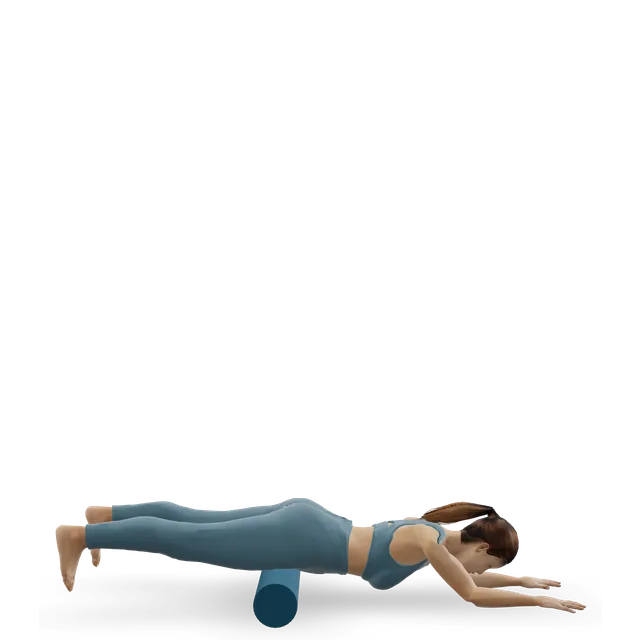
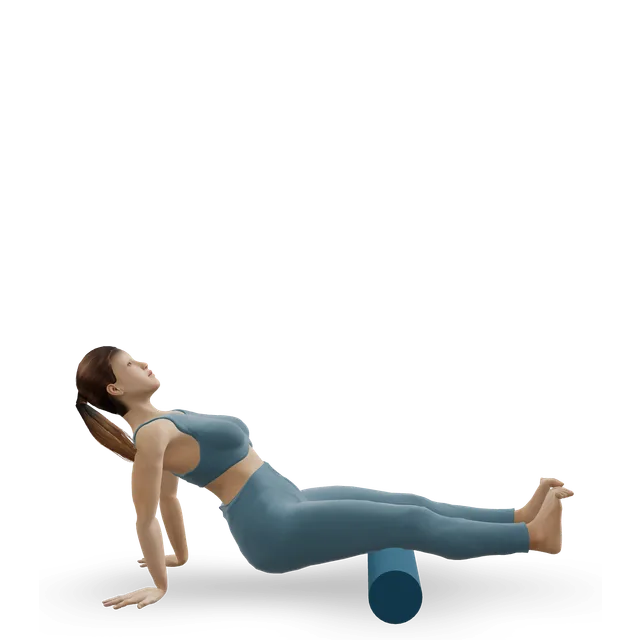
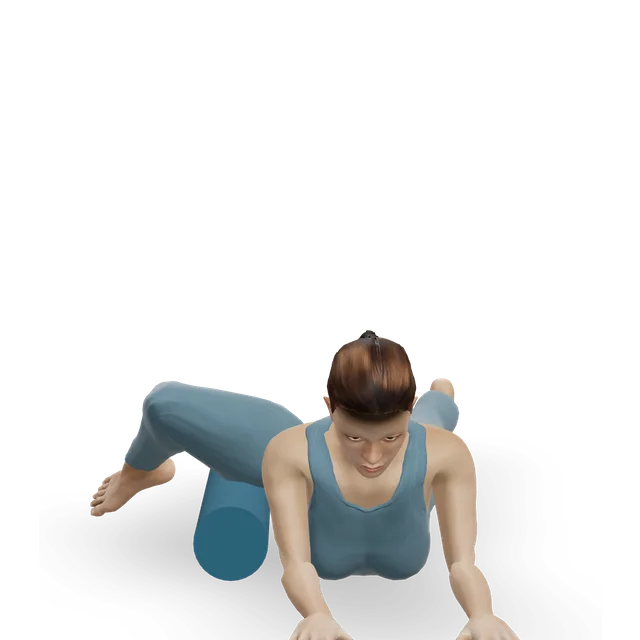
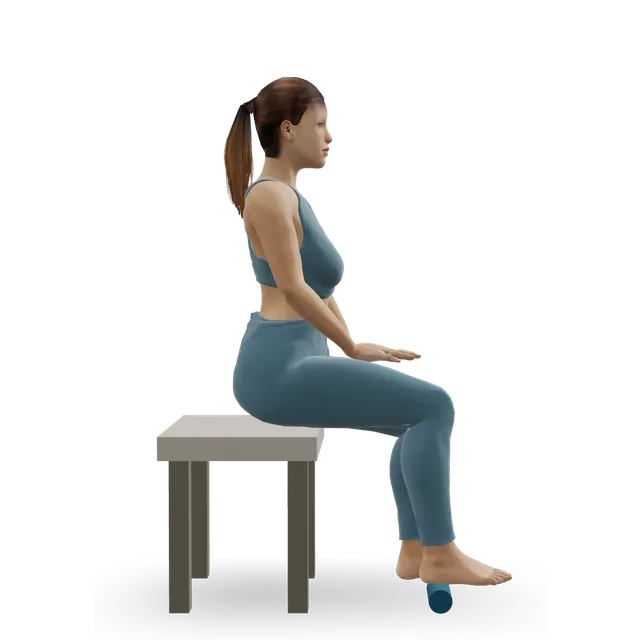
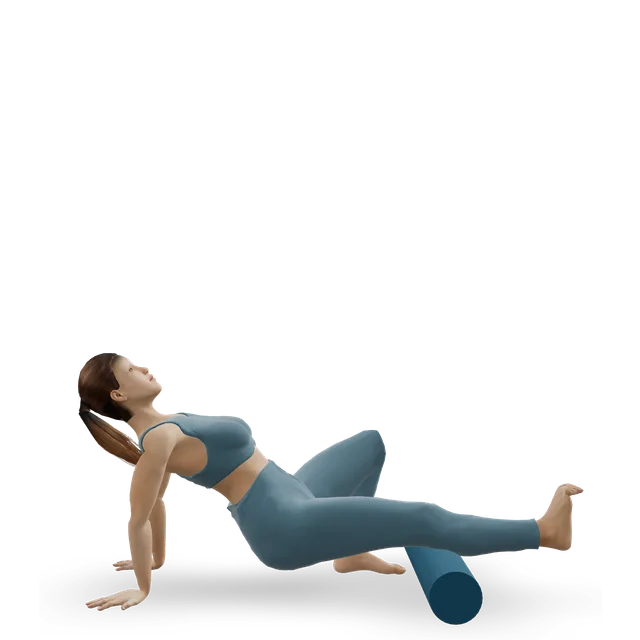
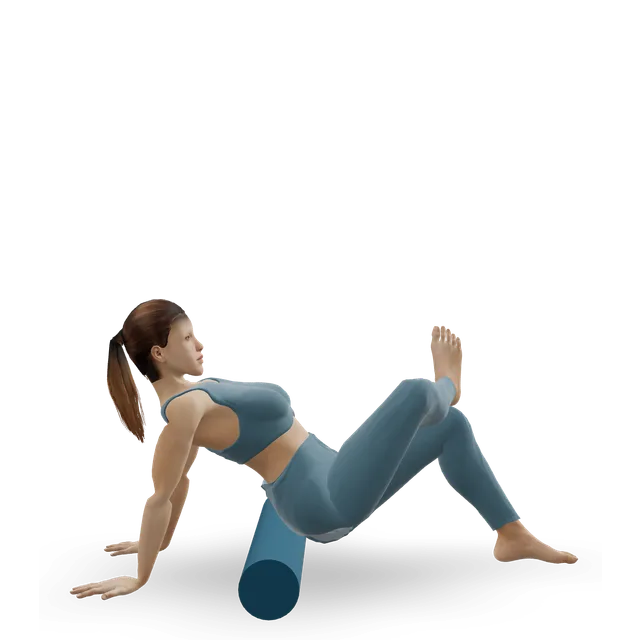
Rolling the front, back and inside of the thigh: about 90 seconds per muscle, for example 2 or 3 slow rounds of 30 to 45 seconds, the move pages' dose, from a review of rolling studies. It gives a few minutes of easier movement; it doesn't reach the bands under dimples.
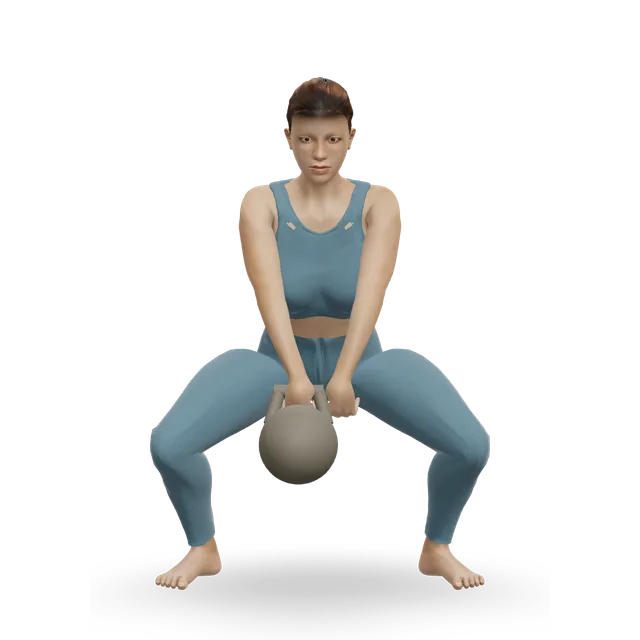
Goblet squats at 3 or 4 sets of 8 to 12, lunges or split squats at 3 sets of 8 to 12 each leg, and Romanian deadlifts at 3 sets of 8 to 10: our bigger legs guide's doses, as our thigh fat guide gives them. Build towards 150 minutes a week of moderate activity, as the NHS advises.
No dose of rolling, massage or exercise has been shown to remove it. If it bothers you, a dermatologist can explain the medical treatments and their limits; their results are modest and often short-lived.
Two or three times a week for strength and leg shape; they don't target cellulite.
 3D demoDumbbell goblet squatIntermediate · A dumbbell
 3D demoSplit squatIntermediate · No equipment
 3D demoReverse lungeIntermediate · No equipment
 3D demoDumbbell Romanian deadliftIntermediate · A dumbbell
 3D demoGlute bridgeBeginner · No equipment
 3D demoStep-upBeginner · A step
 3D demoSit to stand from a chairBeginner · A bench or box
 3D demoSide-lying leg raiseBeginner · No equipment
 3D demoClamshellBeginner · No equipment
About 90 seconds per muscle at a pressure you can breathe through, off bruises and varicose veins; walking counts towards your weekly activity.
Leg strength workouts for strength and health, and a rolling routine for comfort; none is a cellulite treatment.
A 25-minute glute workout with bodyweight and a mini band: bridges, clamshells, band walks, kickbacks and lunges.
25 minBeginner9 movesA wall, A bandA gentle leg strength routine with no jumping: sit-to-stands, step-ups, wall sits, bridges and calf raises.
20 minBeginner7 movesA bench or box, A stepLearn to squat, hinge and lunge: a 25-minute beginner lower body workout with bridges, clamshells and calf raises.
25 minBeginner11 movesA wall, A bench or boxA 25-minute inner thigh workout at home: sumo squats with a dumbbell or kettlebell, Cossack squats, ball squeezes and Copenhagen planks, with bridges and hip mobility.
25 minIntermediate10 movesA dumbbell, A kettlebellRoll then stretch each part of the leg, feet to hips, and finish with springy calf bounces. About 20 minutes.
20 minBeginner14 movesA massage ball, A foam rollerA 10-minute foam roller routine for calves, thighs, glutes and upper back: about a minute per area, moderate pressure, slow rolls.
10 minBeginner6 movesA foam rollerKeep the pressure light, or ask your doctor first, if you take blood thinners, which make bruising more likely, or have a nerve condition such as peripheral neuropathy: the NHS lists these among the reasons hands-on treatments may not be safe.
Skip massage balls, guns and scraping tools on thin, fragile skin, for example after long-term steroid tablets (our suggestion).
In an expert consensus of 37 researchers, open wounds and broken bones were reasons not to roll, and inflammation, a clot, a bone infection or bone forming in a muscle after an injury were at least reasons for caution.
Source 23
In later pregnancy, avoid lying flat on your back for more than a few minutes. Clots are more likely in pregnancy and for 6 weeks after birth: a pregnant woman had a clot reach her lungs shortly after a leg massage, so never roll or massage a swollen or painful leg.
The cellulitis and clot signs are near the top of this page.
Throbbing pain in one leg (rarely both), usually the calf or thigh; swelling in one leg (rarely both); red, blue or darkened skin around the painful area, which may be harder to see on brown or black skin; or swollen veins. This can be a deep vein thrombosis (DVT). It is more likely after surgery, a hospital stay, 3 or more days in bed, a journey of over 4 hours, pregnancy or a recent birth, cancer, a previous clot, or contraception or hormone replacement therapy (HRT) that contains oestrogen.
Source 14
See a GP if:
Skin that is painful, hot and swollen after scraping, cupping or any cosmetic treatment needs the cellulitis advice above, not more pressure.
Source 13
One study, with the inventor among its authors and its design unclear from the summary; no independent trial; and no cellulite treatment has clear evidence.
Cellulite reflects fibrous bands and fat pushing between them, and fat in cellulite holds no extra water.
Bruising is bleeding under the skin, not therapy, and bruising was among the problems people reported to the FDA.
Source 8
Scans found no extra water in the fat of women with cellulite, and no study shows toxins cause it.
Most women have it, at every size, and weight loss helped most women in one study and made it worse for some.
We found no trial of exercise alone removing it. Exercise is worth doing for strength and health.
Partly, in the sense that fibrous bands connected to the fascia tie the skin down while fat pushes up between them. "Tight" or "dehydrated" fascia isn't the cause, and nothing a tool does at home reaches the bands.
No independent trial shows it does. The one study, of 33 women, reported thinner fat under the skin and was written with the tool's inventor among its authors, and reviews of cellulite treatments found nothing with clear evidence.
No study has measured that. People have reported bruising, pain, swelling and other problems to the FDA, mostly in 2017, but voluntary reports can't show how often harm happens or what caused it. Bruising is bleeding under the skin, not progress.
We found no trial. Rolling the thighs makes the legs feel looser for a few minutes, but it doesn't reach the fibrous bands under the dimples.
Twelve weeks of machine massage made no measurable difference in one trial, other massage studies had no untreated group, and with a vibrating massager the cellulite came back after people stopped. A 2023 review concludes there is no effective treatment for cellulite.
Nothing removes it for good. Treatments aimed at the bands, such as an enzyme injection, helped some women in placebo-controlled trials, and shock wave therapy and radiofrequency look promising over short follow-up, but these are cosmetic medical treatments with modest results.
We found no trial of exercise alone removing it. Strength training and overall fat loss change leg shape for some people, and weight loss improved cellulite for most women in one study and made it worse for some.
Yes: 80 to 90% of women have it after puberty, at every size. Women's fibrous bands are fewer and break more easily than men's, which is why it's much commoner in women.
No. Cellulitis is a skin infection: skin that turns painful, hot and swollen needs an urgent GP appointment or NHS 111, and 999 with signs such as a very high temperature, a fast heartbeat or confusion.
Lipoedema is a build-up of fat in both legs that is often painful, tender or heavy and bruises easily; see a GP if that sounds like you. Cellulite on its own isn't painful.
Movement education, not medical advice. Stop for sharp or increasing pain, numbness or tingling, and get individual advice if you are pregnant, after an injury or surgery, or managing a health condition. Health disclaimer.