Training guide

How to do box squats: box height, touching or sitting, the versions, and what the box changes

A box squat is a squat to a box or bench set at the depth you want. Set the box behind you so your thighs are about level when you sit, lower under control until you touch it, or sit for a second without relaxing, then drive back up. The box makes every rep the same depth and takes the bounce out of the bottom.

In lab studies, box squats produced about the same force and power as normal squats and, done with a wide stance, the lowest spine loads of three squat styles in 12 powerlifters lifting fast. But no trial has compared them with free squats over weeks, and the load your knees lose when you sit back goes to your hips and back.

This guide shows you how to do it step by step with a 3D demo, how high to set the box for healthy and sore knees, whether to touch or sit, the goblet, dumbbell and barbell versions, speed box squats, how heavy and how many, and the warning signs.

The short version

A squat to a box at the depth you choose

Set a box or bench behind you, lower under control until you touch it or sit on it for a second without relaxing, then drive back up. It makes every rep the same depth and takes the bounce out of the bottom. In 8 trained men, force and power were about the same as in a normal squat.

Source 1

Sitting back moves work from your knees to your hips

In 12 powerlifters lifting light to moderate weights as fast as they could, the wide-stance box squat put the least load on the spine and ankle of three squat styles. In 7 men, stopping the knees from travelling forward cut the load at the knee by about a fifth but raised the load at the hip about tenfold: the load moves, it doesn't vanish.

Sources 2, 3

Start with your thighs about level

For a standard box squat, set the box so your thighs are about level with the floor when you sit. A higher box asks less of your knees: in studies of standing up from a chair without any weight, a higher seat lowered the load at the knee by up to 60%. Nobody has tested box height in a loaded squat.

Sources 4, 5

A way back for sore knees, hips and backs

Our knee pain when squatting guide starts kneecap pain at a high box, at about 45 degrees of knee bend, where the stress behind the kneecap was lowest in a lab study, and lowers it a notch at a time. Our back and hip guides squat to the depth where your back stays put, or just above a pinch at the front of the hip.

Source 6

Go deeper over time

In 17 men over 10 weeks, full squats grew the glutes and inner thighs more than half squats. If you start with a high box, lower it over the weeks to the depth you want to be strong at (our suggestion).

Source 7

How heavy and how many

To learn, goblet squats to a box, 3 or 4 sets of 8 to 12 (our squat guide). For strength, barbell box squats, 3 sets of 3 to 5 at your target depth (our editorial starting point, from our guide to increasing your squat), resting 2 to 3 minutes, once or twice a week. Stop each set with 2 or 3 reps to spare: going to failure adds little muscle, and people misjudge the reps they have left by about one.

Sources 8, 9

What a box squat is, and what it works

The lift

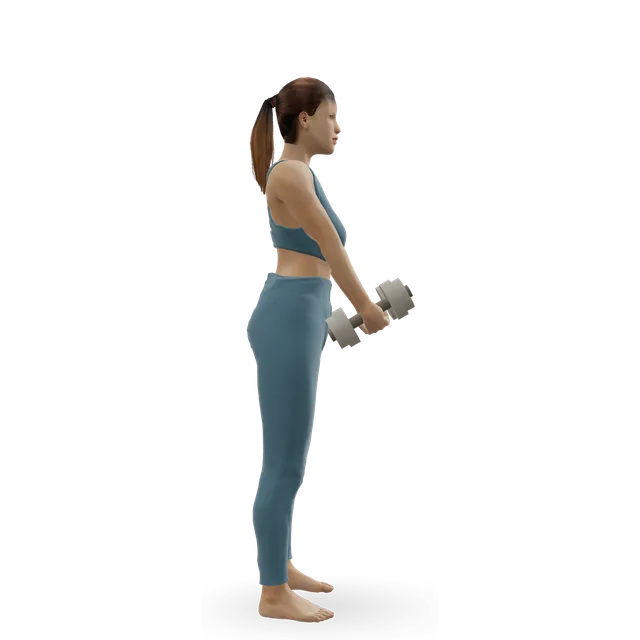
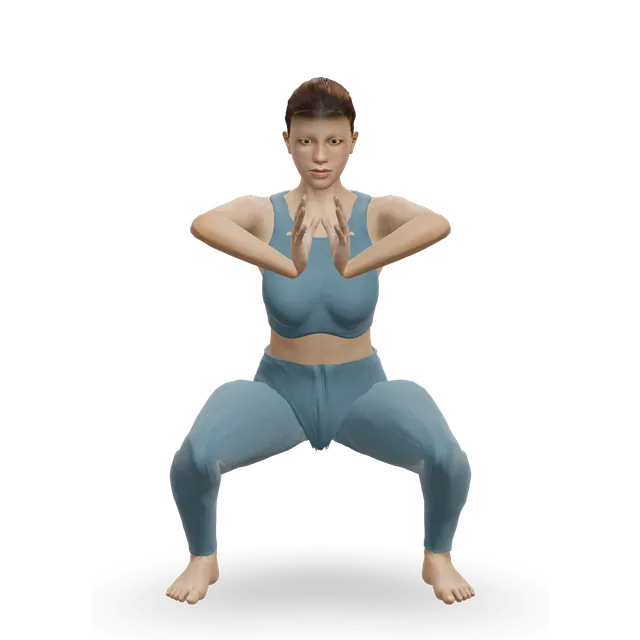
A squat to a box, bench or chair set at the depth you want, then back up. With a barbell on your back, it's a back squat in a rack with a box behind you; with a dumbbell held at your chest, it's a goblet box squat; with dumbbells at your sides or a bar across the front of your shoulders, it's a squat to a bench. Standing up from a chair is the same movement without a weight.

What it works

Your thighs (quadriceps), glutes and inner thighs (adductors) lower and raise you, while your hamstrings, the muscles along your spine and your trunk hold you steady. A wider stance with your shins near upright shifts more of the work to your hips, and squatting deeper grows the glutes and inner thighs more.

The muscle studies measured EMG (electromyography: electrodes measuring how hard a muscle works over a few reps). It shows effort, not what a muscle will build.

Sources 1, 2, 3, 7, 10

What you need first

A controlled goblet squat, as the barbell box squat's move page says. For the barbell, a rack with safety bars and some practice with the empty bar, as our squat guide teaches.

How people differ

Hip shape varies a lot, so the depth that pinches one person suits another, as our hip pain when squatting guide explains: a box lets each person train at their own depth. Longer thighs need more forward lean at the same depth, and a slightly wider stance or a higher box helps. Most beginners start higher and lower the box as they learn (our suggestion).

How to do a box squat, step by step

From our move pages: the box behind you at the depth you want, sitting under control, touching the box softly rather than dropping onto it, staying braced while seated, and the safety bars set just below the box. The lowering time, the stance options and the warning against rocking are our editorial suggestions, from our squat and knee pain guides.

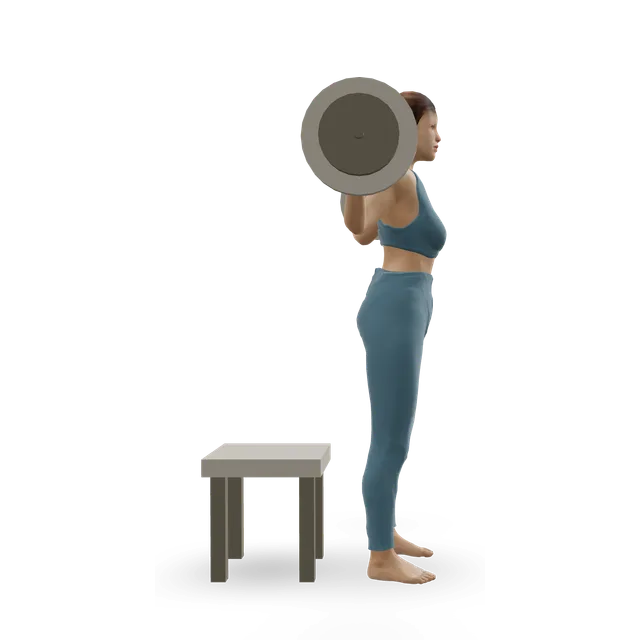
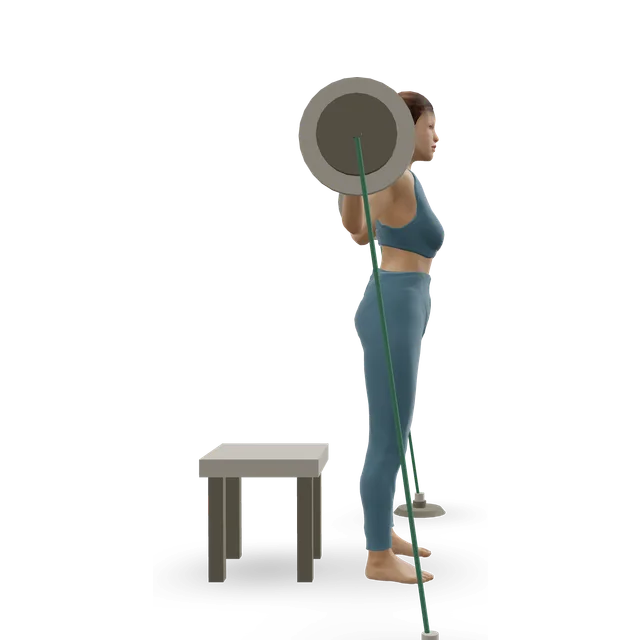
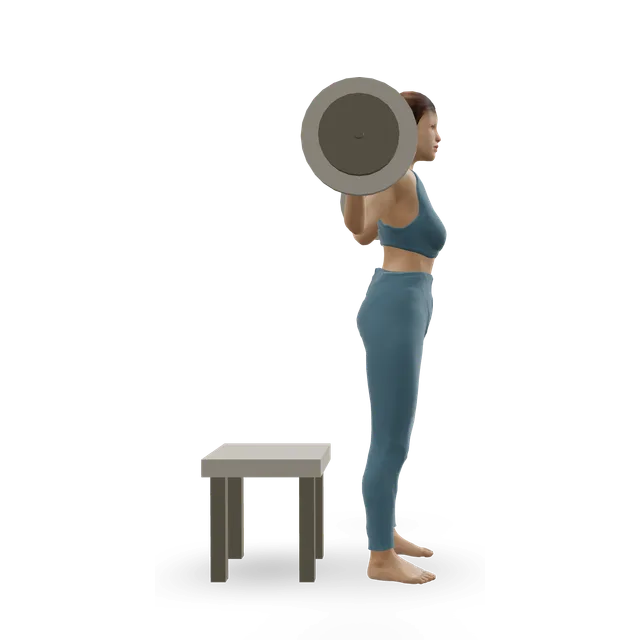
  1. Put a sturdy box or flat bench behind where you'll stand, at the height where your thighs are about level when you sit on it, or at the depth you want to train. It must not slide or tip: against the back of the rack is best.
  2. Set the bar in the rack at about chest height, and the safety bars just below the height of the box.
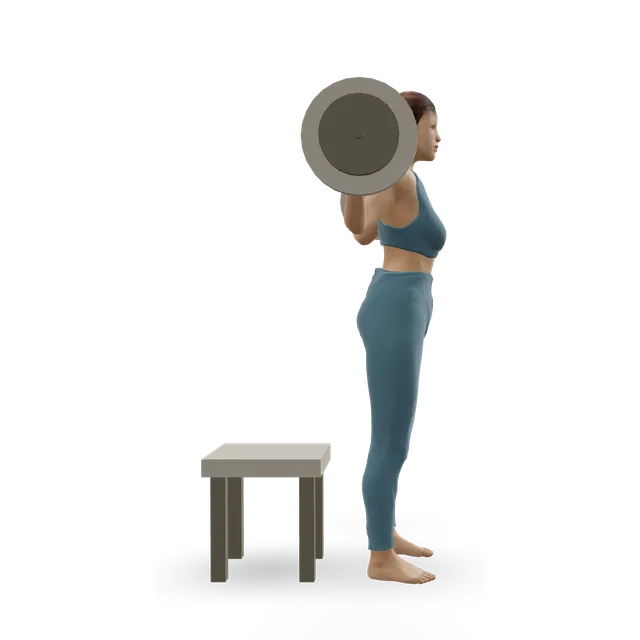
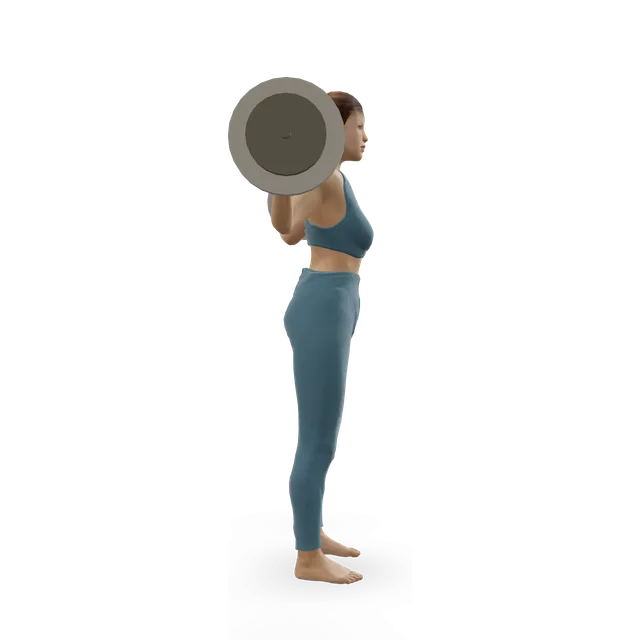
  3. Step under the bar, rest it across your upper back with your hands just outside your shoulders, stand up to lift it off, and walk back until the box is just behind your heels.
  4. Set your feet about shoulder-width apart, toes turned out a little. Go wider if you want to sit back with your shins near upright.
  5. Breathe in and brace, then push your hips back and bend your knees, knees following your toes, taking 2 to 3 seconds to lower until you touch the box, or sit on it under control.
  6. If you sit, pause for about a second with your trunk braced and your feet pressing. Don't relax, rock back or throw yourself forward to get going.
  7. Drive up through your whole foot, chest and hips rising together, and breathe out near the top. Walk the bar back into the rack at the end of the set.

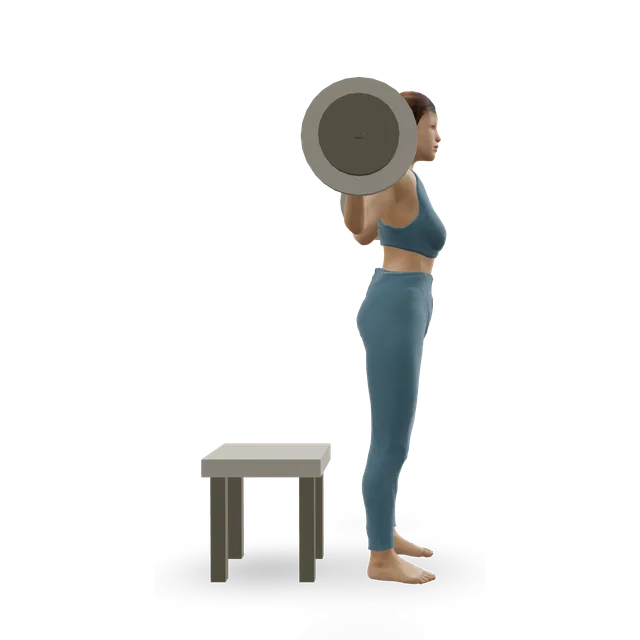
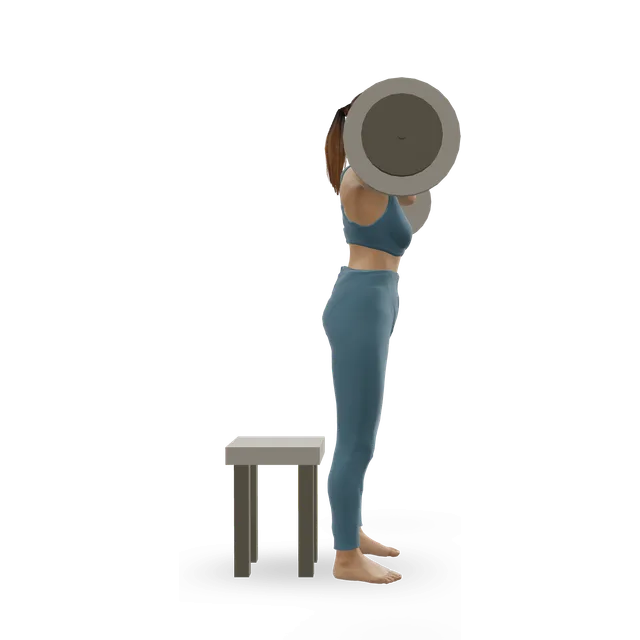
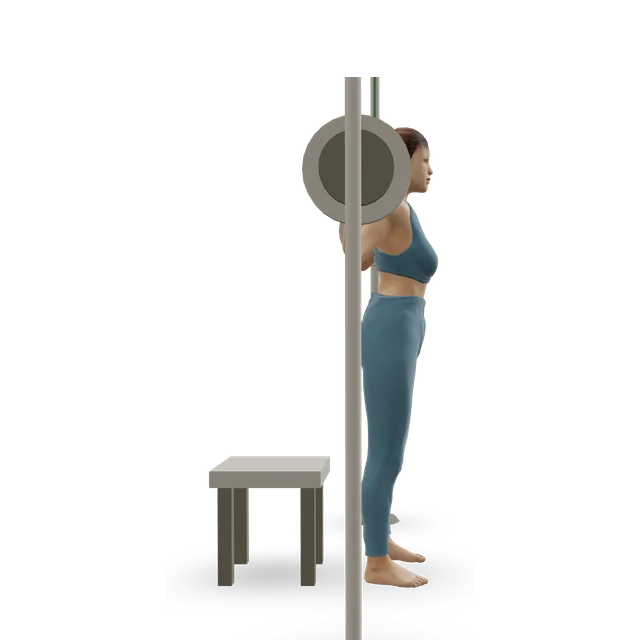
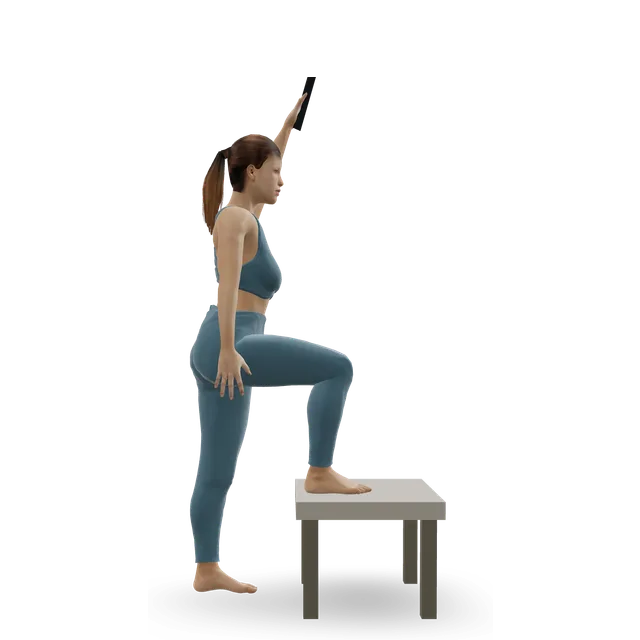
Loading the 3D figure…

Gets into position, then repeats the movement. Technical checks passed; qualified exercise review is pending.

The movement on the figure: Barbell box squat

Touch the box, or sit on it?

Touch: the box as a depth marker

Lower until you feel the box, then stand straight back up without putting your weight on it. This is how our squat guide uses a box, and how the dumbbell and barbell squats to a bench are taught on their move pages: "Touch the bench; don't sit on it." It's the easier style to learn.

Sit: a pause that takes the bounce away

Sit on the box for about a second with your trunk braced and your feet still pressing, then drive up: the barbell box squat's move page says to pause without relaxing. Starting from a stop makes the bottom of the squat harder, which is why lifters use it for strength at the bottom. In 8 trained men, force and power were still about the same as in a normal squat.

Source 1

The powerlifting sit

Some powerlifting coaches go further: a box 1 to 2 inches (about 2.5 to 5 cm) below level, sitting right back and relaxing only the muscles at the front of the hips while everything else stays tight, then driving up. It's coaching practice that no study has tested, and it suits experienced lifters rather than beginners.

Source 11

Never drop, bounce or rock

Whichever style you choose, lower under control and touch softly, and don't bounce off the box or rock back and forward to get going; the move pages tell you to stay braced on the box. Nobody has measured what relaxing on the box or rocking off it does to your back.

What the evidence says

About the same force and power as a normal squatEmerging evidence

In 8 resistance-trained men doing single reps at 60, 70 and 80% of their best squat, peak force and power were about the same in the box squat and the normal squat; the box squat was slightly higher for peak force at 70% and for peak power at 80%. Thigh, hamstring and lower back muscle activity was generally a little higher in the normal squat. It's one small lab study, and muscle activity doesn't predict growth.

Sources 1, 10

Where the load goesEmerging evidence

In 12 male powerlifters lifting 30, 50 and 70% of their best squat as fast as they could, the powerlifting and box squats used wide stances and near-upright shins. Peak loads at the spine and ankle were highest in the traditional squat and lowest in the box squat, and the hips worked hardest in the wide-stance squat without a box. In 7 trained men, stopping the knees from passing the toes cut the load at the knee by about a fifth and raised the load at the hip about tenfold, with more forward lean.

Sources 2, 3

Deeper squats grow moreEmerging evidence

In 17 men over 10 weeks, full squats raised the full squat maximum more than half squats (31.8% against 11.3%) and grew the glutes (6.7% against 2.2%) and the inner thighs (6.2% against 2.7%) more; the front of the thigh grew about the same. A high box forever trades away depth.

Source 7

Used well beyond powerliftingEmerging evidence

Touch-and-go barbell box squats to a box set for each person were the squat in 10 weeks of twice-weekly free-weight training for 41 healthy women aged 40 to 60 (31 finished): squat and bench press maximums rose, and nobody was injured. Box squats were the test lift in a study of 19 women after breast cancer, chosen partly for safety and because the box sets the depth, and the strength measure in two studies of adolescent rugby players, where the box squat maximum rose by about a third or more in 12 weeks of training.

Sources 12, 13, 14, 15

A heavy banded box squat primed jumpsEmerging evidence

In 12 professional rugby league players, 2 box squats loaded to 85% of their best, about 15% of it from bands, improved standing broad jumps 90 seconds later, with moderate effects. That's a boost on the day, not proof that box squats make you more powerful over months.

Source 16

What nobody has tested

We found no trial comparing box squats with free squats for strength, muscle, power or injuries over weeks, no study of box height in a loaded barbell squat, and no study of what relaxing on the box or rocking off it does to the spine. Claims that box squats are the safest way to squat, or that they protect your knees, are coaching opinion.

How high should the box be?

The standard box: thighs about level

Set the box so your thighs are about level with the floor when you sit, as the chain box squat's move page says. Powerlifting coaches often use a box 1 to 2 inches (about 2.5 to 5 cm) below that, and higher boxes for limited mobility or rehabilitation (coaching practice).

Source 11

Higher boxes ask less of your kneesEmerging evidence

These are studies of standing up from a seat without any weight, not loaded squats. Rising from seats set at 65 to 115% of knee height, the load at the knee nearly doubled from the highest seat to the lowest, while the load at the hip changed by less than 12%. Across 39 such studies, a higher seat lowered the load at the knee by up to 60% and at the hip by up to 50%. In 8 young adults, though, peak hip and knee loads hardly changed between very low seats and a normal chair height.

Sources 4, 5, 17

Lower seats work the front of the thigh harderEmerging evidence

In 8 people with knee arthritis standing up and sitting down, lower seats raised the activity of the front thigh muscles. That's useful training once your knees allow it, and a reason to start higher while they're sore.

Source 18

Kneecap pain: start highEmerging evidence

In 10 healthy people, the stress behind the kneecap during a squat was lowest from about 45 degrees of knee bend up to straight. That's why our knee pain when squatting guide starts kneecap pain at a box that high and lowers it a notch at a time while the pain stays within its rule.

Source 6

Lower it a notch at a time

If you start high, keep the weight the same and lower the box a step at a time over the weeks, as our knee pain when squatting guide does, until you reach the depth you want to train. An adjustable step platform makes this easy (our suggestion); whatever you use must not slide or tip.

Your knees, hips and back

Your kneesEmerging evidence

Sitting back with your shins near upright takes load off your knees and puts it on your hips and lower back. In 18 healthy volunteers, a box squat stretched the anterior cruciate ligament (a main knee ligament) less than a seated knee extension with 10 kg, and about as much as a deep lunge. With healthy knees, letting them travel past your toes is normal, as our squat guide says.

Sources 3, 19

The knee rule

With knee pain, our knee pain when squatting guide's rule applies: 0 to 2 out of 10 during and after is fine, and up to 5 is acceptable if your knee is back to its usual level by the next morning; keep to 3 or less for pain at one point just above or below the kneecap. If it hasn't settled, drop back one step next time (a higher box, less weight or fewer sets), not to nothing.

Your hips

A pinch at the front of the hip at the bottom of the squat is a depth signal, not something to push through: set the box just above it, as our hip pain when squatting guide says.

Your backMixed evidence

The wide-stance box squat put the least load on the spine of three squat styles in 12 powerlifters lifting fast, and our back pain guides squat to a box at the depth where your back stays put. Rounding the lower back while lifting wasn't shown to cause back pain, though that evidence is of low quality, and nobody has studied relaxing on the box or rocking off it, so stay braced.

Sources 2, 20

The back rule

With back pain, our back pain when squatting guide's rule applies: up to about 5 out of 10, settling within an hour or so and no worse the next morning. Stop or shrink anything that sends pain, pins and needles or numbness further down a leg.

Learn it in steps: from a chair to the barbell box squat

Sit to stand from a chair, 5 slow reps (the NHS's strength exercise), building to 2 sets of 8 (our squat technique workout); the dumbbell squat to a bench, 2 to 3 sets of 8 to 12 with 2 or 3 reps in reserve (its move page's dose); goblet squats to a box, 3 or 4 sets of 8 to 12 (our squat guide); the barbell squat to a bench, touching only, 2 to 3 sets of 8 to 12 with 2 or 3 reps in reserve (its move page's dose); then the barbell box squat, 3 sets of 3 to 5 at your target depth (our editorial starting point); and, for experienced lifters, speed box squats (below).

Front squat, bands, chains and one leg

The front squat to a bench, 2 sets of 5, light, as a depth check (our front squat technique workout); box squats with bands, chains or reverse bands for experienced lifters, 3 to 5 sets of 3 to 6 with 2 or 3 reps in reserve (their move pages' doses), checking the anchors before every set; and the single-leg high box squat, lowering on one leg to a high box (its move page gives no dose). A Smith machine box squat, not shown, is the same set-up with the bar on a fixed track.

Speed box squats, bands and power

Speed box squats

Light to moderate weight with bands, sitting to the box under control and standing up as fast as you can: 6 to 8 sets of 2 or 3, at 30 to 70% of your best and no more than 24 reps in all, which is its move page's dose. That matches the power advice in the ACSM's (American College of Sports Medicine) 2026 overview of 137 reviews: moderate loads, a fast lifting phase and low volume. Rest fully between sets (our suggestion).

Source 21

Bands and chains

Bands and chains make the bar heavier as you stand. Of 28 elite British powerlifters surveyed, 39% used bands and 57% chains, and most lifted with explosive intent. Check the anchors before every set, and control the way down, because bands pull you towards the box faster.

Source 22

Do box squats make athletes faster?Emerging evidence

Heavy banded box squats improved broad jumps 90 seconds later in professional rugby league players, and adolescent rugby players got stronger at the box squat over 12 weeks of training. No trial has shown that box squats make you faster or jump higher than other squats; our guide to jumping higher covers training for power.

Sources 16, 14

The powerlifting method

One powerlifting coach's method, for experienced lifters: 8 to 12 sets of 2 at 65 to 82% of your best on that box, about a minute apart, changing the box height every 3 or 4 weeks. It's coaching practice that no study has tested.

Source 23

Box squat or back squat?

Against the back squat

The box squat is a squat, not a lesser one: force and power matched a normal squat in one study. But no trial has compared them over weeks, so most lifters keep a free squat as their main lift and rotate box squats in for a few weeks at a time, as our squat strength workout does. If the box sits high, you're doing a partial squat, and half squats built less muscle than full squats.

Sources 1, 7

Against a squat to a bench

A squat to a bench is a box squat in the touch style: you touch and go, without sitting or pausing. It's the easier one to learn, and the one our knee pain when squatting guide brings back first.

Against the pause squat

A pause squat stops at the bottom without a box, so you hold the position yourself. A box squat lets the box mark the depth and, in the sit style, take a little of the weight. Our guide to increasing your squat covers pause squats.

Against the goblet squat

A goblet squat to a box is the easiest loaded box squat and a good way to learn: the dumbbell at your chest keeps you upright. Our goblet squat guide teaches it.

Common mistakes and how to fix them

Dropping onto the box

Lower under control over 2 to 3 seconds and touch softly; if you can't, the weight is too heavy for now.

Relaxing on the box, or rocking to stand

Stay braced, sit only briefly and drive straight up. Rocking for momentum means the weight is too heavy.

Rounding your lower back to reach the box

Raise the box instead, as the barbell squat to a bench's move page says.

Sitting back so far that you tip, or the bar drifts forward

Let your knees travel forward a little and keep the bar over the middle of your feet, as our squat guide teaches.

Knees caving in

Knees follow your toes. Think of spreading the floor apart with your feet, our squat guide's cue, and take some weight off if they keep caving.

A box that slides or wobbles

Use a sturdy box or bench, set against the back of the rack.

Bouncing off the box

Pause instead. Bouncing out of the bottom raised the shearing load at the knee in studies cited by a powerlifting review, as our knee pain when squatting guide notes.

Always the same high box

Lower it over the weeks if depth is your goal.

How heavy, how many and how often

Learning

Goblet squats to a box, 3 or 4 sets of 8 to 12 (our squat guide), or the barbell squat to a bench from the empty bar, 3 sets of 5, adding about 2.5 kg a session while every rep looks the same (our squat guide's barbell start).

For strength

Barbell box squats, 3 sets of 3 to 5 at your target depth, sitting briefly without relaxing, with 2 or 3 reps to spare (our editorial starting point, as in our guide to increasing your squat). Rest 2 to 3 minutes, and 3 to 5 once sets of 5 feel heavy (our squat guide). Heavier loads build strength best, in the ACSM's overview.

Source 21

For muscle

The barbell squat to a bench, 2 to 3 sets of 8 to 12 with 2 or 3 reps in reserve (its move page's dose), resting 90 seconds to 2 minutes, as our plans rest compound sets. Count each set as a squat set for your thighs and glutes.

How hard

Stop each set with 2 or 3 reps to spare, or 3 or 4 in your first two weeks, as our plans advise. Going to failure adds little muscle, and people underestimate the reps they have left by about one.

Sources 8, 9

How often

Once or twice a week, as one of your squats. Strength rose more with two or more sessions a week in the ACSM's overview.

Source 21

Progression

Add about 2.5 kg a session while every rep looks the same (our squat guide). If you started with a high box, lower it a notch at a time and keep the weight the same, as our knee pain when squatting guide does.

No standards

There are no box squat strength standards. Powerlifting coaches find people usually box squat a little less than they free squat; judge it by your reps in reserve.

Source 11

Moves that go with it

Standing hip circles, 3 slow circles each way with each leg (its move page's dose), and knee-to-wall ankle rocks, 10 a side (its move page's dose), before you squat; the deep squat hold, 60 seconds holding a support (our squat strength workout); dumbbell Romanian deadlifts, 3 sets of 8 to 12 (our full-body gym workout), step-ups, 2 to 3 sets of 8 to 10 each side (our lower body workout at home), and glute bridges, 2 to 3 sets of 10 to 15 (our beginner lower body workout); and dead bugs, 2 sets of 5 to 8 a side (our squat strength workout), and side planks, 2 holds of 20 to 40 seconds a side (our powerlifting workout for beginners), for your trunk.

Workouts to follow

Our box squat workout builds a 45-minute leg session around the barbell box squat. The squat technique and front squat technique workouts use a chair or bench to teach depth, our beginner lower body workout starts with sit to stand, our squat strength workout rotates box squats in every 4 to 6 weeks, and the leg day workout is where a box squat can stand in for your main squat.

Plans that use it

These plans use our leg day workout or squat technique workout, where a box squat can take a squat's place.

Who should change it

Knee pain

Start with a high box and follow our knee pain when squatting guide, which lowers the box a notch at a time while the knee rule above holds.

A pinch at the front of the hip

Set the box just above the pinch, as our hip pain when squatting guide says, and go deeper only as the pinch allows.

Back pain

Squat to a box at the depth where your back stays put, as our back pain when squatting guide says, and keep to the back rule above.

Older adults and beginners

Standing up from a chair is one of the NHS's strength exercises: aim for 5 repetitions, and the slower the better. A clinical perspective on the squat in older adults suggests box squats as a first step before the back squat, and a goblet squat to a box is the loaded step in between. Our exercise guide for older adults has more.

Sources 24, 25

High blood pressure, heart disease, eye conditions or a hernia

Breathe out through every effort and keep the weight moderate, as our breathing guide says: heavy lifts to failure with a held breath sent blood pressure to an average of 320/250 mmHg (millimetres of mercury) in 5 bodybuilders. People with controlled blood pressure can do moderate strength training with proper breathing, the American Heart Association says.

Sources 26, 27

Pregnancy

If you already squat, a box or chair behind you makes a sensible depth guide as your balance changes (our suggestion; our pregnancy strength workout squats to a chair). The NHS says strength training is fine if you already do it, and not to start new vigorous activity in pregnancy. A pregnancy charity advises against holding your breath and says pregnancy isn't the time to try lifting your heaviest weights.

Sources 28, 29

Warning signs

Stop and get medical help

If you get chest pain or pressure, feel faint or dizzy, are unusually breathless, or your heart races or beats irregularly during exercise, as our plans advise. The American Heart Association says these need immediate medical evaluation.

Source 27

Call 999 (911 in the US)

For chest pain that comes on suddenly and doesn't go away, feels tight or like squeezing, or spreads to your arms, neck or jaw; a sudden, extremely painful headache, for example during a heavy squat (the NHS says a bleed on the brain may be more likely when lifting something heavy); someone who faints while exercising; palpitations that don't go away, or come with chest pain, breathlessness or feeling faint; or signs of a stroke, even if they've stopped. Don't drive yourself to A&E.

Sources 30, 31, 32, 33, 34, 35, 36

Check before you start

If you haven't exercised for some time or have a medical condition, speak to your GP first, as the NHS advises. Get advice before heavy lifting if your blood pressure is uncontrolled, or you have heart disease or chest pain when you're active, a pacemaker or defibrillator, diabetic eye disease, glaucoma, a hernia, recent eye or tummy surgery, or you're pregnant, as our breathing guide lists.

Source 37

Your back

Call 999 or go to A&E for loss of feeling or numbness around your genitals or bottom, new trouble peeing or controlling your bladder or bowels, changes in genital sensation during sex or problems with erections or orgasm, or pain, tingling, weakness or numbness in both legs. These are signs of cauda equina syndrome, which needs treating in hospital urgently; don't drive yourself. Back pain with chest pain is also a 999 call.

Source 38

Your knee

Get advice from NHS 111 if your knee is very painful, you can't move it or put weight on it, it's badly swollen or has changed shape, or it locks, gives way or clicks painfully; painless clicking is normal. In the US, use urgent care. See a GP if knee pain doesn't improve within a few weeks.

Source 39

A pop at the front of the knee

A pop or tearing feeling at the front of the knee during a heavy squat, then you can't straighten the knee or lift the straight leg, there's a dent above or below the kneecap, or the kneecap sits higher or lower than on the other side: go to A&E or an urgent treatment centre, or get help from NHS 111, the same day. A torn quadriceps or kneecap tendon does best when it's repaired soon, as our knee pain when squatting guide says.

Your hip

Call 999 or go to A&E for severe hip pain after a fall or injury, if you can't walk or put weight on your leg, or for tingling or loss of feeling in your hip or leg after an injury.

Source 40

A new lump or bulge

See a GP if you think you have a hernia. Get help from NHS 111 if you have a hernia and pain in or around it, a bloated tummy, sickness, constipation, a high temperature or sudden confusion. Call 999 or go to A&E for a femoral hernia (a lump at the top of the thigh) with very bad tummy pain, sickness, being unable to fart or poo, a high temperature or sudden confusion.

Sources 41, 42

A dropped bar, plate or dumbbell

Call 999 or go to A&E if you heard a crack, or the injured part has changed shape, points at an odd angle, is numb or tingling, or has turned blue, grey or cold. Get help from NHS 111 if it's very painful, badly swollen or bruised, or you can't put weight on it.

Source 43

Sore, or hurt?

Muscle soreness for a day or two after a new or harder session is common and fades. Sharp pain, or pain that builds during a set or lingers into the next day, isn't: swap to an easier version, and see a clinician if it persists, as our plans advise. The NHS says to stop exercising straight away if you feel any pain or become unwell, and to get help from 111 if symptoms worry you or don't go away.

Source 44
Myths

"Box squats are only for powerlifters"Emerging evidence

Powerlifters made them famous, but box squats have been the squat in programmes for women aged 40 to 60, a test lift for women after breast cancer and the strength measure for teenage rugby players, and standing up from a chair is one of the NHS's strength exercises.

Sources 12, 13, 14, 24

"Box squats are cheating"Emerging evidence

In 8 trained men, force and power matched a normal squat, and the box squat's spine and ankle loads were the lowest of three styles in 12 powerlifters lifting fast. It's a useful variation, not a replacement for the full squat, as our guide to increasing your squat says.

Sources 1, 2

"Box squats are always kinder to your knees"Mixed evidence

A higher seat took load off the knees in studies of standing up from a chair, and keeping the shins upright did in a squat study, which is why our knee pain guide starts there, but the hips and lower back take more. With healthy knees, deep squats with your knees past your toes are normal.

Sources 3, 4, 5, 6

"Box squats are bad for your back"Mixed evidence

The wide-stance box squat had the lowest spine loads of three squat styles in a lab study of 12 powerlifters lifting fast. What hasn't been studied is relaxing on the box or rocking off it, which is why the move pages say stay braced.

Sources 2, 20

"Box squats won't build muscle"

No growth trial has tested them, but they work the same muscles as a squat. How deep you go and how hard you work matter most: full squats built more glute and inner thigh muscle than half squats.

Sources 1, 7

"Your shins must stay vertical"

That's a wide-stance powerlifting technique, useful when the knees are sore. For most people, letting the knees travel past the toes is normal and shares the load between the knees and hips, as our squat guide explains.

Sources 3, 2

Questions people ask

What is a box squat?

A squat to a box or bench set at the depth you want, then back up. You either touch the box lightly and stand straight up, or sit for a second without relaxing your trunk, then drive up. It makes every rep the same depth and takes the bounce out of the bottom.

Should I touch the box or sit on it?

Both work. Touching it marks your depth; sitting briefly takes away the bounce and makes the start harder, which powerlifters use to build strength at the bottom. Either way, never drop onto it, rock or relax.

How high should the box be for box squats?

For a standard box squat, high enough that your thighs are about level with the floor when you sit; powerlifters often use a box a little lower. With knee or hip pain, start higher (about 45 degrees of knee bend for kneecap pain) and lower it a notch at a time. In studies of standing up from a chair without a weight, a higher seat cut the load at the knee by up to 60%.

Are box squats easier or harder than regular squats?

Usually a little harder at the same depth, because there's no bounce out of the bottom, and powerlifting coaches find people usually box squat a little less than they free squat. Force and power were similar in one lab study. A high box is easier; a low box with a full sit is harder.

Are box squats better for your knees?

In studies of standing up from a chair, a higher seat took load off the knees, and keeping the shins near upright did in a squat study, so our knee pain when squatting guide uses both, but the hips and back take more of the work. With healthy knees, a normal squat with your knees past your toes is fine.

Are box squats good for your back?

The wide-stance box squat put the least load on the spine of three squat styles in 12 powerlifters lifting fast, and our back pain guides squat to a box at the depth where your back stays put. Stay braced on the box, as the move pages say: relaxing or rocking off it hasn't been studied.

What muscles do box squats work, and are they good for glutes?

Your thighs, glutes and inner thighs, with your hamstrings and back holding you steady. Sitting back with a wide stance shifts work to your hips. For the most glute growth, squat deep: full squats grew the glutes about three times as much as half squats in one trial.

Can box squats replace back squats?

They can be your main squat for a while, set at the depth you want to be strong at. No trial has compared them over weeks, so most lifters rotate them with free squats every few weeks.

How heavy should box squats be?

There are no box squat standards. Start with a weight you could lift about 10 to 12 times, then for strength do 3 sets of 3 to 5 at your target depth, or 2 to 3 sets of 8 to 12 to a bench, stopping 2 or 3 reps short. Expect a little less than your free squat, as powerlifting coaches find.

Are box squats good for beginners and older adults?

Yes. Standing up from a chair is one of the NHS's strength exercises, with 5 slow reps, and a goblet squat to a box is the next step. A clinical perspective suggests box squats as the first loaded squat for older adults.

How do I do box squats at home or without a box?

Use a sturdy chair, bench or step that can't slide, and hold a dumbbell or kettlebell at your chest. Touch it lightly and stand straight back up; a dining chair usually puts your thighs about level when you sit, which suits learning. The dumbbell squat to a bench's move page gives 2 to 3 sets of 8 to 12.

What are speed box squats, and are box squats good for athletes?

A box squat with bands and 30 to 70% of your best, standing up as fast as you can: 6 to 8 sets of 2 or 3. Rugby players used heavy banded box squats to boost their jumps on the day, but no trial has shown that box squats make you faster than other squats.

Sources

  1. McBride 2010 · The squat against the box squat: force, power and muscle activity in 8 trained men (lab study, JSCR)
  2. Swinton 2012 · Traditional, powerlifting and box squats compared in 12 powerlifters lifting fast (lab study, JSCR)
  3. Fry 2003 · Letting the knees travel forward or not: hip and knee loads in the squat, 7 men (lab study, JSCR)
  4. Rodosky 1989 · Chair height and the joint loads of standing up (lab study, J Orthop Res)
  5. Janssen 2002 · What shapes standing up from a chair: 39 studies (review, Phys Ther)
  6. Powers 2014 · Kneecap joint stress in squats and leg extensions, in 10 healthy adults (lab study, JOSPT)
  7. Kubo 2019 · Full against half squats for 10 weeks: muscle growth in 17 men (randomised trial, Eur J Appl Physiol)
  8. Refalo 2023 · Training to failure against stopping short, for muscle growth: 15 studies (meta-analysis, Sports Med)
  9. Halperin 2022 · How accurately people predict the reps they have left: 12 studies, 414 people (meta-analysis, Sports Med)
  10. Vigotsky 2022 · Muscle activity measured in one session isn't a validated predictor of muscle growth (review, Sports Med)
  11. Simmons 2016 · Box squats: how to box squat correctly (coaching article, Westside Barbell, updated 2024)
  12. Isenmann 2023 · Free-weight training with box squats in 41 women aged 40 to 60 (controlled trial, BMC Womens Health)
  13. Díez-Fernández 2024 · The box squat in breast cancer rehabilitation: load and bar speed in 19 women (lab study, Eur J Sport Sci)
  14. Harries 2018 · 12 weeks of training in adolescent rugby players: box squat strength, sprints and jumps (controlled trial, JSCR)
  15. Smart 2013 · Supervised against unsupervised off-season training in 44 adolescent rugby players (controlled trial, JSCR)
  16. Strokosch 2018 · Banded box squats and deadlifts before broad jumps, in 12 professional rugby league players (crossover study, Int J Sports Physiol Perform)
  17. Yoshioka 2014 · Seat height and peak hip and knee loads when standing up, in 8 young adults (lab study, Biomed Eng Online)
  18. Al Amer 2025 · Seat height and thigh muscle activity in 8 people with knee arthritis (lab study, Healthcare)
  19. Wang 2023 · How far box squats, lunges and knee extensions stretch the anterior cruciate ligament, in 18 volunteers (lab study, Musculoskelet Sci Pract)
  20. Saraceni 2020 · Is bending the lower back while lifting linked with back pain? (systematic review and meta-analysis, JOSPT)
  21. Currier 2026 · Resistance training for muscle function, size and performance in healthy adults: 137 reviews (ACSM position stand, MSSE)
  22. Swinton 2009 · How 28 elite British powerlifters train (survey, JSCR)
  23. Simmons 2016 · Box squatting (coaching article, Westside Barbell)
  24. NHS · Strength exercises
  25. Papadakis 2024 · Back squat errors in older adults, starting from the box squat (clinical perspective, J Funct Morphol Kinesiol)
  26. MacDougall 1985 · Blood pressure during heavy lifting to failure in 5 bodybuilders (lab study, J Appl Physiol)
  27. Paluch 2024 · Resistance exercise training with and without cardiovascular disease: 2023 update (American Heart Association scientific statement, Circulation)
  28. NHS · Exercise in pregnancy
  29. Tommy's · Strength training in pregnancy (pregnancy charity information, reviewed September 2026)
  30. NHS · Chest pain (past its review date: reviewed August 2023, review due August 2026)
  31. NHS · Heart attack
  32. NHS · Headaches
  33. NHS · Subarachnoid haemorrhage
  34. NHS · Fainting
  35. NHS · Heart palpitations
  36. NHS · Symptoms of a stroke
  37. NHS · Physical activity guidelines for adults aged 19 to 64
  38. NHS · Back pain
  39. NHS · Knee pain
  40. NHS · Hip pain in adults
  41. NHS · Hernia
  42. NHS · Femoral hernia
  43. NHS · Sprains and strains
  44. NHS · How to warm up before exercising

Exercise education, not a personal prescription, and clinical review of these guides is pending. Check with a GP before starting hard training if you have a heart condition, chest pain, dizziness or breathlessness when active, and stop for sharp or increasing pain. Health disclaimer.