Training guide

How to do wall push-ups: set-up and form, for beginners and older adults, your wrists and shoulders, the next steps, and how many

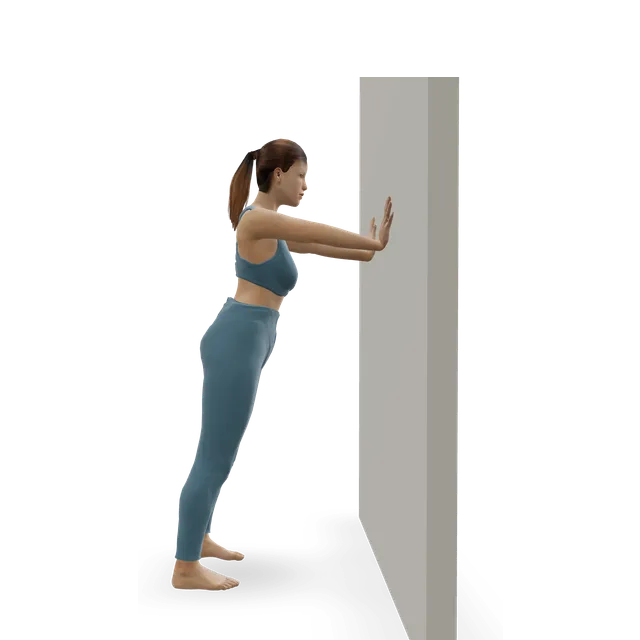
A wall push-up is a push-up standing up: hands on a wall at chest height, body straight, and your chest lowered towards the wall and pushed away. It's the lightest push-up there is, and the NHS teaches it as the wall press-up, with 3 sets of 5 to 10, at least twice a week.

It's the right first step for many beginners, older adults and people coming back from illness, and NHS shoulder and heart rehabilitation programmes start with it. For most people it soon becomes too easy to keep building strength, so the useful question is how to make it harder and when to move on.

This guide shows it step by step on the 3D figure and covers where to put your hands and elbows, who it suits, whether it's enough on its own, how to make it harder, and when to move on to a worktop or table.

The short version

The move

Stand at arm's length from a wall with your hands flat on it at chest level, a little wider than your shoulders. Keep your body straight, bend your elbows, keeping them by your sides, to bring your chest towards the wall, then press back. This is the NHS wall press-up.

Source 1

The NHS dose

"Attempt 3 sets of 5 to 10 repetitions", at least twice a week, building the reps up slowly. Once that's easy, 3 sets of 8 to 15, as an NHS shoulder programme and the British Heart Foundation (BHF) suggest.

Sources 1, 2, 3

The lightest push-up

Nobody has measured how much of your weight it puts on your hands. With the hands on a 61 cm box, they already carried only about 41% of body weight in one study, and a wall is steeper still. Step your feet back to make it harder.

Source 4

Who it's for

Beginners, older adults, pregnancy if you already exercise, after illness (NHS cardiac rehabilitation programmes start with it), sore wrists or shoulders (NHS shoulder programmes start there), and heart failure, where the BHF advises avoiding full press-ups.

Sources 5, 2, 6

Is it enough?

As a start, yes. For most people it soon becomes too easy to keep building strength: older adults are asked to work towards harder loads, and in older women a wall push-up programme improved arm reaction time but didn't add arm strength over a standard falls programme. That "too easy" is our reading of thin evidence.

Sources 7, 8

The next steps

Step your feet further back, slow the lowering to 3 seconds, then move to a worktop or table, our incline push-up guide's first rung. Move on when all 3 sets reach 15. In inactive adults, a daily set of 10 slow reps starting at the wall raised push-up scores within 4 weeks.

Sources 2, 3, 9

What a wall push-up is

The lift

A standing push-up with your hands on a wall. The NHS calls it the wall press-up and includes it in its home strength exercises. It's the first step of our push-up ladder. A wall handstand push-up is a different, much harder exercise: our handstand push-up guide covers it.

Source 1

Muscles

The same pressing muscles as any push-up, at a low load: the chest, the front of the shoulders and the triceps, with the serratus anterior holding your shoulder blades against your ribs and your trunk working lightly to keep you straight. In one study the chest worked at about 12% of its maximum in a wall push-up with an extra push at the top.

Sources 10, 11

Before you start

You need to stand comfortably and tolerate pressure through your hands. There's no floor work: an NHS booklet for over-65s notes that its exercises can be done standing or in a chair, apart from the wall press-up.

Source 12

How people differ

The further back your feet, the harder it is. With sore wrists you can start with less lean. If you can't stand for long, start with the seated exercises in our seniors workout; a home programme for people with heart failure began with seated wall push-ups before standing ones.

Source 13

How to do a wall push-up, step by step

From the NHS wall press-up, our move page and two NHS physiotherapy programmes. The NHS's "elbows by your side" and our push-up guide's "about 45 degrees, angled back, not flared" describe the same thing at a wall: elbows pointing down and back, not out to the sides (our reading).

  1. Stand at arm's length from a clear, solid wall, feet hip-width apart, in shoes that grip.
  2. Place your hands flat on the wall at chest or shoulder height, a little wider than your shoulders, fingers pointing up or slightly out.
  3. Make one straight line from head to heels: brace your trunk lightly and keep your heels down.
  4. Breathe in and bend your elbows to bring your chest towards the wall, elbows pointing down and back, close to your sides rather than out.
  5. Go as close as you can control. The NHS says to aim to close the gap between you and the wall as much as you can.
  6. Breathe out and press back to straight arms, without locking your elbows hard.
  7. To make it harder, step your feet further back; to make it easier, step in.

Loading the 3D figure…

Gets into position, then repeats the movement. Technical checks passed; qualified exercise review is pending.

The movement on the figure: Wall push-up

How many, and how often

To start: the NHS dose

3 sets of 5 to 10, at least twice a week, building the reps up slowly over time. The NHS asks older adults to do strength work on at least 2 days a week, "to the point where you need a short rest before repeating the activity".

Sources 1, 14

Once that's easy

3 sets of 8 to 15, as an NHS shoulder programme, the BHF and our push-up progression use; Age UK suggests 10 to 15. Move on to a worktop or table when all 3 sets reach 15 (our push-up guide's rule).

Sources 2, 3, 15

Rest

60 to 90 seconds between sets (our push-up guide). NHS cardiac and shoulder programmes use 30 to 45 seconds, which is fine at these light loads.

Sources 5, 16

Every day?

Fine at an easy effort if your wrists, elbows and shoulders feel normal (our push-up guide). In one study, one daily set of 10 slow reps worked. A hundred wall push-ups a day isn't needed.

Source 9

Who it's for: beginners, older adults and after illness

Beginners and inactive adultsEmerging evidence

In 22 inactive adults aged 32 to 69, one daily set of 10 slow reps, starting at the wall and moving on once 10 were easy two sessions running, raised push-up test scores from about 12 to 17 reps in 4 weeks; in a follow-up of 10 adults, scores kept rising to 8 weeks. Neither study had a separate control group.

Sources 9, 17

Older adultsStrong evidence

The NHS teaches the wall press-up in its home strength exercises and lists push-ups among the body-weight exercises older adults can use. Age UK suggests 10 to 15 reps, and an NHS booklet for over-65s 8 to 12.

Sources 1, 14, 15, 12

Older adults with walking difficulty mostly needed this versionEmerging evidence

In 97 adults aged 65 or over with walking difficulty, push-ups were modified in 70% of sessions, most often to wall push-ups.

Source 18

After illnessEmerging evidence

An NHS cardiac rehabilitation programme starts with an easy wall press, 2 sets of 10 with 30 to 45 seconds' rest, then moves to a worktop push-up; another asks you to place your hands no higher than your shoulders and lets your heels lift if needed. In 18 adults with chronic lung disease, a wall or bench push-up was the lightest station of a circuit, and in 30 people with heart failure, seated then standing wall push-ups were the arm steps of a home programme.

Sources 5, 19, 20, 13

Pregnancy

No trial has tested wall push-ups in pregnancy. A 2026 Chinese expert consensus lists them among simple strength exercises, and the NHS advises against starting new vigorous activity in pregnancy. Wall push-ups appear in our pregnancy routines. Ask your midwife about floor push-ups as your bump grows (our suggestion).

Sources 21, 22

Heart failureStrong evidence

The British Heart Foundation advises avoiding exercises that use your whole body as the weight, such as press-ups and planks. Wall push-ups with steady breathing are gentler, and its general home routine includes them; ask your heart team.

Sources 6, 3

Is it enough on its own?

Older adults build strength by working towards harder loadsStrong evidence

The National Strength and Conditioning Association's (NSCA's) statement on older adults works towards 2 to 3 sets per major muscle group at 70 to 85% of the most you could lift once, 2 to 3 times a week, starting frail people at 20 to 30% and building up.

Source 7

Wall push-ups soon become too easy for most peopleMixed evidence

In 40 women aged about 75, a 12-week programme that progressed wall push-ups, then leaning further, then one hand, then the floor, improved how fast they could catch themselves with their arms more than a standard falls programme, but arm strength rose in both groups with no difference between them. The study was too small to be sure about strength. "Too easy" is our inference from that trial and the NSCA statement: we found no trial showing wall push-ups alone keep building strength.

Sources 8, 7

So: a sound start, then make it harder

A wall push-up is the right exercise for many frail or very deconditioned people. Once 3 sets of 15 feel easy, step back, then move to a worktop, a table or a chest press machine (our suggestion).

Make it harder: the next steps

Step your feet further back, lowering your hands so they stay level with your shoulders, as an NHS shoulder programme does; then a slow 3-second lowering; then an incline push-up on a worktop or table, 3 sets of 8 to 15 (our push-up progression). The scapular push-up at the wall is the wall push-up plus on its own, 10 reps as a warm-up (our push-up challenge workout). The elastic wall bounce, 2 sets of 8 to 12 bounces (the move page's dose), is a springy step towards faster push-ups; skip it with wrist or shoulder pain. There's no 3D demo of a one-arm wall push-up.

What it works

A light load for the chest and serratus anteriorEmerging evidence

In 28 men doing a push-up with an extra push at the top (the push-up plus), the serratus anterior worked at about 77% of a reference effort on the floor, 39% on the knees and 28% at the wall. In 15 men, the chest worked at about 12% of its maximum in the wall version.

Sources 11, 10

The gentlest start, not the best shoulder-blade exerciseEmerging evidence

At the wall, the upper trapezius at the top of the shoulder worked relatively more than the serratus anterior: a ratio of 0.69 against 0.39 on the floor in 12 men. A review of 19 studies of 356 people ranked the wall push-up plus last for that balance.

Sources 23, 24, 25

Activity isn't growthStrong evidence

Muscle activity (EMG, electromyography) over a few reps shows effort, not what a muscle will build.

Source 26

Common mistakes

Standing too close

There's no range to move through. Step back a little.

Hips sagging towards the wall

Keep one line from head to heels.

Elbows flared out to the sides

Keep them down and back, "by your side", as the NHS puts it.

Source 1

Shrugging

Draw your shoulders away from your ears, as an NHS shoulder programme advises.

Source 2

A slippery floor or wall

Use a dry, solid wall and shoes that grip, as our move page says.

Holding your breath

Breathe out as you press (our push-up guide).

Shoulders and wrists

NHS shoulder programmes start hereStrong evidence

Wall press-ups appear in NHS programmes for painful and weak shoulders (3 sets of 8 to 15, stepping back and lowering the hands, then a worktop or table), rotator cuff classes (3 sets of 8 with 30 seconds' rest; hands a little wider than shoulder width, slightly turned out, elbows tucked in) and after a shoulder dislocation (between 6 and 12 weeks, 3 sets of 10, 3 times a day). These are rehabilitation plans for injured people: follow your physiotherapist's, and see our shoulder pain guides.

Sources 2, 16, 27

The extra push at the top can pinchEmerging evidence

In 12 healthy people with the shoulder blade tracked by bone pins, the wall push-up plus caused little pain but put the shoulder blade in a position the authors linked with impingement; they advise caution using it unmodified early on. If the extra push at the top pinches, leave it out (our suggestion, which fits both this study and the NHS programmes).

Source 28

The shoulder rule

Keep shoulder pain to about 5 out of 10 or less during the exercise, back to its usual level by your next session, as our shoulder guides advise. A sharp pinch means lower, lighter or stop.

Our shoulder pain when doing push-ups guide maps the causes by where it hurts and has a plan back to the floor.

Wrists

A push-up bends your wrist back under your weight, which raised pressure in part of the wrist joint in a lab study of 8 donated wrists. At a wall the load is light; lean less, or turn your fingers slightly out, if your wrists complain. Our wrist pain from push-ups guide has a staged plan that starts at the wall.

Some discomfort during these exercises is fine and doesn't mean you are doing damage. Keep it to about 5 out of 10 or less. It should settle within half an hour or so, and your hand should be no worse the next morning. If it is, do fewer, smaller or lighter next time, not nothing. That's our wrist pain guides' rule.

Source 29

After heart or breast surgery

Follow your surgical team first

After heart surgery through the breastbone, or a heart or lung transplant, follow your surgeon's advice before pushing, pulling or lifting with your arms.

After breast cancer surgery or reconstruction, follow your surgical team's advice on when you can lift your arm above shoulder height, or push, pull or lift with it.

No study gives a dateEmerging evidence

In 72 adults after heart surgery through the breastbone, less restrictive precautions, letting pain guide them, gave the same physical function at 4 and 12 weeks as the standard ones, and one NHS hospital now tells patients to let pain be their guide. After breast surgery, another NHS hospital's leaflet says not to take weight through your arms until six weeks after surgery, in its advice on Pilates and yoga. No study says when a wall push-up is safe, so hospitals differ: ask yours.

Sources 30, 31, 32

Workouts

The strength and balance exercises for seniors use wall push-ups, 5 to 10 reps, stepping your feet back to make them harder; the beginner home workout and the push-up progression start with them; the cardiac rehab style, heart failure and long COVID routines use them at a gentle effort; and the postnatal strength workout brings them back after birth.

Strength and balance exercises for seniors

A 40-minute strength and balance session for over-65s, built from the Otago home programme and NHS exercises, using a chair, a counter and a step.

40 minBeginner18 movesA bench or box, Something with weight

Beginner home workout

A gentle 20-minute beginner home workout with a chair, a wall and a band: sit-to-stands, wall push-ups, band rows, step-ups and dead bugs.

20 minBeginner11 movesA bench or box, A wall

Push-up progression workout

Work up to full push-ups: wall, incline and knee push-ups, then the floor push-up and harder variations.

15 minBeginner8 movesA wall, A bench or box

Cardiac rehab exercises at home: a 45-minute session

A 45-minute home session built like a UK cardiac rehab class: a 15-minute warm-up, 20 minutes of cardio mixed with light strength, and a 10-minute cool-down.

45 minBeginner14 movesA wall, A bench or box

Heart failure exercises at home: a seated or standing session

A 40-minute heart failure workout you can do seated or standing: a long, gentle warm-up, cardio mixed with light strength, and a slow cool-down.

40 minBeginner13 movesA bench or box, A wall

Long COVID: a gentle lying and seated routine

A 12-minute routine for long COVID that starts lying down and stays mostly seated: breathing, gentle leg and arm moves, and legs up to finish.

12 minBeginner13 movesA bench or box, Something with weight

Postnatal strength workout (from about 6 weeks)

A 25-minute strength workout from about 6 weeks after birth: sit-to-stands, deadlift practice, push-ups, rows, bridges and tummy work, with the knack.

25 minBeginner14 movesA bench or box, A kettlebell

Plans

Warning signs

Stop and get medical help

If you get chest pain or pressure, feel faint or dizzy, are unusually breathless, or your heart races or beats irregularly during exercise, as our plans advise. The American Heart Association says these need immediate medical evaluation.

Source 33

Call 999 (911 in the US)

For chest pain that comes on suddenly and doesn't go away, feels tight or like squeezing, spreads to your arms, neck, jaw, stomach or back, or comes with sweating, feeling sick, light-headedness or breathlessness; arm pain that comes on suddenly with pressure, heaviness or squeezing across your chest; severe difficulty breathing, or a chest that feels tight or heavy; someone who faints while exercising; palpitations that don't go away, or come with chest pain, shortness of breath or feeling faint; or a headache that starts suddenly and is extremely painful, especially while lifting or straining. The NHS says a bleed on the brain may be more likely when lifting something heavy. Don't drive yourself to A&E.

Sources 34, 35, 36, 37, 38, 39, 40, 41

A headache with effort

Ask for an urgent GP appointment or get help from NHS 111 for a headache that's triggered or made worse by coughing, sneezing, bending down or exercising.

Source 40

Contact NHS 111 for a wrist injury

For severe wrist pain; feeling faint, dizzy or sick from the pain; a snap, grinding or popping noise at the time of the injury; being unable to move your wrist or hold things; a wrist that has changed shape or colour; a very painful, hot or red lump; or lost feeling in your hand. In the US, use urgent care.

Source 42

See a GP about your wrist

If wrist pain is no better after 2 weeks of home treatment, or comes with tingling, diabetes, or a hot, swollen, stiff wrist.

Source 42

Your shoulder

Ask for an urgent GP appointment or get help from NHS 111 for sudden or very bad shoulder pain, an arm you can't move, a shoulder that has changed shape or is badly swollen, pins and needles that don't go away, no feeling in your arm or shoulder, an arm or shoulder that's hot or cold to touch, pain after an injury or a fall, severe pain in both shoulders, or feeling feverish or unwell. Go to A&E if, after an injury, you can't move your arm or your shoulder looks out of place or has changed shape. See a GP if shoulder pain is getting worse or hasn't improved after 2 weeks.

Sources 43, 44

Very sore, swollen or weak arms after a big session

After a big or unusual session, such as hundreds of wall push-ups in a challenge, muscle pain, swelling or weakness far worse than the session explains, with or without dark pee (red, brown, tea or cola coloured), needs help the same day: call NHS 111, or go to A&E if you feel very unwell. It can be rhabdomyolysis, a breakdown of muscle that can harm the kidneys, as our rhabdomyolysis guide explains.

Falls

If you've fallen and were hurt, fallen twice or more in a year, or couldn't get up, ask your GP about a falls service before you start, as our seniors workout advises.

Before you start

Speak to your GP first if you haven't exercised for some time or have medical conditions or concerns, as the NHS advises. Get advice before hard or straining work if your blood pressure is uncontrolled (140/90 or higher at a clinic, or 135/85 at home), or you have heart disease or chest pain when you're active, a pacemaker or defibrillator, diabetic eye disease, glaucoma, a hernia, recent eye or tummy surgery, or you're pregnant, as our breathing guide lists.

With controlled high blood pressure, the American Heart Association considers low- to moderate-intensity strength training with proper breathing safe. Breathe out as you lift, as our breathing guide advises.

With a pacemaker or defibrillator, the American Heart Association asks you to check with your doctor before upper-body strength training, because repeated arm movements can damage or dislodge the leads.

Sources 45, 46, 33

Sore, or hurt?

Muscle soreness for a day or two after a new or harder session is common and fades. Sharp pain, or pain that builds during a set or lingers into the next day, isn't: swap to an easier version, and see a clinician if it persists, as our plans advise. The NHS says to stop exercising straight away if you feel any pain or become unwell, and to get help from 111 if symptoms worry you or don't go away.

Source 47

Myths

"Wall push-ups are pointless"Emerging evidence

For a beginner, an older adult or someone after illness they're the right first step: the NHS teaches them, NHS cardiac and shoulder programmes start with them, and a ladder starting at the wall raised push-up scores in inactive adults within 4 weeks. For a trained person they're too light to build strength, so move on.

Sources 1, 5, 2, 9

"Wall push-ups are all an older person needs"Mixed evidence

They're a good start, but older adults build strength by working towards harder loads, and the NHS asks for strength work to the point where you need a short rest. In 40 older women, a wall push-up programme didn't add arm strength over a standard falls programme. Step back, then move to a worktop, a table or a chest press machine.

Sources 7, 14, 8

"100 wall push-ups a day will tone your chest"Emerging evidence

More sets help only up to a point, and a few sets made harder over time do more (our reading, from our plans). Muscle soreness for a day or two after a new exercise is normal; very sore, swollen or weak arms after a big session need same-day help.

Source 48

"Wall push-ups change your breast size"

Push-ups train the chest muscle under the breast tissue. Nothing shows they make breasts bigger or smaller.

Questions people ask

How do you do a wall push-up?

Stand at arm's length from a wall and put your hands flat on it at chest level. Keep your back straight and bend your elbows, keeping them by your sides, to bring your chest towards the wall, then press back. That's the NHS wall press-up.

How many wall push-ups should I do?

The NHS suggests 3 sets of 5 to 10, at least twice a week, building the reps up slowly. Once that's easy, do 3 sets of 8 to 15, then move to a worktop or table.

Are wall push-ups good for seniors?

Yes, as a start: the NHS teaches them in its home strength exercises, and older adults with walking difficulty mostly needed this version in one study. To keep getting stronger, make them harder over time.

Are wall push-ups enough on their own?

At first, for many beginners and older adults. For most people they soon become too easy, so step your feet back, then move to a worktop, a table or a chest press machine. In older women, a wall push-up programme didn't add arm strength over a standard falls programme.

What muscles do wall push-ups work?

The chest, the front of the shoulders and the triceps, at a low load, with the serratus anterior holding your shoulder blades. It's the lightest push-up there is.

How do I make wall push-ups harder?

Step your feet further from the wall, lowering your hands so they stay level with your shoulders, and slow the lowering to 3 seconds. Then move to a worktop or table, once all 3 sets reach 15.

How many wall push-ups equal one push-up?

Nobody has measured how much of your weight a wall push-up puts on your hands. It's well under the roughly 64% of a floor push-up, so there's no fair conversion: work through the ladder instead.

Can I do wall push-ups every day?

Yes, at an easy effort, if your wrists, elbows and shoulders feel normal. In one study, a daily set of 10 slow reps starting at the wall improved push-up scores in 4 weeks.

Are wall push-ups safe in pregnancy?

If you already exercise, wall and incline push-ups are the push-up versions our guides suggest as your bump grows. The NHS advises against starting new vigorous exercise in pregnancy, so ask your midwife if you're unsure.

Can I do wall push-ups with heart failure?

The British Heart Foundation advises avoiding exercises that use your whole body as the weight, such as press-ups. Wall push-ups with steady breathing are gentler, and its home routine includes them, but ask your heart team first.

Are wall push-ups OK with a sore shoulder?

NHS shoulder programmes start with them. Keep the pain to about 5 out of 10, settled by your next session, and leave out the extra push at the top if it pinches. Our shoulder pain from push-ups guide has a plan.

When can I do wall push-ups after heart or breast surgery?

No study gives a date, and hospitals differ, so follow your surgical team's advice before pushing with your arms. Our heart surgery and breast cancer surgery guides cover the first weeks.

Sources

  1. NHS · Strength exercises (the wall press-up)
  2. NHS Ayrshire & Arran · Exercises for painful and weak shoulders, levels 1 to 3 (physiotherapy exercise booklet)
  3. British Heart Foundation · Strength exercises you can do at home in 10 minutes
  4. Wurm 2010 · Forces through the hands in six push-up variations in 23 adults, as a share of body weight (lab study, ISBS conference proceedings)
  5. University Hospitals Coventry and Warwickshire NHS Trust · Cardiac rehabilitation upper body programme (patient leaflet)
  6. British Heart Foundation · Exercise for heart failure: tips for exercising safely
  7. Fragala 2019 · Resistance training for older adults (National Strength and Conditioning Association position statement, J Strength Cond Res)
  8. Arnold 2022 · Fall arrest training with wall push-ups against standard falls prevention exercise in 40 older women (randomised trial, Clin Rehabil)
  9. Kirk 2025 · A daily 5-minute home programme, starting push-ups at the wall, for 4 weeks in 22 inactive adults (single-group study with a control period, Eur J Appl Physiol)
  10. Park 2014 · Shoulder-blade muscle activity in the wall push-up plus and a wall slide device in 15 men (EMG study, J Phys Ther Sci)
  11. Park 2014 · Chest and serratus anterior activity in push-up plus exercises on the floor, the knees and the wall in 28 men (EMG study, J Strength Cond Res)
  12. Sherwood Forest Hospitals NHS Foundation Trust · Exercises and education for patients over the age of 65 (patient leaflet, past its review date: revised May 2024, review due May 2026)
  13. Reuser 2026 · Home-based rehabilitation after a hospital stay for heart failure in 30 people (feasibility study, ESC Heart Fail)
  14. NHS · Physical activity guidelines for older adults
  15. Age UK · Functional fitness: movement for better ageing
  16. St George's Healthcare NHS Trust · Cuff class exercise booklet (shoulder unit physiotherapy booklet)
  17. Kirk 2026 · An 8-week minimal-dose home programme in 10 inactive adults (single-group study, Eur J Appl Physiol)
  18. Dandekar 2026 · Brief daily strength training in 97 older adults with walking difficulty (randomised trial, PLoS One)
  19. Sherwood Forest Hospitals NHS Foundation Trust · Cardiac rehabilitation exercise booklet (patient leaflet)
  20. Mellerick 2026 · How hard each station of a minimal-equipment circuit is for 18 adults with chronic lung disease (exercise study, Chron Respir Dis)
  21. Chinese Society of Perinatal Medicine 2026 · Exercise for pregnant and postpartum women (expert consensus, Matern Fetal Med)
  22. NHS · Exercise in pregnancy
  23. Martins 2008 · Serratus anterior and upper trapezius balance in modified push-ups and the bench press in 12 men (EMG study, J Strength Cond Res)
  24. Ludewig 2004 · Serratus anterior and upper trapezius activity in push-up exercises in 30 people (EMG study, Am J Sports Med)
  25. Kang 2019 · Serratus anterior and upper trapezius activity in the push-up plus: 19 studies, 356 people (systematic review and meta-analysis, J Athl Train)
  26. Vigotsky 2022 · Muscle activity measured in one session is not a validated predictor of muscle growth (review, Sports Med)
  27. University Hospitals Plymouth NHS Trust · Anterior shoulder dislocation (physiotherapy leaflet, past its review date: issued December 2023, review due December 2025)
  28. Lunden 2010 · How the shoulder blade moves in the wall push-up plus, measured with bone pins: 12 people (motion study, J Shoulder Elbow Surg)
  29. Daly 2018 · Push-up wrist position and joint pressure in 8 donated wrists (lab study, J Hand Surg Am)
  30. Katijjahbe 2018 · Standard against modified sternal precautions after heart surgery through the breastbone in 72 adults (SMART randomised trial, J Physiother)
  31. University Hospital Southampton NHS Foundation Trust · Post sternotomy activity (patient factsheet)
  32. King's College Hospital NHS Foundation Trust · Breast care after surgery (patient leaflet, past its review date: issued August 2023, review due August 2026)
  33. Paluch 2024 · Resistance training with and without heart disease: 2023 update (American Heart Association scientific statement, Circulation)
  34. NHS · Chest pain (past its review date: reviewed August 2023, review due August 2026)
  35. NHS · Heart attack
  36. NHS · Elbow and arm pain
  37. NHS · Shortness of breath
  38. NHS · Fainting
  39. NHS · Heart palpitations
  40. NHS · Headaches
  41. NHS · Subarachnoid haemorrhage
  42. NHS · Wrist pain
  43. NHS · Shoulder pain (past its review date: reviewed May 2023, review due May 2026)
  44. NHS · Dislocated shoulder
  45. NHS · Physical activity guidelines for adults aged 19 to 64
  46. NHS · High blood pressure
  47. NHS · How to warm up before exercising
  48. Pelland 2026 · Weekly sets, training frequency, muscle growth and strength: 67 studies (meta-regressions, Sports Med)

Exercise education, not a personal prescription, and clinical review of these guides is pending. Check with a GP before starting hard training if you have a heart condition, chest pain, dizziness or breathlessness when active, and stop for sharp or increasing pain. Health disclaimer.