Strength at home
Arm exercises for seniors: push, pull, curl, press and carry, seated or standing
Arm strength carries the shopping, pushes you up from a chair and lifts things onto shelves. This session trains each job: a push at the wall, a band row, curls, a light overhead press and a triceps move, with a short carry if you can walk steadily. Do it twice a week, a day apart, with a weight you could lift about 12 times, and make each move harder every few weeks: in a year-long trial of 617 adults aged 65 and over, a light arm routine that rarely got harder did no better than leg exercises. The wall press-up and curls come from the NHS strength exercises and the twice-weekly dose from pooled trials in older adults; the rest is our editorial starting point, and no trial has tested this exact session.
Warm up
- Shoulder CARs (controlled articular rotations)2 slow circles each way, each armBeginner · Shoulders, Back · 3D demoWithin the range you can control, seated or standingEasier: Arm circlesHarder: Sleeper stretch
- Beginner · Forearms · 3D demoSlow bends and turns, no weightEasier: Wrist circlesHarder: Wrist flexor stretch


Push, pull, curl, press and straighten
2 rounds · Rest 60 to 90 s between moves; about 2 min between rounds. From week 3, do 3 rounds
- Wall push-up5 to 10, building to 10Beginner · Chest, Triceps, Shoulders · 3D demoHands flat on the wall at chest height, arms' length away (the NHS starts at 3 sets of 5 to 10). Step your feet further back as it gets easy, then move to a worktopHarder: Push-up
- Band row8 to 12Beginner · Back, Biceps, Shoulders · 3D demoA light band anchored at chest height in a closed door, on the hinge side; check the band and anchor firstHarder: Supported single-arm dumbbell row
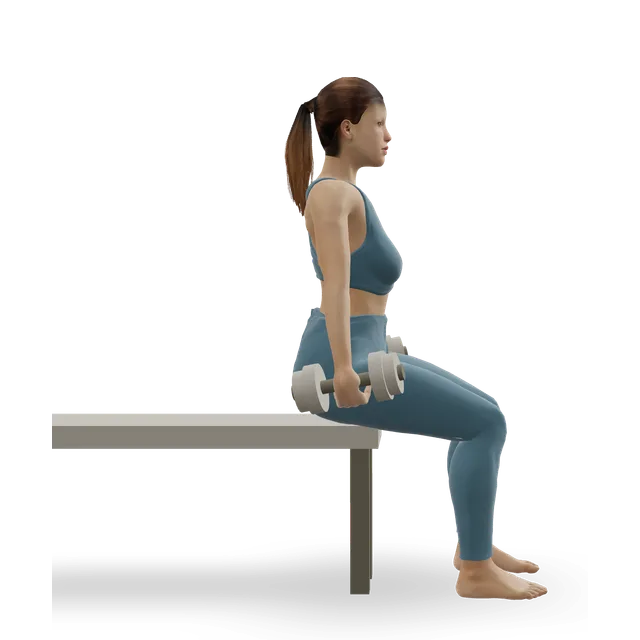
- Seated dumbbell curl8 to 12 each armBeginner · Biceps, Forearms · 3D demoElbows by your sides; filled water bottles are fine, as the NHS suggestsHarder: Dumbbell biceps curl
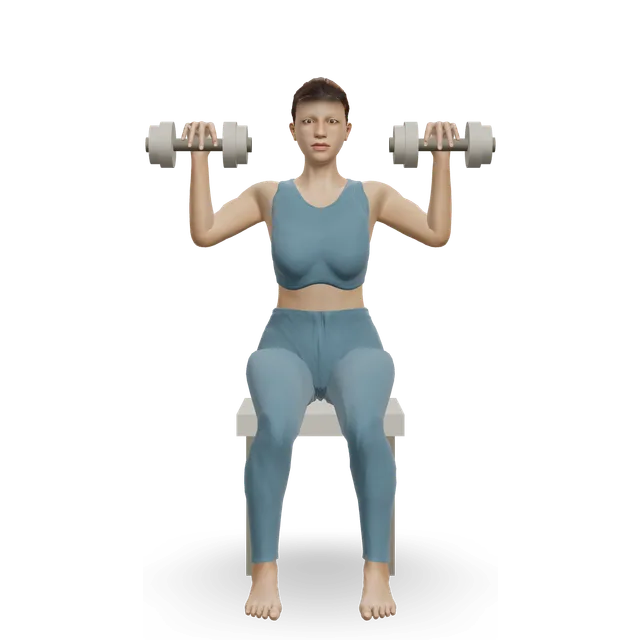
- Intermediate · Shoulders, Triceps · 3D demoLight dumbbells from shoulder height to just above your head; skip it with shoulder painEasier: Machine shoulder pressHarder: Push press
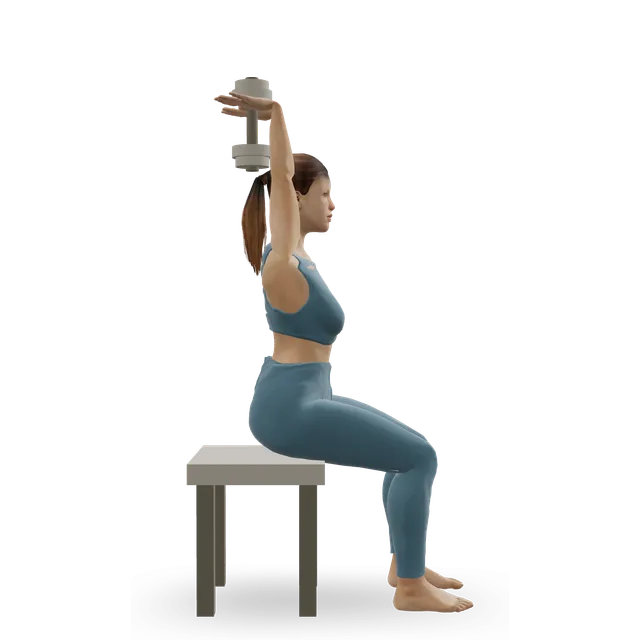
- Intermediate · Triceps · 3D demoOne dumbbell in both hands, lowered behind your head. With shoulder pain or tingling in your little fingers, do kickbacks insteadEasier: Dumbbell triceps kickbackHarder: Parallel bar dip
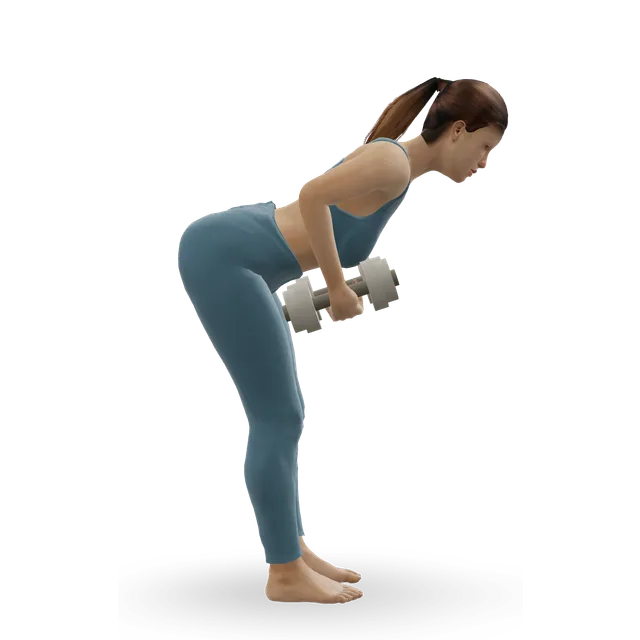
- Dumbbell triceps kickbackOr 8 to 12 each armBeginner · Triceps · 3D demoThe swap with a sore shoulder: keep your upper arm stillHarder: Dumbbell skull crusher (lying triceps extension)


Carry (optional)
- Farmer's carry2 walks of 10 to 20 mIntermediate · Forearms, Abs, Shoulders · 3D demoOnly if you can walk steadily: a light bag or dumbbell in each hand, a clear path, and put them down before your grip tiresHarder: Suitcase carry

Cool down
- Doorway chest opener20 to 30 s, twiceBeginner · Chest, Shoulders · 3D demoA gentle stretch across the front of the chest, no painEasier: Elbows backHarder: Fish pose (Matsyasana)

Tips
- Twice a week, a day apart, building to 3 times if you like: 2 sessions a week, with 2 to 3 sets, did best in pooled trials of healthy adults over 65.
- Choose a weight or band you could lift about 12 times. In weeks 1 and 2, stop each set with 3 or 4 reps to spare; after that, stop 2 or 3 reps short of failure, as our plans' notes say.
- When every set reaches 12, use the next weight or a stronger band, or step further back from the wall. The routine that didn't work in the year-long trial rarely got harder.
- Breathe out as you lift.
- Keep shoulder pain to about 5 out of 10 or less during the exercise, back to its usual level by your next session, as our shoulder guides advise. A sharp pinch means lower, lighter or stop.
- After heart surgery through the breastbone, or a heart or lung transplant, follow your surgeon's advice before pushing, pulling or lifting with your arms.
- With a pacemaker or defibrillator, the American Heart Association asks you to check with your doctor before upper-body strength training. Our arm exercises after a pacemaker or ICD workout has the early stages.
- Stop if you feel dizzy or light-headed. Keep a counter or wall within reach, and have someone nearby for the hardest moves if you've fallen recently (our suggestion, as in our older adults guide).
- Bands that slipped or snapped have caused serious eye injuries, so check yours for nicks before every set.
- Stop and get medical help for chest pain or pressure, unusual breathlessness, dizziness or fainting.
- Call 999: arm pain that comes on suddenly with pressure, heaviness, tightness or squeezing across your chest, especially with shortness of breath, sweating or feeling sick. It could be a heart attack.
The doses are suggested starting points, not a prescription. Choose a range you can control and stop for sharp or increasing pain, numbness or tingling. Get individual advice after an injury or surgery, or if you are pregnant or managing a health condition.
Guides that recommend it
Find more moves like these
More strength at home




Beginner bodyweight workout
A 20-minute full-body workout with no equipment: squats, knee push-ups, bridges, lunges and planks.
20 minBeginner10 movesNo equipment


Full-body bodyweight workout
An intermediate no-equipment workout: push-ups, split squats, single-leg bridges, pike push-ups and core work.
30 minIntermediate11 movesNo equipment


Full-body dumbbell workout
A 35-minute full-body strength workout with dumbbells: goblet squats, presses, rows, Romanian deadlifts and carries.
35 minIntermediate9 movesA band, A dumbbellQuestions people ask
How long does the arm exercises for seniors: push, pull, curl, press and carry, seated or standing take?
About 25 minutes, including any warm-up and cool-down listed. Shorten it by doing fewer rounds; lengthen it by adding one.
What equipment do I need?
You need: A wall, A band, An anchor point, A dumbbell, A bench or box, A kettlebell. Each move links to its guide, where you can find an alternative if you are missing something.
Is it suitable for beginners?
It is written for beginners. 5 of its 10 moves have an easier option listed beside them if you need one.
How do I make it easier or harder?
Use the easier or harder option listed under each move, change the number of rounds, or adjust the rest. Progress one change at a time.