Training guide

How to strengthen your arms: biceps, triceps, forearms and shoulders for everyday strength, with or without weights, at any age, how often, and when arm pain needs a different plan

Strong arms push you up from the floor, pull open a heavy door, lift a case onto a rack and carry the shopping. Strengthening them means training those jobs (push, pull, press, curl, straighten and carry) 2 or 3 times a week, with weights, a band or your body weight, and making each move a little harder as it gets easy.

It works at any age: adults over 50 raised their chest press by about a quarter in trials. But in a year-long trial of 617 adults aged 65 and over, a light home arm routine that rarely got harder did no better than leg exercises for arm function, so making it harder matters.

This guide is about strength for everyday life, not size (our bigger arms guide covers that). It covers the arm muscles, the arm strengthening exercises with doses, push-up steps from the wall to the floor, training without weights, older adults, how often and how heavy, what grip and push-up tests can and can't tell you, and when arm pain needs help first.

The short version

Five jobs, not one muscle

Everyday arm strength is pushing, pulling, lifting overhead, carrying and gripping. The biceps, triceps, forearm and shoulder muscles do these together, so train a push, a pull, a press, a curl, a triceps move and a carry. The NHS names the shoulders and arms among the major muscle groups to train.

Source 1

It works at any age

Adults over 50 raised their chest press by about 24% and their lat pulldown by 25% across 47 studies, and upper-body strength gains in healthy adults over 65 were large across 11 trials.

Sources 2, 3

Make it harder as it gets easier

In one year-long trial of 617 adults aged 65 and over, one set of light seated arm exercises, done about twice a week and rarely made harder, did no better for arm function or strength than a leg programme. The authors suggest that more training, clearer progression or more supervision may be needed.

Source 4

No weights needed

Push-ups built as much strength as a light bench press in 8 weeks, and bands built strength like weights. A floor push-up lifts about two-thirds of your body weight and a knee push-up about half; wall and worktop push-ups lift less again (our reading, from the angle of the body: we found no study that measured them).

Sources 5, 6, 7

How much

Two or 3 sessions a week, 2 or 3 sets of 8 to 12 per move, stopping 2 or 3 reps short of failure, then adding reps and weight. The NHS starts with wall press-ups, 3 sets of 5 to 10, and curls with filled water bottles, 3 sets of 5 each arm.

Sources 8, 3

When arm pain isn't a training job

Arm pain with chest pressure, arm pain that comes on with effort and goes with rest, or a pop at the front of the elbow with a bulge in the upper arm needs help first: see the warning signs below.

Your arms: the muscles and five everyday jobs

The muscles

Three muscles bend the elbow: the biceps, which also turns the palm up, the brachialis underneath it, and the brachioradialis in the forearm. The triceps straightens the elbow, and its long head also crosses the shoulder. The forearm muscles grip and steady the wrist, and the shoulder muscles lift the arm. Our biceps, triceps, brachialis, brachioradialis and forearm pages have the anatomy.

Five everyday jobs

Our editorial grouping: push (push-ups and presses), pull (rows and pull-downs), lift overhead (shoulder presses), carry and grip (carries and squeezes), plus bending and straightening the elbow (curls and triceps moves). The NHS lists carrying heavy shopping bags as a muscle-strengthening activity.

Sources 1, 9

Why it matters for daily life

In 14 women aged 60 to 77, 16 weeks of strength training cut the biceps muscle activity needed to carry a box of groceries by 36%, without a comparison group. In 42 women aged 65 and over with heart disease, 6 months of training made 13 of 16 household tasks faster or let them carry more, against light yoga.

Sources 10, 11

If you can't stand for long

The curl, the shoulder press, the triceps press and a band pull-down all work seated. Our arm exercises for seniors workout can be done seated or standing.

How people differ

Gains were large in older adults, and care home residents with a median age of 86 gained elbow-straightening strength in 12 weeks of supervised training. Women and men gain strength at similar rates relative to where they start, as our plans' notes say. A floor push-up lifts about 66% of your body weight, so heavier people start higher on the ladder (wall, worktop, bench), as our wrists guide suggests.

Sources 2, 12, 7

Strength, not size

This guide is about strength for everyday life. Our bigger arms and bigger forearms guides cover size, our grip strength guide covers grip, and our tone-up and arm fat guides cover how arms look.

What the evidence says

The older adult reviews are the largest evidence here; the push-up and band trials are small and mostly in young adults.

Older adults gain a lotStrong evidence

In a Cochrane review of 121 trials (6,700 people), strength training had a large effect on strength, measured in the legs, and a small one on physical ability. Across 47 studies of adults over 50, the chest press rose about 24% (9.8 kg) and the lat pulldown 25% (10.6 kg), more with higher intensity. Across 11 trials in healthy adults over 65, upper-body strength gains were large.

Sources 13, 2, 3

Push-ups and bandsEmerging evidence

In 18 untrained men, push-ups built as much muscle and strength in 8 weeks as a bench press at a similar light load, and in 30 trained students, band push-ups matched a heavy bench press over 5 weeks. Bands built upper-body strength like weights across studies, and strongly against no training in older adults.

Sources 5, 14, 6, 15

How much of your weight a push-up liftsEmerging evidence

In 8 men on a force plate, a floor push-up started at 66.4% of body weight and a knee push-up at 52.9%. We found no study that measured wall or worktop push-ups; less body weight is our reading of the angle.

Source 7

Light or heavyStrong evidence

Light and heavy loads build similar muscle when the sets are taken close to failure, but heavier loads build more maximal strength (21 studies; 28 studies of 747 adults). Light loads of 20 or more reps still raise strength, just less.

Sources 16, 17, 18

Arm exercises don't take fat off the armsStrong evidence

In 104 adults training one arm for 12 weeks, MRI showed fat loss spread across the body rather than from the trained arm, and in 11 adults training one leg, fat came off the arms and trunk rather than the leg.

Sources 19, 20

The guidelinesStrong evidence

The World Health Organization (WHO) and the NHS ask for strength work for all the major muscle groups, the shoulders and arms included, on 2 or more days a week, and the NHS says to work until you need a short rest before repeating. The National Strength and Conditioning Association calls resistance training a powerful way to keep strength and function in later life, and in the 2026 American College of Sports Medicine overview, strength rose most with heavier loads, 2 to 3 sets and 2 or more sessions a week.

Sources 21, 1, 9, 22, 23

How to strengthen your arms: how much and how often

How often

Two or 3 sessions a week, with a day between. Two sessions a week did best in pooled trials of older adults, and guidelines ask for strength work on at least 2 days.

Sources 3, 1

Sets and reps

Two or 3 sets of 8 to 12 per move, with a weight you could lift about 12 times, as our plans' notes suggest; in older adults, 2 to 3 sets of 7 to 9 reps at a moderately heavy load did best. The NHS starts with 3 sets of 5 to 10 wall press-ups and 3 sets of 5 curls with each arm.

Sources 8, 3

How hard, and rest

Stop push-ups, rows and presses 2 or 3 reps short of failure, which our guides call 2 or 3 RIR (reps in reserve: how many more reps you could have done); the last set of curls and triceps moves can go to 0 to 2. In your first two weeks, keep 3 or 4 in reserve. Rest about 90 seconds to 2 minutes between sets of push-ups, rows and presses, and 60 to 90 seconds for curls and triceps moves, as our plans' notes say.

Progress

Add reps until every set reaches the top of its range, then move to the next push-up step, a stronger band or the smallest weight step, as our plans' notes say. In the year-long trial, a light routine that rarely got harder did little.

Source 4

How long

Strength rose over 8 to 16 weeks in trials, and in older adults the longest programmes, about a year, had the biggest effects. Keep going.

Sources 5, 10, 3

The elbow pain rule

Some discomfort during forearm exercises is fine. Keep it mild: no more than about 3 to 4 out of 10. It should settle within an hour or so, and your elbow should be no worse the next morning. If it is worse, go lighter next time (a lighter weight, a bendier bar, fewer reps or a shorter hold), not nothing. When a set no longer causes any discomfort, it's time to progress.

An arm strength session at home, step by step

Our editorial order, built from the NHS strength exercises, our arm challenge session and our grip strength guide, with our plans' rest and effort rules. Seated versions of the curl and press suit anyone who can't stand for long. Our push-up guide teaches the move shown.

  1. Warm up: 2 slow shoulder circles each way with each arm, then 60 seconds of wrist and forearm circles.
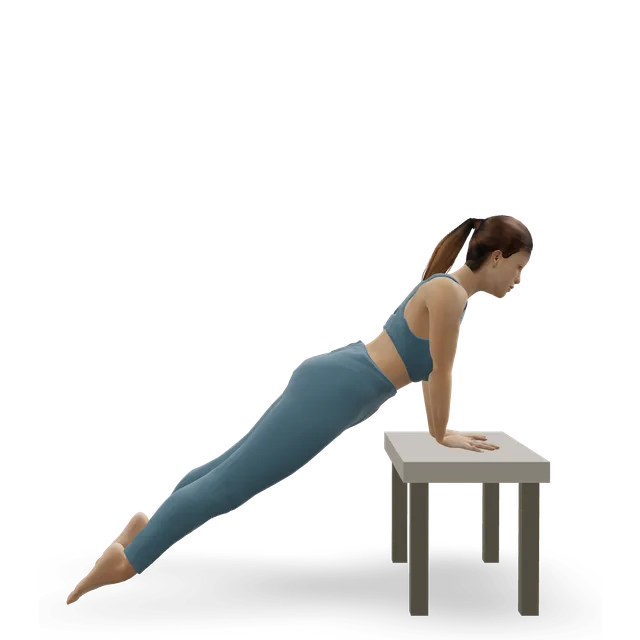
  2. Push: wall press-ups, hands flat on the wall at chest height, arms' length away, bending your elbows to bring your chest towards the wall and pushing back; 2 or 3 sets of 5 to 10. Step your feet back, or move to a worktop, as it gets easy.
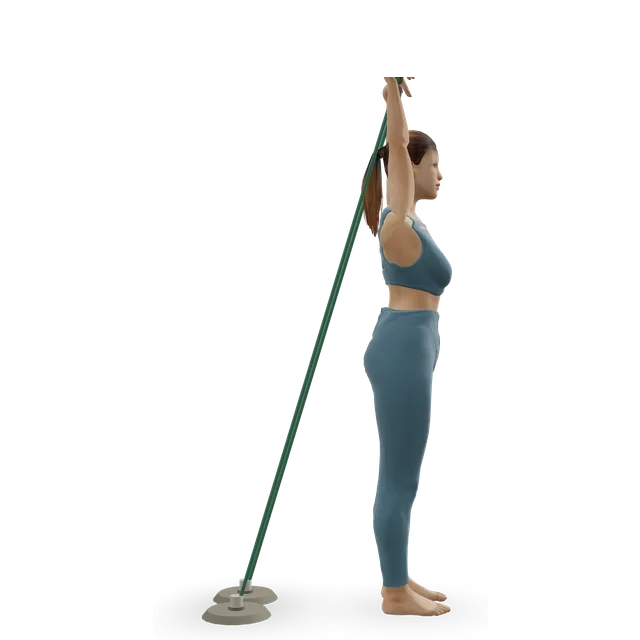
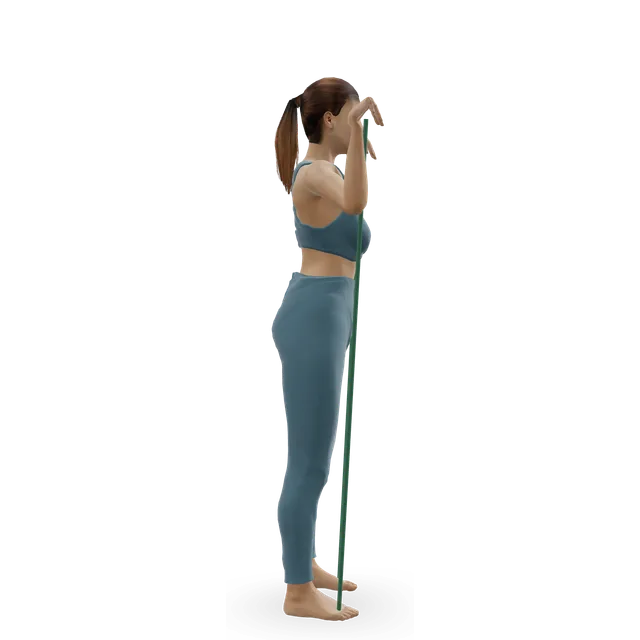
  3. Pull: band rows, the band anchored in a closed door at chest height, 2 or 3 sets of 10 to 15.
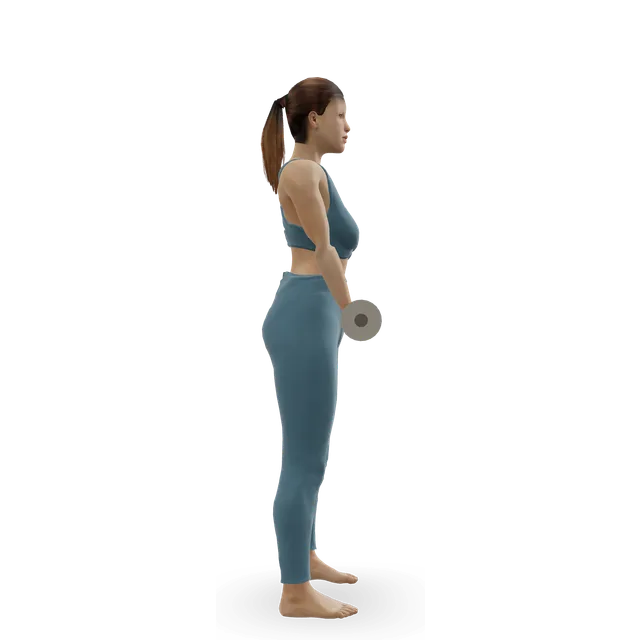
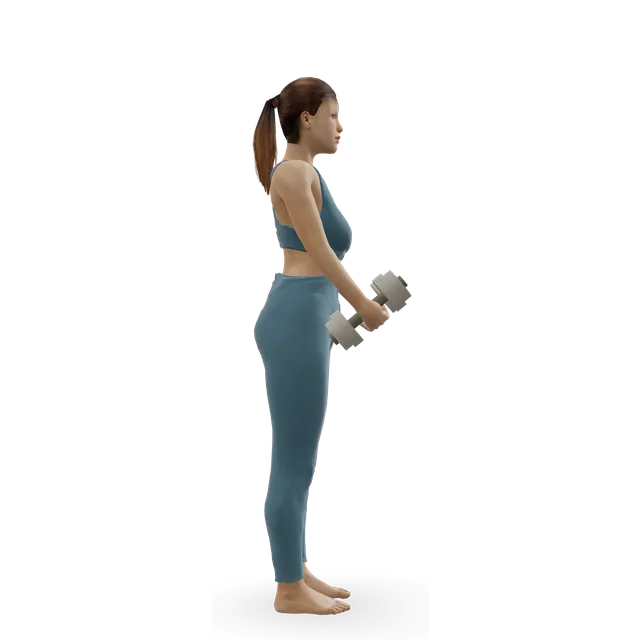
  4. Curl: biceps curls with dumbbells or filled water bottles, elbows by your sides, lowering over 2 seconds, 2 or 3 sets of 8 to 12.
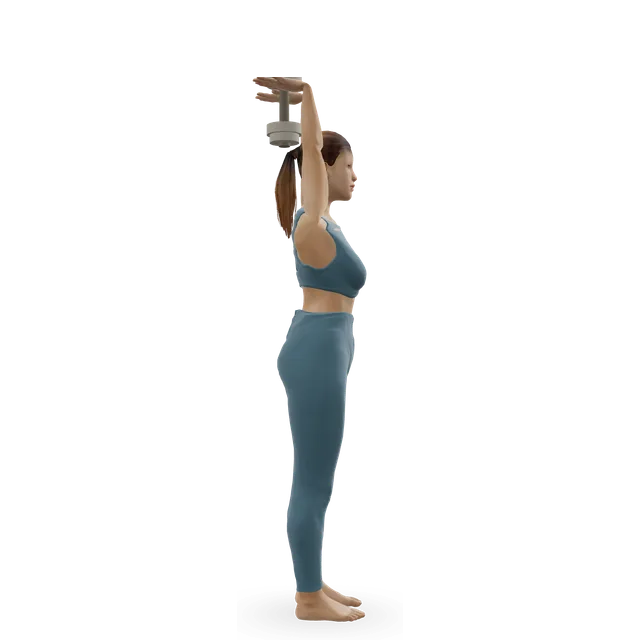
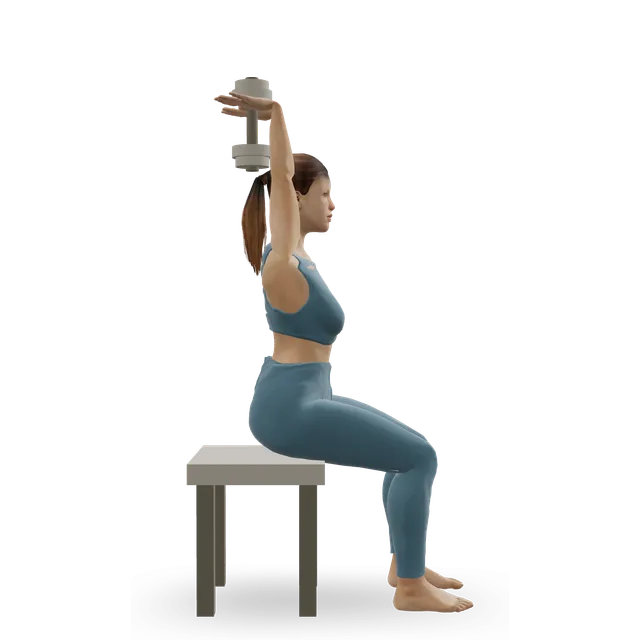
  5. Straighten: an overhead triceps extension with one weight in both hands (or kickbacks if your shoulder is sore), 2 or 3 sets of 10 to 15.
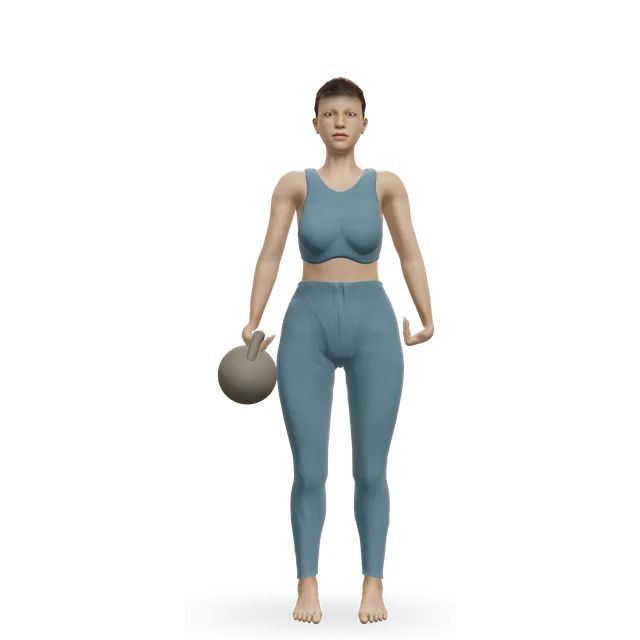
  6. Carry: hold a heavy bag or dumbbell in each hand and walk 20 to 30 metres, 2 or 3 times, putting them down before your grip fails.
  7. Next time, add reps to the top of each range, then move to the next step or a heavier weight.

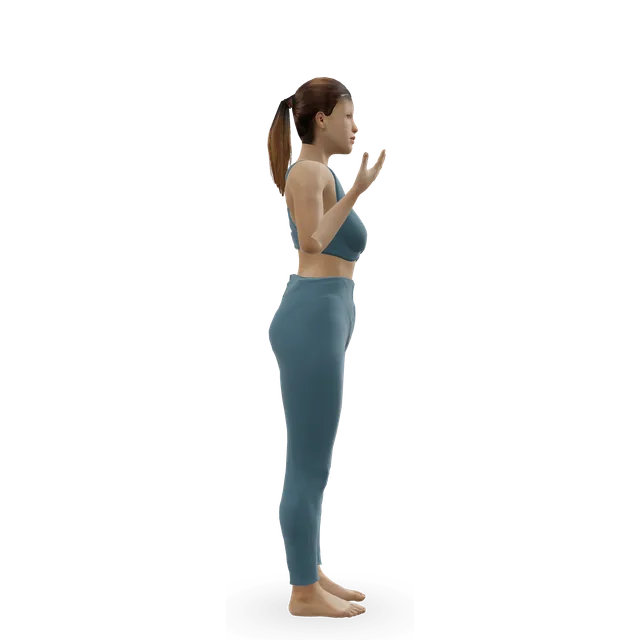
Loading the 3D figure…

Gets into position, then repeats the movement. Technical checks passed; qualified exercise review is pending.

The movement on the figure: Wall push-up

Push: from the wall to the floor

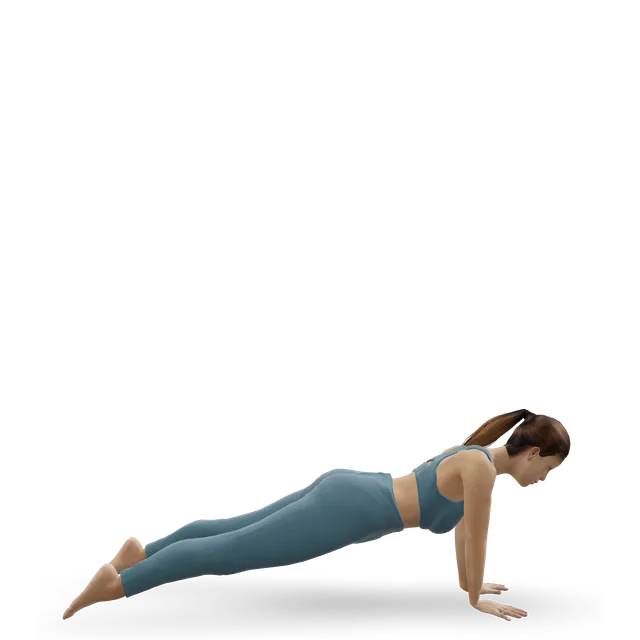
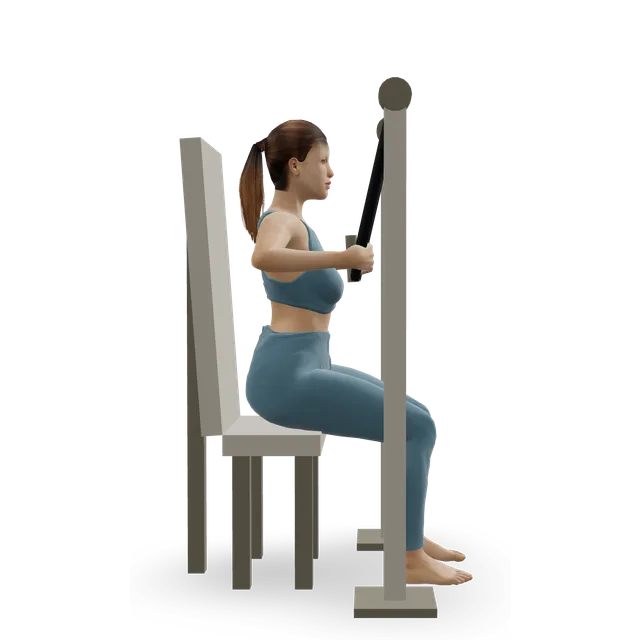
Wall press-ups, 3 sets of 5 to 10 (the NHS strength exercises), then incline, knee and full push-ups, 2 to 3 sets of 8 to 15, moving up a step when you reach the top of the range; close-grip versions, 2 to 3 sets of 6 to 12, for the triceps (our arm challenge session). In a gym, the chest press machine.

Pull: rows and pull-downs

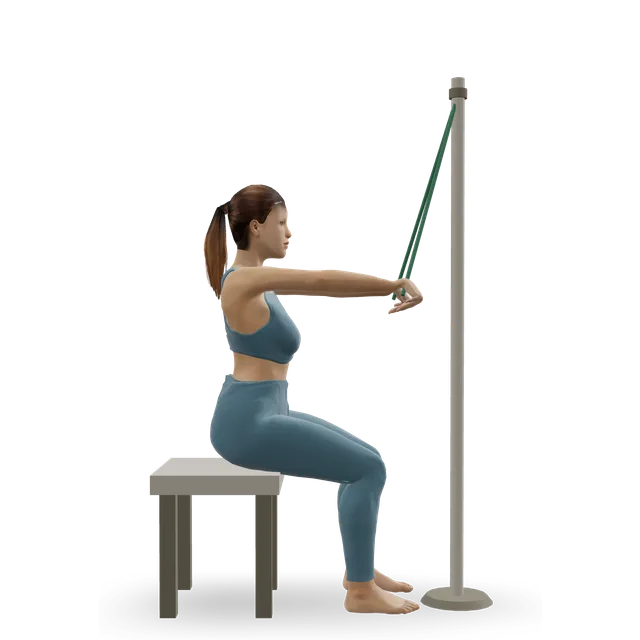
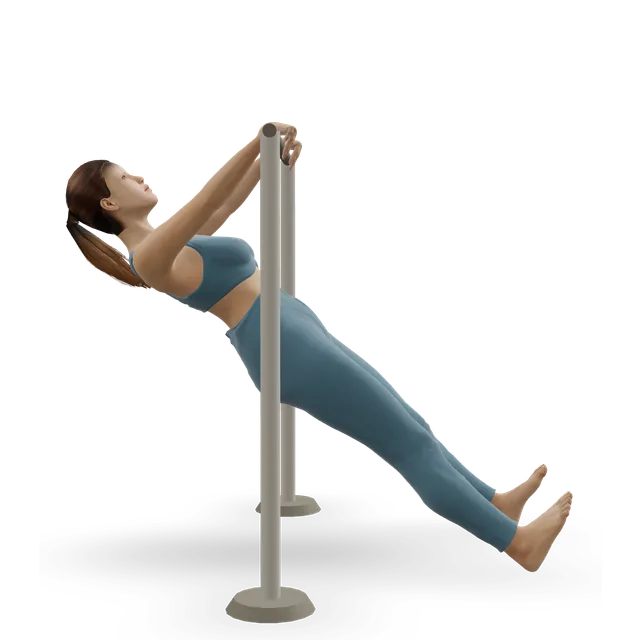
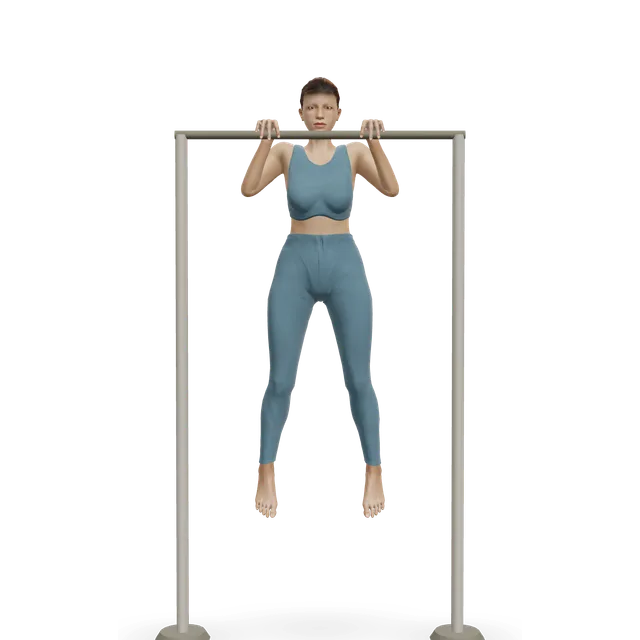
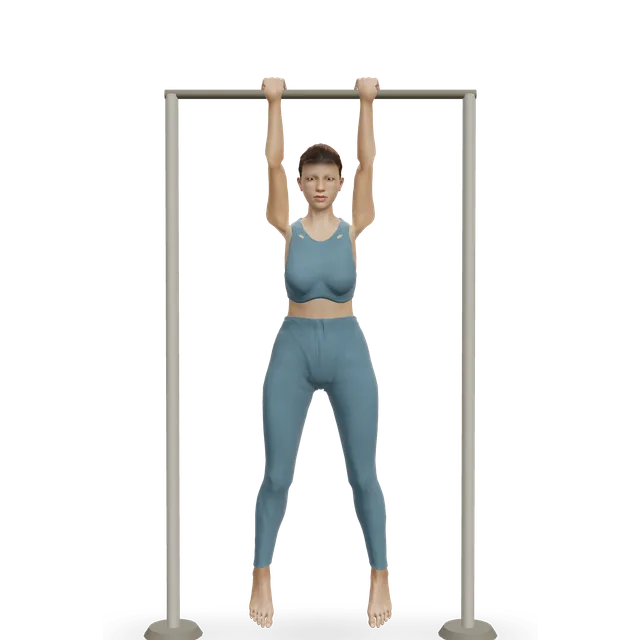
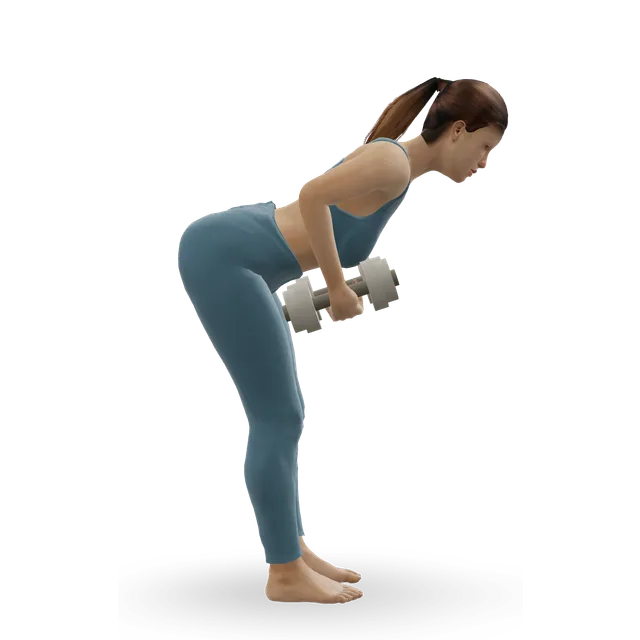
Band rows, 2 to 3 sets of 10 to 15; inverted rows under a sturdy table or bar, 2 to 3 sets of 6 to 12; one-arm dumbbell rows, 2 to 3 sets of 8 to 12 each side (our arm challenge session). If standing is hard, a seated band pull-down, at the dose on its move page. With a bar, slow chin-up negatives, 2 or 3 sets of 3 lowered over 3 to 5 seconds (our pull-up guide). There's no 3D demo of a seated band row: the band row shows the same pull.

Curl and straighten: biceps and triceps

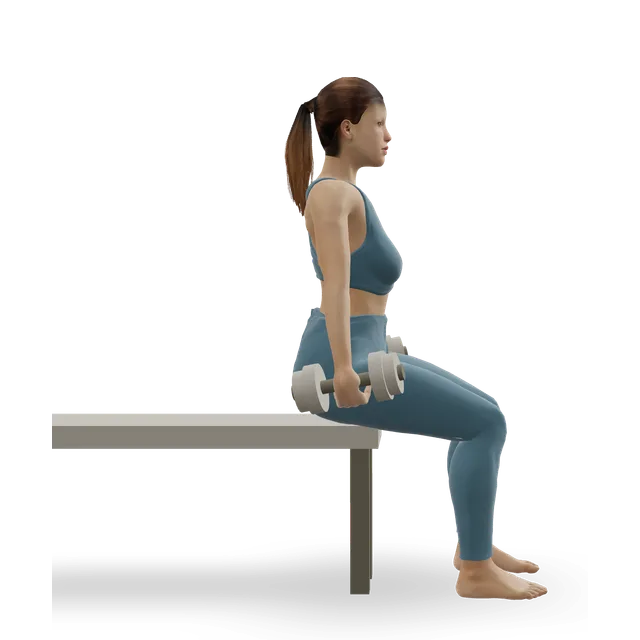
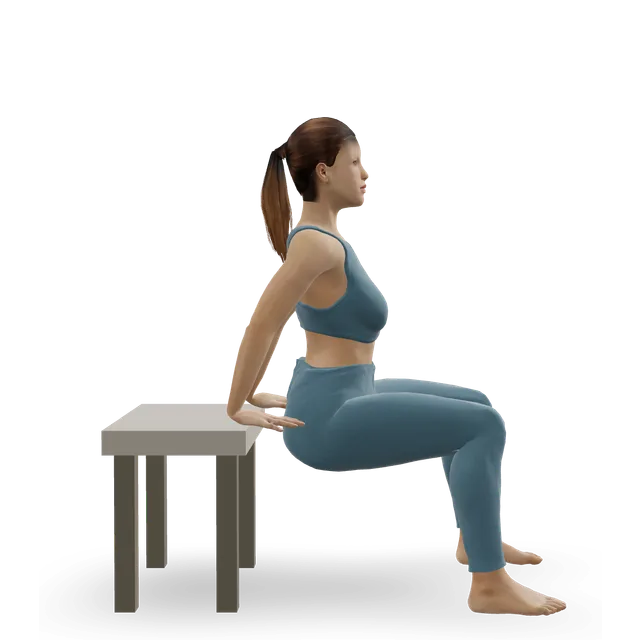
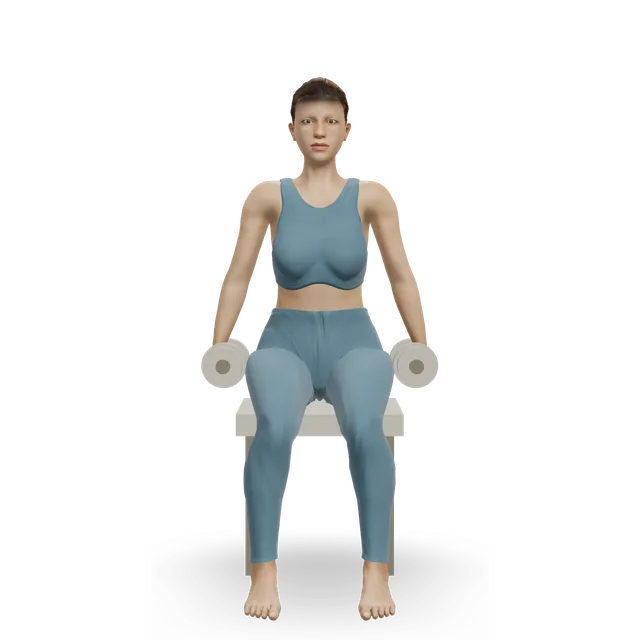
Biceps curls with light weights or filled water bottles, 3 sets of 5 each arm to start (the NHS strength exercises), building to 2 to 3 sets of 10 to 15 (our arm challenge session); seated curls, 5 to 10 each arm (our chair exercises for seniors); hammer curls and overhead triceps extensions, 2 to 3 sets of 10 to 15, and kickbacks or band overhead extensions, 2 to 3 sets of 12 to 15 (our arm challenge session). Bench dips on a sturdy chair, 2 to 3 sets of 8 to 12, lowering only to a right angle at the elbow. There's no 3D demo of a band curl or a chair dip: the dumbbell curl and the bench dip show the same moves.

Press overhead, carry and grip

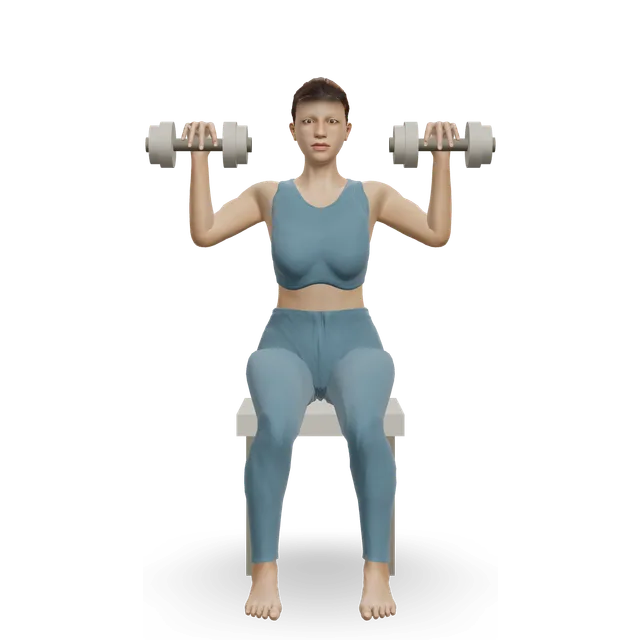
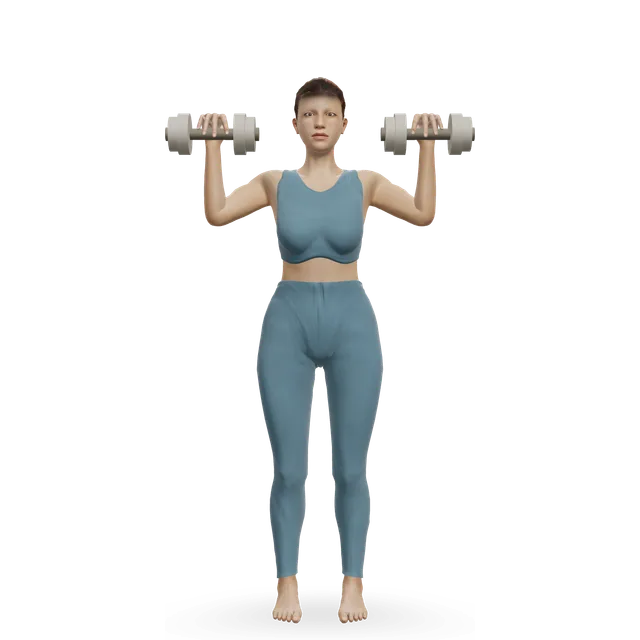
A seated dumbbell or band shoulder press, 2 or 3 sets of 8 to 12 (our editorial starting point, as for other presses in our plans). Farmer's carries, 3 or 4 walks of 30 to 40 m, starting with around a quarter of your body weight in each hand, a coaching benchmark no trial has tested; suitcase carries, 2 walks of 20 to 30 m each side; ball squeezes, 10 squeezes with 5-second holds, building to 4 to 6 sets of 8 to 15 (our grip strength guide). Seated lateral raises, 8 to 10 reps with light weights or none, stopping at shoulder height (our chair exercises for seniors).

Strengthening your arms without weights

Push-upsEmerging evidence

Push-ups at a load like a light bench press built as much muscle and strength in 8 weeks, and band push-ups matched a heavy bench press in trained students. These are small trials in young adults.

Sources 5, 14

The push-up ladder

Wall, worktop, bench, knees, floor: move up a step when you reach about 15 good reps, as our arm challenge session does. A floor push-up lifts about 66% of your body weight and a knee push-up about 53%; wall and worktop push-ups lift less (our reading, from the angle of the body; we found no study that measured them).

Source 7

Pulling without weights

Rows under a sturdy table or with a band anchored in a closed door, and chin-up negatives if you have a bar, as our arm workout without weights does. Check the table, band and anchor before every set.

BandsEmerging evidence

Across studies, bands built upper-body strength as well as weights and machines, and in older adults they built strength strongly against no training. A few bands of different strengths let you keep progressing.

Sources 6, 15

Dips

Bench dips on a sturdy chair, lowering only to a right angle at the elbow, as our arm challenge session says. Keep them shallow or skip them with a sore shoulder, as our bigger arms guide says.

Arm strengthening exercises for seniors

The dose that did bestEmerging evidence

In 25 trials of healthy adults over 65, 2 sessions a week, 2 to 3 sets, 7 to 9 reps and 70 to 79% of the most you could lift once did best, and the longest programmes had the biggest effects. The trials' quality was poor overall.

Source 3

A light routine that never got harderEmerging evidence

In 617 adults aged 65 and over (average age 73, 64% women), a year of 8 seated arm exercises with dumbbells of 600 g to 3 kg and a band, done about twice a week on average, did no better for arm function or most strength measures than a leg programme. It's one trial; the authors suggest a higher dose, clearer progression or more supervision may be needed.

Source 4

At homeStrong evidence

Across 17 trials, home exercise raised strength in older adults modestly, more when strength was the focus. Across 21 trials of unsupervised home strength training, leg strength rose but grip strength didn't, and there were no major harms.

Sources 24, 25

Everyday tasksEmerging evidence

Strength training made carrying groceries easier in 14 women aged 60 to 77, and made 13 of 16 household tasks faster or heavier in 42 older women with heart disease, against light yoga.

Sources 10, 11

In care homesEmerging evidence

In 146 residents with a median age of 86, 12 weeks of supervised activity with an upper-limb emphasis, 3 times a week, improved elbow-straightening strength and quality of life more than leg exercise.

Source 12

What we take from it

Start seated or at the wall with light weights or a band, 2 sets building to 3, and make each move harder every few weeks. The NHS suggests carrying heavy shopping bags and working with resistance bands among strength activities for adults 65 and over. Our arm exercises for seniors workout puts this into one session; no trial has tested that exact session.

Source 9

Grip and push-ups: what the tests can and can't tell you

Grip strengthStrong evidence

Each 5 kg weaker grip went with about 16% higher death rates in 139,691 adults in 17 countries, and 16 to 20% in 502,293 UK adults. These are links: the authors warn they may not mean that grip itself is the cause.

Sources 26, 27

Push-upsEmerging evidence

In 1,104 male firefighters, those who could do more than 40 push-ups had 96% fewer heart and circulation events over 10 years than those who did fewer than 10, but the authors say the results don't support push-ups as an independent predictor of heart risk.

Source 28

Markers, not leversEmerging evidence

General exercise raised grip a little in older adults, but no trial shows that training grip or push-ups changes those risks. Train them for carrying and lifting; our grip strength and push-up test pages have the tests.

Source 29

Workouts to follow

The arm exercises for seniors workout starts at the wall and the chair; the arm challenge, no-weights and home sessions suit most people; the band, carry and grip sessions add equipment you may have. The pacemaker and stroke sessions are for those situations.

Arm exercises for seniors: push, pull, curl, press and carry, seated or standing

A 25-minute arm session for older adults, seated or standing: wall press-ups, band rows, curls, a light press and a triceps move, made harder week by week.

25 minBeginner10 movesA wall, A band

Arm supersets: push-up steps with rows, curls with triceps

A 20-minute arm session for the 30-day arm challenge: a push-up step with a row, then a curl with a triceps move, with or without dumbbells.

20 minBeginner20 movesA wall, A bench or box

Arm workout without weights: chin-ups, rows, close-grip push-ups and dips

A 30-minute bodyweight arm workout: chin-ups and rows for the biceps, close-grip push-ups and dips for the triceps, and a bar hang for your grip.

30 minIntermediate8 movesPull-up bar, A bench or box

Arm workout at home: curls and triceps with dumbbells

A 30-minute arm workout at home with dumbbells: curls, hammer curls and concentration curls paired with overhead extensions, close-grip push-ups and kickbacks.

30 minBeginner8 movesA dumbbell

Push-up progression workout

Work up to full push-ups: wall, incline and knee push-ups, then the floor push-up and harder variations.

15 minBeginner8 movesA wall, A bench or box

Resistance band workout

A full-body resistance band workout: squats, rows, push-ups, presses, pull-aparts, band walks, good mornings and flyes.

30 minBeginner9 movesA band, An anchor point

Resistance band workout B: rows, push-ups, split squats and hip hinges

A 35-minute full-body band workout: rows and push-ups, split squats and an anchored hip hinge, then bridges, face pulls, raises, triceps and a Pallof press.

35 minBeginner15 movesA wall, A band

Loaded carry workout: farmer's, suitcase and overhead carries

A 25-minute carry workout with dumbbells or kettlebells: farmer's carries, suitcase carries on each side and an overhead carry, with a safe pick-up first.

25 minBeginner7 movesA kettlebell, A dumbbell

Grip strength workout: squeezes, curls, carries and hangs

A 20-minute grip session: warm up the wrists and fingers, train the hand and forearm muscles, then carry and hang to load your grip the way everyday life does.

20 minBeginner10 movesOther / check instructions, A band

Chair exercises for seniors: a seated workout

A 20-minute seated workout for older adults who cannot stand for long: marching, leg and arm strength, posture, and sit-to-stands that lead back to standing.

20 minBeginner11 movesA bench or box, Something with weight

Strength and balance exercises for seniors

A 40-minute strength and balance session for over-65s, built from the Otago home programme and NHS exercises, using a chair, a counter and a step.

40 minBeginner18 movesA bench or box, Something with weight

Gym workout for seniors: machine strength training for muscle loss

A 50-minute gym session for older adults and sarcopenia: 7 machines for the legs, chest and back from the UK prescription, then a short balance finish.

50 minBeginner12 movesCardio machine, A bench or box

Arm and shoulder exercises after a pacemaker or ICD: the first 6 weeks

Gentle arm, shoulder and neck exercises for the first 6 weeks after a pacemaker or ICD, keeping your elbow below shoulder height so the leads can settle.

10 minBeginner7 movesA bench or box, A wall

Home exercises after a stroke: bed, chair and standing

A gentle 20-minute routine for home after a stroke: moves on the bed, in a chair and standing at a chair, then a short walk. Do the parts your team has agreed.

20 minBeginner12 movesA bench or box, Something with weight

Plans

The arm challenge works with or without weights; the band, home, seniors' and dumbbell plans train the arms inside a full week.

Who should change their arm training

Sore elbows

Some discomfort is fine: up to about 3 to 4 out of 10, settling within an hour, with your elbow no worse the next morning, as our elbow guides say. If it's worse, go lighter and slower, swap heavy or swinging curls for hammer curls, and see our elbow pain from bicep curls guide.

Tingling is the exception: stop any exercise or position that brings on pins and needles or numbness in your hand, especially in the ring and little fingers, and avoid holding the elbow fully bent while it settles.

Shoulder pain

Leave overhead extensions out and use pushdowns or kickbacks, keep bench dips shallow or skip them, and see our shoulder pain guides. Tingling in your ring and little fingers in deep extensions means shorten the range or swap the move.

Keep shoulder pain to about 5 out of 10 or less during the exercise, back to its usual level by your next session, as our shoulder guides advise. A sharp pinch means lower, lighter or stop.

Sore wrists

Close-grip and diamond push-ups load the wrists and elbows more; use push-up handles or dumbbells to keep your wrists straight. With pain on the thumb side of your wrist, curl palms up rather than with hammer curls, as our move pages advise.

A pacemaker or defibrillator, or heart surgery

After heart surgery through the breastbone, or a heart or lung transplant, follow your surgeon's advice before pushing, pulling or lifting with your arms.

Speak to your GP first if you haven't exercised for some time or have a medical condition. Get advice before hard or straining work with high blood pressure that isn't controlled (140/90 or higher at a clinic, or 135/85 at home), heart disease, glaucoma, a hernia or recent surgery, or if you're pregnant. With a pacemaker or defibrillator, the American Heart Association asks you to check with your doctor before upper-body strength training. Breathe out as you lift.

Our arm exercises after a pacemaker or ICD workout has the early stages.

After a stroke

Our exercise after a stroke guide and home exercises after a stroke workout come first. Start seated, with very light weights or a band, and build up slowly (our suggestion).

Pregnancy and after the birth

Carpal tunnel syndrome and de Quervain's are both more common in pregnancy and after the birth. Our wrist pain in pregnancy guide covers splints, lifting your baby and a plan.

Warning signs: when to get help

Arm pain with chest pain or pressure

Call 999: arm pain that comes on suddenly with pressure, heaviness, tightness or squeezing across your chest, especially with shortness of breath, sweating or feeling sick. It could be a heart attack.

Call 999: shoulder or arm pain with chest pain that feels tight or squeezing, or chest pain that spreads to your arms, neck or jaw, especially with shortness of breath, sweating or feeling sick. It could be a heart attack.

Arm pain that comes on with exercise

Same day (NHS 111): your arm hurts when you exercise, but the pain goes away when you rest.

Get help from NHS 111: pain or tightness in your chest, neck, shoulders, jaw or arms that comes and goes, often brought on by exercise, stress, emotion or cold and easing after a few minutes' rest. It can be angina, a sign of a heart problem. If you've been diagnosed with angina, get help from NHS 111 too if it feels worse than before, is happening more often, lasts longer or happens when you're resting.

Source 30

A weak or numb arm with a drooping face

Call 999, even if it passes: sudden weakness or numbness in one arm, with a drooping face or slurred speech. These are signs of a stroke.

A pop at the front of the elbow

A sudden pop at the front of the elbow during a heavy pull, with bruising, a gap at the front of the elbow or a bulge in the upper arm, can be a torn biceps tendon. Go to an urgent treatment centre or A&E (in the US, urgent care or the emergency department), and don't wait for it to settle: repair is best done within the first 2 to 3 weeks.

Urgent treatment centre or A&E: a pop or snap and sudden pain during an effort, which could be a torn tendon. At the front of the elbow, with bruising and a bulge in the upper arm, don't wait for it to settle: a torn biceps tendon is best repaired within the first 2 to 3 weeks. If it happened weeks ago, still get it checked: repair is often still possible, though it may need a tendon graft.

A pop at the back of the elbow

Urgent treatment centre or A&E: a pop or snap at the back of the elbow during a push, a press or a dip, or after a fall onto an outstretched hand, then sudden pain and swelling, bruising at the back of the elbow or forearm, a gap above the point of the elbow, or weakness straightening the arm, especially overhead. Don't wait to see if it settles: a full tear in an active person is usually repaired, and expert guidance favours repairing it early.

Weakness straightening the arm that you notice without a clear injury, or back-of-elbow pain if you've had steroid injections near the elbow, have kidney disease or use anabolic steroids: get it checked. These can weaken the tendon.

A pop at the front of the armpit or chest

A pop or tearing at the front of the armpit or chest during a lift, followed by bruising into the chest or upper arm, a change in the shape of the chest or armpit, or weakness pushing, can be a torn chest tendon. Don't wait for it to settle: get help the same day from NHS 111 or an urgent treatment centre, as our pec strain guide explains.

An arm injury

Go to A&E or call 999 if you've injured your arm and it is numb, tingling or has pins and needles; a bone is sticking out or a bad cut is bleeding heavily; or the arm or elbow has changed colour or shape, or is at an odd angle. Don't drive yourself.

Urgent treatment centre or A&E: severe pain in your arm and it's difficult to move; you've injured your arm and heard a snap, or your arm has changed shape; or your arm tingles or feels numb.

A hot, swollen elbow

Same day (urgent GP appointment or NHS 111): a swollen elbow with a very high temperature, or you feel hot, cold or shivery; or severe pain in one joint that started suddenly, swelling around a joint, the skin around a joint has changed colour, or difficulty moving a joint. It could be an infection in the joint or the bursa, or gout.

Shoulder symptoms

Ask for an urgent GP appointment or get help from NHS 111 for sudden or very bad shoulder pain, an arm you can't move, a shoulder that has changed shape or is badly swollen, pins and needles that don't go away, no feeling in your arm or shoulder, an arm or shoulder that's hot or cold to touch, pain after an injury or a fall, severe pain in both shoulders, or feeling feverish or unwell. Go to A&E if, after an injury, you can't move your arm or your shoulder looks out of place or has changed shape. See a GP if shoulder pain is getting worse or hasn't improved after 2 weeks.

Same day (GP or NHS 111): sudden weakness lifting the arm after an injury or fall. A rotator cuff tear caused by an injury needs urgent referral to a shoulder specialist. After a dislocation in anyone over 40, the rotator cuff should be checked: about 40% have a tear.

Pins and needles or numbness

Pins and needles that keep coming back or are constant, numbness in the ring and little fingers that doesn't go, a weak or clumsy hand, or visible wasting between the thumb and index finger. Ask about referral: one NHS referral guide treats permanent numbness or wasting as urgent.

Arm weakness or numbness that keeps getting worse, severe pain that painkillers and rest do not touch, or an unexplained fever.

Stop and get checked if the arm feels weaker or numbness spreads.

A clot in the arm (our suggestion)

Our suggestion, from the NHS DVT page, which says DVT symptoms "can sometimes happen in your arm if that's where the blood clot is": for throbbing pain or swelling in one arm, red, blue or darkened skin around the painful area, or swollen veins, ask for an urgent GP appointment or get help from NHS 111, and call 999 or go to A&E if you also feel short of breath or have chest pain, as the NHS advises for DVT.

Source 31

After big or unusual sessions

Same day (call NHS 111, or go to A&E if you feel very unwell): after a big or unusual session, such as hundreds of pull-ups, push-ups, dips or curls, a challenge or a new class, muscle pain, swelling or weakness far worse than the session explains, and dark pee (red, brown, tea or cola coloured), sometimes starting hours or days later. Dark pee isn't always there, so muscles far sorer, more swollen or weaker than the session explains still need the same-day check. It can be rhabdomyolysis, a breakdown of muscle that can harm the kidneys.

See a GP

Elbow or arm pain that hasn't gone after a few weeks of looking after it yourself (for tennis elbow, the NHS says after at least 2 weeks of self-care). In many areas you can refer yourself to NHS physiotherapy.

Stop and get medical help

If you get chest pain or pressure, feel faint or dizzy, are unusually breathless, or your heart races or beats irregularly during exercise, as our plans advise.

Call 999 (911 in the US)

For chest pain that comes on suddenly and doesn't go away, feels tight or like squeezing, spreads to your arms, neck, jaw, stomach or back, or comes with sweating, feeling sick, light-headedness or breathlessness; arm pain that comes on suddenly with pressure, heaviness or squeezing across your chest; severe difficulty breathing, or a chest that feels tight or heavy; someone who faints while exercising; palpitations that don't go away, or come with chest pain, shortness of breath or feeling faint; or a headache that starts suddenly and is extremely painful, especially while lifting or straining. The NHS says a bleed on the brain may be more likely when lifting something heavy. Don't drive yourself to A&E.

Ask for an urgent GP appointment or call NHS 111

Ask for an urgent GP appointment or get help from NHS 111 for a headache that's triggered or made worse by coughing, sneezing, bending down or exercising. In the US, contact your doctor or urgent care.

During any session

Stop straight away if you feel any pain or become unwell, the NHS says, and contact 111 if your symptoms worry you or don't go away.

A dull ache in your muscles for a day or two after something new is normal. Joint pain that's sharp, gets worse during a set or lingers into the next day means switching to the easier option, and seeing a GP or physiotherapist if it carries on (our plans' rule). Our muscle soreness guide has more.

Check first

Speak to your GP first if you haven't exercised for some time or have medical conditions or concerns, as the NHS advises. Get advice before heavy lifting or hard straining work if your blood pressure is uncontrolled, or you have heart disease or chest pain when you're active, a pacemaker or defibrillator, diabetic eye disease, glaucoma, a hernia, recent eye or tummy surgery, or you're pregnant, as our breathing guide lists. After a recent shoulder dislocation or shoulder surgery, follow our shoulder dislocation guide or your surgical team first.

Speak to a GP first if you haven't exercised for some time, or if you have a medical condition or concerns. Get advice first, too, if you have a health problem, an injury or symptoms, have recently had a heart attack or an operation, or are pregnant or have recently given birth.

Source 1

Myths

"Light weights and high reps tone your arms"Strong evidence

No study measures "tone" as its own thing. Light and heavy loads build similar muscle when the sets are taken close to failure, heavier loads build more maximal strength, and training an arm doesn't take the fat off it. Toned arms are some muscle plus less body fat; our tone-up and arm fat guides cover it.

Sources 16, 17, 19, 20

"You need weights to strengthen your arms"Emerging evidence

Push-ups built as much strength as a light bench press, band push-ups matched a heavy bench press, and bands built strength like weights.

Sources 5, 14, 6

"Older people should stick to very light weights"Strong evidence

Older adults gained most with moderate to heavy loads, about 70 to 79% of the most they could lift once in pooled trials, and gains rose with intensity. Start light, then let the load rise.

Sources 3, 2

"A grip or push-up test tells you how long you'll live"Strong evidence

Grip and push-ups are markers: the links come from observational studies whose authors warn they may not mean cause and effect, and no trial shows that training them changes the risk.

Sources 26, 27, 28

"Arm strength is just biceps"

The triceps, forearms and shoulders do most of the pushing, lifting and carrying, so train a push, a pull, a press and a carry as well as curls (our reading of the NHS's list of muscle groups).

Questions people ask

What's the best way to strengthen your arms?

Train the jobs arms do: push (push-ups), pull (rows), lift overhead (presses), bend and straighten the elbow (curls and triceps moves) and carry. Do 2 or 3 sets of 8 to 12 of each, 2 or 3 times a week, and make it harder as it gets easy.

How can I strengthen my arms without weights?

Push-ups from the wall, a worktop or the floor, rows with a band or under a sturdy table, and bench dips on a chair. Push-ups built as much strength as a light bench press in a trial, and bands built strength like weights. Our arm workout without weights adds a pull-up bar.

How can I strengthen my arms at home?

A band and a pair of dumbbells, or filled water bottles, cover it: wall or floor push-ups, band rows, curls, a seated press and an overhead triceps extension. The NHS suggests wall press-ups, 3 sets of 5 to 10, and curls with water bottles, 3 sets of 5 each arm, to start.

What are good arm exercises for seniors?

Wall press-ups, seated curls, a seated press, band rows and short carries, building from light to heavier over weeks. Adults over 50 raised their chest press by about a quarter in trials, while in one year-long trial a very light routine that rarely got harder didn't help arm function, so keep progressing. Our arm exercises for seniors workout puts it together.

How often should I do arm exercises?

Two or 3 times a week, with a day between. Two sessions a week did best in pooled trials of older adults, and guidelines ask for strength work on at least 2 days a week.

How many reps and sets should I do?

Two or 3 sets of 8 to 12, stopping 2 or 3 reps short of failure. In older adults, 2 to 3 sets of 7 to 9 reps at a moderately heavy load did best.

Will light weights and high reps tone my arms?

Light weights build muscle if the sets are hard, but heavier ones build more strength, and no arm exercise takes fat off your arms. Our tone-up and arm fat guides explain what changes how arms look.

How do I strengthen weak arms after an illness or a stroke?

Start seated, with very light weights or a band, and build up slowly. After a stroke, our exercise after a stroke guide and home exercises after a stroke workout come first; after heart surgery through the breastbone, follow your surgeon's advice before lifting with your arms.

How long does it take to strengthen your arms?

Strength rose over 8 to 16 weeks in trials, and in older adults the longest programmes did best. Track your reps and weights so you can see it.

Does grip strength matter?

It's a useful marker: weaker grip went with higher death rates in very large studies, but no trial shows that training grip changes that. Train it for carrying and lifting; our grip strength guide has the plan.

How do I strengthen my arms for push-ups?

Climb the ladder: wall, worktop, bench, knees, floor, moving up when you reach about 15 good reps. A floor push-up lifts about two-thirds of your body weight and a knee push-up about half. Our push-up guide and push-up progression workout set it out.

My elbow hurts when I train. What should I do?

Discomfort up to about 3 to 4 out of 10 that settles within an hour is fine; if it's worse, go lighter, not to nothing, as our elbow guides say. A pop at the front of the elbow with a bulge in the upper arm can be a torn biceps tendon and needs same-day help: see the warning signs.

Sources

  1. NHS · Physical activity guidelines for adults aged 19 to 64
  2. Peterson 2010 · Resistance exercise for strength in adults over 50: 47 studies (meta-analysis, Ageing Res Rev)
  3. Borde 2015 · The dose of resistance training for healthy older adults: 25 trials (systematic review and meta-analysis, Sports Med)
  4. Bates 2026 · A year of home arm exercises against a leg programme in 617 adults aged 65 and over (pragmatic randomised trial, PLoS One)
  5. Kikuchi 2017 · Push-ups against a light bench press over 8 weeks in 18 men (randomised trial, J Exerc Sci Fit)
  6. Lopes 2019 · Elastic bands against weights and machines for strength, as corrected (systematic review and meta-analysis, SAGE Open Med)
  7. Gouvali 2005 · How much body weight push-up variations put on the hands, in 8 men (lab study, J Strength Cond Res)
  8. NHS · Strength exercises
  9. NHS · Physical activity guidelines for older adults
  10. Hunter 1995 · Strength training and everyday tasks in 14 women aged 60 to 77 (training study, J Am Geriatr Soc)
  11. Ades 2003 · Strength training and household tasks in 42 older women with heart disease (randomised trial, Med Sci Sports Exerc)
  12. Zeng 2025 · A supervised activity programme with an upper-limb emphasis in 146 care home residents (cluster-randomised trial, Age Ageing)
  13. Liu 2009 · Progressive resistance strength training for physical function in older adults: 121 trials (Cochrane review)

  14. Calatayud 2015 · Band push-ups against the bench press at matched muscle activity in 30 trained students (randomised trial, J Strength Cond Res)
  15. Martins 2013 · Elastic resistance training and strength in older adults (systematic review and meta-analysis, Arch Gerontol Geriatr)
  16. Schoenfeld 2017 · Light against heavy loads for strength and muscle growth: 21 studies (meta-analysis, J Strength Cond Res)
  17. Lopez 2021 · Light, moderate and heavy loads for muscle growth and strength: 28 studies, 747 adults (network meta-analysis, Med Sci Sports Exerc)
  18. Schoenfeld 2021 · Loads for muscle strength, size and local endurance: a re-examination of the repetition continuum (review, Sports)
  19. Kostek 2007 · Fat changes after upper-body training, measured by MRI in 104 adults (trial, Med Sci Sports Exerc)
  20. Ramírez-Campillo 2013 · Training one leg for 12 weeks, and where the fat came off, in 11 adults (trial, J Strength Cond Res)
  21. Bull 2020 · World Health Organization 2020 guidelines on physical activity and sedentary behaviour (guideline, BJSM)
  22. Fragala 2019 · Resistance training for older adults (NSCA position statement, J Strength Cond Res)
  23. Currier 2026 · ACSM position stand: resistance training prescription for muscle function, size and performance, an overview of 137 reviews (position stand, Med Sci Sports Exerc)
  24. Chaabene 2021 · Home-based exercise and fitness in healthy older adults: 17 trials (systematic review and meta-analysis, Ageing Res Rev)
  25. Mañas 2021 · Unsupervised home strength training for older adults: 21 trials (systematic review and meta-analysis, Ageing Res Rev)
  26. Leong 2015 · Grip strength and death rates in 139,691 adults in 17 countries (PURE cohort study, Lancet)
  27. Celis-Morales 2018 · Grip strength and health outcomes in 502,293 UK Biobank adults (cohort study, BMJ)
  28. Yang 2019 · Push-up capacity and heart events over 10 years in 1,104 male firefighters (cohort study, JAMA Netw Open)
  29. Labott 2019 · Exercise training and grip strength in older adults (meta-analysis, Gerontology)
  30. NHS · Elbow and arm pain
  31. NHS · DVT (deep vein thrombosis)

Exercise education, not a personal prescription, and clinical review of these guides is pending. Check with a GP before starting hard training if you have a heart condition, chest pain, dizziness or breathlessness when active, and stop for sharp or increasing pain. Health disclaimer.