Dumbbell fly
Lying on a bench, the arms open wide in an arc with soft elbows until the dumbbells are level with the chest, then hug back up: the fly with free weights, which the arms must steady themselves rather than following a machine's or cable's path.
Chest fly family
Dumbbell fly
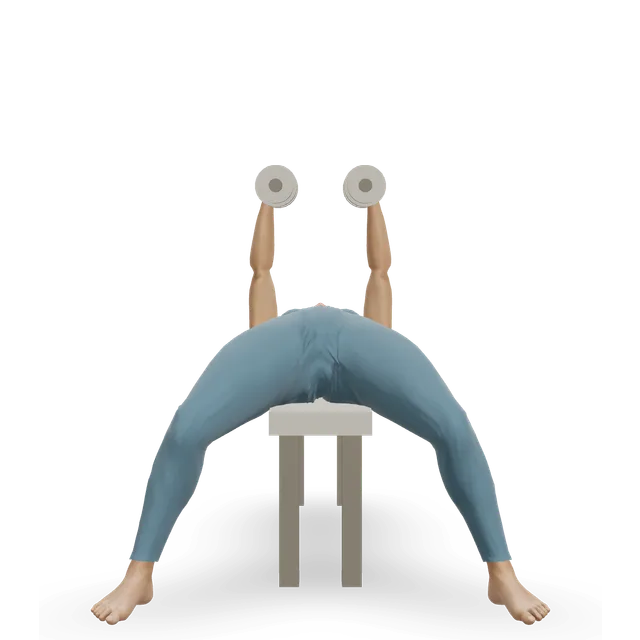
Loading the 3D figure…
Source-researched guide.
How to move
- Lie on a bench with a dumbbell in each hand over the chest, palms facing each other.
- Open the arms wide in an arc, elbows softly bent, until the weights are level with the chest.
- Bring them back up over the chest as if hugging a barrel.
Form cues
- Keep the same slight elbow bend throughout.
- Stop at chest level; the shoulders should not be stretched past comfort.
Practice and cautions
No universal dose is assigned. Choose a manageable amount for your current capacity, leave room for controlled repetitions, and allow recovery. A clinician’s individual plan takes priority.
Lower until your arms are about level with your chest, elbows slightly bent: cautious advice from a hospital shoulder handout and an NHS trust leaflet, as no trial has tested how far to go. A sudden pop or tearing pain in the chest or armpit needs checking the same day. This is movement education, not an assessment or treatment prescription. Stop for sharp or increasing pain, dizziness, numbness or tingling; seek individual guidance for symptoms, injury or restrictions.
Sources and review status
Sources support the educational description; they do not establish that this exercise is suitable for you.
- Solstad 2020 · The bench press and the dumbbell fly compared (lighter loads, much more stabilising work in the fly) ↗
- ACSM 2009 · Progression models in resistance training (machines steady the body and are easy to learn; free weights ask more coordination) ↗
- Mass General Sports Medicine · Strength training for the shoulder (flys with the elbows bent and the hands no lower than the chest) ↗
- Royal Berkshire NHS · Pectoralis major tendon repair (bench presses and flys with the elbow no lower than the shoulder) ↗
- AAOS OrthoInfo · Pectoralis tendon tear (a pop or ripping feeling in the chest needs medical care straight away) ↗
- Free Exercise DB · community text ↗
Unlicense · Free Exercise DB contributors; derived from wrkout/exercises.json. Text import; no photographs or media. · Revision f00c92c7dcf1216a928a52c3706c7ce8e2f71ed5
No variation is labeled clinically validated.
What it works
Equipment
A dumbbell + A bench or box
Level
Intermediate. See the easier and harder options above.
Workouts that use it
Pain guides that use it
Part of a staged plan, with when to get help first.
Guides that use it
Similar moves
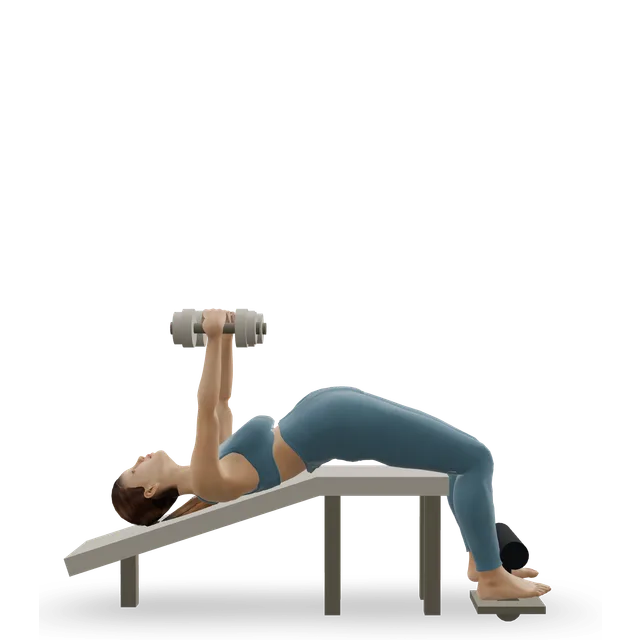 3D demoDecline dumbbell flyIntermediate · A dumbbell + A bench or box
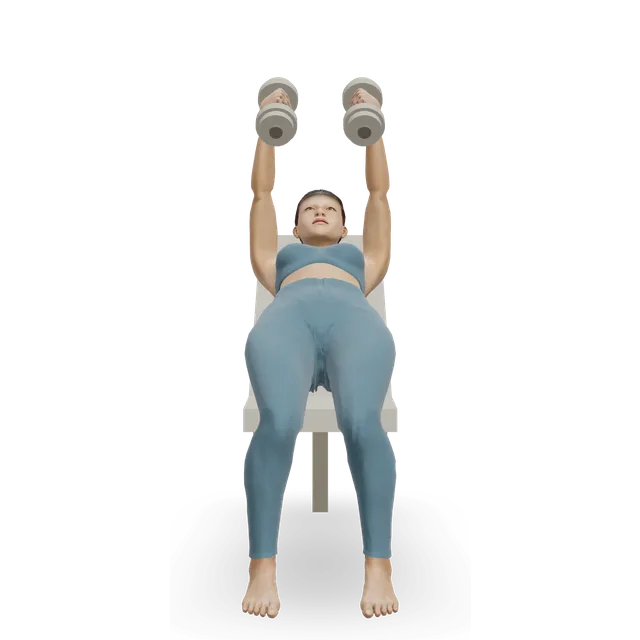 3D demoIncline dumbbell flyIntermediate · A dumbbell + A bench or box
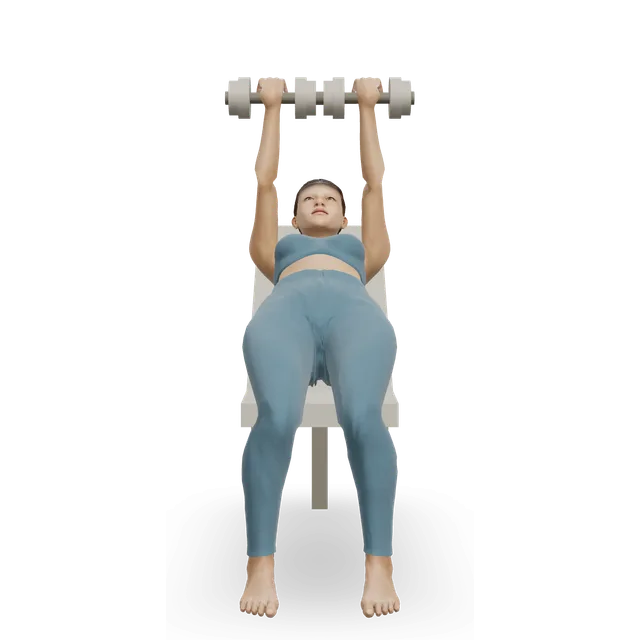 3D demoIncline dumbbell fly with a twistIntermediate · A dumbbell + A bench or box
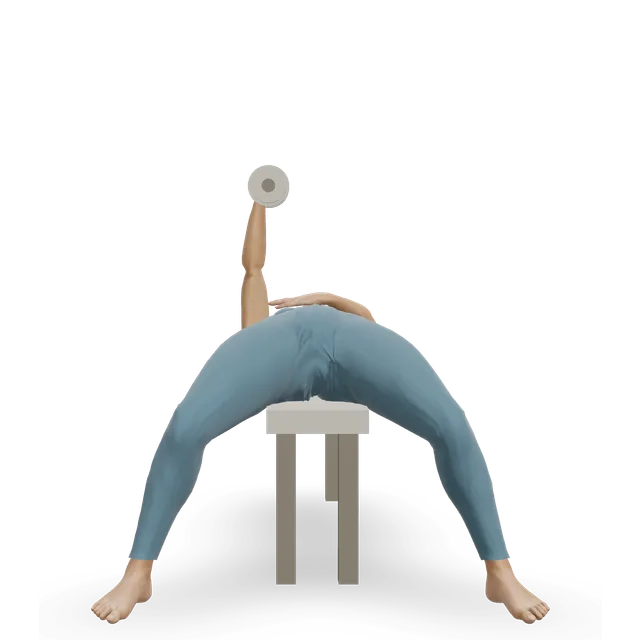 3D demoOne-arm dumbbell flyIntermediate · A dumbbell + A bench or box
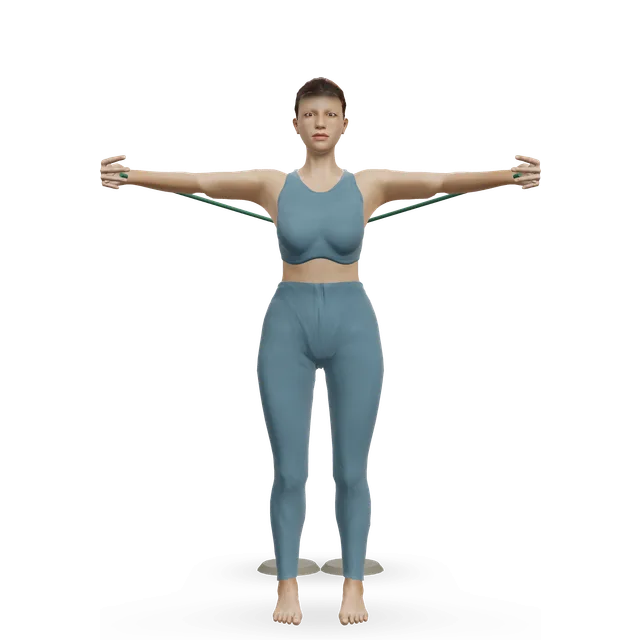 3D demoStanding band chest flyIntermediate · A band + An anchor point
 Ring flyAdvanced · Gymnastic rings
Browse more
Questions people ask
What muscles does the Dumbbell fly work?
Mainly the chest, with help from the shoulders.
What equipment do I need for the Dumbbell fly?
A dumbbell + A bench or box.
Is the Dumbbell fly good for beginners?
It is graded intermediate. If it is too hard right now, start with the Cable fly.
What is an easier alternative to the Dumbbell fly?
Try the Cable fly or the Low-to-high cable fly. Both are written steps in the same progression.
How do I make the Dumbbell fly harder?
Progress to the Bodyweight fly on rolling bars or the Barbell neck press. Follow that guide’s technique and any stated timing.