Tortoise pose (Kurmasana)
A wide-legged seated forward fold in which the shoulders slide under the bent knees and the arms reach out to the sides as the legs straighten over them and the chest lowers to the floor. It goes further than the wide-angle seated forward fold, which Yoga Journal says it often follows. Yoga Journal asks for the bend to come from the hips, with the back rounding as little as possible.
Movement guide
Tortoise pose (Kurmasana)
Make it easier or harder
Choose a version that fits your control and comfort.
Easier option
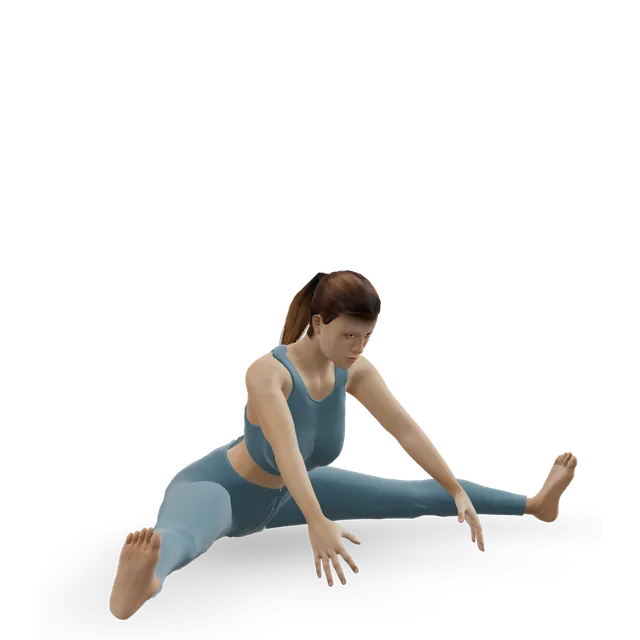 3D demoWide-angle seated forward fold (Upavistha Konasana)Intermediate · No equipment
Similar move, intermediate grade.
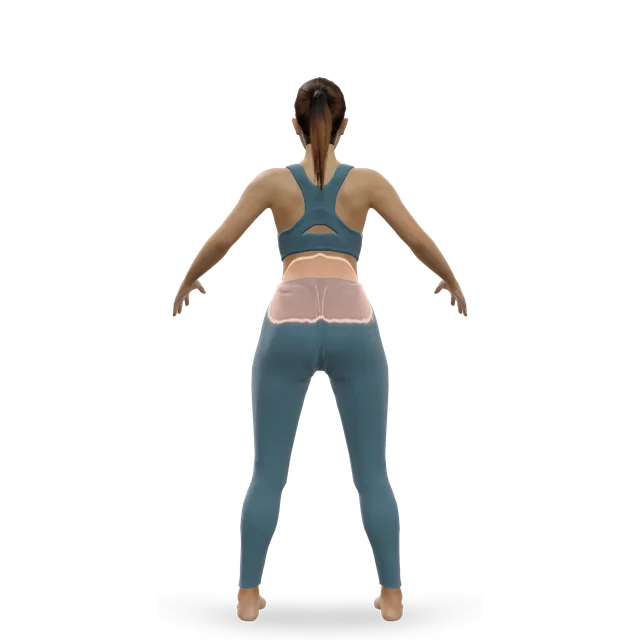
Harder option
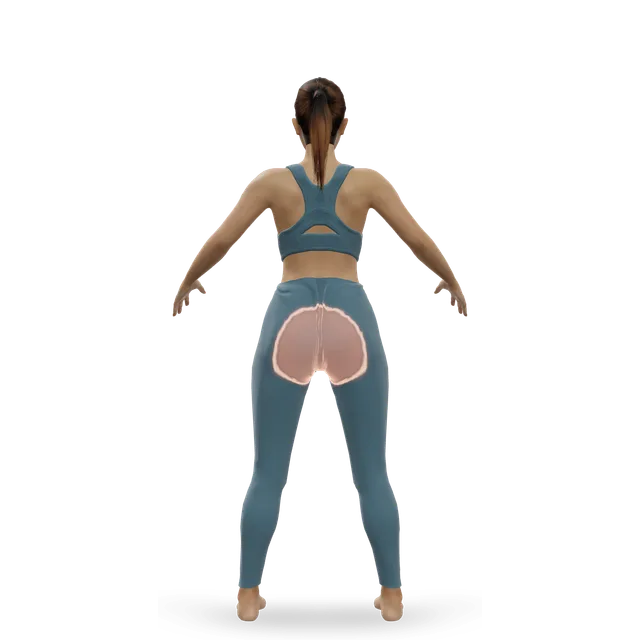 Sleeping tortoise (Supta Kurmasana)Expert · No equipment
Similar move, expert grade.
Source-researched guide.
How to move
- Sit with the legs about 90 cm apart and the knees bent, feet on the floor. Hinge forward from the hips with a long back.
- Slide one arm, then the other, under the knees, working the shoulders as far under the legs as you can, and stretch the arms out to the sides, palms down.
- Slowly straighten the legs, letting the heels slide forward and the backs of the thighs settle on the shoulders, and lower the chest and then the chin or forehead toward the floor.
- Hold, breathing evenly. To come out, bend the knees, draw the arms out one at a time and sit up slowly.
Form cues
- Bend from the hips; the back should round as little as possible.
- Sit on a firmly folded blanket to help the pelvis tip forward.
- Avoid: forcing the knees straight.
Practice and cautions
Hold 3 to 5 slow breaths at first, building toward the 30 to 60 seconds that Yoga Journal and Yoga International give.
Let the legs straighten slowly and only as far as they will go: slow, straight-knee stretches into a deep hip bend have torn the hamstring near the sitting bone in professional dancers. Set the arms so the elbows aren't strained under the legs. Sustained deep spinal flexion under load is a poor idea with disc-related back pain, and nobody should press on your back here. This is movement education, not an assessment or treatment prescription. Stop for sharp or increasing pain, dizziness, numbness or tingling; seek individual guidance for symptoms, injury or restrictions.
Sources and review status
Sources support the educational description; they do not establish that this exercise is suitable for you.
- Yoga Journal · Tortoise pose (how-to: legs about three feet apart, the arms under the bent knees; bend from the hips, as rounding strains the discs; 30 to 60 seconds; the arms bound and the ankles crossed behind the head as the advanced form) ↗
- Yoga International · Kurmasana: the journey inward (the shoulders under the legs, the arms out at right angles; 30 seconds to a minute; skip the final stages with a disc problem) ↗
- Askling 2007 · 15 professional dancers tore the hamstring near the sitting bone in slow stretches with the hip bent and the knee straight; return took a median of 50 weeks (case series, Am J Sports Med) ↗
No variation is labeled clinically validated.
What it works
Muscles
Main: Hamstrings, Adductors. Also: Back, Shoulders.
Anatomy: Hamstrings, Biceps femoris, Adductors, Gracilis, Pectineus.
Equipment
None: body weight and floor space.
Level
Advanced. See the easier and harder options above.
Similar moves
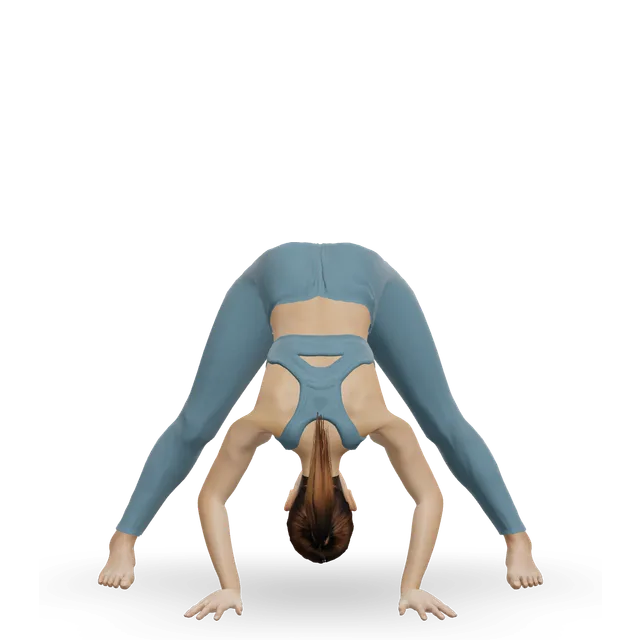 3D demoWide-legged standing forward fold (Prasarita Padottanasana)Beginner · No equipmentCompass pose (Parivrtta Surya Yantrasana)Advanced · No equipment
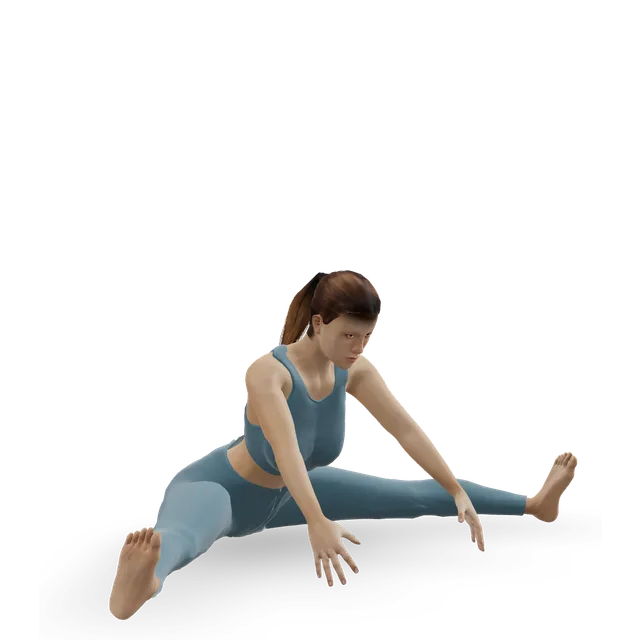 3D demoSeated straddle stretchBeginner · No equipment
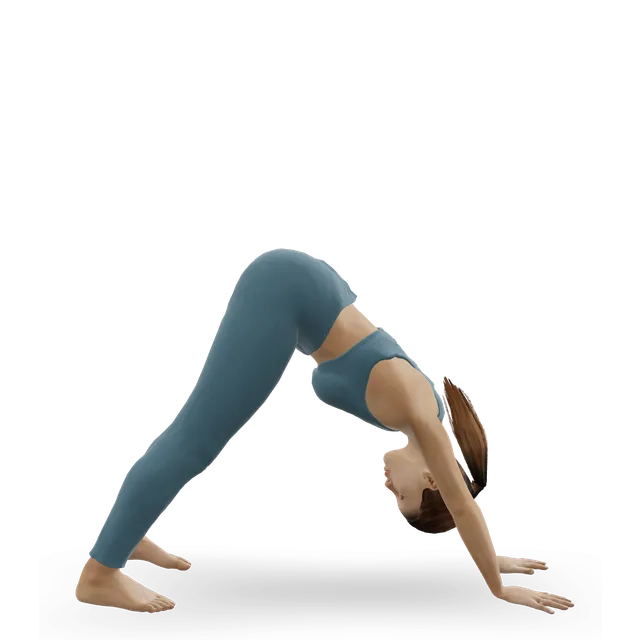 3D demoDownward-facing dog (Adho Mukha Svanasana)Beginner · No equipment
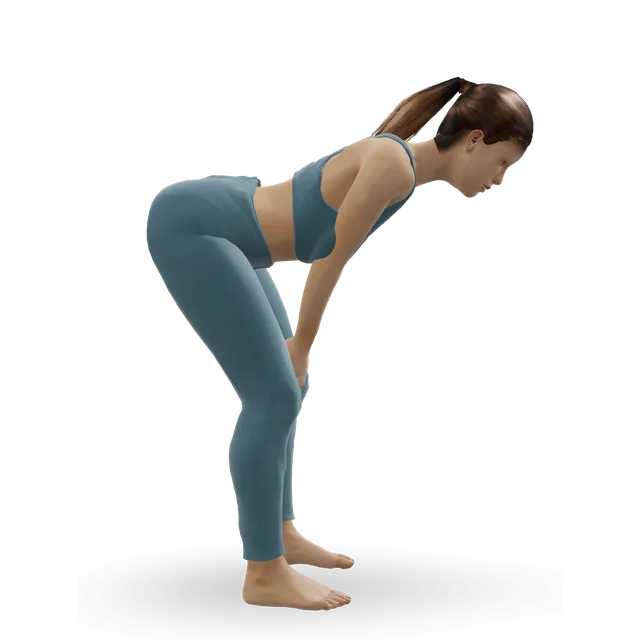 3D demoFlying sword (elastic forward swing)Intermediate · No equipment
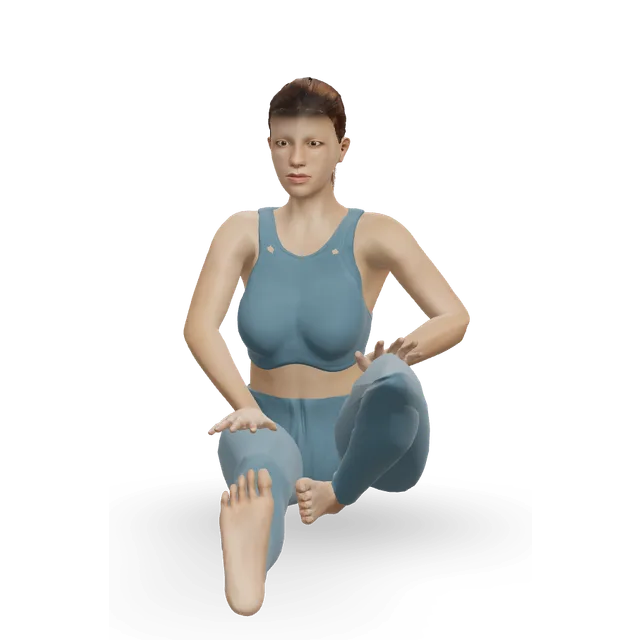 3D demoHead-to-knee pose (Janu Sirsasana)Beginner · No equipment
Browse more
Questions people ask
What muscles does the Tortoise pose (Kurmasana) work?
Mainly the hamstrings and adductors, with help from the back and shoulders.
What equipment do I need for the Tortoise pose (Kurmasana)?
No equipment: your body weight and a little floor space.
Is the Tortoise pose (Kurmasana) good for beginners?
It is an advanced move. Build up to it with the Wide-angle seated forward fold (Upavistha Konasana) first.
What is an easier alternative to the Tortoise pose (Kurmasana)?
Try the Wide-angle seated forward fold (Upavistha Konasana) or the Triangle pose (Utthita Trikonasana). It works similar muscles at a lower grade.
How do I make the Tortoise pose (Kurmasana) harder?
Progress to the Sleeping tortoise (Supta Kurmasana) or the Bird of paradise (Svarga Dvijasana). Follow that guide’s technique and any stated timing.