No exercise burns fat from one spot
Six weeks of ab exercises on 5 days a week didn't shrink belly fat or the waist, and adding ab training to a diet took off no more belly fat. Fat comes off your whole body, not the part you work.
Pilates guide
Pilates won't burn fat off your belly: no exercise takes fat off the part of the body it works. Against doing nothing, Pilates took off about 2.4 kg in small trials of adults with overweight, with no clear change in waist size. What shrinks belly fat, including the deeper visceral fat around your organs, is moving more, especially brisk aerobic activity, and eating a little less, and your waist can shrink even when the scales barely move.
What Pilates does well is build a stronger trunk with more stamina, and it counts toward your two strength days. This guide explains what Pilates can and can't do for your belly, why spot reduction fails, what does shift belly fat, what else changes the shape of your tummy (bloating, a gap after pregnancy, how you stand), the waist size that matters for your health, and a routine that pairs Pilates with walking.
Six weeks of ab exercises on 5 days a week didn't shrink belly fat or the waist, and adding ab training to a diet took off no more belly fat. Fat comes off your whole body, not the part you work.
About 2.4 kg against doing nothing in 11 small trials of adults with overweight, only in programmes longer than 10 weeks, with no clear change in waist size. It's light work, about like a slow walk, and no Pilates trial has measured the deep belly fat on a scan.
Moving more, especially brisk aerobic activity, and eating a little less. Each extra 30 minutes a week of aerobic exercise took about half a centimetre off the waist, and both exercise and eating less cut visceral fat.
Your waist can shrink when the scales barely move. For your health, keep your waist to less than half your height. That's a health number, not a target shape.
It builds trunk endurance (about 10 more curl-ups a minute in trials) and can grow the ab muscles, and it counts toward your two strength days a week.
Bloating, a tummy gap after pregnancy and how you stand all change it. A swollen tummy that doesn't go down needs a GP (see the warning signs below).
Fat under the skin is the fat you can pinch. Visceral fat sits deeper, inside your abdomen around the organs, and when it's measured on CT or MRI scans it's a marker of heart and metabolic risk in its own right. Our guide to losing belly fat explains both.
Source 19
An international consensus calls waist size a vital sign: it predicts disease beyond body mass index (BMI), and waist reductions happen "with or without weight loss". The numbers on this page are about your health. Bodies come in many shapes, and this page doesn't promise any of them.
In one study of 48 women, the Pilates stance (drawing the tummy in and up) measured up to 5.2 cm less around the waist than the usual clinical stance, and added up to 2.7 cm of height. That's a measuring effect, not fat loss: it's one study, but it's why "before and after" tape readings should always be taken the same way.
Source 18
In a lab study of 20 people with bloating, the visible swelling went with an unusual reflex: the diaphragm pushing down while the lower belly muscles relaxed. Our Pilates for bloating guide covers it.
Source 16
In 300 first-time mothers, a gap between the two sides of the six-pack muscle was there in 60% at 6 weeks, 45% at 6 months and 33% at 12 months after the birth. In 35 first-time mothers, 4 weeks of Pilates 5 times a week improved the waist and the gap against no exercise, though the groups may not have been chosen at random. The NHS post-pregnancy body page covers the changes, and our Pilates for diastasis recti guide has the moves.
NICE, the health guidance body for England, says people from South Asian, Chinese, other Asian, Middle Eastern, Black African or African-Caribbean backgrounds "are prone to central adiposity" (fat around the middle). Women with more central fat made more of the stress hormone cortisol under lab stress, though that kind of study can't show which came first, and 2 weeks of short sleep added belly fat in a small trial. The menopause section below covers the change in midlife.
In 24 inactive adults, 7 ab exercises (2 sets of 10) on 5 days a week for 6 weeks, with diet held steady, changed neither body fat, the fat over the belly on a scan, the waist nor skinfolds, though the ab group managed more curl-ups than the control group at the end (47 against 32). In 40 women with overweight, adding 12 weeks of ab resistance training to a diet took off no more belly fat or waist than the diet alone.
These two trials are the evidence for the belly itself. They're small, but they agree with the studies of arms and legs.
Across 13 studies of 1,158 people who trained one arm or leg, the fat over the trained limb didn't fall more than over the other. This review covered arms and legs, not the belly. In 104 adults who trained one arm for 12 weeks, fat loss on MRI was general, not local, and in 11 adults who trained one leg, fat came off the arms and trunk rather than that leg.
In 16 men, running plus 57 minutes of resisted crunches and twists took about 0.7 kg more fat off the trunk than running alone with the energy used matched, over 10 weeks, with similar total fat loss (and trunk fat on that scan isn't only belly fat). A circuit with ab moves thinned the fat over the upper belly on ultrasound in 14 adults. Neither used a Pilates-sized dose, and neither has been repeated.
Pilates can grow the ab muscles: in 9 inactive women, 36 weeks of Pilates twice a week enlarged the six-pack muscle by 21% on MRI, with smaller gains in the side muscles. That's more muscle, not less fat, and whether it shows depends on the fat over it.
Source 14
Across 11 randomised trials in 393 adults with overweight or obesity, mostly women, Pilates against no exercise lowered weight by 2.4 kg, BMI by 1.2 and body fat by 4.2 percentage points, though the body fat results varied a lot between trials. Weight fell only in programmes longer than 10 weeks (3.3 kg). The waist fell 2.7 cm, but that wasn't a clear change, and only 2 trials measured it. Lean mass didn't change.
Certainty was low to moderate for weight and very low to low for body fat. Trials with a diet were left out, and none compared Pilates with other exercise.
Source 4
In healthy-weight adults, mat Pilates was no better than control groups or other exercise for body composition or the waist (10 studies). In about 540 adult women (12 studies), weight fell by about 4 kg at very low certainty, the waist by 3.6 cm in a borderline result from 3 studies, and body fat didn't change. An umbrella review of 27 reviews rated most of them low or critically low quality.
In adults with overweight or obesity, 8 weeks of Pilates or walking, 3 hours a week with no diet change, left weight unchanged, and the waist shrank by about 3 cm in both. Within the Pilates group, body fat fell from 50.9% to 49.1% on a body scan (DXA), but the two groups didn't differ in body composition at the end.
The control group wasn't randomised, the Pilates group was older (about 56 against 42), and visceral fat wasn't reported.
Source 31
In 47 women with overweight, 8 weeks of reformer classes took off 1.4 kg, while the control group gained 0.3 kg, a difference of about 1.7 kg between the groups. Body fat was measured by bioimpedance (a scale that sends a small current through the body), and the waist wasn't measured.
Source 32
In small trials, Pilates did no better. In 196 postmenopausal women with overweight (not randomised), Nordic walking took off 6.4% of body weight against 1.7% with Pilates; a weight circuit matched a Pilates circuit in 18 women; and low-load, high-repetition classes did more for body composition than Pilates in 42 women. With a Mediterranean diet for everyone, home Pilates online cut body fat more than the diet alone in 35 women. Mat and barrel Pilates lowered body fat about equally in 20 women.
Across 30 trials, yoga didn't change weight, BMI, body fat or the waist in general. In one trial of 60 women with a waist of 88 cm or more, 12 weeks of yoga trimmed the waist by 3.8 cm against a waiting list. Our yoga for weight loss guide covers it.
Our searches of trial databases found no Pilates trial that measured visceral fat on CT or MRI, the scans that count. A few small studies report a "visceral fat" reading from bioimpedance, but they had no proper control group or are a preprint not yet checked by other scientists, and our guide to losing belly fat found no study checking those readings. In 20 trained women, the reading fell over 8 weeks of mat Pilates and came back within 3 weeks of stopping.
Across 6 studies of young adults, Pilates worked at about 3 METs (3 times your energy use at rest), about 174 kcal an hour, with shorter rests making it harder; certainty was very low to low. In 31 young adults, a Pilates session matched walking at 3.2 km/h (2 mph) and fell short of 4.8 km/h (3 mph). Brisk walking is listed at 4.8 METs.
A reformer session used 2.6 kcal a minute against 1.9 for a matched mat session in 18 young women, with "low cardiovascular stress" in both. Our Pilates for weight loss guide has the calorie table.
Source 46
These are the same numbers as our guide to losing belly fat, which goes into more detail.
Across 116 trials of 6,880 adults, each extra 30 minutes a week of aerobic exercise took about half a centimetre off the waist and cut visceral fat too, at high certainty; more than 150 minutes a week at a moderate pace or harder was needed for a change that matters. The waist fell 3.2 cm on average across 25 trials, and aerobic exercise without dieting cut visceral fat within 12 weeks.
Without weight loss, exercise cut visceral fat by about 6% against 1% for diet across 117 studies, and the waist shrinks "with or without weight loss". In a 300-person trial, every exercise group lost about 5 cm off the waist against controls, and working harder didn't add more.
Eating less cut visceral fat more than exercise across 40 trials, at moderate certainty, and exercise did more the more energy it used. NICE advises eating a little less than you use, with support, and not "restrictive diets that are nutritionally unbalanced".
A 2024 consensus from the American College of Sports Medicine (ACSM) found no one kind of activity best for weight loss, and European guidance says exercise alone usually takes off no more than 2 to 3 kg. The UK Chief Medical Officers: "Diet is the important factor in weight management." NICE advises being more active "even if they do not lose weight as a result, because of the other health benefits it can bring."
Strength training trimmed body fat by about 1.5 percentage points in healthy adults, with a small cut in visceral fat, but it didn't clearly reduce visceral fat across 35 trials, and in 84 trials it helped men and people under 40% body fat but not women or people at 40% or more. Keep it for muscle and health; it isn't the main belly fat tool.
High-intensity intervals reduced total, belly and visceral fat across 39 studies, but a 2024 ACSM consensus found them no better than steady exercise for weight loss.
In 12 adults with free access to food, 2 weeks of short nights added belly fat, including visceral fat. The stress and belly fat link comes from studies that can't show cause, and real cortisol excess (Cushing's syndrome) is a rare medical condition.
Our waist-to-height ratio calculator does the sum for you.
The NHS: "You should try to keep your waist size to less than half your height." NICE's bands for adults with a BMI under 35: a waist-to-height ratio of 0.4 to 0.49 means no increased health risks, 0.5 to 0.59 increased health risks, and 0.6 or more further increased health risks. They apply to both sexes and all ethnicities.
In NICE's words: "Find the bottom of the ribs and the top of the hips." Then wrap the tape "midway between these points (this will be just above the belly button) and breathe out naturally before taking the measurement." Stand normally rather than pulling your tummy in, and measure the same way every few weeks.
Source 11
On NICE's bands, a waist under half your height means no increased health risks; it doesn't mean a flat stomach, and a flat stomach isn't the goal. Muscle, bloating, a gap after pregnancy and how you stand all change how a tummy looks.
Fat gain about doubles from the start of the menopause transition until about 2 years after the last period, while muscle falls. In 156 women followed with CT scans, visceral fat rose only in those who became postmenopausal, not just with age.
In 101 trials of postmenopausal women, exercise cut fat, the waist and visceral fat, with aerobic and combined training doing most. A network analysis of 142 trials ranked strength training best for the waist and aerobic exercise for body fat, at low quality; it had no Pilates group.
No Pilates trial in postmenopausal women has measured visceral fat, and Nordic walking took off more weight than Pilates in one trial. Pilates counts as the strength part: pair it with brisk activity. Our Pilates for menopause guide has more.
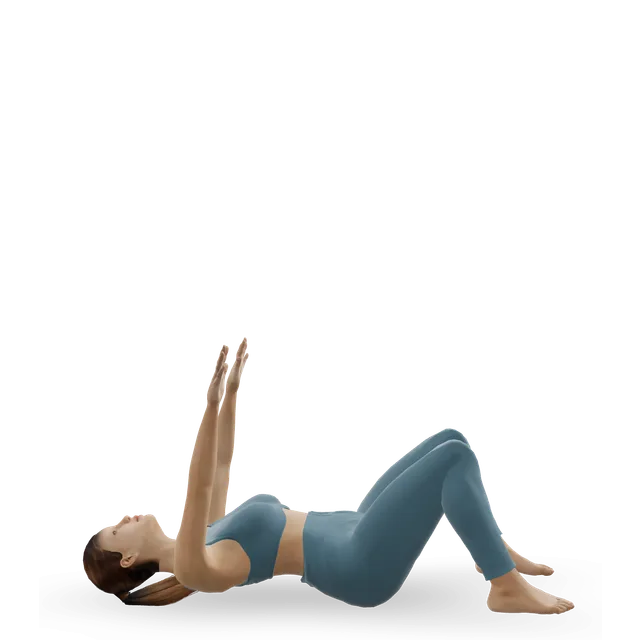
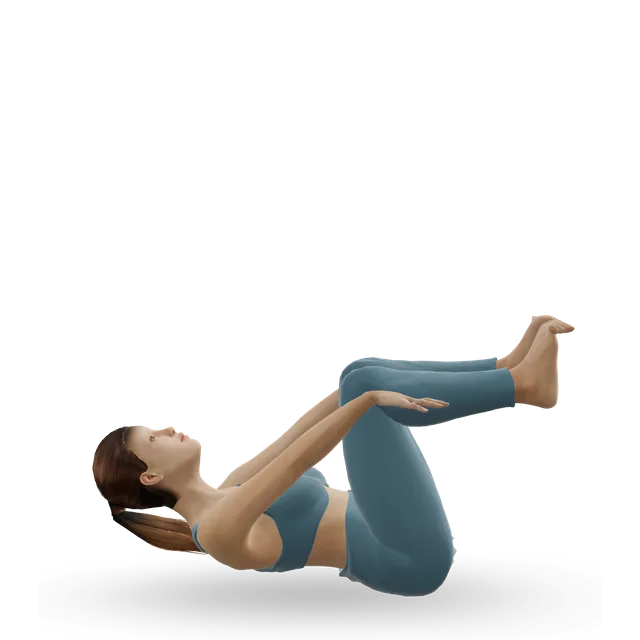
No move burns belly fat. These build strength and trunk stamina, and short rests (15 to 30 seconds) keep you working: the hundred (50 beats to start, building to 100, from the move page's dose), squats (10 reps), the pelvic curl (8 slow reps), the single-leg stretch (6 to 10 each side, from the move page's dose), the side kick (8 to 10 each side, from the move page's dose), swimming (2 to 3 sets of 20 to 30 seconds, from the move page's dose) and the knee hover (3 holds of 15 to 30 seconds, from the move page's dose). The squat and pelvic curl doses are our walk and Pilates workout's.
 3D demoHundred (Pilates)Intermediate · No equipment
 3D demoBodyweight squatBeginner · No equipment
 3D demoPelvic tilt into bridgeBeginner · No equipment
 3D demoSingle-leg stretch (Pilates one leg stretch)Intermediate · No equipment
 3D demoSide kick (Pilates side kick series)Beginner · No equipment
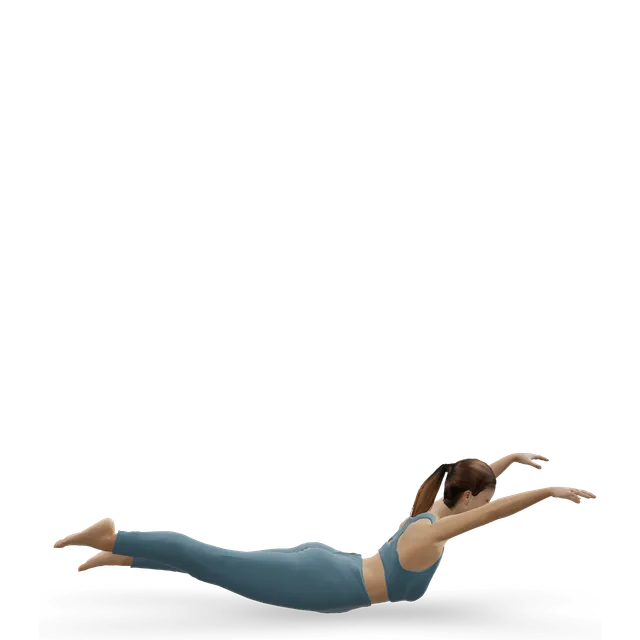 3D demoSwimming (Pilates)Intermediate · No equipment
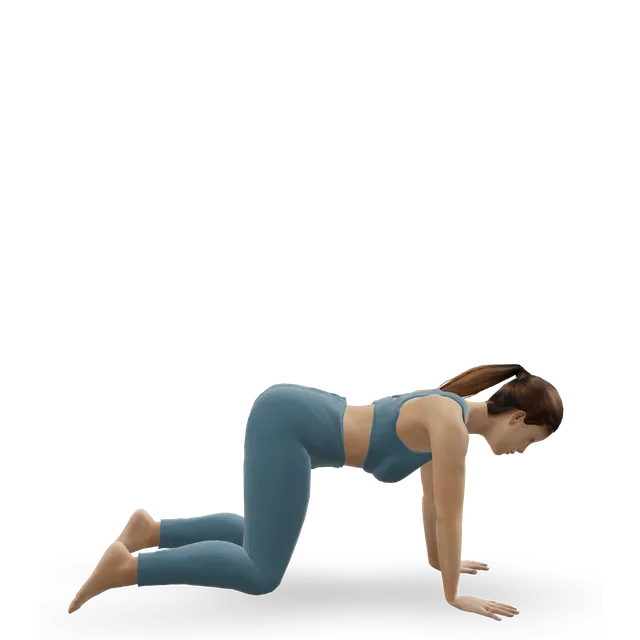 3D demoKnee hover (Pilates tabletop hover)Beginner · No equipment
This half does more for your waist: a brisk walk (20 minutes at a pace where you can talk but not sing, our walk and Pilates workout), marching on the spot (45 seconds on, 15 off, our low-impact cardio workout), step jacks (30 to 45 seconds within a circuit, 2 to 3 rounds, from the move page's dose) and sit to stands (45 seconds on, 15 off, our low-impact cardio workout). No jumping needed. With a higher body weight, use a sturdy chair rated for your weight, ideally with arms and a higher seat, as the sit to stand page advises.
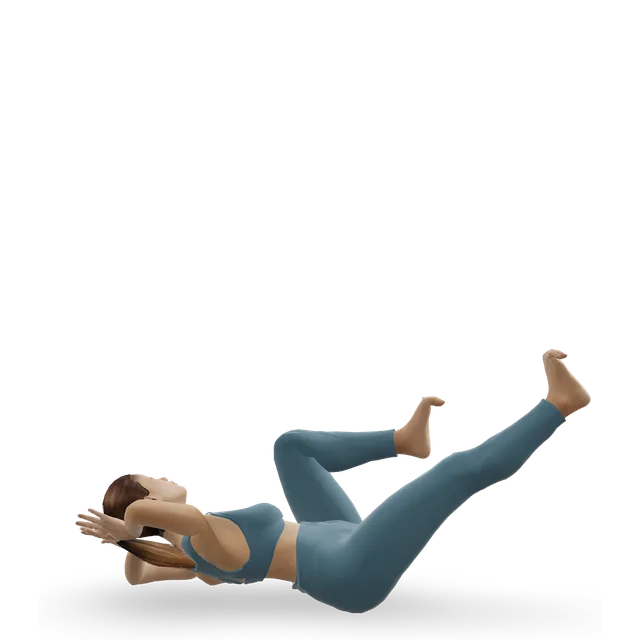
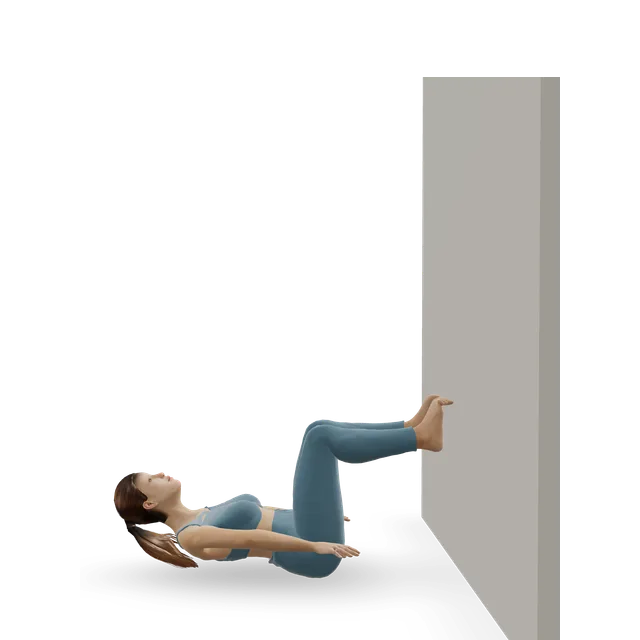
For a stronger trunk, not fat loss: the criss-cross (6 each side, slowly, from the move page's dose), the dead bug and bird dog (6 each side, our beginner core and posture classes), the forearm plank (30 seconds) and knee side plank (20 seconds each side, both from our 10-minute Pilates abs), and the wall hundred (50 to 100 beats, from the move page's dose). The criss-cross works the side muscles but doesn't trim the sides of the waist.
Our editorial starting point, following the NHS and UK activity guidelines and our Pilates for weight loss guide. Doses are starting points, not prescriptions.
The walk and Pilates workout puts a 20-minute brisk walk and a Pilates circuit in one session; the low-impact cardio workout and the 10-minute walk after meals are the indoor and short options. The 10-minute Pilates abs builds trunk endurance; as its own tip says, it won't burn belly fat.
A 45-minute session for weight loss and health: a 20-minute brisk walk, which does more for the scales, then a short-rest Pilates circuit for strength.
45 minBeginner11 movesCardio machineA 25-minute standing cardio circuit with no jumping: marching, step jacks, sit-to-stands, punches, step-ups and wall push-ups, with a seated option for most moves.
25 minBeginner9 movesBench or box, stepA 10-minute routine for straight after a meal: an easy walk, a few simple standing moves from blood sugar trials, then a short walk to finish.
10 minBeginner6 movesCardio machine, bench or boxA 30-minute intermediate mat Pilates class that follows the classical order, from the hundred to the push-up, with prep versions of the hardest moves.
30 minIntermediate22 movesNo equipmentTen minutes of the classic Pilates abdominal series: the hundred, the roll-up and the series of five, with a plank to finish.
10 minIntermediate11 movesNo equipmentThe walking plan builds to 150 minutes a week over 8 weeks; the weight loss plan mixes strength and cardio. The 30-day wall Pilates challenge already says that no 30-day plan can promise a new shape.
A free 8-week walking plan for beginners: build to 150 minutes of brisk walking a week, with intervals, hills and two short strength sessions.
6 training days40 minBeginner5 days a weekA 12-week workout plan for weight loss: three strength days, two cardio days and daily steps, building to 200 minutes a week, with honest results.
3 training days45 minBeginner3 days a weekA free 4-week, 3-day Pilates plan for complete beginners. Two mat days and one wall day, with clear rules for when to move each exercise to its harder version.
3 training days25 minBeginner3 days a weekA free 30-day wall Pilates challenge for beginners: three 20-minute wall classes a week that get harder step by step, with an honest look at the 28-day trend.
3 training days20 minBeginnerStart where you're comfortable: chair, wall and standing versions all count. Our Pilates for plus-size bodies guide covers getting up and down from the floor and the equipment that helps.
Keep your head down in the hundred and single-leg stretch, as our walk and Pilates workout advises, or choose the dead bug, bird dog and planks instead of the curl-up moves. Our Pilates for osteoporosis guide has more.
The look of your tummy after pregnancy isn't only fat, as the NHS post-pregnancy body page explains. Follow our Pilates for diastasis recti and postnatal Pilates guides, and stop the criss-cross or wall hundred if your tummy domes, as their pages say.
Source 21
Ask your midwife or doctor first. From the end of the first trimester, keep moves on your back short, prop your upper body up, or switch to side-lying, all-fours or standing versions, as our walk and Pilates workout says.
If your neck works harder than your abs, lower your head, rest it in your hands, and nod gently without jamming your chin down. Neck pain that persists, or spreads into an arm, is a reason to see our neck pain guide or a professional.
Source 63
If you take insulin or a sulfonylurea, exercise can bring on a hypo: see our type 2 diabetes guide. If you're on weight loss injections, see the exercise advice in our exercise for weight loss guide.
There's no good evidence that either gives you a smaller waist, as our guide to a smaller waist explains.
These are the same warning signs as our guide to losing belly fat and our Pilates for your core guide, word for word. This is general information, not a diagnosis. A&E means accident and emergency; in the US, call 911 for 999, and use your doctor's urgent line or urgent care for NHS 111.
If you have bloating with a swollen stomach and a stomach ache that is severe and came on very suddenly, you're vomiting blood or your vomit looks like ground coffee, or you have severe difficulty breathing. Don't drive yourself to A&E. During exercise, stop and get help for chest pain or pressure, unusual breathlessness, dizziness or fainting, as our plans advise.
Source 64
If you have bloating with being sick, diarrhoea or constipation, or with a stomach ache; a high temperature, or you feel hot, cold or shivery; a swelling or lump in your tummy; a burning feeling in your chest caused by stomach acid travelling up towards your throat (acid reflux); or you can't pee, poo or fart. In the US, contact your doctor or urgent care.
Source 64
For a bulge in your groin or tummy that is painful, or comes with a swollen tummy, being sick or constipation, as our guide to exercise for men explains. In the US, contact your doctor or urgent care.
If you feel bloated regularly, or have bloating with weight loss you can't explain or blood in your poo: the NHS says bloating that doesn't go away can sometimes be a sign of something more serious, such as ovarian cancer, whose symptoms include a swollen tummy or feeling bloated roughly 12 or more times a month. If you're losing weight without trying: it "can be a sign of stress or a serious illness. See a GP just in case." And if fat is building up on your tummy, neck and upper back while your arms and legs look thin, with a red, round face or stretch marks, especially on long-term steroid medicines: this can be Cushing's syndrome.
For leaking, a dragging or bulging feeling in the vagina, pelvic pain or pain during sex. After a birth, follow our postpartum guide on when to see a GP about a tummy gap.
The NHS suggests seeing a GP if your BMI is in the overweight or obese range and you want help to lose weight, your waist is more than half your height, or you have conditions such as diabetes, high blood pressure or sleep apnoea.
Source 58
If your bottom, thighs and lower legs (sometimes your arms) are out of proportion with the rest of your body, feel painful, tender or heavy, and bruise easily, ask your GP about lipoedema, as our weight-loss and thigh fat guides explain.
The NHS lists signs such as spending a lot of time worrying about your weight and body shape, exercising too much, and having very strict habits or routines around food. If that sounds like you, see a GP as soon as you can. You can also talk in confidence to the eating disorder charity Beat: 0808 801 0677 (England), 0808 801 0432 (Scotland), 0808 801 0433 (Wales) or 0808 801 0434 (Northern Ireland), 3pm to 8pm, Monday to Friday.
In a survey of 2,287 young adults, women who did yoga or Pilates had disordered eating as often as those who didn't, and men who did them reported more extreme weight-control behaviours (18.6% against 6.8%). Set goals for strength, control and how you feel, not calories burned.
Call 999 if:
Call 999 or go to A&E (accident and emergency) straight away for severe difficulty breathing (gasping, choking or not able to get words out), a chest that feels tight or heavy, pain that spreads to your arms, back, neck and jaw, lips or skin turning very pale, blue or grey, or sudden confusion. If you're more short of breath than usual, or your heart is racing, fluttering or skipping beats, contact NHS 111.
Source 72
You feel any pain or become unwell, as the NHS advises for its Pilates videos, and especially for chest pain or pressure, unusual breathlessness, dizziness or fainting. If you have a health problem, an injury or any symptoms, get advice from a healthcare professional, such as a GP, before you start.
Source 73
The NHS advises getting advice from a healthcare professional first if you have a health problem, an injury or symptoms, or have recently had a heart attack or an operation.
Source 73
Six weeks of ab exercises on 5 days a week changed neither belly fat nor the waist, and adding ab training to a diet took off no more belly fat.
Training one arm or leg didn't reduce the fat over it across 13 studies, and fat loss on MRI was general, not local. Two small trials found a little extra trunk fat loss with large doses of ab work; neither has been repeated.
The side muscles work, but the fat over them comes off with the rest of you, not because you worked the muscle under it.
Weight fell a little with Pilates, and the waist not clearly. The ab muscles can grow, and part of a "flatter" look is how you stand: in one study, the Pilates stance alone took up to 5.2 cm off a waist measurement. How flat a tummy looks depends mostly on body fat, and no exercise can promise a shape.
Pilates works at about 3 METs, like a slow walk; brisk walking is 4.8. It's good strength work, not a big calorie burner.
The cortisol and belly fat link comes from a snapshot study that can't show cause, and Pilates hasn't been shown to lower cortisol: in 27 women aged 60 to 65, 8 weeks of Pilates raised it by about 16%, and in 36 cancer survivors online Pilates didn't change it. Real cortisol excess is a rare medical condition, Cushing's syndrome.
Muscles don't lengthen with training: stretching changed muscle fibre length only trivially across 19 studies. "Toned" means some muscle and less fat across the whole body, as our Pilates for toning guide explains.
Source 76
One 8-week trial found about 1.4 kg of weight loss, and it didn't measure the waist.
Source 32
Weight fell only in Pilates programmes longer than 10 weeks, and no wall Pilates trial has measured belly fat. Our 30-day wall Pilates challenge says the same: no 30-day plan can promise a new shape.
Source 4
Waist reductions happen with or without weight loss, and exercise cuts visceral fat even when weight doesn't change. In the Pilates and walking trial, the waist shrank by about 3 cm while the scales barely moved.
Not on its own: no exercise burns fat from one spot, and ab exercises didn't shrink belly fat in trials. Pilates helps a little with weight, about 2.4 kg against doing nothing in small trials, and only in programmes longer than 10 weeks.
It strengthens your trunk, and how you stand changes the tape, but how flat a tummy looks depends mostly on body fat. In trials, the waist didn't change clearly with Pilates, and no exercise can promise a shape.
Moving more, especially brisk aerobic activity, and eating a little less. Each extra 30 minutes a week of aerobic exercise took about half a centimetre off the waist, and both exercise and eating less cut visceral fat.
Twice a week as your strength work, plus brisk walking or cycling on most days building to 150 minutes a week, and eating a little less. The Pilates trials that found weight loss ran for more than 10 weeks.
It's a good start for strength, but no wall Pilates trial has measured belly fat, and weight fell only in Pilates programmes longer than 10 weeks. A 28-day challenge can't promise a flatter stomach.
It uses a little more energy than mat Pilates, but one 8-week trial found about 1.4 kg of weight loss and didn't measure the waist. Brisk activity does more for belly fat.
Both trimmed the waist by about 3 cm in an 8-week trial, but brisk walking uses more energy per minute. Doing both works best.
Not by itself: fat comes off your whole body, not one part. A lower tummy can also be bloating, a gap after pregnancy or how you stand, which our bloating and diastasis recti guides cover.
Exercise of any kind cut fat, the waist and visceral fat in trials of postmenopausal women, aerobic and combined training most. Pilates counts as the strength part, so pair it with brisk activity.
Neither burns belly fat on its own: across 30 trials, yoga didn't change the waist in general, and Pilates trials found no clear waist change. Pick the one you'll keep doing, and add brisk activity.
Measure your waist: the NHS advises keeping it to less than half your height, and on NICE's bands a ratio of 0.5 to 0.59 means increased health risks. Measure midway between your lowest rib and the top of your hip bone, breathing out.
Pilates uses little energy, about like a slow walk, and exercise alone usually takes off no more than 2 to 3 kg. Your waist may shrink before the scales move, so measure it the same way every few weeks.
Exercise education, not a personal prescription, and clinical review of these guides is pending. If you are pregnant, have a health condition or have had recent surgery, check with a doctor, midwife or physiotherapist before starting, and stop for sharp or increasing pain. Health disclaimer.