Pilates
Pilates after whiplash: a 15-minute seated and lying class for the first weeks, head supported, with small neck movements
A 15-minute Pilates class for the first weeks after whiplash, once a doctor or NHS 111 has ruled out the injury warning signs. The NHS advice is to keep doing your everyday activities, not to wear a collar and not to rest your neck for long, and this class keeps your neck moving gently, little and often: small separate turns, tilts and nods, gentle chin nods, shoulder rolls and upper-back turns, and Pilates trunk work lying with your head on a towel, with few changes of position. It follows the first stage of our whiplash guide. Do it daily or on most days alongside walking, and move on to the Pilates for neck pain class once every movement here is comfortable, often after 2 or 3 weeks (our suggestion). No trial has tested Pilates for whiplash, so the structure is our editorial choice.
Seated on a firm chair (about 6 minutes)
- Beginner · Abs · 3D demoSit tall; ribs widen to the sides, shoulders and jaw softHarder: Roll-up (Pilates)
- Neck CARs (controlled articular rotations)2 to 3 slow turns, tilts and nods each way, each held 2 secondsBeginner · Neck · 3D demoSeparate movements, not circles, only as far as is comfortable; stop if you feel dizzy
- Chin tuck5 slow repsBeginner · Neck · 3D demoSlide your chin straight back without tipping your head downEasier: Lying chin tuckHarder: Isometric neck holds (four-way)
- Shoulder rolls10 each wayBeginner · Shoulders, Back, Neck · 3D demoSlow and smoothHarder: Shoulder CARs (controlled articular rotations)
- Thoracic rotation6 rotations per side, moving with the breathBeginner · 3D demoArms crossed, hips facing forward; turn from your chest and let your head follow, within comfortEasier: Side-lying open bookHarder: World's greatest stretch





Lying, a folded towel under your head (about 6 minutes)
- Lying chin tuck5 gentle holds of up to 10 secondsBeginner · Neck · 3D demoA small nod, as if saying yes, with your head restingHarder: Chin tuck
- Knee fold5 each sideBeginner · Abs, Hip flexors · 3D demoHead down; pelvis levelEasier: Supine heel slideHarder: Dead bug heel taps
- Supine heel slide8 each sideBeginner · Hip flexors, Hamstrings, Quads · 3D demoPelvis still, head restingHarder: Hip windshield wipers
- Dead bug heel taps5 each sideBeginner · Abs, Hip flexors · 3D demoKnees in a tabletop, head downEasier: Bent-knee fall-outHarder: Forearm plank
- Pelvic tilt into bridge6 slow repsBeginner · Glutes, Abs, Hamstrings · 3D demoWeight on your shoulder blades, not your neck; look at the ceiling and don't turn your headHarder: Glute bridge





On your side (about 2 minutes)
- Side-lying open book5 each sideBeginner · Back, Chest, Shoulders · 3D demoHead on a pillow; let your head turn with your arm only as far as is comfortableHarder: Thoracic rotation

Seated finish (about 1 minute)
- Breath reach5 breaths, exhale longer than inhaleBeginner · 3D demoArms rise as you breathe in and lower as you breathe out; stop at shoulder height if your neck complainsHarder: Slow breathing (6 breaths a minute)

Tips
- NHS inform's neck exercise advice: during exercise, pain up to 5 out of 10 is acceptable; 6 or more is too much. Your neck should be no worse overall, and no worse the next morning. If it is, do fewer repetitions, move more slowly or rest longer between movements.
- The NHS says everyday activity after whiplash may hurt a little and still speeds recovery. In the first weeks, guidelines advise against intensive, high-intensity training.
- If an exercise sends pain, tingling or numbness down your arm, or extra symptoms last more than an hour, make it smaller or leave it out. Stop and get checked for dizziness, vision or speech problems, or any warning sign above.
- Nothing head-down, no rolling and no head lifts in this class; rest your head on the towel throughout the lying block (our suggestion). If you hit your head in the crash or feel foggy, follow our Pilates after a concussion guide first.
The doses are suggested starting points, not a prescription. Choose a range you can control and stop for sharp or increasing pain, numbness or tingling. Get individual advice after an injury or surgery, or if you are pregnant or managing a health condition.
Guides that recommend it
Find more moves like these
More pilates


Beginner Pilates workout
A 20-minute mat Pilates workout for complete beginners. It covers breathing, spine position and the foundation moves, each with an easier option.
20 minBeginner13 movesNo equipment

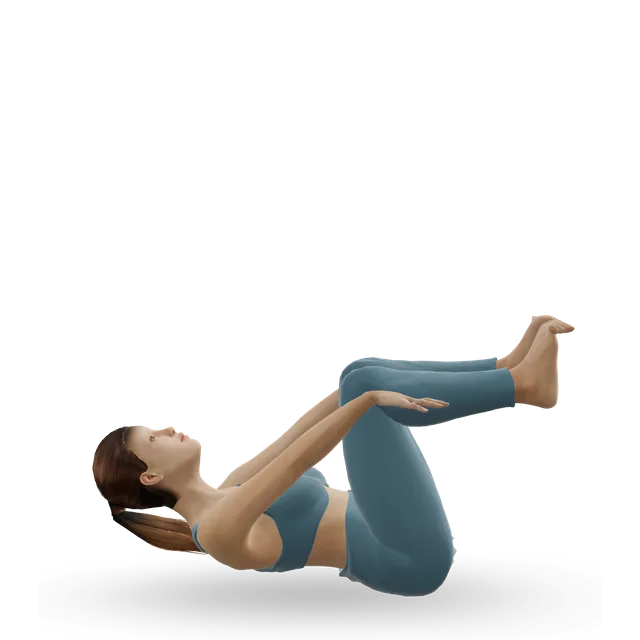
10-minute Pilates abs
Ten minutes of the classic Pilates abdominal series: the hundred, the roll-up and the series of five, with a plank to finish.
10 minIntermediate11 movesNo equipment
Full-body mat Pilates workout
A 30-minute intermediate mat Pilates class that follows the classical order, from the hundred to the push-up, with prep versions of the hardest moves.
30 minIntermediate22 movesNo equipmentQuestions people ask
How long does the pilates after whiplash: a 15-minute seated and lying class for the first weeks, head supported, with small neck movements take?
About 15 minutes, including any warm-up and cool-down listed. Shorten it by doing fewer rounds; lengthen it by adding one.
What equipment do I need?
No equipment: your body and some floor space. A mat makes floor work more comfortable.
Is it suitable for beginners?
It is written for beginners. 4 of its 12 moves have an easier option listed beside them if you need one.
How do I make it easier or harder?
Use the easier or harder option listed under each move, change the number of rounds, or adjust the rest. Progress one change at a time.