No study has tested Pilates in gout
We found no Pilates, yoga or tai chi study in gout at all, and there's very little research on any exercise in gout. Pilates is one way to stay active between attacks; it doesn't treat gout.
Pilates guide
No study has tested Pilates for gout, and no exercise lowers uric acid the way medicine does. What Pilates can do is give you a gentle way to keep moving between flares, which the NHS advises, and much of it is done lying or sitting, which suits sore feet. During a flare, the hot, swollen joint is rested, not exercised.
This guide covers what to do in a flare, when and how to start again, the Pilates moves that bend the big toe back under your weight and what to do instead, hard exercise, heat and drinking enough, weight, and why staying active matters for the blood pressure, heart and kidney problems that often come with gout. It ends with the classes to follow and the warning signs, starting with a hot, swollen joint and a fever, which needs help the same day.
We found no Pilates, yoga or tai chi study in gout at all, and there's very little research on any exercise in gout. Pilates is one way to stay active between attacks; it doesn't treat gout.
Take your medicine early, rest and raise the limb, keep it cool, drink water, and don't put pressure on the joint. Arthritis UK says avoid exercising during a flare.
A hot, swollen joint with a high temperature, or feeling sick or unable to eat, could be an infection in the joint (septic arthritis).
More active, fitter people develop gout less often in large studies, and UK guidance asks for regular exercise, built up gradually. Pilates isn't cardio, so pair it with walking, cycling or swimming.
Planks, push-ups and leg pulls on the toes, toes-tucked kneeling, lunges with the back heel lifted, reformer footwork on the balls of the feet and jumping all bend the big toe back under load. Change them until the toe feels normal.
Source 3
Keep taking urate-lowering medicine, even when you feel well. Staying active matters most for the high blood pressure, heart and kidney problems that often come with gout.
Gout "is a type of arthritis that causes sudden, severe joint pain", most often in the big toe but also in the feet, ankles, hands, wrists, elbows or knees, with "hot, swollen, red skin over the affected joint" (redness can be harder to see on brown or black skin). Too much uric acid in the blood forms crystals around joints. An untreated attack usually lasts 1 to 2 weeks.
Source 3
The NHS lists an illness with a high temperature, too much alcohol or a very large meal, getting dehydrated, injuring a joint, and certain medicines. Exercise isn't on the list.
Source 3
Anti-inflammatory painkillers, colchicine or a short course of steroids treat flares, and urate-lowering medicine such as allopurinol prevents them, taken regularly even when you have no symptoms. NICE says there isn't enough evidence that any specific diet prevents flares, and that excess body weight or excessive alcohol "may exacerbate gout flares and symptoms".
Septic arthritis causes sudden severe pain in a joint, trouble moving or putting weight on it, hot swollen skin and often a fever. The NHS says its symptoms "usually develop quickly over a few days and need to be checked straight away".
Source 5
Most mat Pilates is done lying, side-lying or seated, with little weight through the feet. The exceptions bend the big toe back under load: planks and leg pulls on the toes, push-ups, toes-tucked kneeling, lunges with the back heel lifted, reformer footwork on the balls of the feet and jumpboard work. Kneeling loads a recently flared knee (our reading).
No Pilates, yoga or tai chi study exists in gout. What follows is guidance, large studies of activity and the risk of getting gout, and small lab studies; medicine carries the evidence for treating gout itself.
Our searches of PubMed, Europe PMC and ClinicalTrials.gov found none. A review behind the European (EULAR) lifestyle recommendations found "little research on the effect of physical activity in gout", and an umbrella review of lifestyle and integrative therapies in inflammatory arthritis found no review of exercise or mind-body therapies in gout. Registered exercise trials in gout have no results yet.
In 28,990 male runners followed for nearly 8 years, those running 8 km a day or more had about half the risk of gout. In 97,387 UK adults who wore activity monitors, 150 minutes or more a week of regular activity was linked with 21% lower risk, while cramming it into 1 or 2 days wasn't. In 416,481 UK adults, a healthy lifestyle that included activity was linked with 37% lower risk at every level of genetic risk. These show links with getting gout, not that exercise prevents flares in people who have it.
In 6 untrained young men, repeated 1-minute cycling sprints raised uric acid by 40%, still higher the next morning, while 2 hours of moderate cycling in 7 others didn't raise it. Adding arm work to hard leg work raised it further. One moderate session didn't raise uric acid in 18 young men with high levels. None of these small studies measured flares.
In a genetic study, moderate activity was linked with less gout but not with lower uric acid, and in 424 older adults without gout, a year of moderate activity left uric acid 4.8% higher than health education did. Urate-lowering medicine is what brings uric acid down.
In online studies that compared each person's days before a flare with other days, flares were more likely after purine-rich meals, after more than 1 to 2 alcoholic drinks in 24 hours, and after hotter days, especially hot, dry ones, possibly through dehydration. Dehydration is on the NHS trigger list.
In rabbits with acute crystal arthritis, moving the joint through its range made the inflammation worse. The British Society for Rheumatology says "Affected joints should be rested, elevated and exposed in a cool environment", and notes that "there have been no RCTs of rest".
People move less during flares (5,900 against 6,972 daily steps in 33 people), and in interviews many described "uncertainty about whether exercise could trigger flares or damage joints, particularly in the absence of gout-specific advice". This guide tries to answer that.
Across 24 small studies, people with gout had less movement at the big toe joint and below the ankle, more bunions, weaker foot muscles and slower walking.
Source 24
Across 26 studies, 63.9% of people with gout had high blood pressure, and heart failure, heart attack and stroke were more common than without gout. About 1 in 4 had chronic kidney disease at stage 3 or worse, and 14% had kidney stones. Death rates were higher too.
In a review of 10 mostly observational studies, weight loss favoured fewer attacks, at low quality. In a 16-week trial of 61 people, a low-energy diet took off more weight without changing uric acid, pain or flares. The American College of Rheumatology conditionally recommends a weight-loss programme for people who are overweight, at very low certainty.
Take any medicine you've been prescribed as soon as possible, rest and raise the limb, keep the joint cool with an ice pack or a bag of frozen peas wrapped in a towel for up to 20 minutes at a time, drink lots of water, and "do not put pressure on the joint".
Arthritis UK: "You should avoid exercising during a flare-up of gout, as it could make your pain worse. It's important to rest and recover and begin exercising after the pain and swelling have gone down."
Don't stretch or massage the hot joint either.
Source 4
If you feel well, gentle movement that doesn't jar or load the painful joint, such as seated upper-body work, is reasonable; there's no evidence either way. Keep drinking fluids.
With osteoarthritis, a flare is managed by keeping gently moving. A gout flare is different: the hot, swollen joint is rested. If repeated attacks have damaged a joint, Arthritis UK says that damage is treated like osteoarthritis between flares, as our exercise with gout guide explains.
Source 4
The NHS advises regular exercise between attacks, while avoiding intense exercise or lots of pressure on your joints. Arthritis UK says "Staying active is not only important for your general health and wellbeing, but it also reduces your chances of having a gout attack", and the British Society for Rheumatology says "Diet and exercise should be discussed with all patients with gout".
Our editorial starting point: about 150 minutes a week of moderate activity such as walking, cycling or swimming, spread through the week, with Pilates on 2 days for strength, mobility and balance. The Austrian rheumatology society suggests 150 to 300 minutes a week of moderate exercise.
Start once the pain and swelling have gone down: seated and lying moves first, standing once walking on the joint is comfortable, and back to your usual over 1 to 2 weeks (our exercise with gout guide's editorial plan).
Source 4
Arthritis UK says start slowly and build up, and adds that "Exercise that leaves you out of breath is particularly good", which Pilates on its own rarely does.
Source 4
Gout often starts in the big toe, and people with gout tend to have stiffer big toes and weaker feet. Gentle foot and ankle work suits the time between flares, once a joint has settled (our reading).
Source 24
Anything on the balls of your feet with the toes bent back: planks, push-ups and leg pulls, toes-tucked kneeling, the back foot of a lunge, reformer footwork and jumpboard work. After a big-toe flare, change these until the toe feels normal (our suggestion, following the NHS's advice not to put pressure on the joint).
Source 3
Stand on a recently flared foot only when walking on it is comfortable (our suggestion).
NICE recommends urate-lowering medicine to a target level, usually for life. Keep taking it, even when you feel well, and don't change it without your doctor.
In a small lab study, the authors concluded that "exercise intensity rather than total work output is a critical factor" for raised uric acid. Build up gradually, and save hard interval classes for when you're well between flares (our suggestion).
Source 12
Getting dehydrated is on the NHS trigger list, and flares were about 40% more likely after hotter days in one online study. No study has tested hot Pilates in gout. Our suggestion: skip hot classes, and have water to hand.
If you need to lose weight, do it gradually: losing weight may reduce attacks, but the evidence is low quality, and crash diets and going without food can trigger attacks. Pilates on its own burns little energy, so pair it with walking and a balanced diet.
Gout often comes with high blood pressure, heart disease and kidney disease, and NICE suggests a check of heart risk factors and kidney function after a flare. Staying active helps all three. Our Pilates guides for high blood pressure and heart health, and our exercise with kidney disease guide, cover them.
Only once the pain and swelling have gone down. Lateral breathing: "5 to 8 breaths at the start of every session." (the move page's dose). Heel slides: "10 slow repetitions each side, once or twice a day." (the move page's dose). Knee folds: "2 sets of 5 to 10 each side, every other day" (the move page's dose). Ankle circles, once a flared ankle or foot has settled: "10 slow circles each way with each foot (our editorial starting point)." (the move page's dose). Pelvic tilt into bridge: 8 slow, lifting only as high as is comfortable (our Pilates for arthritis class). Seated march: "1 to 2 minutes as a warm-up (the Otago-based Later Life Training booklet)" (the move page's dose). Seated knee extension: 2 sets of 10 each leg, staying in the bent-knee half if the full range hurts (our Pilates for arthritis class; adapted from the move page's dose). Seated upper-back lift: "3 to 5 repetitions, each held 3 to 5 seconds, at least twice a week (UK osteoporosis consensus, 2022)" (the move page's dose).
 3D demoLateral breathing (Pilates breathing)Beginner · No equipment
 3D demoSupine heel slideBeginner · No equipment
 3D demoKnee foldBeginner · No equipment
 3D demoAnkle circlesBeginner · No equipment
 3D demoPelvic tilt into bridgeBeginner · No equipment
 3D demoSeated marchBeginner · A bench or box
 3D demoSeated knee extension (chair)Beginner · A bench or box + Something with weight
 3D demoSeated upper-back lift (sit tall, shoulders back)Beginner · A bench or box
Hundred: 50 beats, head down and knees bent, or feet on the floor (our Pilates for arthritis class); the move page's dose is "50 beats to start, building to 100 (the classical count)." Single-leg stretch: 6 each side, head down (our Pilates for arthritis class; adapted from the move page's dose). Single-leg circle: "5 circles each direction, each leg (the classical sequence uses 5)." (the move page's dose), small circles. Clamshell: 10 each side; side kick: 8 each side, a folded towel under the bottom hip (both our Pilates for arthritis class; the side kick is adapted from its move page's dose). Swimming: 2 sets of 20 seconds, toes pointed (our high blood pressure Pilates class; adapted from the move page's dose). Spine twist: 3 each side, sitting tall (our Pilates for arthritis class; the move page's dose is "3 to 4 each side (the classical sequence uses 3)."). Mermaid: "3 each direction, each side." (the move page's dose), on a chair if side-sitting presses on a sore ankle.
 3D demoHundred (Pilates)Intermediate · No equipment
 3D demoSingle-leg stretch (Pilates one leg stretch)Intermediate · No equipment
 3D demoSingle-leg circle (Pilates one leg circle)Beginner · No equipment
 3D demoClamshellBeginner · No equipment
 3D demoSide kick (Pilates side kick series)Beginner · No equipment
 3D demoSwimming (Pilates)Intermediate · No equipment
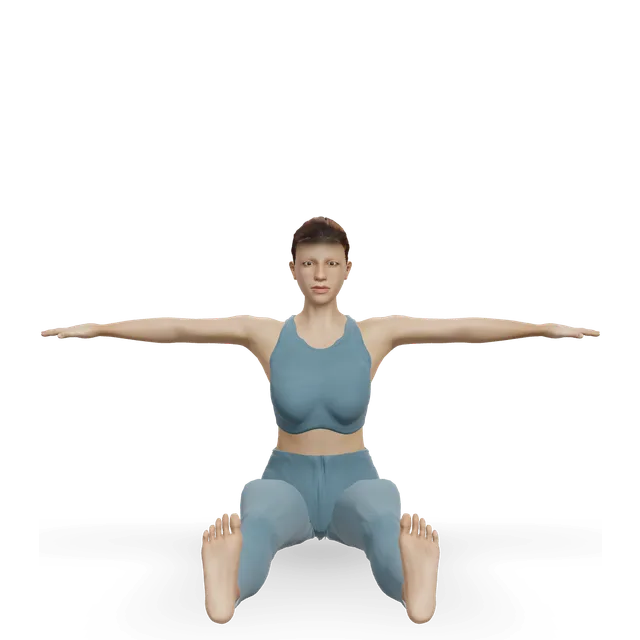 3D demoSpine twist (Pilates)Beginner · No equipment
 3D demoMermaid (Pilates seated side bend)Beginner · No equipment
Sit to stand: 5 slow reps, hands on your thighs if you need them; wall side leg lift: 10 each side, a hand on the wall; single-leg stand: up to 30 seconds each side, a hand near a wall (all our Pilates for arthritis class; the leg lift is adapted from its move page's dose). Slow calf raise: 2 sets of 10 to 15, stopping short of full tiptoe if the big toe is sore (our yoga for gout guide's editorial starting point, and the move's own caution).
Do them on your knees with your toes untucked, or with your hands on a wall, until the toe feels normal (our suggestion, following the NHS's advice not to put pressure on the joint and our yoga for gout guide).
Source 3
Skip it with a big toe that has had gout, as our yoga for gout guide says; its own move page says to ease in with an arthritic big toe.
Keep the back knee down with the toes untucked, or the back heel down, as our yoga for gout guide suggests.
Use your heels on the bar, and skip jumping until the toe has settled (our suggestion).
Source 3
Pad the knee, or use standing and side-lying moves instead of all-fours work such as the bird dog and knee hover (our suggestion).
Skip it (our suggestion): dehydration is a recognised trigger for attacks, and flares were more likely after hot days in one study; no study has tested hot classes in gout.
Very hard efforts raised uric acid for a day or so in small studies. Build back over 1 to 2 weeks with plenty to drink, as our exercise with gout guide suggests.
Source 12
Seated chair Pilates suits the first sessions after a flare in the foot or ankle, once the pain and swelling have gone down, and chair Pilates adds standing at the chair. Our Pilates for arthritis class is the main class between flares, with no kneeling and no weight on your hands, but its flare-day option is for arthritis, not gout: with gout, a hot, swollen joint is rested, not moved, so skip the class until the flare has settled. The head-up class for high blood pressure suits the heart risks that come with gout. Pilates isn't cardio: the two cardio workouts cover that part.
A 15-minute chair Pilates class done entirely sitting down, in a chair or wheelchair: breathing, spine moves, and leg and arm strength with water bottles.
15 minBeginner13 movesA bench or box, Something with weightA 20-minute chair Pilates workout for beginners and older adults: breathing, sitting tall, gentle spine and leg moves, and a standing finish at the chair.
20 minBeginner14 movesA bench or box, Something with weightA gentle 25-minute Pilates class for arthritis: lying, side-lying, chair and standing moves, with no kneeling or weight on your hands, and flare-day options.
25 minBeginner16 movesA bench or box, Something with weightA 30-minute Pilates class for high blood pressure: standing strength, head-level mat work with short holds, no breath holds or inversions, and slow breathing.
30 minBeginner15 movesA bench or box, A wallA 25-minute standing cardio circuit with no jumping: marching, step jacks, sit-to-stands, punches, step-ups and wall push-ups, with a seated option for most moves.
25 minBeginner9 movesA bench or box, A stepA steady 30 to 45 minute cardio session at talk-but-not-sing pace: walk, cycle, row or cross-train, counting toward weekly activity guidelines.
40 minBeginner3 movesCardio machine, A wallThese are the warning signs from our gout guides, word for word, with the chest pain, breathlessness, stop and before-you-start lines our other Pilates guides use. This is general information, not a diagnosis. A&E means accident and emergency; in the US, call 911 for 999, and use your doctor's urgent line or urgent care for NHS 111.
Same day: a sudden, very painful, hot, swollen, red joint, often the big toe but sometimes the middle of the foot (the midfoot) or the ankle, especially with a high temperature, feeling shivery or being unable to eat. It may be gout, but it could be a joint infection (septic arthritis), which is urgent.
If you have sudden pain and swelling in a joint and:
These can be signs of an infection inside the joint (septic arthritis), which usually needs treatment in hospital.
Source 5
Source 34
If you get a rash or other skin reaction. For any other serious side effect, call NHS 111.
Source 34
Same day (urgent GP appointment or NHS 111): severe pain that usually starts in the side of your tummy or your lower back, may spread to the area at the top of your inner thigh (groin), your testicles or the area around the opening of your vagina, and may come and go, or this pain with a high temperature or feeling hot, cold or shivery. It can be a kidney stone.
Source 3
Call 999 or go to A&E (accident and emergency) straight away for severe difficulty breathing (gasping, choking or not able to get words out), a chest that feels tight or heavy, pain that spreads to your arms, back, neck and jaw, lips or skin turning very pale, blue or grey, or sudden confusion. If you're more short of breath than usual, or your heart is racing, fluttering or skipping beats, contact NHS 111.
You feel any pain or become unwell, as the NHS advises for its Pilates videos, and especially for chest pain or pressure, unusual breathlessness, dizziness or fainting. If you have a health problem, an injury or any symptoms, get advice from a healthcare professional, such as a GP, before you start.
Source 39
Speak to a GP first if you haven't exercised for some time, or if you have a medical condition such as heart or kidney disease.
The NHS advises getting advice from a healthcare professional first if you have a health problem, an injury or symptoms, or have recently had a heart attack or an operation.
We found no study showing that exercise triggers flares, and more active, fitter people develop gout less often in large studies. Dehydration, a very large meal or too much alcohol, an illness with a fever and injuring a joint are the NHS triggers.
The NHS says rest and raise the limb and "do not put pressure on the joint", and Arthritis UK says avoid exercising during a flare.
No study shows any exercise class lowers uric acid to target; urate-lowering medicine does.
NICE recommends urate-lowering medicine to a target, usually for life. Keep taking it even when you feel well.
No study supports it, and getting dehydrated is a recognised trigger for attacks.
Source 3
NICE says no specific diet has been shown to prevent flares, while excess weight and alcohol may make them worse. Staying active matters most for the heart and blood pressure problems that come with gout.
Pilates is a gentle way to stay active between gout attacks, which the NHS advises, and most of it is done lying or sitting, which suits sore feet. No study has tested Pilates in gout, and it doesn't lower uric acid or prevent flares: urate-lowering medicine does that.
Yes, between flares. Skip it while a joint is hot, swollen and painful, and start again once the pain and swelling have gone down, beginning with seated and lying moves.
Not with the affected joint: rest and raise it, keep it cool, drink plenty of water and take your medicine early. If you feel well, gentle movement elsewhere that doesn't jar or load the joint, such as seated upper-body work, is reasonable; there's no evidence either way.
We found no study showing it does, and active, fitter people get gout less often. Very hard efforts briefly raised uric acid in small studies, and dehydration and hot weather are linked with flares, so build up gradually, drink well and avoid hot rooms.
Moves that bend the big toe back under your weight: planks, push-ups and leg pulls on your toes, toes-tucked kneeling, lunges with the back heel lifted, reformer footwork on the balls of your feet, and jumping. Do them on your knees with your toes untucked, with your hands on a wall, or leave them out until the toe feels normal.
No study shows that Pilates or any exercise class lowers uric acid; in one genetic study, moderate activity was linked with less gout but not with lower uric acid. Urate-lowering medicine, taken every day even when you feel well, is what brings uric acid to target.
Our suggestion: twice a week between flares, alongside about 150 minutes a week of walking, cycling or swimming, spread through the week. In a large study, regular activity spread across the week was linked with lower gout risk, while cramming it into 1 or 2 days wasn't.
We'd avoid it. Getting dehydrated is a known trigger for gout attacks, and flares were more likely after hot days in one study; no study has tested hot classes in gout.
Pilates on its own burns little energy, so it isn't much of a weight-loss tool, but it pairs well with walking and a balanced diet. If you need to lose weight, do it gradually: crash diets and going without food can trigger attacks.
The same day if a joint is suddenly hot, swollen and painful and you have a high temperature, feel shivery, or feel sick or can't eat: it could be an infection in the joint. See a GP for your first gout symptoms, if your treatment isn't helping, or if you get frequent attacks or lumps on your ears, fingers or elbows.
Gout often comes with high blood pressure, heart disease and kidney disease, and staying active helps all three. Our Pilates guides for high blood pressure and heart health cover those.
Exercise education, not a personal prescription, and clinical review of these guides is pending. If you are pregnant, have a health condition or have had recent surgery, check with a doctor, midwife or physiotherapist before starting, and stop for sharp or increasing pain. Health disclaimer.















