Pilates
Chair-to-mat Pilates for veterans: a 25-minute class for the back, upper back, legs and balance, with a seated option for every block
A 25-minute Pilates class that starts in a chair, moves to standing at the chair if you stand, then to the mat for the lower back, and ends calmly. Every block has a seated version, so it works with back pain, old injuries, limb loss or a wheelchair. You choose the positions, your eyes stay open, and any move can be skipped. It's exercise, not therapy, and it doesn't replace your rehabilitation team's programme or treatment for your mental health. No trial has tested this class.
Arrive, seated
- Lateral breathing (Pilates breathing)5 to 8 breathsBeginner · Abs · 3D demoSit near the front of the seat with your hands on your lower ribs; eyes open, looking around the roomHarder: Roll-up (Pilates)
- Seated march1 to 2 minBeginner · Hip flexors, Quads, Abs · 3D demoHold the sides of the seatHarder: Standing march
- Chin tuck5 reps, 3 s holdBeginner · Neck · 3D demoSeated; slide your head straight backEasier: Lying chin tuckHarder: Isometric neck holds (four-way)
- Thoracic rotation5 each side, 5 s holdsBeginner · 3D demoSeated, arms crossed on your chest, hips facing forwardEasier: Side-lying open bookHarder: World's greatest stretch
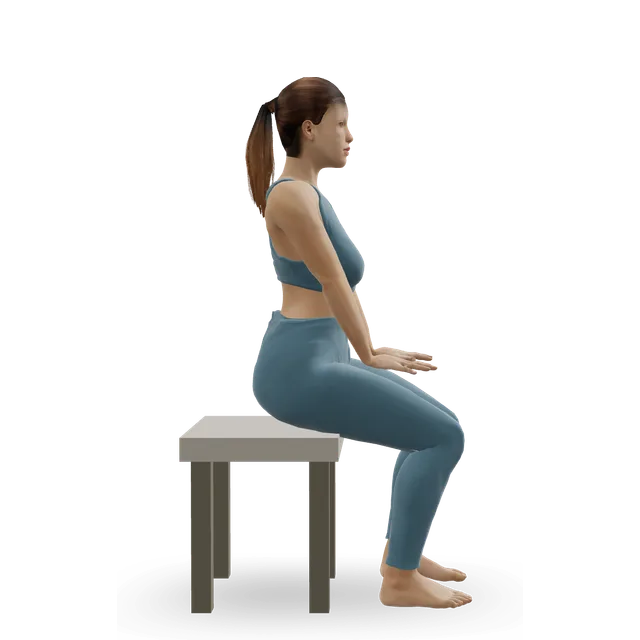
- Seated upper-back lift (sit tall, shoulders back)5 holds of 3 to 5 sBeginner · Back, Shoulders, Neck · 3D demoSit tall, draw your shoulder blades back and lift your breastboneEasier: Elbows backHarder: Prone Y-T-W raises





Standing at the chair, if you stand
- Sit to stand, pushing on the thighs5 to 8 repsBeginner · Quads, Glutes, Triceps · 3D demoPush on your thighs, not the chair; with a prosthesis, as your physiotherapist has shown youHarder: Bodyweight squat
- Slow calf raise8 to 10 repsBeginner · Calves · 3D demoHolding the back of the chairEasier: Seated bent-knee calf raise (soleus raise)Harder: Standing dumbbell calf raise
- Beginner · Hip abductors, Glutes, Abs · 3D demoHand on the back of the chair or a wall; lift the leg out to the side without leaningHarder: Lateral band walk, band at the feet


On the mat, or stay seated
- Pelvic tilt into bridge6 slow repsBeginner · Glutes, Abs, Hamstrings · 3D demoSmall range at firstHarder: Glute bridge
- Dead bug heel taps6 each sideBeginner · Abs, Hip flexors · 3D demoBack resting on the floor; breathe out as each heel lowersEasier: Bent-knee fall-outHarder: Forearm plank
- Clamshell10 each sideBeginner · Hip abductors, Glutes · 3D demoA pillow between your knees; face the room if you preferEasier: Supine isometric hip abduction (belt press)Harder: Lateral band walk
- Bird dog5 each sideBeginner · Back, Abs, Glutes · 3D demoHold each for 3 breaths; fists if your wrists are soreEasier: Bird dog, one limb at a timeHarder: Bear crawl
- Cat-cow6 slow roundsBeginner · Back, Abs · 3D demoPain-free range; or seated with your hands on your kneesHarder: Half lord of the fishes (Ardha Matsyendrasana)





Finish
- Side-lying open book5 each sideBeginner · Back, Chest, Shoulders · 3D demoHead on a cushion; open only as far as is easyHarder: Thoracic rotation
- Beginner · 3D demoSit or lie however is comfortable; eyes open is fineEasier: Breath reachHarder: Crocodile breathing (prone diaphragmatic breathing)


Tips
- Chair-only option: in place of the mat block, do seated knee extensions (up to 10 each leg) and table slides (8 to 10 slow reps), as in our chair Pilates class.
- Skip any position that doesn't feel right, such as lying on your back or on all fours, and do it seated instead. If strong feelings come up, stop, open your eyes, sit up with your feet on the floor, look around and breathe slowly.
- After an amputation, follow the exercises and prosthesis advice your rehabilitation team has given you; this class adds to them. Check your skin after floor work.
- Twice a week counts towards the UK advice to do strengthening activities on at least 2 days a week. Walk or wheel on other days if you can.
- Stop for any pain, chest pain, unusual breathlessness or dizziness. Chest pain that doesn't go away needs 999.
- This is exercise, not therapy. If you're struggling, talk to your GP or contact Op COURAGE (England); in the US, call 988 and press 1 for the Veterans Crisis Line. In an emergency, call 999 or 911.
The doses are suggested starting points, not a prescription. Choose a range you can control and stop for sharp or increasing pain, numbness or tingling. Get individual advice after an injury or surgery, or if you are pregnant or managing a health condition.
Guides that recommend it
Find more moves like these
More pilates


Beginner Pilates workout
A 20-minute mat Pilates workout for complete beginners. It covers breathing, spine position and the foundation moves, each with an easier option.
20 minBeginner13 movesNo equipment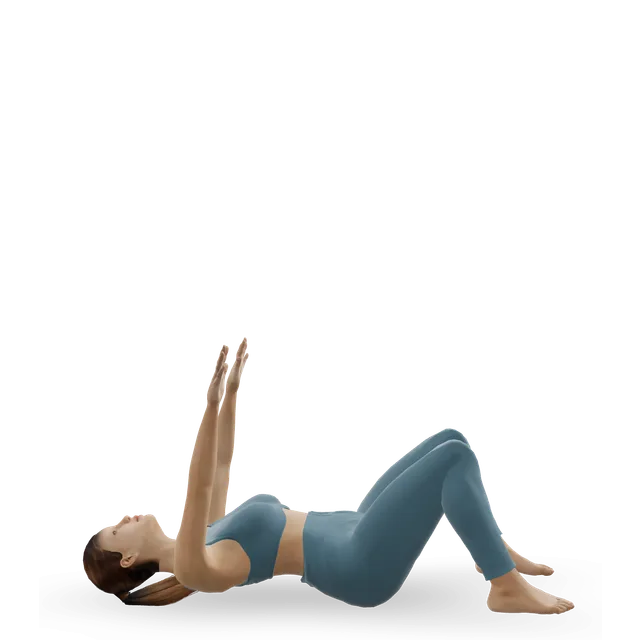

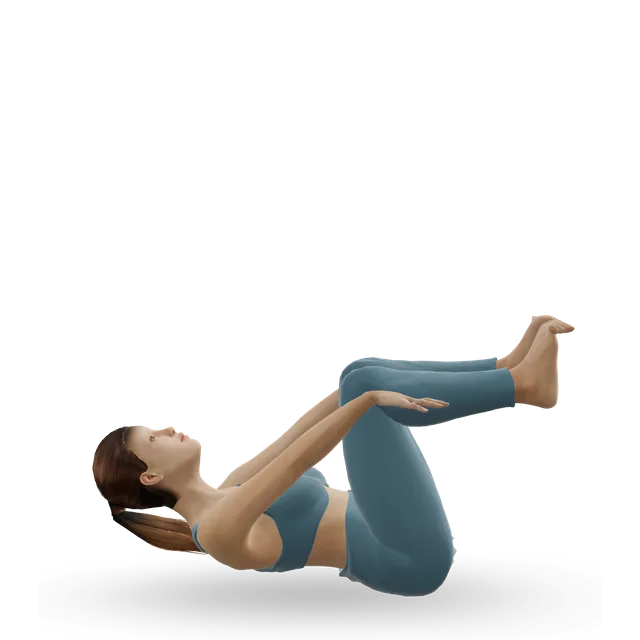
10-minute Pilates abs
Ten minutes of the classic Pilates abdominal series: the hundred, the roll-up and the series of five, with a plank to finish.
10 minIntermediate11 movesNo equipment
Full-body mat Pilates workout
A 30-minute intermediate mat Pilates class that follows the classical order, from the hundred to the push-up, with prep versions of the hardest moves.
30 minIntermediate22 movesNo equipmentQuestions people ask
How long does the chair-to-mat pilates for veterans: a 25-minute class for the back, upper back, legs and balance, with a seated option for every block take?
About 25 minutes, including any warm-up and cool-down listed. Shorten it by doing fewer rounds; lengthen it by adding one.
What equipment do I need?
You need: A bench or box, A wall. Each move links to its guide, where you can find an alternative if you are missing something.
Is it suitable for beginners?
It is written for beginners. 8 of its 15 moves have an easier option listed beside them if you need one.
How do I make it easier or harder?
Use the easier or harder option listed under each move, change the number of rounds, or adjust the rest. Progress one change at a time.