Scorpion pose (Vrschikasana)
A forearm stand in which the spine arches, the knees bend and the feet reach toward the back of the head while the chest presses forward between the arms. Forearm stand keeps the body in a straight line; scorpion adds a deep backbend upside down. Yoga Journal builds it from forearm stand at a wall, one foot at a time, and asks for an even backbend rather than the feet touching the head.
Movement guide
Scorpion pose (Vrschikasana)
Make it easier or harder
Choose a version that fits your control and comfort.
Easier option
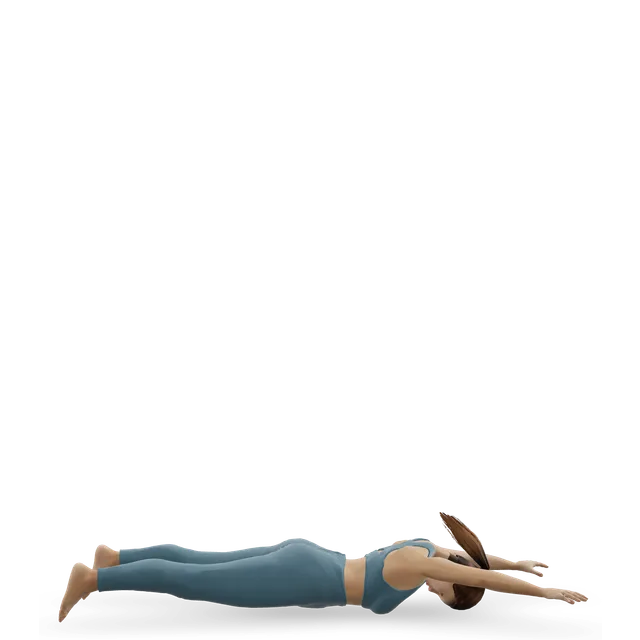 3D demoProne swimmersAdvanced · No equipment
Similar move, advanced grade.
Harder option
Keep a comfortable range and follow any technique and timing given in the guide. A deeper stretch or more complex pose is optional, not a required next step. Ingram 2025 review of stretching and range of motion
Source-researched guide.
How to move
- Set up dolphin pose facing a wall, the forearms parallel and shoulder-width apart, the fingertips about 15 cm from the wall.
- Walk the feet in, kick one leg up and then the other into forearm stand, the heels on the wall and the head off the floor.
- Press the forearms down, draw the chest forward between the arms and lift the gaze toward the floor ahead, keeping the low back lifting.
- Bend both knees, hip-width apart with the big toes together, and bring the feet toward the back of the head, the toes on the wall at first, then lifting one foot at a time away from it.
- To come down, straighten the legs back up into forearm stand, then lower one leg at a time and rest in child's pose.
Form cues
- Aim for an even curve through the whole spine; the feet touching the head is not the goal.
- Firm the upper arms and press the forearms and knuckles down.
- Avoid: letting the low back sag to bring the feet lower.
Practice and cautions
3 to 5 attempts of 5 to 15 seconds at a wall, resting about a minute between them, while you are fresh (our editorial starting point).
Come down by straightening back to forearm stand rather than dropping the feet to the floor. In a published case, a 63-year-old man who lost control while practising scorpion developed spinal cord damage and tears in two neck arteries; he already had narrowing in his neck spine. A fall from this pose is a real fall, so learn it at a wall, ideally with a spotter. Skip it with glaucoma, uncontrolled high blood pressure, or neck, shoulder or low back problems, and bend through the whole spine rather than cranking the low back. This is movement education, not an assessment or treatment prescription. Stop for sharp or increasing pain, dizziness, numbness or tingling; seek individual guidance for symptoms, injury or restrictions.
Sources and review status
Sources support the educational description; they do not establish that this exercise is suitable for you.
- Yoga Journal · Scorpion pose in forearm balance (how-to: from forearm stand at a wall, one foot at a time; an even backbend, not the feet on the head; keep the low back lifting) ↗
- Nayar 2022 · Spinal cord damage and torn neck arteries in a 63-year-old who lost control of scorpion pose, with existing narrowing of the neck spine (case report, Spinal Cord Ser Cases) ↗
- Baskaran 2006 · Eye pressure doubled on going into headstand and stayed up for the 5 minutes measured, in 75 experienced practitioners (observational study, Ophthalmology; a related inversion) ↗
No variation is labeled clinically validated.
What it works
Muscles
Main: Shoulders, Back. Also: Triceps, Abs, Hip flexors.
Anatomy: Deltoid, Rotator cuff, Supraspinatus, Infraspinatus, Subscapularis, Teres minor.
Equipment
A wall
Level
Expert. See the easier and harder options above.
Guides that use it
Similar moves
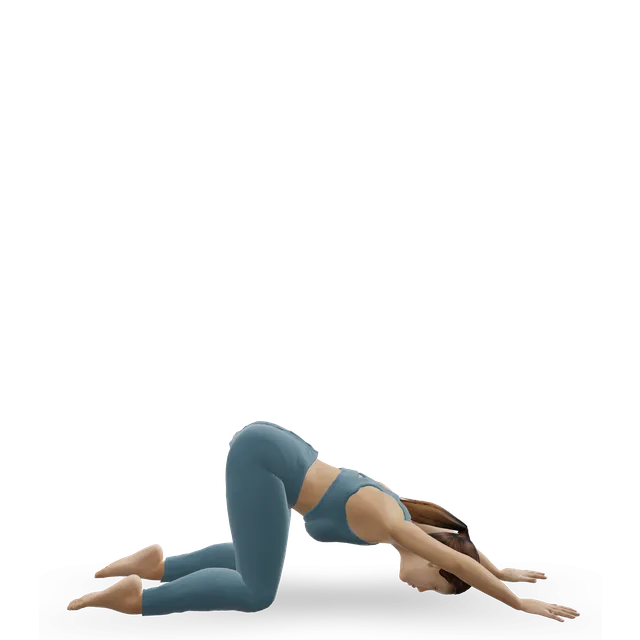 3D demoExtended puppy pose (Uttana Shishosana)Beginner · No equipment
 Peacock pose (Mayurasana)Expert · No equipment
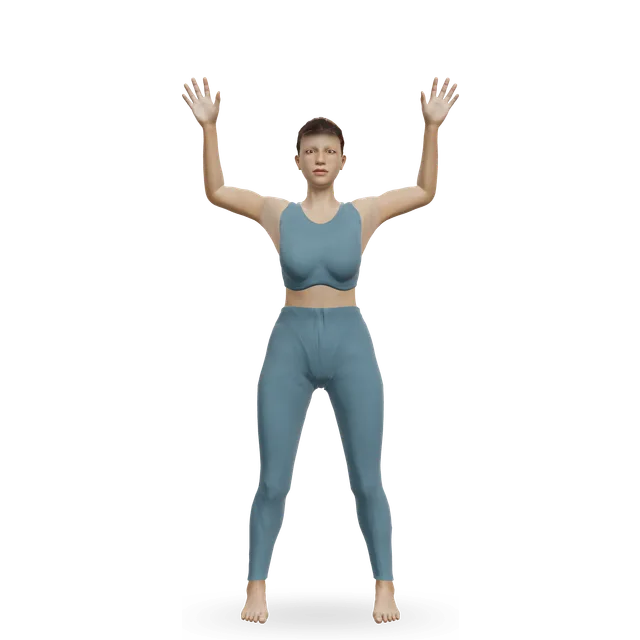 3D demoWall angelBeginner · A wall
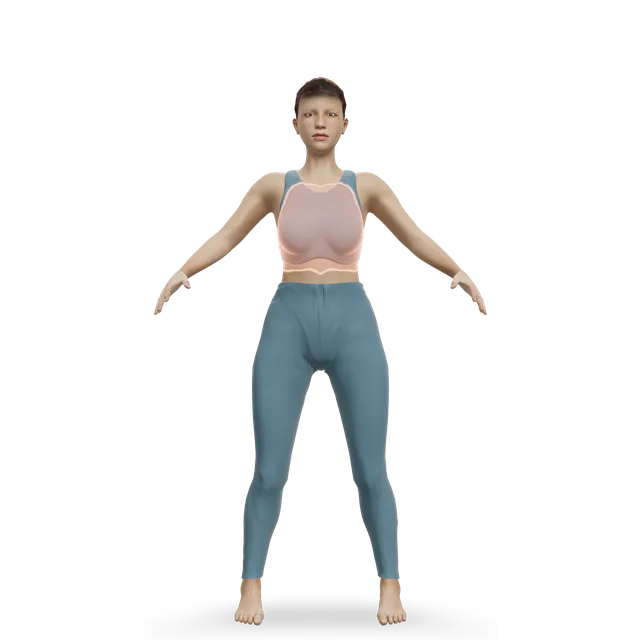 King dancer pose (full Natarajasana, both hands overhead)Expert · No equipment
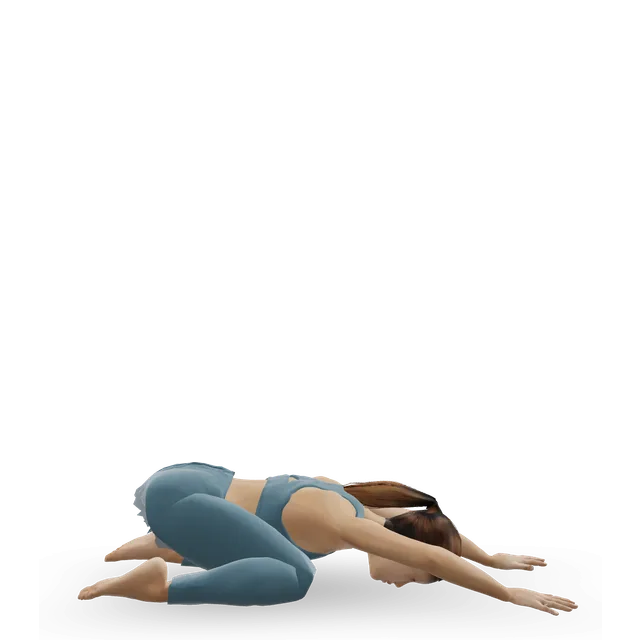 3D demoChild's Pose (Balasana)Beginner · No equipment
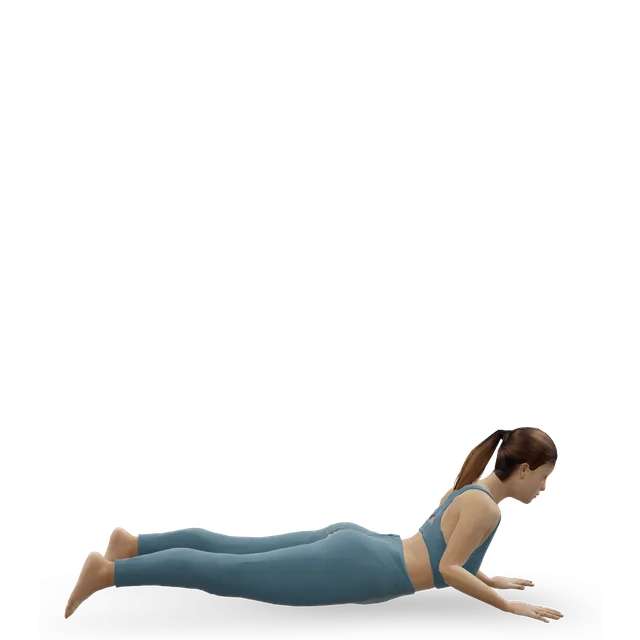 3D demoCobra pose (Bhujangasana)Intermediate · No equipment
Browse more
Questions people ask
What muscles does the Scorpion pose (Vrschikasana) work?
Mainly the shoulders and back, with help from the triceps, abs and hip flexors.
What equipment do I need for the Scorpion pose (Vrschikasana)?
A wall.
Is the Scorpion pose (Vrschikasana) good for beginners?
It is an advanced move. Build up to it with the Prone swimmers first.
What is an easier alternative to the Scorpion pose (Vrschikasana)?
Try the Prone swimmers or the Wheel pose (Urdhva Dhanurasana). It works similar muscles at a lower grade.