Training guide

How to do a kettlebell figure 8: passing the bell between your legs, the figure 8 to hold, the grip and trunk, and how many

A kettlebell figure 8 (or figure of 8) is a passing drill: in a wide half squat with a flat back, you pass a light kettlebell from hand to hand under and round each leg, tracing an 8. Start with the simpler pass between the legs, use your lightest bell, and do 2 to 3 rounds of 20 to 30 seconds each way.

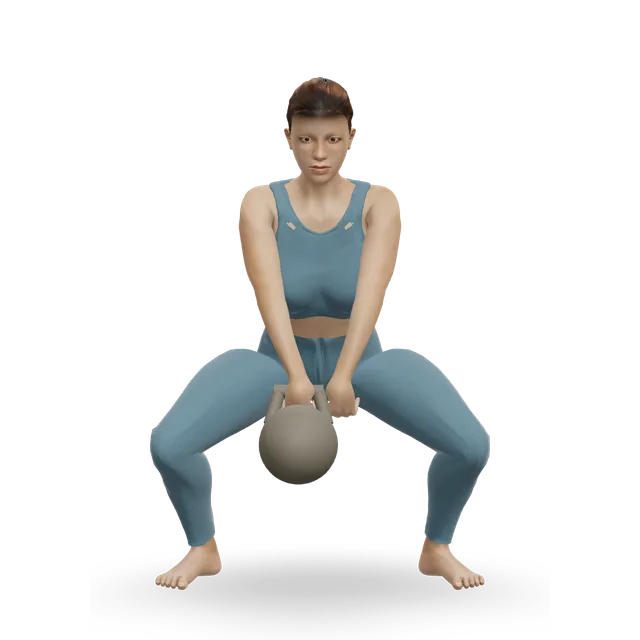
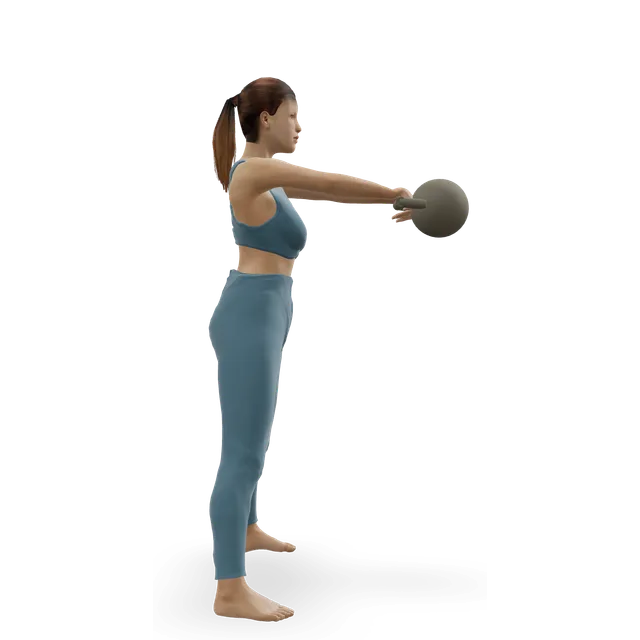
Nobody has studied the figure 8, so everything about it comes from coaches: it warms up your hips and hinge and trains your grip and coordination, and the swinging figure 8 to hold is a harder drill for people who already swing well. There's no 3D demo of the passes yet; the figure shows the stance and the pick-up.

This guide covers the steps, the pass between the legs, the figure 8 to hold, what it might work, which bell and how many, a dropped bell, and who should change it.

The short version

The move

Feet wider than your shoulders and a light kettlebell on the floor between them, push your hips back and bend your knees into a half squat with a flat back. Pick the bell up in your left hand, reach your right hand round behind your right leg and pass the bell to it under that leg; carry it round the outside of the right leg to the front, then pass it under the left leg to your left hand. Keep tracing an 8, then go the other way. ACE rates it intermediate. There's no 3D demo of the passes.

Source 1

Nobody has studied it

We found no study of any kind on the figure 8, the figure 8 to hold or the pass between the legs, and a review of 99 kettlebell publications doesn't mention them. Everything about technique here is coaching practice.

Source 2

Two drills share the name

The slow pass in a held half squat is a warm-up and coordination drill. The figure 8 to hold swings the bell up between passes and catches it at your chest, your free hand cupping the bell while the other keeps the handle. Learn the pass between the legs first, then the figure 8, then the figure 8 to hold.

Sources 3, 4, 5

What it works, by analogy

Your hips and back hold the half squat while the bell moves, your grip changes hands every pass, and your trunk resists the bell's sideways pull: one-sided and moving loads make the trunk muscles on the far side work harder in other kettlebell and dumbbell exercises. With a light bell it's unlikely to build much strength, which comes mainly from heavier loads.

Sources 6, 7, 8

Dropped bells are the real risk

Weights dropping on people caused about two-thirds of weight-training injuries seen in US emergency departments; toes and feet led the leg injuries and fingers about a quarter of the arm and hand injuries. Use your lightest bell, pass slowly, hand over the handle rather than the ball, wear shoes and clear the space. If the bell slips, let it go down and away from your feet.

Sources 9, 10, 11

How many

2 to 3 rounds of 20 to 30 seconds each way, resting between rounds (the move page's dose), or one round each way in a kettlebell warm-up. The figure 8 to hold: 2 or 3 sets of 5 each side with a light bell, building over weeks towards 5 sets of 5 (our editorial starting point, inside one coach's range).

Source 5

What a kettlebell figure 8 is

A passing drill in a held half squat

You hold a half squat or hinge and pass the bell hand to hand under and round each leg. ACE squats until the thighs are about level with the floor; Breaking Muscle says to squat about halfway down and not to let the bell pull you out of position. Our move page uses a half squat with a flat back. ACE gives no dose.

Sources 1, 3

The muscles and joints (by analogy)

Your hips and back muscles hold the half squat still, your hands grip and pass the handle, your trunk resists the bell's sideways pull and turn, and your shoulders reach behind your legs. Nobody has measured a figure 8. Coaches say it warms up your legs and hip hinge.

Sources 2, 6, 12, 7

Before you start

A steady bodyweight hip hinge and squat, as our move page asks. Before the figure 8 to hold, one coach asks that you can pass a bell round your legs "without bowing over and looking", and you need a crisp two-handed swing (our kettlebell swing guide).

Source 5

How people differ

Longer legs and smaller hands make the reach behind the leg harder; a smaller or lighter bell, or a wider stance, helps (our editorial suggestion). Kettlebell sizes jump 4 kg at a time, so the lightest bell you own is usually the right one.

How to do a kettlebell figure 8, step by step

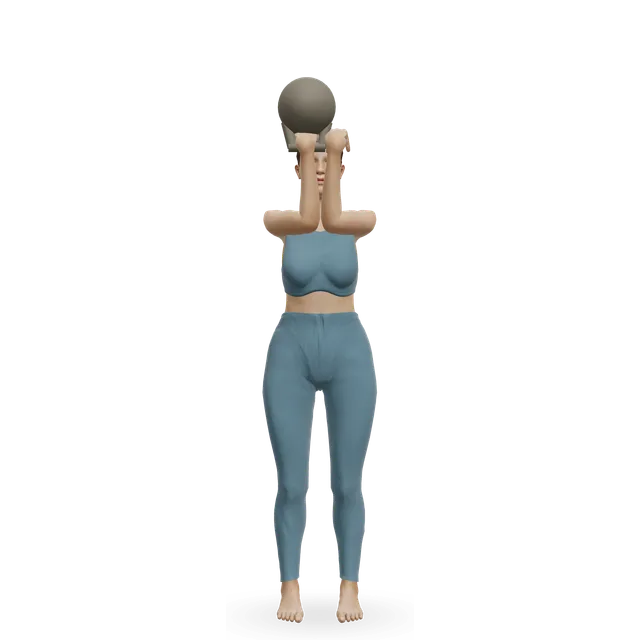
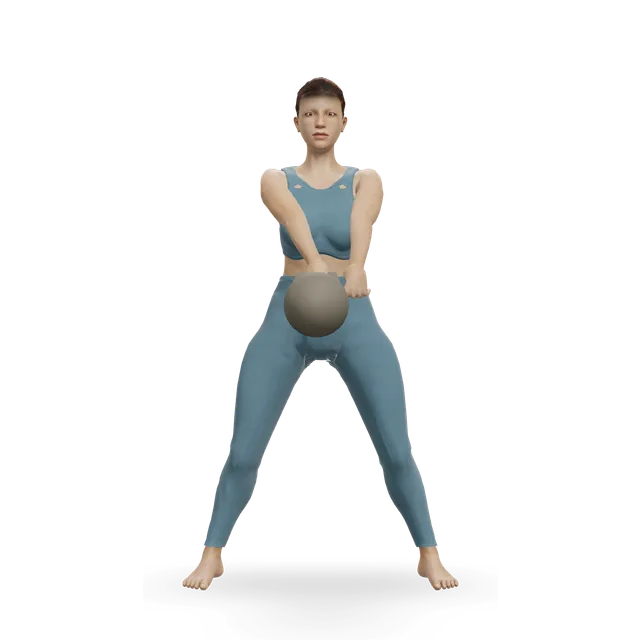
The 3D figure shows the stance and the pick-up (a kettlebell deadlift); the passes aren't demonstrated yet. Steps from our move page and ACE, in our editorial wording.

  1. Put your lightest kettlebell on the floor between your feet, feet wider than your shoulders, toes turned out a little. Wear shoes and clear the space around you.
  2. Push your hips back and bend your knees into a half squat, back flat and chest up, and pick the bell up by the handle in your left hand.
  3. Reach your right hand round behind your right leg and pass the bell to it under that leg, handing over the handle, not the ball.
  4. Carry it round the outside of your right leg to the front, then pass it back under your left leg to your left hand, reaching round from behind. That's one figure 8.
  5. Keep passing slowly, your hips and back still and your chest up. Don't round down to chase the bell.
  6. After your time, put the bell down with a flat back, then go the other way.

Loading the 3D figure…

Gets into position, then repeats the movement. Technical checks passed; qualified exercise review is pending.

The movement on the figure: Kettlebell deadlift

The pass between the legs

Learn this first

In a hinge with soft knees and a flat back, pick the bell up in your right hand and swing it gently back between your legs to your left hand, which takes it under your hips. Let your left hand carry it a little out beside your left leg, then swing it back through to your right hand. Keep passing back and forth, then stand up with the bell held in front of you.

The bell never goes round the outside of a leg, so it's the simpler drill, as our move page says: hold the hinge still, only the arms pass, and hand over the handle, not the ball of the bell. No 3D demo yet. Its move page's dose is the same as the figure 8's: 2 to 3 rounds of 20 to 30 seconds each way, resting between rounds.

The figure 8 to hold

A swinging version that ends at your chest

Start as a figure 8, but as the bell passes behind one leg, snap your hips forward so it swings up in front of you, and catch the ball of the bell in your free hand at chest height, the other hand still on the handle. Let it drop back into the next pass on the other side. One coach calls it figures of eight to a stop and uses it as a trunk-power drill, built up over 6 to 8 weeks.

Sources 4, 5

Only once you swing well

Learn it with a light bell and a crisp two-handed swing. The hips drive the bell up; the arms only guide it. As one coach warns: "Do not let the KB or its handle punch you in the chest, chin, face, or shoulder." There's no 3D demo and no catalogue entry for it.

Sources 4, 5

What it works, and what nobody has tested

No study of the drill

PubMed has no record for kettlebell with any spelling of figure 8, and none for around the body or between the legs; a 2019 scoping review of 99 kettlebell publications rated confidence in kettlebell effects overall low to very low and never mentions the figure 8. The nearest item is a physiotherapy suggestion of a lunge with the bell passed under the front leg, with no data.

Sources 2, 13

One-sided loads work the far side of the trunkEmerging evidence

In one-arm kettlebell swings, the trunk muscles on the side away from the bell worked about 24% harder than those on the bell's side (16 men), and the back muscles about 25% harder in American swings (15 men). The trunk muscles opposite the load worked harder in one-sided lunges (42 athletes), and the external oblique worked about 68% less in a two-arm than a one-arm standing press. None of these is a figure 8.

Sources 6, 12, 14, 7

One-handed lifting moves the spine moreEmerging evidence

Lifting with one hand, off to the side, added side-bending and twisting and raised sideways load on the spine in lab studies. A slow pass is lighter than these lifts.

Sources 15, 16

"Figure 8s build strength"

Untested, and unlikely with a light bell. Strength rose most with heavier loads (80% of the most you can lift once, or more) in the American College of Sports Medicine's overview, light loads build muscle only when sets go close to failure, and the kettlebell review judged typical bells well below the level that builds muscle.

Sources 8, 17, 2

Kettlebell training in generalEmerging evidence

Kettlebell programmes, mostly swings, improved strength and jump height in small trials, sped up balance reactions after a push in 40 workers, and raised grip by about 7 kg in adults aged 59 to 79. Effects were trivial to small, with low to very low confidence, and none used figure 8s.

Sources 2, 18, 19, 20, 21, 22

GripEmerging evidence

Kettlebell work tires the grip: it fell by about 10 kg after a 6-minute snatch set in 12 experienced men. A figure 8 changes hands every pass, which nobody has measured.

Sources 23, 22

Warm-upsEmerging evidence

Warming up improved performance in 79% of the measures across 32 studies, but no study of upper-body warm-ups measured injuries. No kettlebell warm-up drill has been tested.

Sources 24, 25

Build up to it

Hip-hinge practice, 2 or 3 sets of 8, tapping your hips back to a wall (our kettlebell swing guide's first step); kettlebell deadlifts, 3 sets of 5 to 10 (its second step); plié dumbbell squats for the wide stance, 2 sets of 8 (our sumo deadlift workout). Then the pass between the legs and the figure 8 (no demos; 2 to 3 rounds of 20 to 30 seconds each way, their move pages' dose). Kettlebell swings come before the figure 8 to hold: 6 to 8 sets of 5 to 8 while learning (our swing guide's editorial starting point). Halos are the upper-body cousin: 5 circles each way in a warm-up (our kettlebell workouts).

Which bell, how many and how often

Which bell

Your lightest bell, lighter than your swing bell: one coach says "use a very light bell when first starting with these". If you can't pass it slowly with your back flat, go lighter.

Source 4

The figure 8 or the pass between the legs

2 to 3 rounds of 20 to 30 seconds each way, resting between rounds: the move page's dose, its editorial starting point.

As a warm-up

One round of 20 to 30 seconds each way before swings, after halos (our editorial starting point; our kettlebell workouts start with halos, 5 each way).

The figure 8 to hold

2 or 3 sets of 5 each side with a light bell to start, building over weeks towards 5 sets of 5 with a heavier bell: our editorial starting point, inside one coach's range of "five to ten sets of five to ten reps".

Source 5

Effort

Stop each round while every pass is still slow and clean. It isn't a set to push, as our halo guide treats halos.

How often

In any kettlebell session's warm-up, or 2 or 3 times a week as a short conditioning round (our editorial suggestion). No study has tested a dose.

Common mistakes

Rounding your back to chase the bell

Keep the hinge still; only your arms pass, as our move pages say.

Throwing the bell from hand to hand

Pass it: the receiving hand reaches round and takes the handle. "Pass the bell; don't throw it", as our move page puts it.

A bell too heavy to pass slowly

Go to your lightest bell.

Holding the ball, not the handle, or gripping off-centre

Hand over the handle. In one case report, repeatedly holding the handle off-centre damaged a thumb tendon.

Source 26

Standing up between passes

Hold the half squat for the round (our editorial suggestion).

Pulling the bell up with your arms in the figure 8 to hold

The hips drive it, the arms guide it, and it mustn't hit your chest or face.

Source 5

Bare feet or a cluttered floor

Shoes on and space clear, as our move page says.

Dropped bells, fingers and your back

Dropped weightsEmerging evidence

In US emergency departments from 1990 to 2007, weights dropping on the person caused 65.5% of weight-training injuries. From 2014 to 2023, toes (24.8%) and feet (20.3%) led the leg injuries; from 2021 to 2024, fingers were about a quarter of the arm and hand injuries, and drops or crushes the commonest cause. In Australia, 78.4% of dumbbell injuries came from weights falling or dropping on people. These registries count injuries, not how many people train, so they can't give a risk.

Sources 9, 10, 11, 27

Kettlebells themselvesEmerging evidence

Kettlebells appeared in under 1% of US resistance-training emergency cases (0.80% of women's and 0.10% of men's) in a 10-year analysis. Kettlebell injuries in the research are case reports, each apparently with a load or technique error. We found no kettlebell injury-rate study.

Sources 28, 2, 26

If the bell slips

Let it go down and away from your feet rather than grabbing at it (our editorial advice). Our swing guide's rule is the same idea: don't fight the bell. A light bell, slow passes, shoes and a clear floor, as our move page says, guard against the common injury.

Your lower backEmerging evidence

In 7 men, a 16 kg swing, a faster version of the same hinge, loaded the lower back with about 3,200 newtons at the bottom of the swing, which the authors called quite conservative, though a few people find swings irritate their back. A slow pass has no swing, so it's probably lower (our reading). Bending or twisting is unlikely to cause back pain on its own, though fast twisting under heavy load marked high-risk factory jobs.

Aim for discomfort you'd call mild to moderate, no more than about 5 out of 10. It should settle within an hour or so, and your back should be no worse the next morning, as our back pain guides say. Pain, pins and needles or numbness spreading down a leg are the exception: stop, and see our sciatica guide.

Sources 29, 30, 31, 32

Your hands and wrists

Some discomfort during these exercises is fine and doesn't mean you are doing damage. Keep it to about 5 out of 10 or less. It should settle within half an hour or so, and your hand should be no worse the next morning. If it is, do fewer, smaller or lighter next time, not nothing. That's our wrist pain guides' rule.

Stop if your fingers tingle or go numb: that's a nerve, not a tired muscle, as our grip strength guide says.

While your wrist hurts, the NHS says not to lift heavy objects or grip anything too tightly.

Source 33

Figure 8 vs the halo, around the world and the swing

Vs the halo

The halo circles the bell round your head and works your shoulders; the figure 8 passes it round and between your legs in a half squat, working your grip and hips. Only the halo has a 3D demo. Our halo guide covers it.

Vs around the world

The around-the-world (around the body) pass circles your waist standing tall, passing the bell hand to hand. It's the easier passing drill; our kettlebell halo guide covers it. Neither has been measured.

Vs the swing

The swing is a fast, powerful hinge with the bell in front of you; the slow figure 8 holds the hinge still and moves the bell round your legs. The figure 8 to hold borrows the swing's hip snap, so learn the swing first, with our kettlebell swing guide.

The lunge pass-through

Passing the bell under your front leg in a lunge is a related drill, a physiotherapy suggestion for late-stage rehabilitation. It has no 3D demo; its move page's dose is 2 to 3 sets of 8 to 12 each side, stopping with 2 or 3 reps in reserve.

Moves that go with it

Kettlebell pirate ships for side-to-side bell control, 2 to 3 sets of 8 to 12 swings each side, stopping with 2 or 3 reps in reserve (the move page's dose). Farmer's carries for grip, 2 or 3 carries of 30 metres; suitcase carries for the side of your trunk, 2 walks of 20 to 30 metres each side (our workouts); dumbbell Romanian deadlifts for hinge strength, 3 sets of 8 to 10 (our back pain guide's strengthening stage).

Workouts

No workout uses the figure 8 yet, because it has no 3D demo. These kettlebell sessions start with halos, 5 each way; add a round of slow figure 8s after them once halos are easy.

Plans

Who should change it

Back pain

Use the pass between the legs in a shallower hinge, or leave it until kettlebell deadlifts are comfortable, as our swing guide does for swings. Stay within the back rule above.

Recent hip surgery

Follow your surgical team's limits; a deep hinge with a passing load waits until they clear it.

Wrist or hand pain, thumb-base arthritis or trigger finger

A lighter bell, with your wrists straight; stop if passing hurts more than the wrist rule allows.

Pregnancy

The NHS says it's not recommended to start a new vigorous activity in pregnancy, so don't start figure 8s new; skip them with pelvic girdle pain. Avoid activities with a risk of bumping your tummy, as the NHS advises.

Sources 34, 35

Osteoporosis with spinal fractures

Ask a physiotherapist first: it's a held forward hinge with a moving load, and the UK consensus advises against repeated bending forward.

Source 36

Warning signs

Stop and get medical help

If you get chest pain or pressure, feel faint or dizzy, are unusually breathless, or your heart races or beats irregularly during exercise, as our plans advise. The American Heart Association says these need immediate medical evaluation.

Source 37

Call 999 (911 in the US)

For chest pain that comes on suddenly and doesn't go away, feels tight or like squeezing, spreads to your arms, neck, jaw, stomach or back, or comes with sweating, feeling sick, light-headedness or breathlessness; arm pain that comes on suddenly with pressure, heaviness or squeezing across your chest; severe difficulty breathing, or a chest that feels tight or heavy; someone who faints while exercising; palpitations that don't go away, or come with chest pain, shortness of breath or feeling faint; or a headache that starts suddenly and is extremely painful, especially while lifting or straining. The NHS says a bleed on the brain may be more likely when lifting something heavy. Don't drive yourself to A&E.

Sources 38, 39, 40, 41, 42, 43, 44, 45

A headache with effort

Ask for an urgent GP appointment or get help from NHS 111 for a headache that's triggered or made worse by coughing, sneezing, bending down or exercising.

Source 44

A bell dropped on your foot or fingers

Call 999 or go to A&E if you heard a crack, the joint or limb has changed shape or points at an odd angle, it's numb or tingling, or the skin looks blue or grey or feels cold. Get help from NHS 111 (in the US, urgent care) if it's very painful, very swollen or bruised, very stiff, or you can't put weight on it or walk more than a few steps.

A crushed finger that's bent out of shape or numb, or a wound that won't stop bleeding, needs the same urgent care (our reading of the same NHS advice).

Source 46

A knock to the head

Call 999 if someone has hit their head and has been knocked out and not woken up, can't stay awake, has a fit, has fallen from a height of more than 1 metre or 5 stairs, has problems with their vision, hearing, balance, walking or speech, or has new numbness or weakness. Get help from NHS 111 after a head injury if you're being sick or feel dizzy. If you're told to go to A&E, don't drive yourself.

Source 47

Your wrist

Get help from NHS 111 for a wrist injury with a snap, grinding or popping noise, lost feeling in the hand, or a wrist you think is broken.

Source 33

Back pain

Call 999 or go to A&E: loss of feeling or numbness around the genitals or bottom, new trouble peeing or controlling your bladder or bowels, changes in genital sensation during sex or problems with erections or orgasm, or pain, tingling, weakness or numbness in both legs. These are signs of cauda equina syndrome, which needs treating in hospital urgently. Don't drive yourself.

See a GP if pain spreading down a leg hasn't improved after a few weeks of home treatment, is getting worse or stops your normal activities. Sciatica on both sides, or weakness or numbness in both legs that's severe or getting worse, is a 999 call or a trip to A&E.

Sources 48, 49

A new lump or bulge in your groin or tummy

See a GP if you think you have a hernia, a bulge or lump that may get bigger when you strain and smaller when you lie down. Get help from NHS 111 if you have a hernia and pain in or around it, a bloated tummy, you feel or are sick, you're vomiting blood or your vomit looks like coffee grounds, you're constipated, you have a high temperature or feel hot, cold or shivery, or you've suddenly become confused. Call 999 or go to A&E for a femoral hernia (a small lump at the top of your thigh, in your groin) with very bad tummy pain, sickness, being unable to fart or poo, a high temperature or sudden confusion.

The NHS lists lifting heavy weights among the causes of a femoral hernia. After an inguinal hernia repair, avoid heavy lifting or strenuous activity for at least 4 to 6 weeks.

Sources 50, 51, 52

Before you start

Speak to your GP first if you haven't exercised for some time or have medical conditions or concerns, as the NHS advises. Get advice before hard or straining work if your blood pressure is uncontrolled (140/90 or higher at a clinic, or 135/85 at home), or you have heart disease or chest pain when you're active, a pacemaker or defibrillator, diabetic eye disease, glaucoma, a hernia, recent eye or tummy surgery, or you're pregnant, as our breathing guide lists.

With controlled high blood pressure, the American Heart Association considers low- to moderate-intensity strength training with proper breathing safe. Breathe out as you lift, as our breathing guide advises.

With a pacemaker or defibrillator, the American Heart Association asks you to check with your doctor before upper-body strength training, because repeated arm movements can damage or dislodge the leads.

Sources 53, 54, 37

Myths

"Figure 8s are just a warm-up"

Coaches use them as a warm-up, as coordination and trunk practice, in conditioning sets and, as the figure 8 to hold, as a loaded trunk-power drill. But nothing has measured what any version builds.

Sources 3, 4, 55, 5, 2

"Figure 8s build strength, or abs"

Untested. Strength favours heavy loads, light loads build muscle only near failure, kettlebell weights are usually below the level that builds muscle, and exercising one area doesn't burn the fat over it.

Sources 8, 17, 2, 56

"Figure 8s are only coordination"

Also untested: they hold a loaded hinge, change grip every pass and resist a side-to-side pull, so they probably train grip and trunk endurance a little (our reading from other one-sided exercises).

Sources 6, 7

"Swing the bell between the passes to make it harder"

That's the figure 8 to hold, a different drill that needs a good swing first. The slow figure 8 says "Pass the bell; don't throw it", as our move page puts it.

Source 5

"Use your swing bell"

Coaches start with a very light bell, and our halo guide says the same for halos.

Source 4

"Kettlebells are dangerous"Emerging evidence

Kettlebells appeared in under 1% of US resistance-training emergency cases, and kettlebell injury reports are case reports with load errors. The common free-weight injury is a weight dropped on the feet or fingers, which a light bell, slow passes, shoes and a clear floor guard against.

Sources 28, 2, 9, 10, 11

Questions people ask

What is a kettlebell figure 8?

A passing drill: in a wide half squat, you pass a kettlebell from hand to hand under and round each leg, tracing a figure of 8. ACE rates it intermediate.

How do you do a kettlebell figure 8?

Stand with your feet wide and a light bell between them, sit into a half squat with a flat back, and pass the bell under your right leg to your right hand reaching round from behind, round the outside, then under your left leg to your left hand. Keep passing for your time, then go the other way.

What muscles do kettlebell figure 8s work?

Nobody has measured it. Your hips and back hold the half squat, your forearms grip, and your trunk resists the bell's sideways pull, as it does in other one-sided kettlebell work.

What are the benefits of figure 8s?

Coaches use them to warm up the hips and hinge, practise passing a bell, and train grip and coordination. No study has tested any benefit, so treat them as a drill, not a strength builder.

Do figure 8s build strength or just coordination?

Untested either way. With a light bell they're unlikely to build much strength, which comes mainly from heavier loads; coaches load the figure 8 to hold for power, but that's coaching practice.

What is a kettlebell figure 8 to hold?

A harder, swinging version: as the bell passes behind one leg, your hips drive it up and you catch it at your chest with your free hand cupping the bell, the other hand still on the handle. Learn it only once you can swing well.

How many figure 8s should I do?

2 to 3 rounds of 20 to 30 seconds each way, resting between rounds (our move page's dose), or one round each way in a warm-up. For the figure 8 to hold, start with 2 or 3 sets of 5 each side (our suggestion).

What weight kettlebell for figure 8s?

Your lightest bell, lighter than your swing bell. If you can't pass it slowly with your back flat, go lighter.

Figure 8 or around the world?

The figure 8 passes the bell under and round your legs in a half squat; the around-the-world (around the body) pass circles your waist standing tall. Our kettlebell halo guide covers the around-the-body pass.

Are figure 8s safe for your back?

Keep your back flat and don't round down to chase the bell, and they're a light, slow hinge. With back pain, start with kettlebell deadlifts and keep to our back pain rule: about 5 out of 10, settling within an hour.

Is there an easier version?

Yes: the pass between the legs, where the bell goes back and forth under your hips without circling a leg. Learn that first.

What if I drop the bell?

Let it fall, away from your feet, and don't grab at it. Weights dropping on people caused about two-thirds of the weight-training injuries seen in US emergency departments, so wear shoes, clear the space and use a light bell.

Sources

  1. ACE · Figure eight (exercise library, rated intermediate, American Council on Exercise)
  2. Meigh 2019 · Kettlebell training in clinical practice: 99 publications (scoping review, BMC Sports Sci Med Rehabil)
  3. Lind 2016 · The 3-phase kettlebell warm-up (coaching article, Breaking Muscle)
  4. Brooks 2016 · Kettlebell figure 8s and figure 8s to hold (coaching article, Lauren Brooks)
  5. Dorey 2015 · Two kettlebell exercises for trunk power, including figure 8s to a stop (coaching article, Breaking Muscle)
  6. Andersen 2016 · Core muscle activity in one-armed and two-armed kettlebell swings, in 16 men (EMG study, J Strength Cond Res)
  7. Saeterbakken 2012 · Trunk muscle activity in one- and two-arm, seated and standing presses, in 15 men (EMG study, Eur J Appl Physiol)
  8. Currier 2026 · Resistance training for muscle function, size and performance in healthy adults: an overview of 137 reviews (ACSM position stand, MSSE)
  9. Kerr 2010 · Weight training injuries seen in US emergency departments, 1990 to 2007 (national injury surveillance study, Am J Sports Med)
  10. Nishida 2025 · Weightlifting injuries to the legs and feet in US emergency departments, 2014 to 2023 (registry study, Orthop J Sports Med)
  11. Lee 2026 · Weightlifting injuries to the arms and hands in US emergency departments, 2021 to 2024 (registry study, Orthop J Sports Med)
  12. Andersen 2019 · Trunk muscle activity in one- and two-armed American kettlebell swings, in 15 trained men (EMG study, Sports Med Int Open)
  13. Brumitt 2010 · Kettlebells in lower limb sports rehabilitation (clinical commentary, N Am J Sports Phys Ther)
  14. López-de-Celis 2023 · Where you hold the weight and trunk muscle activity in lunges, in 42 amateur athletes (cross-sectional study, Healthcare)
  15. Allread 1996 · Trunk movement in one-handed lifting (lab study, Ergonomics)
  16. Marras 1998 · Spine load in one- against two-handed lifting from the side (lab study, Ergonomics)
  17. Schoenfeld 2017 · Light against heavy loads for strength and muscle growth: 21 studies (meta-analysis, J Strength Cond Res)
  18. Lake 2012 · Kettlebell swing training and maximal and explosive strength (randomised trial, J Strength Cond Res)
  19. Otto 2012 · Weightlifting against kettlebell training for 6 weeks in 30 men (randomised trial, J Strength Cond Res)
  20. Manocchia 2013 · Ten weeks of kettlebell classes and strength, power and endurance (controlled trial, J Strength Cond Res)
  21. Jay 2013 · Kettlebell training, balance reactions and jumping in 40 adults (randomised trial, J Strength Cond Res)
  22. Meigh 2022 · Kettlebell training and grip strength in 32 inactive adults aged 59 to 79: the BELL trial (non-randomised controlled trial, BMC Geriatr)
  23. Ross 2017 · The forces in a 6-minute set of kettlebell snatches, in 12 trained men (lab study, PeerJ)
  24. Fradkin 2010 · Effects of warming up on physical performance: 32 studies (systematic review and meta-analysis, J Strength Cond Res)
  25. McCrary 2015 · Upper-body warm-ups, performance and injury: 31 trials (systematic review, Br J Sports Med)
  26. Karthik 2013 · A damaged thumb tendon after kettlebell training (case report, BMC Sports Sci Med Rehabil)
  27. Gray 2015 · Causes of injuries at fitness facilities seen in Victorian emergency departments (registry study, Inj Epidemiol)
  28. Coffey 2026 · Resistance training injuries in US emergency departments over 10 years: 15,348 cases (registry study, J Strength Cond Res)
  29. McGill 2012 · Kettlebell swing, snatch and carry: back and hip muscle activity and low back loads, in 7 men (lab study, J Strength Cond Res)
  30. Wai 2010 · Does bending or twisting at work cause low back pain? (systematic review, Spine J)
  31. Swain 2020 · No consensus that spine posture or physical exposure causes low back pain: 41 systematic reviews (review of reviews, J Biomech)
  32. Marras 1993 · Trunk motion and the risk of low back disorders in over 400 industrial lifting jobs (job study, Spine)
  33. NHS · Wrist pain
  34. NHS · Exercise in pregnancy
  35. NHS · Pelvic pain in pregnancy (past its review date: reviewed December 2022, review due December 2025)
  36. Brooke-Wavell 2022 · Strong, steady and straight: UK consensus on physical activity and exercise for osteoporosis (consensus statement, Br J Sports Med)
  37. Paluch 2024 · Resistance exercise training with and without cardiovascular disease: 2023 update (American Heart Association scientific statement, Circulation)
  38. NHS · Chest pain (past its review date: reviewed August 2023, review due August 2026)
  39. NHS · Heart attack
  40. NHS · Elbow and arm pain
  41. NHS · Shortness of breath
  42. NHS · Fainting
  43. NHS · Heart palpitations
  44. NHS · Headaches
  45. NHS · Subarachnoid haemorrhage
  46. NHS · Sprains and strains
  47. NHS · Head injury and concussion
  48. NHS · Back pain
  49. NHS · Sciatica
  50. NHS · Hernia
  51. NHS · Femoral hernia
  52. NHS · Inguinal hernia repair
  53. NHS · Physical activity guidelines for adults aged 19 to 64
  54. NHS · High blood pressure
  55. EliteFTS · Kettlebell metabolic conditioning 101 (training log)
  56. Ramirez-Campillo 2022 · Does exercising a body part reduce the fat over it? 13 studies, 1,158 people (systematic review and meta-analysis, Hum Mov)

Exercise education, not a personal prescription, and clinical review of these guides is pending. Check with a GP before starting hard training if you have a heart condition, chest pain, dizziness or breathlessness when active, and stop for sharp or increasing pain. Health disclaimer.