Bench dip
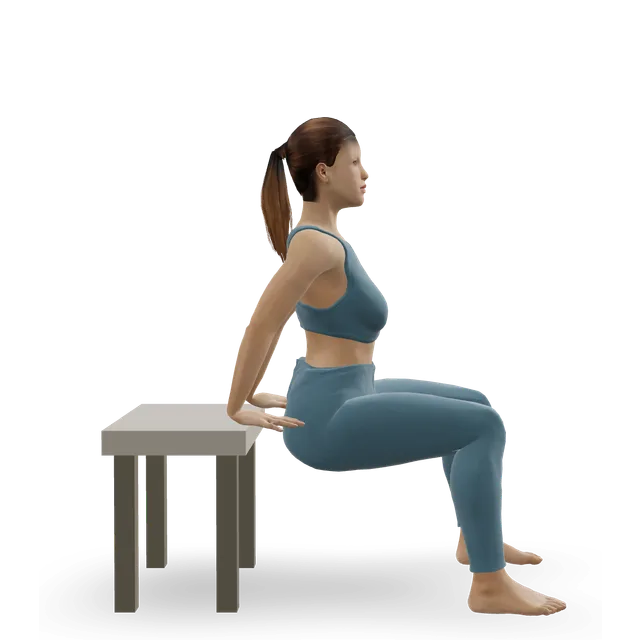
Hands on a bench behind you, the feet flat on the floor in front and the knees slightly bent, so the legs take part of the load: the middle step between the bent-knee bench dip, with the feet close in, and the straight-leg bench dip, with only the heels down. Bench dips were among the top triceps exercises in an ACE comparison.
Dip family
Bench dip
Loading the 3D figure…
Source-researched guide.
How to move
- Sit on the edge of a secure bench, grip the edge beside the hips, then walk the feet forward and slide the hips off the bench.
- Bend the elbows straight back to lower the body until the elbows reach about a right angle.
- Press back up through the hands. Bending the knees and bringing the feet closer makes it easier.
Form cues
- Keep the shoulder blades back and down; do not let the shoulders roll forward.
- Lower only as far as the shoulders are comfortable.
Practice and cautions
No universal dose is assigned. Choose a manageable amount for your current capacity, leave room for controlled repetitions, and allow recovery. A clinician’s individual plan takes priority.
This position pulls the shoulder forwards. Keep the range short and the chest tall, and drop it entirely if the front of the shoulder complains. After heart surgery through the breastbone, or a heart or lung transplant, follow your surgeon's advice before pushing, pulling or lifting with your arms. After breast cancer surgery or reconstruction, follow your surgical team's advice on when you can lift your arm above shoulder height, or push, pull or lift with it. If you push a manual wheelchair, dips and overhead pressing load the shoulder in positions the spinal cord injury guideline advises limiting: favour rows, pull-downs from shoulder height and rotator cuff work, and stop if it brings on shoulder pain. This is movement education, not an assessment or treatment prescription. Stop for sharp or increasing pain, dizziness, numbness or tingling; seek individual guidance for symptoms, injury or restrictions.
Sources and review status
Sources support the educational description; they do not establish that this exercise is suitable for you.
- NASM · Bench dips (the set-up, the easier versions and the dose it gives) ↗
- ACE study · Best triceps exercises (bench dips among the top three) ↗
- McKenzie 2022 · Bench, bar and ring dips: do kinematics and muscle activity differ? (IJERPH) ↗
No variation is labeled clinically validated.
What it works
Equipment
A bench or box
Level
Beginner. See the easier and harder options above.
Workouts that use it
Pain guides that use it
Part of a staged plan, with when to get help first.
Guides that use it
Similar moves
Browse more
Questions people ask
What muscles does the Bench dip work?
Mainly the triceps, with help from the chest and shoulders.
What equipment do I need for the Bench dip?
A bench or box.
Is the Bench dip good for beginners?
It is graded beginner, so it suits most people starting out. When it feels easy, try the Parallel bar dip.
What is an easier alternative to the Bench dip?
Try the Bent-knee bench dip. It is the suggested step down from this move.
How do I make the Bench dip harder?
Progress to the Parallel bar dip or the Chest dip (forward lean). Follow that guide’s technique and any stated timing.