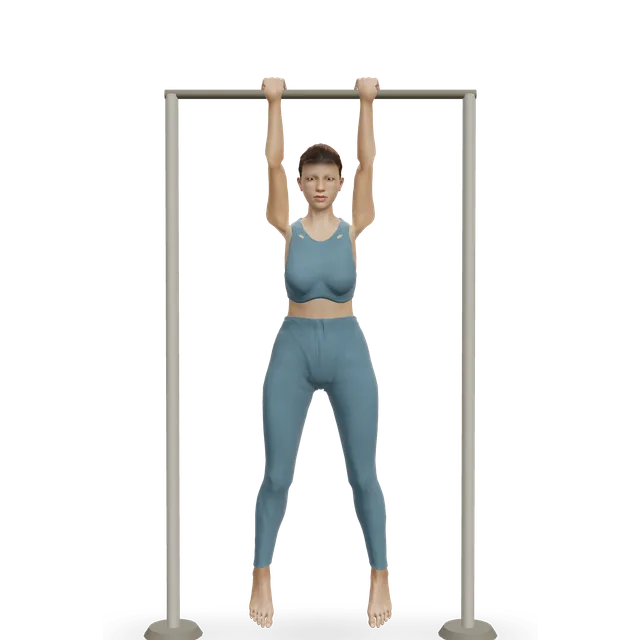
Pain guide · Elbow pain

Elbow pain when doing dips: the back, inside and outside of the elbow, depth, bench and bar dips

Elbow pain when you do dips usually comes from one of a few places, and where it hurts is the best clue. An ache at the tip of the elbow, worse as you push up, usually comes from the triceps tendon; tingling on the inside into the ring and little fingers, from the ulnar nerve, which slips out of its groove more as the elbow bends deep; the bony bump on the inside, golfer's elbow; and the outside, tennis elbow from gripping the bars. No study has counted the causes or measured the elbow's loads in dips, but experienced men dip past a right angle by choice, and machine dips were the dip least often linked to pain in a gym survey. Stopping at about a right angle, no weighted dips for a while, and pushdowns and the dip machine usually help.

This guide starts with the signs that need help, from a 999 call for arm pain with pressure across your chest, to an urgent treatment centre or accident and emergency (A&E) for a pop at the back of the elbow with weakness straightening your arm, and a same-day check through the National Health Service's 111 line (NHS 111) for a hot, red swelling on the point of the elbow. It then maps the causes by where it hurts, explains what the studies of depth and of bench, bar, ring and machine dips show, and don't, shows how to change your dips today, and gives a three-stage plan with a 3D demo of every move, from pushdowns and the dip machine back to bar dips.

When to get help first

Exercise is for pain that has been checked or is clearly mild and settling.

Get urgent medical help if

  • Call 999: arm pain that comes on suddenly with pressure, heaviness, tightness or squeezing across your chest, especially with shortness of breath, sweating or feeling sick. It could be a heart attack.
  • Get help from NHS 111: pain or tightness in your chest, neck, shoulders, jaw or arms that comes and goes, often brought on by exercise, stress, emotion or cold and easing after a few minutes' rest. It can be angina, a sign of a heart problem. If you've been diagnosed with angina, get help from NHS 111 too if it feels worse than before, is happening more often, lasts longer or happens when you're resting.
  • Same day (NHS 111): your arm hurts when you exercise, but the pain goes away when you rest.
  • Call 999, even if it passes: sudden weakness or numbness in one arm, with a drooping face or slurred speech. These are signs of a stroke.
  • Urgent treatment centre or A&E: a pop or snap at the back of the elbow during a push, a press or a dip, or after a fall onto an outstretched hand, then sudden pain and swelling, bruising at the back of the elbow or forearm, a gap above the point of the elbow, or weakness straightening the arm, especially overhead. Don't wait to see if it settles: a full tear in an active person is usually repaired, and expert guidance favours repairing it early.
  • Urgent treatment centre or A&E: a pop or snap and sudden pain during an effort, which could be a torn tendon. At the front of the elbow, with bruising and a bulge in the upper arm, don't wait for it to settle: a torn biceps tendon is best repaired within the first 2 to 3 weeks. If it happened weeks ago, still get it checked: repair is often still possible, though it may need a tendon graft.
  • Urgent treatment centre or A&E: severe pain in your arm and it's difficult to move; you've injured your arm and heard a snap, or your arm has changed shape; or your arm tingles or feels numb.
  • Go to A&E or call 999 if you've injured your arm and it is numb, tingling or has pins and needles; a bone is sticking out or a bad cut is bleeding heavily; or the arm or elbow has changed colour or shape, or is at an odd angle. Don't drive yourself.
  • Call 999 or go to A&E: after a fall or a blow, the elbow looks out of place, has changed shape, or you can't move it. Don't try to put it back in yourself. Support the arm in a sling or with a towel, hold an ice pack wrapped in a tea towel to it, and don't drive yourself.
  • Same day (NHS 111): after a fall or knock you can't fully straighten the elbow, or the injured arm is very painful or the pain is getting worse, it's very swollen or bruised, it's stiff and hard to move, or you also have a very high temperature or feel hot, cold or shivery, which could be an infection. In a large study, about half of people who couldn't fully straighten the elbow after an injury had a fracture.
  • Ask for an urgent GP appointment or get help from NHS 111 the same day if the skin over the swelling is painful, hot and swollen. Redness can be harder to see on brown or black skin. The bursa may be infected and need antibiotics, especially if there's a cut, graze or insect bite over it.
  • Call 999 or go to A&E if redness spreads through the skin around the elbow and you have a very high temperature or feel hot, cold or shivery, a fast heartbeat or fast breathing, purple patches on the skin, feel dizzy or faint, are confused, have cold, clammy or pale skin, or are unresponsive or lose consciousness. These can be signs of a serious infection. Don't drive yourself.
  • Same day (urgent GP appointment or NHS 111): a swollen elbow with a very high temperature, or you feel hot, cold or shivery; or severe pain in one joint that started suddenly, swelling around a joint, the skin around a joint has changed colour, or difficulty moving a joint. It could be an infection in the joint or the bursa, or gout.
  • Same day (call NHS 111, or go to A&E if you feel very unwell): after a big or unusual session, such as hundreds of pull-ups, push-ups, dips or curls, a challenge or a new class, muscle pain, swelling or weakness far worse than the session explains, and dark pee (red, brown, tea or cola coloured), sometimes starting hours or days later. Dark pee isn't always there, so muscles far sorer, more swollen or weaker than the session explains still need the same-day check. It can be rhabdomyolysis, a breakdown of muscle that can harm the kidneys.
  • You're taking a fluoroquinolone antibiotic and a tendon starts to hurt or swell: stop taking it, contact your doctor straight away, and rest the painful area until you've been seen.

See a doctor or physiotherapist if

  • Elbow or arm pain that hasn't gone after a few weeks of looking after it yourself (for tennis elbow, the NHS says after at least 2 weeks of self-care). In many areas you can refer yourself to NHS physiotherapy.
  • A swelling at the back of the elbow that started with a tearing feeling during a lift, or comes with weakness straightening the arm against gravity: tell the GP or physiotherapist about the lift and ask them to check for a torn tendon, which can look like bursitis and is best repaired within about 3 weeks (our suggestion).
  • Weakness straightening the arm that you notice without a clear injury, or back-of-elbow pain if you've had steroid injections near the elbow, have kidney disease or use anabolic steroids: get it checked. These can weaken the tendon.
  • Tingling in the ring and little fingers, or a snap on the inner side of the elbow as it bends: possibly the ulnar nerve, sometimes with a snapping triceps.
  • Pins and needles that keep coming back or are constant, numbness in the ring and little fingers that doesn't go, a weak or clumsy hand, or visible wasting between the thumb and index finger. Ask about referral: one NHS referral guide treats permanent numbness or wasting as urgent.
  • Pins and needles in the ring and little fingers that last more than 6 months despite the position changes on this page: the same NHS guide refers at that point.
  • Elbow or forearm pain with pins and needles, or a sharp, hot or burning pain: it can come from a nerve in the neck, even if your neck doesn't hurt. See a GP or physiotherapist.
  • A swelling on the point of the elbow that isn't better after 1 to 2 weeks of looking after it yourself.
  • Pain on the bone at the point of the elbow that builds over weeks of heavy pressing or extensions and is sore to press on: see a GP or sports doctor, because a stress fracture there is rare in lifters and an early X-ray can miss it (our suggestion).
  • An elbow that locks or catches: occasionally a loose piece of bone or cartilage is the cause.
  • Contact your GP if you have elbow pain and have ever been diagnosed with cancer or a joint condition like rheumatoid arthritis, or your elbow is hot, swollen or tender, especially if you can't recall an injury. If your GP practice is closed, phone 111.
  • A swelling that keeps coming back, a firm lump that keeps growing, a lump that grows back after it was removed, or a lump with weight loss or night sweats: see a GP. Rarely, something else can look like bursitis.
  • Pain at the top of the breastbone that is tender to press and builds with dips, especially wide-grip dips, and isn't settling after a week or two without them: see a GP. Very rarely, dips have caused a stress fracture there (our suggestion).

Where does it hurt?

Location narrows the likely causes; it does not diagnose.

The tip of the elbow or just above it, an ache pushing up and straightening, at the bottom or the top of the dip, with your strength kept

Usually the triceps tendon (triceps tendinopathy), often stiff in the morning and sore as you start, and also sore with skull crushers and close-grip presses. Stopping at about a right angle, no weighted dips and slow pushdowns usually help.

Read: Triceps tendonitis →
A pop or tearing at the back of the elbow while lowering into a heavy or weighted dip, then swelling, bruising, a gap above the point or weakness straightening the arm

Possibly a torn triceps tendon: rare, and sometimes mistaken for bursitis. Go to an urgent treatment centre or A&E, as the warning signs say.

Read: Triceps tendonitis →
The inside of the elbow with tingling or numbness in the ring and little fingers, at the bottom of a deep dip or with the elbow held bent

The ulnar nerve (cubital tunnel syndrome), which slips out of its groove more often the further the elbow bends. Shallower dips and a straighter elbow at night usually help.

Read: Ulnar nerve entrapment →
A flick or snap over the inner bump as the elbow bends deep, sometimes with tingling

The nerve slipping out of its groove, which is common and often painless, rarely with part of the triceps.

Read: Ulnar nerve entrapment →
The bony bump on the inside, no tingling, worse gripping the bars hard

Usually golfer's elbow.

Read: Golfer's elbow →
The bony bump on the outside, worse gripping the bars or with the wrist bent back

Usually tennis elbow. A relaxed grip with straight wrists usually helps.

Read: Tennis elbow →
A soft, squashy swelling on the point of the elbow, with the elbow still moving

Usually olecranon bursitis, from pressure or knocks. Hot, red and painful needs a same-day check.

Read: Elbow bursitis →
A jamming pain at the very back of the elbow only as it snaps fully straight

The back of the joint pinching (our reading). Straightening under control, short of a hard lockout, usually helps.

Read: Elbow pain straightening →
Stiff all round, slowly losing the last bit of straightening, sometimes catching

Often elbow arthritis or a loose fragment in the joint.

Read: Elbow arthritis and stiffness →
A pop at the front of the elbow, then bruising and a bulge in the upper arm

A possible torn biceps tendon, rarely from dips. Go to an urgent treatment centre or A&E.

Read: Front of the elbow (biceps tendon) →
The front of the shoulder, the chest or behind the breastbone during dips

The shoulder or the chest wall: our shoulder dips guide covers them.

Read: Shoulder pain in dips →
Elbow or forearm pain with pins and needles or burning that changes when you move your neck

A nerve in the neck, even if your neck doesn't hurt.

Read: Pinched nerve in the neck →
Achy triceps a day or two after a new or big session, easing day by day

Muscle soreness. Muscles far sorer, more swollen or weaker than the session explains, especially with dark pee, need a same-day check.

Read: Upper arm pain →
The same elbow pain in push-ups, on the bench press or in tricep extensions

Our push-up, bench press and tricep extension elbow guides cover each one.

Read: Elbow pain in push-ups →

Understand it

What dips ask of the elbow, and what no study has measuredEmerging evidence

On bars you hold your whole weight on straight arms and lower by bending your elbows; the triceps controls the lowering and straightens the elbow to press you back up, with the chest and the front of the shoulder. In 13 experienced men, bar and ring dips drew more triceps activity than bench dips, and bench dips bent the elbow less while taking the shoulder to 101% of each man's measured maximum backward range, against 88% for bar dips and 69% for ring dips. In 15 experienced men dipping to failure, the elbows bent to about 115 degrees at the bottom, and tiring didn't make them go deeper. In a study of 15 women funded by the American Council on Exercise (ACE), chair dips drew 87% of the triceps activity of the diamond push-up, the top exercise.

No study has measured the forces at the elbow during any dip, and none counts what causes elbow pain in dips; the dip researchers' worry is the front of the shoulder, not the elbow. So the map on this page comes from these lab studies, a gym survey, case reports and series of triceps tears, nerve studies and health-service pages.

Sources 1, 2, 3, 4

Who gets itEmerging evidence

In an online survey of 1,387 recreational gym users, 136 of the 392 who did bodyweight dips (35%) linked them to training pain, and 59 had stopped them because of it; for bench dips it was 64 of 301 (21%), and for machine dips 36 of 386 (9%). The elbow was the fourth commonest pain site overall, but the survey didn't say which exercise hurt which area, and it is a self-selected sample, so it can't give a risk per session.

Among competitive lifters, the elbow made up 11% of injuries in 101 Oceania powerlifters and 8.0% of powerlifting injuries (elbow and upper arm) in pooled surveys, and upper limb injuries, the elbow included, were more common in powerlifters over 40. Our reading of who it bothers: people adding dips, weighted dips or dip challenges quickly, people who dip deep or bounce at the bottom, and people already doing close-grip presses, skull crushers or push-ups the same week.

Sources 5, 6, 7, 8

The triceps tendon, from ache to tearEmerging evidence

NHS referral guidance describes triceps tendon pain as "well localised pain at the triceps insertion on resisted elbow extension", and says it "occurs occasionally in weightlifters". Strength is usually kept.

A tear is different and rare: under 1% of upper limb tendon ruptures. The American Academy of Orthopaedic Surgeons (AAOS) says most come from pushing a heavy load, with sudden sharp pain and swelling at the back of the elbow. In repaired athletes, weightlifting caused 40.7% of tears, mainly while lowering in the bench or overhead press, and in professional players the usual story was a load on a triceps working to control the lowering. Anabolic steroid users had about 9 times the rate of tendon tears of other bodybuilders, and steroid injections near the tendon preceded several tears in case reports.

Sources 9, 10, 11, 12, 13, 14, 15, 16, 17

The inner elbow and the nerveEmerging evidence

In 26 healthy people, the ulnar nerve slid partly or fully out of its groove in 21% of elbows at a right angle and 54% at full bend. On ultrasound it slipped in 76% of 492 elbows in college athletes, mostly without symptoms, so a flick alone isn't damage. A snapping triceps is rare and almost always comes with a slipping nerve (58 of 64 cases).

The British Society for Surgery of the Hand says cubital tunnel syndrome usually starts with numbness or tingling in the little and ring fingers, often on and off, brought on by leaning on the elbow or holding it bent. Deep dips hold the elbow well bent under load, which fits tingling at the bottom of the dip (our reading).

Sources 18, 19, 20, 21

When a scan or test mattersEmerging evidence

Not for ordinary overuse pain: NHS referral guidance manages triceps tendon pain without imaging at first. A suspected tear needs an examination and usually imaging: an X-ray can show a fleck of bone pulled off with the tendon, and ultrasound or magnetic resonance imaging (MRI) shows how much is torn.

Weakness can be subtle, because only about 20% of complete tears lose straightening altogether, and a 53-year-old bodybuilder's full tear was treated as bursitis for 5 weeks. Tingling that keeps coming back may need nerve tests, and a hot, swollen bursa may need checking for infection. A slipping nerve shows on ultrasound in most athletes' elbows, so a scan finding on its own isn't the diagnosis.

Sources 9, 10, 22, 23, 21, 24, 19

How it usually goesEmerging evidence

No study follows elbow pain from dips. NHS referral guidance says triceps tendon pain "Can improve within weeks to months depending on contributing factors", and NHS inform says new elbow pain should begin to settle within 6 weeks. Partial triceps tears often heal without surgery (6 of 10 in professional players). After a repair, 93% of athletes returned to sport at an average of 5.2 months, and 95% of 22 strength athletes returned. The NHS says bursitis should go away in a few weeks. No one can promise a date.

Sources 9, 25, 13, 12, 11, 24
What helps, and how strong the evidence is

Depth: stop at about a right angleEmerging evidence

A hospital sports medicine handout says never lower yourself below the point where the elbows reach a 90-degree angle on parallel bars, and advises against training to failure. The National Academy of Sports Medicine (NASM) teaches bench dips to about 90 degrees at the elbow. Experienced men go to about 115 degrees by choice.

No study has tested depth against elbow pain. That a right angle eases a sore triceps tendon or nerve is our reading: less bend under your body weight, and a nerve that slipped less often at 90 degrees than at full bend in healthy people. It costs little to try.

Sources 26, 27, 2, 18

Which dip: the machine first, bench dips lastEmerging evidence

In the gym survey, dip machines were the dip least often linked to pain (9%, against 35% for bodyweight dips and 21% for bench dips), and a machine lets you set the load and the range. The dips study authors suggest assisted bar dips, with a band or your feet helping, as the step before full bar dips.

Bench dips worked the triceps a little less than bar dips and bent the elbow less, but they still work it hard (87% of the top triceps exercise in one study) and take the shoulder further back than any other dip. So they come back last, kept shallow. None of these studies measured pain.

Sources 5, 1, 3

Elbows in or out: experts disagree, and nothing is testedMixed evidence

NASM teaches the elbows pointing straight back and says flaring them increases shoulder stress. A Hospital for Special Surgery physiotherapist says elbows pointing straight back stress the triceps tendon, and suggests flaring them about 45 degrees. No study has tested either cue against pain. With back-of-elbow pain, a little flare may feel better; with pain at the front of the shoulder, keep the elbows back (our suggestion, weighing the two).

Sources 27, 28

Close-grip push-ups aren't the easy swapEmerging evidence

In 9 men doing push-ups, hands together raised the elbow's straightening load to 71% of their maximum, against 56% with a normal hand position and 29% with the hands apart. So push-ups with your hands a little wider than your shoulders are the gentler swap, and close-grip push-ups come back last. This was a push-up study; nobody has measured dips this way.

Source 29

Loading helps elbow tendons, slowly; the triceps hasn't been testedEmerging evidence

No trial has tested any treatment for triceps tendon pain. The plan borrows the site's triceps tendinopathy and tennis elbow guides' order: holds first, then slow loading, then full-speed work. A UK physiotherapy consensus for tennis elbow includes exercise into acceptable levels of pain, and in 7 trials of long-lasting muscle and joint pain, exercise that allowed some pain did no worse than pain-free exercise. This is borrowed from other tendons and other pain.

Sources 30, 31

Steroid injections: a bad bet near the triceps tendonEmerging evidence

In 4 weightlifters with triceps tears, 2 had had steroid injections for triceps pain; 5 of 21 professional players with tears had had a cortisone injection; and one weightlifter's tear followed repeated injections for bursitis. The AAOS lists steroid medicines among the risks. For bursitis, steroid injections shortened symptoms but brought more infection and skin thinning in 2 small trials at high risk of bias, so simple care comes first.

Sources 16, 13, 17, 10, 32, 33

A torn triceps: repair, and getting back to dipsEmerging evidence

Partial tears affecting under half of the tendon are usually treated without surgery, and repair is preferred within 3 weeks for a complete tear. After repair, 93% of 277 athletes across 31 studies returned to sport at an average of 5.2 months, with re-tears in 4.4%; complications ran at about 15% across 16 studies. There is no agreed test for returning to dips, so your surgical team's plan comes first.

Sources 22, 12, 14, 11, 13

How much pain is OK while you exercise?

Mild discomfort, up to about 3 to 4 out of 10, settled within an hourEmerging evidence

This guide uses the site's elbow pain rule, as our other elbow movement guides do. Some discomfort during forearm exercises is fine. Keep it mild: no more than about 3 to 4 out of 10. It should settle within an hour or so, and your elbow should be no worse the next morning. If it is worse, go lighter next time (a lighter weight, a bendier bar, fewer reps or a shorter hold), not nothing.

Tingling is the exception: stop any exercise or position that brings on pins and needles or numbness in your hand, especially in the ring and little fingers, and avoid holding the elbow fully bent while it settles.

The 3 to 4 figure is editorial. It sits within a UK physiotherapy consensus that allows exercise into acceptable pain and below NHS inform's elbow exercises, which call 4 to 5 out of 10 acceptable and want pain no worse the morning after. In 7 trials of long-lasting muscle and joint pain, exercise that allowed some pain did no worse than pain-free exercise.

For dips (our suggestion, built on the same rule): judge each set by its last reps, and use the step of the ladder (pushdowns and push-ups, the dip machine, assisted bar dips, bar dips to a right angle, then weighted, ring or bench dips) and the depth where those reps stay at 3 to 4 out of 10 or less, settle within an hour and leave the elbow no worse the next morning. A burn in the triceps muscle is fine; a sharp pain at the tip of the elbow is a reason to go back a step. A pop, weakness straightening the arm, a hot swelling, tingling that stays, or arm pain with chest pressure isn't a pain-rule question: see the warning signs.

Sources 30, 34, 31

The exercise plan: 3 stages

Start at the first stage. Each move opens a full guide with a 3D demo.

Stage 1

Keep pushing, take the dip out

About the first 2 weeks, pushing 2 or 3 times a week and holds daily: keep the chest and triceps working with moves that pass the elbow rule, settle a sore tendon with holds, and keep the elbow moving. No bar, bench or ring dips, close-grip push-ups or skull crushers for now. With a diagnosed condition (a torn or partly torn triceps tendon, bursitis, cubital tunnel syndrome, tennis or golfer's elbow), that guide's plan comes first; after a repair, your surgical team's plan does.

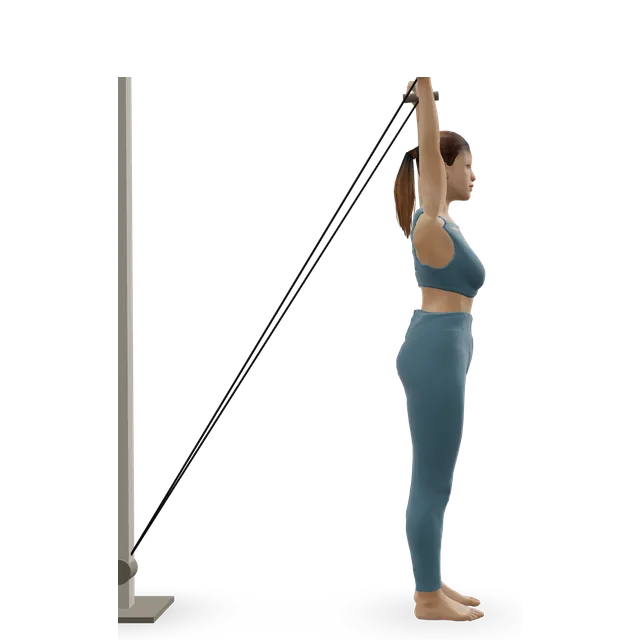
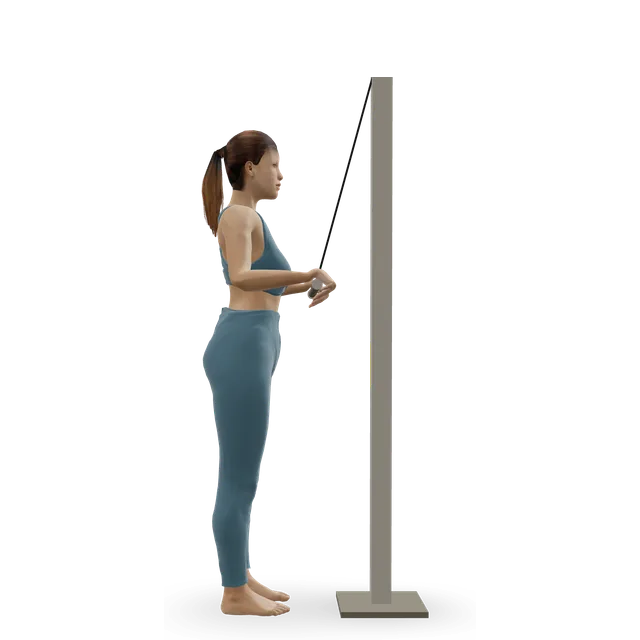
Triceps pushdown demonstrated on the 3D figure3D demoTriceps pushdownBeginner · A cable machine

Back-of-elbow pain: 5 holds of 30 to 45 s, once a day, at a moderate effort, the bar about halfway down · As in our triceps tendinopathy, tricep extension and bench press elbow guides (editorial). Keep the load below the level that makes the pain climb during the hold

Harder: Dumbbell skull crusher (lying triceps extension)

Incline push-up demonstrated on the 3D figure3D demoIncline push-upBeginner · A bench or box

2 to 3 sets of 8 to 12, hands a little wider than your shoulders · Editorial, as in our push-up elbow guide

Easier: Wall push-up · Harder: Push-up

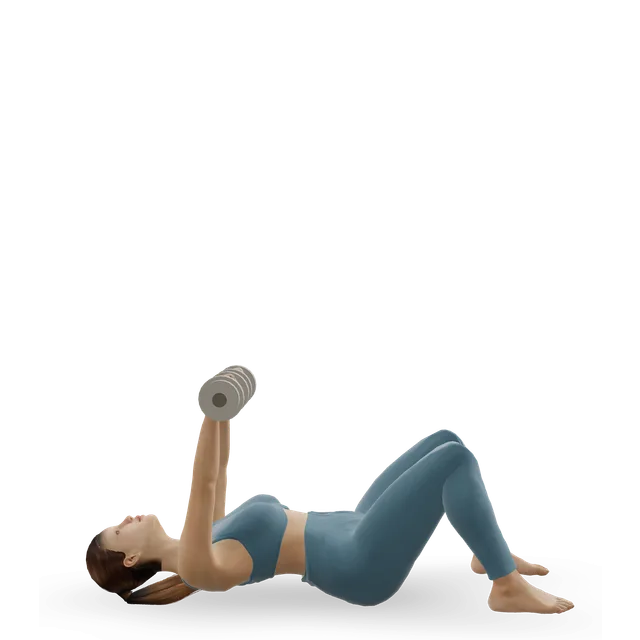
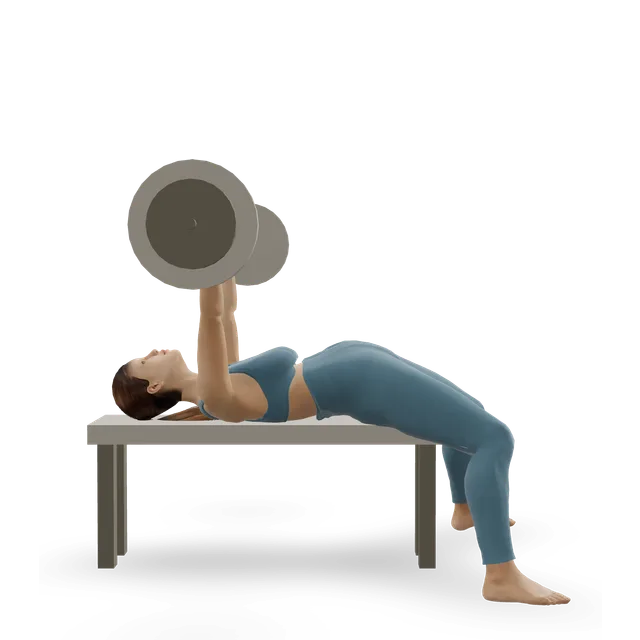
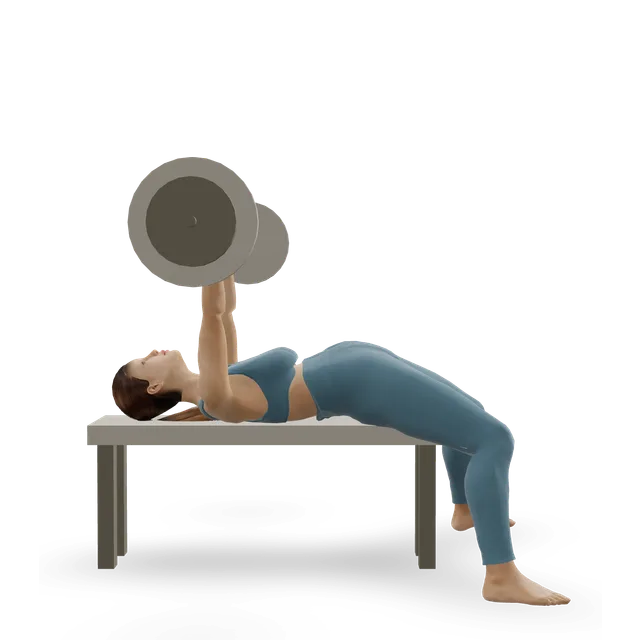
Dumbbell floor press demonstrated on the 3D figure3D demoDumbbell floor pressIntermediate · A dumbbell

2 to 3 sets of 8 to 12, stopping with 2 or 3 reps in reserve · The move page's dose (an editorial starting point). Use palms facing each other; the floor stops your elbows. Pad them if the point of the elbow is sore

Easier: Chest press machine · Harder: Bench press with chains

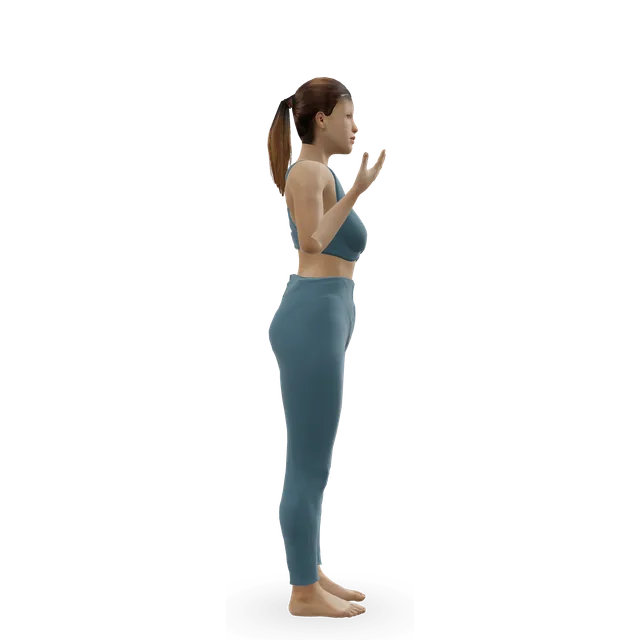
Elbow bend and straighten (elbow range of motion) demonstrated on the 3D figure3D demoElbow bend and straighten (elbow range of motion)Beginner · No equipment

10 slow repetitions, up to 4 times a day · The move page's dose (an NHS Borders leaflet's). With tingling, skip holds at full bend

Harder: Dumbbell biceps curl

Band row demonstrated on the 3D figure3D demoBand rowBeginner · A band + An anchor point

3 sets of 10 to 15, stopping 2 to 3 reps short of failure, with 60 to 90 seconds' rest · The move page's dose (an editorial starting point); keeps your pulling going

Harder: Supported single-arm dumbbell row

Reverse wrist curl demonstrated on the 3D figure3D demoReverse wrist curlBeginner · A dumbbell + A bench or box

Outer-elbow pain only: 5 holds of 30 to 45 s, once a day, palm down, wrist level, forearm supported · As in our tennis elbow and bench press elbow guides (editorial)

Easier: Wrist-extensor eccentrics · Harder: Plate pinch

Move on when: Daily life and the stage 1 moves pass the elbow rule for a week, and the holds no longer raise the pain (editorial, as in our triceps guides). With inner-elbow pain and no tingling, add wrist curl holds (5 of 30 to 45 s, palm up), as our golfer's elbow guide does.

Follow along: a timer, a cue and the next move, one step at a time.
Stage 2

Load the tendon, dip on the machine

About weeks 2 to 6, 2 or 3 sessions a week: slow, heavier triceps work, and the dip's movement back on a machine, to a right angle at the elbow at most.

Triceps pushdown demonstrated on the 3D figure3D demoTriceps pushdownBeginner · A cable machine

3 sets of 10 to 15, lowering over 3 s, 2 to 3 times a week · As in our triceps tendinopathy guide (editorial)

Harder: Dumbbell skull crusher (lying triceps extension)

Dip machine demonstrated on the 3D figure3D demoDip machineBeginner · Strength machine

3 sets of 10 to 15, light, the elbows bending to a right angle at most · Editorial, as in our dips shoulder guide. Machine dips were the dip least often linked to pain in a gym survey

Harder: Parallel bar dip

Push-up demonstrated on the 3D figure3D demoPush-upIntermediate · No equipment

3 sets of 8 to 15, hands a little wider than your shoulders, a comfortable depth · Editorial, as in our push-up elbow guide; hands apart loaded the elbow least in a lab study

Easier: Wall push-up · Harder: Close-grip push-up (close triceps position)

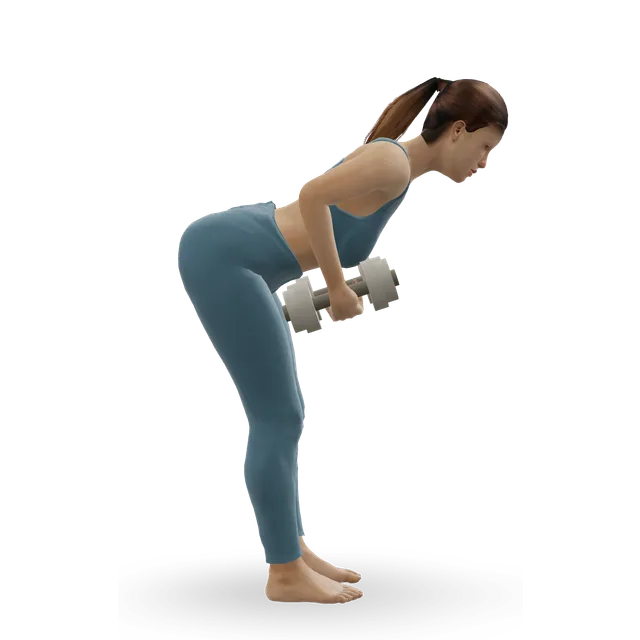
Dumbbell triceps kickback demonstrated on the 3D figure3D demoDumbbell triceps kickbackBeginner · A dumbbell

2 to 3 sets of 10 to 15, light · As in our triceps tendinopathy guide (editorial)

Harder: Dumbbell skull crusher (lying triceps extension)

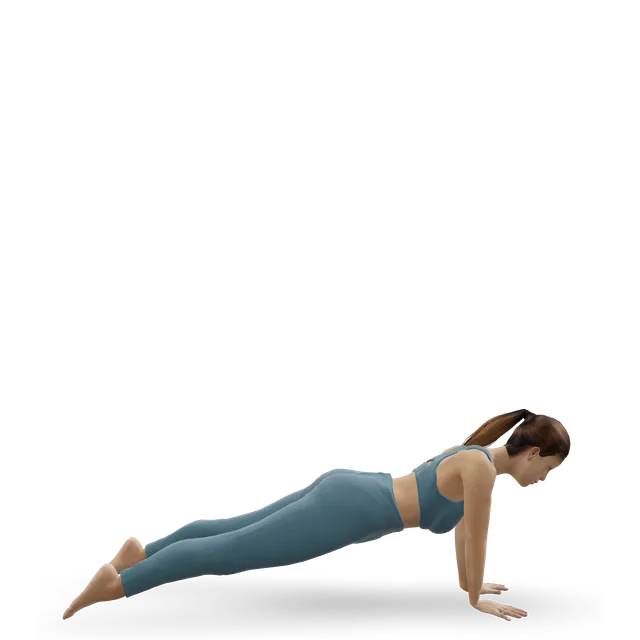
Straight-arm plank (high plank) demonstrated on the 3D figure3D demoStraight-arm plank (high plank)Intermediate · No equipment

3 holds of 15 to 30 seconds · The move page's dose (an editorial starting point): straight-arm support, as at the top of a dip

Easier: Knee hover (Pilates tabletop hover) · Harder: Leg pull front (Pilates leg pull down)

Wrist curls demonstrated on the 3D figure3D demoWrist curlsBeginner · A dumbbell

Inner or outer forearm pain: 3 sets of 10 to 15, lifting and lowering slowly, once a day · As in our golfer's elbow and push-up elbow guides (editorial)

Easier: Wrist-extensor eccentrics · Harder: Plate pinch

Move on when: 3 sets of 15 slow pushdowns and 3 sets of 12 to 15 on the dip machine to a right angle pass the elbow rule, with the elbow no worse the next morning, for a week (editorial).

Follow along: a timer, a cue and the next move, one step at a time.
Stage 3

Back to bar dips

From about week 6, often later for tendon pain, 2 or 3 sessions a week: bodyweight bar dips to a right angle, then your usual dips, one change at a time by the written steps below. No study has tested a return to dips after elbow pain, so the order is editorial.

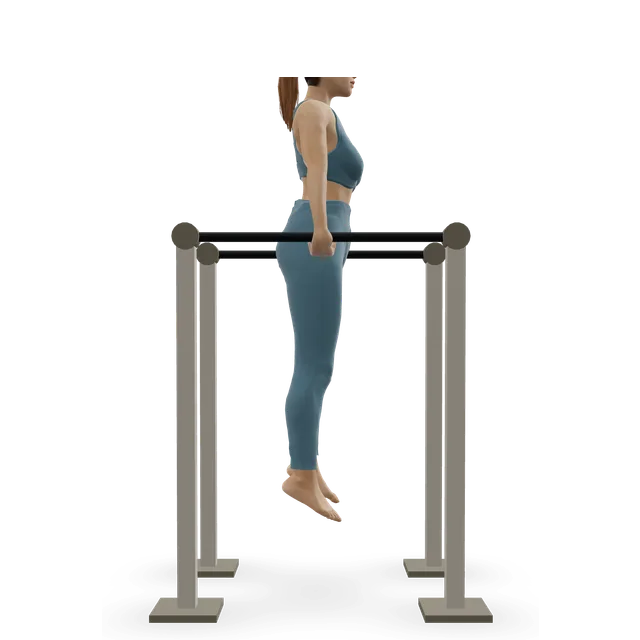
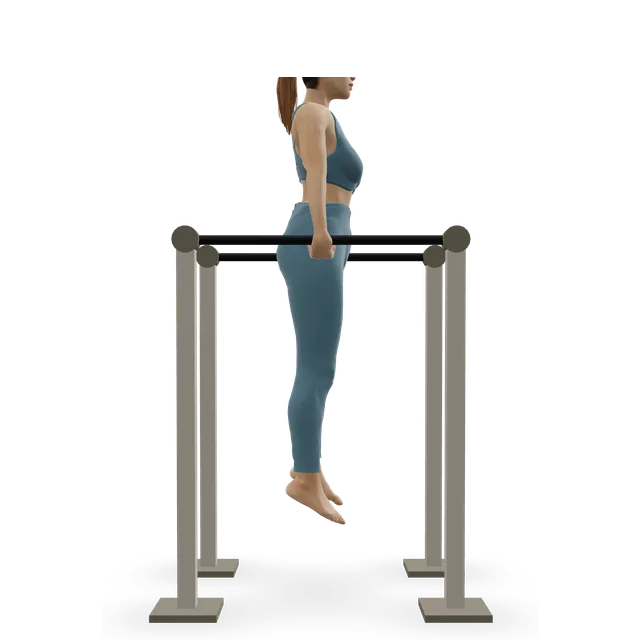
Parallel bar dip demonstrated on the 3D figure3D demoParallel bar dipAdvanced · Pull-up bar

3 sets of 3 to 5 slow lowerings (3 to 5 s down) to a right angle, then 3 sets of 5 to 8 full reps, with a band or your feet helping until 5 clean reps come easily · Our dips guide's ladder (editorial), as our dips shoulder guide uses it. Stop at about a 90-degree elbow bend, as a hospital handout advises

Easier: Bench dip · Harder: Ring dip

Triceps dip (upright) demonstrated on the 3D figure3D demoTriceps dip (upright)Advanced · Other / check instructions

2 to 3 sets of 5 to 10, stopping with 2 or 3 reps in reserve · The move page's dose (an editorial starting point). Stop at about level upper arms, as the move page says

Easier: Bench dip · Harder: Ring dip

Triceps pushdown demonstrated on the 3D figure3D demoTriceps pushdownBeginner · A cable machine

2 sets of 10 to 15, lowering over 3 s, twice a week, kept going · Editorial: one slow triceps exercise kept as a habit, as in our bench press elbow guide

Harder: Dumbbell skull crusher (lying triceps extension)

Close-grip push-up (close triceps position) demonstrated on the 3D figure3D demoClose-grip push-up (close triceps position)Intermediate · No equipment

Last and optional: 2 to 3 sets of 6 to 10 · Editorial. Hands close together load the elbow most, so they come back only after bar dips pass the elbow rule

Easier: Push-up · Harder: Archer push-up

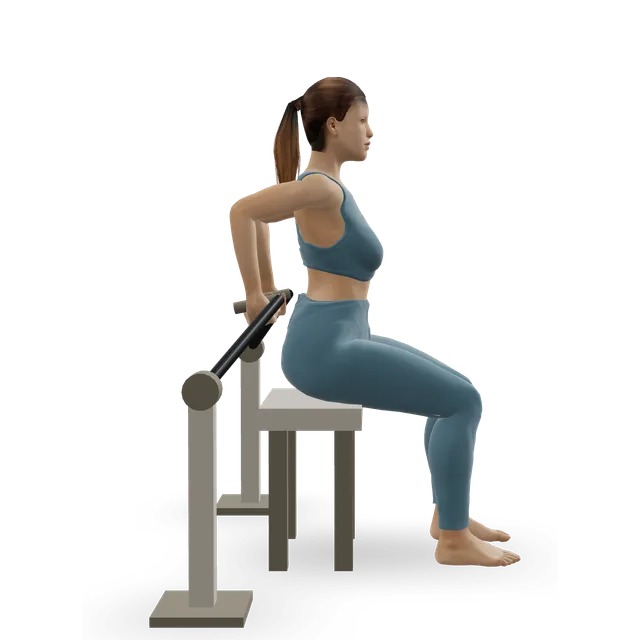
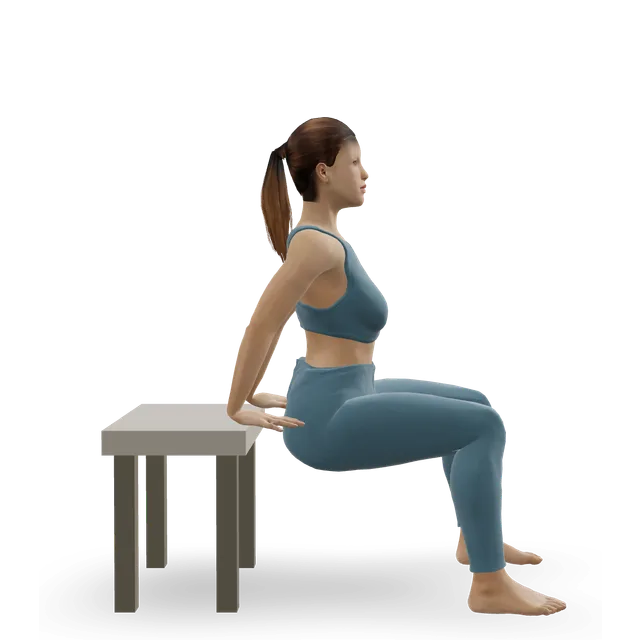
Bench dip demonstrated on the 3D figure3D demoBench dipBeginner · A bench or box

Last and optional: 2 to 3 sets of 8 to 12, knees bent, lowering to about a right angle · Editorial; NASM's depth. Skip it if the front of your shoulder complains, as our dips shoulder guide says

Easier: Bent-knee bench dip · Harder: Parallel bar dip

Move on when: Your usual dips to a right angle pass the elbow rule for 2 weeks. Add weight only after 10 to 15 clean bodyweight dips, the smallest step first, as our dips guide says. If it flares after a big session, go back a stage for a few days, not to nothing (editorial).

Follow along: a timer, a cue and the next move, one step at a time.

What to change for now

Your dips for now (written steps)

Our 3D figure can't show your depth, grip width or elbow angle. These steps come from a hospital handout, NASM, a hospital physiotherapist, the site's dips guides and lab studies of healthy experienced men; no trial has tested a change to the dip for elbow pain, and each step names its source or says it is our suggestion.

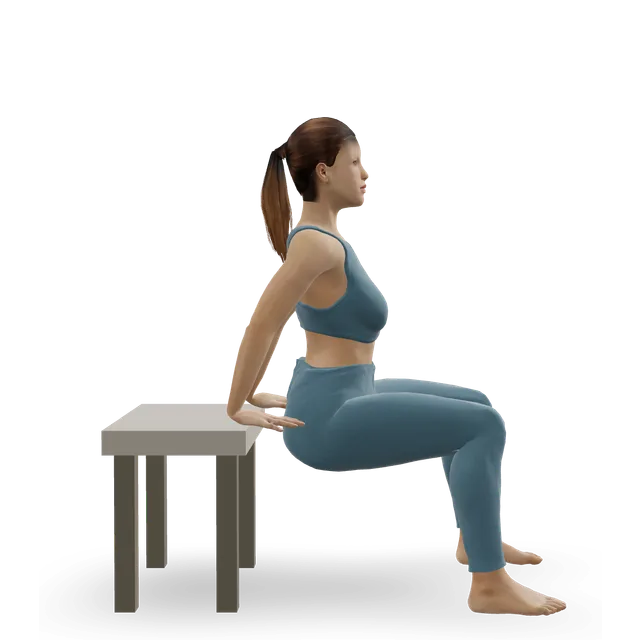
  • 1. Depth: stop when your elbows reach about a right angle and your upper arms are about level with the floor, as the hospital handout and NASM say; go shallower if the tip or the inside of the elbow complains (editorial).
  • 2. Which dip: the dip machine first, then bar dips with a band or your feet helping, as the dips study authors suggest; bench and ring dips last.
  • 3. Elbows: with back-of-elbow pain, try a little flare (about 45 degrees), as the hospital physiotherapist suggests; with front-of-shoulder pain, keep them pointing back, as NASM teaches. Neither is tested.
  • 4. Grip and wrists: about shoulder width, wrists straight over the heels of your hands, as the site's dips guide teaches.
  • 5. Lowering: about 2 to 3 seconds down, with no dropping or bouncing into the bottom (our suggestion; tears happen mostly while lowering a heavy load).
  • 6. The top: press to straight without snapping into a hard lockout (our suggestion; NASM's bench dip cue is to avoid locking out).
  • 7. Load and sets: no weighted dips, sets to failure or dip challenges for now, as the hospital handout advises against training to failure; 2 or 3 dip sessions a week (editorial).
  • 8. The rest of your week: fewer close-grip presses, skull crushers and diamond push-ups while the back of the elbow hurts, as our triceps and push-up guides say.
  • 9. Tingling: stop the set, go shallower and don't hold the elbow fully bent between sets, as the elbow hub's tingling exception says.

Sources 26, 27, 28, 1, 2, 12, 13, 18

Back to your usual dips (written steps)

No study has tested how dips come back after elbow pain, so these steps are our suggestion unless a source is named.

  • 1. One change at a time: less help, then reps, then weight, then rings, then bench dips; the depth stays at about a right angle.
  • 2. Add weight with a dip belt only after 10 to 15 clean bodyweight dips, the smallest plate first, as the site's dips guide says.
  • 3. Close-grip push-ups and heavy close-grip pressing come back after bar dips pass the rule.
  • 4. Pushing in other sports (gymnastics, climbing, calisthenics) comes back in the same order: holds, slow loading, then full-speed work.

Injections, bursitis and everyday life

Avoid a steroid injection near the triceps tendon. For bursitis, the NHS says rest it, avoid pressure on it and see a GP if it isn't better after 1 to 2 weeks; steroid injections brought more infection and skin thinning than simple care.

Everyday life comes back alongside the plan: carry with the elbow close to straight and the load close to you, don't lean on the point or the inside of the elbow at a desk, and with tingling at night keep the elbow straighter in bed, for example with a folded towel wrapped round it, as UK hand surgeons suggest. NHS inform says use the elbow more after the first 48 hours, and avoid sport and heavy lifting until you have less discomfort and good movement.

Sources 24, 32, 21, 25

Positions to swap, and why

Habit or positionWhy it mattersInstead
Dipping as deep as you canExperienced men already go to about 115 degrees by choice, and a hospital handout stops at 90.Elbows to a right angle, on the dip machine first.Try: Dip machine
Weighted dips while the back of the elbow hurtsTriceps tears happen under heavy loads, mostly while lowering.Bodyweight or assisted dips to a right angle.Try: Dip machine
Dropping into the bottom and bouncingMomentum at the deepest bend loads a sore tendon (our suggestion).2 to 3 seconds down.
Snapping into a hard lockout every repUntested, but there's nothing to gain on a sore tip of the elbow (our suggestion; NASM's bench dip cue is to avoid locking out).Press to straight, under control.
Sets to failure and dip challengesA hospital handout advises against training to failure, and rarely a huge session breaks down muscle.Stop 2 or 3 reps short.
Close-grip push-ups as the easy swapHands together loaded the elbow most in a push-up study.Push-ups with your hands a little wider than your shoulders.Try: Push-up
Bench dips while the front of your shoulder hurts tooThey take the shoulder further back than any other dip.The dip machine.Try: Dip machine
Dipping on through tingling in the ring and little fingersThat is the nerve, and it slips more the further the elbow bends.Shallower dips, or pushdowns for now.Try: Triceps pushdown
Leaning on the point of the elbow with a swelling therePressure irritates the bursa, the NHS says.A pad, or the machine.
A steroid injection near the triceps tendonInjections there came before several tears in case reports.Exercise first; ask about the risks if one is offered.
Carrying on after a pop, a tearing feeling or sudden weaknessA tear is best repaired early and is often missed at first.Stop and get it checked the same day.
Resting the arm completelyNHS inform says use the elbow more after the first 48 hours.The stage 1 holds and presses.Try: Triceps pushdown

Routines to follow

Dip progression workout

Work up to bar dips: bent-knee and straight-leg bench dips, a support hold, slow lowering and assisted dips, then full dips and ring dips.

20 minBeginner9 movesA band, A bench or box

Push-up progression workout

Work up to full push-ups: wall, incline and knee push-ups, then the floor push-up and harder variations.

15 minBeginner8 movesA wall, A bench or box

Chest and triceps workout: presses, flys, dips and extensions

A 55-minute gym session for a split: the bench press, an incline dumbbell press, cable flys and dips for your chest, then two triceps extensions.

55 minIntermediate11 movesA band, A barbell

Tricep workout: a close-grip press, then overhead, lying and pushdown extensions

A 35-minute triceps session: a close-grip bench press or dips, then overhead extensions, skull crushers and pushdowns, about 10 hard sets.

35 minIntermediate7 movesA barbell, A bench or box

Arm workout without weights: chin-ups, rows, close-grip push-ups and dips

A 30-minute bodyweight arm workout: chin-ups and rows for the biceps, close-grip push-ups and dips for the triceps, and a bar hang for your grip.

30 minIntermediate8 movesPull-up bar, A bench or box

Upper body workout at home

An upper body workout at home with no gym: push-ups, band rows, pike push-ups, face pulls, close-grip push-ups and Y-T-W raises, with dumbbell options.

30 minIntermediate13 movesA band, An anchor point

Wrist and forearm routine

Wrist mobility and forearm strength for desk work, climbing, push-ups and handstands.

10 minBeginner7 movesA wall, A dumbbell

More moves for this area

Questions people ask

Why do my elbows hurt when I do dips?

Usually because the load, the depth or a jump in volume has got ahead of the triceps tendon at the back of the elbow, the bars are irritating the tendons on the inner or outer bump, or a deep dip is squeezing the nerve on the inside. Where it hurts is the best clue, and tingling in the little finger points to the nerve.

Why does the back of my elbow hurt after dips?

An ache at the tip, worse pushing up with your strength kept, is usually the triceps tendon. Stop at about a right angle, drop weighted dips and use pushdowns and the dip machine for a while. A pop with weakness straightening the arm needs an urgent check.

Why does the inside of my elbow hurt doing dips?

With tingling in the ring and little fingers, it's usually the ulnar nerve, which slips out of its groove more often the further the elbow bends. Without tingling, it's usually golfer's elbow from gripping the bars hard.

Why does the outside of my elbow hurt on dips?

Usually tennis elbow, from gripping the bars. A relaxed grip, straight wrists and the wrist exercises in the plan usually help, and our tennis elbow guide covers the rest.

Are dips bad for your elbows?

Not at sensible doses: in a gym survey, about two in three people who did bodyweight dips didn't link them to any pain. Deep, weighted or bouncing dips, sets to failure and sudden jumps in volume are the usual problems.

How deep should I go on dips?

Until your elbows reach about a right angle and your upper arms are about level with the floor; a hospital handout says never below 90 degrees on parallel bars. Experienced men tend to go deeper by choice, and no study shows deeper dips build more.

Should my elbows be in or out on dips?

Experts disagree: NASM says keep them pointing back to protect the shoulder, and a hospital physiotherapist says straight back stresses the triceps tendon and suggests a slight flare. No study has tested either, so use the one that passes the pain rule.

Are bench dips easier on the elbows than bar dips?

They work the triceps a little less and bend the elbow less, but they take the shoulder further back than any other dip. The dip machine is the gentler first step for both.

Can I do dips with tricep tendonitis?

Usually, changed: the machine or assisted dips to a right angle, slow lowering and no added weight, keeping pain at 3 to 4 out of 10 and settled within an hour. Avoid a steroid injection near the tendon, which has been linked with tears.

Do elbow sleeves help with dips?

No study has tested them for pain in dips. If one feels better and you still follow the pain rule, it's fine, but changing the depth and load matters more.

I felt a pop at the back of my elbow doing dips. What now?

Go to an urgent treatment centre or A&E, especially with swelling, bruising, a gap or weakness straightening the arm. A full tear is best repaired early, and tears are often missed at first.

When should I see a doctor?

Call 999 for arm pain with pressure across your chest. Go to an urgent treatment centre or A&E after a pop with weakness, and get a same-day check for a hot, red swelling on the point of the elbow or very sore, swollen arms with dark pee after a big session. See a GP if it hasn't gone after a few weeks or your fingers stay numb; in the US, call 911 where this page says 999.

Related exercise guides

Other pain guides

Sources

  1. McKenzie 2022 · Bench, bar and ring dips compared in 13 experienced men (motion capture and muscle activity study, Int J Environ Res Public Health)
  2. McKenzie 2022 · Bar dips to failure in 15 experienced men: joint angles and muscle activity (lab study, Int J Environ Res Public Health)
  3. Boehler 2011 · Eight triceps exercises compared in 15 women (ACE-funded muscle activity study, ACE Certified News)
  4. McKenzie 2021 · Shoulder extension and the dip: considerations for coaches (narrative review, Strength Cond J)
  5. Bernstorff 2023 · Exercises linked to pain in 1,387 recreational gym users (online survey, Sports)
  6. Keogh 2006 · Injuries over a year in 101 Oceania powerlifters (survey, J Strength Cond Res)
  7. Tung 2024 · Injuries in weightlifting and powerlifting: 17 reports (systematic review, BMJ Open Sport Exerc Med)
  8. Siewe 2011 · Injuries and overuse syndromes in 245 powerlifters (survey, Int J Sports Med)
  9. NHS Lothian RefHelp · Insertional biceps and triceps tendinopathy (referral guidance for GPs)
  10. AAOS OrthoInfo · Triceps tendon tear at the elbow
  11. Gruber 2024 · Triceps tendon repair in 22 strength athletes (case series, J Clin Med)
  12. Vandenberg 2026 · Return to sport after triceps tendon repair: 31 studies, 277 athletes (systematic review, JSES Rev Rep Tech)
  13. Mair 2004 · Triceps tendon tears in professional American football players (case series, Am J Sports Med)
  14. Tran 2022 · Outcomes and complications of triceps tendon repair: 16 studies (systematic review, JSES Rev Rep Tech)
  15. Kanayama 2015 · Tendon tears in 142 bodybuilders with and without anabolic steroid use (cross-sectional cohort, Am J Sports Med)
  16. Sollender 1998 · Triceps tendon tears in 4 weightlifters, 3 while bench pressing (case series, J Shoulder Elbow Surg)
  17. Stannard 1993 · A triceps tendon tear after steroid injections in a weightlifter (case report, Am J Sports Med)
  18. Kang 2017 · Ulnar nerve slipping and a snapping triceps in 26 healthy people (ultrasound and nerve conduction study, Am J Phys Med Rehabil)
  19. Tsukada 2021 · Ulnar nerve slipping in 246 college athletes (ultrasound study, J Clin Med)
  20. Xia 2026 · Snapping triceps syndrome: 24 studies, 64 people (literature review, JSES Rev Rep Tech)
  21. British Society for Surgery of the Hand · Cubital tunnel syndrome
  22. Demirhan 2016 · Distal triceps ruptures (review, EFORT Open Rev)
  23. Shivdasani 2024 · A full triceps tear mistaken for elbow bursitis (case report, JSES Rev Rep Tech)
  24. NHS · Bursitis (past its review date: reviewed October 2023, review due October 2026)
  25. NHS inform · Elbow problems
  26. Mass General Sports Medicine · Strength training for the shoulder (patient handout)
  27. National Academy of Sports Medicine · Bench dips
  28. Hospital for Special Surgery · Pain with triceps dips: a physical therapist on elbow position (news summary of an expert interview)
  29. Donkers 1993 · Hand position and elbow loads in push-ups, in 9 men (lab study, J Biomech)
  30. Bateman 2021 · A UK consensus physiotherapy protocol for tennis elbow (consensus study, BMJ Open)
  31. Smith 2017 · Painful against pain-free exercise in long-lasting muscle and joint pain: 7 trials, 385 people (systematic review, Br J Sports Med)
  32. Kaur 2023 · Non-surgical treatment of olecranon bursitis: 2 trials and 2 observational studies (systematic review, Reumatol Clin)
  33. Nchinda 2021 · Managing olecranon bursitis (review, J Hand Surg Am)
  34. NHS inform · Exercises for elbow problems
  35. NHS · Elbow and arm pain
  36. NHS · Heart attack
  37. NHS · Angina
  38. NHS · Septic arthritis

Exercise education, not a diagnosis or treatment plan. It is written from the guidelines and studies listed above; review by a clinician is pending. If your pain follows an injury, is severe, is getting worse, or comes with any warning sign listed on this page, get it assessed. Health disclaimer.