What no study has counted, and what an extension asks of the elbowEmerging evidence
No study counts what causes elbow pain in tricep extensions, and none has tested the grip, the bar, the depth or the arm position against pain. So the map on this page comes from what each condition is known to do, cadaver and lab studies, a gym survey, case reports and health-service pages.
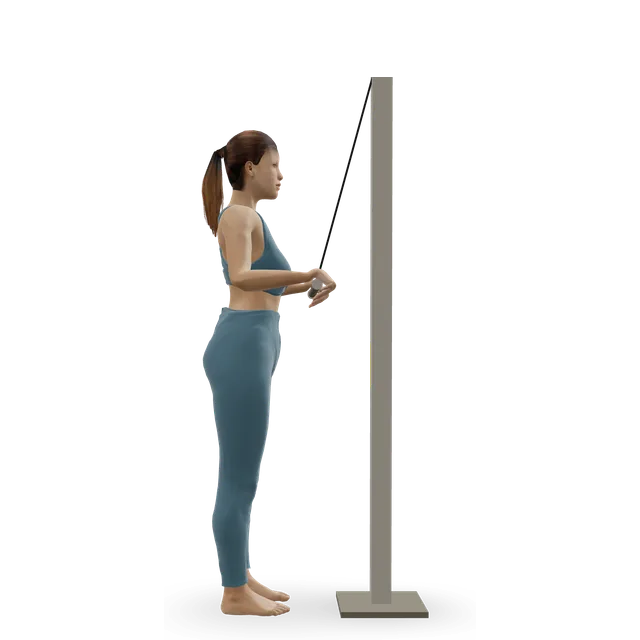
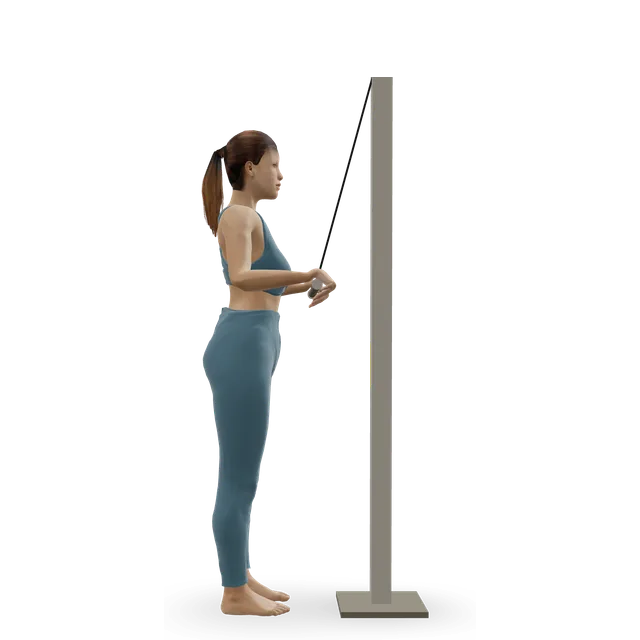
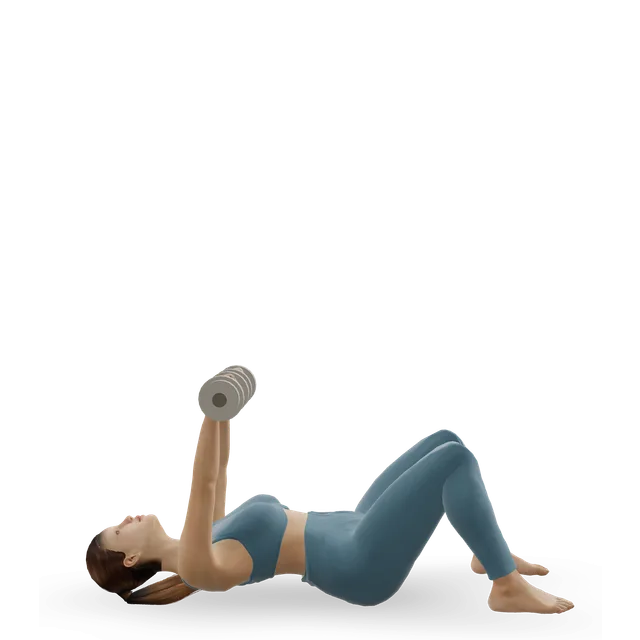
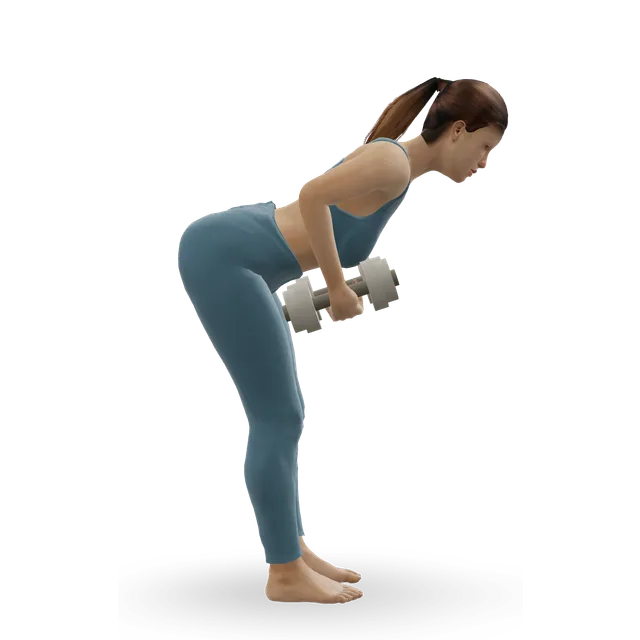
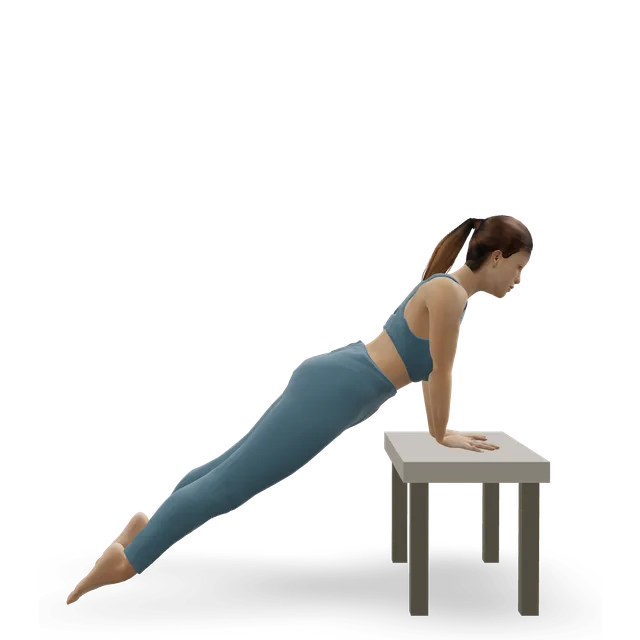
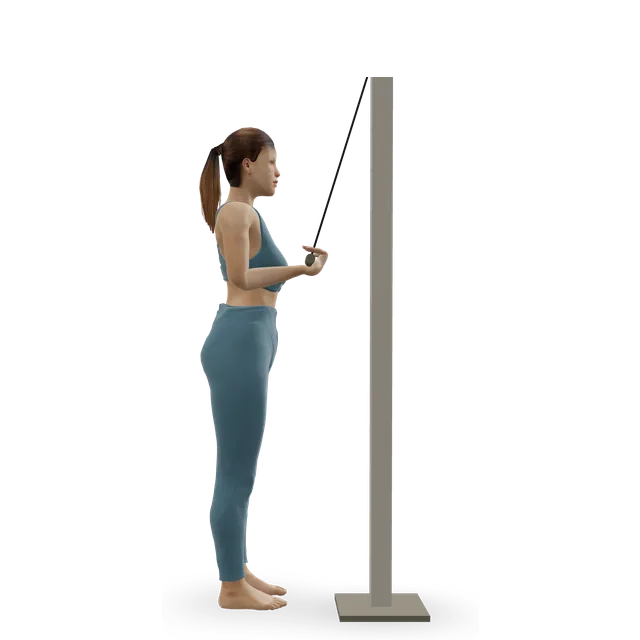
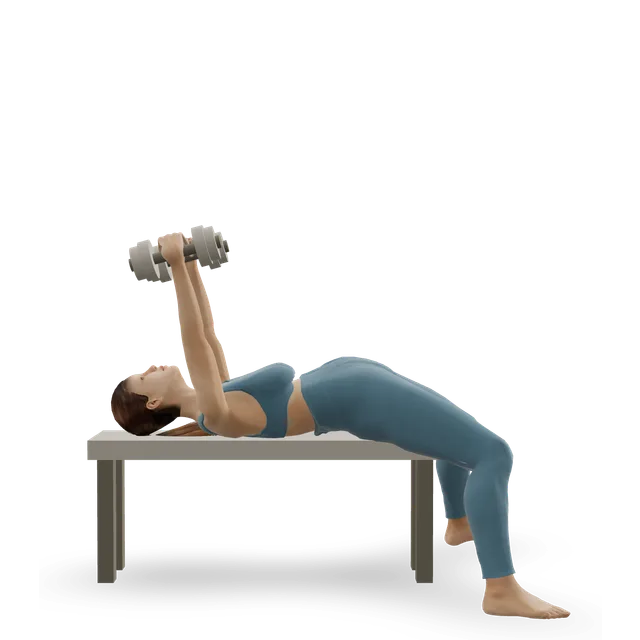
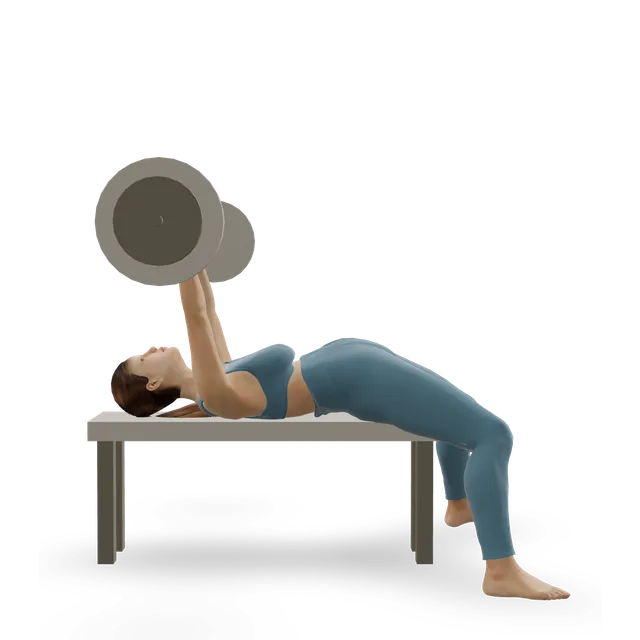
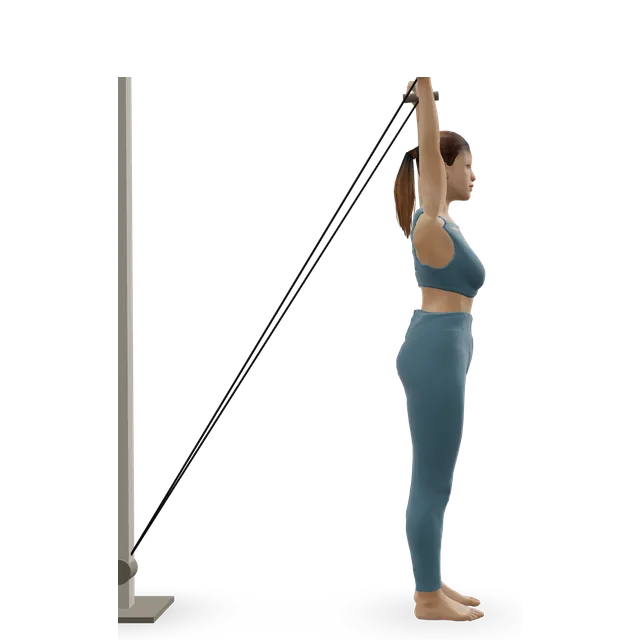
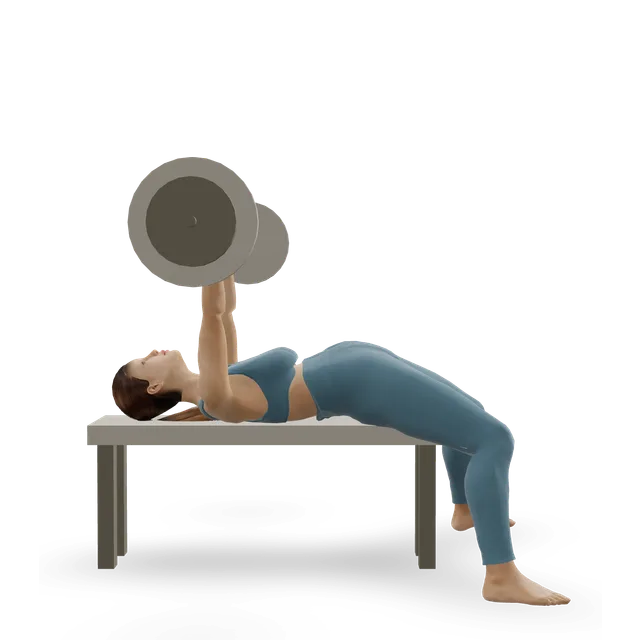
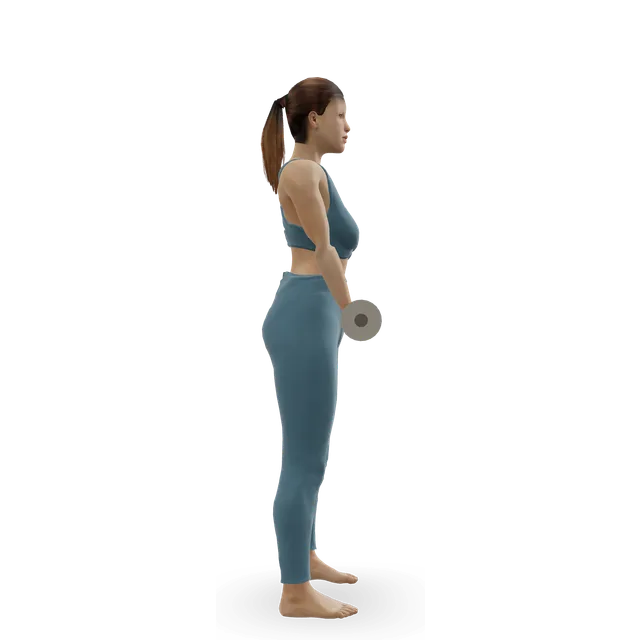
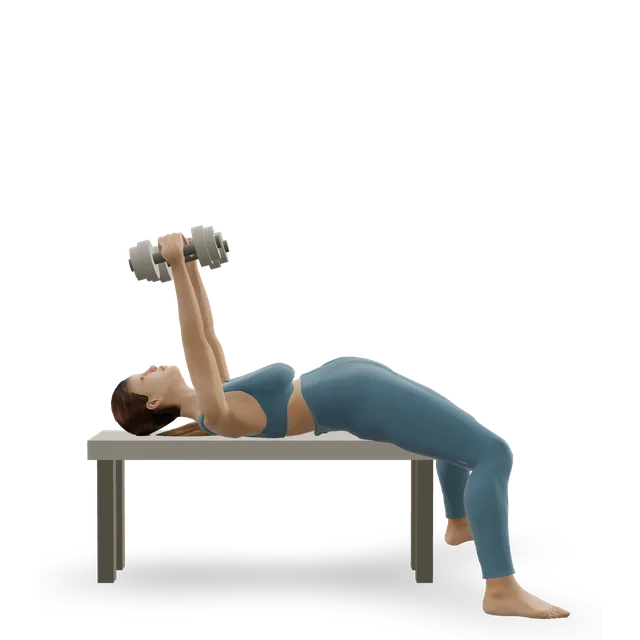
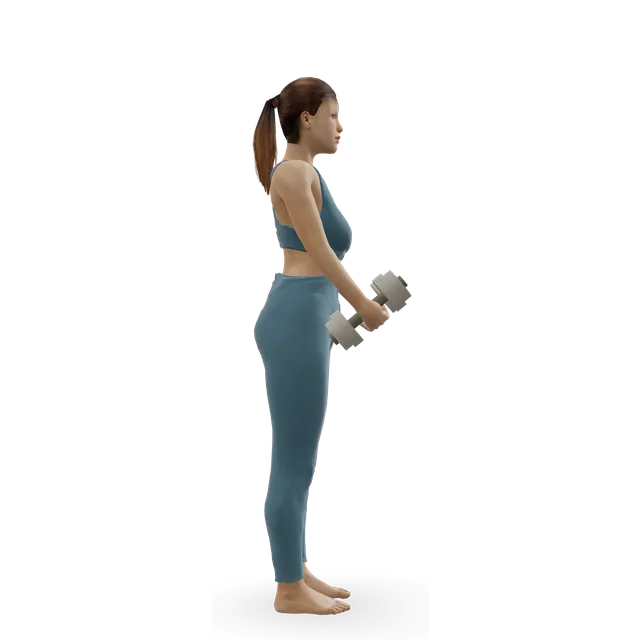
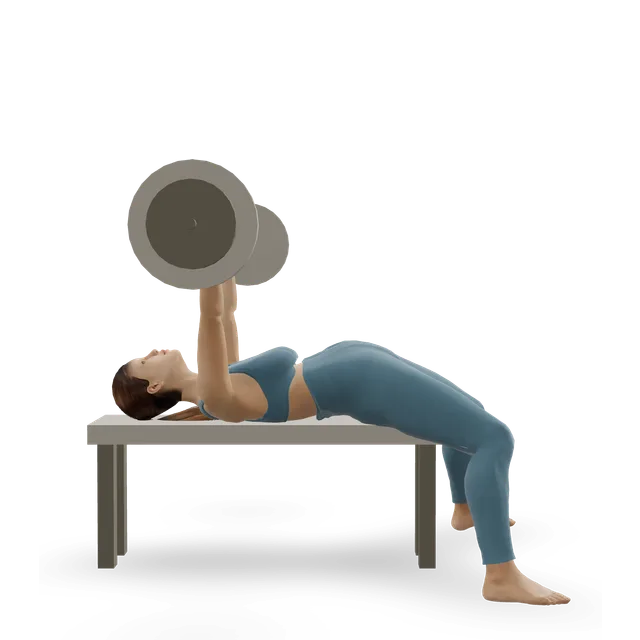
Every triceps extension straightens the elbow against a weight while the upper arm stays still. The three heads of the triceps share one tendon that attaches to the point of the elbow (the olecranon). Overhead extensions (dumbbell, cable rope or French press) and lying extensions (skull crushers) start from a deep bend with the upper arm raised; pushdowns and kickbacks work with the arm at your side and the elbow bending less.
In an online survey of 1,387 recreational gym users, 732 reported pain with training. Among those who did dumbbell triceps extensions, 17.7% linked them to pain (85 of 481), against 7.7% for cable extensions and 6.6% for machine extensions; the elbow was the fourth commonest painful area, though the survey didn't record where each exercise hurt. These figures are of people who reported training pain, not of everyone who trains, so they can't give a risk per session. Across the weight-training sports, the elbow is among the five commonest injured areas, though injury rates are low against team sports; in surveys of competitive lifters it is among the commonest painful areas, more so after 40, and many train on with the pain.
Sources 1, 2, 3, 4, 5, 6, 7, 8
Where it hurts sorts the causesEmerging evidence
NHS referral guidance describes triceps tendon pain as "well localised pain at the triceps insertion on resisted elbow extension", usually after a change in load, stiff in the morning and painful as you start; it is less common than biceps tendon pain but "occurs occasionally in weightlifters". Its list of other causes at the back of the elbow includes bursitis, arthritis, gout, a loose body, a stress fracture and the back of the joint pinching.
A bursitis is a soft swelling at the tip from pressure or knocks; the American Academy of Orthopaedic Surgeons (AAOS) names long holds of the plank position among the causes. Cubital tunnel syndrome starts with numbness or tingling in the little and ring fingers, at first on and off, brought on by leaning on the elbow or holding it bent. A snap over the inner bump is often the nerve slipping out of its groove, sometimes with part of the triceps; in 2 lifters it appeared only after weightlifting. A snapping triceps is rare: in 64 reported cases, 9 in 10 also had an unstable ulnar nerve. A jamming pain at the back as the elbow snaps straight is the back of the joint pinching, mostly described in throwers. The bony bump on the outside, worse gripping, lifting and moving the wrist, is usually tennis elbow, which the NHS says usually goes away with rest; golfer's elbow on the inside is up to 6 times less common.
Rarer causes are on record too: a stress fracture of the point of the elbow in a young weightlifter (most are in throwers and gymnasts, and an early X-ray can be normal), and a complete teres major tear, felt below the shoulder blade, during an overhead triceps extension in a 40-year-old gym user. These show what can happen, not how often.
Sources 1, 9, 10, 11, 12, 13, 14, 15, 16, 17, 2, 18, 19, 20
The inner elbow and the nerve: why deep bending mattersEmerging evidence
The ulnar nerve runs in a tunnel behind the inner bump, the funny bone. The AAOS says bending the elbow slightly compresses and stretches the nerve and lowers its blood supply, which is why symptoms get worse with the elbow bent. The bottom of an overhead or lying extension is that position, under load.
In 20 cadaver arms, bending the elbow from straight to 135 degrees shrank the tunnel by 30% to 41% and the nerve by up to 50%, and from 90 degrees the pressure inside the nerve was higher than around it. In another cadaver study, the nerve stretched most at full bend, directly behind the inner bump. In 20 people with cubital tunnel syndrome measured during surgery, a changed shoulder position (the shoulder turned in, with the elbow bent) added more stretch to the nerve in every case. In healthy people the nerve slipped out of its groove more often at full bend than at a right angle, and more than half of 42 volunteers without symptoms had a nerve that moved out of place.
That overhead extensions strain the nerve more than other versions is our inference from these studies: none of them tested the overhead position, a weight or lifters. What they do support is that less bend means less squeeze and stretch, which is why stopping the lowering at about a right angle, or swapping to pushdowns, is the first change for tingling.
Sources 21, 22, 23, 24, 11, 12, 10
A torn triceps tendon: rare, and sometimes mistaken for bursitisEmerging evidence
Triceps tears are rare: about 0.5% of the tendon tears seen in US emergency departments over 20 years, in men about 12 times as often as women, at an average age of about 44. The AAOS says most come from pushing a heavy load, lifting weights or a fall onto an outstretched hand, with a pop, swelling, bruising, a gap above the point of the elbow and weakness straightening the arm. The mechanism most often described is a heavy load forcing a contracting triceps to lengthen, and anabolic steroids, a steroid injection near the tendon, kidney disease and an existing bursitis make a tear more likely.
One report describes a 53-year-old recreational bodybuilder who felt a tearing sensation during triceps extension training, then swelling and weakness straightening the arm. It was diagnosed as bursitis, and the repair of a full tear was delayed by 5 weeks. In a surgical series of 22 people, 10 tears were missed at first, and repair was always possible within 3 weeks of the injury. That is why a swelling that began with a tearing feeling needs checking for a tear, not just bursitis.
Sources 25, 3, 26, 27, 28, 29, 30
What a scan shows, and when it mattersEmerging evidence
Not for ordinary overuse pain: the NHS doesn't suggest a scan for it, and in 205 elbow magnetic resonance imaging (MRI) scans every triceps tendon showed a bright line that the authors think is normal.
A scan matters for a suspected tear, after an examination: an X-ray shows a fleck of bone pulled off with the tendon in 61% to 88% of operated tears, and ultrasound or MRI confirms it and shows how much is torn, though in one small series MRI called 2 of 6 partial tears complete. Tingling that lasts more than about 6 weeks, or any weakness in the hand, may need nerve conduction tests; the AAOS says most causes of a squeezed ulnar nerve can't be seen on an X-ray. After a fall or a knock, an elbow you can't fully straighten needs an X-ray: in a study of 2,127 people, nearly half of those who couldn't had a fracture. A hot, swollen bursa may need fluid drawn off to test for infection.
Sources 31, 32, 3, 30, 33, 34, 21, 35, 36
How it usually goesEmerging evidence
NHS referral guidance says most people with triceps tendon pain improve without surgery, "within weeks to months depending on contributing factors", though it "may persist for several years" in some. NHS inform expects new elbow pain to begin to settle within 6 weeks in many cases.
Most people with mild or moderate cubital tunnel syndrome improve with night splints and position changes, though it is unclear whether that is the treatment or time. Most tennis elbow had recovered at a year whatever the treatment, 83% with waiting alone in one trial, and an NHS trust leaflet expects improvement after 8 to 12 weeks of the right exercises. Bursitis that isn't infected often settles by itself. After a triceps repair, 89% of 262 people returned to their previous activity. No one can promise a date.
Sources 1, 37, 38, 39, 40, 41, 30