Fascia and hypermobility: loose joints and connective tissue, Ehlers-Danlos syndromes, whether to stretch or release, strength first, and staying safe
If your joints bend further than most people's, you may have read that your fascia is "too loose", "sticky" or "tight", and that releasing it is the answer. Hypermobility is about connective tissue: in the Ehlers-Danlos syndromes (EDS), the collagen that strengthens ligaments is different, and tendons and muscles behave differently too. Research on fascia itself in hypermobility is early, and no trial has tested rolling or myofascial release in hypermobile people.
The honest headline: gentle release can be a comfortable start, but it can't tighten loose tissue, and more stretching can make unstable joints worse. Strength and control work, built up slowly, is the main treatment.
This guide explains what hypermobility and EDS are, why bendy people often feel tight, how to use pressure safely, a 15-minute release-then-control routine, and the signs that need checking first.
The NHS's main treatment for joint hypermobility syndrome is improving muscle strength and fitness. In 100 adults with hypermobile shoulders, heavier strengthening helped more than light exercise at 16 weeks, with more short-lived soreness, though not clearly at a year.
Joint hypermobility affects around 1 in 30 people on NHS figures, and 18.3% of 12,853 UK adults in a survey, where it was only modestly linked with pain. In Wales, about 194 in every 100,000 people had a recorded diagnosis of EDS or joint hypermobility syndrome.
EDS are inherited conditions of connective tissue, with 13 types; for most of the rarer ones, the faulty genes affect collagen. The NHS says loose joints come from weak ligaments, because the collagen that strengthens them is different. Hypermobility spectrum disorder (HSD) is the label for troublesome hypermobility without another syndrome.
Tendons were less stiff and muscles had less resting tension in hypermobile EDS, but in one ultrasound study the deep fascia was thicker in the neck and no different at the hip or thigh. A "fascia-centred" explanation of hypermobility is a hypothesis so far.
In one study, hypermobile people's extra range came from tolerating more stretch, not from different tissue. The Ehlers-Danlos Society says overstretching beyond the normal range can be harmful and may lead to instability.
The Ehlers-Danlos Society lists gentle myofascial release among the hands-on techniques physiotherapists may use. We found no trial of rolling, massage balls, massage guns or myofascial release in hypermobile people, and forceful neck or spine manipulation isn't safe with EDS or HSD.
Check first: dislocations, fainting and fragile skin
These come before any release or exercise. A&E means accident and emergency.
Call 999 (911 in the US)
Call 999 if someone:
Fainted while exercising, or while lying down.
Isn't breathing, can't be woken within 1 minute, or hasn't fully recovered or has trouble speaking or moving.
Has chest pain or a pounding, fluttering or irregular heartbeat.
Is shaking or jerking (a seizure), or was seriously hurt before or after fainting.
Go to A&E
Go to A&E after an injury if any of these apply, and call 999 if you can't get there yourself:
Your shoulder looks out of place or has changed shape, you can't move your arm, or it's painful, bruised or swollen. Don't try to put it back yourself.
Your knee has changed shape, swells very quickly, you felt a pop or snap, bone is showing, or it's bleeding heavily.
Skin that bruises, thins or splits
Your skin bruises very easily, is thin with visible small blood vessels, or splits easily and leaves wide scars. These can be signs of the rarer types of EDS, so hold off strength training until you've been assessed (our suggestion).
Hold off pressure tools too until you've been assessed (our suggestion).
Joint hypermobility means joints move further than expected. On its own it is relatively common, around 1 in 30 people on NHS figures, and in a survey of 12,853 UK adults it was only modestly linked with pain. When it causes symptoms without another syndrome to explain it, it is called hypermobility spectrum disorder, within a framework that runs from hypermobility without symptoms to the inherited syndromes. The NHS says joint hypermobility syndrome usually affects children and young people and often gets better with age.
Inherited conditions of connective tissue marked by loose joints, stretchy skin and fragile tissue, with 13 types in the 2017 classification. Hypermobile EDS is the commonest, and no test confirms it, so it is diagnosed from your history and an examination; every other type is confirmed with a genetic test. Vascular EDS is rare and the most serious. In Wales, 70% of people with a recorded diagnosis of EDS or joint hypermobility syndrome were women.
The NHS explains that the joints are loose because the ligaments that should support them are weak, because the collagen that strengthens them is different from other people's.
In 25 women with hypermobile EDS, the ankle reached a larger angle with similar resistance, meaning less resting muscle tension, and the Achilles tendon was less stiff. In hypermobility spectrum disorder, some muscles and tendons were softer on scans. In classical EDS, kneecap tendons were about half as stiff as in benign hypermobility or in other people. For fascia itself, one ultrasound study found the deep fascia over a neck muscle thicker in hypermobile EDS, but not at the hip or thigh. A 2025 review by fascia researchers proposes that fascia is central to hypermobility; that is a hypothesis to test, not a treatment guide.
In people with benign joint hypermobility syndrome, the extra range came with more tolerance of stretch, while the muscle and tendon behaved like other people's at the same angle. Muscles working hard to steady loose joints can feel tight (our reading). Our exercise for hypermobility guide says a muscle that feels tight may need strengthening rather than stretching, and the Ehlers-Danlos Society advises holding the more flexible part still before gently stretching a tight muscle.
A common description, but we found no study measuring "sticky" fascia in EDS. Researchers have proposed changes in how fascia layers glide in hypermobility; our hydration and glide guides explain that theory and how little of it has been measured in living people.
Stretch or not: why more stretching isn't the answer
Overstretching can make joints less stableStrong evidence
"Overstretching beyond the normal range of motion can be harmful. It may lead to instability if the muscles are unable to stabilize the joint", says the Ehlers-Danlos Society, and it lists repeated or excessive stretching among the reasons joints slip out. The NHS says not to overextend your joints just because you can. Extra range in hypermobile people came from tolerating more stretch, not from different tissue.
"Careful, gentle stretching of muscles can be helpful when muscles are tight", the Ehlers-Danlos Society says. Hold the flexible part still first: with tight hamstrings and a very flexible lower back, keep your back still and stretch the hamstring gently. Stretch only what is genuinely tight, to a mild pull, for about 30 seconds: our exercise for hypermobility guide's editorial dose. Leave out end-of-range stretches such as the splits.
We read most studies' summaries (abstracts), not their full texts.
Release, massage and rolling
We found no trial of foam rolling, massage balls, massage guns or myofascial release in hypermobile people. The Ehlers-Danlos Society lists gentle manual therapy, including myofascial release and soft tissue mobilisation, among techniques physiotherapists may use to reduce pain. Elsewhere, rolling acts mainly through the nervous system, so it can change how an area feels for a while; it can't tighten loose ligaments or change collagen.
In 100 adults with hypermobility spectrum disorder or hypermobile EDS and shoulder pain or instability, 16 weeks of supervised, progressively heavier strengthening improved self-reported shoulder function more than light exercise, with more short-lived muscle soreness (56% against 37%) and headaches (40% against 20%) and no serious harms. At a year, the difference was no longer clear. Our exercise guide notes the 16-week gain was smaller than people usually notice.
Reviews of exercise and physiotherapyMixed evidence
Across 11 studies, people improved over time, but controlled evidence that treatment beats a comparison was weak. Across 10 studies of 330 adults with EDS or HSD, every study showed some improvement and one minor harm was reported. Six small randomised trials in hypermobile EDS (20 to 57 people, 4 to 8 weeks) improved pain or joint sense whatever the exercise. An international physiotherapy review says the evidence is limited in size and quality.
In 26 children with hypermobility and knee pain, exercising into the full range or only to straight both reduced pain. A feasibility trial in adults with joint hypermobility syndrome found a physiotherapy package worth testing properly.
The NHS suggests warm baths, hot water bottles and heat-rub cream, painkillers, and pacing: not doing repetitive activities without regular breaks. For severe pain, a GP may refer you to a pain clinic.
Each dose names its source or is our editorial starting point. Doses are starting points, not prescriptions.
Strength, built slowly
Three sessions a week, as in most trials. Start with 1 to 2 sets of 8 to 12 slow repetitions, stopping 2 to 3 repetitions before you tire, and every 1 to 2 weeks, if your joints have settled, add a few repetitions, then a light band or weight. That is our exercise for hypermobility guide's editorial starting point: "start low and go slow", as the Ehlers-Danlos Society puts it.
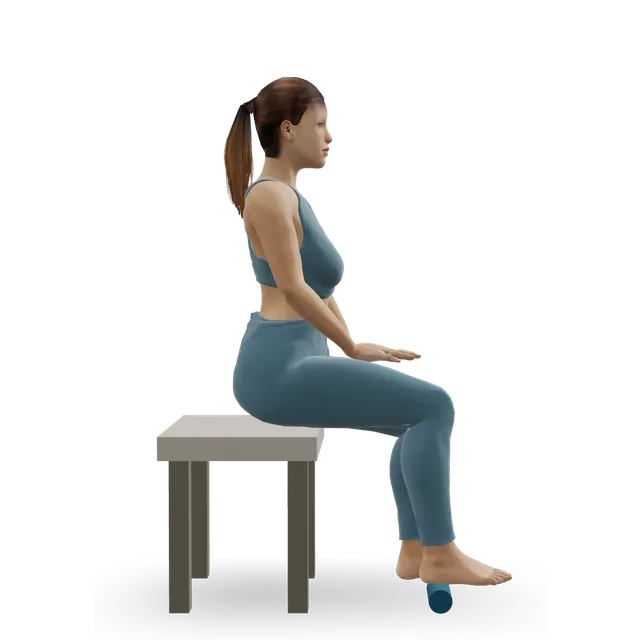
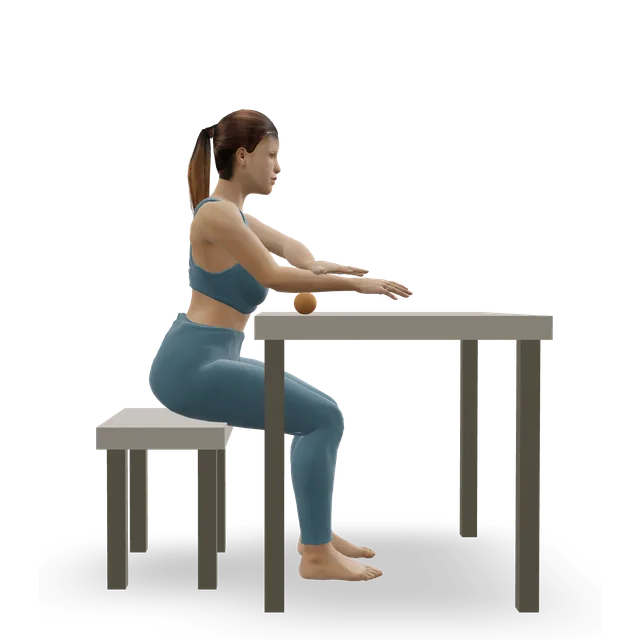
A soft ball under each foot for about a minute (the low end of the foot roll move page's 1 to 2 minutes), or along each forearm for 45 to 60 seconds (that move page's editorial dose), at light pressure. No deep pressure into loose joints, and nothing on the neck.
Gentle release, then control: about 15 minutes for hypermobile joints
The breathing dose is its move page's suggested starting point, the forearm roll its move page's editorial dose, and the foot roll the low end of its move page's 1 to 2 minutes. The strength, balance and turning doses are our hypermobility strength and control routine's editorial starting points, and the water tip is from that routine. No trial has tested release in hypermobility: keep pressure light and range in the middle. Stop or shrink a move if a joint feels about to slip.
Check first: a joint that has come out, fainting or a racing heart, or skin that bruises very easily, is thin with visible small blood vessels, or splits easily needs checking before this. With postural tachycardia syndrome (PoTS), drink a glass or two of water first and start lying down.
Breathe: lying on your back with your knees bent, 5 to 8 slow breaths into the sides of your ribs.
Optional, gentle release: sitting, roll a soft ball under each foot for about a minute, or along each forearm for 45 to 60 seconds, at light pressure. No end-of-range stretching afterwards.
Dead bug heel taps: 8 each side, slowly, keeping your back still.
Glute bridges: 10, with a 2-second squeeze at the top; then clamshells, 10 each side.
Bird dog, one limb at a time: 6 each arm and leg with a 3-second hold, elbows soft, not locked.
Balance: stand on one leg beside a counter, 2 holds of 20 seconds each leg.
Turn: sitting tall, turn through your upper back 5 times each side, in the middle of your range.
Loading the 3D figure…
Drag to turn
Gets into position, then repeats the movement. Technical checks passed; qualified exercise review is pending.
Forceful chiropractic adjustments of the neck and spine aren't safe with EDS or HSD, because of the risk of damage to the arteries, stroke and other serious problems.
People with vascular EDS should exercise at low intensity only and avoid activities that cause spikes in blood pressure and straining, such as heavy weightlifting. Our editorial reading: no heavy lifting, long straining holds such as the wall sit, or holding your breath, while easy walking, cycling and swimming fit. With vascular EDS, Marfan syndrome or osteogenesis imperfecta, discuss exercise with your specialist team first.
Skip massage balls, guns and scraping tools on thin, fragile skin, for example after long-term steroid tablets (our suggestion).
With vascular or classical EDS, or skin that bruises or tears easily, skip balls, guns, scraping and cupping, and keep any hands-on pressure light (our suggestion). The NHS lists skin that bruises very easily and thin skin with visible small blood vessels among the signs of vascular EDS.
Keep the pressure light, or ask your doctor first, if you take blood thinners, which make bruising more likely, or have a nerve condition such as peripheral neuropathy: the NHS lists these among the reasons hands-on treatments may not be safe.
The neck, and anywhere near a joint that feels unstable.
Deep into a joint at the end of its range.
Bruises, broken skin or skin that bruises very easily.
When to get help
The 999 and A&E signs are near the top of this page.
Get help from NHS 111
After a knee injury, if:
You think your kneecap came out and went back into place.
It's very painful, swollen or bruised, or you can't stand up or move your knee.
See a GP
You think you or your child has joint hypermobility syndrome: joints that keep dislocating, ongoing joint or muscle pain and stiffness, frequent sprains, tiredness even after rest, poor balance or coordination, thin stretchy skin, or bladder or bowel problems.
Several symptoms of EDS are troubling you. A GP may refer you to a rheumatologist for joint problems, or to a genetics service if a rarer type is possible.
You get dizzy, have palpitations or feel faint when you stand up, or you have fainted.
"Hypermobile people need more stretching"Mixed evidence
The NHS says not to overextend your joints, the Ehlers-Danlos Society says overstretching may lead to instability, and extra range came from stretch tolerance, not different tissue. Our exercise guide grades its version of this myth strongly against.
"Strength training is dangerous for loose joints"Mixed evidence
Heavier strengthening, built up with supervision, caused no serious harms and helped more in the short term in one trial, and reviews report few, minor harms. Start low and go slow.
Probably, but the research is early. In EDS the collagen that strengthens connective tissue is different, tendons were less stiff in hypermobile EDS, and one ultrasound study found thicker neck fascia but no difference at the hip or thigh. A fascia-centred explanation is a hypothesis so far.
What is sticky fascia in EDS?
It's a popular description, not a measured finding: we found no study measuring "sticky" fascia in EDS. Researchers have proposed changes in how fascia layers glide in hypermobility, and our hydration guide explains the glide theory.
Is myofascial release safe if you're hypermobile?
Gentle hands-on work is among the techniques the Ehlers-Danlos Society says physiotherapists may use. Keep pressure light, skip it on fragile or easily bruised skin, and never accept forceful neck or spine manipulation. No trial has tested release in hypermobile people.
Should hypermobile people stretch?
Only what is genuinely tight, gently, keeping the flexible part still. The Ehlers-Danlos Society says overstretching beyond the normal range can be harmful and may lead to instability, and the NHS says not to overextend your joints just because you can.
Why do I feel tight if I'm hypermobile?
Muscles working hard to steady loose joints can feel tight, and in one study bendy people's extra range came from tolerating more stretch, not from different tissue. A tight feeling often responds better to strength and control work than to more stretching.
Can I use a foam roller or massage gun with hypermobility?
For comfort, with light pressure and short times, most people can; there are no trials either way. Skip them on skin that bruises or tears easily, and keep a gun off the neck.
What's the best exercise for hypermobility?
Strength and control work, built up slowly, which is the NHS's main treatment. In 100 adults with hypermobile shoulders, heavier strengthening helped more than light exercise at 16 weeks, though not clearly at a year. Our exercise for hypermobility guide has a plan.
Is it hypermobility or EDS?
Joint hypermobility is relatively common, and in a large UK survey it was only modestly linked with pain. When it causes symptoms, a doctor may diagnose hypermobility spectrum disorder or hypermobile EDS from your history and an examination; there's no test for hypermobile EDS.
Is chiropractic safe with EDS?
Forceful chiropractic adjustments of the neck and spine aren't safe with EDS or HSD, because of the risk of damage to the arteries and stroke. The Ehlers-Danlos Society says very gentle work may be acceptable from someone who knows you have EDS.
Does massage help hypermobility pain?
It may ease pain for a while, as it does elsewhere, but we found no trial in hypermobile people. The NHS also suggests warmth, pacing and painkillers, and a pain clinic for severe pain.
Movement education, not medical advice. Stop for sharp or increasing pain, numbness or tingling, and get individual advice if you are pregnant, after an injury or surgery, or managing a health condition. Health disclaimer.