Fascia release for tennis elbow: the forearm and its tendon, massage, rolling and friction, what the trials show, and what helps more
Fascia release for tennis elbow means massage, deep friction, scraping or rolling the forearm muscles that lift the wrist, whose shared tendon is the sore spot on the outside of the elbow. It can ease the ache for a while. It doesn't break up adhesions or heal the tendon, and in trials it helped a little, briefly, while loading exercise and time did more. This page covers self-care and hands-on treatment, not tennis elbow surgery.
The honest headline: most tennis elbow gets better within a year, steroid injections leave people worse off at a year, and strengthening is the backbone of care.
This guide explains the forearm's tender spots, what each hands-on treatment did in trials, a 15-minute release-then-load routine, where never to press, and the elbow pain that needs help.
The muscles that lift your wrist share a tendon on the bony bump on the outside of the elbow, and that is where tennis elbow hurts. About 1.3% of adults aged 30 to 64 have it. A US physiotherapy guideline describes changes in the tendon, in muscle control and in pain processing, not adhesions.
Without active treatment, 89% were much better or recovered within a year, across 24 trials. In one trial, 83% of a wait-and-see group had succeeded at a year.
In a Cochrane review of 23 trials, manual therapy, exercise or both eased pain by about half a point out of 10 against minimal care at 4 weeks to 3 months, and the benefit didn't last. The one placebo-controlled trial, of 23 people, found less pain at the end of 2 to 3 weeks, with no later follow-up.
Friction, release and scraping: small, mixed or single trials
A Cochrane review found no clear benefit from deep friction massage in 2 small trials. Myofascial release helped a lot in one trial from one clinic that hasn't been repeated, and UK physiotherapists left manual therapy out of their best-bet package for tennis elbow.
Exercise beat passive treatments and steroid injections over time, though the effects are small. A slow flexible-bar twist gave large gains in a small trial, and a steroid injection left people worse off at a year than a placebo injection.
If you roll or press, keep to the muscle a few finger widths below the elbow, off the bony bump, the inner elbow and the bony wrist, and stop if your fingers tingle or go numb.
The forearm, its tendon and what release changes
Where it hurts and why
Tennis elbow is pain on the outside of the elbow, from the shared tendon of the muscles that lift the wrist and fingers. The NHS lists typing and using a mouse, using tools, sewing, tennis and playing a musical instrument among the causes, and says it is most common between 35 and 54. In a Finnish population study, smoking and work that is both repetitive and forceful raised the odds.
The US physiotherapy guideline describes changes in the tendon's structure, in how the muscles are controlled, and possibly in how pain is processed. The NHS describes the tendons as inflamed. Neither describes fascia stuck down. Deep friction massage was designed to prevent abnormal fibrous adhesions and scarring, but no study has shown that happening.
In 20 people with tennis elbow, pressing tender spots in the wrist-lifting muscles brought on their familiar elbow and forearm ache in most (65% for the main wrist extensor), and their pain thresholds were lower than in 20 people without it. That points to a sensitised nervous system as well as a sore tendon, which is why pressing the forearm can feel relevant, and why the relief is short-lived.
Without active treatment, every 2.5 to 3 months half of those still struggling recover, and 89% are much better or recovered at a year. The guideline warns that it often comes back and can mean long spells off work.
Pressure and rubbing change how sensitive the area feels for a while, mostly through the nervous system. They don't reshape the tendon or its fascia: dense fascia needs forces far outside the body's normal range to change shape.
An ache a few centimetres below the bump rather than on it can be radial tunnel syndrome, and elbow pain with pins and needles can come from the neck. Our elbow pain guides cover these.
What the evidence says
Hands-on treatment overall: a little, brieflyEmerging evidence
In the 2024 Cochrane review (23 trials, 1,612 people), the only placebo-controlled trial of manual therapy (23 people) found pain of 2.0 against 4.1 out of 10, and disability of 15 against 40 out of 100, at the end of 2 to 3 weeks, with no later follow-up. Against minimal or no treatment, manual therapy, exercise or both eased pain by 0.5 points and disability by 5 points out of 100 at 4 weeks to 3 months, which may not be worthwhile and didn't last (12 trials, low certainty). Side effects such as pain and bruising were reported by 313 in 1,000 people treated against 85 in 1,000 with minimal treatment.
A Cochrane review found 2 small trials (57 people, 40 with tennis elbow) and no clear benefit when friction was added to ultrasound treatment, on very low quality evidence. Since then, 10 minutes of friction with a manipulation, 3 times a week for 4 weeks, beat ultrasound with a gel plus exercise in 60 people. In another small trial, only the friction group (who also had a local anaesthetic injection) still showed improvement in every measure at 6 months; those are changes within each group, not a comparison between groups. A 2025 review pooling 13 studies of different designs across several tendon problems reported less pain when friction was added to physiotherapy, but it mixed trials with weaker studies and conditions, so it can't settle tennis elbow on its own.
In 68 computer workers with tennis elbow, 12 sessions of myofascial release by certified practitioners over 4 weeks cut pain and disability scores by 78.7%, against 6.8% with fake ultrasound, and 63.1% of the improvement remained at week 12. It is one trial, run at the clinic of a myofascial therapy foundation that its lead author is linked to, and nobody has repeated it.
Scraping (Astym, Graston and similar tools)Emerging evidence
Astym, a scraping treatment, resolved 78.3% of elbows against 40.9% with an eccentric exercise programme after 4 weeks (107 people, 113 elbows), but people who hadn't improved then switched treatments, so the later results don't compare the two; our scraping guide notes the lead investigator's interest in the instruments. In 48 people, 8 sessions of scraping added to home exercise eased pain and improved grip and function more than shockwave plus exercise, or exercise alone, up to 4 weeks later.
A UK best-bet physiotherapy package left manual therapy outEmerging evidence
Physiotherapists, NHS service managers and patients building an optimised tennis elbow treatment kept advice and education, exercise into acceptable levels of pain, and braces or straps, and excluded manual therapy, electrotherapy and acupuncture.
We found no trial of rolling the forearm, a massage ball or a massage gun for tennis elbow. Our tennis elbow guide reports the US guideline's grades: cross-friction massage has conflicting evidence (grade D), and resisted exercise for the wrist-lifting muscles grade B.
Where the evidence is thin
The hands-on trials are small, short and mostly without a sham comparison, and two of the most positive come from groups with an interest in the treatment. We read the studies' summaries (abstracts), not their full texts.
What helps more: time and loading
TimeStrong evidence
89% are much better or recovered at a year without active treatment. In a trial of 185 people, success at a year was 83% with wait-and-see, 91% with physiotherapy and 69% after a steroid injection; in a trial of 198 people, physiotherapy beat wait-and-see at 6 weeks but not at a year.
Across 30 trials (2,123 people), exercise beat passive treatments and steroid injections over time (low certainty), though against wait-and-see the differences were small. Adding a slow twist of a flexible bar to physiotherapy improved disability by 76% against 13% in 21 people, and the twist eased pain and grip more than active release technique in 30.
They help for a few weeks, then do worse: in 165 people, 83% had recovered or were much better at a year after a steroid injection, against 96% after a placebo injection, and pain came back in 54% against 12%.
Our tennis elbow guide has the staged plan: still holds first, then the Tyler twist or slow lowering, then heavier work, keeping pain to about 3 to 4 out of 10 and no worse the next morning. Forearm rolling, if you like it, is 45 to 60 seconds a side, its move page's editorial starting point. Doses are starting points, not prescriptions.
Forearm release, then load: about 15 minutes for tennis elbow
The forearm roll, Tyler twist (from a trial of 30 people, Kazi 2023) and wrist extensor stretch doses are their move pages' (the roll's is editorial; the stretch's is from an NHS Scotland booklet, which places it after strengthening). The still holds and the pain rule are our tennis elbow guide's (the holds from a UK consensus; the pain rule editorial), and the 30-second pause is our editorial starting point. No trial has tested this sequence.
Check first: a pop or snap, a hot, swollen elbow, or numbness, tingling or weakness in the hand needs help first. Elbow pain that has lasted weeks needs assessment; rolling isn't a substitute for strengthening.
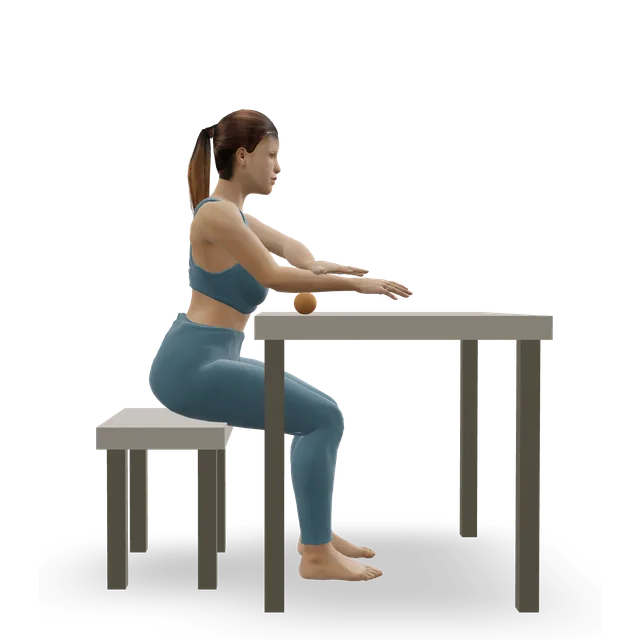
Find the muscle: sit at a table with your forearm palm down. The wrist-lifting muscles are the soft band a few finger widths below the bony bump on the outside of the elbow.
Roll: rest your forearm on a ball, put your other hand on top and roll slowly from near the elbow to near the wrist, palm down then palm up, about 3 seconds a pass, for 45 to 60 seconds a side. Keep off the bony bump, the inner elbow and the bony wrist, and stop at once if your fingers tingle or go numb.
Pause on a tender spot for a few slow breaths, about 30 seconds, then move on. Aim for discomfort, not pain.
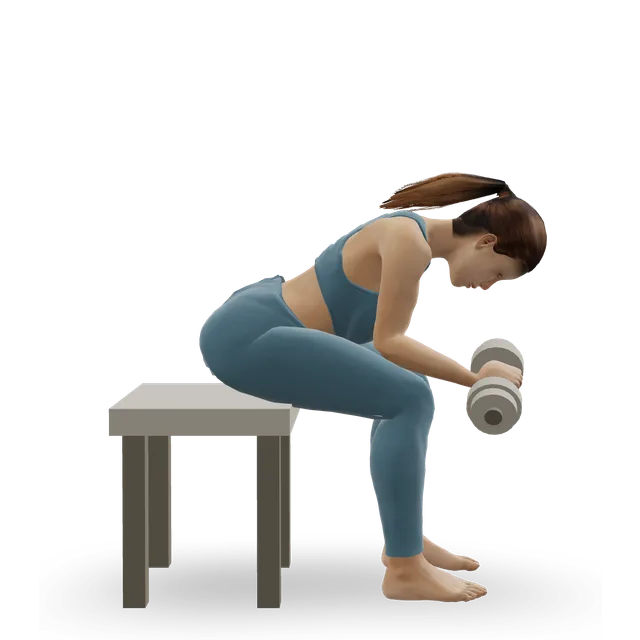
Load, early on: hold a light weight with the palm down and the wrist level, keeping it still, 5 holds of 30 to 45 seconds, once a day.
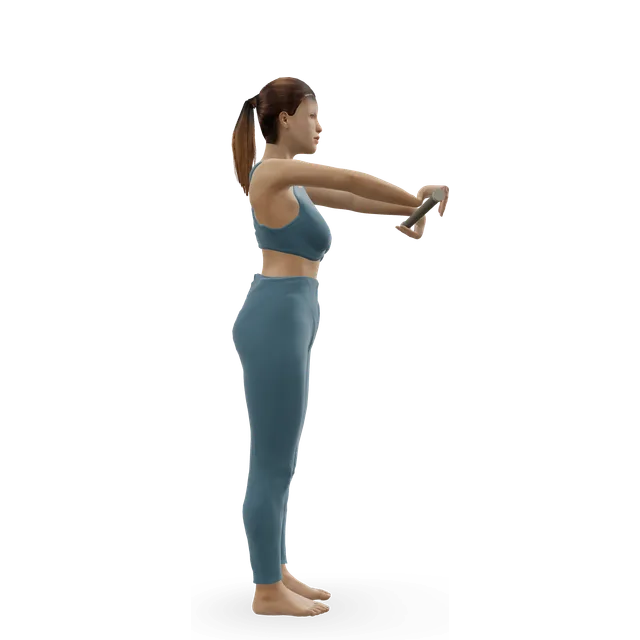
Load, when holds are easy: the Tyler twist with a flexible bar, 3 sets of 15, about 4 seconds a repetition, with 30 seconds' rest between sets.
Keep loading pain to about 3 to 4 out of 10, settled within an hour and no worse the next morning.
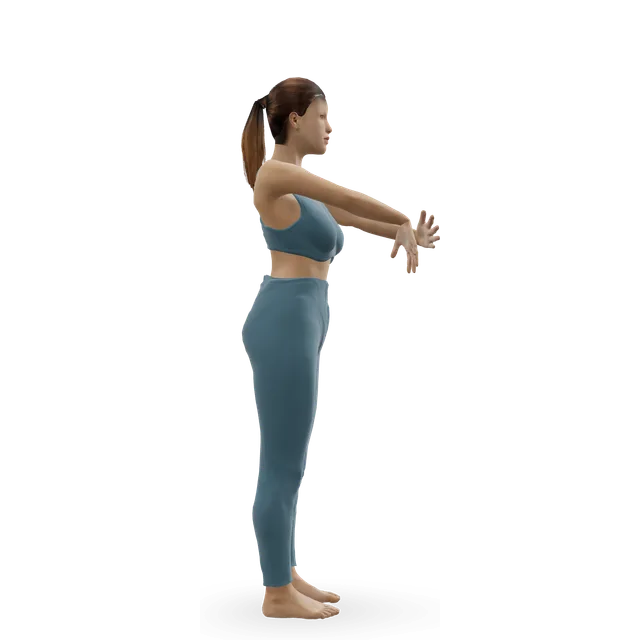
Stretch after loading: the wrist extensor stretch, 3 holds of 30 seconds.
Loading the 3D figure…
Drag to turn
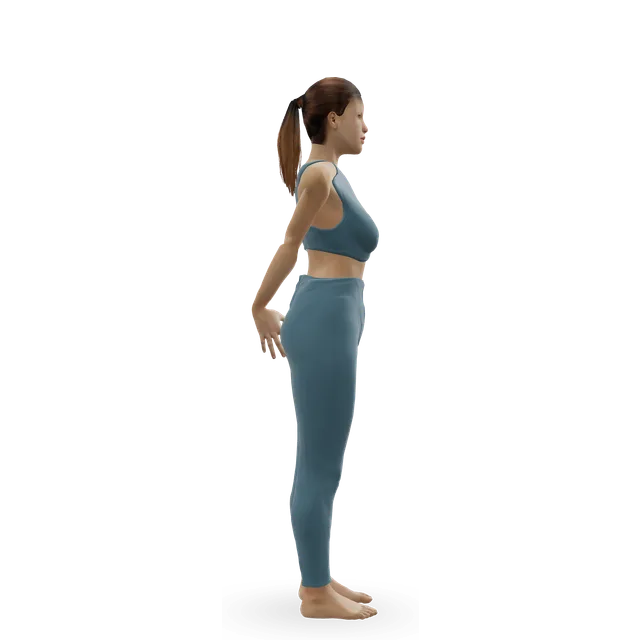
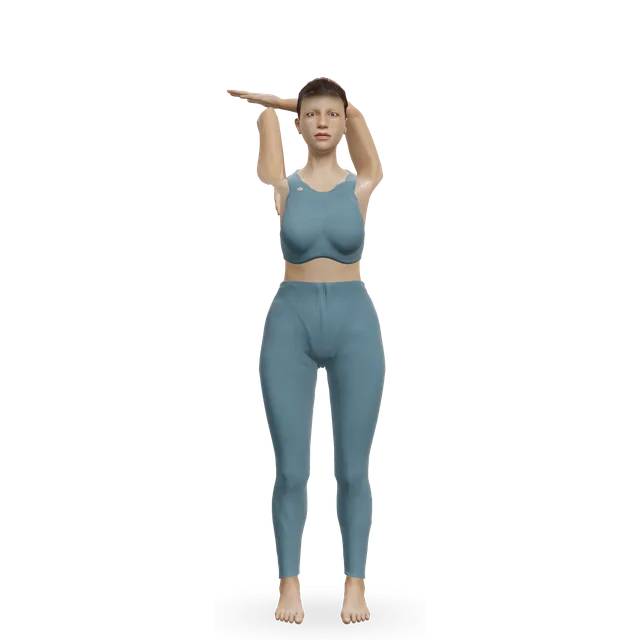
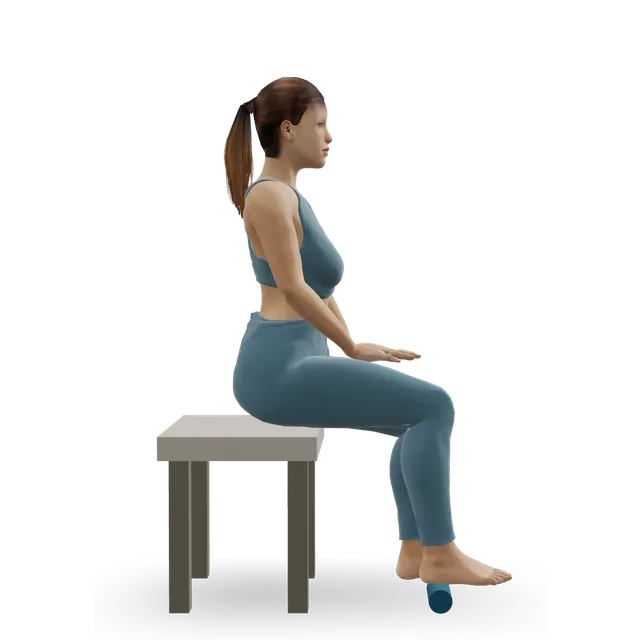
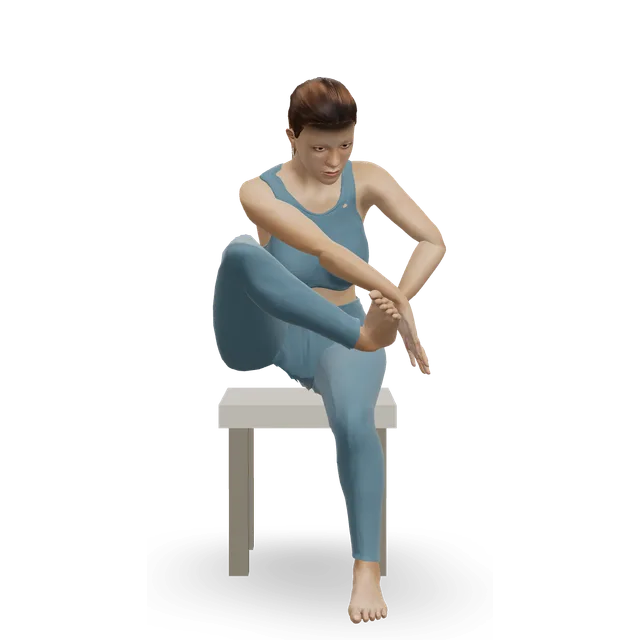
Gets into position, then repeats the movement. Technical checks passed; qualified exercise review is pending.
The wrist and forearm routine is the one our tennis elbow guide uses; the arm release routine adds forearm rolling, and the tennis elbow guide has the loading plan.
Safety: where not to press, and who should ask first
Where not to press
The bony bump on the outside of the elbow itself.
The inner elbow, the bony wrist and the armpit, where nerves run close to the surface.
The back and outer side of the upper arm with a ball, where the radial nerve runs.
Stop at once if your fingers tingle or go numb.
Massage guns and tools
If you use a massage gun, keep it brief and light on the forearm muscle and off the bony elbow and wrist. Save scraping and deep friction for a clinician, and skip fascia blasting: bruising is a harm, not progress.
Ask first
Keep the pressure light, or ask your doctor first, if you take blood thinners, which make bruising more likely, or have a nerve condition such as peripheral neuropathy: the NHS lists these among the reasons hands-on treatments may not be safe. Bruising was more common with hands-on treatment in trials.
In an expert consensus of 37 researchers, open wounds and broken bones were reasons not to roll, and inflammation, a clot, a bone infection or bone forming in a muscle after an injury were at least reasons for caution.
Call 999: arm pain that comes on suddenly with pressure, heaviness, tightness or squeezing across your chest, especially with shortness of breath, sweating or feeling sick. It could be a heart attack.
Urgent treatment centre or A&E
Urgent treatment centre or A&E: a pop or snap and sudden pain during an effort, which could be a torn tendon. At the front of the elbow, with bruising and a bulge in the upper arm, don't wait for it to settle: a torn biceps tendon is best repaired within the first 2 to 3 weeks. If it happened weeks ago, still get it checked: repair is often still possible, though it may need a tendon graft.
Go to A&E or call 999 if you've injured your arm and it is numb, tingling or has pins and needles; a bone is sticking out or a bad cut is bleeding heavily; or the arm or elbow has changed colour or shape, or is at an odd angle. Don't drive yourself.
Same day
Same day (urgent GP appointment or NHS 111): a swollen elbow with a very high temperature, or you feel hot, cold or shivery; or severe pain in one joint that started suddenly, swelling around a joint, the skin around a joint has changed colour, or difficulty moving a joint. It could be an infection in the joint or the bursa, or gout.
See a GP or physiotherapist
Pins and needles that keep coming back or are constant, numbness in the ring and little fingers that doesn't go, a weak or clumsy hand, or visible wasting between the thumb and index finger. Ask about referral: one NHS referral guide treats permanent numbness or wasting as urgent.
Elbow or arm pain that hasn't gone after a few weeks of looking after it yourself (for tennis elbow, the NHS says after at least 2 weeks of self-care). In many areas you can refer yourself to NHS physiotherapy.
Tennis elbow that hasn't improved after 12 to 24 weeks of good care: a UK care pathway suggests referral at that point.
A Cochrane review found 2 small trials and no clear benefit, and hands-on treatment in general helped a little at the end of treatment and the benefit didn't last.
Injections help for a few weeks, then do worse than a placebo injection at a year (83% against 96% recovered or much better), with far more relapse (54% against 12%).
Nothing shows pressure on the bone helps, nerves run close to the surface at the inner elbow and wrist, and pain and bruising were more common with hands-on treatment in trials.
Cut down on what makes it worse, as the NHS suggests, but loading exercise beat passive treatments over time, and most tennis elbow gets better within a year either way.
One trial of 68 computer workers found a large benefit over fake ultrasound, but it came from a single clinic and hasn't been repeated. Across 23 trials, hands-on treatment helped a little at the end of treatment and the benefit didn't last.
Does friction massage work for tennis elbow?
A Cochrane review found only 2 small trials and no clear benefit. Later small trials are mixed, so friction is at best an extra on top of loading exercise.
Should I use a foam roller or massage ball on tennis elbow?
We found no trial of either for tennis elbow. For comfort, roll the forearm muscle for 45 to 60 seconds, palm down then up, keeping off the bony bump, the inner elbow and the wrist, and stop if your fingers tingle. Then do the strengthening, which has the better evidence.
Can I use a massage gun on tennis elbow?
There are no trials. If you use one, keep it brief and light on the forearm muscle and off the bony elbow, and don't let it replace the strengthening exercises.
Does Graston or scraping help tennis elbow?
In small trials, scraping added to exercise did better than exercise alone, but one trial's lead researcher had an interest in the instruments. Bruising is a known side effect of hands-on treatment.
Where should I massage for tennis elbow?
On the muscle a few finger widths below the bony bump on the outside of the elbow, where pressing often brings on the familiar ache. Not on the bone itself, the inner elbow or the bony wrist.
How long does tennis elbow last?
Without active treatment, 89% are much better or recovered within a year, and every 2.5 to 3 months half of those still struggling recover. It can come back, so keep up the strengthening.
What helps tennis elbow most?
Time, and loading the wrist-lifting muscles: exercise beat passive treatments over time, and a flexible-bar twist gave large gains in small trials. A steroid injection helps for a few weeks but leaves you worse off at a year.
Is tennis elbow inflammation?
The NHS describes inflamed tendons, but the physiotherapy guideline describes changes in the tendon, in muscle control and in pain processing. Either way, there are no adhesions to break up.
Should I rest my arm with tennis elbow?
Cut down on what makes it worse, but loading exercise beats passive care over time. Our arms guide adds the NHS warning that resting a sore arm too long leaves it weaker and less flexible.
Movement education, not medical advice. Stop for sharp or increasing pain, numbness or tingling, and get individual advice if you are pregnant, after an injury or surgery, or managing a health condition. Health disclaimer.