Pilates guide

Pilates for COPD: pulmonary rehab first, breathing in class, staying upright, and a 25-minute seated and standing class

Pilates can be a useful extra with chronic obstructive pulmonary disease (COPD), which includes emphysema: strength, posture and steady breathing, done mostly sitting and standing. But pulmonary rehabilitation, a course of exercise and education, has far stronger evidence and comes first. Two small Pilates studies found people walked further and had stronger breathing muscles, but both were at high risk of bias, and neither showed better lung function.

This guide covers why getting a little breathless is fine, how to use rehab's breathing techniques in a Pilates class, why lying flat and lifting your arms can make breathing harder, steroid tablets and your bones, oxygen and flare-ups, the moves to change, a 25-minute class that keeps you upright, and the warning signs that mean stop.

The short version

Pulmonary rehabilitation comes first

Pulmonary rehabilitation (PR) improves breathlessness, fatigue, quality of life and walking (65 trials), and the National Institute for Health and Care Excellence (NICE) and the British Thoracic Society say it should be offered. Pilates is an extra, or a way to keep going afterwards.

Sources 1, 2, 3

Getting a little breathless is fine

The NHS: "Exercising until you're a little breathless is not dangerous, but do not push yourself too far."

Source 4

Two small Pilates studies, both at high risk of bias

They found better walking distance and breathing-muscle strength. Neither showed a consistent change in lung function.

Sources 5, 6

Stay upright for most of it

Lying flat on your back is the hardest position to breathe in for many people with COPD, and sitting leaning forward the easiest. Most mat Pilates is done lying down, so this guide's class keeps you sitting and standing.

Sources 7, 8

Use rehab's breathing in class

Pursed-lip breathing, breathing out on the effort ("blow as you go"), and resting in a recovery position whenever you need to.

Sources 4, 9

Bones, oxygen and flare-ups

If you've needed steroid tablets often, use the osteoporosis versions of moves. Use oxygen on your usual setting, and rest from structured exercise during a flare-up.

Sources 10, 11, 12

COPD, breathlessness and how Pilates loads your breathing

What COPD is

COPD "is the name for a group of lung conditions that cause breathing difficulties", including emphysema (damage to the air sacs in the lungs) and chronic bronchitis (long-term inflammation of the airways). There's no cure. Stopping smoking is "the most important thing you can do", alongside inhalers, tablets and pulmonary rehabilitation.

Sources 13, 10

Breathlessness

The NHS's breathing techniques are breathing control ("breathing gently using the least effort, with the shoulders supported"), pursed-lip breathing, "breathing out hard when doing an activity that needs a big effort" and paced breathing. They all work in a Pilates class.

Source 4

Why position matters in a Pilates class

In 16 people with COPD, the breathing muscles worked hardest lying flat on the back and least sitting leaning forward. In 16 people with advanced COPD, about two-thirds chose lying on the back as their least comfortable posture. Most mat Pilates is done lying on your back.

Sources 7, 8

Lifting your arms

Lifting your arms makes many people with COPD breathless, which is why PR includes arm exercises. Use light weights or none, breathe out as you lift, and go slowly.

Those are our exercise for COPD guide's words, and they apply to Pilates arm work too.

Source 14

Posture, balance and bones

People with COPD tend to have a more rounded upper back and a stiffer chest, and these go with more breathlessness (cross-sectional studies). Poor balance is the factor most consistently linked with falls. The Global Initiative for Chronic Obstructive Lung Disease (GOLD) calls osteoporosis "an important and common comorbidity in patients with COPD".

Sources 15, 16, 17, 14

Heat, air and weight

"Cold spells and periods of hot weather and humidity can cause breathing problems if you have COPD", the NHS says, and dusty places, fumes and strong-smelling products are worth avoiding. "Carrying extra weight can make breathlessness worse", but some people with COPD lose weight without meaning to and need more protein and calories. Pilates isn't a weight-loss tool either way.

Source 4

Pulmonary rehabilitation first

What it is

The NHS describes it as "a specialised programme of exercise and education", usually "2 or more group sessions a week for at least 6 weeks", with walking, cycling and strength exercises. NICE asks for it to be offered to everyone who feels functionally disabled by COPD, usually grade 3 and above on the Medical Research Council (MRC) breathlessness scale.

Sources 10, 2

How well it worksStrong evidence

In 65 trials (3,822 people), PR improved breathlessness, fatigue, emotional function and people's sense of control by more than the amount people notice, and improved quality of life and walking distance (about 44 metres). The American Thoracic Society recommends it too.

Sources 1, 18

How to get it

Ask your GP, practice nurse or respiratory team. The British Thoracic Society's 2026 standard asks for PR within 90 days of referral, and within 30 days of leaving hospital, with at least 6 weeks of twice-weekly supervised sessions and a written plan to keep exercising afterwards.

Sources 3, 2

Where Pilates fits

None of these guidelines mentions Pilates. It can be the strength, posture and breathing-control part of your week, beside walking or cycling on most days. After PR, a supervised Pilates class may be one way to keep going: that's what the Portuguese study tested (our suggestion, low certainty).

Source 5

What the evidence says

Pilates in COPD rests on two small studies at high risk of bias. Pulmonary rehabilitation, walking, strength training and medicines carry the evidence.

Pilates after rehab: one non-randomised studyMixed evidence

In Portugal, after 3 months of community PR, 14 people did 6 months of physiotherapist-led Pilates classes twice a week, and 21 were encouraged to exercise at home. Walking distance was 92.5 metres higher with Pilates at 6 months and 178.5 metres at 9 months, mostly because the home group declined after PR ended. Breathing muscles were stronger and sit-to-stands and balance improved; lung function showed no consistent advantage. The groups weren't comparable at the start, the assessors knew who was in which group, and supervised classes were compared with unsupervised home exercise.

Source 5

A small Egyptian trialMixed evidence

In 38 men aged 40 to 50 with moderate COPD, 12 weeks of mat Pilates 3 times a week, plus tummy breathing, raised walking distance from 465 to 623 metres, against 470 to 490 metres with tummy breathing alone. The group is unusual for COPD, the walking gain is about 3.5 times what PR achieves, and the journal is outside the main indexes, so the certainty is very low.

Source 6

Other small studies and registered trialsMixed evidence

In 9 people without a comparison group, 10 weekly sessions on Pilates equipment raised breathing-muscle pressures, peak flow and chest expansion. A Portuguese trial of clinical Pilates in 38 people with mild COPD finished in November 2025 with no results posted yet.

Sources 19, 20

No consistent change in lung functionEmerging evidence

In the better-reported study, lung function showed no consistent advantage with Pilates. A 2018 review of Pilates in long-term conditions found 1 COPD study and "limited or conflicting evidence" on breathing function.

Sources 5, 21

Rankings that put Pilates firstEmerging evidence

In a 2022 network analysis of 41 trials, Pilates ranked high for walking distance, but that rested on one trial, the Egyptian one. A 2026 network analysis reported that "Pilates plus pulmonary rehabilitation showed the largest improvement in exercise capacity"; we could read only its summary and reference list, so we can't say which studies or how much certainty sit behind that ranking. Neither ranking shows that Pilates beats other exercise.

Sources 22, 23

Mind-body exercise adds little to rehab for breathlessnessEmerging evidence

In a Cochrane review of tai chi, qigong and yoga (10 studies, 762 people), mind-body movement improved quality of life against unstructured walking, but not breathlessness, and added nothing significant on top of PR. A 2026 review in older adults called mind-body exercise "an adjunctive or optional component" of PR. Neither included a Pilates trial.

Sources 24, 25

A Dutch guideline advises against it for breathlessness in advanced COPDEmerging evidence

A Dutch palliative care guideline for advanced COPD doesn't advise mind-body approaches such as yoga, tai chi, qigong and Pilates to reduce breathlessness, because randomised research on yoga, tai chi and qigong showed no effect on it. It cites no Pilates trial.

Source 26

Breathing exercises work alongside exercise, not aloneStrong evidence

Breathing exercises improved walking distance in small studies but had inconsistent effects on breathlessness and quality of life; the Cochrane authors say the data "do not suggest a widespread role for breathing exercises in the comprehensive management of people with COPD". Pursed-lip breathing during exercise slows breathing, with no consistent change in walking distance.

Sources 27, 28

Stronger breathing muscles aren't less breathlessnessEmerging evidence

Breathing-muscle training added nothing to PR for breathlessness or walking (22 trials, 1,446 people). So the stronger breathing muscles in the Pilates studies shouldn't be read as less breathlessness.

Source 29

Strength training helps, including with bandsEmerging evidence

Adding strength training to endurance training helps walking distance (23 studies), and elastic bands gave strength gains similar to weight machines (8 studies, 332 people).

Sources 30, 31

Breathing in class

Pursed-lip breathing

Breathe in gently through your nose and out slowly through pursed lips. Use it whenever you're breathless and to recover between moves; in trials, it slowed breathing during exercise.

Sources 4, 9, 28

Blow as you go

Breathe out on the effort: as you stand, push, lift or curl. Breathe in before you start the move.

Source 4

Paced breathing

When you march or walk, breathe in for 1 step and out for 2, as in our breathe and move COPD workout.

Source 4

Let your tummy move, if your COPD team agreesMixed evidence

In a single-session study of 15 people with moderate to severe COPD, relaxed tummy breathing slowed and deepened breathing, while Pilates breathing with the tummy held in didn't change breathing rate or depth; both raised oxygen levels, probably through the pursed lips. But a Dutch guideline for advanced COPD advises against teaching tummy breathing to people whose lungs are markedly over-inflated.

So if your COPD team agrees, drop the "navel to spine" cue while you breathe and let your tummy move; otherwise follow the breathing your own physiotherapist teaches. Keep the pursed-lip breath out either way.

Sources 32, 26

Recovery positions

Sitting leaning forward with your forearms on your thighs eased the work of breathing more than other positions in one study. Rest like this whenever you need to, until your breathing settles.

Sources 9, 7

If a breathing drill makes you dizzy

If a breathing practice makes you dizzy, light-headed or tingly, make the breaths smaller or go back to normal breathing. If you get wheezy, tight-chested or much more breathless than usual, stop, rest in a recovery position and follow your plan (our suggestions).

Stay upright, prop up and keep your arms low

Upright first

Do most of your Pilates seated and standing. If lying flat makes you breathless, prop your head and shoulders up on cushions or lie on your side, as our corpse pose page suggests. Breathlessness that gets worse when you lie down needs a GP.

Sources 7, 8, 33

Side-lying, if it suits you

Side kicks and clams, which both COPD Pilates studies used, are done on your side with your head on a pillow or your lower arm. Skip them on days when lying down makes you more breathless.

Sources 5, 6

Arms low, lifted on the breath out

In the roll-up's reach, the mermaid's top arm and reformer arm work, lift your arms slowly as you breathe out, keep them lower, and rest between (our suggestion, following our exercise for COPD guide).

Source 14

Don't hold your breath to brace

In planks, the teaser or on heavy reformer springs, breathe out on the effort and keep holds short (our suggestion).

Source 4

Bones, oxygen and flare-ups

Steroid tablets and your bonesStrong evidence

Long-term steroid tablets can weaken bones, and NICE asks for people on long-term oral steroids to be monitored for osteoporosis and given bone protection, starting it without waiting for tests in people over 65. GOLD says steroid tablets and injections "significantly increase the risk of osteoporosis". If your bones are thin, or you've needed steroid tablets often, use head-down versions of curl-ups and skip roll-ups, roll-downs and legs-overhead moves; our Pilates for osteoporosis guide has more.

Sources 10, 2, 14

OxygenStrong evidence

If you use oxygen when you move, use it on your usual setting for the class and check you have enough. Keep the tubing clear of your legs and of any reformer's springs and carriage (our suggestion). The NHS says not to smoke or let anyone smoke near you while you use it, to keep it at least 3 metres from open flames, and not to use oil-based creams such as Vaseline with it.

Sources 11, 34

Know the signs of a flare-up

Being more breathless than usual, coughing more, bringing up more phlegm or a change in its colour, more wheezing, feeling more tired, or finding it harder to be active.

Source 12

During and after a flare-up

Our editorial starting point, because no trial has tested a schedule for getting back to exercise: during a flare-up, rest from structured exercise and follow your plan, but keep moving gently around the house. Restart with shorter, easier sessions once your symptoms are back near your usual, and build up over a few weeks. Flare-ups usually last 7 to 10 days and most people recover within 4 to 6 weeks, though 1 in 5 still have symptoms at 8 weeks.

Sources 12, 2

If your breathlessness started after COVID-19

If your breathlessness started after COVID-19, read our long COVID guide first: with post-exertional malaise, the World Health Organization advises pacing rather than training into breathlessness.

Our Pilates for long COVID guide covers the Pilates side.

Source 33

Breathing control, seated

Pursed-lip breathing: "To learn it, practise 5 to 10 breaths sitting down, once or twice a day, until it comes naturally" (from the move page's dose), then use it whenever you're breathless in class. Slow breathing: 1 minute of breathing control, gentle and relaxed, shoulders down (our breathe and move COPD workout; adapted from the move page's dose). Lateral breathing: 5 breaths, seated, hands on your lower ribs, breathing out through pursed lips (our editorial starting point, adapted from the move page's dose); let your tummy move if your COPD team agrees.

Seated warm-up

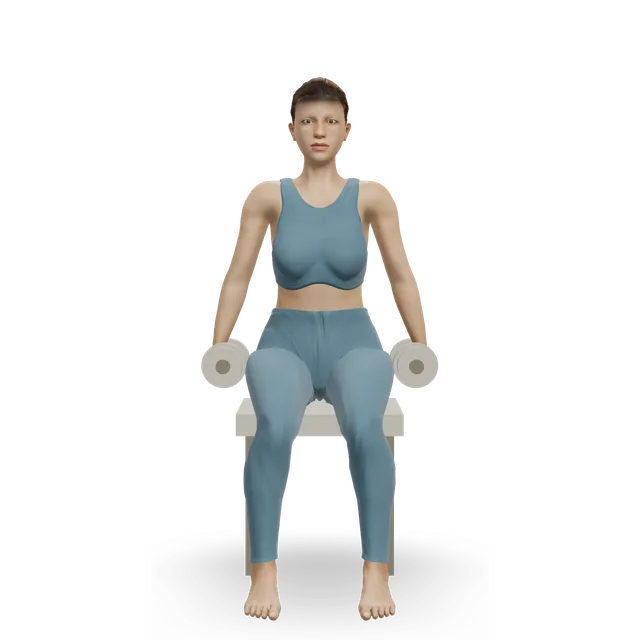
Seated march: "1 to 2 minutes as a warm-up (the Otago-based Later Life Training booklet)" (the move page's dose), swinging your arms gently. Shoulder rolls: 10 slow circles each way (our seated chair Pilates class; adapted from the move page's dose). Thoracic rotation: 5 each side, seated with your arms crossed, breathing out as you turn (our seated chair Pilates class; adapted from the move page's dose). Breath reach: "5 breaths, exhale longer than inhale" (the move page's dose), lifting your arms only as high as is comfortable.

Standing at a chair: blow as you go

Sit to stand: 8 to 10, breathing in before you stand and out through pursed lips as you stand; slow calf raise: 10, holding a chair back (both our breathe and move COPD workout). Wall push-up: 8 to 10, breathing out as you push away (our bronchiectasis workout's dose). Wall side leg lift: 8 each side, a hand on the wall (our chair Pilates workout; adapted from the move page's dose). Standing march: 1 to 2 minutes, in for 1 step and out for 2 (the paced breathing from our breathe and move COPD workout; the time is our editorial starting point).

Seated strength, arms low

Seated knee extension: 10 each leg, breathing out as you straighten; band row: 10, a light band, breathing out as you pull; seated lateral raise: 8, light weights or none, breathing out as you lift (all our breathe and move COPD workout; the knee extension and band row are adapted from their move pages' doses). Seated upper-back lift: "3 to 5 repetitions, each held 3 to 5 seconds, at least twice a week (UK osteoporosis consensus, 2022)" (the move page's dose), breathing through the hold.

Optional: propped or side-lying

Skip this block if lying down makes you more breathless. Side kick: 8 each side, head resting on your lower arm; clamshell: 10 each side; pelvic tilt into bridge: 8 slow, head and shoulders on a pillow, breathing out as you lift (all our high blood pressure Pilates class; the side kick is adapted from its move page's dose). Side-lying open book: 5 each side, breathing in as you open (our editorial starting point, adapted from the move page's dose).

Seated cool-down

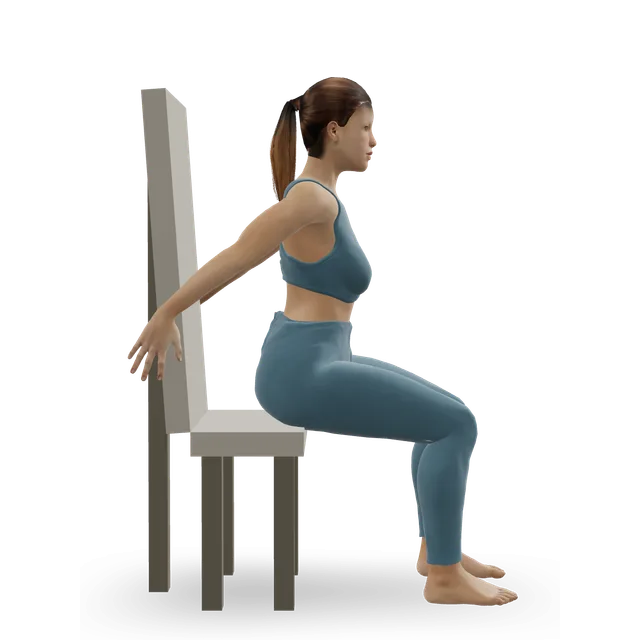
Chair chest and shoulder stretch: 2 holds of 15 to 20 seconds, breathing throughout (our seated chair Pilates class; adapted from the move page's dose). Mermaid: "3 each direction, each side." (the move page's dose), sitting on a chair and reaching only as high as is comfortable. Slow breathing: 1 minute sitting (our breathe and move COPD workout's cool-down).

Moves to change or leave out

Long spells flat on your back

The hundred, the single-leg stretch series and roll-ups keep you on your back. Prop yourself up, use side-lying moves, or do the seated and standing blocks twice instead (our suggestion).

Sources 7, 33

The hundred's count

If breathing in for 5 beats and out for 5 leaves you short of breath, breathe at your own pace, do it propped up, or leave it out if lying flat makes you breathless (our suggestion).

Arms held overhead

Keep reaches low and slow, lift on the breath out, and rest your arms between reps (our suggestion).

Source 14

Head-down and legs-overhead moves

Leave out the roll-over and jack knife: they fold your chest and make breathing harder (our suggestion), and their osteoporosis cautions already rule them out for thin bones.

Deep or repeated rounding with thin bones

The roll-up, spine stretch forward and saw: if you take steroid tablets often or have osteoporosis, follow those moves' osteoporosis cautions.

Sources 10, 2

Breath holds and hot rooms

Skip the holds in box and 4-7-8 breathing when you're breathless, as our yoga for lungs guide says. The NHS lists hot weather and humidity as causes of breathing problems in COPD, so choose a room at normal temperature (our suggestion).

Source 4

Classes to follow

Our seated-and-standing Pilates class for COPD keeps you upright, with pursed-lip recovery between blocks and an optional side-lying block. No trial has tested it: its order and doses are our editorial choice, from our breathe and move COPD workout and chair Pilates classes. The breathe and move workout is the main home session, with marching and strength. Chair Pilates suits very breathless days. In the breathing routine, skip the box and 4-7-8 holds when you're breathless. Use the osteoporosis class if you've been told your bones are thin.

Seated-and-standing Pilates for COPD: a 25-minute class with pursed-lip breathing and an optional side-lying block

A 25-minute seated and standing Pilates class for COPD: pursed-lip breathing, a seated warm-up, strength at a chair, seated arm work and optional side-lying moves.

25 minBeginner20 movesA bench or box, A wall

Breathe and move: a home workout for COPD

A 25-minute home session for COPD: marching and light strength work, with pursed-lip and paced breathing and rests in a recovery position when you need them.

25 minBeginner12 movesA bench or box, A wall

Chair Pilates workout

A 20-minute chair Pilates workout for beginners and older adults: breathing, sitting tall, gentle spine and leg moves, and a standing finish at the chair.

20 minBeginner14 movesA bench or box, Something with weight

Seated chair Pilates: 15 minutes, no standing

A 15-minute chair Pilates class done entirely sitting down, in a chair or wheelchair: breathing, spine moves, and leg and arm strength with water bottles.

15 minBeginner13 movesA bench or box, Something with weight

Yoga for COPD: a 25-minute follow-along practice, sitting and standing

A 25-minute follow-along yoga practice for COPD: pursed-lip breathing, seated stretches, standing poses at a chair with blow-as-you-go breathing, and a rest.

25 minBeginner14 movesA bench or box, A wall

Breathing exercises to relax

A 6-minute breathing routine: slow breathing, crocodile breathing, alternate nostril breathing, box breathing and 4-7-8 breathing.

6 minBeginner5 movesNo equipment

Pilates for osteoporosis: a mat class with safe swaps

A 25-minute Pilates workout for osteoporosis and osteopenia: the Royal Osteoporosis Society's swaps for rounding moves, plus back strength and balance.

25 minBeginner16 movesA wall, A bench or box

Warning signs

The 999, NHS 111, stop, don't-exercise and GP lists are from our exercise for COPD guide, word for word, and the asthma lines from our yoga for lungs guide; the chest pain, stop and before-you-start lines are the ones our other Pilates guides use. This is general information, not a diagnosis. A&E means accident and emergency; in the US, call 911 for 999, and use your doctor's urgent line or urgent care for NHS 111.

Call 999 or go to A&E

Call 999 (911 in the US) or go to A&E if any of these happen. Don't drive yourself: ask someone to drive you or call an ambulance, and take your medicines with you.

  • You have severe difficulty breathing: you're gasping, choking or not able to get words out.
  • Your chest feels tight or heavy.
  • You have pain that spreads to your arms, back, neck and jaw.
  • Your lips or skin are turning very pale, blue or grey. On brown or black skin, this may be easier to see on the palms of the hands.
  • You feel suddenly confused.
  • Your breathing doesn't go back to normal after exercise.

Sources 33, 12, 11

Contact NHS 111

  • You have difficulty breathing and may be more short of breath than usual.
  • You feel sick or are being sick.
  • You're coughing up blood.
  • You have pain or swelling in one of your legs.
  • You have palpitations: your heart feels like it's racing, going too slowly or skipping a beat, or fluttering.

Source 33

Stop exercising and get advice

Stop and get advice from your healthcare professional if:

  • You have chest pain or chest tightness.
  • You're more breathless than you usually are when you're active.
  • You feel dizzy.
  • You feel sick.
  • You feel clammy or really cold.
  • You start wheezing.
  • You have sore joints or muscle weakness.

Source 11

Don't exercise if

The American Lung Association says not to exercise if:

  • You have a fever or an infection.
  • You feel sick.
  • You have chest pain.
  • You've run out of oxygen.
  • You're more breathless than usual, or have more of your other symptoms.
  • You feel dizzy, weak or unsteady.

See a GP

  • Your breathlessness gets worse when you're doing your normal activities, or when you lie down.
  • You're short of breath and have swollen ankles.
  • You've been coughing for 3 weeks or more.

Source 33

Chest pain or fainting: call 999

  • You get sudden pain or discomfort in your chest that doesn't go away; it can feel like squeezing or pressure, burning or indigestion.
  • The pain spreads to your left or right arm, or your neck, jaw, stomach or back.
  • You have chest pain and feel sweaty, sick, light-headed or short of breath.
  • Someone faints while exercising, can't be woken within 1 minute, or has chest pain or a pounding, fluttering or irregular heartbeat.

Sources 35, 36, 37

If you also have asthma

Sit up straight and try to stay calm. Then:

  • With a blue reliever inhaler: take 1 puff every 30 to 60 seconds until you feel better, up to a maximum of 10 puffs. Shake the inhaler between puffs, and use a spacer if you have one.
  • With an AIR or MART inhaler (used for both preventing and treating symptoms): take 1 puff every 1 to 3 minutes until you feel better, up to a maximum of 6 puffs.
  • If your asthma action plan gives a different maximum dose for an attack, follow your plan.
  • Call 999 if you start to feel worse at any time, you don't feel better after the maximum dose, or you don't have your inhaler. If you're no better after 10 minutes and the ambulance hasn't arrived, use your inhaler again, up to the same maximum dose. See a GP within 2 days, even if you feel better.

Source 38

Stop the session if

You feel any pain or become unwell, as the NHS advises for its Pilates videos, and especially for chest pain or pressure, unusual breathlessness, dizziness or fainting. If you have a health problem, an injury or any symptoms, get advice from a healthcare professional, such as a GP, before you start.

Source 39

Before you start

The NHS advises getting advice from a healthcare professional first if you have a health problem, an injury or symptoms, or have recently had a heart attack or an operation.

Source 39

Myths

"With COPD, avoid getting breathless"Strong evidence

The NHS says getting a little breathless is not dangerous, as long as you don't push yourself too far. Pulmonary rehab, which makes people breathless on purpose, is one of the most effective COPD treatments.

Sources 4, 1

"Pilates can replace pulmonary rehab"Strong evidence

PR has 65 trials and guideline backing; Pilates has two small studies at high risk of bias. Pilates is an extra, or a way to keep going after PR.

Sources 1, 2, 5, 6

"Pilates strengthens your lungs"Emerging evidence

Lungs aren't muscles. Small studies show stronger breathing muscles, but lung function didn't improve consistently with Pilates, and stronger breathing muscles added nothing to PR for breathlessness in 22 trials.

Sources 5, 29

"Always pull your navel to your spine as you breathe"Mixed evidence

In one small study of people with COPD, Pilates breathing with the tummy held in didn't slow or deepen breathing, while relaxed tummy breathing did. A Dutch guideline advises against teaching tummy breathing with markedly over-inflated lungs, so follow the breathing your COPD team teaches.

Sources 32, 26

"Breathing exercises are enough"Strong evidence

On their own they don't consistently reduce breathlessness or improve quality of life; they work alongside walking and strength training.

Source 27

"Pilates increases your lung capacity"Emerging evidence

Exercise doesn't make adult lungs bigger, as our lung capacity guide explains, and the Pilates studies found no consistent change in lung function.

Sources 5, 21

"Lying flat is the safest way to exercise"Emerging evidence

For many people with COPD, lying flat on the back is the hardest position to breathe in, and breathlessness that gets worse when you lie down needs a GP.

Sources 7, 8, 33

Questions people ask

Is Pilates good for COPD?

It can be a useful extra for strength, posture and breathing control, but it isn't a substitute for pulmonary rehabilitation, which has much stronger evidence. The two Pilates studies in COPD found better walking distance and breathing-muscle strength, but both were small and at high risk of bias.

Can you do Pilates with COPD?

Yes, for most people, starting seated and standing, with pursed-lip breathing and rests in a recovery position whenever you need them. Check with your GP or respiratory team first if your symptoms are severe or you haven't exercised for a while. Getting a little breathless is not dangerous.

Is Pilates good for emphysema?

Emphysema is one of the lung conditions that COPD includes, so the same advice applies. Pulmonary rehab comes first, then Pilates as an extra, done mostly sitting and standing.

Can Pilates replace pulmonary rehab?

No. Pulmonary rehab improved breathlessness, fatigue, quality of life and walking in 65 trials, and NICE and the British Thoracic Society say it should be offered to people who need it. Pilates may help you keep going after a course ends.

Will Pilates improve my lung function or lung capacity?

Probably not. In the better-reported Pilates study, lung function showed no consistent advantage, and exercise doesn't make adult lungs bigger. What improves is your muscles: stronger, fitter muscles can make everyday tasks feel less breathless.

How should I breathe during Pilates with COPD?

Breathe in gently through your nose, breathe out through pursed lips, and breathe out on every effort ("blow as you go"). In one small study, letting the tummy move slowed breathing better than holding it in, but a Dutch guideline advises against tummy breathing with markedly over-inflated lungs. So follow the breathing your own COPD team or physiotherapist teaches you.

Why do I get more breathless lying down in Pilates?

Lying flat on your back makes the breathing muscles work hardest for many people with COPD, and about two-thirds of people with advanced COPD in one study found it their least comfortable position. Prop yourself up, use side-lying moves, or do the seated and standing parts. Breathlessness that gets worse when you lie down needs a GP.

Can I do Pilates if I use oxygen?

Yes, if your team agrees: use your oxygen on your usual setting, make sure you have enough, and keep the tubing clear of your legs and any equipment. Don't smoke or let anyone smoke near you while you use it, and keep it away from open flames.

Is reformer Pilates OK with COPD?

It has hardly been studied in COPD: one small study without a comparison group used Pilates equipment. Much reformer work is done lying on your back, which some people with COPD find harder, so choose seated and standing options and take rests.

Can I do Pilates during a COPD flare-up?

No: rest from structured exercise and follow your self-management plan, but keep moving gently around the house. Come back with shorter, easier sessions when your symptoms are near your usual.

How often should I do Pilates with COPD?

Our suggestion is twice a week, alongside walking or cycling on most days; the Pilates studies used classes 2 or 3 times a week. Pulmonary rehab itself is usually 2 or more sessions a week for at least 6 weeks.

Is Pilates good for your lungs if you're healthy?

It can make you fitter, and small studies found stronger breathing muscles, but it won't make your lungs bigger. Our guide to increasing lung capacity explains what exercise can and can't change.

Sources

  1. McCarthy 2015 · Pulmonary rehabilitation for COPD: 65 trials (Cochrane review)
  2. NICE NG115 · Chronic obstructive pulmonary disease in over 16s: diagnosis and management (2018, updated 2019)
  3. Singh 2026 · British Thoracic Society quality standard for pulmonary rehabilitation (quality standard, BMJ Open Respir Res; read in full)
  4. NHS · COPD: living with (past its review date: reviewed April 2023, review due April 2026)
  5. Barbosa 2024 · Six months of Pilates after pulmonary rehabilitation in 35 people with COPD (non-randomised cohort study, Can J Respir Ther; read in full)
  6. Hagag 2019 · Mat Pilates in 38 men with COPD (RCT, IOSR J Nurs Health Sci; read in full; not in PubMed)
  7. Topcuoglu 2024 · Breathing effort in different relief positions in 16 people with COPD (crossover study, Respir Care)
  8. Elbehairy 2026 · Postures that relieve breathlessness in 16 people with advanced COPD (physiology study, Eur Respir J)
  9. Asthma + Lung UK · How can I manage my breathlessness?
  10. NHS · COPD: treatment (past its review date: reviewed April 2023, review due April 2026)
  11. Asthma + Lung UK · Physical activity and your lungs
  12. Asthma + Lung UK · What is a COPD flare-up (exacerbation)?
  13. NHS · Chronic obstructive pulmonary disease (COPD) (past its review date: reviewed April 2023, review due April 2026)
  14. GOLD 2026 · Global strategy for the diagnosis, management and prevention of COPD (Global Initiative for Chronic Obstructive Lung Disease report)
  15. Naz 2022 · Posture, breathlessness and lung function in COPD (cross-sectional study, Heart Lung)
  16. Smith 2016 · Balance recovery and trunk muscle activity in COPD (lab study, Gait Posture)
  17. Zangi 2026 · Factors linked with falls in COPD (systematic review, Int J Chron Obstruct Pulmon Dis)
  18. Rochester 2023 · Pulmonary rehabilitation for adults with chronic respiratory disease (American Thoracic Society guideline, Am J Respir Crit Care Med)
  19. Torri 2017 · Pilates on equipment in 9 people with COPD (uncontrolled study, Fisioter Bras; read in full)
  20. ClinicalTrials.gov · NCT07267858: clinical Pilates in 38 people with mild COPD (finished November 2025, no results posted)
  21. Miranda 2018 · Pilates in noncommunicable diseases (systematic review, Complement Ther Med)
  22. Priego-Jiménez 2022 · Types of physical activity and exercise capacity in COPD: 41 trials (network meta-analysis, Int J Environ Res Public Health; read in full)
  23. Gao 2026 · Mind-body exercise for COPD (network meta-analysis, Clin Rehabil; summary and reference list only)
  24. Gendron 2018 · Mind-body movement therapies with or compared with pulmonary rehabilitation for COPD: 10 studies (Cochrane review)
  25. Du 2026 · Mind-body exercise in older adults with COPD: 35 studies (three-level meta-analysis, Life; read in full)
  26. Richtlijnendatabase 2021 · Palliative care in COPD: relaxation and breathing exercises for breathlessness (Dutch guideline, in Dutch)
  27. Holland 2012 · Breathing exercises for COPD: 16 trials (Cochrane review)
  28. Mayer 2018 · Pursed-lip breathing during exercise in COPD: 8 studies (systematic review and meta-analysis, Physiotherapy)
  29. Ammous 2023 · Breathing-muscle training, with or without pulmonary rehabilitation, for COPD (Cochrane review)
  30. Ferté 2022 · Resistance training and walking distance in COPD: 23 studies (systematic review and meta-analysis, Ann Phys Rehabil Med)
  31. de Lima 2020 · Elastic band against conventional resistance training in COPD: 8 studies (systematic review and meta-analysis, Phys Ther)
  32. Cancelliero-Gaiad 2014 · Diaphragmatic and Pilates breathing in 15 people with COPD (crossover study, Braz J Phys Ther; read in full)
  33. NHS · Shortness of breath
  34. NHS · Home oxygen treatment (past its review date: reviewed August 2023, review due August 2026)
  35. NHS · Chest pain (past its review date: reviewed August 2023, review due August 2026)
  36. NHS · Fainting
  37. NHS · Heart attack
  38. NHS · Asthma
  39. NHS · Pilates for beginners (exercise video, with safety information)

Exercise education, not a personal prescription, and clinical review of these guides is pending. If you are pregnant, have a health condition or have had recent surgery, check with a doctor, midwife or physiotherapist before starting, and stop for sharp or increasing pain. Health disclaimer.