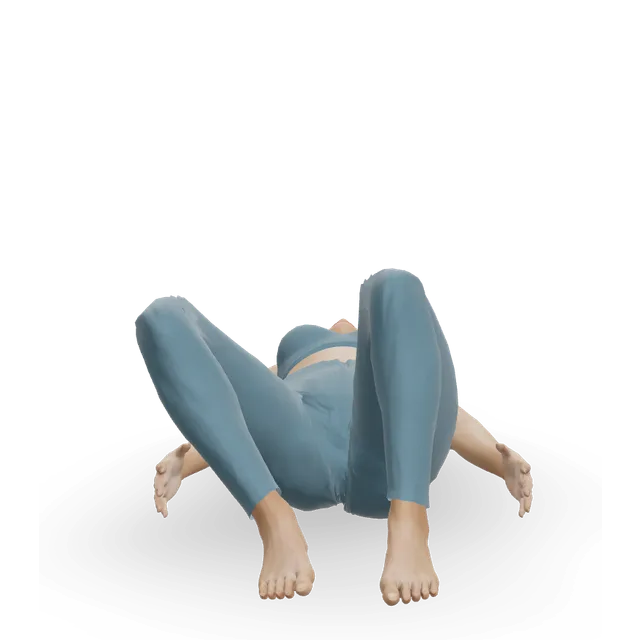
Pilates with a hernia and after hernia surgery: inguinal, umbilical and hiatus hernias
Most people can keep doing Pilates with a hernia, as long as a move doesn't make the hernia bulge, hurt or ache afterwards, and Pilates can be part of staying fit before and after a repair. It can't close or fix a hernia: only surgery does, and a GP should check any new lump. No study has tested Pilates in people with a hernia in the groin or tummy. This guide is about those hernias and hiatus hernias; for a slipped (herniated) disc in your back, see our Pilates for a herniated disc guide.
It covers which Pilates moves raise the pressure inside your tummy (fewer than people think, though the evidence is one small study), curl-ups, roll-ups and planks, breathing out instead of straining, the reformer, a hiatus hernia and reflux, and the stages back to a full class after a groin, belly-button or scar repair, where the NHS's 4 to 6 weeks and the international guideline's advice of no restrictions disagree. Your surgical team's advice comes first. It ends with the warning signs that need 999 or NHS 111.
The British Hernia Society answers "Can I exercise whilst I have a hernia?" with "Yes", using lighter weights with more repetitions and stopping any movement that causes pain. Leave out any Pilates move that makes your hernia bulge, hurt or ache afterwards.
Only surgery does. Men with a painless or barely painful groin hernia can usually wait safely, though most have surgery in the end, mostly for pain. Women's groin hernias and femoral hernias need prompt repair.
Our searches found none in groin, belly-button, scar or hiatus hernias. The nearest is a small UK study of Pilates-based exercise for a hernia beside a stoma, which reported no serious harms but couldn't show benefit.
Most Pilates moves are low-pressure, in one small study
In 18 healthy women who already did Pilates, most mat and reformer moves raised the pressure in the tummy no more than getting up from a chair; roll-ups kept it high for longest. Coughing, jumping and straining with a held breath raise it far more. The measure was indirect, and it hasn't been tested in men, in hernias or in fresh scars.
Advice ranges from no restrictions once you're comfortable (the international groin hernia guideline) to no heavy lifting or strenuous activity for at least 4 to 6 weeks (the NHS), and 4 weeks without straining after a repair through a scar (European surgeons). Breathing and knees-bent moves come first, curl-ups and planks last, and your surgical team's advice comes first.
Call 999 for a femoral or belly-button hernia with very bad tummy pain, sickness or no wind; get help from NHS 111 for pain, sickness or a bloated tummy with any other hernia. The full lists are below.
"A hernia is where part of an internal organ, such as your bowel, pushes through a gap or weak area in the muscle that keeps your organs in place." Most happen in the tummy or groin.
Inguinal hernias are where your leg joins your tummy (the groin); femoral hernias are in the upper thigh, near the groin; umbilical hernias are under or near your belly button; incisional hernias come through an old scar; hiatus hernias are in your chest, where part of the stomach pushes up; and stoma hernias are beside a stoma.
Usually a lump that "may get bigger when you cough, sneeze or cry, and get smaller when you lie down", sometimes with a heavy, dragging feeling in the leg with a groin hernia. A hiatus hernia causes heartburn or reflux instead. Pain in or around a hernia, usually with smaller ones, can be a sign it's being squeezed (strangulated).
Groin hernias are far more common in men; femoral hernias "mainly happen in women over 50 years old. They can happen to anyone." In adults, belly-button hernias are linked with a higher body weight, several pregnancies and fluid in the tummy from liver disease. The British Hernia Society lists age, smoking, obesity, repeated straining, a long-term cough and frequent heavy lifting among the risks.
"An inguinal hernia may not need treatment if it's not causing symptoms." Surgery is usually recommended for adults with a belly-button hernia, and a femoral hernia needs treatment in hospital. A GP decides what's right for you.
A sports hernia is groin pain without a lump and isn't a true hernia: adding Pilates to treatment helped function in one trial of 88 men, and our sports hernia guide covers it. A tummy gap after pregnancy (diastasis recti) is a stretched midline with no hole, though the two can happen together: see our Pilates for diastasis recti guide. A herniated disc is a back problem: see our Pilates for a herniated disc guide.
These are laboratory studies in people without hernias. None measured what happened to a hernia.
Pilates moves, measuredEmerging evidence
In a US study of 20 healthy women with Pilates experience (18 analysed), with pressure measured by a vaginal sensor, most of 11 mat and 11 reformer moves raised the pressure in the tummy no more than getting up from a chair. Mat roll-ups and reformer roll-ups were the highest and kept it up longest; bridging, reformer footwork and side kicks were among the lowest. The authors worked out that a normal day after an operation, with 20 sit-to-stands and 15 minutes' slow walking, adds up to more pressure than a whole hour of mat and reformer Pilates.
It was one small study, in experienced women, with an indirect sensor. It hasn't been repeated in men, in people with a hernia or in fresh scars, and between 6% and 25% of women went above their own sit-to-stand pressure in 10 of the 22 moves. So it tells you most Pilates is low-pressure for most people, not that every move is safe for your hernia.
Coughing, jumping and straining are the big onesEmerging evidence
In 57 women, coughing and jumping raised the pressure about five times as much as a curl-up, and straining with a held breath was highest of all. In 20 healthy adults, coughing and jumping gave far higher pressures than lifting a 10-pound (4.5 kg) weight. In 147 women with leaking or a prolapse, standing up from a chair and coughing raised it more than lifting 10 or 20 pounds.
Curl-ups vary a lot from person to personEmerging evidence
In 30 women with leaking, curls raised pressure much less than a cough on average, but some women's curls were higher than other women's coughs. In another study, crunches raised it no more than getting out of a chair. That's why the rule is individual: watch what your own hernia does.
In 11 adults lifting a weight, breathing in and holding raised the pressure more than breathing naturally or breathing out. Breathe out on the effort, which is how Pilates is taught.
No study has linked a given tummy pressure, or core exercise, to a hernia forming or coming back. A review of activity limits after surgery found no clinical study linking activity to complications such as a hernia at the scar.
No trial has tested Pilates in people with a hernia in the groin or tummy. The evidence below is about waiting, lifting, returning after surgery and simple exercise programmes.
No Pilates trial in a true hernia
Our searches of PubMed, Europe PMC and ClinicalTrials.gov in November 2026 found none; the Pilates "hernia" studies are about herniated discs. In the UK HALT study, a Pilates-based programme for people with a hernia beside a stoma was feasible and reported no serious harms (17 people, then 19 in a small trial), but it wasn't designed to show benefit. An uncontrolled Indian yoga study of 19 men with groin hernias had no comparison group and didn't examine the hernias.
Waiting with a groin hernia is safe for many menStrong evidence
In a trial of 720 men with few or no symptoms, pain limiting activities at 2 years was similar with waiting and with surgery, and a hernia became stuck in about 2 men per 1,000 a year. But by up to 11.5 years, an estimated 68% had chosen surgery, mostly for pain, and 72% by 7.5 years in a Glasgow trial. The international guideline and the Academy of Medical Royal Colleges' Evidence-Based Interventions programme support waiting for minimally symptomatic hernias.
Women and femoral hernias need prompt repairStrong evidence
The international guideline strongly advises timely repair of groin hernias in women, because the risk of strangulation is high. The NHS says a femoral hernia needs treatment in hospital.
The European and Americas hernia guideline suggests waiting for belly-button hernias without symptoms (a weak recommendation) and says nothing about exercise. The NHS says surgery is usually recommended for adults.
Lifting and the risk of a groin herniaMixed evidence
A review of 23 studies found too little evidence to say heavy work causes groin hernias. In 17,967 Danish men, direct groin hernias weren't linked with physical work, and exercise in their spare time wasn't linked with either type. The British Hernia Society says "There is no good evidence that occasional heavy lifting is a risk factor for developing a hernia"; the international guideline says heavy lifting may make one more likely.
Getting back to normal after a groin repairStrong evidence
The international guideline says "Patients are recommended to resume normal activities without restrictions as soon as they feel comfortable", and that no study has shown an early return raises the risk of the hernia coming back. Its 2023 update didn't change this. A review of 34 trials found short recovery advice after keyhole groin repair didn't increase pain, complications or recurrence.
The NHS and surgeons are more cautiousMixed evidence
The NHS says "do not do any heavy lifting or strenuous activity for at least 4 to 6 weeks" after a groin repair. Across 91 studies, advice on heavy lifting ranged widely, with a median of 42 days after open repair and 14 after keyhole repair. A 2025 Danish consensus advises everyday activities straight away and sport and heavy lifting after 2 to 4 weeks.
After a repair through a scar: 4 weeks without strainingMixed evidence
European surgeons say there's "a lack of evidence-based information to provide patients with after surgery", and by expert agreement advise avoiding heavy lifting or exercise that makes you strain for 4 weeks while the mesh settles in, with a binder for comfort for the first 6 weeks.
Simple exercise around a repair: early signsEmerging evidence
In a Romanian trial of 194 adults having an open groin repair, six simple moves (breathing out to feel the deep tummy muscles, pelvic tilts, knee rolls, seated arm raises and knee lifts, and sit to stand), started 4 weeks before surgery and again from day 3, went with an earlier return to work (about 9 against 13 days) and no recurrences; but the groups differed at the start and people who couldn't finish were left out. A Canadian pilot of 30 people found a similar programme safe. After a repair in the front of the tummy, supervised physiotherapy from 2 weeks (112 people, results posted on the trial registry, not yet peer reviewed) was safe but didn't clearly improve function at 10 weeks. A 2025 review of 6 studies was weak.
Exercise is fine while you wait for surgery: use lighter weights with more repetitions, stop a movement that causes pain, and walk. This is expert advice: no trial has tested exercise programmes in people waiting for repair.
Breathe out as you curl, lift or press, and never hold your breath and bear down. Straining with a held breath is the highest-pressure thing you can do.
There's no fixed list of banned moves. Leave out any move that makes your hernia bulge, hurt, come out or ache more afterwards, and try an easier version another time. With a belly-button hernia, rest a hand on it during curl-ups and planks to feel for doming (our suggestion).
Most mat work suits you. Moves that load the groin hard, such as deep lunges with a weight or squeezing a ring between the thighs with a held breath, are the ones to watch (our suggestion).
Women with a groin lump
See a GP before you carry on as normal: groin hernias in women and femoral hernias need prompt repair.
The British Hernia Society says a support garment can make exercise more comfortable with a large hernia, and that a truss "is now thought to have no or limited benefit". A belt doesn't repair the hernia.
Guidance ranges from no restrictions once you're comfortable to no heavy lifting or strenuous activity for 4 to 6 weeks. The stages below are our suggestion, and no trial has tested them. Walk from the start: the NHS says keep moving and do gentle exercise such as walking.
Breathing, a gentle tummy draw-in, pelvic tilts, heel slides and knee rolls with your knees bent and head down. These are close to the moves in the Romanian trial, which started on day 3 after an open groin repair, and among the lowest-pressure moves in the Pilates study (our reading).
Side-lying work, all fours, small bridges and standing work: usually from about 2 weeks after a keyhole or groin repair, if your wounds have healed and your team agrees (our suggestion).
Stage 3, curl-ups and planks
Head-and-shoulder curls, dead bugs and knee planks once your team's restriction is over and nothing bulges at your scar: about 4 weeks after a repair through a scar or at the belly button, and when you're comfortable after a groin repair (our suggestion). Then the hundred, roll-ups and full planks, one at a time.
The NHS says it usually takes up to 4 to 6 weeks to fully recover, with 1 to 2 weeks off work, or up to 6 with heavy lifting. Neither the NHS nor the guideline gives exercise limits, so we follow the European advice for scar repairs (our reading).
Tell your Pilates teacher what repair you had and when, and anything your team said to avoid (our suggestion).
Getting up from the mat
Roll onto your side and push up with your arms rather than sitting straight up, which loads the front of your tummy (our suggestion). The steps are in the warning signs below.
Pilates with a hiatus hernia
Our exercise with a hernia and exercise with acid reflux guides cover reflux and exercise in full.
Time your class
Hard exercise soon after eating can bring reflux on: in 30 athletes with heartburn, reflux was worse after a meal. Our hernia guide's suggestion is to leave a couple of hours after a meal before a hard session.
Upside-down and legs-overhead moves, long curl-ups and lying face down can bring reflux on. Do them earlier in a class, or leave them out if they do (our suggestion), and swap face-down breathing for rib breathing sitting up.
Breathe out
Straining raises the pressure in your tummy, so breathe out on the effort.
Any time with a hernia, and in the first weeks after a repair if your team agrees. Lateral breathing: "5 to 8 breaths at the start of every session" (the move page's dose). Side-lying tummy draw-in: "Hold for up to 10 seconds, up to 10 times" (the move page's dose), gently, not as hard as you can; 3 to 5 holds at first after surgery (our bowel surgery routine's dose). Pelvic tilt into bridge: 3 to 5 tilts held 5 to 10 seconds at first (our bowel surgery routine's dose). Heel slide: "10 slow repetitions each side, once or twice a day" (the move page's dose). Bent-knee fall-out and knee fold: "2 sets of 5 to 10 each side, every other day" (the move page's dose). Walk every day.
Glute bridge: 2 sets of 8, and stop if you feel pulling at a scar (our editorial starting point). Clamshell: 8 to 10 each side (our editorial starting point). Side kick: "8 to 10 each side" (the move page's dose). Cat-cow: "8 waves, slower than feels natural" (the move page's dose), keeping the arch small over a fresh scar. Bird dog one limb: 5 each arm and leg (our men's pelvic floor class's dose). Sit to stand: 8 to 10, breathing out as you stand, and hip hinge: 8 to 10 (our editorial starting points). Wall side leg lift: "10 to 12 each side" (the move page's dose).
With a hernia, only if they don't make it bulge or ache; after a repair, once your team's restriction is over and nothing bulges at your scar. Dead bug heel taps: 5 to 8 each side, head down, and knee plank: 3 holds of 10 to 20 seconds, breathing throughout (our stoma core class's doses). Chest lift: "8 to 10 reps" (the move page's dose); start with 5 and stop if your tummy domes. Pallof press: 8 each side with a light band (our editorial starting point). Then the hundred: "50 beats to start, building to 100" (the move page's dose), head down at first.
Our suggestions, from the pressure studies and the British Hernia Society's advice to stop any movement that hurts. No study has tested them in people with a hernia.
Anything that makes the hernia bulge, ache or come out
Both legs lowered together, and legs-overhead rolls
Double leg lowering, the double-leg stretch with low legs, the roll-over, the jack knife, the control balance and the boomerang: stage 3 or later, one leg at a time first. Our exercise with a hernia guide also leaves sit-ups, double leg raises and planks out at first after a repair in the front of the tummy.
Full planks and push-ups with a belly-button or scar hernia
Front-loaded holds can make a midline bulge show. Use the knee plank and watch your tummy.
Lying face down
With a fresh belly-button scar or a sore belly-button hernia, skip the swan, swimming and other face-down moves, or put a folded towel under your hips, until it's comfortable.
Forceful breathing
Rapid pumping breaths borrowed from yoga raise tummy pressure. One case report describes a groin hernia in a man on peritoneal dialysis who practised them; a single case can't show cause, but keep them gentle with a hernia.
Footwork and lying arm work were among the lowest-pressure moves. Leave the long stretch (a plank on the carriage), heavy springs with a held breath and the abdominal series on the box to stage 3.
Our return class takes you through the three stages after a repair, with a stop point after each; with a hernia that hasn't been repaired, use stages 1 and 2, and stage 3 only if it doesn't make your hernia bulge. No trial has tested it: its order and doses are our editorial choice. The clinical Pilates routine is curl-free (skip its face-down move if a belly-button hernia is sore). The bowel surgery routine suits the first weeks after a repair in the front of the tummy, and the stoma levels 3 and 4 class is the next step (skip its stoma tips). With a hiatus hernia, a walk after meals and the head-up blood pressure class avoid head-down moves.
The hernia lines are from our exercise with a hernia guide, word for word, which takes them from the NHS's hernia, femoral hernia, umbilical hernia and inguinal hernia repair pages; the heart lines are from our other Pilates guides. This is general information, not a diagnosis. A&E means accident and emergency; in the US, call 911 for 999, and use your doctor's urgent line or urgent care for NHS 111.
Call 999 (911 in the US)
Call 999 or go to A&E now, and don't drive yourself to A&E (accident and emergency), if you have a femoral hernia (a small lump at the top of your thigh, in your groin) and any of the signs below.
With an umbilical hernia (at the belly button), call 999 if you get very bad tummy pain that does not go away, you feel sick, are being sick or can't keep any food down, your hernia is more swollen than usual and the skin around it has changed colour, or you can't fart or poo.
You have very bad tummy pain.
You feel sick or you're being sick.
You cannot fart or poo.
You have a high temperature, or you feel hot, cold or shivery.
Stop and get advice if a hernia hurts, won't go back in when you lie down, or grows or aches more after exercise. If it stays out with severe pain, sickness or no wind, call 999 (our reading of the society's and the NHS's advice).
Call 999 or go to A&E (accident and emergency) straight away for severe difficulty breathing (gasping, choking or not able to get words out), a chest that feels tight or heavy, pain that spreads to your arms, back, neck and jaw, lips or skin turning very pale, blue or grey, or sudden confusion. If you're more short of breath than usual, or your heart is racing, fluttering or skipping beats, contact NHS 111.
You feel any pain or become unwell, as the NHS advises for its Pilates videos, and especially for chest pain or pressure, unusual breathlessness, dizziness or fainting. If you have a health problem, an injury or any symptoms, get advice from a healthcare professional, such as a GP, before you start.
The NHS advises getting advice from a healthcare professional first if you have a health problem, an injury or symptoms, or have recently had a heart attack or an operation.
"Pilates or core work can fix a hernia"Strong evidence
Only surgery closes the gap. A small uncontrolled yoga study reported groin hernias came out less often, but it had no comparison group and didn't examine the hernias.
No study shows that Pilates or core exercise causes a hernia. Most Pilates moves were low-pressure in one small study, and coughing and straining raise pressure far more. In 277 people having a hernia repair, only 8.3% first noticed it in a gym, and what people believed caused it isn't evidence of cause. The evidence on heavy work is mixed.
No trial shows core training prevents hernias. Age, being male (for groin hernias), smoking, a long-term cough, repeated straining and, after surgery, a wound infection or diabetes are what's linked with them.
"Never do curl-ups or planks with a hernia"Emerging evidence
No study shows they harm a hernia, and curl-ups raised pressure less than coughing on average. The rule is individual: leave out any move that makes your hernia bulge, hurt or ache afterwards.
"You can't do Pilates for months after hernia surgery"Strong evidence
The international guideline says go back to normal activities as soon as you're comfortable, and even the NHS's more cautious advice is no heavy lifting or strenuous activity for at least 4 to 6 weeks. Gentle Pilates-style moves can start within days if your team agrees.
Usually, yes. The British Hernia Society says you can exercise while you wait for surgery; leave out any move that makes the hernia bulge, hurt or ache afterwards, and stop if a movement causes pain.
Can Pilates cause a hernia?
We found no study showing it does. Most Pilates moves raised tummy pressure no more than getting up from a chair in one small study, while coughing, jumping and straining with a held breath raised it far more.
Can Pilates fix a hernia?
No. Only surgery closes the gap in the muscle. Pilates keeps you strong and active, before and after a repair.
Which Pilates exercises should I avoid with an inguinal hernia?
There's no fixed list. Long curl-ups and roll-ups, both legs lowered together and moves where you hold your breath are the most likely to push on it, so watch for a bulge or ache and stop any move that brings one on. Breathe out on the effort.
Can I do Pilates with an umbilical hernia?
Usually, yes, with the same rules. Watch your belly button during curl-ups and planks, use the knee plank if a full plank makes it bulge, and skip lying face down if it's sore. The NHS says surgery is usually recommended for adults, so see a GP.
Can I do Pilates with a hiatus hernia?
Yes. Leave a couple of hours after a meal before a hard class, and skip upside-down, legs-overhead and face-down moves if they bring on reflux. That timing is our suggestion, from one small study.
When can I do Pilates after hernia surgery?
Gentle breathing, a tummy draw-in and knees-bent moves can start within days if your team agrees. Guidance then ranges from no restrictions once you're comfortable to no heavy lifting or strenuous activity for 4 to 6 weeks, so follow your own team. Curl-ups and planks come last.
Can I do reformer Pilates after hernia surgery?
Yes, in stages. Footwork and arm work lying down were among the lowest-pressure Pilates moves in one study, so they can come back early. Leave the long stretch, the abdominal series and heavy springs until your team's restriction is over.
Do planks and crunches make a hernia worse?
No study shows they do: in small studies, curl-ups raised tummy pressure less than coughing on average. But people vary, so watch for a bulge and leave out any move that brings one on.
Should I wear a hernia belt in Pilates?
It's up to you: a support garment can ease pain and make exercise more comfortable. It doesn't repair the hernia or stop it getting bigger, so the rules about bulging still apply.
Is a sports hernia the same as a hernia?
No. A sports hernia is groin pain without a lump, and adding Pilates to treatment helped function in one trial. Our sports hernia guide covers it.
When is a hernia an emergency?
Call 999 for a femoral or belly-button hernia with very bad tummy pain, being sick, or not being able to fart or poo. Get help from NHS 111 for pain, sickness or a bloated tummy with any other hernia.
Exercise education, not a personal prescription, and clinical review of these guides is pending. If you are pregnant, have a health condition or have had recent surgery, check with a doctor, midwife or physiotherapist before starting, and stop for sharp or increasing pain. Health disclaimer.