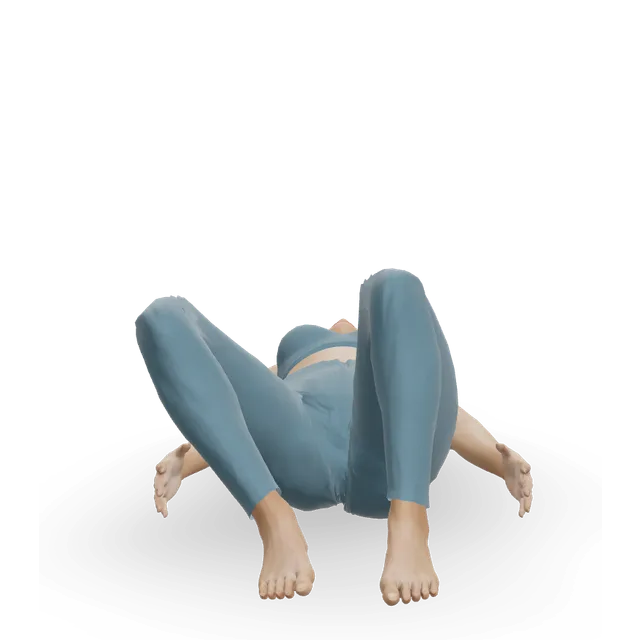
Pilates guide

Pilates after gallbladder removal: when to start, what to change and a return class

Most people have their gallbladder removed by keyhole surgery and go home the same day, and gentle Pilates-style exercises (breathing, a tummy draw-in and knee rolls) start the day after. A full Pilates class comes back in stages: knees-bent, side-lying and all-fours moves from about 2 weeks once your cuts have healed, and curl-ups, planks and roll-ups from about 4 weeks after keyhole surgery, later after open surgery. Those timings are our suggestion: no study has tested Pilates after gallbladder removal, advice from surgeons ranges from 2 to 6 weeks for heavy lifting, and your surgical team's advice comes first.

This guide covers the stages, why curl-ups and roll-ups come last, lying face down over fresh cuts, shoulder-tip pain and bloating in class, the reformer, hernias at the keyhole cuts, Pilates while you wait for surgery, other keyhole tummy operations, and the warning signs after the operation. It ends with a free 25-minute class that takes you back towards a normal beginner class.

The short version

Pilates-style moves start the day after

Breathing, a gentle tummy draw-in, pelvic tilts and knee rolls are part of NHS physiotherapy advice from the day after tummy surgery, and the NHS says start light activity and build up gradually. Our exercise after gallbladder removal guide covers the first 2 weeks day by day.

Sources 1, 2

A class comes back in stages

Our suggestion: knees-bent, side-lying and all-fours moves from about 2 weeks once the cuts have healed, then curl-ups, planks and roll-ups from about 4 weeks. Advice varies from light exercise at about a week to no heavy lifting for 4 to 6 weeks, so ask your team, and take longer after open surgery.

Sources 3, 4, 5

No study has tested Pilates after gallbladder removal

Our searches found none. People recover faster than old advice assumed: in 200 people told to take 2 days off, the median return to their usual recreation was 2 days, and clear, earlier advice sped recovery without more complications in a Dutch trial of 344 people.

Sources 6, 7, 8

Most Pilates moves are low-pressure, in one small study

In 18 healthy women who already did Pilates, most moves raised tummy pressure no more than getting up from a chair, something you do many times a day after an operation. Roll-ups kept it up longest, so they come last. It hasn't been tested in men or in fresh scars.

Source 9

Hernias at the cuts are uncommon

In large studies, 0.2% to 2.1% of people needed a repair, mostly at the belly-button cut. See a GP about a bulge near a scar.

Sources 10, 11, 12

Know the warning signs

Severe or worsening pain, a high temperature, pus, swelling or redness at a wound, yellow skin or eyes, or a painful, swollen leg need an urgent GP appointment or NHS 111; a swollen leg with breathlessness or chest pain needs 999. The full lists are below.

Source 13

The operation and your recovery

Living without a gallbladder

"You can live without a gallbladder and continue to eat a normal, healthy diet after it's been removed." It's usually removed because gallstones are causing problems such as frequent tummy pain.

Source 14

Keyhole or open

The National Institute for Health and Care Excellence (NICE) recommends offering keyhole (laparoscopic) surgery as a day case for planned operations, and about 2 in 3 planned operations in England are day cases. Keyhole surgery uses 3 or 4 small cuts, and full recovery typically takes around 10 days; open surgery uses a larger cut and typically takes 6 weeks. In a Cochrane review, keyhole surgery shortened recovery by about 3 weeks.

Sources 15, 16, 17, 18

Where the cuts are

Our exercise after gallbladder removal guide puts the keyhole cuts near the belly button and on the right of the tummy. That's why lying on your front, and on your right side, can be uncomfortable at first.

What the NHS says about recovery

The NHS says "start doing some light activity but build up gradually and avoid strenuous exercise". You may be able to go back to work 1 to 2 weeks after the operation, later with a job that involves heavy lifting.

Source 2

What's common afterwards

Pain in the tip of your shoulder from the gas used in keyhole surgery is common for a few days. The NHS says feeling sick, indigestion, tummy pain or diarrhoea usually improve soon after the operation. Across 17 studies, about 1 in 6 people had diarrhoea afterwards, more with alcohol and a diet that isn't low in fat.

Sources 13, 19, 20

After open surgery

An NHS physiotherapy booklet for major tummy surgery says "We strongly advise you to avoid exercises like sit ups" while the tummy wall heals, lift nothing heavier than 2 to 3 kg at first, and build up to walking 30 minutes a day by 2 to 3 months. Then, "To progress your core stability exercises you could attend a Yoga or Pilates group".

Source 1

When to start: the stages back to a Pilates class

Our suggestion, built from the NHS physiotherapy booklet for tummy surgery, the Royal College of Surgeons' recovery guide, the NHS, a German review and the Pilates pressure study. Guidance ranges from light exercise at about a week to no heavy lifting for 4 to 6 weeks, no trial has tested these stages, and your surgical team's advice comes first.

  1. Days 1 to 14: breathing, ankle circles, a gentle tummy draw-in, pelvic tilts and small knee rolls, twice a day, plus short walks from about day 3. Our exercise after gallbladder removal guide has the day-by-day plan and a 15-minute routine.
  2. From about 2 weeks after keyhole surgery, once the cuts have healed and your team agrees: knees-bent mat work, side-lying moves, all fours and standing moves, as in stages 1 and 2 of our return class.
  3. From about 4 weeks, when that's easy and nothing bulges at your belly-button scar: head-and-shoulder curls, dead bugs and knee planks, as in stage 3 of the class.
  4. Then the classical moves one at a time: the hundred, the single-leg stretch and roll-ups last, and the reformer's abdominal series.
  5. After open surgery, or keyhole surgery that became open, take each stage more slowly: the NHS physiotherapy booklet suggests a Pilates or yoga group after 2 to 3 months.
  6. At any stage, if something hurts, ease back and build up again; stop if a cut pulls sharply or a bulge appears.

See the movement on the 3D figure: Lateral breathing (Pilates breathing)

What the evidence says

No one has tested Pilates after gallbladder removal. The evidence below is about recovery, lifting advice, tummy pressure and hernias at the cuts.

No study of Pilates, yoga or core exercise after gallbladder removal

Our searches of PubMed, Europe PMC and ClinicalTrials.gov in November 2026 found none. The nearest are small nursing trials: in 66 people, deep breathing and breathing exercises borrowed from yoga eased shoulder pain in the first 24 hours, and in another trial breathing and coughing exercises eased shoulder pain at 12 hours. Both were single-centre and unblinded.

Sources 6, 21, 22

People recover faster than old advice assumedEmerging evidence

In 200 Danish people advised to take 2 days off, the median return to usual recreation was 2 days and to work 6 days; pain, tiredness and expectations drove longer recoveries. In 24 people, activity, tiredness and pain were back to normal by day 2. In a Dutch trial of 344 people having keyhole operations including gallbladder removal, clear, personalised recovery advice brought the median return to normal activities from 26 days down to 21, with no more complications.

Sources 7, 23, 8

Lifting advice varies, and little evidence lies behind itStrong evidence

A German review of 16 low-quality studies found no evidence for any particular limit, and 78% of 386 German hospitals based their advice on experience. The Royal College of Surgeons allows walking, swimming, cycling and light exercise from about a week if the wound is comfortable, while one NHS trust's 2024 leaflet says "Avoid heavy lifting for four to six weeks". A Dutch expert panel suggested lifting 5 kg from 2 to 4 days and 15 kg from 1 to 2 weeks.

Sources 4, 24, 3, 5, 25

Getting up early helpsStrong evidence

The ERAS Society's guideline for abdominal surgery recommends getting up for 30 minutes on the day of surgery and for 6 hours a day after that (a strong recommendation, moderate evidence). A review concluded that bed rest is harmful, though studies of early-mobilisation programmes were few and poor.

Sources 26, 27

Pressure inside the tummy during PilatesEmerging evidence

In one US laboratory study of 18 healthy women who already did Pilates, most mat and reformer moves raised tummy pressure no more than getting up from a chair, and roll-ups were the highest. The authors listed lower-pressure moves for after surgery, such as bridging, lifting one knee to tabletop, the chest lift, side kicks, all fours and reformer footwork. The measure was indirect, and the study hasn't been repeated in men or after surgery.

Source 9

Hernias at the cuts: uncommon, mostly at the belly buttonStrong evidence

In large studies, 0.2% of 2,930 people, about 1% of 1,172 people followed for about 5 years and 2.1% of 1,756 people needed a repair; most hernias were at the belly-button cut. When 241 people were examined and scanned about 4 years later, 25.9% had one there, many without symptoms. Obesity, diabetes, a wound infection and a cut that had to be enlarged raise the risk. None of these studies looked at exercise as a cause.

Sources 10, 28, 11, 12, 29

Activity and hernias at the scarMixed evidence

A review found no clinical study linking activity after abdominal surgery to a hernia at the scar, and a German review noted that hernias were more common in people who avoided exertion for longer than 8 weeks. Both rest on weak evidence, so following your team's lifting advice for the first weeks still makes sense.

Sources 30, 4

Being active before surgeryEmerging evidence

In 200 Swedish people, those who were regularly active before gallbladder removal were more likely to be back at work within 3 weeks. It's an observational study, so it can't show the activity caused the quicker recovery.

Source 31

Binders didn't helpEmerging evidence

In a trial of 66 people after keyhole gallbladder removal, a tummy binder made no difference to pain, walking or recovery, and people were more comfortable without one.

Source 32

Days 1 to 14: the first moves

From our exercise after gallbladder removal guide, which takes its doses from an NHS physiotherapy booklet: lateral breathing, 5 deep breaths 3 to 4 times an hour at first; ankle circles, 30 seconds each foot every hour while you're resting a lot; then, from the day after, a gentle tummy draw-in, pelvic tilts (no bridge yet), small knee rolls and pelvic floor squeezes, 3 to 5 of each held 5 to 10 seconds, twice a day. Walk from about day 3, 5 to 10 minutes at first (the Royal College of Surgeons' recovery guide).

From about 2 weeks: knees bent, on your side and on all fours

Heel slide: "10 slow repetitions each side, once or twice a day" (the move page's dose). Knee fold and bent-knee fall-out: "2 sets of 5 to 10 each side, every other day" (the move page's dose). Pelvic tilt into bridge: 6 to 8 small bridges (our clinical Pilates routine's dose). Clamshell: about 1 minute each side (our clinical Pilates routine's dose). Side kick: "8 to 10 each side" (the move page's dose); lie on your left side first if the right-side cuts are sore. Open book: "8 to 10 slow openings each side" (the move page's dose), only as far as is comfortable. Cat-cow: "8 waves, slower than feels natural" (the move page's dose). Bird dog one limb: 5 each arm and leg, and sit to stand: 8 to 10 (our editorial starting points). Wall side leg lift: "10 to 12 each side" (the move page's dose).

From about 4 weeks: curls and planks, slowly

When stage 2 is easy and nothing bulges at your belly-button scar; later after open surgery. Dead bug heel taps: 5 to 8 each side, head down, and knee plank: 3 holds of 10 to 20 seconds (our stoma core class's doses). Chest lift: "8 to 10 reps" (the move page's dose); start with 5. Hundred: "50 beats to start, building to 100" (the move page's dose), head down at first. Single-leg stretch: "6 to 10 each side" (the move page's dose), with the long leg higher if your tummy domes. Roll-ups come last.

Moves to change or leave out at first

Our suggestions, from the NHS physiotherapy booklet and the Pilates pressure study. No study has tested them after gallbladder removal.

Sit-ups, curl-ups and roll-ups

Leave the curl-up family to the last stage. The NHS physiotherapy booklet strongly advises against sit-ups while the tummy wall heals after major surgery, and the roll-up kept tummy pressure up longest of 22 Pilates moves.

Sources 1, 9

Lying face down on fresh cuts

Wait until the cuts have healed and it's comfortable, usually about 2 weeks, before the swan, swimming or other face-down moves. A folded towel under your hips helps at first.

Source 3

Rolling and legs-overhead moves

Rolling like a ball, the seal, the open-leg rocker and the roll-over press on your tummy and load it at the end of the movement. Leave them until the curl-ups feel easy.

Twisting with effort

Small knee rolls on your back are fine from the day after, as the NHS booklet shows. Leave the criss-cross and the saw until the last stage.

Source 1

Holding your breath

Breathe out as you lift, curl or press, and hug a cushion over your tummy if you need to cough or sneeze in the first weeks (our exercise after gallbladder removal guide).

The reformer

Footwork, lying arm work and side-lying work on light springs were among the lowest-pressure moves and suit the 2-week stage. The long stretch, the abdominal series and heavy springs suit the last stage.

Source 9

Shoulder pain, bloating and your scars in class

Shoulder-tip pain

It's referred pain from the gas used in keyhole surgery and usually settles within days. Moving about helps, and breathing exercises eased it in small trials in the first day or so.

Sources 19, 21, 22

Bloating or loose poo

Keep classes away from big or fatty meals and know where the toilet is (our suggestion). If diarrhoea, tummy pain or indigestion carry on after the operation, tell your GP or care team.

Sources 13, 20

Watch your belly-button scar

Ease off if a scar pulls sharply, or if a bulge appears when you curl, plank or strain, and get it checked (see the warning signs).

Tell your teacher

Tell your teacher the date and type of your operation. The UK pelvic health physiotherapists' Pilates booklet asks women who've had recent tummy surgery to wait until they've had a post-operative check and been told it's safe to start exercising.

Source 33

Pilates while you wait for surgery

Staying active helps

The NHS physiotherapy booklet suggests about 30 minutes of exercise a day before a tummy operation, and people who were active before gallbladder surgery were back at work sooner. Pilates can be part of that.

Sources 31, 1

Gallstone pain

Pilates won't treat gallstones: the only report of yoga for gallbladder inflammation is a single case. Symptomatic gallstones are treated with surgery. Stop and get help for the pain described in the warning signs below.

Sources 34, 35

After other keyhole tummy operations

The same stages, with your own team's timings

The stages on this page suit most planned keyhole tummy operations, but some have their own guides: a hernia repair (our Pilates with a hernia guide), a caesarean birth (Pilates after having a baby), keyhole surgery for endometriosis (Pilates for endometriosis), a hysterectomy and appendix removal (our exercise guides). Your own surgical team's advice comes first.

Classes to follow

Start with our 15-minute routine for the first 2 weeks. Our return class then takes you through three stages, with a stop point after each. No trial has tested it: its order and doses are our editorial choice, from an NHS physiotherapy booklet, the Royal College of Surgeons' recovery guide and the Pilates pressure study. The clinical Pilates routine suits the 2-week stage; after open surgery, the bowel surgery routine uses the same NHS doses with a second level, and the stoma levels 3 and 4 class is the next step (skip their stoma tips).

Exercises after gallbladder or appendix removal: the first 2 weeks

A gentle 15-minute routine for the first 2 weeks after keyhole gallbladder or appendix removal: breathing, gentle tummy exercises, chair and standing moves and a walk.

15 minBeginner12 movesA bench or box, Something with weight

Pilates after tummy surgery: a 25-minute return class in three stages, with a stop point after each

A 25-minute Pilates return class after keyhole gallbladder removal or a hernia repair: knees-bent moves, then side-lying and standing work, then first curls.

25 minBeginner17 movesA bench or box, A wall

Clinical Pilates exercises: an NHS-style physio class routine for home

A 15-minute routine of the exercises NHS physiotherapy Pilates classes send home: bridge, knee folds, leg slides, clam, side kick and side openings.

15 minBeginner10 movesNo equipment

Core exercises after bowel or stoma surgery

A gentle 20-minute core routine for the weeks after bowel or stoma surgery: breathing, tummy and pelvic floor work lying down, then chair and standing moves.

20 minBeginner14 movesA bench or box, A wall

Core exercises with a stoma: levels 3 and 4

The next step after the first core routine: 20 to 30 minutes of level 3 and 4 core work, 2 to 3 times a week, from the UK stoma nurses' recommendations.

25 minIntermediate14 movesNo equipment

Beginner Pilates workout

A 20-minute mat Pilates workout for complete beginners. It covers breathing, spine position and the foundation moves, each with an easier option.

20 minBeginner13 movesNo equipment

Easy cardio workout

A steady 30 to 45 minute cardio session at talk-but-not-sing pace: walk, cycle, row or cross-train, counting toward weekly activity guidelines.

40 minBeginner3 movesCardio machine, A wall

A plan to follow

The walking plan builds back towards 150 minutes a week.

Warning signs: when to get help

The lines after the operation are from our exercise after gallbladder removal guide, word for word, from the NHS complications page; the lines while you wait for surgery are the NHS gallstones page's words; the heart lines are from our other Pilates guides. This is general information, not a diagnosis. A&E means accident and emergency; in the US, call 911 for 999, and use your doctor's urgent line or urgent care for NHS 111.

Ask for an urgent GP appointment or call NHS 111

The NHS says get help if:

  • you have severe or worsening pain that does not go away
  • pus is oozing from your wounds
  • you have pain or swelling around your wounds, or they're red and tender (redness may be harder to see on brown or black skin)
  • your skin or the whites of your eyes are yellow
  • you have swelling, tenderness, throbbing or cramping pain in your leg
  • your temperature is very high, or you feel hot, cold or shivery

Source 13

Call 999 or go to A&E

Call 999 or go to accident and emergency (A&E) if you have pain and swelling in your leg and you're having difficulty breathing or chest pains: this could be a blood clot in your lungs. Call 999 for chest pain that feels tight or spreads to your arms, neck or jaw. Don't drive yourself to A&E.

Sources 13, 36

Contact your GP or care team

If feeling sick, indigestion, tummy pain or diarrhoea carry on after the operation.

Source 13

A bulge at a scar

A hernia at a cut feels like a soft lump or bulge near a scar, often easier to see when you cough or strain. See a GP if you notice one. Our hernia guide lists the signs that need 999, such as very bad tummy pain that doesn't go away, or not being able to poo or fart.

Source 10

If a class brings on pain

The Royal College of Surgeons says that if you feel pain as you build up, you have probably just overdone it a little: ease back, then build up gradually again. Stop if a wound pulls sharply or a bulge appears when you strain, and get advice if it doesn't settle.

Source 3

While you wait for surgery

The NHS says ask for an urgent GP appointment or get help from NHS 111 if "you have pain in your tummy that lasts longer than 30 minutes", and call 999 or go to A&E if "you have sudden, severe pain in your tummy", "you have pain that spreads from your tummy to your back, and are being sick", "your temperature is very high, or you feel hot, cold or shivery" or "your skin or the white part of your eyes looks yellow".

Source 34

Chest pain or fainting: call 999

  • You get sudden pain or discomfort in your chest that doesn't go away; it can feel like squeezing or pressure, burning or indigestion.
  • The pain spreads to your left or right arm, or your neck, jaw, stomach or back.
  • You have chest pain and feel sweaty, sick, light-headed or short of breath.
  • Someone faints while exercising, can't be woken within 1 minute, or has chest pain or a pounding, fluttering or irregular heartbeat.

Sources 37, 38, 36

Breathlessness

Call 999 or go to A&E (accident and emergency) straight away for severe difficulty breathing (gasping, choking or not able to get words out), a chest that feels tight or heavy, pain that spreads to your arms, back, neck and jaw, lips or skin turning very pale, blue or grey, or sudden confusion. If you're more short of breath than usual, or your heart is racing, fluttering or skipping beats, contact NHS 111.

Source 39

Getting up from the mat

  • Finish all your lying moves before you sit up, so you change position as few times as you can.
  • Roll onto your side, then push yourself up to sitting with your arms.
  • Sit for a minute or so before you kneel or stand.
  • Stand up slowly, with a chair or counter within reach.
  • Pause before you walk off. If you feel light-headed, cross your legs or clench your buttocks and tummy muscles.
  • If you still feel faint, lie down with your legs raised.

Source 38

Stop the session if

You feel any pain or become unwell, as the NHS advises for its Pilates videos, and especially for chest pain or pressure, unusual breathlessness, dizziness or fainting. If you have a health problem, an injury or any symptoms, get advice from a healthcare professional, such as a GP, before you start.

Source 40

Before you start

The NHS advises getting advice from a healthcare professional first if you have a health problem, an injury or symptoms, or have recently had a heart attack or an operation.

Source 40

Myths

"You can't exercise for 6 weeks after keyhole surgery"Strong evidence

Full recovery typically takes around 10 days after keyhole surgery, the NHS says start light activity and build up, and people told to expect a quick recovery were back to their usual recreation within days. Six weeks is the timescale after open surgery.

Sources 17, 2, 7

"Stay in bed and keep still to let it heal"Strong evidence

Bed rest is harmful after an operation, and guidelines recommend getting up on the day of surgery.

Sources 27, 26

"Pilates is too much for your tummy after surgery"Emerging evidence

Most beginner Pilates moves raised tummy pressure no more than getting up from a chair in one small study, and an NHS physiotherapy booklet suggests a Pilates or yoga group to build core strength after major surgery. Curl-ups, roll-ups and planks come later.

Sources 9, 1

"Lifting your shopping will give you a hernia at the scar"Mixed evidence

Hernias at the cuts are uncommon, and no clinical study links activity after surgery to them, though the evidence is weak. Follow your team's lifting advice for the first weeks.

Sources 10, 11, 30

"Pilates or yoga can treat gallstones"Strong evidence

No study shows it; the only report is a single case. Gallstones that cause symptoms are treated with keyhole surgery.

Sources 35, 15

"You need a reformer for real Pilates after surgery"

Mat Pilates is Pilates. Reformer footwork and lying arm work were among the lowest-pressure moves, so either suits the return (our reading).

Source 9

Questions people ask

When can I do Pilates after gallbladder removal?

Gentle breathing, a tummy draw-in and knee rolls start the day after keyhole surgery. Our suggestion is knees-bent, side-lying and all-fours Pilates from about 2 weeks once your cuts have healed, and curl-ups, planks and roll-ups from about 4 weeks, later after open surgery. Advice varies, so your surgical team's comes first.

Can I do reformer Pilates after gallbladder surgery?

Yes, in stages: footwork, lying arm work and side-lying work on light springs first, then the abdominal series and the long stretch later. Those first moves were among the lowest-pressure in a study of 22 Pilates moves.

When can I do sit-ups or ab work in Pilates after gallbladder removal?

Leave curl-ups, the hundred and roll-ups until gentler work is easy and nothing bulges at your belly-button scar: from about 4 weeks after keyhole surgery is our suggestion. An NHS physiotherapy booklet strongly advises against sit-ups while the tummy wall heals after major surgery.

Can Pilates cause a hernia after gallbladder surgery?

Hernias at the keyhole cuts are uncommon, and we found no study linking Pilates or exercise to them. Build up gradually, breathe out on the effort and see a GP if you notice a bulge near a scar.

Why does my shoulder hurt after gallbladder surgery?

It's referred pain from the gas used in keyhole surgery, and it usually settles within a few days. Moving about helps, and breathing exercises eased it in small trials.

Is it OK to lie on my front in Pilates after the operation?

Wait until your cuts have healed and it feels comfortable, usually about 2 weeks. Then try a small swan with a folded towel under your hips.

What should I tell my Pilates teacher?

The date and type of your operation, keyhole or open, and anything your team told you to avoid. A teacher may ask for your team's go-ahead first, as the UK pelvic health physiotherapists' Pilates booklet advises after recent tummy surgery.

Can Pilates help bloating after gallbladder removal?

It won't treat it, but gentle upright and side-lying work and walking can ease bloating, and keeping classes away from big meals helps. If diarrhoea or tummy pain carries on, see your GP.

Can I do Pilates while I wait for gallbladder surgery?

Usually, yes, and being active before surgery went with a quicker return to work in one study. Ask for an urgent GP appointment or call NHS 111 for tummy pain lasting longer than 30 minutes, and call 999 for sudden, severe tummy pain, a very high temperature, or yellow skin or eyes.

Does Pilates help gallstones?

No study shows it does. Gallstones that cause symptoms are treated with surgery, and Pilates is for staying active around it.

What are the warning signs after gallbladder surgery?

Ask for an urgent GP appointment or call NHS 111 for severe or worsening pain, a high temperature, pus, or pain, swelling or redness at a wound, yellow skin or eyes, or a painful, swollen leg. Call 999 for a painful, swollen leg with difficulty breathing or chest pain.

Sources

  1. York and Scarborough Teaching Hospitals NHS Foundation Trust 2024 · Recovering from major abdominal surgery (NHS physiotherapy booklet; read in full)
  2. NHS · Recovering from gallbladder removal
  3. Royal College of Surgeons of England 2014 · Get Well Soon: gallbladder removal (recovery guide with a day-by-day tracker)
  4. Güsgen 2020 · Advice on physical strain after abdominal surgery (systematic review, Dtsch Arztebl Int)
  5. Royal Berkshire NHS Foundation Trust 2024 · Advice following keyhole gallbladder removal (patient leaflet; review was due October 2026)
  6. PubMed, Europe PMC and ClinicalTrials.gov · Our searches for Pilates, yoga and core exercise studies after gallbladder removal (November 2026)
  7. Bisgaard 2001 · What decides recovery after keyhole gallbladder removal: 200 people (cohort study, Arch Surg)
  8. van der Meij 2018 · Personalised recovery advice after keyhole abdominal surgery: 344 people (randomised trial, Lancet)
  9. Coleman 2015 · Tummy pressure during 22 Pilates exercises (laboratory study, Int Urogynecol J; read in full)
  10. Nofal 2020 · Hernias at the keyhole cuts after gallbladder removal in 2,930 people (cohort study, Sci Rep)
  11. van Bodegraven 2025 · Hernias at the keyhole cuts in 1,756 people after gallbladder removal (retrospective study, Langenbecks Arch Surg)
  12. Helgstrand 2011 · Hernias at keyhole cuts after laparoscopic surgery (systematic review, Hernia)
  13. NHS · Complications of gallbladder removal
  14. NHS · What is gallbladder removal?
  15. NICE CG188 · Gallstone disease: diagnosis and management (2014)
  16. Ayyaz 2025 · Day-case keyhole gallbladder removal in England, 2019 to 2022 (national data study, Ann R Coll Surg Engl)
  17. NHS inform · Gallstones
  18. Keus 2006 · Keyhole against open gallbladder removal: 38 trials (Cochrane review)
  19. Donatsky 2013 · Shoulder pain after keyhole gallbladder removal (systematic review, Surg Endosc)
  20. Zhang 2026 · Diarrhoea after gallbladder removal: 17 studies (systematic review and meta-analysis, J Laparoendosc Adv Surg Tech A)
  21. Kurt 2025 · Breathing exercises after keyhole gallbladder removal in 66 people (randomised trial, Nurs Health Sci; read in full)
  22. Artıklar 2024 · Breathing and coughing exercises for shoulder pain after keyhole gallbladder removal (randomised trial, J Perianesth Nurs)
  23. Bisgaard 2002 · Recovery after keyhole gallbladder removal in 24 people (cohort study, Surgery)
  24. Schaaf 2022 · What 127 hernia experts advise on strain after surgery (survey, Hernia)
  25. van Vliet 2016 · Expert agreement on recovery times after abdominal surgery (Delphi study, Surg Endosc; read in full)
  26. Oodit 2022 · ERAS Society guidelines for abdominal and pelvic surgery (guideline, World J Surg; read in full)
  27. Castelino 2016 · Early mobilisation after abdominal and chest surgery (systematic review, Surgery)
  28. Chatzimavroudis 2017 · Hernias at the keyhole cuts after gallbladder removal over 10 years (cohort study, Hernia)
  29. Comajuncosas 2014 · Hernias at the belly-button cut in 241 people examined and scanned (prospective study, Am J Surg)
  30. Loor 2021 · Work and activity restrictions after abdominal surgery (systematic review, Ann Surg)
  31. Onerup 2015 · Activity before surgery and recovery after gallbladder removal in 200 people (cohort study, Int J Surg)
  32. Choi 2021 · A tummy binder after keyhole gallbladder removal in 66 people (randomised trial, J Minim Invasive Surg)
  33. POGP 2022 · Pilates in women's health physiotherapy, UK pelvic health physiotherapists' booklet (physiotherapy leaflet, past its review date: reviewed 2022, review due 2025)
  34. NHS · Gallstones
  35. Metri 2021 · Gallbladder inflammation managed with Ayurveda and yoga (case report, J Ayurveda Integr Med)
  36. NHS · Heart attack
  37. NHS · Chest pain (past its review date: reviewed August 2023, review due August 2026)
  38. NHS · Fainting
  39. NHS · Shortness of breath
  40. NHS · Pilates for beginners (exercise video, with safety information)

Exercise education, not a personal prescription, and clinical review of these guides is pending. If you are pregnant, have a health condition or have had recent surgery, check with a doctor, midwife or physiotherapist before starting, and stop for sharp or increasing pain. Health disclaimer.