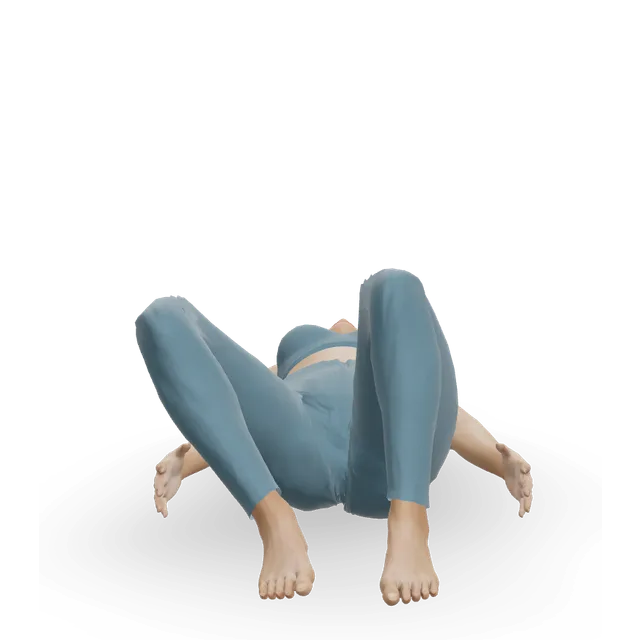
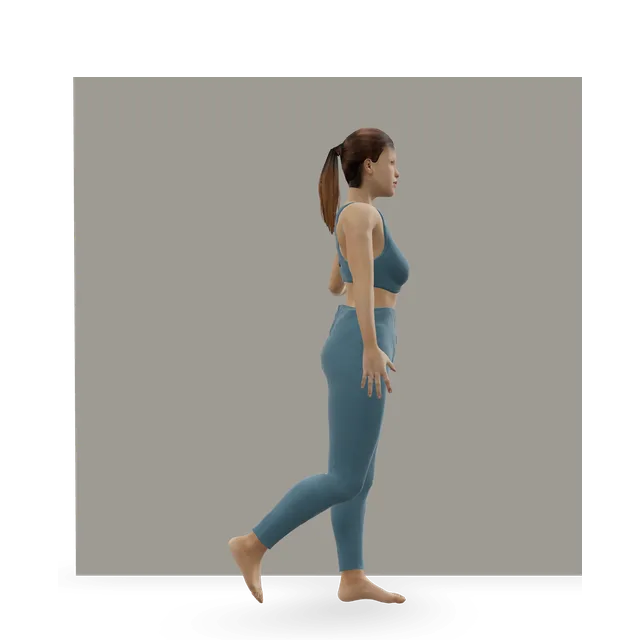
No study has tested Pilates for restless legs
Our searches found no published study. The only Pilates study is registered, in older adults on dialysis, and hasn't reported any results.
Pilates guide
Restless legs syndrome (RLS) is a strong urge to move your legs, usually with uncomfortable feelings, that comes on when you rest in the evening or at night and eases when you move. Pilates can fit well: gentle leg stretches and slow leg circles in the early evening follow the NHS's advice to walk, stretch or massage your legs, and leg strength work earlier in the day follows the one exercise trial. But no study has tested Pilates for restless legs, and the treatments with the most evidence are checking and treating low iron and reviewing your medicines, which a GP does.
This guide covers what helps and how much, when to do Pilates, why your legs can feel restless after a class or during the relaxation at the end, which moves to use and change, pregnancy, and when to see a GP. It ends with a free 20-minute evening class.
Our searches found no published study. The only Pilates study is registered, in older adults on dialysis, and hasn't reported any results.
US sleep doctors ask for an iron check in everyone with troublesome RLS, and in a Cochrane review iron eased symptoms more than a dummy treatment. Some medicines, alcohol and caffeine can make RLS worse. A GP can check your iron and your medicines.
In the one trial, walking and leg strength work 3 days a week cut symptom scores by 39% by week 6, though only 23 people finished. Gentle yoga helped in one small trial, and leg stretches helped in small trials in people on dialysis.
The NHS says "exercise during the day" and not to do strenuous exercise late at night. In a survey of 528 people with RLS, over half said morning exercise helped and evening exercise made it worse. Our suggestion, from surveys and opinion rather than trials: harder classes in the morning or afternoon, gentle stretching in the early evening.
The NHS suggests walking, stretching or massaging your legs when you have symptoms. RLS comes on at rest, so if the relaxation at the end of a class sets it off, get up and walk.
Source 5
See a GP if restless legs stop you sleeping, affect your mental health, or the things you've tried haven't helped.
Source 5
The NHS lists "a strong need to move your legs", "uncomfortable feelings in your legs, such as tingling, throbbing or itching" and "pain in your legs", usually worse at night when resting. NHS inform, which calls it Willis-Ekbom disease, says the feelings can often be relieved by moving or rubbing your legs.
In a survey of 15,391 adults, 7.2% had some symptoms in a year and 2.7% had moderately or severely distressing symptoms at least twice a week. It's more common in women.
The NHS says it's thought to be linked to iron and the brain chemical dopamine. Usually there's no clear cause, but it runs in families and is linked with pregnancy, iron deficiency anaemia, kidney disease and some medicines.
NHS inform says up to 80% of people with RLS also have jerking leg movements in their sleep. US sleep doctors say about 9 in 10 people with RLS have trouble falling or staying asleep. Our Pilates for sleep guide covers winding down.
Leg cramps (a sudden painful tightening, often in the calf) and nerve damage (peripheral neuropathy) can feel similar. Our exercise for restless legs guide sorts them out, and a swollen, painful leg can be a clot (see the warning signs).
RLS comes on at rest and eases with movement, so two things in a Pilates class matter: moving and stretching your legs, which can ease symptoms while you do it, and lying still at the end, which can bring them on. Pilates leg work overlaps with the trial's strength exercises. It doesn't change your iron levels or replace the medicines that have the most evidence (our reading).
The American Academy of Sleep Medicine (AASM) asks for ferritin and transferrin saturation (measures of iron) in everyone with troublesome RLS, and suggests iron if ferritin is 75 micrograms per litre or less or transferrin saturation is below 20%. Those cut-offs are higher than for anaemia, and are expert agreement "which have not been empirically tested".
Source 3
In a Cochrane review, iron lowered symptom scores by about 4 points on a 0 to 40 scale against a dummy treatment (7 studies, 345 people; moderate certainty). Don't take extra iron without a GP's advice.
The AASM's first step is dealing with alcohol, caffeine, untreated sleep apnoea and some medicines, including sedating antihistamines, some antidepressants and anti-sickness medicines. A German guideline found too little evidence on coffee, alcohol and nicotine, so guidelines differ. Never stop a prescribed medicine yourself: ask your GP or pharmacist.
The AASM strongly recommends gabapentin, pregabalin and iron through a drip, and advises against the standard use of dopamine medicines, which can make RLS worse over time (augmentation). The NHS lists these and other medicines a GP may offer.
No one has tested Pilates for restless legs. The evidence below is about walking, strength work, stretching, yoga and timing, and most of it is small.
Our searches of PubMed, Europe PMC and ClinicalTrials.gov in November 2026 found no published Pilates study in RLS. One is registered: 100 older adults on haemodialysis, 16 weeks, not yet recruiting in 2025 and with no results. In a US survey, one person listed the reformer among exercises that made their legs worse, and in a follow-up study another suggested a Pilates programme might help: opinions, not evidence.
In the only trial of aerobic and strength training in RLS outside dialysis, 41 adults were randomised and 23 finished. A 30-minute treadmill walk plus lower-body strength exercises, 3 days a week for 12 weeks, cut symptom scores by 39% by week 6, against under 8% in the comparison group, and the gain lasted to week 12. One person had knee pain. People knew which group they were in.
Source 6
In 33 people on haemodialysis, 30 minutes of leg stretches during dialysis, 3 times a week for 8 weeks, lowered symptom scores from about 19 to 12. A 2026 review of 8 trials on dialysis, all in Iran, rated the evidence very low certainty. Outside dialysis, a Turkish pilot with 6 people per group found scores fell with both treadmill exercise and stretching, but it's too small to rely on.
A Cochrane review called the effects of treatments for RLS in kidney disease uncertain, though exercise lowered scores in 2 small studies. In a 6-month trial of 32 people, exercise during dialysis cut symptoms about as much as a dopamine medicine.
In 41 adults (30 finished), 12 weeks of gentle Iyengar yoga eased symptoms more than an educational film programme, with no side effects reported. The AASM rated it low certainty and made no recommendation.
A review of 11 trials found exercise among the treatments that helped, though the quality wasn't high; a 2025 review of 17 trials found no clear effect. The AASM didn't grade exercise because the studies were too limited, while a 2024 German guideline counts exercise and yoga among treatments with enough evidence.
No trial has compared exercise at different times of day. In a US survey of 528 people with RLS, over half said morning exercise helped and evening exercise made symptoms worse, and 24% said exercise only made them worse. The German guideline says intense exercise in the afternoon or evening seems to worsen symptoms at night, and the trial's authors note that people with RLS often avoid vigorous exercise because of anecdotal reports that it makes symptoms worse.
Exercise during the day, and don't eat a big meal or do strenuous exercise late at night. NHS inform says "do not exercise before bed", and lists walking and stretching, and relaxation exercises like yoga or tai chi, for an episode.
Harder, longer or hot classes in the morning or afternoon; gentle stretching and leg circles in the early evening, a couple of hours before bed. The US RLS Foundation advises avoiding significant exertion within an hour or so of bedtime, and RLS-UK says some people find a gentle walk early in the evening helps. This comes from surveys and opinion, so notice what works for you.
RLS comes on when you rest, so the still relaxation at the end of a class can set it off: get up and walk or stretch rather than lying through it. Some people also say hard or late exercise makes it worse. No study has looked at this in Pilates (our reading).
In the exercise trial, symptoms had eased by week 6. If nothing has changed and RLS still stops you sleeping, see your GP.
Source 6
The trial did 1 set of 8 to 12 for 2 weeks, then 2 sets, 3 days a week, with a 30-minute walk. Sit to stand, slow calf raise and glute bridge: 8 to 12 (the trial's dose; our home version). Wall side leg lift: "10 to 12 each side" (the move page's dose). Side kick: "8 to 10 each side" (the move page's dose). Inner thigh lift: "10 to 12 each side" (the move page's dose), standing in for the trial's hip adduction machine. Walk 30 minutes at a pace you can talk through.
 3D demoTreadmill walkingBeginner · Cardio machine
 3D demoSit to stand from a chairBeginner · A bench or box
 3D demoSlow calf raiseBeginner · A wall
 3D demoGlute bridgeBeginner · No equipment
 3D demoWall side leg lift (standing side kick at the wall)Beginner · A wall
 3D demoSide kick (Pilates side kick series)Beginner · No equipment
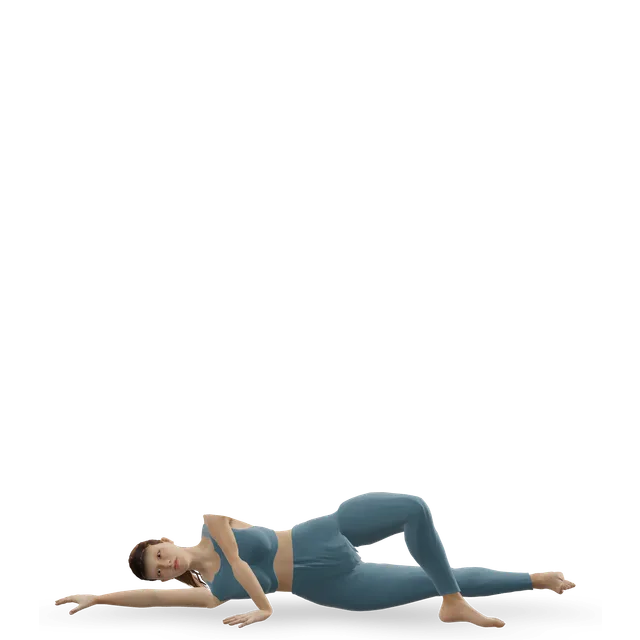 3D demoSide-lying inner thigh lift (Pilates side kick series)Beginner · No equipment
Calf, soleus and hamstring stretches and the figure four: 30 seconds each side (our editorial starting point, as our exercise for restless legs guide uses them). Standing quad stretch: "Hold 20 to 30 seconds, 2 to 4 times each side" (the move page's dose), a hand on the wall. Single-leg circle: "5 circles each direction, each leg" (the move page's dose). Side-lying leg circles: "8 each direction, each side" (the move page's dose). Ankle circles: "10 slow circles each way with each foot" (the move page's dose).
 3D demoWall calf stretch (gastrocnemius)Beginner · A wall
 3D demoSoleus wall stretchBeginner · A wall
 3D demoStanding quad stretchBeginner · A wall
 3D demoSupine hamstring stretch with a strapBeginner · No equipment
 3D demoReclined figure four (eye of the needle, Sucirandhrasana)Beginner · No equipment
 3D demoSingle-leg circle (Pilates one leg circle)Beginner · No equipment
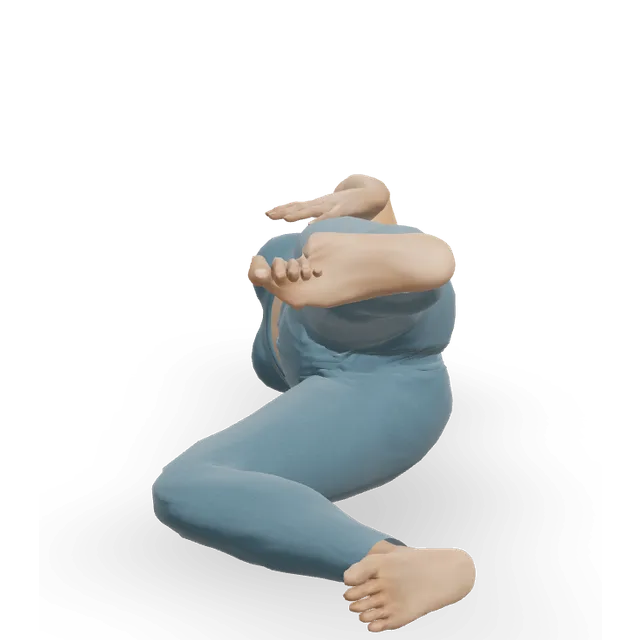 3D demoSide-lying leg circles (Pilates side kick series)Beginner · No equipment
 3D demoAnkle circlesBeginner · No equipment
Slow breathing: 1 to 2 minutes, about 4 counts in and 6 out (our bedtime Pilates class's dose, adapted from the move page's dose); the NHS points people with RLS to breathing exercises for stress. Windscreen wipers: "10 slow passes side to side, 2 rounds" (the move page's dose). Bent-knee fall-out: "2 sets of 5 to 10 each side, every other day" (the move page's dose).
Long corpse pose, long legs-up-the-wall holds or a long reclining rest at the end of an evening class can set RLS off. If your legs start to feel restless, get up and walk or stretch (our suggestion, from the NHS's advice for symptoms).
Source 5
Take strong, hot or long classes earlier in the day (our suggestion, from the NHS's advice not to do strenuous exercise late at night).
Some people report that vigorous exercise makes RLS worse, and the RLS Foundation says it often does. Keep the effort moderate and see how your legs respond (our suggestion).
The NHS says no caffeine after midday, so skip caffeinated pre-workout drinks before an afternoon or evening class.
Source 5
About 1 in 5 pregnant women get RLS, more as pregnancy goes on (8%, 16% and 22% by trimester), and only about 4% after the birth. The NHS says symptoms usually go away after giving birth.
In pregnancy, after the first trimester, keep time flat on your back to a few minutes: prop your upper body up, or use a side-lying or all-fours version.
The German guideline says moderate physical activity, yoga and massage can be recommended in pregnancy. Ask your midwife or GP about iron before taking supplements.
Our evening class is for the early evening: a short walk, standing calf and thigh stretches, slow leg circles and side kicks, then slow breathing, with no long still rest. No trial has tested it: its order and doses are our editorial choice, from the NHS's advice to walk and stretch your legs, RLS-UK's daily stretching and small stretching trials. The restless legs exercises session is the trial's daytime walk and leg strength work. The bedtime classes suit the last hour before bed, but get up if your legs start to feel restless.
A gentle 20-minute early-evening Pilates class for restless legs: a short walk, calf and thigh stretches, slow leg circles and side kicks, and slow breathing.
20 minBeginner14 movesA wallA 45-minute daytime session for restless legs, our editorial home version of the one exercise trial: a 30-minute walk, six leg strength moves and three stretches.
45 minBeginner10 movesCardio machine, A bench or boxA 25-minute Pilates class for your legs: reformer footwork without the machine, leg circles, the side kick series, inner-thigh squeezes and stretches.
25 minBeginner15 movesA wall, Other / check instructionsA slow 15-minute Pilates wind-down for the last hour before bed: slow breathing, small lying moves and a few minutes of stillness, with no effort or holds.
15 minBeginner9 movesFirm cushionA slow, 10-minute floor routine to unwind before sleep: child's pose, twists, happy baby and slow breathing.
10 minBeginner7 movesFirm cushion, A wallA steady 30 to 45 minute cardio session at talk-but-not-sing pace: walk, cycle, row or cross-train, counting toward weekly activity guidelines.
40 minBeginner3 movesCardio machine, A wallThe walking plan builds the daytime walking from the trial; do the evening class on other days.
The restless legs lines are from our exercise for restless legs guide, word for word, and the heart lines from our other Pilates guides. This is general information, not a diagnosis. A&E means accident and emergency; in the US, call 911 for 999, and use your doctor's urgent line or urgent care for NHS 111.
Source 28
Poor sleep can wear you down. If you have thoughts of harming yourself, call 999 or Samaritans on 116 123 (free, any time) in the UK, or call or text 988 in the US.
Call 999 or go to A&E (accident and emergency) straight away for severe difficulty breathing (gasping, choking or not able to get words out), a chest that feels tight or heavy, pain that spreads to your arms, back, neck and jaw, lips or skin turning very pale, blue or grey, or sudden confusion. If you're more short of breath than usual, or your heart is racing, fluttering or skipping beats, contact NHS 111.
Source 32
You feel any pain or become unwell, as the NHS advises for its Pilates videos, and especially for chest pain or pressure, unusual breathlessness, dizziness or fainting. If you have a health problem, an injury or any symptoms, get advice from a healthcare professional, such as a GP, before you start.
Source 33
The NHS advises getting advice from a healthcare professional first if you have a health problem, an injury or symptoms, or have recently had a heart attack or an operation.
Source 33
No study of Pilates in RLS has been published, and the stretching trials are small, mostly on dialysis, with very low certainty. Iron, when it's low, and medicines have the most evidence.
In the one trial, walking and leg strength work cut symptom scores by 39% by week 6, and the NHS says exercise during the day. Hard exercise late in the evening is the part people say makes it worse.
US sleep doctors suggest iron at a ferritin of 75 or less, higher than the usual cut-off for anaemia. These cut-offs are expert agreement, not trial results.
Source 3
Lying still is when RLS comes on. The NHS suggests walking or stretching when symptoms start, so get up if your legs become restless.
Source 5
RLS is thought to be linked to iron and dopamine in the brain. Leg pain from narrowed arteries comes on with walking and eases with rest, the opposite pattern: our exercise for restless legs guide explains the difference.
Source 5
It can be a good fit: gentle leg stretches and slow leg circles in the early evening follow the NHS advice to walk and stretch, and leg strength work earlier in the day follows the one exercise trial. But no study has tested Pilates for restless legs, and iron and medicines have the most evidence.
We don't know yet: the only Pilates study is registered, in older adults on dialysis, with no results. Walking and leg strength (one trial), stretching (small trials) and yoga (one trial) have some evidence.
Restless legs come on when you rest, so the still relaxation at the end of a class can set them off; get up and walk or stretch. Some people also say hard or late exercise makes it worse, so do harder classes earlier in the day.
Harder classes in the morning or afternoon, and gentle stretching in the early evening. That's our suggestion from surveys and the NHS's advice to exercise during the day and avoid strenuous exercise late at night.
In the early evening: calf, hamstring and thigh stretches, slow leg circles on your back and side, and ankle circles. Earlier in the day: bridges, side kicks and inner thigh lifts for leg strength, as in the one exercise trial.
It can be, but take hot or strong classes earlier in the day rather than late in the evening. That's our suggestion, from the NHS's advice not to do strenuous exercise late at night.
Yes, if restless legs bother you: US sleep doctors suggest iron treatment at a ferritin of 75 or less, higher than the usual anaemia cut-off, and a GP can test it. Don't take iron supplements without advice.
Yes: about 1 in 5 pregnant women get restless legs, and it usually goes after the birth. After the first trimester, keep time flat on your back to a few minutes, and ask your midwife or GP about iron.
Yoga has one small trial showing benefit; Pilates has none yet. Either can be part of a gentle evening routine, so choose the one you'll keep doing.
They may ease them for some people: RLS-UK suggests daily stretching, and small trials in people on dialysis found leg stretches helped. They don't cure restless legs.
See a GP if restless legs stop you sleeping, affect your mental health, or the things you've tried haven't helped. Also see one if they're getting worse on a dopamine medicine, or if you're pregnant and they trouble you.
Exercise education, not a personal prescription, and clinical review of these guides is pending. If you are pregnant, have a health condition or have had recent surgery, check with a doctor, midwife or physiotherapist before starting, and stop for sharp or increasing pain. Health disclaimer.