How to do a hang clean: the hang positions, the pull and the catch, easier steps, and how many
A hang clean starts with the bar in your hands rather than on the floor: you lower it to mid-thigh or just above your knees, jump and shrug, then pull yourself under and catch it on the front of your shoulders. Caught in a full front squat it's a hang clean; caught with your thighs above parallel, a hang power clean, though many gyms use one name for both.
Starting from the hang gives up nothing for power, and it's how coaches teach the clean, from the top down.
This guide covers the steps on the 3D figure, the four hang positions, the squat and power catches, the ladder from the hinge to the floor, how heavy and how many, your wrists and back, how safe weightlifting is, and the warning signs.
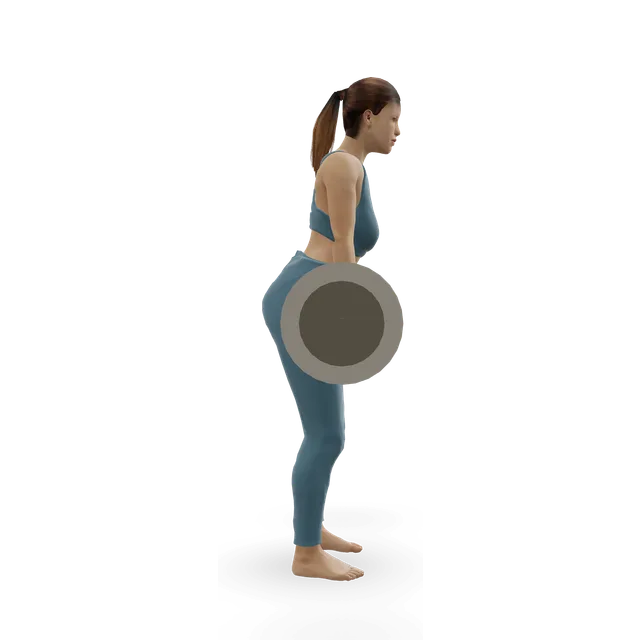
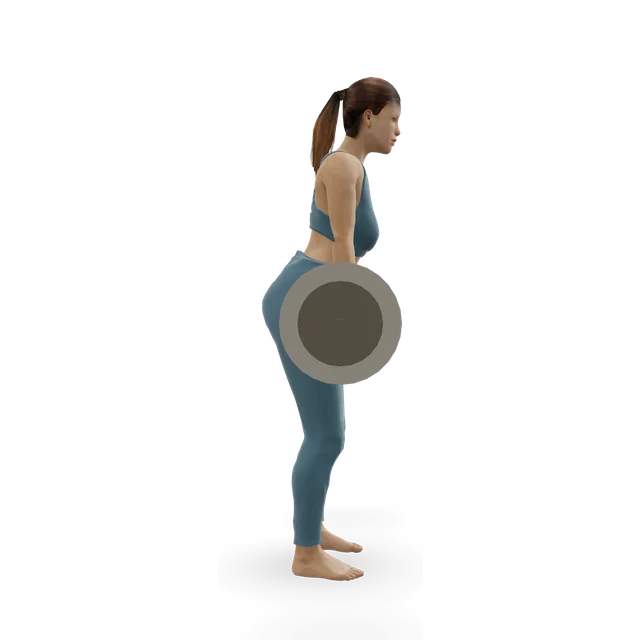
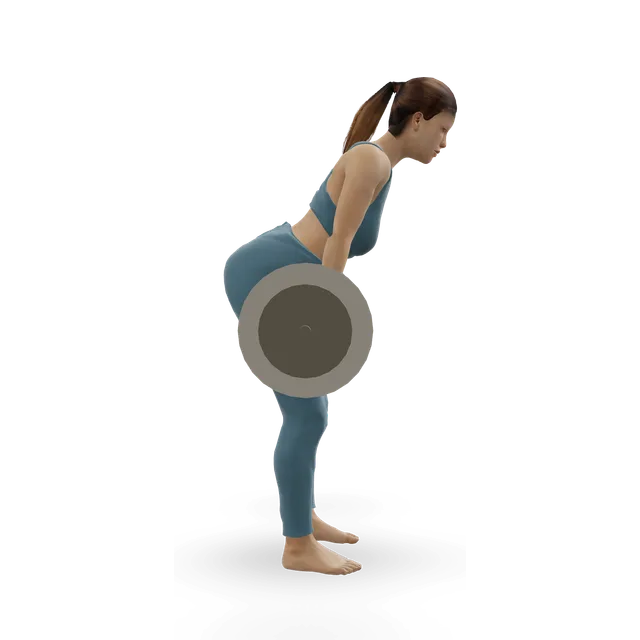
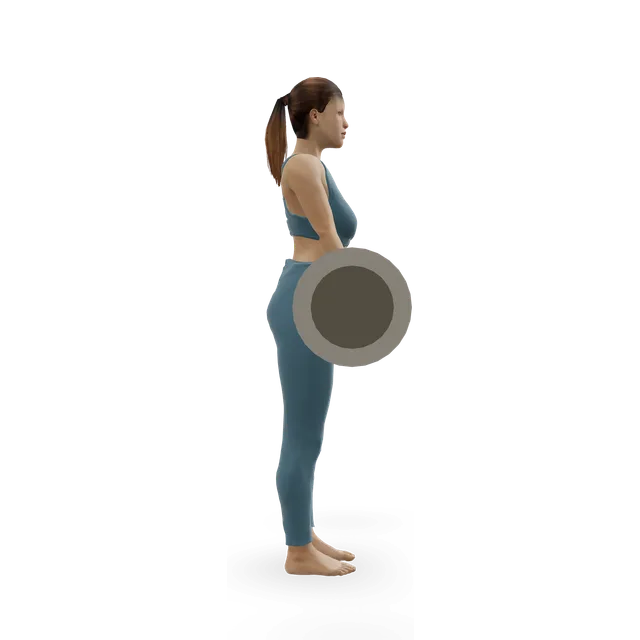
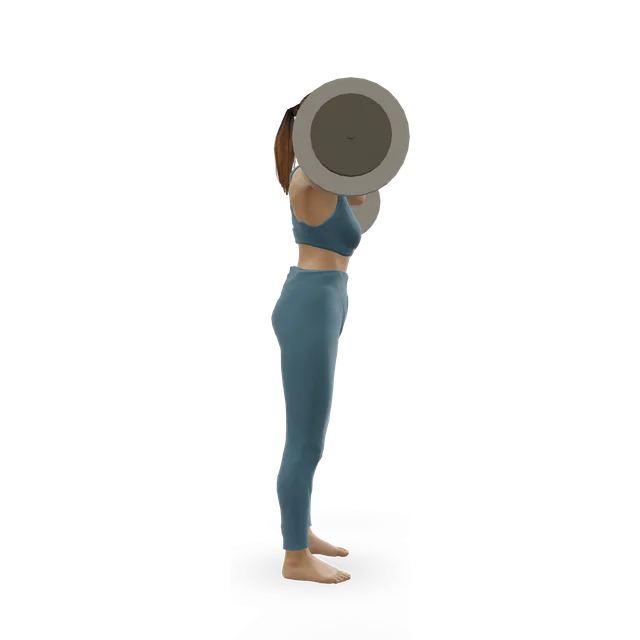
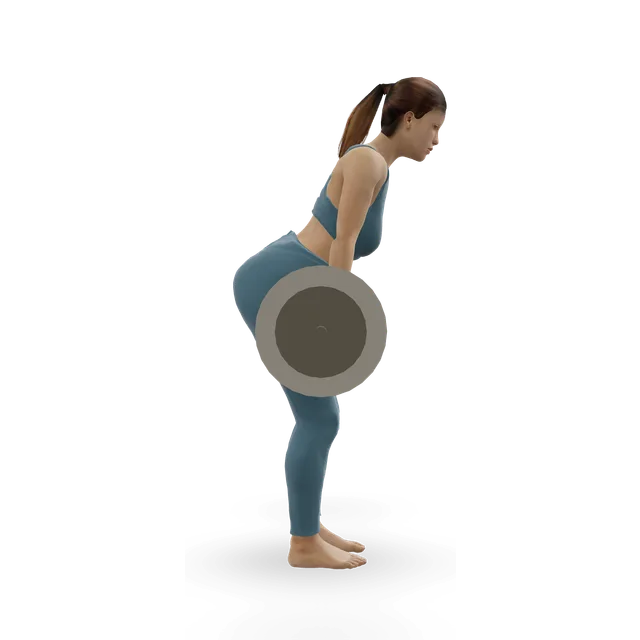
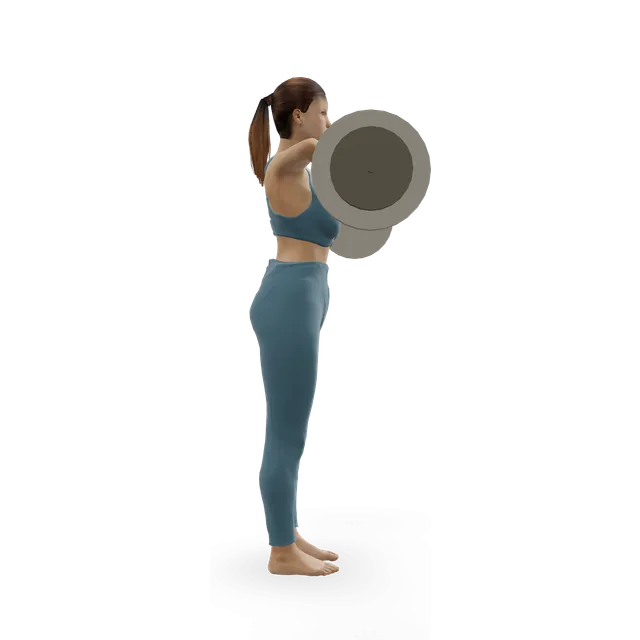
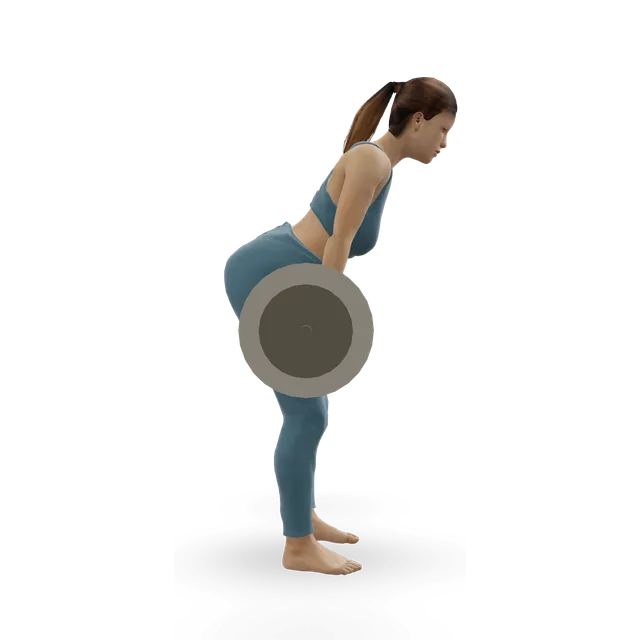
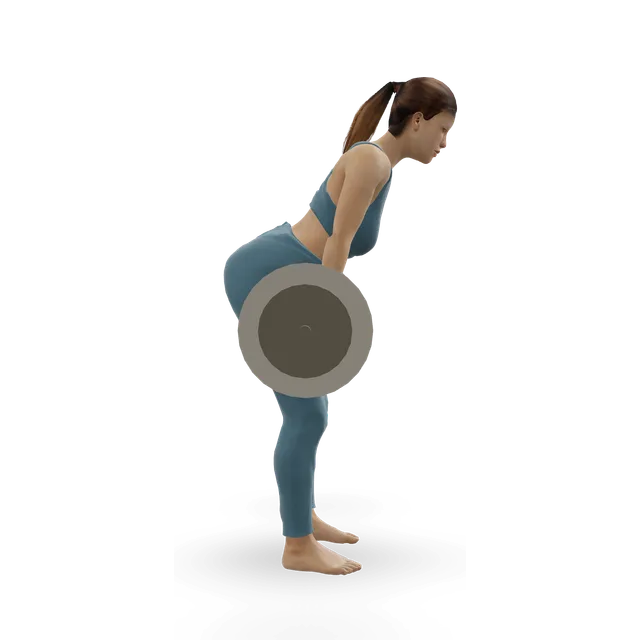
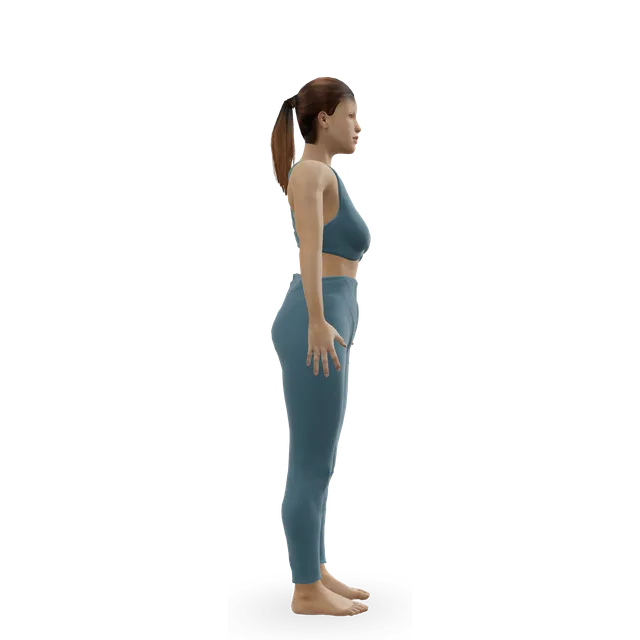
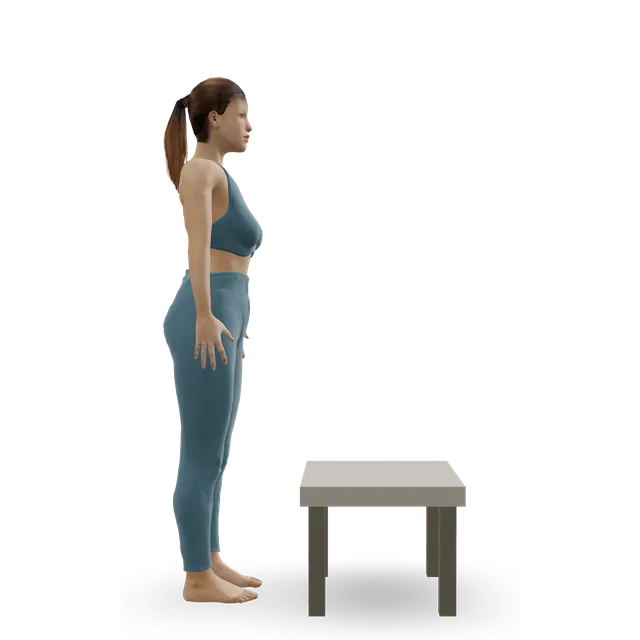
Deadlift the bar to standing in a clean grip, then hinge to lower it to the hang, usually mid-thigh or just above your knees. Jump: extend your hips, knees and ankles fast and shrug with straight arms. Then pull yourself under, whip your elbows round and catch the bar on the front of your shoulders: in a full front squat for a hang clean, in a quarter squat for a hang power clean.
"Hang" is where the bar starts; "power" means a catch with your thighs above parallel, and a plain "clean" is caught at the bottom of a front squat, in the National Strength and Conditioning Association's (NSCA) terms. Many gyms and studies say "hang clean" for the hang power clean: the hang cleans in one training study were caught in a quarter squat.
At 60% of their best power clean, 16 elite rugby league players produced about 3,180 watts in the hang power clean against 2,590 from the floor, and more again from mid-thigh. In 16 inexperienced female athletes the start made no difference.
The NSCA teaches the lifts top-down, and four athletes learning the hang power clean raised their jump power within 4 weeks, though coaches agree there is no clear consensus on the best order. British Weight Lifting calls a local club one of the best ways to learn from qualified coaches.
In 23 female college athletes, 6 weeks of hang cleans twice a week raised vertical jump by 5.1 cm and back squat by 7.5 kg and cut 40-yard sprint time by 0.21 seconds, as much as hang snatches; no group skipped them. Pulls without the catch improved power as much as catches in 34 athletes.
3 to 5 sets of 2 or 3, light, resting 2 to 3 minutes, early in your session, and never to failure: end the set when the bar slows. That's our editorial starting point, matching our power clean guide. The American College of Sports Medicine (ACSM) found power built best with 24 or fewer reps a session.
A clean that starts from a hang: you stand with the bar, lower it to the top of your thighs, mid-thigh, just above your knees or just below them, then drive it up and catch it on the front of your shoulders. The NSCA says all clean variations can be caught in a partial (power) or full squat, so strictly a hang clean ends in a full front squat and a hang power clean in a quarter squat.
Your hips, knees and ankles drive the bar (glutes, hamstrings, quads and calves), your trapezius and shoulders finish the shrug and the pull under, and your trunk holds the position. In 27 weightlifters, muscle activity in the hang power clean and the hang clean pull was similar above 70% of the best lift. The squat catch adds a loaded front squat.
It cuts out the pull from the floor, the slowest part of the clean, so you can learn the jump and the catch first. In trained rugby players at the same load, power, peak force and the rate of force development were higher from the hang than from the floor, and highest from mid-thigh.
A deep front squat with the bar on your shoulders, a clean-grip deadlift and Romanian deadlift with a flat back, and a coordinated countermovement jump: an NSCA coaching article's checks before the power clean. For the squat catch you also need wrists that bend back and shoulders that turn out: a good catch went with about 92 degrees of wrist extension in 20 CrossFit athletes. Our front squat guide has the rack checks.
Learning can take 2 to 4 weeks or 2 to 4 months, the NSCA coaching article says, depending on the athlete and the coaching. Inexperienced lifters produced the same power from the floor, the hang and mid-thigh, while trained lifters produced more from the higher starts, so the start matters more as you improve (our reading).
From the NSCA's technique (Caulfield, Hornsby and Haff) and its terms, and our power clean guide's set-up and bailing out. The pause at the hang is editorial.
Set up on bumper plates and a clear platform or rubber floor, with nobody near you. Use an empty bar or a light technique bar.
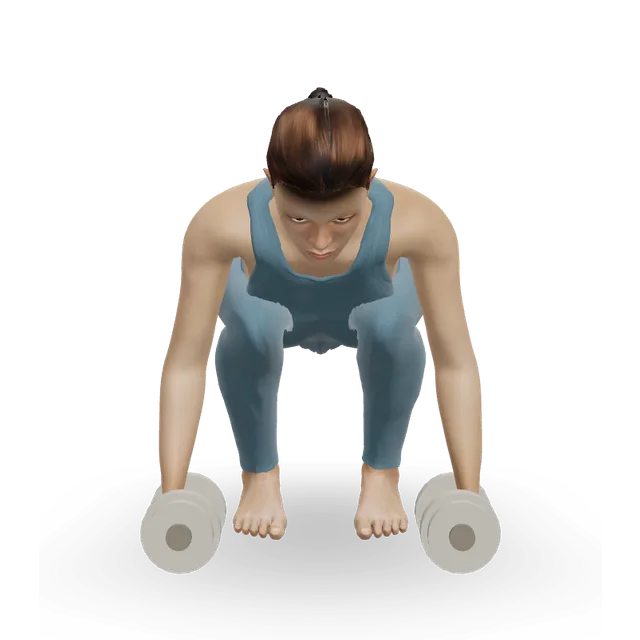
Take an overhand grip a little wider than your shoulders, a hook grip if you know it, and deadlift the bar to standing with your arms straight.
Lower the bar to the hang: push your hips back and slide the bar down your thighs to mid-thigh or just above your knees, shoulders over the bar, back flat and arms long. Pause for a count while you learn.
Jump: push the floor away and extend your hips, knees and ankles fast, heels down as long as you can, arms straight, and finish tall with a shrug.
Only now bend your elbows, high and out, and pull yourself down under the rising bar.
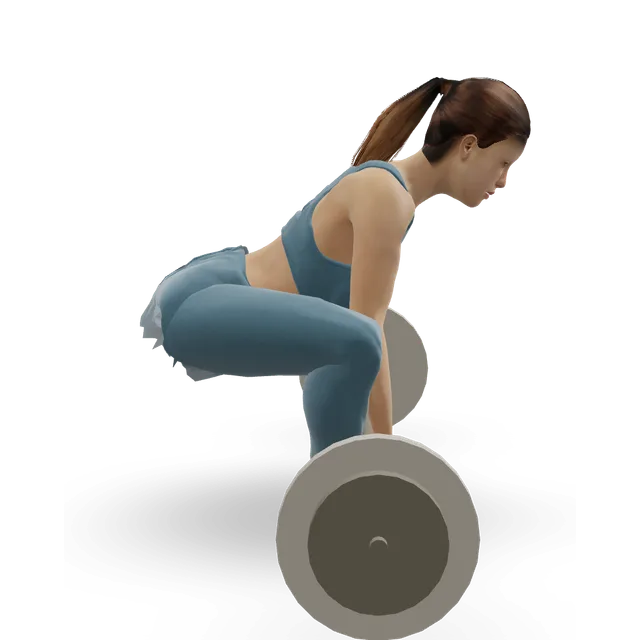
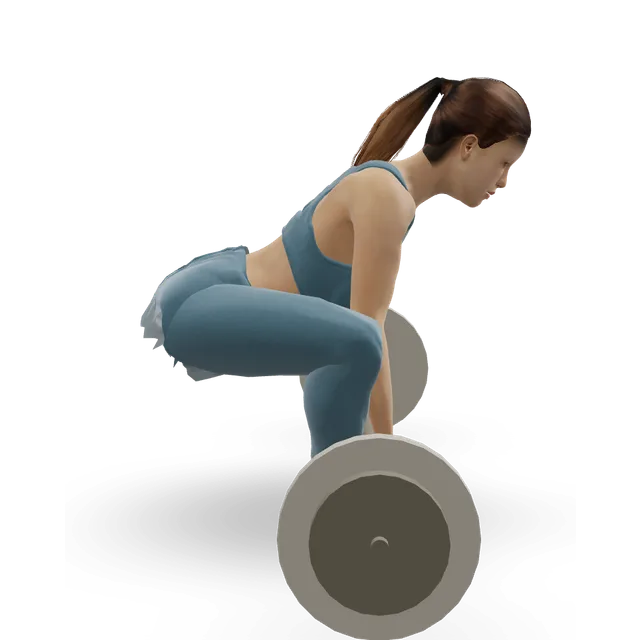
Whip your elbows round so your upper arms are about level with the floor, the bar on the front of your shoulders and your fingers loose. Land on flat feet and ride down into a front squat.
Stand up. Lower the bar to your thighs, bending your hips and knees to take it, and reset the hang before the next rep.
If a rep goes wrong, don't fight it: push the bar away, let it drop in front of you on bumper plates and step back.
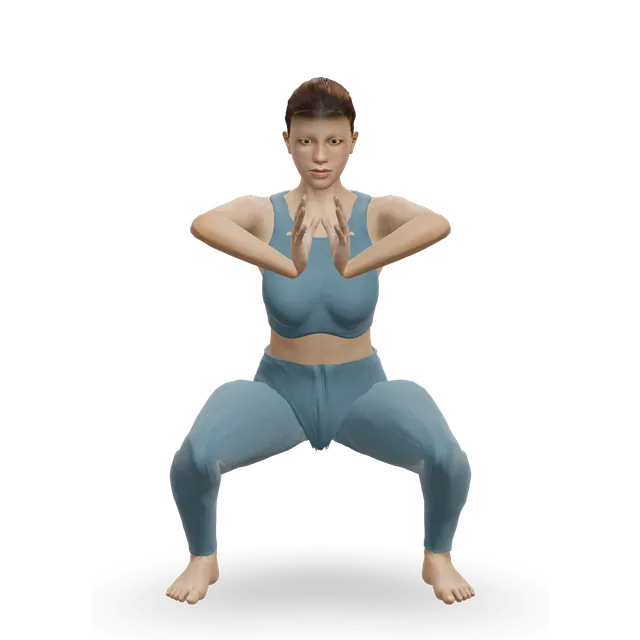
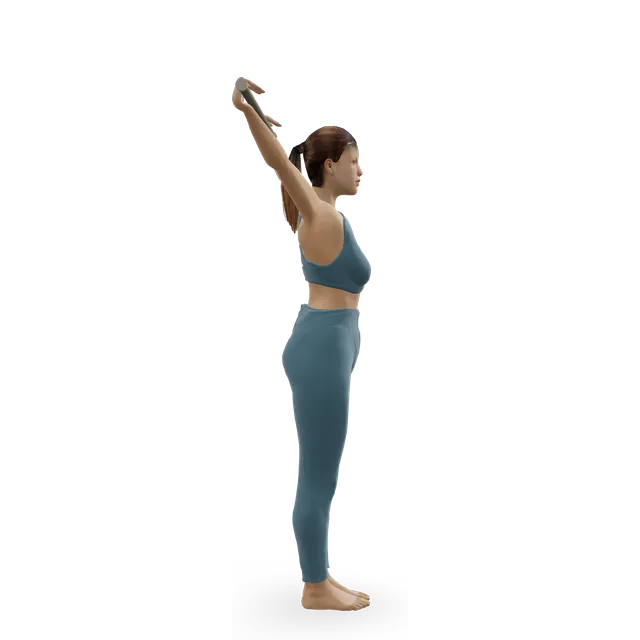
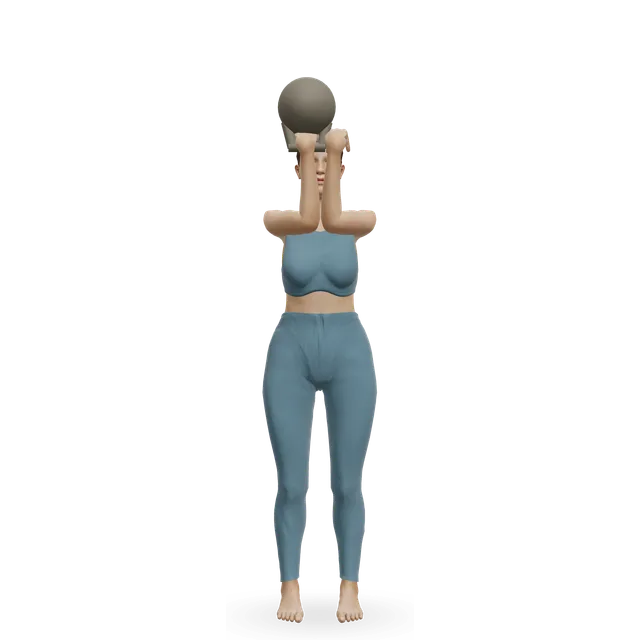
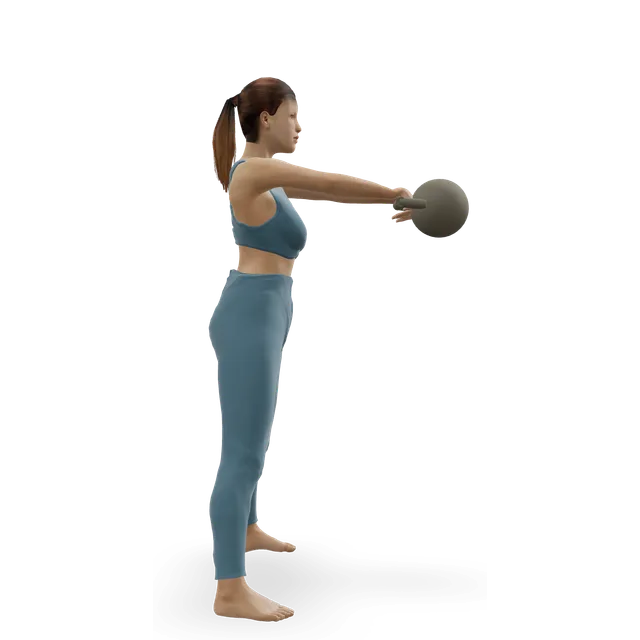
Loading the 3D figure…
Drag to turn
Gets into position, then repeats the movement. Technical checks passed; qualified exercise review is pending.
Hang clean, hang power clean, power clean: the names
Where the bar starts, and where you catch itStrong evidence
"Hang" means the bar starts at the hips, mid-thigh or above the knee; "from blocks" means it rests on blocks at those heights; no prefix means the floor. "Power" means a catch with your feet flat, knees bent and trunk upright, thighs above parallel; a plain clean is caught in the bottom of a front squat. These are the NSCA's terms.
The NSCA position statement calls lifts without the catch pulling derivatives: clean pulls, jump shrugs and high pulls. They can be loaded heavier than the lift you catch, and the NSCA wants them to add to catching lifts, not replace them.
From the NSCA's terms and the move page. It needs less depth and less wrist and shoulder range than the squat catch, so most people learn it first (editorial, following our power clean guide).
Start as for the hang clean: the bar at mid-thigh or just above your knees, shoulders over it, back flat.
Jump and shrug with straight arms, then pull yourself under.
Catch the bar on your shoulders in a quarter squat, thighs above parallel, feet flat, then stand up.
Our power clean guide teaches it step by step, with the clean ladder from the hinge to the floor.
Loading the 3D figure…
Drag to turn
Gets into position, then repeats the movement. Technical checks passed; qualified exercise review is pending.
Halfway down your thighs, shoulders over the bar. The usual hang, the start that produced the most power in trained athletes, and the start in the hang clean training study.
Just below your kneecaps: the last start before the floor. NSCA coaches teach it from blocks to athletes who can't yet hold the position from the hang.
From the move page, whose prerequisite is the hang clean from above the knee. 3 sets of 2, light, once the above-knee start looks the same every rep, is our editorial starting point.
Hold the bar just below your knees, hips back and shoulders over it, back flat.
Drive the bar up your thighs and extend explosively, arms straight.
Pull yourself under into a full front squat, catching the bar on your shoulders, then stand up.
Loading the 3D figure…
Drag to turn
Gets into position, then repeats the movement. Technical checks passed; qualified exercise review is pending.
Hang starts produce as much power, or moreEmerging evidence
At 60% of their best power clean, 16 elite rugby league players produced about 3,570 watts in the mid-thigh power clean, 3,690 in the mid-thigh pull, 3,180 in the hang power clean and 2,590 in the power clean from the floor; force and the rate of force development followed the same order in 11 players. In 16 inexperienced female college athletes, the three starts didn't differ.
23 college athletes did 5 sets of 3 hang cleans (from mid-thigh, caught in a quarter squat) or hang snatches at 80 to 85% of their best, twice a week for 6 weeks, alongside their usual training. In the clean group, vertical jump rose from 51.3 to 56.4 cm, back squat from 81.4 to 88.9 kg, and 40-yard sprint time fell from 5.93 to 5.72 seconds, no different from the snatch group. There was no group that skipped them, and sprints were hand-timed.
Heavy or lighter hang power cleansEmerging evidence
In professional female handball players with a year's experience of the lift, 7 weeks of hang power cleans at 90% or 50% of their best raised both groups' best lift and 5 to 30 m sprint speed; neither group jumped higher. The effects favoured 90%.
Stronger cleaners jump and sprint betterEmerging evidence
In 29 Australian Rules footballers, those with a higher hang power clean for their body weight were stronger and faster and jumped higher, though they didn't change direction faster. That's a link, not proof the lift caused it.
Its 2026 review of 137 reviews found power improved most with moderate loads, 24 or fewer reps a session, Olympic-style lifts and fast lifting. Our power clean guide covers the wider weightlifting evidence: better than ordinary strength training for jumping, less certain for sprinting.
We found no trial comparing the squat-catch hang clean with the hang power clean, no injury figures for the hang clean itself, no tested weight standards, and no trial of teaching orders.
Do you need to catch it, and how deep?
Pulls trained power as well as catchesEmerging evidence
In 34 athletes over two 4-week blocks in season, power clean exercises with or without the catch improved jump height (10.8 and 5.2%), pulling force and the power clean itself (9.5 and 8.4%), with no difference between the groups.
The hang power clean's catch absorbed less load than landing from a jump shrug at every load from 30 to 80% of the best lift, in 12 men and in 11 lacrosse players. Learn to land well first: jump squats and box jumps help.
In 20 CrossFit athletes, a good catch at 80% of their best went with about 92 degrees of wrist extension, 107 degrees of outward shoulder rotation and 99 degrees of forearm turning. The squat catch lets you lift more but needs a deep front squat and that range.
We found no study comparing them. Learn the hang power clean first, as our power clean guide does, and add the squat catch once your front squat is steady to depth; with stiff wrists or shoulders the power catch is usually easier. That's editorial, from coaching practice and the NSCA's top-down order. At heavier loads, weightlifters' catches drifted below a quarter squat in one study, so heavy power cleans tend to drift towards a squat catch (our reading).
The NSCA and the International Weightlifting Federation teach the lifts from the top down, so each new part is followed by parts you already know. An NSCA coaching article says "There is no clear consensus on the best approach", and that a progression may take 2 to 4 weeks or 2 to 4 months; some coaches teach the floor start first.
Four athletes new to weightlifting, learning the hang power clean for 20 to 30 minutes twice a week, raised their squat jump power by 9 to 33% within 4 weeks, and their technique moved towards a clearer double knee bend.
The NSCA's dumbbell hang power clean lowers the dumbbells to mid-thigh, at or just above the knees, extends explosively with a shrug, and racks them on the front of the shoulders in a quarter squat. Our power clean guide uses dumbbell and kettlebell cleans as a lighter way to learn the jump and the catch.
British Weight Lifting says finding a local club is one of the best ways to learn from qualified coaches and improve your technique. Film a few reps from the side if you train alone, and compare them with the steps above (our suggestion).
Hip-hinge practice, 1 set of 8, and the barbell Romanian deadlift, 2 sets of 5 with an empty bar in a clean grip, to find the hang (our power clean technique workout); the clean-grip front squat, 3 to 4 sets of 3 to 6 with about 2 reps in reserve (the move page's dose), 2 sets of 5 with the empty bar while learning; the clean shrug, 3 sets of 3 to 5 fast reps (the move page's editorial starting point); the rack delivery, sets of 5 to 10 with an empty bar (the move page's dose); the hang power clean, 3 sets of 3 from mid-thigh, light (our power clean technique workout); the hang clean with the squat catch, 3 sets of 2 once your front squat is steady (our weightlifting technique workout); power cleans from blocks above the knee, 3 sets of 3, light (our power clean technique workout); then from below the knee and from blocks below the knee, 3 sets of 2, light (editorial); and the full clean from the floor, with a coach (our clean and jerk guide).
Pulls, dumbbells, kettlebells and the Smith machine
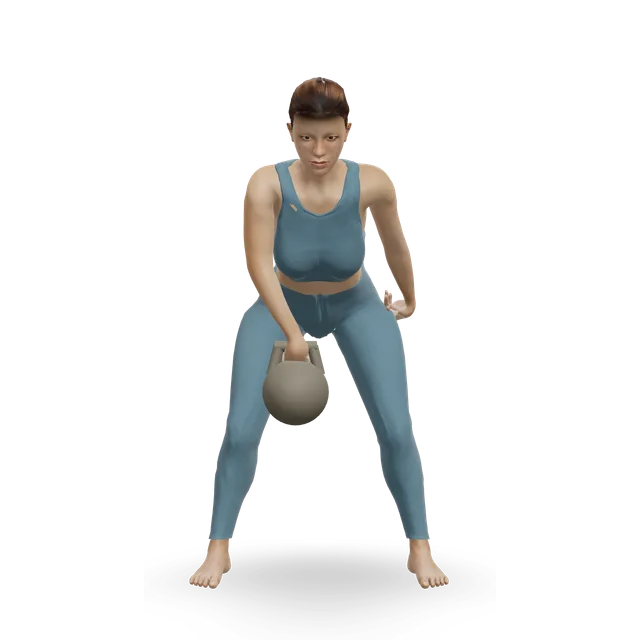
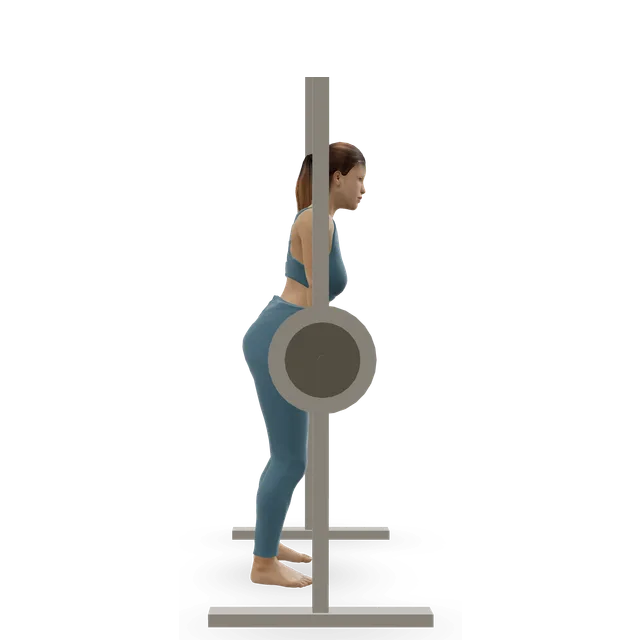
The clean pull, 3 sets of 3, light (our power clean technique workout): the lift without the catch. The dumbbell clean, 3 sets of 3 to 5, light (editorial), is the nearest demo to the NSCA's dumbbell hang power clean, which lowers the dumbbells to mid-thigh and racks them on your shoulders in a quarter squat. The kettlebell hang clean, 3 to 5 sets of 5 each side (the move page's editorial starting point), is a different, one-arm skill that our kettlebell clean guide covers. The Smith machine hang power clean, 3 to 5 sets of 2 to 5 crisp reps (the move page's editorial starting point), is a stand-in on fixed rails, not a way to learn the free-bar lift. No demo yet of the hang high pull or the jump shrug; the clean shrug is the nearest.
Dropping straight from standing into the jump loses the position. Pause for a count at the hang while you learn (our suggestion).
Slow, low elbows
The bar lands in your hands and on your wrists. Whip your elbows round fast and let the bar sit on your shoulders; the rack delivery drills it, as our power clean guide says.
Crashing into the squat
Meet the bar and ride it down rather than dropping under and letting it land on you, as the move page cues.
Landing on your toes
Land on flat feet. If your heels come up, the bar was probably in front of you.
Too heavy, too soon
Add weight only when every rep looks the same, in small steps.
3 sets of 3 hang power cleans from mid-thigh, light, with 2 minutes' rest (our power clean technique workout), then 3 sets of 2 hang cleans with the squat catch (our weightlifting technique workout). Every rep should look the same.
Most people
3 to 5 sets of 2 or 3, resting 2 to 3 minutes, fast, and never to failure: end the set when the bar slows or a rep looks different. That's our editorial starting point, matching our power clean guide's hang dose.
Experienced athletes
5 sets of 3 at about 80 to 85% of your best, twice a week, as in the 6-week study in female college athletes.
Hang power clean power peaked at about 70% of the best lift in 15 men and at about 80% in 12 professional rugby players and in 8 weightlifters, but loads from about 40 or 50% to 90% gave similar power. A meta-analysis of 27 studies found loads of 70% or more best for power in the power clean and hang power clean. It depends on the lifter and how power is measured.
An empty bar or a light technique bar. There are no tested weight standards, so compare yourself with yourself, and never set your weight as a share of body weight, as our power clean guide says.
How often
Twice a week with a day between while you learn, as our power clean guide and weightlifting technique workout do.
Warm up first
3 to 5 minutes of easy rowing or cycling, wrist circles, ankle rocks and upper-back rotations, then the empty bar through each position, then 2 or 3 lighter sets, as our power clean guide and plans suggest.
Jump squats, 2 sets of 8 (our full-body bodyweight workout), and box jumps, 4 sets of 3, stepping down (our plyometric workout), teach the jump and the landing. Warm up your wrists with 60 seconds of wrist and forearm circles (our power clean technique workout), your upper back with thoracic rotation, 6 each side (the move page's dose), and your ankles with knee-to-wall rocks, 10 slow rocks each side (the move page's dose); hold a deep squat for 30 to 60 seconds, holding a support (our power clean technique workout).
Weightlifting has about 2.4 to 3.3 injuries per 1,000 hours of training, similar to other non-contact strength sports and low compared with contact sports. Most are at the knee, lower back, shoulder and hands, and most studies were of low quality.
Learn with a coach, start light, lift on bumper plates on a clear floor, and let a missed rep drop in front of you rather than fighting it (our suggestion, as in our power clean guide).
Workouts to follow
The power clean technique workout teaches the hang top-down: hang power cleans from mid-thigh, blocks above the knee, the shrug, the rack delivery and the clean-grip front squat. The weightlifting technique workout adds hang cleans with the squat catch once your front squat is steady. The strength and jerk workouts add pulls and the overhead half; the kettlebell clean and press workout teaches the one-arm kettlebell hang clean.
Loosen your grip so the bar sits on your shoulders, try a slightly wider grip, and use the power catch. While it settles, do pulls and shrugs, which trained jumping and strength as well as catches. Wrist pain up to about 5 out of 10 that settles within half an hour and is no worse the next morning is acceptable; tingling is a stop sign, as our wrist pain when lifting guide says.
Use the power catch, work on the rack position with an empty bar, and get a coach to check it. Stop if your shoulder feels about to slip out, as our shoulder pain guide says.
Back pain
Lift from the hang or from blocks above the knee, lighter, and reset every rep, as our power clean guide says. Back pain up to about 5 out of 10 that settles within an hour or so and is no worse the next morning is acceptable, but pain spreading down a leg isn't.
Pain below the kneecap
If it builds with training, follow our jumper's knee guide, and cut back the jumps and catches while it settles.
High blood pressure, heart disease and eye conditions
Breathe out through each rep, keep the weights moderate, and leave maximal lifts until your blood pressure is controlled and you've had advice, as our power clean guide says. The American Heart Association advises against high-intensity resistance training with active proliferative diabetic eye disease.
Coached weightlifting is safe and beneficial for young people, the NSCA says, with technique first and no adult programmes. Our power clean and children's exercise guides have more.
Lift from the hang or from blocks, use the power catch if a deep squat is uncomfortable, and keep loads where any pain settles by the next morning, as our power clean guide suggests.
Pregnancy
The NHS says strength training is fine if you already do it, but not to start a new vigorous activity, and to avoid activities with a risk of falling or bumping your tummy. A bar travelling close to your body is one of those, so don't start learning the hang clean in pregnancy (our view, as in our power clean guide).
Leaking urine was reported by half of women and 9% of men in weightlifting and powerlifting. It's common and treatable: a reason to see our pelvic floor guide and a pelvic health physiotherapist, not to stop lifting. See a GP about any leaking, as the NHS advises.
If you get chest pain or pressure, feel faint or dizzy, are unusually breathless, or your heart races or beats irregularly during exercise, as our plans advise. The American Heart Association says these need immediate medical evaluation.
For chest pain that comes on suddenly and doesn't go away, feels tight or like squeezing, spreads to your arms, neck, jaw, stomach or back, or comes with sweating, feeling sick, light-headedness or breathlessness; someone who faints while exercising; palpitations that don't go away, or come with chest pain, shortness of breath or feeling faint; or a sudden headache that is extremely painful, or comes with numbness or weakness, difficulty speaking or loss of vision. Don't drive yourself to A&E.
If back pain comes with pain, tingling, weakness or numbness in both legs, loss of feeling around your genitals or bottom, or changes in your bladder or bowels.
If wrist pain is severe, makes you feel faint, dizzy or sick, followed a snap, grinding or popping noise, stops you moving your wrist or holding things, or has changed the wrist's shape or colour, or your hand has lost feeling. See a GP if wrist pain hasn't improved after 2 weeks or keeps coming back.
Get an urgent GP appointment or call NHS 111 for sudden or very bad shoulder pain, an arm you can't move, or a shoulder that has changed shape or is badly swollen. Get advice from NHS 111 now if your knee is very painful, you can't put weight on it, it's badly swollen or has changed shape, or it locks or gives way.
"Olympic lifts are too dangerous for ordinary gym-goers"Emerging evidence
Weightlifting has about 2.4 to 3.3 injuries per 1,000 hours of training, similar to other non-contact strength sports and lower than contact sports, and the NSCA notes lower injury rates with long-term weightlifting than in other sports. Most studies were of low quality. Learn it coached, light, on bumper plates.
"The hang clean is the cheat's version of the clean"Emerging evidence
From the hang, trained rugby players produced more power than from the floor, and inexperienced women the same, and hang cleans improved athletes' jumps, squats and sprints in a short study. Our power clean guide makes the same correction.
"A hang clean and a hang power clean are the same lift"
Not quite: the NSCA uses "power" for a catch above parallel and the plain name for a full front squat catch. Many gyms and studies blur them, so ask which catch a programme means.
"The hang clean is the best way to learn the clean"Mixed evidence
The NSCA teaches top-down, and athletes gained power within weeks of learning the hang power clean, but an NSCA coaching article says there's no clear consensus on the best order, and some coaches teach the floor start first.
Across 15 studies, training to failure gave a trivial growth advantage at most, and in a fast lift it means slow, ragged reps. End the set when the bar slows.
Deadlift the bar to standing, then lower it to mid-thigh with a flat back. Jump and shrug with straight arms, then pull yourself under, whip your elbows round and catch the bar on your shoulders in a front squat before standing up. Learn it light, with a coach.
What's the difference between a hang clean and a hang power clean?
Where you catch the bar: a hang clean is caught in a full front squat, a hang power clean with your thighs above parallel. Many gyms say "hang clean" for both, so check which your programme means.
Hang clean or power clean: which is better?
Neither, for most goals. From the hang, elite rugby players produced more power than from the floor, and inexperienced women the same; the hang is easier to learn, and the floor start matters if you want to compete. Our power clean guide covers the floor start.
What are the hang positions?
At the hips, mid-thigh, just above the knee and just below the knee. Mid-thigh is the usual start, and the lower you start, the more of the pull you practise.
What muscles do hang cleans work?
Your hips, thighs and calves drive the bar, your trapezius and shoulders finish the pull, and your trunk holds it together. The squat catch adds a loaded front squat.
Are hang cleans good for athletes?
In female college athletes, 6 weeks of hang cleans improved jump height, squat strength and sprint time, though no group skipped them for comparison. Combine them with squats and jumps, as our power clean guide suggests.
How heavy should my hang clean be?
Light while you learn: an empty bar or a light technique bar, adding weight only when every rep looks the same. There are no tested weight standards, so compare yourself with yourself.
How many sets and reps of hang cleans?
3 to 5 sets of 2 or 3, resting 2 to 3 minutes, early in your session. End each set when the bar slows or a rep looks different, and never go to failure.
Why do my wrists hurt in the catch?
Usually the bar is landing in your hands rather than on your shoulders. Loosen your grip and get your elbows round faster; a good catch went with about 92 degrees of wrist extension in one study. While it settles, do pulls without the catch.
Is the hang clean a good way to learn the clean?
It's how the NSCA teaches it, from the top down, and athletes gained power within 4 weeks of learning the hang power clean. Coaches don't all agree on the best order, so follow your coach.
Can I do hang cleans with dumbbells?
Yes: lower the dumbbells to mid-thigh, jump and shrug, and catch them on your shoulders in a quarter squat, as the NSCA's technique manual teaches. It's a lighter way to learn the catch.
Are hang cleans dangerous?
Weightlifting has about 2.4 to 3.3 injuries per 1,000 hours of training, similar to other non-contact strength sports. Learn with a coach, use bumper plates and let a missed rep drop in front of you.
Exercise education, not a personal prescription, and clinical review of these guides is pending. Check with a GP before starting hard training if you have a heart condition, chest pain, dizziness or breathlessness when active, and stop for sharp or increasing pain. Health disclaimer.