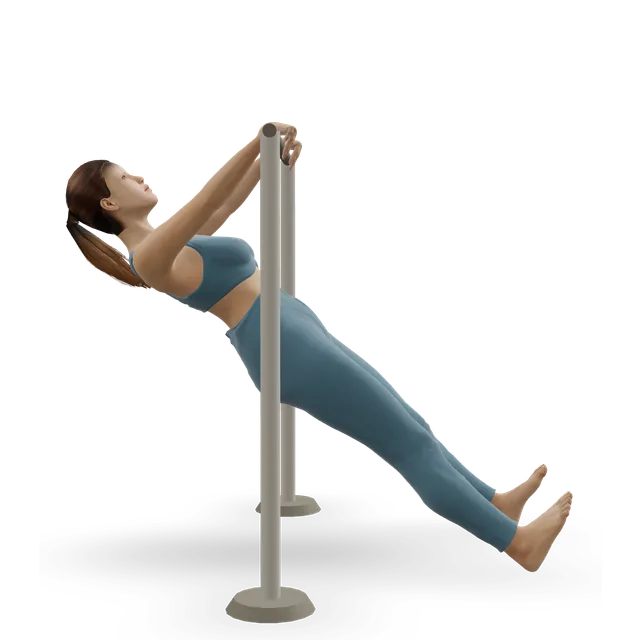
How to do archer push-ups: shifting your weight to one arm, building towards a one-arm push-up, and how many
An archer push-up sets your hands about twice shoulder width apart and lowers you over one arm at a time, while the other arm straightens out to the side and helps. Most of the load lands on the bending arm, which makes it the usual bridge between two-handed push-ups and the one-arm push-up.
No study has measured the archer push-up itself. But a 4-week trial whose push-up ladder ran up to archer and one-arm push-ups built bench press strength as bench pressing did, and lab studies show what one-handed pushing asks of your elbow and lower back.
This guide covers the technique step by step on the 3D figure, the steps from wide push-ups to the one-arm push-up, how many to do and when to move up, and how to look after your elbows and shoulders.
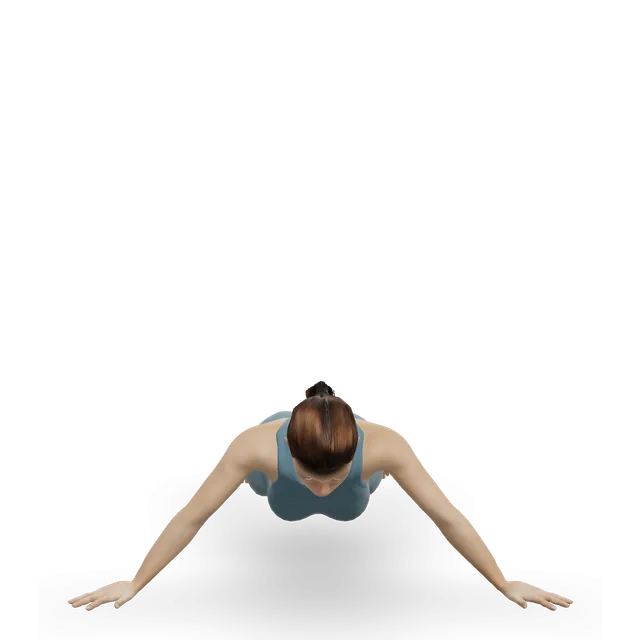
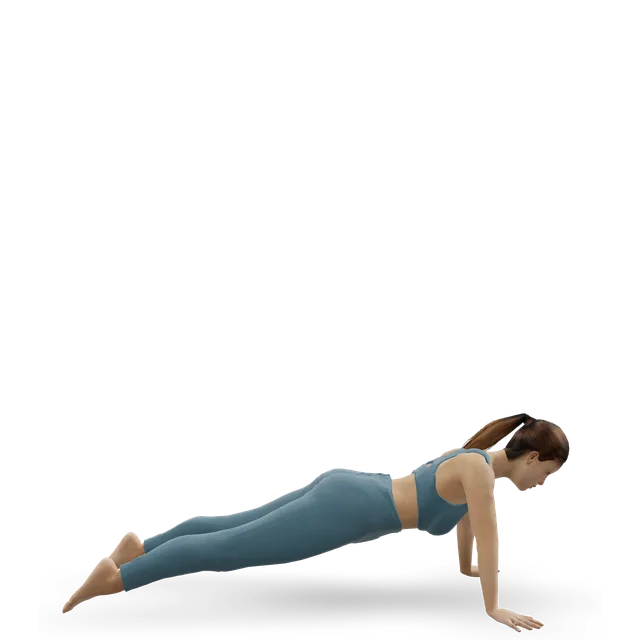
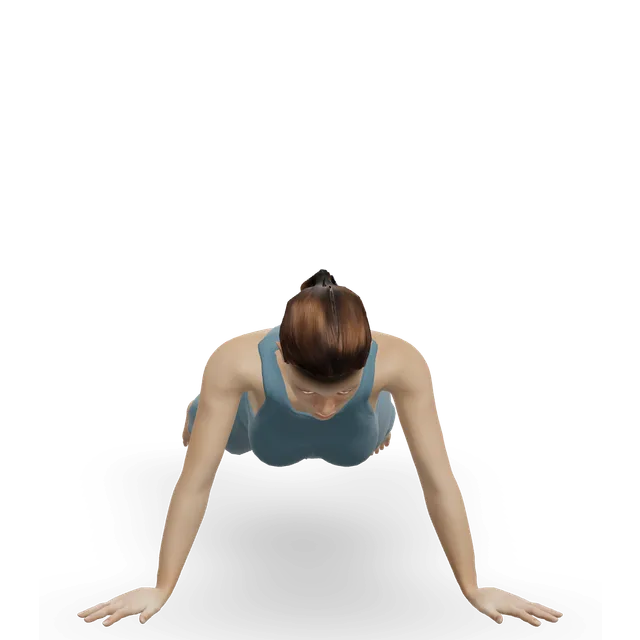
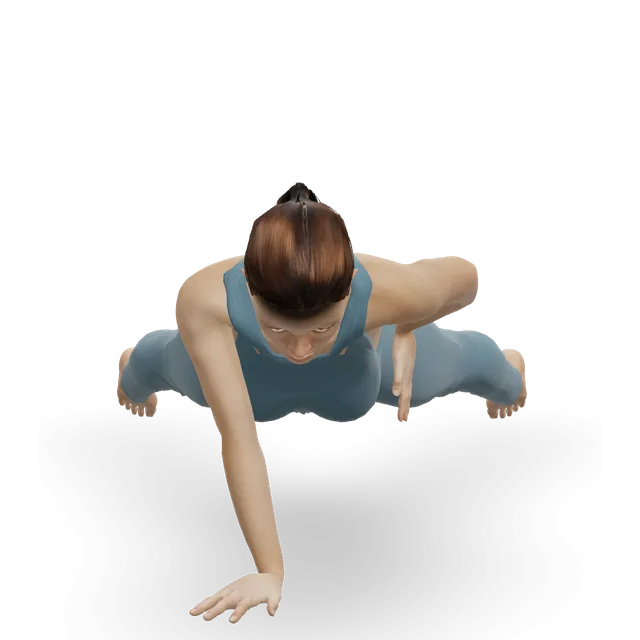
Set your hands about twice shoulder width apart. Shift your chest over one hand as that elbow bends, angled back, while the other arm straightens out to the side; press back to the middle and repeat on the other side, hips square to the floor. That's our move page's set-up and the National Academy of Sports Medicine's (NASM).
The bending arm does most of the work and the straight arm helps, as NASM describes, but no study has measured the split. Lean less on the straight arm as you get stronger, as our move page suggests.
In a trial of 23 moderately trained men, 4 weeks on a progressive push-up ladder raised bench press strength as 4 weeks of bench pressing did, with no significant difference between the groups. The ladder ran from wall push-ups up to archer and one-arm push-ups, as a summary of the author's thesis describes.
A one-handed push-up put a peak force of about 65% of body weight through the elbow, and turning the hand out raised the sideways strain on it by half; a one-arm push-up compressed the lower back more than any of 12 push-ups tested. Keep the working hand's fingers forward, and build up slowly if your shoulder has ever dislocated or felt unstable, as our move page says.
Side-to-side wipers, archers with your hands on a bench, archers on the floor, then the one-arm push-up with your hands raised, slow one-arm lowering, and the one-arm push-up with your feet wide. StrongFirst's coach raises the hands to make it easier, and our one-arm push-up progression follows this ladder.
Once 15 strict push-ups are steady: 3 sets of 3 to 5 each side to start (our push-up challenge workout), building to 3 sets of 5 (our push-up progression) and moving on at 3 sets of 8 each side (our editorial starting point). Rest about 2 minutes, train 2 or 3 times a week, and start with your weaker side. NASM suggests 3 sets of 5 to 10 per side.
A push-up with your hands set very wide, about twice shoulder width, as our move page says, in which you lower towards one hand, bending that elbow, while the other arm straightens out to the side and helps. You press back up through the middle and repeat to the other side; NASM describes shifting your weight towards one arm while extending the other out to the side. Archers on rings or sliders are harder variations, not learning steps (our view).
The chest, triceps and front shoulder of the bending arm, the straight arm's shoulder in a stretched position, and your trunk, which resists the twist, as our move page and NASM describe. No study has measured the muscle activity or how much of your weight each arm carries.
Our push-up guide's ladder puts the archer after the feet-raised push-up and before the one-arm push-up. In the trial ladder, as Sci-Sport's summary of the author's thesis lists it, the ten levels were wall, incline, knee and half push-ups, full push-ups, close-hand push-ups, staggered (uneven-hand) push-ups, half one-arm push-ups, archer push-ups and one-arm push-ups.
The whole push on one arm, feet wide, with your trunk fighting the twist, as our move page says. In 8 people, a one-handed push-up put a peak force of about 65% of body weight along the forearm through the elbow with the hand facing forward. In 9 men, a one-handed push-up under a simulated fall raised the sideways twisting load on the elbow by 42%. In 10 adults, the one-arm push-up gave the highest lower-spine compression of 12 push-up versions.
Strong floor push-ups and diamond push-ups, as our archer move page says; our push-up challenge workout starts archers only once 15 strict push-ups are steady. The side-to-side wiper asks for 10 or more steady push-ups, and the one-arm push-up for strong archers on both sides, as their move pages say.
How people differ
Wider feet make the one-arm balance easier, and StrongFirst's test standard allows feet up to two shoulder widths apart. Most people have a stronger side, so start each set with the weaker one (our suggestion). Shoulders that have dislocated or felt unstable need a slower build-up, because of the straight arm's stretched position, as our move page says.
From our archer push-up move page and NASM's: the wide hands, the bending arm and the straight arm, and back through the middle. The working hand's fingers pointing forward follows the one-handed elbow study; ending the set when your hips twist follows our one-arm push-up move page.
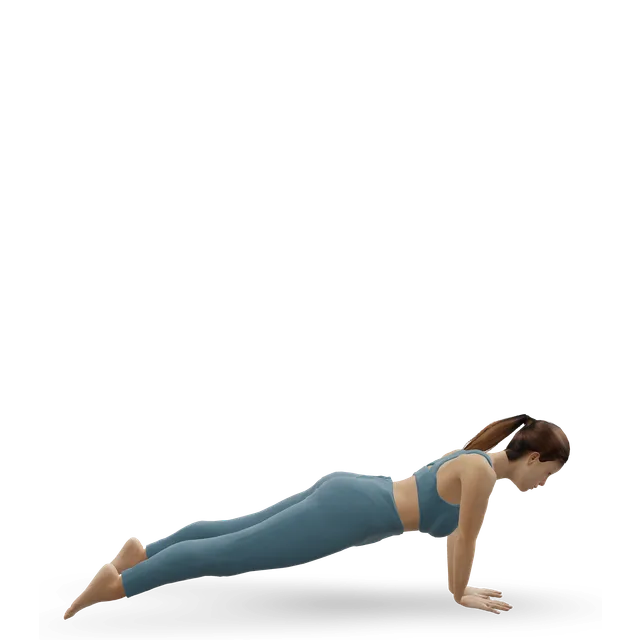
Start in a push-up position with your hands about twice shoulder width apart, fingers pointing forward, and your body in one straight line.
Breathe in and shift your weight towards your right hand as you bend your right elbow, angled back rather than out.
Let your left arm straighten out to the side as you lower: it helps, but carries less of your weight.
Lower your chest towards your right hand, keeping your hips and shoulders square to the floor.
Breathe out and press back up through the middle.
Repeat towards your left hand: that's one rep each side.
Lean less on the straight arm as you get stronger, and end the set when your hips start to twist.
Loading the 3D figure…
Drag to turn
Gets into position, then repeats the movement. Technical checks passed; qualified exercise review is pending.
The one-arm push-up: your elbow, shoulder and back
Elbow load in a one-handed push-upEmerging evidence
In 8 people, the first study of the one-handed push-up, the peak force along the forearm through the elbow averaged 65% of body weight with the hand facing forward, and less with it turned in or out. But turning the hand out raised the sideways (valgus) shearing force at the elbow by 50%, and the authors advise against it. Keep the working hand's fingers pointing forward.
In 9 men, the sideways twisting load on the elbow rose by 42% in a one-handed push-up under simulated fall conditions. Control matters more than reps: stop the set when your form goes.
In 10 adults, the one-arm push-up compressed the lower spine more than any of 12 push-up versions, and staggered hands switched which side's trunk muscles worked hardest. It's a trunk exercise as much as an arm one.
StrongFirst's standard: lower on one arm until the tip of the working elbow is above the top of your shoulder, with your feet no wider than two shoulder widths, your shoulders almost parallel to the floor, a distinct pause at the bottom, and your hips and shoulders moving together. Its coach makes it easier by raising the hands, advises against high reps, suggests practising singles at about half your maximum through the day, and trains it first in a session.
One case report describes a man who fully tore his triceps tendon when he fell from an unstable chair during a one-arm push-up. Train on a stable floor, never on a chair, bench or anything that can tip.
Turning the hand out raised the sideways strain at the elbow in the one-handed study, and turning the hands in raised the shearing forces in a two-handed one. Point the working hand's fingers forward.
We found no study of the archer push-up, and none measuring how much of your weight the working arm carries. NASM says the bending arm takes most of the load; the share is unmeasured.
A push-up ladder built bench press strengthEmerging evidence
In 23 moderately trained men, randomly assigned to progressive push-ups or the bench press 3 times a week for 4 weeks, bench press strength rose in both groups, with no significant difference between them; muscle thickness didn't change in either group over the 4 weeks. The push-up group worked up a ten-level ladder that included archer and one-arm push-ups, as Sci-Sport's summary of the thesis describes. Neither the trial's abstract nor the summary says how many men reached the one-arm push-up.
Push-ups match the bench press in other trialsEmerging evidence
In 30 experienced lifters, band-resisted push-ups and the bench press at matched muscle activity gave similar strength gains over 5 weeks, and in 18 men, push-ups matched to a light bench press load built as much muscle and strength over 8 weeks.
Harder-looking isn't better on its ownEmerging evidence
Across 137 reviews, exercise choice and complexity didn't consistently change strength or muscle growth, and in 30 men, 8 weeks of push-ups on unstable surfaces built no more strength than on stable ones. The archer earns its place as a way to keep adding load without equipment, not as a better exercise.
In 181 Dutch calisthenics athletes, 59% reported an injury in a year, most often the shoulders (32%), wrists (15%), elbows (10%) and back (10%). Build up through the steps rather than forcing reps.
We found no study timing how long it takes to reach a one-arm push-up, and no survey of how many people can do an archer or one-arm push-up. Percentages you see online are guesses.
The ladder: towards one arm
In order: wide push-ups, 3 sets of 8 to 15 (our editorial starting point, as our push-up guide's ladder), to learn the wide base; side-to-side wipers, a partial archer with your hands just outside shoulder width, 2 to 3 sets of 6 to 10 each side, stopping 2 or 3 reps short (the move page's dose); archers with your hands on a sturdy bench, 3 sets of 5 to 8 each side (our editorial starting point); archers on the floor, 3 sets of 3 to 5 each side (our push-up challenge workout), building to 3 sets of 5 (our push-up progression) and moving on at 3 sets of 8 each side (our editorial starting point); the one-arm push-up with your hands on a worktop, then a bench, then a low step, 3 sets of 3 to 5 each side (our editorial starting point, as StrongFirst regresses it); slow one-arm lowering, 3 sets of 1 to 3 lowers each side over 3 to 5 seconds (our editorial starting point; the move page says to practise slow lowering first); and the one-arm push-up, 3 sets of 1 to 5 each side, feet wide (our editorial starting point; StrongFirst advises against high reps). The hands-raised archer and one-arm push-ups have no demo of their own: use the floor demos with your hands on a sturdy bench or worktop.
One hand forward and one back, which loads one side more; ACE rates its version advanced, and in a lab study, staggered hands switched which side's trunk muscles worked hardest. Use the push-up demo with your hands staggered, and swap sides each set (our suggestion).
The trial ladder put a half one-arm push-up before the archer, as Sci-Sport's summary of the thesis lists it. It has no demo, and the hands-raised one-arm push-up does the same job of shortening the lever, so we leave it out (our editorial choice).
Archers: 3 sets of 3 to 5 each side to start (our push-up challenge workout), building to 3 sets of 5 each side (our push-up progression and advanced calisthenics workout), and moving on at 3 sets of 8 each side (our editorial starting point). NASM suggests 3 sets of 5 to 10 per side. The one-arm steps: 3 sets of 1 to 5 each side (our editorial starting point).
As Sci-Sport's summary of the thesis describes it: two-handed levels started at 3 sets of 6 and one-handed levels at 3 sets of 3 per arm, adding a rep to each set every session, and moved up a level after 3 sets of 8 (one-handed: 3 sets of 4 per arm) in two sessions running. Our one-arm push-up progression uses the same idea: start at the bottom of your step's range, add a rep a session, and move up after reaching the top in two sessions running.
About 2 minutes between sets, as our advanced calisthenics workout and push-up guide suggest for hard sets such as archer and one-arm push-ups, and as long as you need between arms. Resting more than about a minute gave a small growth advantage across 9 studies.
2 or 3 times a week with a day between; the trial trained 3 times a week. Do it early in your session while you're fresh, as StrongFirst's coach advises.
StrongFirst advises against high reps of one-arm push-ups, and stopping 2 or 3 reps short builds about as much muscle as going to failure. End each set when your hips twist or your shoulder shrugs.
Start each set with your weaker side and match its reps on the stronger side (our suggestion).
Counting your weekly sets
Count each set of archers, both sides, as a chest set and about half a triceps set (our reading of the weekly-sets research, which counted presses and push-ups as half sets for the triceps).
Archer push-ups against typewriter, diamond and regular push-ups and the bench press
Against typewriter push-ups
In an archer, you go down and up on one side, then the other. In a typewriter push-up, you stay low and slide across from one hand to the other before pressing up, which keeps the load on longer (our description: no study has measured it, and we don't have a demo).
Against diamond push-ups
Diamonds load both arms with your hands together and come first: our archer move page asks for steady diamonds before archers. Our diamond push-up guide teaches them.
Against regular push-ups
Not better, just harder: archers keep adding load once regular push-ups are easy, and harder-looking exercises don't build more on their own. If you can do 15 strict push-ups, archers are the next way to keep progressing without weights.
In the trial, a push-up ladder that included archers built bench press strength as bench pressing did over 4 weeks. The bench press is easier to load in small steps; archers need only a floor. Our bench press guide covers the lift.
Pike push-ups move the work up to your shoulders as an overhead press; archers keep it on one side of your chest and triceps. Our pike push-up guide covers them.
Trunk and shoulder strength
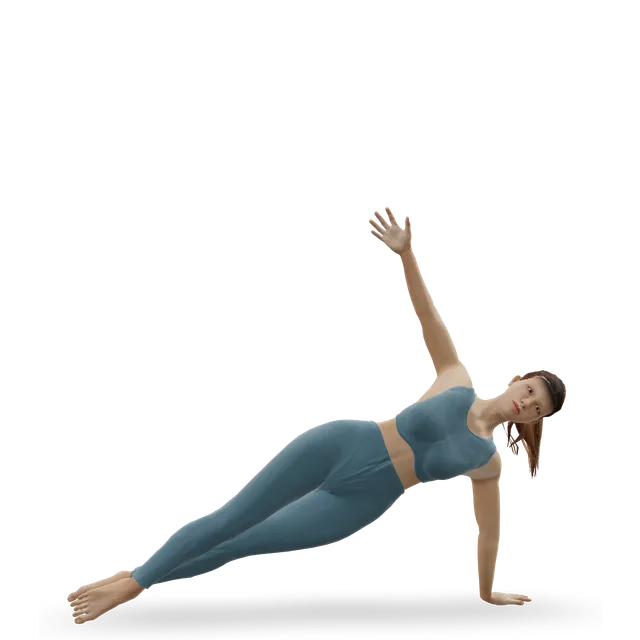
For the twist: side planks, 2 holds of 30 seconds each side (our gymnastics conditioning workout), push-ups to side plank (T push-ups), 2 to 3 sets of 6 to 10, alternating sides, stopping 2 or 3 reps short (the move page's dose), and high plank holds, 3 holds of 15 to 30 seconds (the move page's dose). Diamond push-ups, 2 or 3 sets of 6 to 12 (our diamond push-up guide's starting point), are the archer's prerequisite. To balance your pushing and look after your shoulders: band rows, 3 sets of 10 to 15, stopping 2 or 3 reps short, 60 to 90 seconds' rest (the move page's dose), band external rotations, 2 sets of 12 to 15 each arm (our shoulder workout at home), and scapular push-ups, 1 set of 10 in your warm-up (our push-up challenge workout).
Our one-arm push-up progression is the full ladder, from wipers to the one-arm push-up. The push-up progression and push-up challenge workout end their ladders with archers; the advanced calisthenics workout uses 3 sets of 5 each side with 2 minutes' rest; and the full-body calisthenics workout's push-up ladder runs from hands raised to archer push-ups.
Elbows, shoulders and your back: who should change it
Elbows
Keep the working hand's fingers forward. Discomfort of about 3 to 4 out of 10 that settles within an hour and is no worse the next morning is acceptable, as our elbow guides say; tingling in your ring and little fingers is different. A pop at the back of the elbow, then pain or weakness straightening your arm, needs an urgent treatment centre or A&E.
It sits in a stretched position, so build up slowly if you've ever had shoulder instability, as our move page says. A shoulder that slips, clunks or gives way with your arm out to the side needs a GP or physiotherapist before you carry on (our suggestion); our shoulder dislocation guide has more. Otherwise keep shoulder pain to about 5 out of 10, back to its usual level by your next session.
Your lower back
One-arm push-ups compress the lower spine more than other push-ups. With back pain, stay at archers or wipers, and follow our back pain guides' rule: up to about 5 out of 10, settled within an hour, no worse the next morning.
At the bottom, most of your weight is on one bent-back wrist, which raised pressure inside the joint in a lab study. A push-up handle on the working side keeps it straight; leave the wipers and archers out while your wrist hurts, and see our wrist pain from push-ups guide.
With heart failure, the British Heart Foundation advises avoiding press-ups and planks; ask your heart team. With high blood pressure, breathe out on every push, and ask first while it isn't controlled. In pregnancy, the NHS advises against starting new strenuous exercise: if you already do archers, ask your midwife as your bump grows, and move to wall or incline push-ups, as our push-up guide suggests.
If you get chest pain or pressure, feel faint or dizzy, are unusually breathless, or your heart races or beats irregularly during exercise, as our plans advise. The American Heart Association says these need immediate medical evaluation.
For chest pain that doesn't go away, feels tight or like squeezing, or spreads to your arms, neck, jaw, stomach or back, or comes with sweating, feeling sick, light-headedness or breathlessness; severe difficulty breathing; someone who faints while exercising; palpitations that don't go away, or come with chest pain, shortness of breath or feeling faint; or a headache that starts suddenly and is extremely painful. Don't drive yourself to A&E.
If you haven't exercised for some time or have a medical condition, speak to your GP first, as the NHS advises. Get advice before hard pressing if your blood pressure is uncontrolled, or you have heart disease or chest pain when you're active, a pacemaker or defibrillator, diabetic eye disease, glaucoma, a hernia, recent eye or tummy surgery, or you're pregnant, as our breathing guide lists.
Go to an urgent treatment centre or A&E for severe arm pain that makes it hard to move your arm, a snapping noise or a change of shape after an injury, or an arm that tingles or feels numb. A pop at the back of the elbow during a push, then sudden pain, swelling, bruising or weakness straightening your arm, needs the same without waiting: the NHS says sudden, severe pain during an activity, sometimes with a popping or snapping sound, may be a torn tendon. See a GP for elbow or arm pain that doesn't go away after a few weeks.
Ask for an urgent GP appointment or get help from NHS 111 for sudden or very bad shoulder pain, an arm you can't move, a shoulder that has changed shape or is badly swollen, pins and needles that don't go away, or pain that started after a fall or injury. See a GP if shoulder pain is getting worse or doesn't improve after 2 weeks.
Contact NHS 111 for severe wrist pain, a snap, grinding or popping noise at the time of an injury, a wrist you can't move or hold things with, or one that has changed shape or colour. See a GP if wrist pain hasn't improved after 2 weeks, or comes with tingling or loss of feeling.
After a big session, get medical help the same day (NHS 111, or urgent care in the US): severe exertion can break down muscle, with dark, red or cola-coloured urine. Sudden, severe pain in a limb is a 999 or A&E call.
"Archer push-ups are just for show"Emerging evidence
They were step 9 of the 10-step ladder in the trial in which 4 weeks of progressive push-ups raised bench press strength as bench pressing did, and NASM teaches them to build single-arm pressing strength towards the one-arm push-up. What they aren't is magic: harder-looking exercises don't build more muscle on their own, so they're one way to keep adding load without weights.
No study has timed it. The 4-week trial took moderately trained men up its ladder, and neither its abstract nor the summary says how many reached the one-arm push-up. Anyone promising one in 30 days is guessing.
It compressed the lower spine more than any of 12 push-up versions, and uneven hands switched which trunk muscles worked hardest. StrongFirst's standard is as much about square hips and shoulders as about the arm.
StrongFirst advises against high reps of one-arm push-ups, stopping 2 or 3 reps short works about as well as going to failure, and more hard sets build more muscle only up to a point. A few clean sets, 2 or 3 times a week, beat grinding out sloppy ones.
The chest, triceps and front shoulder of the bending arm, the straight arm's shoulder, and your trunk, which resists the twist. No study has measured how much of the load each arm takes.
How do I get to archer push-ups?
Get to 15 strict push-ups and steady diamond push-ups first, then practise side-to-side wipers and archers with your hands on a bench. Our one-arm push-up progression lays out the steps.
How many archer push-ups should I do?
Start with 3 sets of 3 to 5 each side, as our push-up challenge workout does, and build to 3 sets of 5 to 8, resting about 2 minutes. NASM suggests 3 sets of 5 to 10 per side.
How many archer push-ups before a one-arm push-up?
No study has tested a number. We suggest 3 sets of 8 each side before the one-arm steps, starting with your hands raised on a bench or worktop, as StrongFirst does.
How long does it take to do a one-arm push-up?
No study has timed it, so anyone promising one in 30 days is guessing. In a 4-week trial, moderately trained men worked up a ladder that ended with the one-arm push-up, and nothing we could read says how many got there.
Are archer push-ups bad for your elbows or shoulders?
They load one arm much more, so build up slowly. A one-handed push-up put about 65% of body weight through the elbow, and turning the hand out raised the sideways strain by half, so keep your fingers forward. If your shoulder has ever dislocated or felt unstable, take extra time.
What's the difference between archer and typewriter push-ups?
In an archer, you go down and up on one side, then the other. In a typewriter push-up, you stay low and slide across from one hand to the other before pressing up, which keeps the load on longer. No study has measured either, and we don't have a typewriter demo.
How many people can do an archer or one-arm push-up?
Nobody has surveyed it, so the percentages online are guesses. Compare yourself with yourself: count clean reps each side every few weeks.
Are archer push-ups better than regular push-ups or the bench press?
Not better, just harder: they keep adding load once regular push-ups are easy. In a trial, a push-up ladder including archer push-ups built bench press strength as bench pressing did, and harder-looking exercises don't build more on their own.
Can I do assisted or knee archer push-ups?
Yes: hands on a bench is the simplest assisted version, and side-to-side wipers are a partial archer. Knee and band-assisted archers have no demo on our site.
Why are archer push-ups so hard?
Most of your weight shifts to one arm, and your trunk has to stop you twisting. One-arm push-ups even compress the lower back more than other push-ups. Build up through the steps rather than forcing reps.
Exercise education, not a personal prescription, and clinical review of these guides is pending. Check with a GP before starting hard training if you have a heart condition, chest pain, dizziness or breathlessness when active, and stop for sharp or increasing pain. Health disclaimer.