Training guide

How to do decline push-ups: feet on a step, bench or box, the upper chest and shoulders, how high, and how many

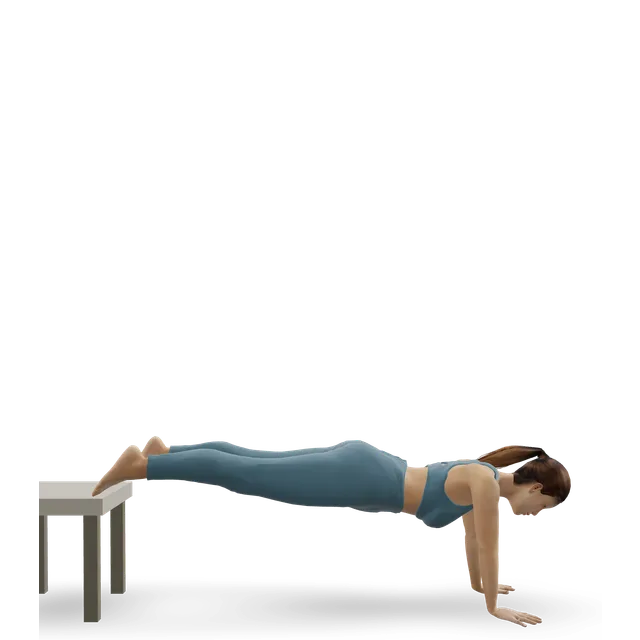
A decline push-up is a push-up with your feet on a step, bench or box, so your body slopes down towards your head. Raising your feet puts more of your weight on your hands: in a lab study, about 70 to 74% of it with your feet on a box 30 to 61 cm high, against 64% on the floor. It's the next step once floor push-ups get easy.

Despite the name, it isn't a lower-chest exercise, and the popular claim that it builds the upper chest has never been measured: what clearly changes as your feet go up is more work for your shoulders and triceps.

This guide shows it step by step on the 3D figure and covers how high to go, what it works, easier and harder versions, how many to do, and why the head-down position matters with glaucoma or high blood pressure.

The short version

Feet up, everything else the same

Feet on a steady step, bench or box, hands on the floor just outside shoulder width, one straight line from head to heels, elbows about 45 degrees from your body, and your chest lowered towards the floor without leading with your chin. Step down deliberately when you finish. That's our move page's set-up and the National Academy of Sports Medicine's (NASM).

Source 1

More of your weight on your hands

In 23 adults, the hands carried about 64% of body weight in a floor push-up, 70% with the feet on a 30 cm box and 74% on a 61 cm box. That's roughly a tenth to a sixth more load per rep (our arithmetic).

Source 2

How high: start low, stop at about bench height

Start on a low step (NASM suggests 15 to 30 cm, 6 to 12 inches) and work up to about bench height, which is plenty: that's our editorial view. Higher isn't always harder: a 61 cm box loaded the hands only a little more than a 30 cm one, in 27 men peak force on the hands was lower at the steepest angle, and in 19 trained men steeper angles moved work from the chest to the shoulders.

Sources 1, 2, 3, 4

The upper chest: unmeasured

No study has measured the upper part of the chest in a decline push-up. By our reading of the incline bench press studies, raising your feet may shift a little work to the upper chest; the measured change is to your shoulders. It isn't a lower-chest exercise either.

Sources 4, 5

Your head is below your hips

Head-down positions raised eye pressure within a minute in a small study of yoga poses. So the cautions in our decline bench press guide apply (our extrapolation): breathe out on each push and keep sets short, and with glaucoma or diabetic eye disease, a floor or incline push-up keeps your head higher.

Source 6

How many

3 sets of 6 to 12 with your feet on a low step (our push-up challenge workout), or 3 sets of 8 to 12 on a bench (our push-up progression), stopping 2 or 3 reps short, 2 or 3 times a week. NASM suggests 3 sets of 5 to 12.

Source 1

What a decline push-up is, and what it works

The set-up

Both feet on a low, secured bench or step and both hands on the floor just outside shoulder width, as our move page says. "Decline", "feet-elevated" and "elevated" push-ups are the same move; our 3D demo is the feet-elevated push-up, and some UK guides call it a decline press-up. The name says "decline" because your body slopes down towards your head, not because it works the lower chest.

Source 1

What it works

Your chest, the front of your shoulders and your triceps, as in any push-up, with your trunk working harder to hold the line, as NASM says. As your feet go up, the work shifts: in 19 trained men, tilting the body 15 and 30 degrees head-down raised the front shoulder from 49.1% to 55.5% and 59.5% of its maximum, the triceps from 34.5% to 37.8% and 41.4%, the serratus anterior (the muscle that holds your shoulder blade to your ribs) from 34.2% to 44.6% and 55.2%, and the upper trapezius from 10.1% to 18.0% and 25.3%, while the main chest fell from 40.8% to 35.8% and 27.2%.

Sources 1, 4

The load on your hands

In 23 recreationally fit adults, the share of body weight on the hands was 41% with the hands on a 61 cm box, 49% on the knees, 55% with the hands on a 30 cm box, 64% on the floor, 70% with the feet on a 30 cm box and 74% with the feet on a 61 cm box, each significantly different from the others, with no difference between women and men. In 27 men, peak hand force was about 667 and 663 newtons with the body tilted 10 and 20 degrees, and 596 at 30 degrees: very high feet don't keep adding load.

Sources 2, 7, 3

What you need first

Controlled standard push-ups and comfortable shoulder and wrist loading, as our move page says; NASM asks for solid push-up form first. Our push-up guide's ladder rule moves you on when all 3 sets of floor push-ups reach 15, and our push-up challenge starts with your feet on a low, steady step.

Source 1

How people differ

If you're taller, your feet sit further from your hands, so the same box gives a gentler slope; the 27-man study set each man's box height from his arm and trunk length to reach the same angle. Body mass predicted hand force, and the share of weight on the hands didn't differ between women and men. Judge the height by the slope and how it feels, not by a number (our suggestion).

Sources 3, 7

How to do a decline push-up, step by step

From our feet-elevated push-up move page and NASM's: the hands just outside shoulder width, the trunk in line, no leading with the chin and stepping down deliberately. The elbow angle and breathing follow our push-up guide; coming up slowly follows the NHS advice on dizziness.

  1. Put a steady step, bench or box against a wall so it can't slide, and start low.
  2. Kneel in front of it, place your hands on the floor just outside shoulder width, fingers forward, and put one foot then the other on the step behind you.
  3. Make one straight line from head to heels, trunk braced, head in line with your body.
  4. Breathe in and lower your chest towards the floor, elbows about 45 degrees from your body, without leading with your chin or letting your hips sag.
  5. Go as low as you can control, chest nearly to the floor.
  6. Breathe out and press back to straight arms.
  7. At the end of the set, lower your knees to the floor, step your feet down one at a time, then come up slowly.

Loading the 3D figure…

Gets into position, then repeats the movement. Technical checks passed; qualified exercise review is pending.

The movement on the figure: Feet-elevated push-up

How high should your feet be?

Raising your feet adds loadEmerging evidence

In 23 adults on a force plate, the hands carried 64% of body weight on the floor, 70% with the feet on a 30 cm box and 74% on a 61 cm box. Going from 30 to 61 cm added only about 4% of body weight.

Sources 2, 7

Steeper isn't always heavierEmerging evidence

In 27 male sports students with their feet raised so the body sloped 10, 20 or 30 degrees, peak hand force was about the same at 10 and 20 degrees and about 70 newtons lower at 30 degrees. The authors suggest the shoulder takes more of the strain at the steepest angle, which they didn't measure.

Source 3

Steeper moves the work to your shouldersEmerging evidence

In 19 trained men, the steepest angle tested (30 degrees head-down) cut the main chest's activity by a third and raised the front shoulder, triceps, serratus anterior and upper trapezius.

Source 4

Our advice: start low, stop at about bench height

Start on a low step, 15 to 30 cm as NASM suggests, and raise it in stages to about bench height, roughly 40 to 60 cm. That ceiling is our editorial view, not a tested rule: in the force studies above, a 61 cm box loaded the hands only a little more than a 30 cm one, the steepest angle loaded them less, and much higher starts to turn the move into a pike push-up, with more work for your shoulders than your chest. If you want that shoulder work, do pike push-ups properly instead.

Source 1

How many decline push-ups equal one push-up?

They don't convert exactly. At 70 and 74% of body weight against 64%, each decline rep loads your hands about 9 to 16% more than a floor rep, so 10 decline push-ups are roughly 11 or 12 floor push-ups' worth of load (our arithmetic).

Source 2

Upper chest, lower chest or shoulders?

The main chest works less as you go steeperEmerging evidence

In 19 trained men, the main (sternal) part of the chest worked at 40.8% of its maximum with the body flat, 35.8% at 15 degrees head-down and 27.2% at 30 degrees. The shoulders, triceps and serratus anterior took over.

Source 4

A small decline changed littleEmerging evidence

In 11 trained men, a 15-degree decline didn't significantly change activity in any of six upper-body muscles compared with a floor push-up. This is a preprint, not yet peer reviewed.

Source 8

The upper chest has never been measured

No study has measured the upper (collarbone) part of the chest in a push-up with the feet raised: the body-angle study measured the main part, and the one push-up study of the upper chest raised the hands, not the feet.

Sources 4, 9

What the incline bench press suggestsMixed evidence

In 30 trained adults, upper-chest activity peaked with the bench at a 30-degree incline; in 14 trained men, it didn't differ across bench angles over the whole lift but rose at 30 and 45 degrees in part of it; and in 47 untrained men, 8 weeks of incline pressing grew the upper chest more than flat pressing at one of three sites.

A decline push-up puts your arms at roughly an incline press's angle to your trunk, so it may shift a little work to the upper chest. That's our reading of the incline bench data: no study has measured it in a push-up, and the change it did measure is to your shoulders.

Sources 10, 5, 11

Not a lower-chest exerciseEmerging evidence

Despite the name, a decline push-up is more like an incline press than a decline press. Every push-up works the lower chest, and in 14 trained men, the decline bench press worked it about as hard as a flat press (100.4% against 100.1% of maximum). Our decline bench press guide covers it.

Source 5

For a bigger upper chest

Raise your feet modestly, then add reps, slow the lowering or move on to archer push-ups. A flat press or push-ups, plus an incline press if you like, cover the whole muscle, as our bigger chest guide explains.

What the evidence says

More weight on your hands, more muscle activityEmerging evidence

In 21 people, shoulder muscle activity across press-up positions rose with the share of body weight on the hands, which is why raising your feet makes the push-up harder.

Source 12

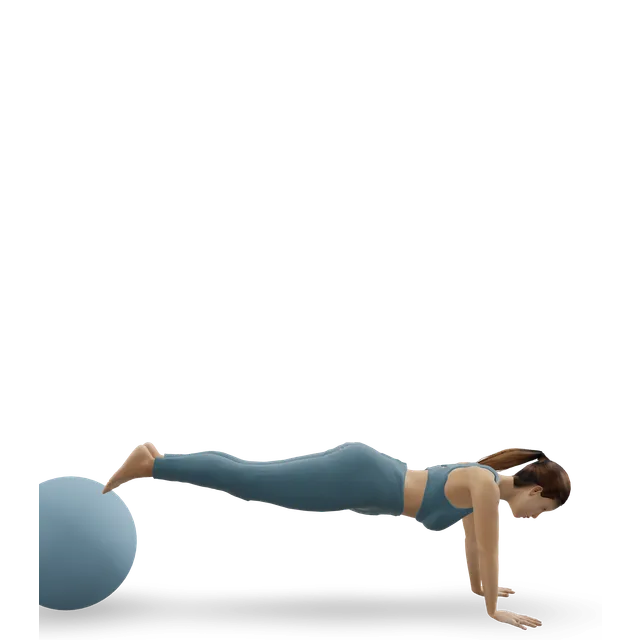
A ball under your feet adds balance, not chest workEmerging evidence

In 13 trained men with their feet on a bench or on a Swiss ball, no muscle changed with the ball. With the feet on the bench, the triceps worked at 32.7% and the chest at 30.4% of maximum, against 22.2% and 21.4% with the hands on the bench, though the study didn't test that difference.

Source 13

Push-ups build strength like the bench pressEmerging evidence

In three small trials of 18 to 30 people over 4 to 8 weeks, push-up training built bench press strength comparable to bench pressing, and push-ups matched to a light bench press load grew the chest and triceps as much as the bench press did.

Sources 14, 15, 16

Activity isn't growthStrong evidence

Muscle activity measured over a few reps hasn't been shown to predict growth, so the angle studies show where the work goes, not what each version builds.

Source 17

No trial of decline push-ups on their own

We found no training trial of decline push-ups. What they build is our reading of the push-up trials, the force studies and the muscle activity studies.

The ladder: raising your feet

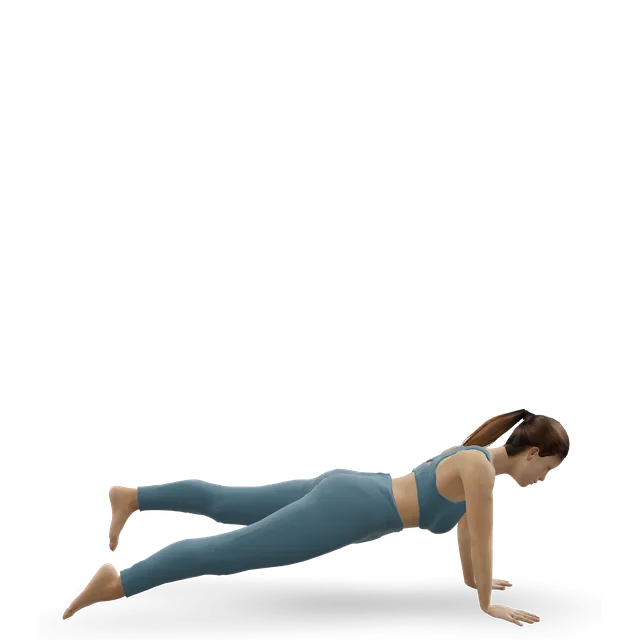
In order: incline push-ups, 3 sets of 8 to 15 (our push-up progression), the opposite direction for bad days; floor push-ups, 3 sets of 8 to 15, moving on when all three reach 15 (our push-up guide's ladder rule); feet-elevated push-ups with your feet on a low step, 3 sets of 6 to 12 (our push-up challenge workout), then on a bench, 3 sets of 8 to 12 (our push-up progression); single-leg push-ups with your feet raised, 3 sets of 6 to 10 each leg, floor first (our editorial starting point); feet on an exercise ball, 2 to 3 sets of 6 to 10 once bench declines are solid (our editorial starting point), which adds balance rather than chest work; and archer push-ups, 3 sets of 3 to 5 each side (our push-up challenge workout). Start low and stop at about bench height (editorial). Weighted, knuckle and deficit decline push-ups have no demo.

How many, and how often

Sets and reps

3 sets of 6 to 12 with your feet on a low step (our push-up challenge workout), or 3 sets of 8 to 12 on a bench (our push-up progression), stopping 2 or 3 reps short, or 3 or 4 in your first two weeks, as our plans advise. NASM suggests 3 sets of 5 to 12.

Source 1

Why stop short of failureStrong evidence

Across 15 studies, stopping a couple of reps short built about as much muscle as going to failure, and in 10 trained men, sets to failure slowed recovery by about a day or two. Short of failure also keeps your head-down time short.

Sources 18, 19

RestEmerging evidence

60 to 90 seconds, as our push-up guide suggests: across 9 studies, resting more than about a minute gave a small growth advantage, with no clear gain past about 90 seconds. Kneel rather than staying head-down while you rest.

Source 20

How often

2 or 3 times a week as one of your chest and triceps moves, with a day between hard sessions. The NHS asks for strengthening activities on at least 2 days a week, and how often you train matters mainly through your weekly sets: 3 or 6 sessions a week gave similar results in 27 trained men.

Sources 21, 22, 23

Counting your weekly setsStrong evidence

About 10 or more hard sets a week per muscle gave extra growth, with diminishing returns. Count each set of decline push-ups as a chest set and about half a triceps set, the counting that predicted growth best across 67 studies.

Sources 24, 25

Moving up

Add reps, then slow the lowering to 3 seconds, then raise the step a little, up to about bench height, then move on to archer push-ups, one change at a time, as our plans advise. Keep the full range: full range built more strength across 16 studies.

Source 26

Common mistakes and how to fix them

A box that's too high too soon

NASM says higher elevation angles dramatically increase difficulty and should be progressed gradually, and steep angles turn the move into a shoulder press. Start at 15 to 30 cm and build to about bench height.

Sources 1, 4

Hips sagging

Your lower back takes the strain, and NASM lists it first among the common mistakes. Brace and squeeze your glutes, or lower the step.

Source 1

Leading with your chin

It reaches depth with your neck, as our move page warns. Let your chest lead, head in line.

Elbows flared wide

NASM says it increases shoulder stress, and in a lab study flared elbows put the shoulder blade in a position linked with impingement. Keep them at about 45 degrees.

Sources 1, 27

A step that slides

A slipping step can drop you onto your face or shoulder. Set it against a wall on a non-slip floor (our suggestion).

Holding your breath with your head low

It raises blood pressure, and in a lab study it raised eye pressure more than breathing out during a bench press. Breathe out on every push.

Source 28

Getting up fast after the set

Standing up suddenly after being head-down can make you dizzy; the NHS advises not getting up suddenly. Kneel, then stand slowly.

Source 29

Decline push-ups against incline push-ups, the incline bench press, dips and pike push-ups

Against incline push-ups

They do different jobs. Incline push-ups, with your hands raised, are the easier step towards floor push-ups; declines, with your feet raised, are the harder step after them. In one study, the chest worked about the same with the hands raised as flat, while raising the feet shifted work to the shoulders.

Sources 2, 4

Against the incline bench press

In body angle, roughly alike: your arms push at a similar angle to your trunk, which is why our incline bench press guide calls the feet-elevated push-up the push-up closest to an incline press. No study has compared the two directly.

Against dips

Dips lift almost all your weight and take your shoulders further back; declines put about three-quarters of it on your hands. Our dips guide covers who should skip dips.

Against pike push-ups

A pike push-up is far steeper, with your hips high, which turns the push into an overhead press. If you want shoulder work, do pikes; if you want a harder chest push-up, keep your feet at about bench height. Our pike push-up guide teaches them.

Against diamond push-ups

Diamonds bring your hands together and move the work towards your triceps and elbows; declines keep your usual hand width and add load. Our diamond push-up guide covers them, and you can combine the two once both are steady.

Upper back and shoulder care

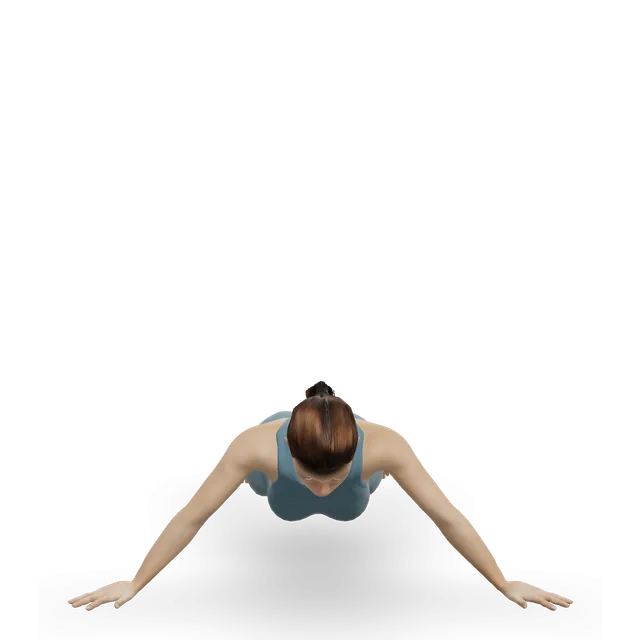
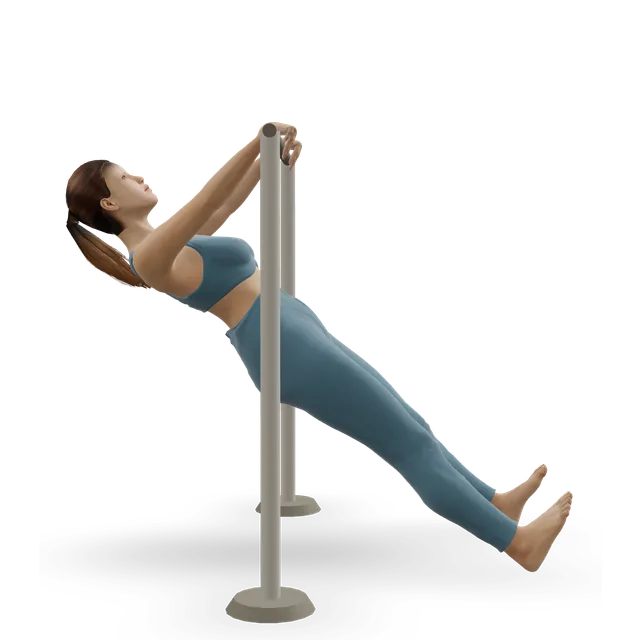
Scapular push-ups, 2 sets of 10 (our push-up progression): the serratus anterior works harder as your feet go up. Band pull-aparts, 15 reps, and face pulls, 3 sets of 12 to 20 (our upper body workout at home); band rows, 3 sets of 10 to 15, stopping 2 or 3 reps short, 60 to 90 seconds' rest (the move page's dose); inverted rows, 3 sets of 6 to 12 (our full-body calisthenics workout); high plank holds, 3 holds of 15 to 30 seconds (the move page's dose); and the doorway chest opener, 30 seconds (our upper body workout at home).

Workouts to follow

Our push-up progression and push-up challenge workout put the feet-raised push-up on their ladders; the full-body calisthenics workout's push-up ladder runs from hands raised to feet raised to archer push-ups; the drop-set workout starts its push-up drop set with your feet raised; and the chest and upper body workouts at home use floor push-ups, with declines as the harder option.

Plans that use them

The 30-day push-up challenge uses the push-up challenge workout, and the calisthenics plan the full-body calisthenics workout.

Head-down, and who should change it

Your head is below your hips

Raising your feet puts your head below your hips, so the same head-down cautions apply, as our decline bench press guide says. Head-down yoga poses and tilts raised eye pressure within minutes in small studies, and a researcher quoted by the American Academy of Ophthalmology's EyeNet says the distance of your eyes below your heart matters most, so a low step and short sets should matter less than a high step and long sets (our reading). We found no study of eye pressure in any push-up, so the advice below is our extrapolation.

Sources 6, 30, 31

With glaucoma

Our glaucoma guide advises keeping head-down positions brief or using a head-up version, and asking your eye team first if your glaucoma is advanced or you've had eye surgery. Glaucoma UK advises avoiding positions with your head lower than your heart for a long time. For decline push-ups, that means a low step and short sets with your breath flowing, or a floor or incline push-up instead (our extrapolation).

Source 32

With high blood pressure

While your blood pressure isn't under control, our high blood pressure guide advises skipping headstands, shoulder stands and long head-down holds, a precaution rather than a trial finding. We'd apply that to decline push-ups: use floor or incline push-ups until it's under control (our extrapolation). Breathe out on every push, as the American Heart Association advises.

Source 33

With diabetic eye disease

With proliferative or severe non-proliferative diabetic retinopathy, or after recent eye laser treatment or surgery, our guides advise leaving out head-down positions until your eye team says they're safe, and the American Diabetes Association advises avoiding head-down activities and breath holding. Use floor or incline push-ups until your eye team agrees (our extrapolation).

Source 34

In pregnancy

If you already do push-ups, ask your midwife as your bump grows, and move to wall or incline push-ups, as our push-up guide suggests, rather than a head-down version (our reading). The NHS advises against starting new strenuous exercise in pregnancy.

Source 35

With heart failure

The British Heart Foundation advises avoiding exercises that use your whole body as a weight, such as press-ups and planks. Wall push-ups are gentler; ask your heart team.

Source 36

Sore shoulders

Declines load the front of the shoulder more. Lower the step, and keep shoulder pain to about 5 out of 10, back to its usual level by your next session, as our shoulder pain on the bench press guide says.

Source 4

Sore wrists

More weight on your hands means more on your wrists, and a bent-back wrist raised pressure inside the joint in a lab study. Use push-up handles, fists or dumbbells, and see our wrist pain from push-ups guide.

Source 37

Warning signs

Stop and get medical help

If you get chest pain or pressure, feel faint or dizzy, are unusually breathless, or your heart races or beats irregularly during exercise, as our plans advise. The American Heart Association says these need immediate medical evaluation.

Source 33

Call 999 (911 in the US)

For chest pain that doesn't go away, feels tight or like squeezing, or spreads to your arms, neck, jaw, stomach or back, or comes with sweating, feeling sick, light-headedness or breathlessness; severe difficulty breathing; someone who faints while exercising; palpitations that don't go away, or come with chest pain, shortness of breath or feeling faint; or a headache that starts suddenly and is extremely painful. Don't drive yourself to A&E.

Sources 38, 39, 40, 41, 42, 43, 44

Check before you start

If you haven't exercised for some time or have a medical condition, speak to your GP first, as the NHS advises. Get advice before hard pressing or head-down work if your blood pressure is uncontrolled, or you have heart disease or chest pain when you're active, a pacemaker or defibrillator, diabetic eye disease, glaucoma, a hernia, recent eye or tummy surgery, or you're pregnant, as our breathing guide lists.

Source 21

A headache brought on by exercise

A headache triggered or made worse by coughing, sneezing, bending down or exercising needs an urgent GP appointment or NHS 111 (in the US, your doctor or urgent care). Stop head-down and heavy pressing work until it's been checked (our suggestion).

Source 43

Dizzy or light-headed

Stop, kneel or lie down until it passes, then get up slowly. See a GP if dizziness won't go away or keeps coming back.

Source 29

Your wrist

Contact NHS 111 for severe wrist pain, a snap, grinding or popping noise at the time of an injury, a wrist you can't move or hold things with, or one that has changed shape or colour. See a GP if wrist pain hasn't improved after 2 weeks, or comes with tingling or loss of feeling.

Source 45

Your shoulder

Ask for an urgent GP appointment or get help from NHS 111 for sudden or very bad shoulder pain, an arm you can't move, a shoulder that has changed shape or is badly swollen, or pins and needles that don't go away. See a GP if shoulder pain is getting worse or doesn't improve after 2 weeks.

Source 46

Very sore, swollen or weak arms, or dark urine

After a big session, get medical help the same day (NHS 111, or urgent care in the US): severe exertion can break down muscle, with dark, red or cola-coloured urine. Sudden, severe pain in a limb is a 999 or A&E call.

Sources 47, 48

Myths

"Decline push-ups work the lower chest"Emerging evidence

The name misleads: raising your feet slopes your body head-down, so your arms push at roughly an incline press's angle to your trunk. In 19 trained men, the steepest feet-raised angle cut the main chest's activity by a third and shifted work to the shoulders. The lower chest works in every push-up, and the decline bench press, the exercise the name borrows, works it about as much as a flat press.

Sources 4, 5

"Decline push-ups are the best push-up for the upper chest"Mixed evidence

No study has measured the upper chest in a decline push-up. In bench pressing, inclines raised the upper chest only modestly and only at some angles or parts of the lift, with one growth trial finding more upper-chest growth at one of three sites. So declines may shift a little work to the upper chest (our reading), and a flat press or push-ups plus an incline press cover the whole muscle.

Sources 4, 9, 10, 5, 11

"The higher your feet, the better"Emerging evidence

In 23 adults, a 61 cm box loaded the hands only a little more than a 30 cm one (74% against 70% of body weight); in 27 men, peak hand force at the steepest angle was lower than at gentler ones; and steeper angles moved the work to the shoulders. About bench height is plenty (our editorial view).

Sources 2, 3, 4

"Decline push-ups are easier than regular push-ups"Emerging evidence

They put more of your weight on your hands. If they feel easier, check you're going as deep, chest towards the floor rather than just your face, and that your hips aren't piking up (our suggestion).

Source 2

"You need to do hundreds a day"Emerging evidence

More hard sets build more muscle only up to a point, stopping 2 or 3 reps short works about as well as failure, and 3 or 6 sessions a week gave similar results in 27 trained men. One man who did hundreds of push-ups a day for months got a stress fracture of his collarbone. A few hard sets, 2 or 3 times a week, do more.

Sources 24, 18, 23, 49

Questions people ask

Do decline push-ups work the upper or lower chest?

Neither specifically. No study has measured the upper chest in a decline push-up; raising your feet mainly shifts work to the front of your shoulders and your triceps, and at the steepest angle tested the main chest worked a third less. Despite the name, they aren't a lower-chest exercise: every push-up works the lower chest.

How high should my feet be for decline push-ups?

Start on a low step (NASM suggests 15 to 30 cm, 6 to 12 inches) and work up to about bench height. Going much steeper adds little load to your hands and shifts the work to your shoulders, so about bench height is plenty (our editorial view).

Are decline push-ups harder than regular push-ups?

Yes, a little. In 23 adults, the hands carried 70% of body weight with the feet on a 30 cm box and 74% on a 61 cm box, against 64% on the floor.

How many decline push-ups equal one push-up?

They don't convert exactly, but at those heights each decline rep puts roughly a tenth to a sixth more load on your hands than a floor rep. So 10 decline push-ups are worth roughly 11 or 12 floor ones in load, by our arithmetic.

Decline or incline push-ups: which is better?

They do different jobs. Incline push-ups, with your hands raised, are the easier step towards floor push-ups; declines, with your feet raised, are the harder step after them. In one study, the chest worked about the same with the hands raised as flat, while raising the feet shifted work to the shoulders.

Do decline push-ups work your shoulders?

Yes, more than flat push-ups. In 19 trained men, the front of the shoulder, the triceps and the serratus anterior worked harder as the feet went up. If your shoulders are sore, lower the step.

How many decline push-ups should I do?

3 sets of 6 to 12 with your feet on a low step, or 3 sets of 8 to 12 on a bench, stopping 2 or 3 reps short, 2 or 3 times a week, as our push-up challenge and push-up progression workouts use. NASM suggests 3 sets of 5 to 12.

Why do I find decline push-ups easier?

They put more weight on your hands, so they shouldn't be. Check that your chest goes towards the floor rather than just your face, and that your hips aren't piking up.

Are decline push-ups safe with glaucoma or high blood pressure?

Raising your feet puts your head below your hips, so the head-down cautions apply, as our decline bench press guide says. Floor or incline push-ups keep your head higher; if you do declines, keep the feet low and the sets short, and breathe out on each push. With high blood pressure that isn't controlled, or severe diabetic eye disease, stick to floor or incline push-ups until your doctor or eye team agrees.

Are feet-elevated push-ups the same as decline push-ups?

Yes: decline, feet-elevated and elevated push-ups all mean push-ups with your feet raised. Our 3D demo is the feet-elevated push-up.

Can I do decline push-ups with my feet on an exercise ball?

Yes, once bench declines are solid. Expect a balance challenge rather than more chest or triceps work: in 13 trained men, a ball under the feet didn't change muscle activity compared with a bench.

Are decline push-ups like an incline bench press?

In body angle, roughly: your arms push at a similar angle to your trunk, which is why our incline bench press guide calls the feet-elevated push-up the closest push-up to an incline press. No study has compared the two directly.

Sources

  1. NASM · Decline push-up (exercise library)
  2. Wurm 2010 · Forces in six push-up variations in 23 adults, as a share of body weight (lab study, ISBS conference paper of Ebben 2011)
  3. Wu 2025 · Hand force in feet-raised push-ups at three body angles in 27 men (lab study, Sci Rep)
  4. Lin 2026 · Muscle activity in floor and suspension push-ups at five body angles in 19 trained men (EMG study, BMC Sports Sci Med Rehabil)
  5. Lauver 2016 · Bench angle and upper-body muscle activity in 14 trained men (EMG study, Eur J Sport Sci)
  6. Jasien 2015 · Eye pressure in four head-down yoga poses in 20 people with and without glaucoma (lab study, PLoS One)
  7. Ebben 2011 · Forces in six push-up variations in 23 adults (lab study, JSCR)
  8. Zhang 2023 · Muscle activity in incline and decline push-ups in 11 trained men (preprint, not peer reviewed, Research Square)
  9. Borreani 2015 · Shoulder muscle activity in stable and suspended push-ups with the hands at different heights in 29 men (EMG study, Phys Ther Sport)
  10. Rodríguez-Ridao 2020 · Chest, shoulder and triceps activity at five bench angles in 30 trained adults (EMG study, Int J Environ Res Public Health)
  11. Chaves 2020 · Flat against incline bench press for 8 weeks in 47 untrained men (randomised trial, Int J Exerc Sci)
  12. Herrington 2015 · Shoulder muscle activity in press-up variations and progressions in 21 people (EMG study, J Electromyogr Kinesiol)
  13. Lehman 2006 · Shoulder and arm muscle activity in push-ups on and off a Swiss ball in 13 trained men (EMG study, Dyn Med)
  14. Kotarsky 2018 · Progressive push-ups vs bench press for strength and muscle in 23 men (randomised trial, JSCR)
  15. Calatayud 2015 · Band push-ups vs bench press at matched muscle activity in 30 lifters (randomised trial, JSCR)
  16. Kikuchi 2017 · Light bench press vs load-matched push-ups for muscle and strength in 18 men (randomised trial, J Exerc Sci Fit)
  17. Vigotsky 2022 · Muscle activity measured in one session is not a validated predictor of muscle growth (review, Sports Med)
  18. Refalo 2023 · How close to failure to train for muscle growth: 15 studies (systematic review and meta-analysis, Sports Med)
  19. Morán-Navarro 2017 · Recovery after sets taken to failure or not, in 10 trained men (crossover study, Eur J Appl Physiol)
  20. Singer 2024 · Rest between sets and muscle growth: 9 studies (systematic review with Bayesian meta-analysis, Front Sports Act Living)
  21. NHS · Physical activity guidelines for adults aged 19 to 64
  22. Grgic 2018 · Training frequency and strength gains (systematic review and meta-analysis, Sports Med)
  23. Saric 2019 · Training 3 or 6 times a week in 27 trained men (randomised trial, JSCR)
  24. Pelland 2026 · Weekly sets and training frequency against muscle growth and strength: 67 studies, 2,058 people (meta-regression, Sports Med)
  25. Currier 2026 · Resistance training for strength, muscle and performance in healthy adults: an overview of 137 reviews (ACSM position stand, Med Sci Sports Exerc)
  26. Pallarés 2021 · Full vs partial range of movement in strength training: 16 studies (systematic review and meta-analysis, Scand J Med Sci Sports)
  27. Suprak 2013 · Shoulder blade movement and arm position in the push-up in 16 people (lab study, J Athl Train)
  28. Vieira 2006 · Eye pressure during the bench press, holding the breath or breathing out (lab study, Arch Ophthalmol)
  29. NHS · Dizziness (past its review date: reviewed April 2023, review due April 2026)
  30. Marshall-Goebel 2017 · Eye and brain pressure at different head-down tilts in healthy adults (lab study, Aerosp Med Hum Perform)
  31. Weiner 2019 · Glaucoma and exercise: what to tell your patients (interviews with ophthalmologists, EyeNet Magazine, American Academy of Ophthalmology)
  32. Glaucoma UK · Living with glaucoma: diet, exercise and smoking
  33. Paluch 2024 · Resistance exercise training with and without cardiovascular disease: 2023 update (American Heart Association scientific statement, Circulation)
  34. Colberg 2016 · Physical activity and exercise with diabetes (American Diabetes Association position statement, Diabetes Care)
  35. NHS · Exercise in pregnancy
  36. British Heart Foundation 2026 · Exercise for heart failure: tips for exercising safely
  37. Daly 2018 · Wrist joint pressures in two push-up positions, in 8 donated wrists (lab study, J Hand Surg Am)
  38. NHS · Chest pain (past its review date: reviewed August 2023, review due August 2026)
  39. NHS · Heart attack
  40. NHS · Shortness of breath
  41. NHS · Fainting
  42. NHS · Heart palpitations
  43. NHS · Headaches
  44. NHS · Subarachnoid haemorrhage
  45. NHS · Wrist pain
  46. NHS · Shoulder pain (past its review date: reviewed May 2023, review due May 2026)
  47. MedlinePlus (US National Library of Medicine) · Rhabdomyolysis
  48. NHS · Compartment syndrome
  49. Ohnishi 2026 · A collarbone stress fracture after excessive daily push-ups in one man (case report, J Rural Med)

Exercise education, not a personal prescription, and clinical review of these guides is pending. Check with a GP before starting hard training if you have a heart condition, chest pain, dizziness or breathlessness when active, and stop for sharp or increasing pain. Health disclaimer.