Training guide

How to do a decline bench press: the angle, the lower chest, head-down safety, and how heavy

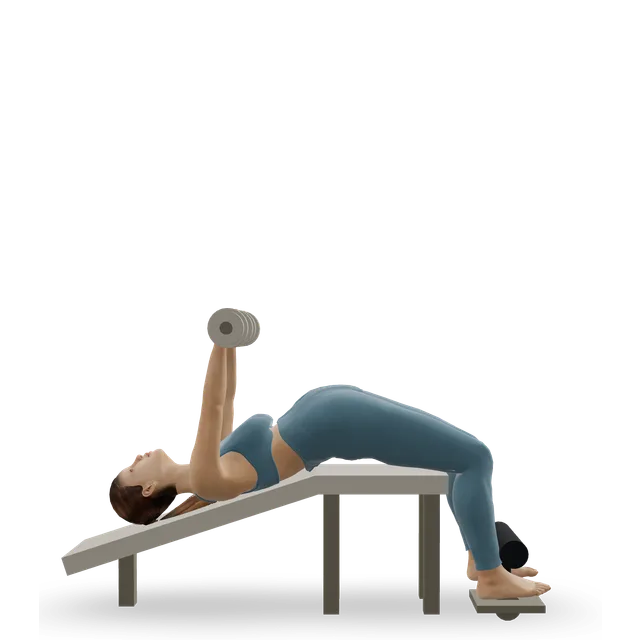
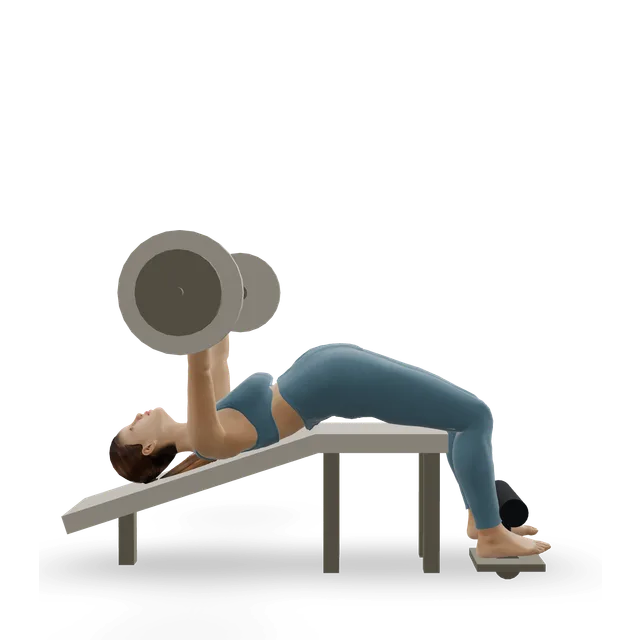
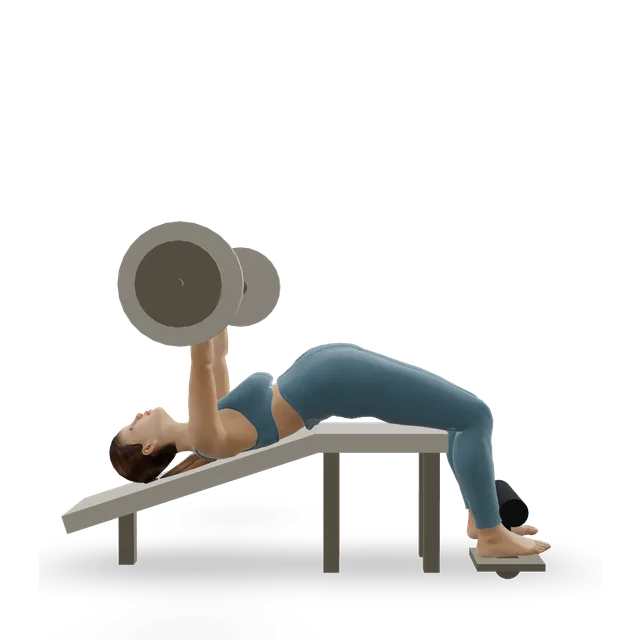
A decline bench press is a bench press on a bench tilted head-down, usually 15 to 30 degrees, with your legs hooked under the pads. You lower the bar under control to your lower chest and press it back up, with a spotter or safety arms because you can't roll a failed rep down your body, and you sit up slowly when you finish.

It works your chest, shoulders and triceps about as hard as a flat bench press, with about the same weight, and the lower chest about as much as a flat press does, so it's a useful variation rather than a must. Your head is below your hips, so with glaucoma, high blood pressure that isn't under control or diabetic eye disease, or after the first trimester of pregnancy, a flat or seated press is the better choice.

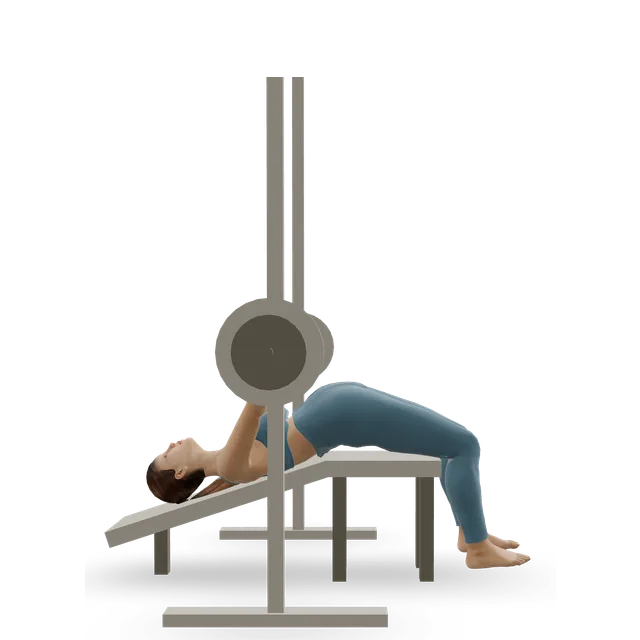
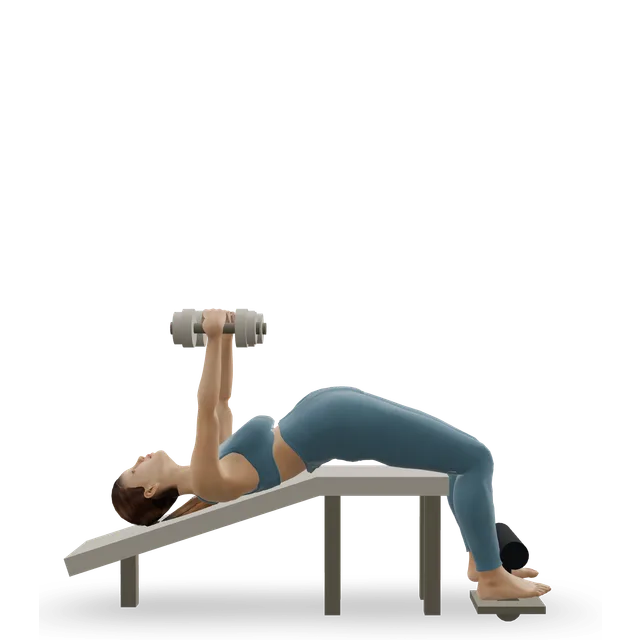
This guide shows you the set-up step by step on the 3D figure, the angle, the lower chest, your shoulders, head-down safety, the dumbbell, Smith machine and machine versions, presses without a decline bench, how heavy, and the warning signs.

The short version

A bench press with your head below your hips

Hook your legs under the rollers on a bench tilted about 15 to 30 degrees head-down, lower the bar to your lower chest and press it back up. In 12 competitive bench pressers, a 25-degree decline lifted about as much as the flat bench, with similar chest, shoulder and triceps activity.

Source 1

The lower chest: about the same as a flat press

In 14 trained men, the lower chest worked as hard at a 15-degree decline as flat, and less on a steep incline; one small study found it worked harder flat than on a decline. The flat bench already works your lower chest.

Sources 2, 3

Use a spotter or safety arms

You can't roll a failed rep down your body, so set the safety arms or have a spotter hand you the bar, and never go to failure alone. Dropped equipment caused 12 to 19% of the gym injuries seen in US emergency departments in a 10-year study.

Source 4

Head-down positions raise eye pressure

In small studies, eye pressure rose within minutes in head-down tilt and within a minute in head-down yoga poses. Nobody has measured it in a decline press. With glaucoma, high blood pressure that isn't under control or diabetic eye disease, follow our head-down advice below, which for the decline press is our extrapolation from those studies, and everyone should breathe out on each press and sit up slowly.

Sources 5, 6

Pregnancy: leave it out

After the first trimester, a pregnancy charity advises switching a flat bench press to an incline or standing chest press if lying flat makes you uncomfortable or light-headed. A head-down bench is a step further the wrong way (our reading).

Source 7

How heavy and how many

About your flat bench weight, starting lighter while you learn the set-up: 3 sets of 6 to 10, stopping 2 or 3 reps short and resting 2 to 3 minutes (our editorial starting point), once a week as one of your presses. Going to failure adds little muscle.

Sources 1, 8

What a decline bench press is, and what it works

The lift

A bench press on a bench tilted so your head is lower than your hips, with your legs hooked under rollers so you don't slide. The bar comes down to your lower chest and presses back up. The studies used declines of 15 to 25 degrees.

What it works

Your chest (the pectoralis major, both its upper and lower parts), the front of your shoulders and your triceps, much like the flat bench. The "lower chest" is the lower part of one muscle, not a separate muscle.

Most of these studies measured EMG (electromyography: electrodes measuring how hard a muscle works over a few reps). It shows effort, not what a muscle will build.

Sources 1, 2, 9

What you need first

A steady flat bench press, as the decline press's move page says, and a spotter or safety arms.

How people differ

Some people find the decline more comfortable for their shoulders, and some find the head-down position unpleasant. Both are good reasons to choose, or skip, it.

How to do a decline bench press, step by step

From the decline bench press's move page: the legs hooked, the grip, the lower chest, a spotter to hand you the bar and sitting up slowly. The 15 to 30 degree setting is our editorial range (the studies used 15 to 25 degrees); the shoulder blades, elbow angle and breathing follow our bench press and breathing guides.

  1. Set the decline at about 15 to 30 degrees and the safety arms just below your chest height, or have a spotter ready to hand you the bar.
  2. Hook your legs firmly under the rollers and lie back with your eyes under the bar.
  3. Grip the bar a little wider than your shoulders, thumbs round it.
  4. Pull your shoulder blades back and down so your upper back is tight on the bench.
  5. Take the bar out to straight arms over your lower chest, with your spotter's help.
  6. Breathe in and lower the bar under control to your lower chest, elbows tucked about 45 to 75 degrees from your sides.
  7. Press back up to straight arms, breathing out near the top, or all the way through the press if you have high blood pressure or glaucoma.
  8. Rack the bar with your spotter, rest a moment, then sit up slowly.

Loading the 3D figure…

Gets into position, then repeats the movement. Technical checks passed; qualified exercise review is pending.

The movement on the figure: Decline barbell bench press

What angle?

15 to 30 degrees

The studies used declines of 15 to 25 degrees. A steeper decline adds head-down time without any proven benefit (our view), so there's no reason to go past about 30 degrees.

Sources 1, 2, 10, 11

The bar travels a little less farEmerging evidence

In competitive bench pressers, the bar travelled less far in the decline press than in the incline press, though not significantly less than flat.

Source 1

What the evidence says

Decline and flat loads were about the sameEmerging evidence

In 12 national and international bench pressers, 6-rep maximums were 132.7 kg flat, 129.4 kg on a 25-degree decline (not a significant difference) and 109.2 kg on a 25-degree incline, 21.5% less than flat. Chest, shoulder and lat activity were similar across the angles, and the incline cut triceps activity.

Source 1

The lower chest worked as hard flat as on a declineMixed evidence

In 14 trained men at 65% of their best, lower chest activity was 100.4% of maximum at a 15-degree decline, 100.1% flat, 86.6% at a 30-degree incline and 71.9% at 45 degrees. In 15 men it worked harder on a decline than a 30-degree incline; in 13 men the lowest part of the chest favoured wide grips on a decline and flat over 30-degree inclines; and in 6 weight trainers it worked harder flat than on a decline. So: about the same as flat, and more than a steep incline.

Sources 2, 10, 11, 3

No training trial of the declineEmerging evidence

The only bench-angle growth trial compared flat with a 44-degree incline in 47 untrained men training once a week for 8 weeks: strength rose alike, by about 10 to 11 kg, and the incline grew the upper chest more at one of three sites. No trial has tested the decline press for muscle or strength.

Source 12

Muscle activity isn't growthStrong evidence

Activity over a few reps isn't a validated predictor of growth, so these studies tell you what a press works, not what it builds.

Source 9

Chest tendon tears happen in the gymEmerging evidence

Of 365 published tears of the big chest muscle (the pectoralis major), 48% happened during weight training. Lower under control, and don't go to failure without a spotter.

Source 13

The lower chest

Does the decline work the lower chest?

Yes, about as much as a flat bench press does, and more than a steep incline. If you want lower chest work, the flat bench already gives it; the decline is a different angle for the same muscle, useful if you like it or your shoulders prefer it.

Sources 1, 2

Lower chest workouts

Flat presses, dips with a forward lean, push-ups and flys all work the lower chest. Our chest workout and chest workout at home cover it without a decline bench, and our bigger chest guide covers building the whole chest.

Decline, flat, incline or dips?

Against the flat bench

About the same weight and muscle work. The flat bench is easier to set up, needs no head-down position and is the one our bench press guide teaches; the decline is an alternative, not an upgrade.

Source 1

Against the incline

The incline shifts work towards the upper chest and the front of the shoulder, and cut the 6-rep maximum by 21.5% in competitive lifters; the decline works the lower chest like a flat press. Our incline bench press guide covers the incline.

Sources 1, 2

Against dips

Both work the lower chest. Dips lift your whole body weight and take your shoulders further back, as our dips guide explains, and no study has compared them with the decline press, so choose the one your shoulders tolerate.

Against the decline push-up

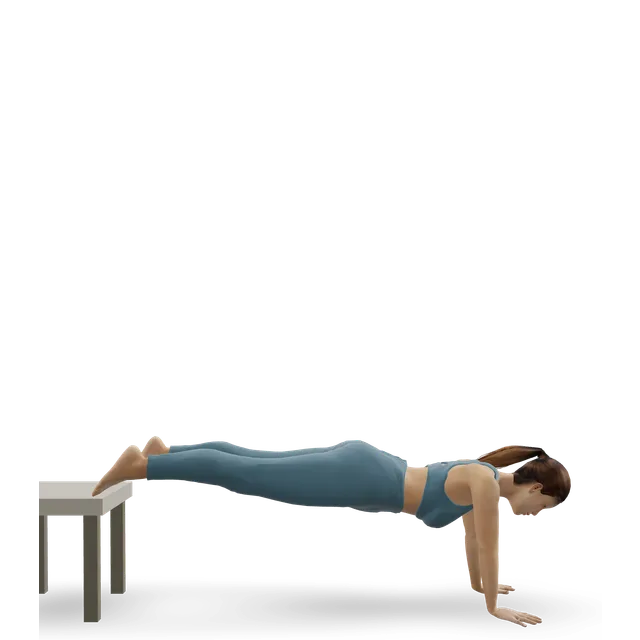
Raising your feet puts your head below your hips too, so the same head-down cautions apply. Our push-up guide teaches it.

Your shoulders

Less front-of-shoulder work than an inclineEmerging evidence

The front of the shoulder worked 25.7% less in the decline than the incline in competitive bench pressers, but not significantly less than flat, and it tended to rise as the bench angle rose in 6 lifters.

Sources 1, 3

Not proven safer

Some people find the decline easier on their shoulders, and it's worth trying if the flat bench bothers them, but nobody has counted shoulder injuries by bench angle.

The shoulder rule

With shoulder pain, our shoulder pain on the bench press guide's rule applies: up to about 5 out of 10 while pressing, back to its usual level by your next session, and 4 out of 10 (an NHS physiotherapy booklet's limit) for heavy pressing. Keep the grip no wider than your shoulders, as the wide-grip decline press's move page says.

Head-down safety

Eye pressure rises with your head downEmerging evidence

In 16 healthy people, 5 minutes tilted 12 or 18 degrees head-down raised eye pressure by 2.2 and 3.4 mmHg (millimetres of mercury); 4 hours at 17 degrees raised it by about 3 mmHg in 9 volunteers; hanging upside down raised it from 14 to 36 mmHg; and head-down yoga poses raised it within a minute in people with and without glaucoma, falling back within 2 minutes of sitting up.

Sources 5, 14, 15, 6

Lifting raises it tooStrong evidence

Across 34 studies in healthy adults, resistance exercise raised eye pressure, more with heavy loads, longer sets and a held breath, and it was back to normal about a minute after the set in most studies. In 30 people, holding the breath on the last bench press rep raised it by 4.3 mmHg against 2.2 breathing out, and in 23 adults, pressing lying down raised it more than pressing seated.

Sources 16, 17, 18

Blood pressure rises upside downEmerging evidence

Full inversion raised blood pressure to 146/97 mmHg at rest and 158/101 exercising in 19 young men, and bent-knee inversion raised heart rate, blood pressure and the heart's workload in 20 men, whose authors suggested it may not suit people with heart disease. These were full inversions, far steeper than a decline bench.

Sources 19, 20

Nobody has measured a decline press

We found no study of eye pressure, blood pressure or injuries in a decline bench press. So applying our guides' head-down advice to the decline press, below, is our extrapolation from the tilt-table, inversion and flat bench press studies.

With glaucoma

Our glaucoma guide advises keeping head-down positions brief or using a head-up version, and asking your eye team first if your glaucoma is advanced or you've had eye surgery. Glaucoma UK advises avoiding positions with your head lower than your heart for a long time. For the decline press, that means short sets with your breath flowing, or a flat bench or seated machine press instead (our extrapolation).

Sources 21, 6

With high blood pressure

While your blood pressure isn't under control, our high blood pressure guide advises skipping headstands, shoulder stands and long head-down holds, a precaution rather than a trial finding. We'd apply that to the decline press: use a flat bench or a seated press until it's under control (our extrapolation). Breathe out on every press, and cool down for longer if you take blood pressure medicines, as the American Heart Association advises. Keep exercising, though: the NHS recommends regular activity to help lower blood pressure.

Sources 22, 23

With diabetic eye disease

With proliferative or severe non-proliferative diabetic retinopathy, or after recent eye laser treatment or surgery, our guides advise leaving out head-down positions until your eye team says they're safe, and the American Heart Association advises against high-intensity strength training with active proliferative or moderate to severe non-proliferative retinopathy. That rules out the decline press until your eye team agrees (our extrapolation).

Source 22

In pregnancy

After the first trimester, a pregnancy charity advises switching a flat bench press to an incline or standing chest press if lying flat makes you uncomfortable or light-headed, and the NHS advises against lying flat on your back for more than a few minutes in later pregnancy. A head-down bench is a step further, so leave the decline out and press on an incline bench or a seated machine, breathing out as you press (our reading).

Sources 7, 24

For everyone

Breathe out on each press rather than holding your breath for the whole set, keep sets short, and sit up slowly at the end: the NHS advises not getting up suddenly after sitting or lying down. If you feel dizzy when you sit up, lie back down until it passes.

Source 25

Learn it in steps: from push-ups to the decline barbell press

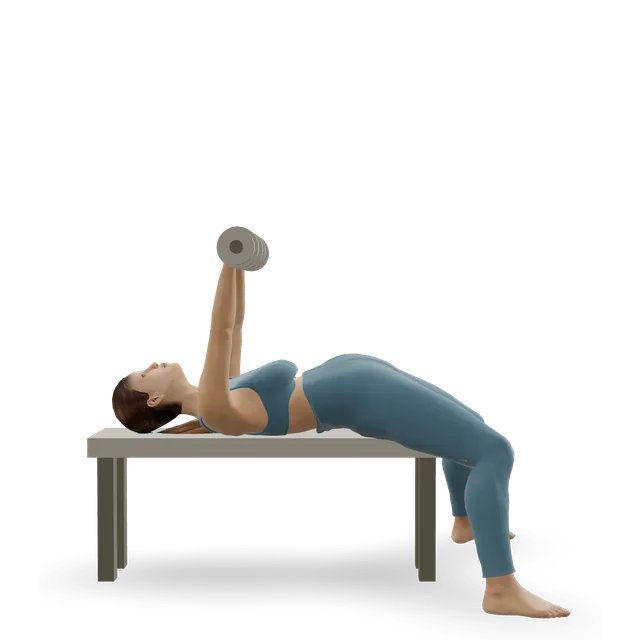
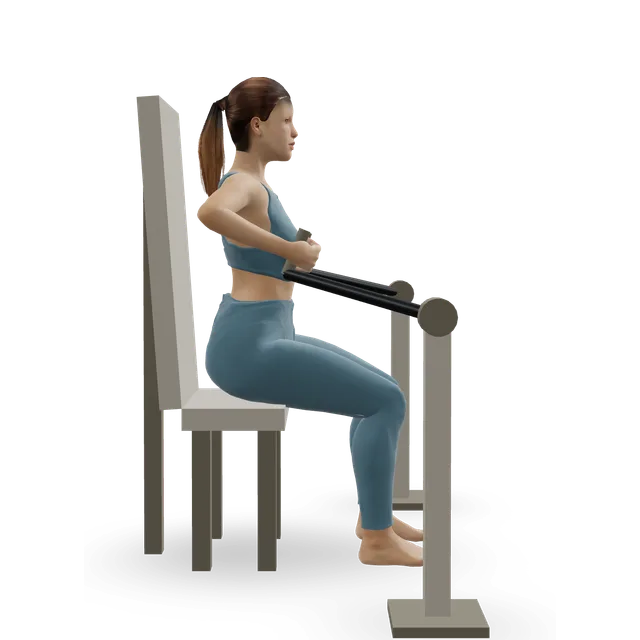
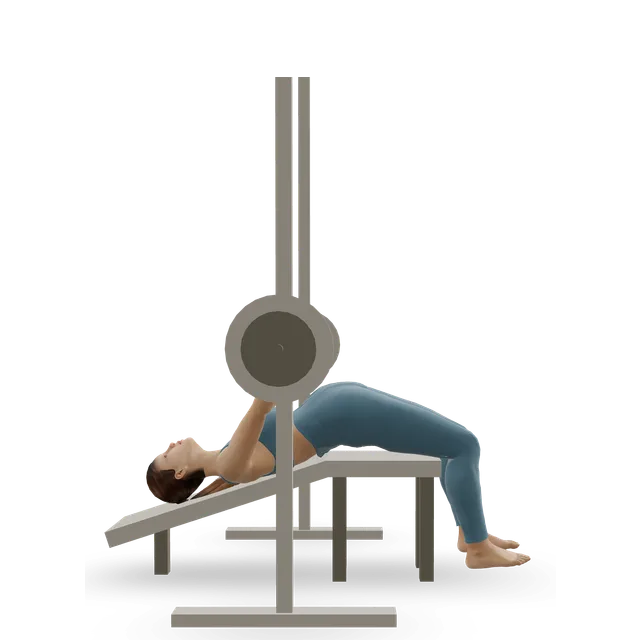
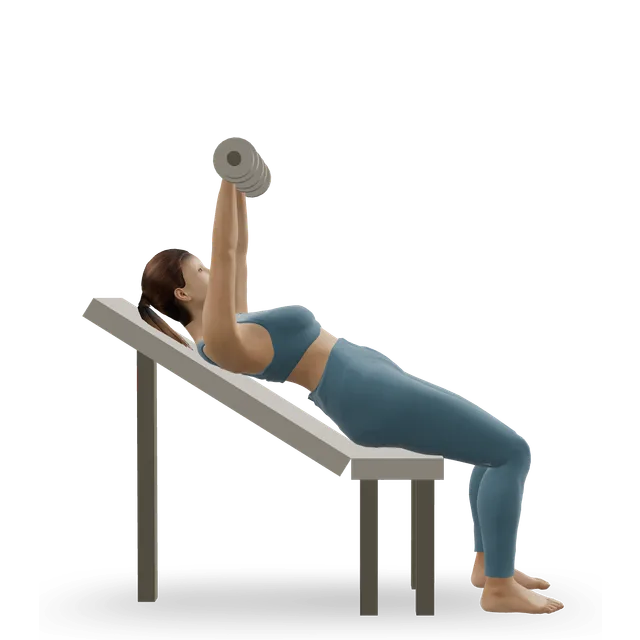
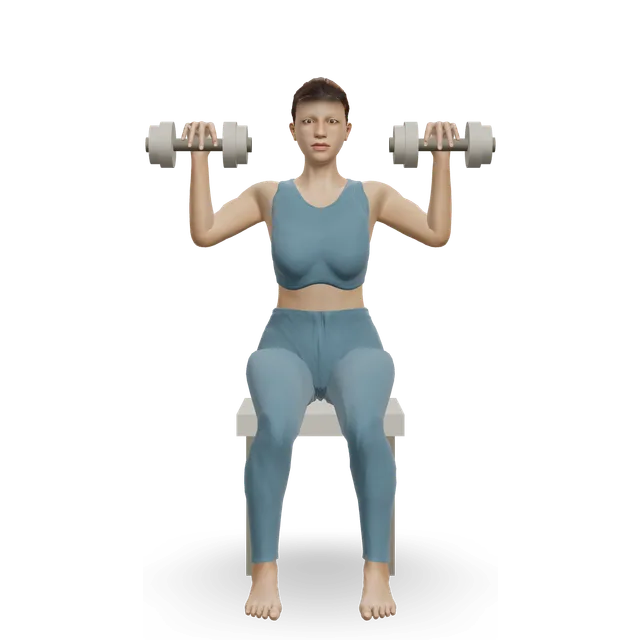
Push-ups, 3 sets of 6 to 15 (our chest workout at home); dumbbell bench presses, 3 sets of 8 to 12 with 1 or 2 reps to spare (our push day workout B); the barbell bench press, 4 sets of 6 to 8 after 2 lighter sets (our push day workout); the plate-loaded lever decline press, which you do sitting upright, 2 to 3 sets of 8 to 12 with 2 or 3 reps in reserve (its move page's dose); the Smith machine decline press with the stops set, and the decline dumbbell press, 3 sets of 8 to 12 with 2 or 3 reps to spare (our editorial starting point); then the decline barbell bench press, 3 sets of 6 to 10 with a spotter or safety arms (our editorial starting point).

Wide-grip, Smith machine and fly versions

The wide-grip decline press, kept no wider than your shoulders if they're sore, as its move page says; the wide-grip Smith machine decline press, easiest to use alone with the safety stops set just above your chest; and decline dumbbell flys, kept light and lowered only to about chest level (their move pages give no dose), with the decline dumbbell press above brought to your chest before you sit up.

No decline bench?

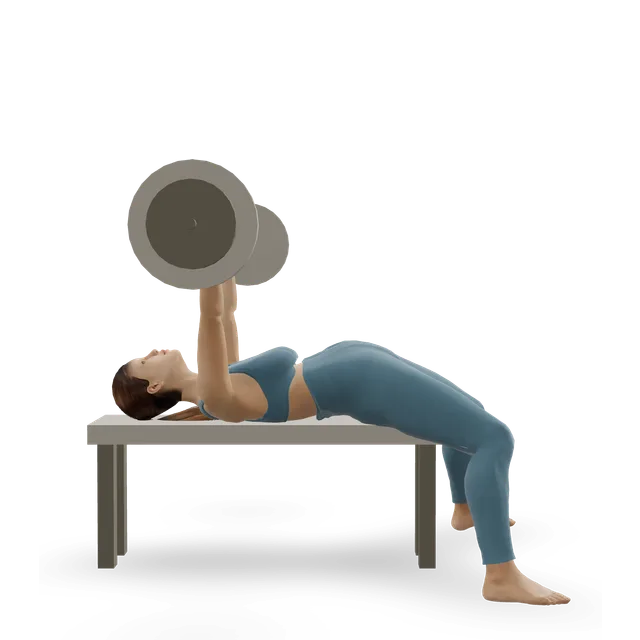
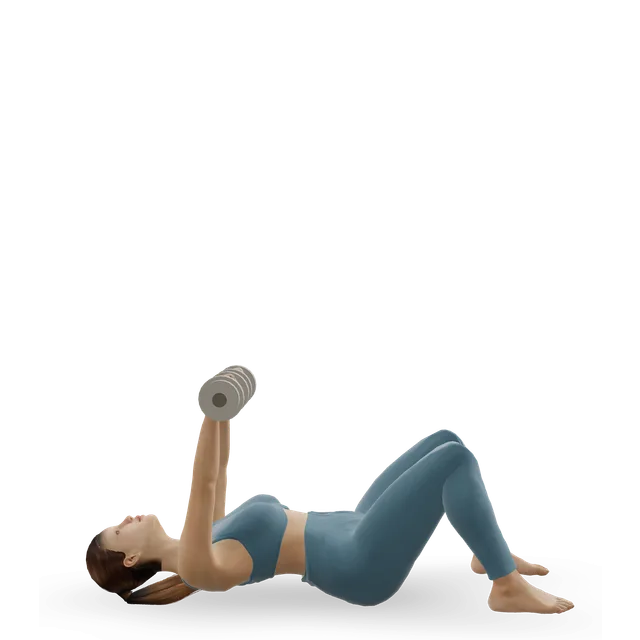
Dips, 2 to 3 sets of 6 to 12 (our chest and triceps workout), with the forward lean coaches teach for the chest; the bent-forward cable crossover, 2 to 3 sets of 10 to 15 with 2 or 3 reps in reserve (its move page's dose); cable flys, 3 sets of 12 (our chest workout); the dumbbell floor press, 2 to 3 sets of 8 to 12 with 2 or 3 reps in reserve (its move page's dose); and feet-elevated push-ups, 3 sets of 8 to 12 (our push-up progression), which put your head below your hips too. A flat bench press with your hips raised in a bridge copies the angle, as coaches suggest, though no study has tested it.

Common mistakes and how to fix them

Unracking alone without safety arms or a spotter

Set the arms, use a spotter, or use a Smith machine with the stops set.

Bouncing the bar off your chest

Lower under control and touch, as our bench press guide teaches.

Lowering to your upper chest or neck

Bring the bar to your lower chest, as the move pages say.

Legs not hooked in

You'll slide: hook them before you take the bar.

Holding your breath for the whole set

One breath per rep at most, and breathe out on every press if you have high blood pressure, glaucoma or a heart condition, as our breathing guide says.

Sitting up fast

Sit up slowly: dizziness when you stand or sit up suddenly can be a sudden drop in blood pressure.

Source 25

A steeper decline than you need

More time head-down with no proven benefit: the studies used 15 to 25 degrees.

Dropping the dumbbells from the bottom

Bring them to your chest, then sit up, as the decline dumbbell press's move page says.

How heavy, how many and how often

Weight

About your flat bench weight for the same reps, but start lighter for your first sessions while you learn the position and the hand-off (our suggestion). There are no decline press strength standards.

Source 1

Sets and reps

3 sets of 6 to 10, stopping 2 or 3 reps short and resting 2 to 3 minutes (our editorial starting point, close to our chest workout's bench press, 4 sets of 6 to 8); or 3 sets of 8 to 12 with 90 seconds to 2 minutes' rest for muscle (our plans). Never go to failure without a spotter.

How hard

Stop each set with 2 or 3 reps to spare, or 3 or 4 in your first two weeks, as our plans advise. Going to failure adds little muscle, and people underestimate the reps they have left by about one.

Sources 8, 26

How often

Once a week as one of your presses, or in place of the flat bench for a block of a few weeks (our suggestion). Count the sets as chest sets.

Progression

Add the smallest plates while every rep stays controlled, as our bench press guide does.

Moves that go with it

Band pull-aparts, 15 reps, and scapular push-ups, 10 reps, to warm up (our chest workout); shoulder circles, 3 slow circles each way with each arm (its move page's dose); face pulls, 3 sets of 12 to 20 (our pull day workout), to balance pressing with pulling; and the doorway chest opener, 30 seconds (our chest workout at home), to finish.

Workouts to follow

None of our workouts uses a decline press: it can replace the flat or dumbbell press in any of these chest and push days for a few weeks, and our chest workout at home covers the lower chest without a bench.

Plans that use it

These plans use our chest, push day or chest and back workouts, where a decline press can take a flat press's place for a while.

Who should change it

Glaucoma, high blood pressure or diabetic eye disease

Use a flat bench, a seated machine press or dips instead, or ask your specialist: see head-down safety above.

Heart disease, a pacemaker or a defibrillator

Get advice before upper-body strength training, as the American Heart Association advises for pacemakers and defibrillators, and breathe out through every press.

Source 22

Shoulder pain

Follow our shoulder pain on the bench press guide, keep the grip no wider than your shoulders, and use the decline only if it feels better than flat.

Pregnancy

After the first trimester, press on an incline bench or a seated machine instead, and breathe out as you press, as our bench press move pages advise.

A hernia or recent surgery

Get advice first, breathe out through every effort and keep the weight moderate: heavy lifts to failure with a held breath sent blood pressure to an average of 320/250 mmHg in 5 bodybuilders.

Source 27

Warning signs

Stop and get medical help

If you get chest pain or pressure, feel faint or dizzy, are unusually breathless, or your heart races or beats irregularly during exercise, as our plans advise. The American Heart Association says these need immediate medical evaluation.

Source 22

Call 999 (911 in the US)

For chest pain that comes on suddenly and doesn't go away, feels tight or like squeezing, or spreads to your arms, neck or jaw; a sudden, extremely painful headache, for example during a heavy press (the NHS says a bleed on the brain may be more likely when lifting something heavy); someone who faints while exercising; palpitations that don't go away, or come with chest pain, breathlessness or feeling faint; or signs of a stroke, even if they've stopped. Don't drive yourself to A&E.

Sources 28, 29, 30, 31, 32, 33, 34

Sudden eye symptoms

Call 999 or go to A&E for intense eye pain, a red eye, tenderness around the eyes, rainbow-coloured circles around bright lights, blurred vision, or feeling or being sick with a headache: these can be glaucoma that has come on suddenly.

Source 35

Dizzy when you sit up

Lie back down until it passes, then get up slowly. See a GP if dizziness won't go away or keeps coming back, or comes with fainting, headaches, double or blurred vision or numbness.

Source 25

Check before you start

If you haven't exercised for some time or have a medical condition, speak to your GP first, as the NHS advises. Get advice before heavy lifting if your blood pressure is uncontrolled, or you have heart disease or chest pain when you're active, a pacemaker or defibrillator, diabetic eye disease, glaucoma, a hernia, recent eye or tummy surgery, or you're pregnant, as our breathing guide lists.

Source 36

A pop at the front of the armpit

Get help the same day (NHS 111 or an urgent treatment centre) for a pop or tearing at the front of the armpit or chest during a press, followed by bruising into the chest or upper arm, a change in the shape of the chest or armpit, or weakness pushing. Don't wait for it to settle: it can be a torn chest tendon, and repairs done within about 6 weeks did better than later ones, as our shoulder pain on the bench press guide says.

Your shoulder

Call 999 or go to A&E if, after a fall or injury, or after the bar came down on you, your shoulder looks out of place or has changed shape, or you can't move your arm; don't try to put it back in. Get help the same day from a GP or NHS 111 for sudden or very bad shoulder pain, an arm you can't move, an arm or shoulder that's badly swollen or has changed shape, pins and needles that don't go away, no feeling in the arm, an arm that's hot or cold to the touch, pain after an injury such as a fall, or severe pain in both shoulders.

See a GP or physiotherapist for shoulder pain that's getting worse or hasn't improved after 2 weeks of looking after it yourself.

Source 37

A new lump or bulge

See a GP if you think you have a hernia. Get help from NHS 111 if you have a hernia and pain in or around it, a bloated tummy, sickness, constipation, a high temperature or sudden confusion. Call 999 or go to A&E for a femoral hernia (a lump at the top of the thigh) with very bad tummy pain, sickness, being unable to fart or poo, a high temperature or sudden confusion.

Sources 38, 39

A dropped bar, plate or dumbbell

Call 999 or go to A&E if you heard a crack, or the injured part has changed shape, points at an odd angle, is numb or tingling, or has turned blue, grey or cold. Get help from NHS 111 if it's very painful, badly swollen or bruised, or you can't put weight on it.

Source 40

Sore, or hurt?

Muscle soreness for a day or two after a new or harder session is common and fades. Sharp pain, or pain that builds during a set or lingers into the next day, isn't: swap to an easier version, and see a clinician if it persists, as our plans advise. The NHS says to stop exercising straight away if you feel any pain or become unwell, and to get help from 111 if symptoms worry you or don't go away.

Source 41
Myths

"The decline press is useless"Emerging evidence

It works the chest as hard as a flat press, with about the same weight. It's a different angle, not a wasted one, though nobody needs it to build a full chest.

Sources 1, 2

"The decline is the best lower chest exercise"Mixed evidence

The lower chest worked about as much flat as on a decline, and more than on a steep incline; one study found more lower chest activity flat.

Sources 1, 2, 10, 3, 11

"You can lift much more on a decline"Emerging evidence

In competitive bench pressers, the decline and flat loads were within about 3 kg for 6 reps, not a significant difference.

Source 1

"The decline is safer for your shoulders"

The front of the shoulder worked less than in an incline press, but not clearly less than flat, and no study has counted shoulder injuries by bench angle.

Sources 1, 3

"Decline presses burn lower chest fat"Strong evidence

Training one area doesn't burn the fat over it: across 13 studies of 1,158 people, training one limb didn't reduce the fat on that limb. Chest shape changes with your whole body.

Source 42

"Any time with your head down is dangerous"

For healthy people, the rises in eye pressure from head-down positions and lifting were small and short-lived in studies. The caution is for people with glaucoma, high blood pressure that isn't under control, diabetic eye disease or later pregnancy.

Sources 5, 16

Questions people ask

Does the decline bench press work the lower chest?

It works it about as much as a flat bench press, and more than a steep incline. The lower chest is part of one muscle, and the flat bench already works it.

What angle should a decline bench be?

About 15 to 30 degrees head-down; the studies used 15 to 25 degrees. Steeper adds head-down time without any proven benefit.

Is the decline bench press useless?

No: it works your chest, shoulders and triceps about as hard as a flat press. It isn't essential either, and nobody needs it to build a full chest.

Decline or flat bench: which is better, and why does decline feel easier?

Competitive bench pressers lifted about the same on both, within about 3 kg for 6 reps. Some people feel stronger on a decline, perhaps because their shoulders like the angle, but nothing shows it builds more.

Decline or incline bench press?

The incline shifts work towards the upper chest and the front of the shoulder, and cut the 6-rep maximum by 21.5% in one study; the decline works the lower chest like a flat press. Our incline bench press guide covers the incline.

Decline bench or dips for the lower chest?

Both work the lower chest. Dips with a forward lean lift your whole body weight and take your shoulders further back; no study has compared them, so choose the one your shoulders tolerate.

Is the decline press easier on your shoulders?

The front of the shoulder worked less in a decline than an incline, but not clearly less than flat. Some people find it more comfortable; follow our shoulder pain on the bench press guide if pressing hurts.

Is the decline bench press safe with high blood pressure or glaucoma?

Head-down positions raise eye pressure, and our guides advise keeping head-down positions brief with glaucoma and skipping long head-down holds while blood pressure is uncontrolled. No study has measured the decline press itself, so use a flat bench or a seated machine press instead, or ask your specialist, and breathe out on every press. Keep exercising, though: regular activity helps lower blood pressure.

How heavy should the decline bench press be, and how many sets and reps?

About your flat bench weight for the same reps, starting lighter while you learn the set-up. 3 sets of 6 to 10, stopping 2 or 3 reps short, with a spotter or safety arms, is a good starting point. There are no decline press standards.

How can I do a decline press without a decline bench?

Use the lever decline machine, dips with a forward lean, high-to-low cable flys, or a flat bench press with your hips raised in a bridge. At home, push-ups and dumbbell floor presses work the same muscles.

Can I do decline bench presses in pregnancy?

Leave them out. After the first trimester, a pregnancy charity advises swapping a flat bench press for an incline or standing chest press if lying flat makes you uncomfortable or light-headed, and a head-down bench is a step further.

What about decline sit-ups and decline push-ups?

Decline sit-ups, crunches and reverse crunches are in our sit-up and reverse crunch guides, and the decline push-up, with your feet raised, is in our push-up guide. Both put your head below your hips, so the same precautions apply.

Sources

  1. Saeterbakken 2017 · Flat, incline and decline bench presses in 12 competitive bench pressers (lab study, J Hum Kinet)
  2. Lauver 2016 · Bench angle and upper-body muscle activity in 14 trained men (EMG study, Eur J Sport Sci)
  3. Barnett 1995 · Bench angle, grip width and five shoulder muscles, in 6 weight trainers (EMG study, J Strength Cond Res)
  4. Coffey 2026 · Resistance training injuries in US emergency departments over 10 years: 15,348 cases (registry study, JSCR)
  5. Marshall-Goebel 2017 · Eye and brain pressure at different head-down tilts, in 16 healthy adults (lab study, Aerosp Med Hum Perform)
  6. Jasien 2015 · Eye pressure in four head-down yoga poses, in 20 people with and without glaucoma (lab study, PLoS One)
  7. Tommy's · Strength training in pregnancy (pregnancy charity information, reviewed September 2026)
  8. Refalo 2023 · Training to failure against stopping short, for muscle growth: 15 studies (meta-analysis, Sports Med)
  9. Vigotsky 2022 · Muscle activity measured in one session isn't a validated predictor of muscle growth (review, Sports Med)
  10. Glass 1997 · Upper and lower chest activity in incline and decline presses, in 15 men (EMG study, J Strength Cond Res)
  11. Roy 2021 · Twelve bench press variations and the three parts of the chest muscle, in 13 trained men (EMG study, Int J Strength Cond)
  12. Chaves 2020 · Flat against incline bench press for 8 weeks in 47 untrained men (randomised trial, Int J Exerc Sci)
  13. ElMaraghy 2012 · 365 published pec tears (systematic review, J Shoulder Elbow Surg)
  14. Vitish-Sharma 2017 · Eye pressure after 4 hours tilted head-down, in 9 volunteers (crossover trial, Anaesthesia)
  15. Friberg 1985 · The eyes when hanging upside down, in 16 volunteers (lab study, JAMA)
  16. Hackett 2024 · Eye pressure during resistance exercise in healthy adults: 34 studies (systematic review, JSCR)
  17. Vieira 2006 · Eye pressure during the bench press, holding the breath or breathing out, in 30 adults (lab study, Arch Ophthalmol)
  18. Lara 2023 · Eye pressure in lying and seated bench presses, in 23 adults (lab study, Graefes Arch Clin Exp Ophthalmol)
  19. Vehrs 1988 · Blood pressure hanging upside down, at rest and exercising, in 19 young men (lab study, Arch Phys Med Rehabil)
  20. Heng 1992 · Heart rate, blood pressure and the heart's workload in bent-knee inversion, in 20 men (lab study, Int J Sports Med)
  21. Glaucoma UK · Living with glaucoma: diet, exercise and smoking (charity information)
  22. Paluch 2024 · Resistance exercise training with and without cardiovascular disease: 2023 update (American Heart Association scientific statement, Circulation)
  23. NHS · High blood pressure
  24. NHS · Exercise in pregnancy
  25. NHS · Dizziness (past its review date: reviewed April 2023, review due April 2026)
  26. Halperin 2022 · How accurately people predict the reps they have left: 12 studies, 414 people (meta-analysis, Sports Med)
  27. MacDougall 1985 · Blood pressure during heavy lifting to failure in 5 bodybuilders (lab study, J Appl Physiol)
  28. NHS · Chest pain (past its review date: reviewed August 2023, review due August 2026)
  29. NHS · Heart attack
  30. NHS · Headaches
  31. NHS · Subarachnoid haemorrhage
  32. NHS · Fainting
  33. NHS · Heart palpitations
  34. NHS · Symptoms of a stroke
  35. NHS · Glaucoma
  36. NHS · Physical activity guidelines for adults aged 19 to 64
  37. NHS · Shoulder pain (past its review date: reviewed May 2023, review due May 2026)
  38. NHS · Hernia
  39. NHS · Femoral hernia
  40. NHS · Sprains and strains
  41. NHS · How to warm up before exercising
  42. Ramirez-Campillo 2022 · Does training one limb reduce the fat on it? 13 studies, 1,158 people (meta-analysis, Hum Mov)

Exercise education, not a personal prescription, and clinical review of these guides is pending. Check with a GP before starting hard training if you have a heart condition, chest pain, dizziness or breathlessness when active, and stop for sharp or increasing pain. Health disclaimer.