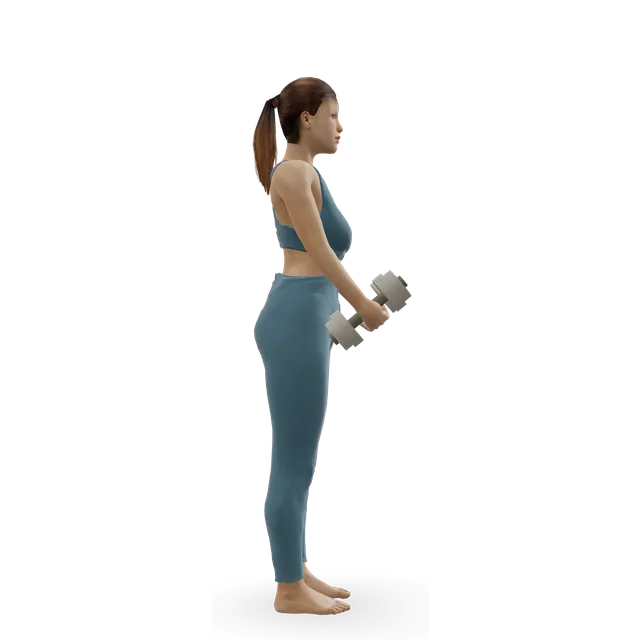
Training guide

How to do cable curls: the bar, rope and single-arm versions, cables against dumbbells, your elbows and wrists, and how many

A cable curl, or cable bicep curl, is a biceps curl against a cable from a low pulley: stand tall with your elbows by your sides, curl a bar, rope or single handle towards your shoulders, and lower it all the way. Where you stand and the pulley height decide where the curl is hardest, which is why the cable doesn't give "constant tension".

In the trials so far, cable curls built the biceps as well as barbell curls, and curling with your arm behind you, at your side or in front made little difference. The trials were small and in people new to training, and where the curl is hardest is our reading of the mechanics, so this guide says which is which.

It shows the curl step by step on the 3D figure and covers the bar, rope, one-arm and Bayesian versions, how heavy and how many, and your elbows and wrists, with a cable arm workout to follow.

The short version

The move

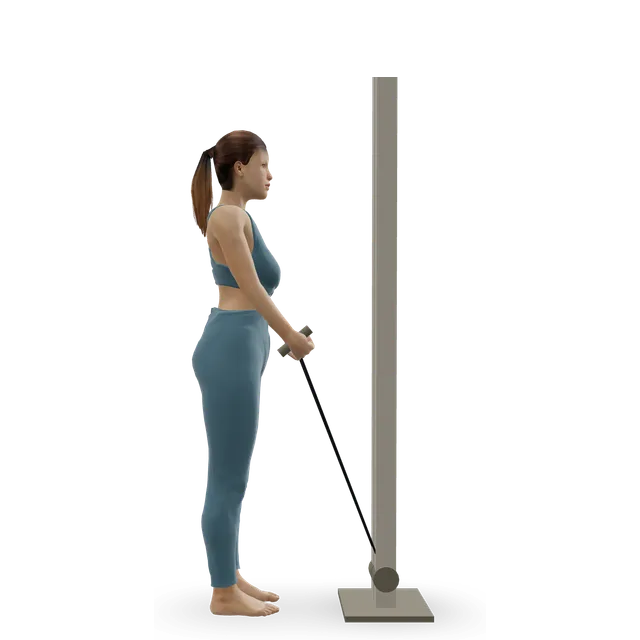
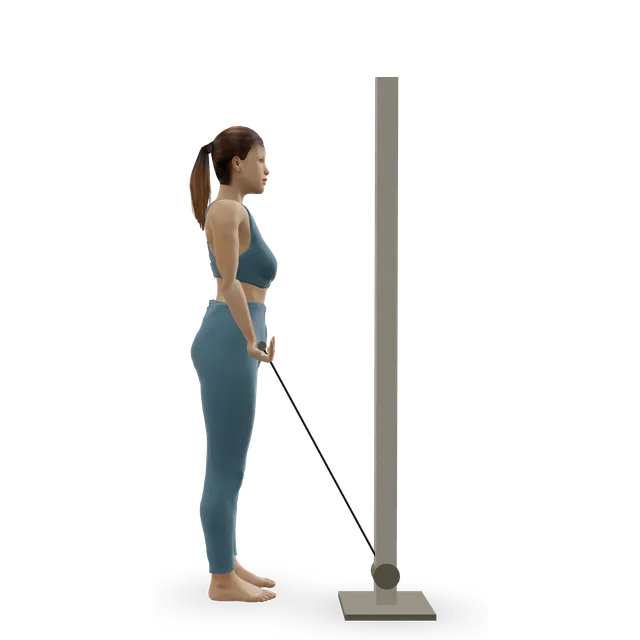
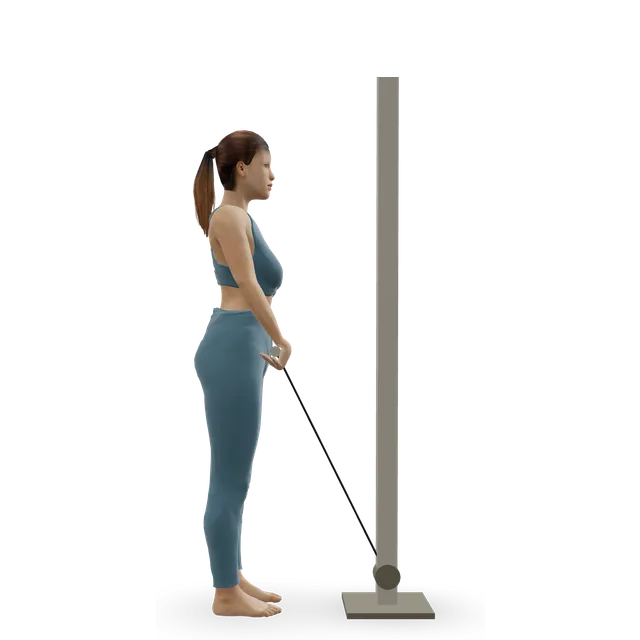
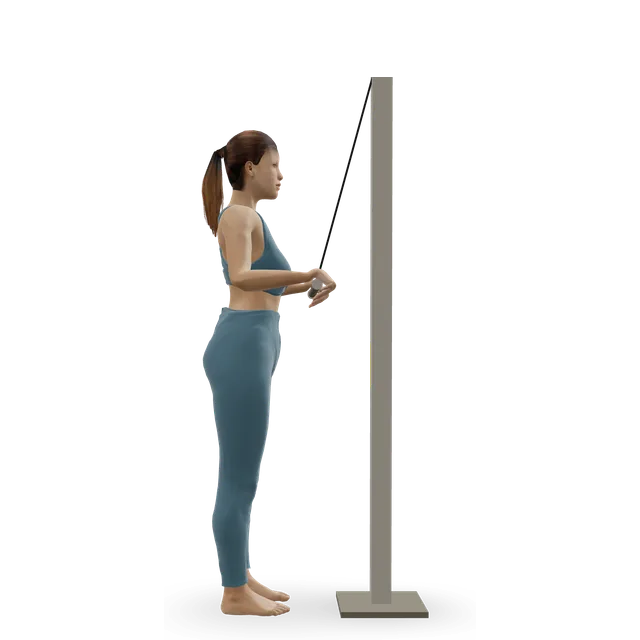
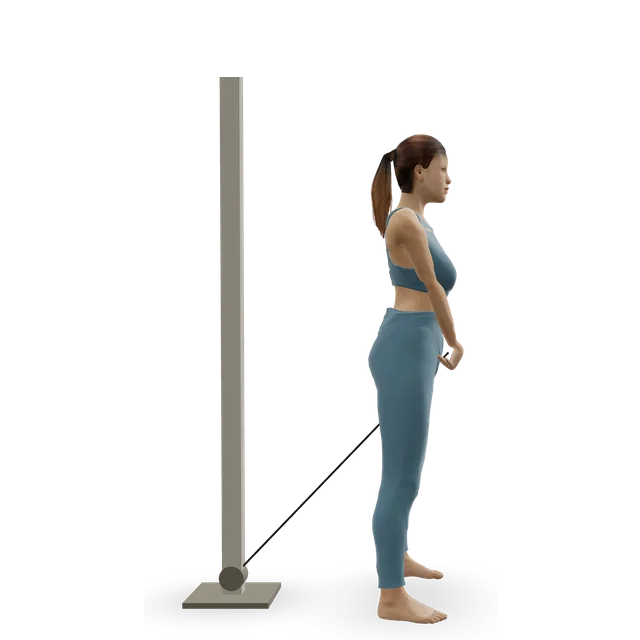
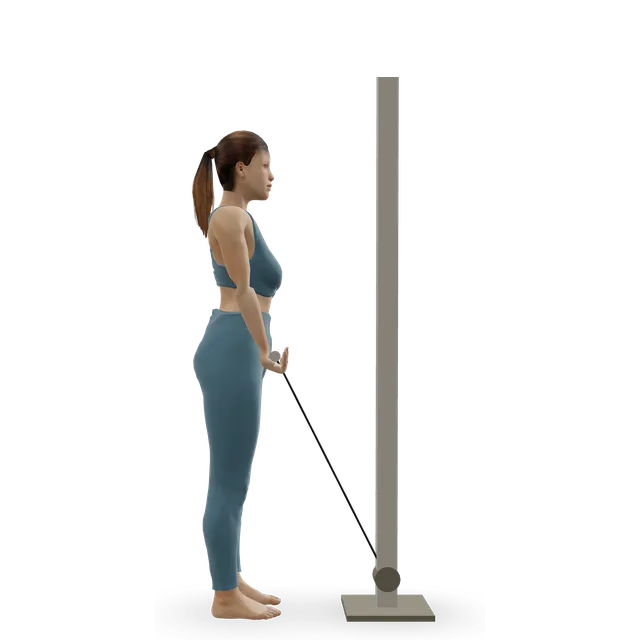
Stand facing a low pulley with a short bar, rope or single handle, elbows by your sides. Curl it up towards your shoulders without leaning back, then lower it all the way until your arms are straight, keeping the plates just off the stack. The American Council on Exercise (ACE) rates the standing curl on a cable a beginner exercise.

Source 1

Where it's hardest is up to you

A cable pulls hardest on your elbow when it meets your forearm at a right angle, so the pulley height and how far you stand from the stack set the hardest point. One trial's set-up made it hardest a little before halfway up; another made it hardest near straight arms. That's why cables don't give "constant tension".

Sources 2, 3

As good as free weights, not better

In 35 young adults, 10 weeks of cable or barbell preacher curls grew the biceps 7% and 8%, and strength rose most where each was hardest. Free weights and machines built similar muscle across 13 studies. Nobody has shown that cables build bigger biceps.

Sources 4, 5

Bar, rope, one arm or arm behind: choose by comfort

Palms up worked the biceps a little harder than the rope in one study, but no trial has compared grips for growth. One-arm and two-arm curls grew the arms alike. The Bayesian curl, facing away with your arm behind you, grew the arm about as much as other cable curls in two 10-week trials.

Sources 6, 7, 2, 3

How many

2 or 3 sets of 10 to 15 with 60 to 90 seconds' rest, most sets 1 to 3 reps short of failure and the last 0 to 2 short, as our bicep curl guide says. Aim for about 10 hard biceps sets a week, counting each set of rows or pulldowns as half. Lower all the way: the stretched half of the curl built the most.

Sources 8, 9, 10

Your elbows

Discomfort up to about 3 to 4 out of 10 that settles within an hour is fine, as our elbow guides say. A pop at the front of the elbow with bruising or a bulge in your upper arm needs an urgent treatment centre or A&E the same day: a torn tendon is ideally repaired within 2 to 3 weeks.

Source 11

What a cable curl is, and where it's hardest

The lift

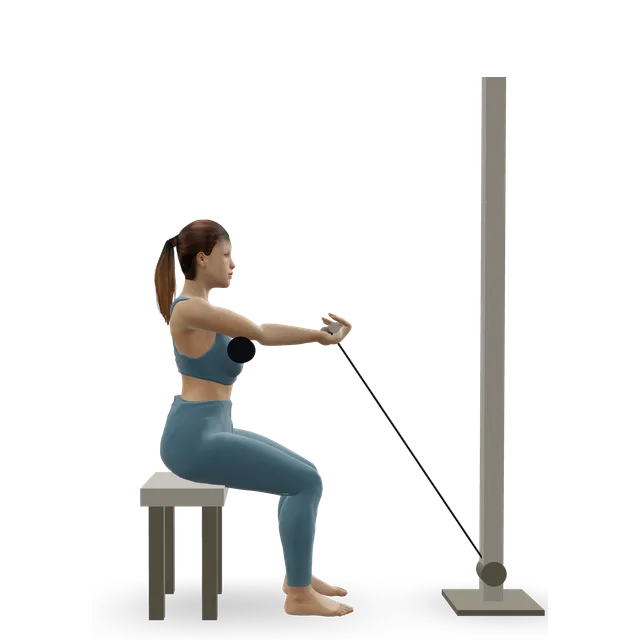
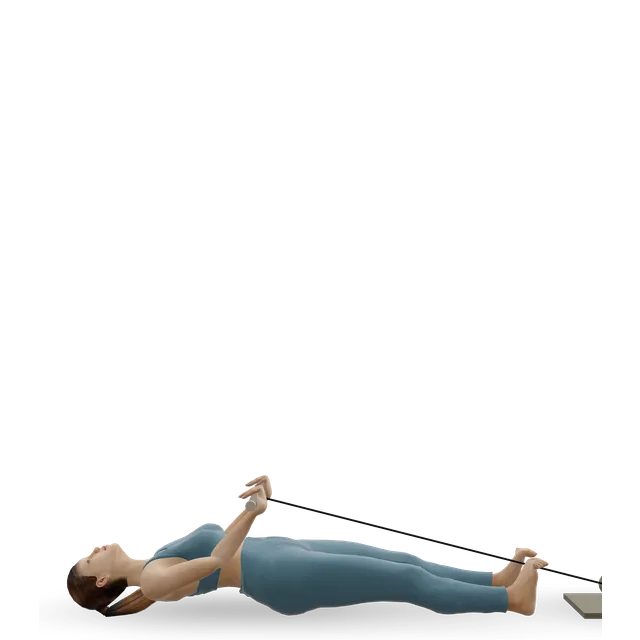
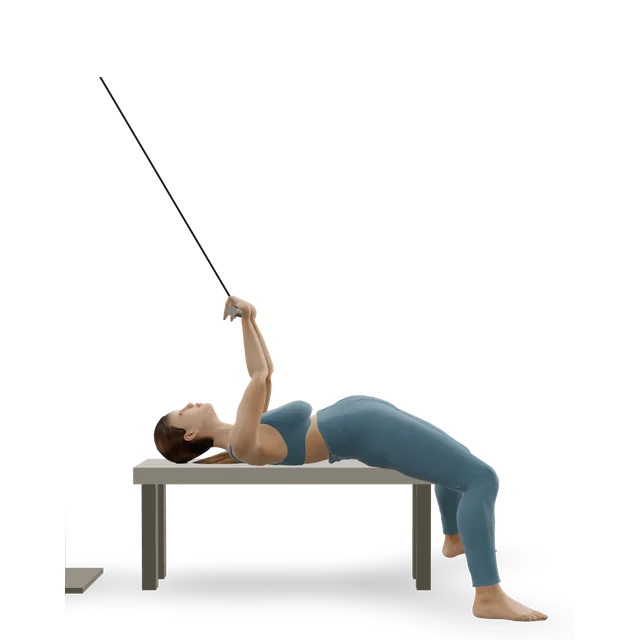
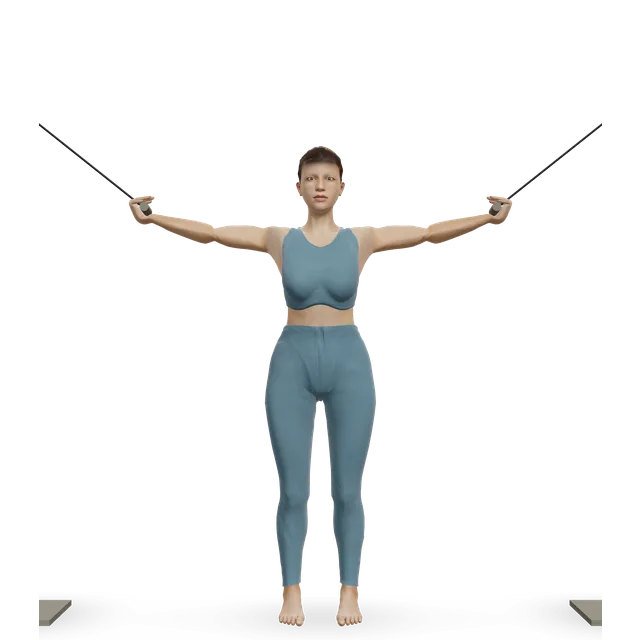
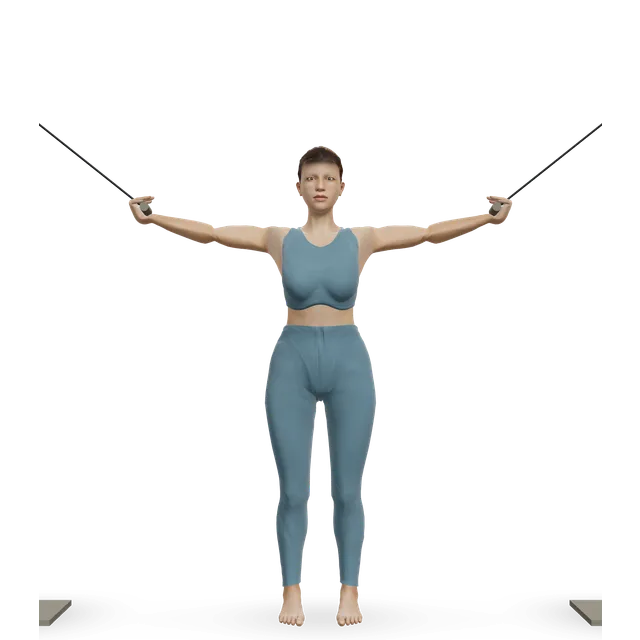
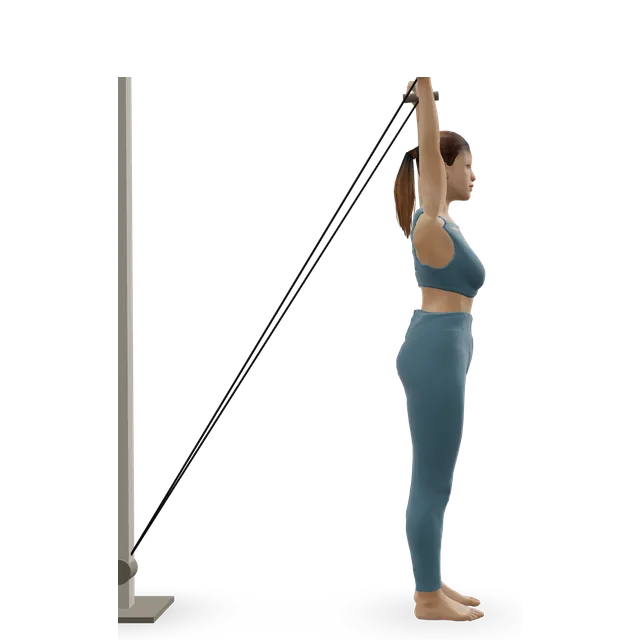
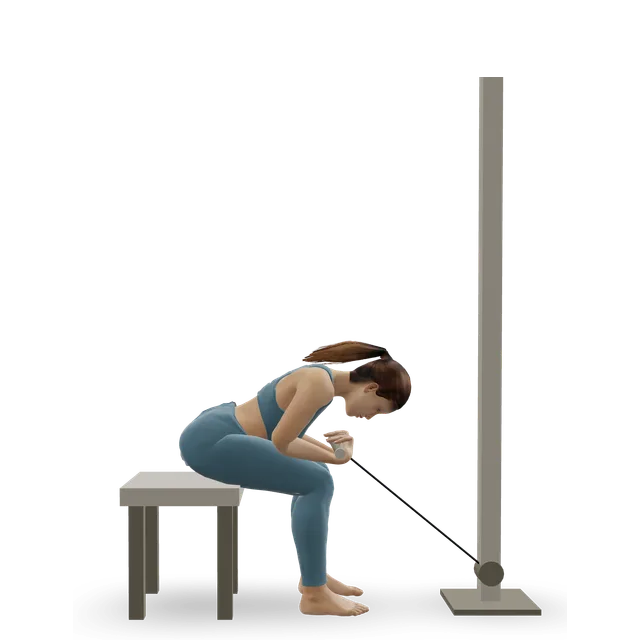
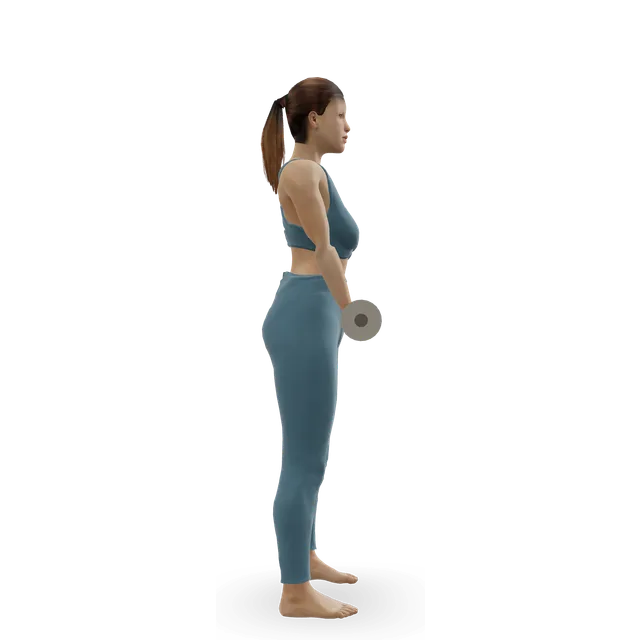
A biceps curl against a cable instead of a dumbbell or barbell. You stand facing a low pulley holding a short straight or EZ bar, a rope with your palms facing, or a single handle, and curl with your elbows by your sides. Other versions use two high pulleys with your arms out, a preacher bench, the floor, or a low pulley behind you with your arm back (the Bayesian curl).

"Cable curls" for your abs or hamstrings are different exercises: see our cable crunch and leg curl guides.

Muscles and joints

The biceps, the brachialis underneath it and the brachioradialis in the forearm bend the elbow, as our bicep curl guide explains. In a standing cable curl your chest and the front of your shoulder also work to hold the arm still: more than in a fixed-machine curl, in 15 adults. The elbow and wrist move; the shoulder stays still.

Source 12

Where it's hardest (our reading of the mechanics)

With a dumbbell, a curl is hardest when your forearm is level with the floor. With a cable, it's hardest where the cable meets your forearm at a right angle, and that depends on the pulley height and how far you stand from the column. In one trial's set-up it fell at about 60 degrees of elbow bend, a cable preacher curl was hardest near 100 degrees, and another trial set the cable so the curl was hardest near straight arms. A review notes that your distance from the pulley and its height decide where the peak falls.

In practice (our editorial reading): stepping closer to the stack makes it more like a dumbbell curl, hardest in mid-range; stepping back, or facing away with your arm behind you, loads the straight-arm end more.

Sources 2, 4, 3, 13

What you lift

The number on the stack depends on the machine's pulley ratio: on a 2:1 machine you lift about half of it, and on a 4:1 machine about a quarter, as our cable machine guide explains. It isn't comparable with dumbbells either: the same 11 men's best Bayesian cable curl read 42.3 kg on the stack against 22.7 kg for a dumbbell curl. Compare yourself only on the same machine.

Source 14

How people differ

Taller people need to stand a little further back for the same cable angle (our suggestion). Smaller and newer lifters may find the plate steps big, so use a half-step or add-on weight if there is one (our cable machine guide). Growth varies hugely between people, and men and women grow by similar proportions, as our bicep curl guide reports.

How to do a cable curl, step by step

From our standing cable curl move page, ACE's standing curl with a band or cable, our bicep curl guide's steps and our cable machine guide's set-up. Keeping the plates just off the stack and walking in at the end are coaching practice.

  1. Set the pulley to the bottom, clip on a short bar (or an EZ bar if your wrists prefer it) and set a light pin.
  2. Hold the bar underhand at shoulder width and step back until the plates lift off, with your arms straight and the cable still pulling.
  3. Stand tall, feet hip-width apart, knees soft, elbows by your sides just in front of your hips.
  4. Breathe out and curl the bar towards your shoulders, moving only at the elbows. Don't lean back.
  5. Stop when your forearms are about upright, before your elbows drift forward.
  6. Lower slowly, for a count of about 2, until your arms are straight, keeping the plates just off the stack.
  7. End the set when the next rep would need a lean or a swing, or 0 to 2 reps short on your last set. Then walk in and let the plates down gently.

Loading the 3D figure…

Gets into position, then repeats the movement. Technical checks passed; qualified exercise review is pending.

The movement on the figure: Standing cable curl

Bar, rope, one arm and other versions

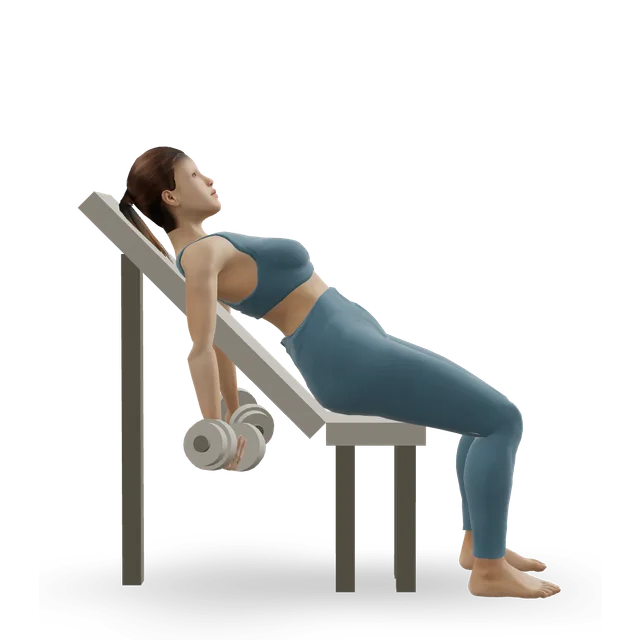
The bar curl, 2 or 3 sets of 10 to 15 with 60 to 90 seconds' rest, the last set 0 to 2 short (our bicep curl guide's dose); the one-arm curl with a handle, the same each arm (our suggestion); the rope, palms facing and thumbs up, 2 sets of 10 to 15 (our bicep workout's hammer curl dose); the cable preacher curl, 2 or 3 sets of 10 to 15 (our bicep workout); the lying, lying high-pulley, high and overhead cable curls, 2 to 3 sets of 8 to 12 stopping 2 or 3 reps short (their move pages' dose); and the reverse (palms-down) curl, 2 sets of 10 to 15, the last to come back after tennis elbow (our suggestion). The Bayesian curl has no 3D demo: set a single handle at the bottom, face away from the stack and step forward until your arm hangs slightly behind your body, then curl without letting your elbow swing forward, 2 or 3 sets of 10 to 15 each arm (our suggestion; the one-arm cable curl shows the arm action, and the incline dumbbell curl the arm-behind position). Kneeling and seated cable curls have no demo either; the standing curl shows the action.

Cables or free weights?

Same growth in the one direct trialEmerging evidence

In 35 untrained young adults doing preacher curls, 3 sets of 8 to 12 three times a week for 10 weeks, biceps thickness rose 7% with a cable and 8% with a barbell, not a real difference. Strength followed where each was hardest: near straight arms, the barbell group gained 39% against 30%. It's the only trial of cable against free-weight curls we found.

Source 4

Free weights and machines build similar muscleEmerging evidence

Across 13 studies of 1,016 adults, free weights and machines built similar muscle, with strength best on the kit you trained with. In 46 young adults, 8 weeks of free weights or machines grew the biceps alike, and cable and dumbbell lateral raises grew the side of the shoulder alike in 24 trained adults.

Sources 5, 15, 16

Cables ask a little more of your trunk and shouldersEmerging evidence

A standing cable curl drew more chest and front-shoulder activity than a fixed-machine curl in 15 adults, because nothing holds your arm in place. Muscle activity isn't growth, so treat it as a difference in feel, not a reason to choose.

Sources 12, 17

What cables are good for

Small weight steps, an easy change of attachment, and the choice of where the curl is hardest. They suit people new to the gym, as our bicep curl guide says, and they're a fair swap for any curl at the same dose (our view).

What the evidence says: arm position, grip and one arm

Arm behind you or at your side: about the sameEmerging evidence

In 24 untrained men, one arm did cable curls with the arm about 43 degrees behind the body and the other with the arm at the side, 6 to 8 sets a week for 10 weeks. Elbow flexor thickness rose 7.2 to 7.9% with the arm behind and 6.3 to 9.2% at the side, and the authors found no meaningful difference.

Source 3

Bayesian against preacher cable curlsEmerging evidence

In 15 untrained young men, matched cable preacher and Bayesian curls twice a week for 10 weeks grew the biceps 6 to 7% and 9%, and the brachialis 10% and 8%, with strength up 28% and 37%: not clearly different. No injuries occurred.

Source 2

Bayesian curls in muscle activityEmerging evidence

In 11 men, the Bayesian cable curl drew less biceps activity than a dumbbell curl. Activity in a few reps doesn't predict growth, so this doesn't make it worse, just not special.

Sources 14, 17

Lower all the wayEmerging evidence

In 32 untrained adults, curling through the straight-arm half of the range grew the biceps 8.9% in 5 weeks, against 3.4% for the bent-arm half. In trained adults, on a programme that included Bayesian cable curls, half reps in the stretched position matched full reps; that trial was funded by a fitness company. Full reps that reach straight arms cover both, as our bicep curl guide says.

Sources 10, 18

Grip: palms up, palms in or palms downMixed evidence

In the one loaded cable study, 10 bodybuilders' biceps worked 19% harder palms up than palms down and 12% harder than with a rope hammer grip. Curling without a load, grip didn't change biceps activity in 16 adults. Palms in was about as strong as palms up, and palms down about half as strong, in 11 men. No trial has compared grips for growth.

Sources 6, 19, 20

Straight bar or EZ barEmerging evidence

Small differences in muscle activity, which the authors called "a matter of subjective comfort", in 12 trained men. We found no study of wrist pain with either bar; many people find the EZ bar or rope kinder to their wrists.

Source 21

One arm or twoEmerging evidence

In 54 untrained women, 8 weeks of one-arm or two-arm curls grew the arms alike. Training one arm makes the other a little stronger too. One-arm curls are useful for evening up a weaker side or trying the arm-behind version, not as a growth upgrade (our reading).

Sources 7, 22, 23

SwingingEmerging evidence

Momentum didn't help or hinder growth in untrained adults doing curls and cable pushdowns (25 analysed). Strict reps make your effort easier to judge, and they're kinder to your back.

Source 24

How heavy, and how many

Warm up

The wrist and forearm flow for 60 seconds, then one light set of curls, as our bicep workout does.

Your first weight

A pin setting you can curl 10 to 15 times without leaning back, as our bicep curl guide says. In your first two weeks, stop each set with 3 or 4 reps to spare, as our plans advise.

Sets, reps and rest

2 or 3 sets of 10 to 15, resting 60 to 90 seconds. Most sets 1 to 3 reps short of failure, and the last set 0 to 2 short; across 15 studies, training to failure added little growth at most.

Sources 8, 25

Sets a week

About 10 hard biceps sets a week, counting each set of rows or pulldowns as about half a set, as our bicep curl guide works it out. Split them over two or three sessions.

Source 9

Very light loads build lessEmerging evidence

In 30 men, curls at 20% of their maximum grew the arm flexors 11.4% in 12 weeks, against about 25% at 40 to 80%. Moderate and heavy loads built similar muscle when the sets were hard, so the 10 to 15 range works.

Sources 26, 27

Train the triceps tooEmerging evidence

Bigger arms need the back of the arm as well. In a 12-week cable trial in 21 adults, overhead triceps extensions grew the triceps about 20%, against 14% for pushdowns with the arm at the side. Our cable arm workout pairs each curl with a triceps move.

Source 28

Moving up

Add reps until every set reaches the top of the range, then the next plate. If that's too big a jump, use a half-step or add-on weight, or a machine with a higher pulley ratio, as our cable machine guide says. Stack numbers only compare on the same machine.

Breathing

With controlled high blood pressure, the American Heart Association considers low- to moderate-intensity strength training with proper breathing safe. Breathe out as you lift, as our breathing guide advises.

Source 29

Common mistakes and how to fix them

Leaning back to start the bar

Stand tall and use a lighter pin.

Elbows drifting forward

Keep them by your sides, so the shoulder doesn't take over, as our move page says.

Stopping short of straight arms

Lower all the way: the straight-arm half built the most.

Source 10

Standing so close that the cable slackens at the bottom

Step back until it still pulls with your arms straight.

Letting the stack crash between reps

Keep the plates just off the stack, as our cable machine guide says.

Wrists bent back on a straight bar

Try an EZ bar or the rope.

Source 21

Comparing stack numbers between machines

The pulley ratio changes what you lift: compare yourself on the same machine.

Source 14

Your elbows and wrists

The elbow pain rule

Some discomfort is fine: up to about 3 to 4 out of 10, settling within an hour, with your elbow no worse the next morning. If it's worse, go lighter next time, not to nothing. That's the rule in our elbow guides.

Where it hurts says the most

The front of the elbow is usually the biceps tendon, the outside tennis elbow and the inside golfer's elbow; tingling in the ring and little fingers points to the ulnar nerve. Our elbow pain from bicep curls guide has the plan for each.

Easier swaps while it settles

Go lighter and lower more slowly, try the rope or an EZ bar, and keep to the middle of the range before curling from fully straight arms, as our elbow guides suggest (editorial swaps). Leave the palms-down curl until last after tennis elbow.

Cables against free weights for sore elbows

We found no study comparing elbow or wrist pain between cable and free-weight curls, or linking curls to tennis or golfer's elbow. Choose the version that lets you keep within the pain rule.

A torn biceps tendon: uncommon, but time-sensitiveStrong evidence

Complete tears of the biceps tendon at the elbow are uncommon: about 1 to 10 in 100,000 people a year, depending on the country and the decade, almost all men, typically in their 40s. The rate was 1.2 in 100,000 a year in one US health plan (14 people, average age 47) and 2.55 in a large US insurance database (average age 46, about 95% men), and operations for it in Swedish men rose from 1.6 to 10.0 in 100,000 a year between 2001 and 2016. The American Academy of Orthopaedic Surgeons (AAOS) says 3 to 5 in 100,000, rarely in women.

The usual cause is a heavy load forcing a bent elbow straight, and heavy lifting came up in about half the cases across 121 articles. Repair is ideally done within the first 2 to 3 weeks, the AAOS says.

A pop or snap with sudden pain at the front of the elbow, especially with bruising, a gap at the front of the elbow or a bulge in the upper arm, can be a torn biceps tendon. Go to an urgent treatment centre or A&E (in the US, urgent care) the same day, and don't wait for it to settle, as our biceps guides say.

Sources 30, 31, 32, 33, 11, 34

The rest of the arm

Triceps pushdowns, 10 to 15 reps (our cable machine workout), and overhead cable triceps extensions, 2 or 3 sets of 10 to 15 (our suggestion), for the back of the arm. Lat pulldowns and seated cable rows, 3 sets of 8 to 12 (our cable machine guide), each count as about half a biceps set. Cable wrist curls, 2 sets of 12 to 15, light (our suggestion), and the wrist and forearm flow, 60 seconds as a warm-up (our bicep workout).

Workouts to follow

The cable arm workout pairs bar, rope and one-arm curls with pushdowns and overhead extensions on one cable station, about 7 hard sets each for biceps and triceps. The cable machine workout uses the standing cable curl in a whole-body session; the bicep workout offers the cable preacher curl; the back and biceps and arm workouts use curls that a cable curl can replace at the same dose.

Plans

Curls come round once or twice a week in these plans, as our bicep curl guide lists; a cable curl can stand in for any of them.

Who should change it, and warning signs

Stop and get medical help

If you get chest pain or pressure, feel faint or dizzy, are unusually breathless, or your heart races or beats irregularly during exercise, as our plans advise. The American Heart Association says these need immediate medical evaluation.

Source 29

Call 999 (911 in the US)

For chest pain that comes on suddenly and doesn't go away, feels tight or like squeezing, spreads to your arms, neck, jaw, stomach or back, or comes with sweating, feeling sick, light-headedness or breathlessness; arm pain that comes on suddenly with pressure, heaviness or squeezing across your chest; severe difficulty breathing, or a chest that feels tight or heavy; someone who faints while exercising; palpitations that don't go away, or come with chest pain, shortness of breath or feeling faint; or a headache that starts suddenly and is extremely painful, especially while lifting or straining. The NHS says a bleed on the brain may be more likely when lifting something heavy. Don't drive yourself to A&E.

Sources 35, 36, 37, 38, 39, 40, 41, 42

A headache with effort

Ask for an urgent GP appointment or get help from NHS 111 for a headache that's triggered or made worse by coughing, sneezing, bending down or exercising.

Source 41

Go to an urgent treatment centre or A&E

If you have severe pain in your arm and it's difficult to move; you've injured your arm and heard a snap, or it has changed shape; or your arm tingles or feels numb. A pop at the front of the elbow with bruising and a bulge in the upper arm needs checking the same day. In the US, go to urgent care or the emergency department.

Sources 37, 11, 34

Get help from NHS 111

If your arm hurts when you exercise but the pain goes when you rest, or it's swollen and you have a very high temperature or feel hot, cold or shivery. In the US, contact your doctor or urgent care.

Source 37

See a GP

If elbow or arm pain hasn't gone after a few weeks.

Source 37

Swollen arms and dark urine

Very painful, swollen, tight arms and dark urine after an unusually hard or high-rep session, such as drop sets or a curl challenge, need medical help the same day: it could be rhabdomyolysis, as our elbow pain from pull-ups guide explains. Dark urine isn't always there, so arms far sorer, more swollen or weaker than the session explains still need the same-day check.

Contact NHS 111 for a wrist injury

For severe wrist pain; feeling faint, dizzy or sick from the pain; a snap, grinding or popping noise at the time of the injury; being unable to move your wrist or hold things; a wrist that has changed shape or colour; a very painful, hot or red lump; or lost feeling in your hand. In the US, use urgent care.

Source 43

See a GP for wrist pain

If wrist pain is no better after 2 weeks of home treatment, or comes with tingling, diabetes, or a hot, swollen, stiff wrist.

Some discomfort during these exercises is fine and doesn't mean you are doing damage. Keep it to about 5 out of 10 or less. It should settle within half an hour or so, and your hand should be no worse the next morning. If it is, do fewer, smaller or lighter next time, not nothing. That's our wrist pain guides' rule.

Source 43

Your back

Call 999 or go to A&E: loss of feeling or numbness around the genitals or bottom, new trouble peeing or controlling your bladder or bowels, changes in genital sensation during sex or problems with erections or orgasm, or pain, tingling, weakness or numbness in both legs. These are signs of cauda equina syndrome, which needs treating in hospital urgently. Don't drive yourself.

See a GP if pain spreading down a leg hasn't improved after a few weeks of home treatment, is getting worse or stops your normal activities. Sciatica on both sides, or weakness or numbness in both legs that's severe or getting worse, is a 999 call or a trip to A&E.

Sources 44, 45

A cable or clip that fails

Check the cable, clips and pin before you start. A frayed cable or a clip that won't close means another station, as our cable machine guide says.

After heart, lung or breast surgery

After heart surgery through the breastbone, or a heart or lung transplant, follow your surgeon's advice before pushing, pulling or lifting with your arms.

After breast cancer surgery or reconstruction, follow your surgical team's advice on when you can lift your arm above shoulder height, or push, pull or lift with it.

After a recent shoulder dislocation, or shoulder or elbow surgery, follow your surgical team's limits first.

Before you start

Speak to your GP first if you haven't exercised for some time or have medical conditions or concerns, as the NHS advises. Get advice before hard or straining work if your blood pressure is uncontrolled (140/90 or higher at a clinic, or 135/85 at home), or you have heart disease or chest pain when you're active, a pacemaker or defibrillator, diabetic eye disease, glaucoma, a hernia, recent eye or tummy surgery, or you're pregnant, as our breathing guide lists.

With a pacemaker or defibrillator, the American Heart Association asks you to check with your doctor before upper-body strength training, because repeated arm movements can damage or dislodge the leads.

Sources 46, 29

Sore, or hurt?

Muscle soreness for a day or two after a new or harder session is common and fades. Sharp pain, or pain that builds during a set or lingers into the next day, isn't: swap to an easier version, and see a clinician if it persists, as our plans advise. The NHS says to stop exercising straight away if you feel any pain or become unwell, and to get help from 111 if symptoms worry you or don't go away.

Source 47
Myths

"Cables build bigger biceps than dumbbells or barbells"Emerging evidence

In the one trial, cable and barbell preacher curls grew the biceps 7% and 8%, and free weights and machines built similar muscle across 13 studies.

Sources 4, 5

"Cables keep constant tension, so they build more muscle"Emerging evidence

The load on your elbow changes with the cable's angle, and nobody has tested "constant tension" for growth, as our cable machine guide says.

Sources 2, 13

"Bayesian curls are best for the long head"Emerging evidence

Two 10-week trials found no clear difference in growth between the arm behind, at the side and in front.

Sources 2, 3

"Rope curls build the forearms better"Emerging evidence

Under load, palms up worked the brachioradialis in the forearm slightly harder than the rope, by 5 to 6%, in one muscle activity study. Use the rope for comfort.

Source 6

"One arm at a time builds more"Emerging evidence

One-arm and two-arm curls grew the arms alike in 54 women.

Source 7

"The number on the stack is what you lift"

It depends on the pulley ratio, and in one study the stack read about twice the dumbbell weight for a similar curl, as our cable machine guide explains.

Source 14

Questions people ask

How do you do a cable curl properly?

Stand facing a low pulley with a short bar, palms up and elbows by your sides, far enough back that the cable pulls with your arms straight. Curl it up until your forearms are about upright without leaning back, then lower it slowly until your arms are straight, keeping the plates off the stack.

Are cable curls better than dumbbell curls?

Neither is better for size: in the one trial, cable and barbell preacher curls grew the biceps 7% and 8% over 10 weeks. Strength rose most where each was hardest, so choose by comfort, and mix them if you like.

Do cables keep constant tension on the biceps?

Not quite. The cable's pull is roughly steady, but the load on your elbow is greatest where the cable meets your forearm at a right angle, and where you stand and the pulley height move that point. Nobody has shown that "constant tension" builds more muscle.

What is a Bayesian curl?

A one-arm cable curl facing away from a low pulley, so your arm starts behind your body and the biceps starts stretched. In two 10-week trials it grew the arm about as much as cable curls with the arm at your side or in front. We don't have a 3D demo of it yet: the one-arm cable curl shows the arm action.

Rope, straight bar or EZ bar?

All work. Palms up worked the biceps a little harder than the rope in one study of bodybuilders, the rope's palms-in grip is about as strong and suits some wrists, and many people find an EZ bar kinder to their wrists than a straight bar.

Should I do cable curls one arm at a time?

If you want to: one-arm and two-arm curls grew the arms alike in 54 untrained women. One arm at a time helps even up a weaker side and lets you try the arm-behind version.

How heavy should my cable curls be?

A pin setting you can curl 10 to 15 times without leaning back, with the last set 0 to 2 reps short of failure. The number on the stack depends on the machine's pulley ratio, so compare yourself only on the same machine.

How many sets and reps of cable curls?

2 or 3 sets of 10 to 15, resting 60 to 90 seconds, two or three times a week. Across the week, aim for about 10 hard sets for your biceps, counting each set of rows or pulldowns as about half a set.

Where should I stand for cable curls?

Close enough to the stack that the plates stay up at the bottom, and far enough that the cable still pulls with your arms straight. Stepping closer makes it more like a dumbbell curl; stepping back makes the straight-arm end harder.

Why do my elbows hurt when I do cable curls?

Usually a tendon that has had more load than it's ready for: go lighter, lower more slowly, try the rope, and keep pain to about 3 to 4 out of 10 that settles within an hour. A pop at the front of the elbow with bruising or a bulge in your upper arm needs checking the same day. Our elbow pain from bicep curls guide has the full plan.

Can I build big arms with just cable curls?

Cable curls build the biceps as well as other curls, but bigger arms also need triceps work for the back of the arm, and enough sets each week. Our cable arm workout pairs curls with pushdowns and overhead extensions.

Are cable curls good for beginners?

Yes: you can start very light and add weight in small steps, and ACE rates the standing curl on a cable a beginner exercise. Learn the plain bar curl first, then try the rope, one arm and the arm-behind version.

Sources

  1. ACE · Standing biceps curl with a band or cable (exercise library, rated beginner, American Council on Exercise)
  2. Attarieh 2025 · Preacher against Bayesian (arm behind) cable curls in 15 young men (within-person trial, Eur J Sport Sci)
  3. Larsen 2026 · Cable curls with the arm behind the body or at the side, in 24 untrained men (within-person trial, Front Physiol)
  4. Nunes 2020 · Cable against barbell preacher curls for biceps growth and strength in 35 young adults (randomised trial, Int J Environ Res Public Health)
  5. Haugen 2023 · Free weights against machines for strength, muscle and jumping: 13 studies (meta-analysis, BMC Sports Sci Med Rehabil)
  6. Coratella 2023 · Biceps and brachioradialis activity in palm-up, palm-down and rope hammer cable curls in 10 bodybuilders (muscle activity study, Sports)
  7. Kassiano 2026 · One-arm against two-arm curls for strength and muscle size in 54 untrained women (randomised trial, Eur J Appl Physiol)
  8. Currier 2026 · Resistance training prescription for muscle function, size and performance in healthy adults: an overview of 137 reviews (ACSM position stand, Med Sci Sports Exerc)
  9. Pelland 2026 · Weekly sets, training frequency, muscle growth and strength: 67 studies (meta-regressions, Sports Med)
  10. Sato 2021 · Curls through the straight-arm or bent-arm half of the range in 32 untrained adults (randomised trial, Front Physiol)
  11. AAOS OrthoInfo · Biceps tendon tear at the elbow (patient information, American Academy of Orthopaedic Surgeons)
  12. Signorile 2017 · Cable against fixed weight-stack machines: muscle activity and range in 15 adults (lab study, J Strength Cond Res)
  13. Pedrosa 2026 · Muscle length, range of motion and exercise choice for muscle growth (narrative review, Sports Med Int Open)
  14. Parpa 2025 · Biceps activity in dumbbell curls and Bayesian cable curls in 11 men (muscle activity study, Muscles)
  15. Schwanbeck 2020 · Free weights against machines for 8 weeks in 46 young adults (randomised trial, J Strength Cond Res)
  16. Larsen 2025 · Cable against dumbbell lateral raises for shoulder growth in 24 trained adults (within-person trial, Front Physiol)
  17. Vigotsky 2022 · Muscle activity measured in one session is not a validated predictor of muscle growth (review, Sports Med)
  18. Wolf 2025 · Half reps at long muscle lengths against full reps in 30 trained adults (within-person trial, PeerJ)
  19. Kleiber 2015 · Biceps and brachioradialis activity with the palm up, in and down, in 16 adults (muscle activity study, Front Physiol)
  20. Kohn 2018 · Elbow-bending strength with the palm up, in and down, in 11 men (lab study, Physiol Rep)
  21. Marcolin 2018 · Dumbbell, barbell and EZ-bar curls in 12 trained men (muscle activity study, PeerJ)
  22. Manca 2017 · Cross-education: strength gained by the untrained limb after one-sided training, 31 trials (meta-analysis, Eur J Appl Physiol)
  23. Song 2024 · One-arm training and strength in the other arm in 160 people (randomised trial, Scand J Med Sci Sports)
  24. Augustin 2025 · Strict against swinging (cheat) curls and pushdowns in 30 untrained adults (within-person trial, Int J Exerc Sci)
  25. Refalo 2023 · Training close to failure and muscle growth: 15 studies (systematic review and meta-analysis, Sports Med)
  26. Lasevicius 2018 · Curls and leg presses at 20 to 80% of maximum, volume matched, in 30 men (within-person trial, Eur J Sport Sci)
  27. Lopez 2021 · Light, moderate and heavy loads for muscle growth and strength: 28 studies, 747 adults (network meta-analysis, Med Sci Sports Exerc)
  28. Maeo 2023 · Overhead against arm-at-side cable triceps extensions for growth in 21 adults (within-person trial, Eur J Sport Sci)
  29. Paluch 2024 · Resistance training with and without heart disease: 2023 update (American Heart Association scientific statement, Circulation)
  30. Safran 2002 · Distal biceps tendon ruptures: incidence, who and how, in a US health plan (cohort study, Clin Orthop Relat Res)
  31. Kelly 2015 · Distal biceps tendon ruptures in a large US population database (epidemiological study, Am J Sports Med)
  32. Launonen 2020 · Distal biceps tendon rupture surgery in Finnish and Swedish men, 1997 to 2016 (registry study, J Hand Surg Am)
  33. Jaschke 2025 · Risk factors for distal biceps tendon injury: 121 articles (systematic review, Adv Clin Exp Med)
  34. Royal Berkshire NHS Foundation Trust 2026 · Distal biceps tendon repair: advice and exercises (orthopaedic physiotherapy leaflet)
  35. NHS · Chest pain (past its review date: reviewed August 2023, review due August 2026)
  36. NHS · Heart attack
  37. NHS · Elbow and arm pain
  38. NHS · Shortness of breath
  39. NHS · Fainting
  40. NHS · Heart palpitations
  41. NHS · Headaches
  42. NHS · Subarachnoid haemorrhage
  43. NHS · Wrist pain
  44. NHS · Back pain
  45. NHS · Sciatica
  46. NHS · Physical activity guidelines for adults aged 19 to 64
  47. NHS · How to warm up before exercising

Exercise education, not a personal prescription, and clinical review of these guides is pending. Check with a GP before starting hard training if you have a heart condition, chest pain, dizziness or breathlessness when active, and stop for sharp or increasing pain. Health disclaimer.