Pilates guide

Pilates for hip dips: what they are, what Pilates can and can't change, and the side-hip moves to do

Hip dips, sometimes called violin hips, are the inward curves on the sides of your hips, around the top of your thigh bone. They come mostly from the shape of your pelvis and thigh bones, they're common in women and men at every size, and they aren't a sign of being unfit or overweight. Pilates can't change your bones, and no exercise burns fat from one spot.

What Pilates can do is make the muscles around your hips stronger. Side-hip training grew the side and upper glutes a little in one small trial, but nine months of ordinary Pilates didn't grow the glutes in a small scan study, so the moves need to get harder over time to build muscle.

This guide covers what hip dips are, what Pilates can and can't change, the side-hip and glute moves, how to make them harder, and a class to follow. Our hip dips guide covers the gym side and fillers. If worry about your shape is taking over, there's help further down.

The short version

Hip dips are a normal part of how hips are built

Plastic surgeons call the dip the trochanteric depression: a dip at the side of the hip, around the bony bump at the top of the thigh bone, made by bone and the places where the glute and thigh muscles attach. One surgeons' review calls a dip like this "a natural anatomic entity". They're seen in athletes, with age, and as part of the usual male hip shape.

Sources 1, 2, 3

Bone sets most of the outline, and bone doesn't change with exercise

In 48 adults, the width across the two bony bumps at the top of the thigh bones varied by about 8 cm between people of the same sex, and pelvic shape differs from person to person. No study has measured how common hip dips are, or how much bone, muscle and fat each add to them.

Sources 4, 5, 6

No exercise burns fat from one spot

Across 13 studies of 1,158 people, training one area didn't take more fat off it, and when adults trained one leg for 12 weeks, fat came off their arms and trunk, not their legs. Where your body keeps fat is mostly inherited.

Sources 7, 8, 9

What can change is the side-hip muscle, a little

In the only trial of its kind (17 adults, 10 weeks), side-hip training against a cable grew the upper part of the main glute muscle by about 10% and the side glutes by about 4%. Hip thrusts and squats grew the main glute but hardly the side glutes. No study has measured whether this changes how a hip dip looks.

Sources 10, 11

Ordinary Pilates didn't grow the glutes in the one study that measured them

In 12 inactive women who did studio Pilates twice a week for 36 weeks, glute size on MRI (magnetic resonance imaging) scans didn't change, and the researchers think the exercise was too light. It was one small study with no comparison group. Pilates did make hips somewhat stronger in other small trials.

Sources 12, 13, 14

To build muscle, make it harder

Muscle grows with more hard sets, about 10 or more a week for a muscle, and light loads work as well as heavy ones when sets end close to tiring out. Add reps, a band, standing and one-leg versions, then squats, lunges and hip thrusts.

Sources 15, 16, 17

What hip dips are

Where the dip sits

One group of surgeons describes the trochanteric depression as "found below the greater trochanter in the lateral buttock region", made of the bone and the attachments of the gluteus medius, vastus lateralis, quadratus femoris and gluteus maximus. Another places hip dips between the top of the pelvis and that bony bump, under the attachments of the tensor fasciae latae and glute muscles. The descriptions don't quite agree, so we say: at the side of the hip, around the top of the thigh bone.

Sources 1, 2

Why they're normal

"This depression could be constitutional, resulting from a pronounced muscular definition in athletes, or happen as part of the ageing process due to skin laxity and fat accumulation in the lower third of the buttocks. In men, this depression is an inherent characteristic of the android gluteal form." A surgeons' review describes a similar dip that many patients dislike, "although it is a natural anatomic entity".

Sources 1, 3

Bone

The width and shape of your pelvis, where your hip sockets sit and how far the top of each thigh bone sticks out set most of the outline. In 48 adults, the width across the bony bumps ranged from about 33 to 41 cm in men and 35 to 43 cm in women. Pelvic shape differs between the sexes even before birth. Exercise doesn't change the shape of adult bone.

Sources 4, 5, 18

Muscle

The gluteus medius and minimus sit above the bony bump, the gluteus maximus behind and below it, the tensor fasciae latae in front, and the vastus lateralis runs down the outside of the thigh. These are the muscles side-hip Pilates works.

Source 1

Fat and skin

"Women, compared to men, have higher percent body fat and deposit it in a different pattern, with relatively more adipose tissue in the hips and thighs." After the menopause, fat tends to shift towards the waist. In twins, where fat is stored on the lower body was about 80% down to genes. Skin loosens with age, which can make a dip look deeper.

Sources 19, 9, 1

Who has them

We found no study of how common they are: every record in our search was about cosmetic procedures. Surgeons describe them in women and men, in athletes and with age.

Sources 6, 1

Some clinicians think big glutes can make the dip look deeper

One ultrasound review suggests that when the glutes grow, the tendon sheet at the side keeps its size, so the dip can look more marked. That is the authors' opinion, not a measurement.

Source 20

When your shape becomes a worry

Hip dips are searched for as a body worry more than a fitness question. Your hips aren't a problem to fix.

Larger hips and thighs aren't a health problem

In 1,357 adults aged 50 to 75 followed for 6 years, larger hips went with lower odds of type 2 diabetes, and fat on the hips and thighs is linked with healthier blood fats and sugar. These are associations, not proof, and no reason to want bigger or smaller hips.

Sources 21, 22

Signs of an eating disorder: see a GP

The NHS lists signs such as spending a lot of time worrying about your weight and body shape, exercising too much, and having very strict habits or routines around food. If that sounds like you, see a GP as soon as you can. You can also talk in confidence to the eating disorder charity Beat: 0808 801 0677 (England), 0808 801 0432 (Scotland), 0808 801 0433 (Wales) or 0808 801 0434 (Northern Ireland), 3pm to 8pm, Monday to Friday.

Sources 23, 24

Worrying a lot about one area of your body

If you worry a lot about one area of your body, spend a lot of time comparing your looks with other people's, or check or avoid mirrors, it can be body dysmorphic disorder (BDD). The NHS says "You should see a GP if you think you might have BDD." You can also refer yourself to NHS talking therapies (our suggestion, from the NHS page).

Source 25

Yoga and Pilates don't protect against itEmerging evidence

In a survey of 2,287 young adults, women who did yoga or Pilates had disordered eating as often as those who didn't, and men who did them reported more extreme weight-control behaviours (18.6% against 6.8%). Set goals for strength, control and how you feel, not calories burned.

Source 26

What the evidence says

Most of these studies are small and short, several were read only as abstracts, and none measured a hip dip itself.

Spot reduction doesn't happenStrong evidence

In 13 studies of 1,158 people training one arm or leg, the trained limb didn't lose more fat. When 11 adults trained one leg for 12 weeks, fat came off the arms (about 10%) and trunk (about 7%), not either leg, and in 104 adults who trained one arm, scans found no difference in fat between the arms.

Sources 7, 8, 27

Two small trials disagreeMixed evidence

Adding tummy exercises to running took a little more fat off the trunk in 16 men, and leg fat fell more than arm fat in 8 women who did lower-body weights. Fat next to working muscle releases a little more fat during exercise, for a short time. None of these studied the hips, and they don't outweigh the larger evidence.

Sources 28, 29, 30

Side-hip training and glute sizeEmerging evidence

Seventeen young adults trained one leg sideways against a cable and the other backwards, twice a week for 10 weeks, about 10 sets a week. The side-hip training grew the upper part of the gluteus maximus by about 10% (the middle 4%, the lower 1%) and the gluteus medius and minimus by about 4%. One small trial, read as an abstract.

Source 10

Squats and hip thrusts build the main gluteEmerging evidence

In 34 untrained adults over 9 weeks, hip thrusts and back squats grew the glutes about equally, while the side glutes showed little to no growth. Across 11 studies, resistance training had a moderate effect on gluteus maximus size, though no study made clear how people were allocated. Full squats grew it 6.7% against 2.2% for half squats in 17 men.

Sources 11, 31, 32

Which side-hip moves work hardestEmerging evidence

In a review of 56 muscle-activity studies, the single-leg bridge, side-lying leg lifts with the hip turned slightly in, standing side lifts against resistance and resisted side-stepping worked the gluteus medius hardest. Side-lying lifts, clamshells and the abduction machine worked it about equally in 11 men. How hard a muscle works in one session doesn't predict how much it grows.

Sources 33, 34, 35

Pilates and glute size: one small studyMixed evidence

In 12 inactive women doing studio Pilates twice a week for 36 weeks (9 in the scan results), the gluteus maximus, medius and minimus didn't change size on MRI. There was no comparison group, and the researchers suggest the exercises "could have not been specific enough or the exercise intensity could have been too low". Our search found no other Pilates study that measured glute size or side-hip strength.

Sources 12, 36

Pilates and hip strengthEmerging evidence

In 60 women aged 60 to 80 (49 finished), Pilates twice a week for 18 weeks beat no exercise only for holding the hip straight, while resistance training improved every machine-measured hip test within its group. In 14 older women with no comparison group, 12 weeks of mat Pilates raised hip strength. Pilates makes hips somewhat stronger; it hasn't been shown to make the side glutes bigger.

Sources 13, 14

How muscle growsStrong evidence

The 2026 ACSM (American College of Sports Medicine) position stand, drawing on 137 reviews, says muscle growth "was enhanced by higher volumes (≥10 sets/wk)". More weekly sets give more growth, with smaller gains as you add more. When sets are taken close to failure, light loads build about as much muscle as heavy ones.

Sources 15, 16, 17

Pilates and hip sizeMixed evidence

In a 2026 review of 12 studies in about 540 women, Pilates lowered weight by about 4 kg and BMI (body mass index) by about 1.2, but hip circumference (2 studies), waist and body fat percentage didn't change significantly, at very low to low certainty. Earlier reviews found small weight losses in poor-quality trials, no change in waist size, and mat Pilates no better than other exercise for body composition.

Sources 37, 38, 39, 40

Single trialsMixed evidence

Reformer Pilates 3 times a week for 8 weeks took weight from about 76.0 to 74.7 kg in 23 women with overweight, with unblinded assessors; Pilates and a weights circuit did about the same in 18 women. Neither measured the hips.

Sources 41, 42

Fillers and fat transferEmerging evidence

The evidence for hip dip fillers is two small case series with no comparison group: 11 women followed for about 10 months, and 30 women for 6 months, 13 of whom had swelling. A UK plastic surgeons' review describes serious risks with fat grafting to the buttocks, higher in unregulated clinics or abroad. Our hip dips guide covers this.

Sources 1, 2, 43

What Pilates can do for your side hips

Good for: strength, control and a way in

The Pilates side kick series, standing side lifts and bridges use the moves that work the side glutes hard, and Pilates makes hips somewhat stronger. It's a low-impact, low-cost way to start, and it suits people who don't like gyms.

Sources 33, 13

Less good for: adding muscle without more load

Body-weight moves done the same way week after week get easy. To build muscle, the sets have to stay hard: more reps, a band or ankle weight, slower lowering, one-leg and standing versions, heavier springs on a reformer, or squats and hip thrusts.

Sources 12, 15

Mat, reformer or wall

Joseph Pilates designed both the mat work and the machines. Mat and machine Pilates improved fitness equally in 48 older women. On the reformer, heavier springs worked the side glutes more in standing side splits in one lab study. A band at home does a similar job.

Sources 44, 45, 46

How to make side-hip Pilates harder

Our editorial plan, from the 2026 ACSM position stand (about 10 or more hard sets a week for a muscle), the light-load studies (sets close to failure), the side-hip moves that worked hardest in the muscle-activity review, and the Pilates scan study that found no growth without more load.

  1. Start with the side kick series lying down: side kick, side-lying leg lifts and small leg circles, 8 to 12 of each side.
  2. When the last few reps feel easy, add reps until the final 2 or 3 of each set feel hard.
  3. Slow down: take about 3 seconds to lower each lift.
  4. Add a light band above your knees, or an ankle weight.
  5. Stand up: side leg lifts at a wall, then band walks, with the standing hip level.
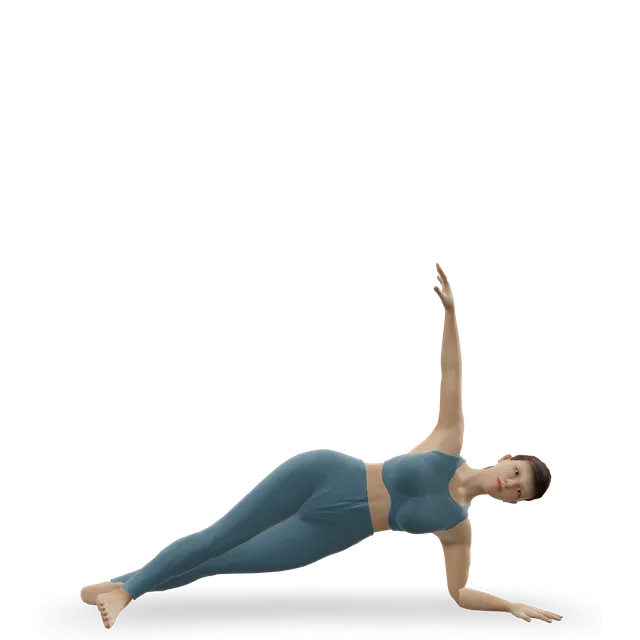
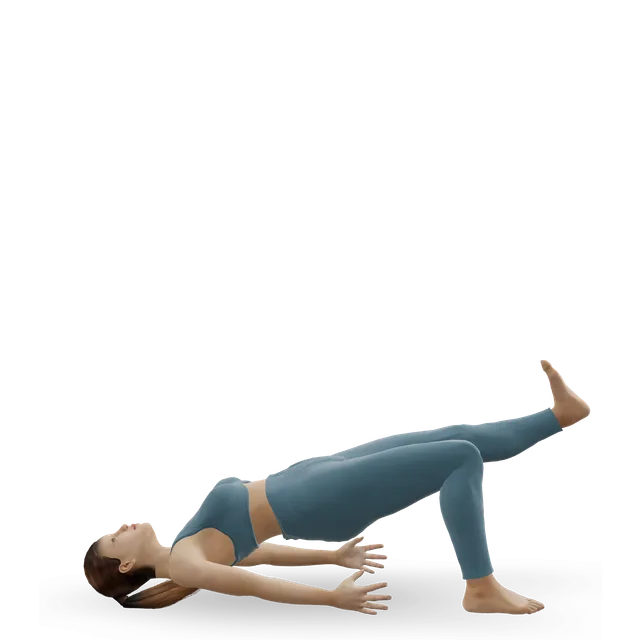
  6. Go to one leg: single-leg bridges, then a side plank with a leg lift.
  7. Count your hard side-hip and glute sets across the week and build towards about 10, over 2 or more sessions.
  8. For more muscle, add squats, lunges or hip thrusts with weights, as our glute guides explain.

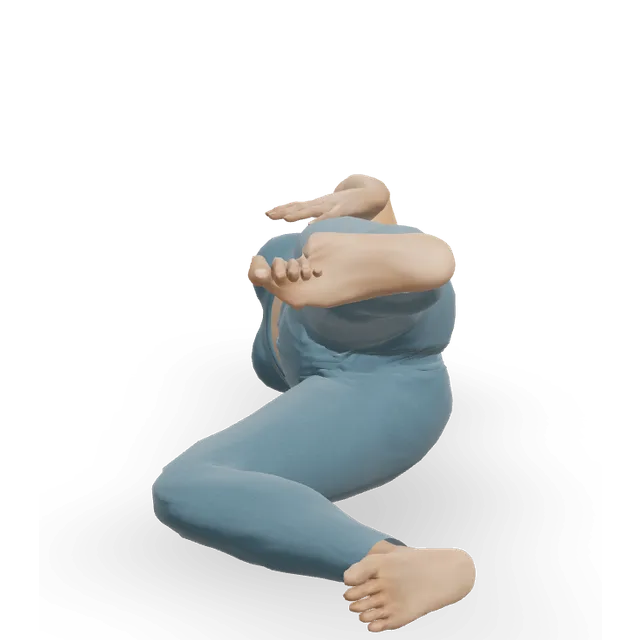
See the movement on the 3D figure: Wall side leg lift (standing side kick at the wall)

Side hip, lying (the side kick series)

Side-lying leg lift: 10 each side (our Pilates glute workout), heel leading and the leg slightly behind you. Side kick: 8 to 10 each side, and side-lying leg circles: 8 each direction, each side (both from the move pages' doses). Clamshell: 12 each side (our Pilates glute workout), a light band above the knees to progress. Leave the clamshell out if the outside of your hip hurts at night.

Side hip, standing

Wall side leg lift: 10 to 12 each side (from the move page's dose). Standing wall press: "3 to 5 holds of 5 to 15 seconds each side, twice a day: the standing hold in the LEAP trial programme." (the move page's dose). Band walk: 2 sets of 10 steps each way (our Pilates glute workout). Side plank with a leg lift: 2 sets of 5 to 8 each side, once side planks on your feet are steady (our plank challenge workout).

The back of the hip

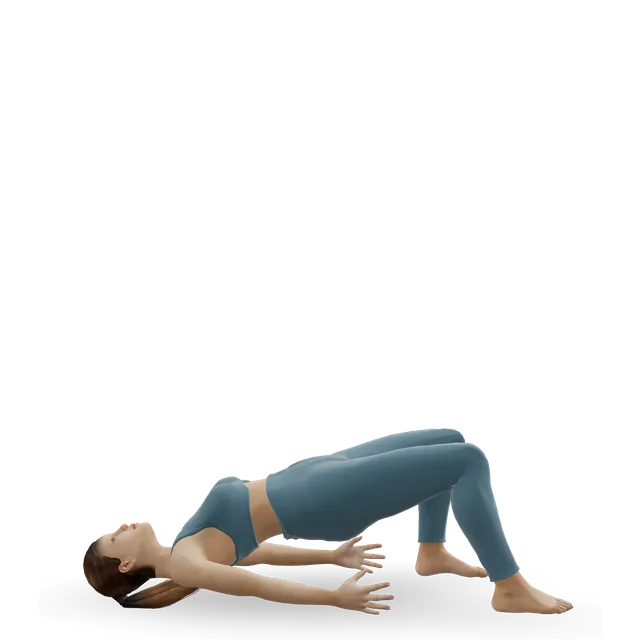
Glute bridge: 2 sets of 12, and single-leg bridge: 6 to 8 each side (both our Pilates glute workout). Shoulder bridge: 3 to 5 kicks each leg (from the move page's dose). Staggered-stance bridge: "5 slow repetitions each side once a day, building to 2 sets of 5 to 10 at a somewhat hard effort, as in the LEAP trial programme." (the move page's dose).

Add load

Reverse lunge: 2 sets of 8 to 10 each side, and goblet squat: 3 sets of 8 to 12, stopping with 2 or 3 good reps left (both our Pilates strength workout). For the gym, our hip dips and glute guides add hip thrusts and the abduction machine.

Who should change what

Pain on the outside of the hip

Never lie on the sore side, and leave out clamshells and the inner thigh lift while the hip hurts at night. Start with the standing wall press, the lying belt press and bridges, as the trial that did best for this pain did, and keep side lifts small with a pillow between your knees when they come back (our suggestion, from the LEAP trial). Our Pilates for hip bursitis guide has a class.

Source 47

Pregnancy

In later pregnancy, the NHS advises avoiding lying flat on your back for more than a few minutes. Our rule starts after the first trimester: use a propped-up or side-lying bridge instead of floor bridges, and with pelvic girdle pain, limit one-sided moves such as single-leg bridges, split squats and step-ups, as our hip thrust and pregnancy guides say.

Source 48

After a hip replacement

Follow your team's precautions: the clamshell turns the leg out and the inner thigh lift crosses one leg over the other, as their move pages say. Our Pilates after a hip replacement guide covers what to change.

Hypermobility

Keep leg circles small and stop before the end of your range, as the single-leg circle's caution says, and favour the strengthening moves.

Sore knees

Shorten lunges and squats, and use bridges and side-lying work, which suit sore knees (our suggestion, as our Pilates for knee pain guide advises).

Classes to follow

There is no hip dips class on purpose: no class can promise a shape, and the Pilates glute workout already has the side kick series, standing side lifts and band walks. Make it harder as you go. The hips class works the hip in every direction, the strength workout adds dumbbells, and the hip bursitis class suits a sore outer hip.

Plans

For stronger, fuller glutes over 8 weeks, the glute plan; the 30-day glute challenge is a gentler start.

Warning signs: when to get help

This is general information, not a diagnosis. A&E means accident and emergency; in the US, call 911 for 999, and use your doctor's urgent line or urgent care for NHS 111.

A fall, or a hip you can't put weight on: call 999

Call 999 or go to A&E: severe hip pain after a fall or injury, or you cannot stand, walk or put weight on the leg. In an older adult this can be a broken hip; the leg may be at an odd angle or look shorter. Don't drive yourself.

Call 999 or go to A&E: tingling or loss of feeling in the hip or leg after an injury.

Source 49

A hot, swollen hip or a fever

Ask for an urgent GP appointment or get help from NHS 111 if you have severe hip pain that started suddenly but you've not had a fall or injured your hip, your hip is swollen and feels hot, the skin around your hip has changed colour, or you have hip pain, feel generally unwell and have a high temperature (or feel hot, cold or shivery). A hot, swollen hip with a high temperature can be a joint infection.

Sources 49, 50

See a GP or physiotherapist

  • Hip pain that stops normal activities or disturbs sleep, keeps getting worse or keeps coming back, or has not improved after 2 weeks of looking after it at home.
  • Stiffness lasting more than 30 minutes after waking.
  • Outer hip pain that hasn't improved within 6 weeks of following our outer hip pain guide's advice, or that gets worse: talk to a GP or physiotherapist. In many areas you can refer yourself.
  • A lump in the groin, or groin pain with coughing or straining (a possible hernia).

Sources 49, 51

A lump in the groin or at the top of the thigh

A lump in the groin, upper thigh or tummy, especially one that appears when you cough or strain and goes when you lie down: see a GP, as it may be a true hernia. A femoral hernia (a small lump at the top of the thigh, mainly in women over 50, though it can happen to anyone) needs treating in hospital.

Sources 51, 52

One hip sticking out

See a GP if you think you might have scoliosis: the NHS lists uneven shoulders, one shoulder or hip sticking out, and the ribs sticking out on one side among the signs.

Source 53

Hips and legs that are painful and bruise easily

If your bottom, thighs and lower legs (sometimes your arms) are out of proportion with the rest of your body, feel painful, tender or heavy, and bruise easily, ask your GP about lipoedema, as our weight-loss and thigh fat guides explain.

Source 54

If you're thinking about a procedure

These are medical procedures with real risks. A UK plastic surgeons' review says complications are better managed in strictly regulated healthcare settings, and that people treated in unregulated clinics or abroad face higher risk.

Source 43

Chest pain or fainting while exercising: call 999

Call 999 if:

  • You get sudden pain or discomfort in your chest that doesn't go away; it can feel like squeezing or pressure, burning or indigestion.
  • The pain spreads to your left or right arm, or your neck, jaw, stomach or back.
  • You have chest pain and feel sweaty, sick, light-headed or short of breath.
  • Someone faints while exercising, can't be woken within 1 minute, or has chest pain or a pounding, fluttering or irregular heartbeat.

Sources 55, 56, 57

Unusual breathlessness

Call 999 or go to A&E (accident and emergency) straight away for severe difficulty breathing (gasping, choking or not able to get words out), a chest that feels tight or heavy, pain that spreads to your arms, back, neck and jaw, lips or skin turning very pale, blue or grey, or sudden confusion. If you're more short of breath than usual, or your heart is racing, fluttering or skipping beats, contact NHS 111.

Source 58

Stop the session if

You feel any pain or become unwell, as the NHS advises for its Pilates videos, and especially for chest pain or pressure, unusual breathlessness, dizziness or fainting. If you have a health problem, an injury or any symptoms, get advice from a healthcare professional, such as a GP, before you start.

Source 59

Before you start

The NHS advises getting advice from a healthcare professional first if you have a health problem, an injury or symptoms, or have recently had a heart attack or an operation.

Source 59

Myths

"Pilates can get rid of hip dips"Strong evidence

No study shows it. Bone sets most of the outline and doesn't change with exercise; side-hip training grew the side and upper glutes by a few percent in one small trial, and Pilates didn't change glute size in the one study that measured it. No study has measured a change in a hip dip with any exercise.

Sources 1, 10, 12, 6

"Hip dips mean you're overweight or unfit"Emerging evidence

Surgeons describe them as part of many people's natural build, more visible in muscular athletes, and typical of the male hip. No study links them with weight or fitness.

Sources 1, 3

"Pilates gives you hip dips"Mixed evidence

We found no study suggesting any exercise causes them. Pilates didn't change glute size in the one study that measured it; some clinicians think big glutes can make a dip look deeper, which is opinion, not a finding.

Sources 12, 20

"Side-lying leg lifts burn hip fat"Strong evidence

Training one area doesn't take fat off it. When people trained one leg, fat came off their arms and trunk instead.

Sources 7, 8

"Pilates slims your hips"Mixed evidence

Not shown. Across Pilates trials in women, weight fell a little but hip circumference didn't change significantly, in only 2 studies at very low certainty.

Source 37

"You need a reformer for real Pilates"Emerging evidence

Joseph Pilates designed both the mat work and the machines, and mat and machine Pilates improved fitness equally in older women. Bands and your body weight work at home.

Sources 46, 44

"Fillers are a quick, risk-free fix"Emerging evidence

They're medical procedures with two small case series behind them, and fat grafting to the buttocks carries serious risks, higher in unregulated clinics.

Sources 1, 2, 43

Questions people ask

Is Pilates good for hip dips?

Pilates is good for strong, steady hips, but it can't change hip dips, which come mostly from the shape of your pelvis and thigh bones. Side-hip Pilates works the muscles above the dip, and making it harder over time can add a little muscle there. Whether that changes how your hips look hasn't been studied.

Can Pilates get rid of hip dips?

No. Exercise doesn't change bone, and no study has shown any exercise removing hip dips. They're a normal part of many people's build.

What causes hip dips?

Mainly the width and shape of your pelvis and where the top of your thigh bone sits, with the muscles and fat over them. Where you store fat is largely inherited. They're common in women and men, at every size, and in athletes.

What's the best Pilates workout for hip dips?

Our Pilates glute workout: side kicks, side-lying leg lifts, leg circles, clams, wall side lifts and band walks for the side of your hips, and bridges for the back. Do it 2 or 3 times a week and make it harder as you go, because ordinary Pilates didn't grow the glutes in the one study that measured them.

Does Pilates cause hip dips?

We found no study suggesting it. Pilates didn't change glute size in the one study that measured it; some clinicians think big glute muscles can make a dip look deeper, but that's opinion, not a finding.

How long until I see a difference?

In the trial of side-hip training, the upper glutes grew about 10% and the side glutes about 4% in 10 weeks of hard, loaded sets. People vary, and the bone underneath won't change. Judge your progress by what you can do: more reps, a heavier band, a harder version.

Is reformer Pilates better for hip dips?

Not shown. Mat and machine Pilates improved fitness equally in older women, and on the reformer, heavier springs worked the side hip more in one lab study. A band or ankle weight does a similar job at home.

Do side-lying leg lifts burn hip fat?

No. Training one area doesn't take fat off it; when people trained one leg, fat came off their arms and trunk instead. Fat changes with your overall activity and eating.

What is a side plank hip dip?

It's an exercise, not the body shape: in a side plank, you lower your hip towards the floor and lift it again. It works the side of your trunk and hip, but we found no study of it, and it won't change the shape of your hips. Our side plank with a leg lift is a similar move with a 3D demo.

Are hip dip fillers safe?

They're medical procedures, and the evidence is two small case series with no comparison group. Fat transfer to the buttocks has serious risks, higher in unregulated clinics or abroad. Our hip dips guide has more.

Do men get hip dips?

Yes. Plastic surgeons describe the dip as part of the typical male hip shape.

I don't like my hips. What can I do?

Hip dips are normal, and larger hips and thighs aren't a health problem. If worry about your shape takes up a lot of your time, see a GP; in England you can also call Beat's helpline on 0808 801 0677, 3pm to 8pm on weekdays.

Sources

  1. Lourenco 2024 · Filling hip dips with hyaluronic acid in 11 women (case series, Skin Health Dis; read in full)
  2. Lee 2026 · Hip filler with PDLLA and hyaluronic acid in 30 women (case series, J Cosmet Dermatol; read in full)
  3. Lee 2009 · Ethnic considerations in buttock aesthetics (plastic surgery review, Semin Plast Surg; read in full)
  4. Kramer 2023 · Hip width in 48 adults (lab study, PLoS One; read in full)
  5. Fischer 2017 · Pelvis shape and sex in 99 adults (3D shape study, Anat Rec)
  6. Europe PMC · Our search for studies of hip dips and the trochanteric depression (3 November 2026): 51 records, all cosmetic or surgical
  7. Ramírez-Campillo 2022 · Exercise and fat loss in the exercised area (spot reduction): 13 studies, 1,158 people (systematic review and meta-analysis, Hum Mov)
  8. Ramírez-Campillo 2013 · Training one leg for 12 weeks in 11 adults: where the fat came off (trial, J Strength Cond Res)
  9. Malis 2005 · Where fat is stored: genes in young and older Danish twins (twin study, Obes Res)
  10. Attarieh 2026 · Hip extension or hip abduction training for 10 weeks: glute growth on MRI in 17 adults (trial, J Strength Cond Res)
  11. Plotkin 2023 · Hip thrusts or squats for 9 weeks in 34 untrained adults: glute growth on MRI (RCT, Front Physiol; read in full; corrected 28 October 2026 for an undeclared equipment donation and late registration, no data changed)
  12. Dorado 2020 · 36 weeks of Pilates and glute size on MRI in 12 inactive women (uncontrolled study, Sports Health; read in full)
  13. Carrasco-Poyatos 2019 · Pilates or resistance training for trunk and hip strength in 60 women aged 60 to 80 (cluster randomised trial, PeerJ)
  14. Bertoli 2018 · 12 weeks of mat Pilates and hip and knee strength in 14 older women (uncontrolled study, J Bodyw Mov Ther)
  15. Currier 2026 · ACSM position stand: resistance training for strength and muscle growth, 137 reviews (Med Sci Sports Exerc)
  16. Pelland 2026 · Weekly sets, frequency and muscle growth: 67 studies (meta-regression, Sports Med)
  17. Lopez 2021 · Light, moderate or heavy loads and muscle growth: 28 studies (network meta-analysis, Med Sci Sports Exerc; a 2022 corrigendum changed three strength figures, not the findings)
  18. Kanahashi 2024 · The pelvis differs by sex before birth: 72 fetuses (MRI study, Commun Biol; read in full)
  19. Karastergiou 2012 · Sex differences in fat tissue: the biology of the pear shape (review, Biol Sex Differ; read in full)
  20. Ducati 2025 · Ultrasound anatomy of the buttock and fillers (descriptive review, J Cosmet Dermatol; read in full)
  21. Snijder 2003 · Hip and thigh size and type 2 diabetes over 6 years in 1,357 adults: the Hoorn Study (cohort, Am J Clin Nutr)
  22. Manolopoulos 2010 · Hip and thigh fat and metabolic health (review, Int J Obes)
  23. NHS · Eating disorders: overview
  24. Beat · Support now: helplines for England, Scotland, Wales and Northern Ireland
  25. NHS · Body dysmorphic disorder (BDD) (past its review date: reviewed October 2023, review due October 2026)
  26. Neumark-Sztainer 2011 · Yoga and Pilates, body image and disordered eating in 2,287 young adults (population survey, Int J Eat Disord)
  27. Kostek 2007 · Training one arm for 12 weeks in 104 adults: fat on MRI (trial, Med Sci Sports Exerc)
  28. Brobakken 2023 · Adding abdominal exercise to running in 16 men: trunk fat (RCT, Physiol Rep)
  29. Scotto di Palumbo 2017 · Upper or lower body resistance training and regional fat loss in 16 women (trial, J Sports Med Phys Fitness)
  30. Stallknecht 2007 · Blood flow and fat release next to working muscle in 10 men (lab study, Am J Physiol Endocrinol Metab)
  31. Krause Neto 2025 · Resistance training and gluteus maximus size: 12 studies (systematic review and meta-analysis, Front Physiol; read in full)
  32. Kubo 2019 · Full or half squats for 10 weeks: muscle growth on MRI in 17 men (RCT, Eur J Appl Physiol)
  33. Moore 2020 · Which exercises work the gluteus medius and minimus hardest: 56 studies (systematic review, Int J Sports Phys Ther; read in full)
  34. de Almeida Paz 2022 · The abduction machine, side-lying lifts and clamshells in 11 men (EMG study, J Bodyw Mov Ther)
  35. Vigotsky 2022 · Muscle activity in a session doesn't predict muscle growth (review, Sports Med)
  36. Europe PMC · Our search for Pilates studies that measured glute size or hip abductor strength (3 November 2026): one study
  37. Bajčetić 2026 · Pilates and body composition, strength and flexibility in women: 12 studies (systematic review and meta-analysis, Sports; read in full)
  38. Wang 2021 · Pilates for overweight or obesity: 11 trials, 393 people (meta-analysis, Front Physiol; read in full)
  39. Cavina 2020 · Mat Pilates and body composition: 10 studies (systematic review and meta-analysis, J Phys Act Health)
  40. Silva 2022 · Pilates and body composition in healthy people: 9 studies (systematic review, J Bodyw Mov Ther)
  41. Gökalp 2025 · Reformer Pilates for 8 weeks in 47 women with overweight (RCT, Sci Rep; read in full)
  42. Oh 2026 · Pilates or a weights circuit in 18 women with obesity (exploratory trial, J Funct Morphol Kinesiol)
  43. Tillo 2023 · Fat grafting to the buttocks: the UK plastic surgeons' (BAAPS) safety review (Aesthet Surg J)
  44. Mueller 2021 · Mat or apparatus Pilates and functional fitness in 48 older women (trial, J Bodyw Mov Ther)
  45. Lee 2023 · Heavy or light springs in reformer side splits in 28 women (lab study, Sports; read in full)
  46. Pilates Method Alliance · Pilates history
  47. Mellor 2018 · Education and exercise, an injection, or wait and see for outer hip pain in 204 people: the LEAP trial (RCT, BMJ; read in full)
  48. NHS · Exercise in pregnancy
  49. NHS · Hip pain in adults
  50. NHS · Septic arthritis
  51. NHS · Hernia
  52. NHS · Femoral hernia
  53. NHS · Scoliosis (past its review date: reviewed April 2023, review due April 2026)
  54. NHS · Lipoedema (past its review date: reviewed July 2023, review due July 2026)
  55. NHS · Chest pain (past its review date: reviewed August 2023, review due August 2026)
  56. NHS · Heart attack
  57. NHS · Fainting
  58. NHS · Shortness of breath
  59. NHS · Pilates video for beginners, with its safety advice

Exercise education, not a personal prescription, and clinical review of these guides is pending. If you are pregnant, have a health condition or have had recent surgery, check with a doctor, midwife or physiotherapist before starting, and stop for sharp or increasing pain. Health disclaimer.