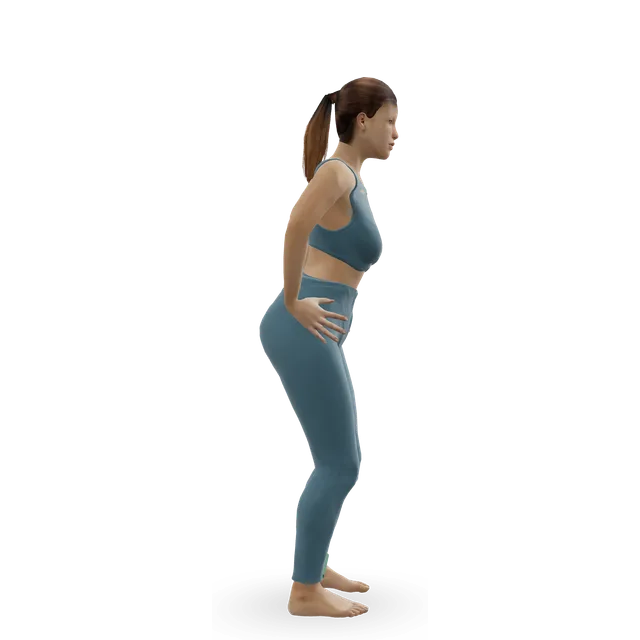
Training guide

How to get rid of hip dips: what they are, what training can change, and what to expect

Hip dips, sometimes called violin hips, are the inward curves on the sides of your hips, between your hip bone and the top of your thigh bone. They're common in women and men at every size, and they come mostly from the shape of your pelvis and thigh bone, which no exercise changes. That rests on anatomy and one plastic surgery series of 11 women: no study has measured what shapes hip dips or whether training changes them.

What training can change is the muscle: side-hip work grew the upper and side glutes a little in one small trial, and a full glute plan builds stronger, fuller glutes. This guide explains what hip dips are, why they don't mean you're overweight, what side-glute training can and can't do, the moves and sets, fat, fillers and fat transfer, and what to expect.

The short version

What they are

Hip dips are the inward curve on each side of your hips, between your hip bone and the top of your thigh bone. Plastic surgeons call it the trochanteric depression: it sits around the greater trochanter, the bony bump at the top of the thigh bone, where several glute and thigh muscles attach.

Source 1

Mostly bone shape

The width of your pelvis and where the top of your thigh bone sits set most of the outline, with muscle and fat over it. That comes from anatomy and one plastic surgery series of 11 women: no study has measured how much bone, muscle and fat each contribute. Pelvic shape already differs between the sexes before birth.

Sources 1, 2

Normal, at every size

Plastic surgeons describe hip dips as part of many people's natural build, more visible in athletes with well-defined muscles and with age, and typical of the male hip shape. They don't mean you're overweight, and where your body keeps fat is largely inherited.

Sources 1, 3, 4

Training builds the side glutes a little

In one 10-week trial of 17 adults, hip abduction (moving the leg out to the side against resistance) grew the upper part of the main glute muscle by about 10% and the side glutes by about 4%. Hip thrusts and squats grew the main glute muscle but the side glutes little. No study has measured whether training changes the outline of the hip.

Sources 5, 6

The plan for fuller glutes

If you want stronger, fuller glutes, follow our glute guide's plan: a hip thrust or bridge, a squat or split squat, a hinge and side-hip work, building towards 10 to 20 hard glute sets a week over 2 sessions.

Sources 7, 8, 9

Some things need a GP

See a GP if one hip sticks out more than the other, or if your legs are out of proportion with the rest of your body, painful or heavy, and bruise easily.

Sources 10, 11

What hip dips are, and what shapes them

What they are

The inward curve on the side of each hip, below the hip bone and around the greater trochanter. Plastic surgeons describe it as made up of the greater trochanter and the attachments of several thigh and buttock muscles: the gluteus medius, gluteus maximus, vastus lateralis and quadratus femoris. Some people call them violin hips.

Source 1

Bone

The width of your pelvis, the shape of your hip bones, and where the top of your thigh bone sits and how far it sticks out. Adult bone shape doesn't change with training (our reading). Pelvic shape differs by sex from the start of bone formation: in 72 fetuses, girls already had a wider angle under the pubic bone than boys.

Source 2

Muscle

The gluteus medius and minimus sit above the bony bump, the gluteus maximus behind and below it, the tensor fasciae latae in front and the vastus lateralis down the outer thigh. Our muscle pages show each one.

Fat and skin

Fat over the hips and upper thighs, which your genes and sex hormones distribute, and skin that loosens with age. You can't choose where your body stores or loses fat.

Sources 3, 4, 12, 1

Who has them

Women and men, at every size. Plastic surgeons describe the dip as constitutional (part of your build), more visible with well-defined muscles in athletes or with age, and as typical of the male hip shape. We found no study of how common hip dips are.

Source 1

Hip dips and love handles

Love handles are fat above your hip bone; hip dips are the curve below it. Some people have both, and our love handles guide covers the fat above.

What the evidence says

No study has measured what shapes hip dipsMixed evidence

Our searches of the medical research found no study of how much bone, muscle and fat each contribute to hip dips, how common they are, or whether training changes the hip's outline. What's known comes from anatomy and one plastic surgery series of 11 women.

Source 1

What plastic surgeons describeEmerging evidence

Surgeons who fill hip dips describe them as made up of the greater trochanter and the attachments of several thigh and buttock muscles. They write that the dip can be constitutional, more visible with pronounced muscle definition in athletes, or part of ageing as skin loosens and fat gathers lower on the buttocks, and that in men it's a typical part of the hip shape.

Source 1

Pelvic shape differs by sex before birthEmerging evidence

In 72 fetuses, girls had a larger angle under the pubic bone than boys (68.1 against 64.0 degrees), among other differences, from the start of bone formation.

Source 2

Side-hip training grew the upper and side glutes a littleEmerging evidence

In one 10-week trial, 17 adults trained one leg with cable hip extension and the other with hip abduction, twice a week. Abduction grew the upper part of the gluteus maximus by about 10% and the gluteus medius and minimus by about 4%; extension grew the gluteus maximus more overall (9% against 5%), mostly lower down. It's one small trial, and we could read only its summary.

Source 5

Hip thrusts and squats grew the main glute, not the side glutesEmerging evidence

In 34 untrained adults over 9 weeks, hip thrusts and back squats grew the glutes about equally on MRI (magnetic resonance imaging) scans, but the gluteus medius and minimus grew little or not at all, and squats grew the front and inner thighs more.

Source 6

Strength training grows the gluteus maximusStrong evidence

Across 11 studies, strength training had a moderate effect on the size of the main glute muscle, with single or combined exercises, including full or parallel squats, leg presses and kneeling hip extensions.

Source 9

Deeper squats grew it moreEmerging evidence

In 17 men over 10 weeks, full squats grew the gluteus maximus by 6.7%, against 2.2% for half squats.

Source 13

Which moves work the side glutes hardestEmerging evidence

Across 56 muscle activity studies, the hip hitch, side-lying leg raises with the hip turned slightly in, single-leg bridges, lateral step-ups and resisted standing side steps worked the gluteus medius hardest. In 11 men, the abduction machine, clamshells and side-lying raises worked it alike, with the least help from the front of the hip on the machine. Muscle activity in a few reps isn't a validated guide to growth.

Sources 14, 15, 16

Hip and thigh fat isn't the harmful kindEmerging evidence

In 1,357 adults aged 50 to 75, larger hips and thighs went with lower odds of type 2 diabetes over 6 years, while a larger waist went with higher odds, and hip and thigh fat is a long-term store linked with better blood fat and sugar levels. These are associations, not proof, and no reason to want bigger or smaller hips.

Sources 17, 18

Enough hard sets build the glutesStrong evidence

About 10 or more hard sets per muscle a week builds more muscle, with diminishing returns, and how often you train matters little once the weekly sets match.

Sources 7, 19, 8, 20
Side-hip moves for the area above the dip

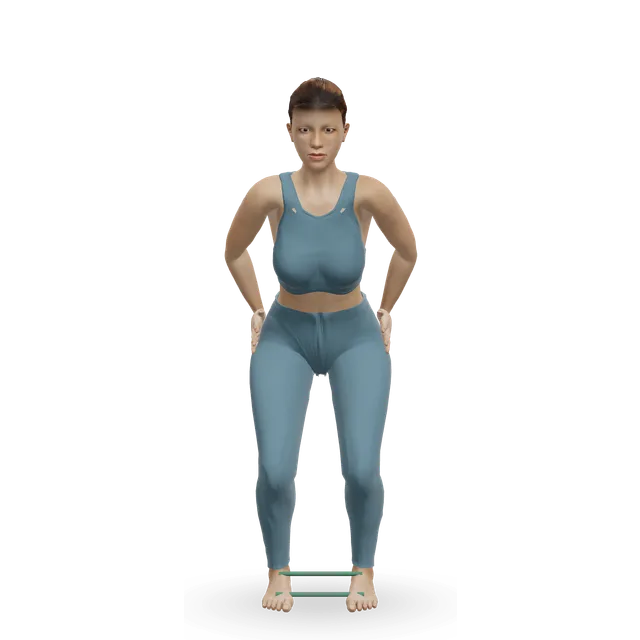
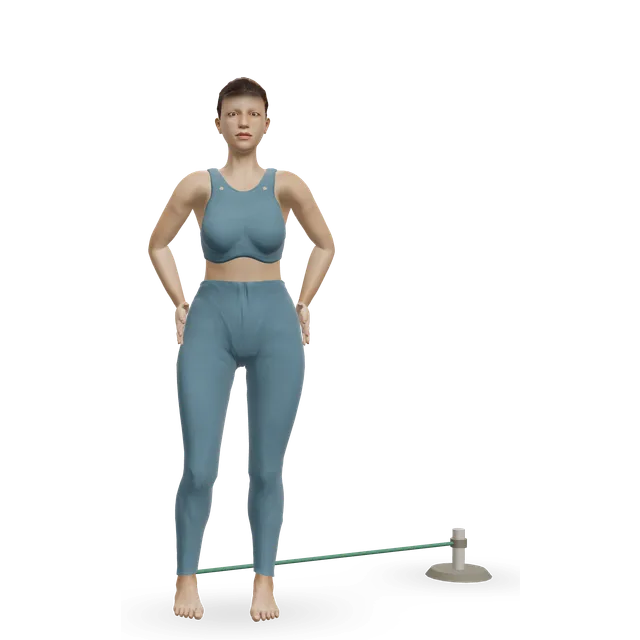
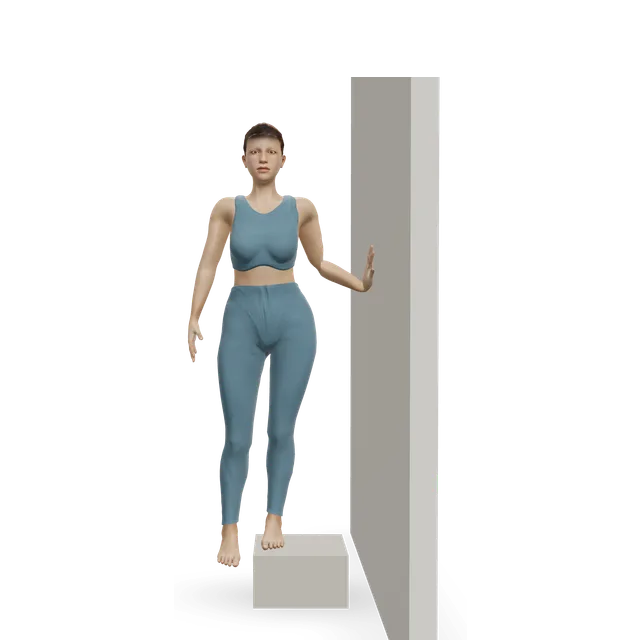
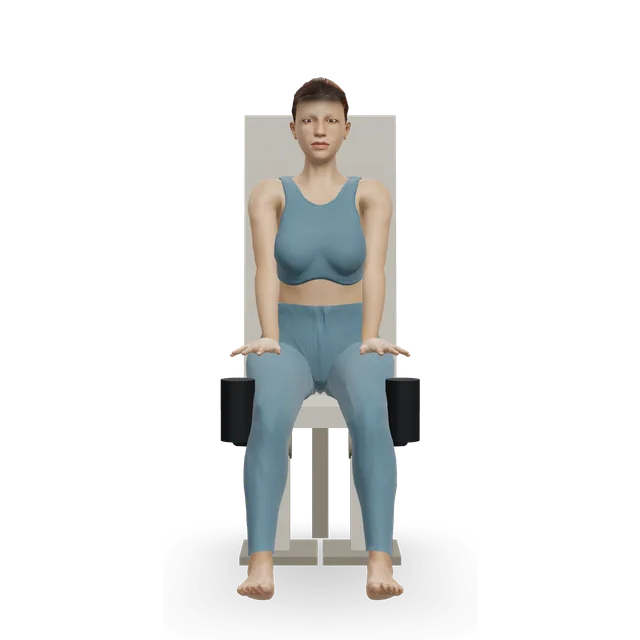
One or two each glute day: the abduction machine at 3 sets of 12 to 20 (our glute gym workout), or side-lying leg raises (12 each side) and band walks (10 steps each way) from our glute workout at home. The hip hitch, monster walk and standing wall-press hold have their own doses on their move pages. These build the side glutes a little; they don't move fat or change your bones.

The main glute moves

Pick a hip thrust or bridge, a squat or split squat and a hinge for each glute day, as our glute guide explains; its how-to guides cover the technique.

How many sets, reps and days

Weekly sets

Build towards 10 to 20 hard glute sets a week over 2 sessions, as our glute guide suggests, counting squats, split squats, lunges, deadlifts and leg presses. More sets build more muscle, with diminishing returns.

Sources 7, 8

Twice a week

On days apart. Training a muscle more often added little growth once the weekly sets matched.

Source 20

The main lifts

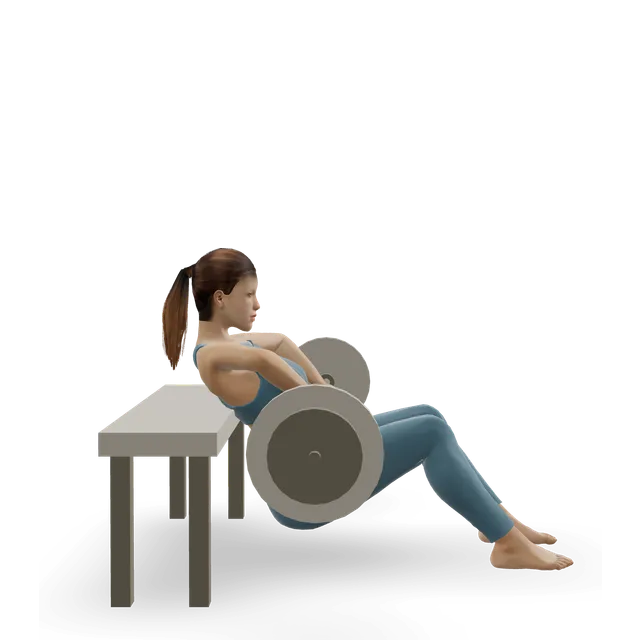
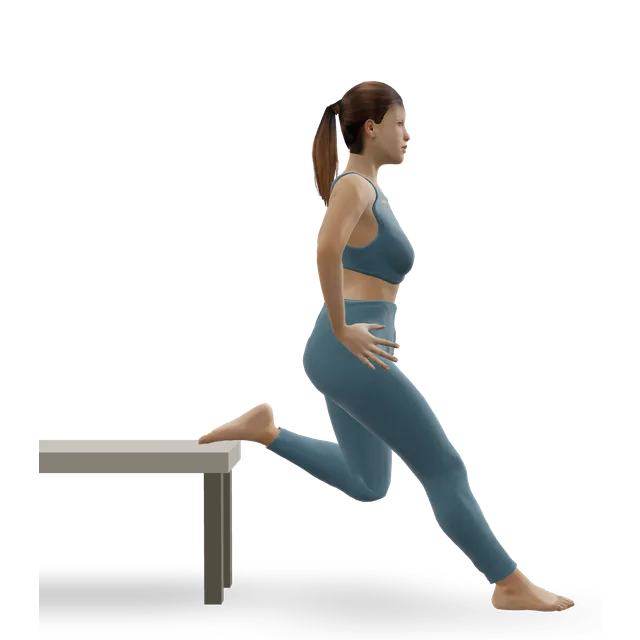
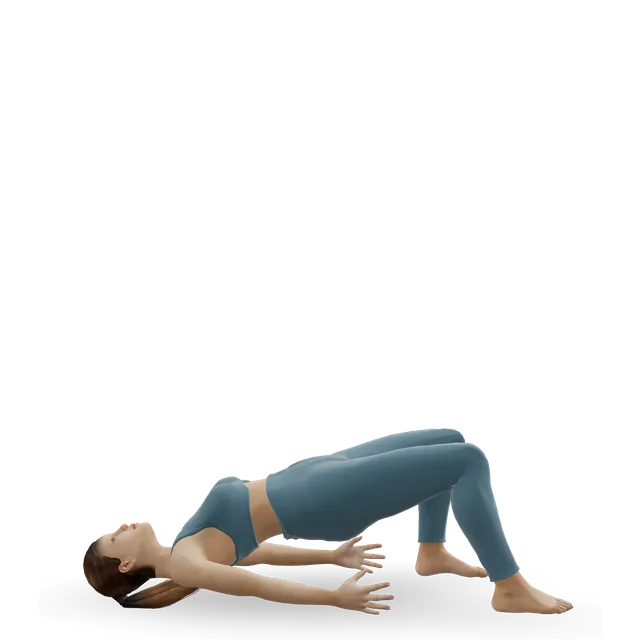
Hip thrusts at 3 sets of 6 to 10, resting 2 to 3 minutes and stopping 1 to 3 reps short of failure, and Bulgarian split squats at 2 sets of 8 to 12 each side, as in our glute gym workout. At home, single-leg bridges (10 each side) and reverse lunges (8 each side), as in our glute workout at home.

Side-hip work

The hip abduction machine at 3 sets of 12 to 20, resting 60 seconds, with the last set 0 to 2 reps short of failure (our glute gym workout); or side-lying leg raises (12 each side) and band walks (10 steps each way) from our glute workout at home. The hip hitch's move page gives 3 sets of 15 slow reps each side, 3 times a week, the dose in a runners' trial, starting with 2 sets of 10. The monster walk's gives 2 to 3 sets of 10 to 15 steps forward and the same back.

How hard

Light and heavy loads built similar muscle when the sets were hard, and training to failure wasn't needed.

Sources 21, 22

Progress

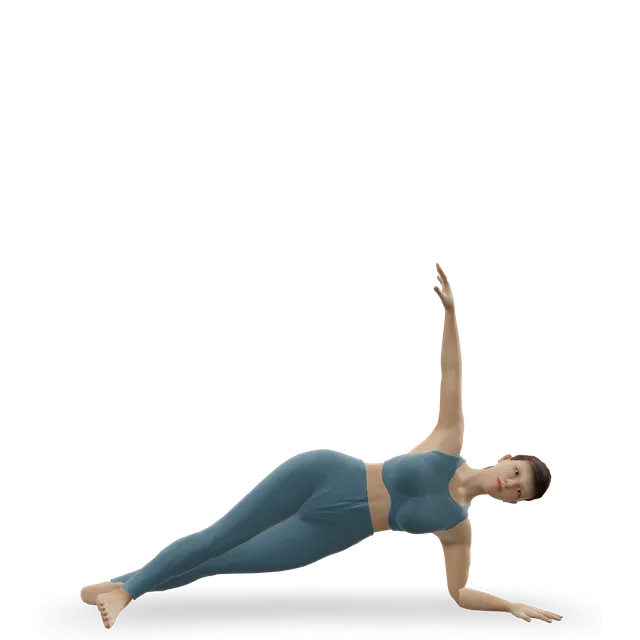
Add reps until every set reaches the top of its range, then add the smallest weight step or a stronger band. A simple ladder: clamshells, then side-lying leg raises, then band walks, then the abduction machine with more weight and the side plank with a leg lift (our progression).

A glute and side-hip session, step by step

From our glute gym workout and glute workout at home, twice a week on days apart; technique from the side-lying leg raise's move page and guide.

  1. Warm up: 12 glute bridges and 10 band walk steps each way, then 1 or 2 light sets of your first lift.
  2. Hip thrusts: 3 sets of 6 to 10, resting 2 to 3 minutes, stopping 1 to 3 reps short of failure (at home: single-leg bridges, 10 each side).
  3. A split squat: Bulgarian split squats, 2 sets of 8 to 12 each side (at home: reverse lunges, 8 each side).
  4. Side-hip work: the hip abduction machine, 3 sets of 12 to 20, or side-lying leg raises. Lie on your side in one straight line, bottom knee bent, and lift your top leg to about 30 to 45 degrees with the heel leading and toes pointing forward, keeping it slightly behind you; lower slowly; 12 each side.
  5. Band walks: 10 steps each way, staying low with your toes pointing forward.
  6. Write down your weights and reps; add reps, then the smallest weight step.

Loading the 3D figure…

Gets into position, then repeats the movement. Technical checks passed; qualified exercise review is pending.

The movement on the figure: Side-lying leg raise

At home

No gym needed

Bridges and single-leg bridges, split squats and reverse lunges, side-lying leg raises, band walks, the hip hitch on a stair and the standing wall-press hold all work at home. Light loads build muscle when the sets are hard.

Source 21

The standing wall-press hold

A standing hold, pressing your leg out against a wall. Its move page gives 3 to 5 holds of 5 to 15 seconds each side, twice a day: the standing hold in the LEAP trial programme.

Fire hydrants

They aren't in our 3D library, so we use clamshells instead, as our strength workout for dancers does.

What to expect

Strength first, size slowly

Strength rises within weeks; in 9 and 10-week trials the glutes grew by a few percent. People vary a lot: on the same programme, muscle size changes ranged from 2% smaller to 59% bigger in 585 adults.

Sources 5, 6, 13, 23

How to judge it

Track your weights and reps, and take photos in the same light every 4 weeks. A tape round your hips measures fat as well as muscle (our glute guide's suggestion).

No promise of a shape

Nobody can promise how your hips will look, because the bone underneath sets most of the outline.

Source 1

Fillers and fat transfer

Hip dip fillersEmerging evidence

The evidence for filling hip dips with hyaluronic acid is one case series of 11 women, reported by the doctors who developed the technique, who reported high satisfaction and no complications at 10 months. There was no comparison group.

Source 1

Fat transferStrong evidence

A UK plastic surgeons' safety review notes that fat grafting is used to fill a hip dip, and describes the risks of fat grafting to the buttocks: death from fat reaching the lungs (estimated in later data at nearer 1 in 15,000 Brazilian butt lifts), dangerous cooling, serious infection, skin death and poor results.

Source 24

If you're thinking about a procedure

These are medical procedures with real risks. A UK plastic surgeons' review says complications are better managed in strictly regulated healthcare settings, and that people treated in unregulated clinics or abroad face higher risk.

Source 24

Workouts to follow

No workout fills in hip dips. These build your glutes and side hips; the lateral pelvic tilt routine is a side-hip session.

Glute workout at home

A 25-minute glute workout with bodyweight and a mini band: bridges, clamshells, band walks, kickbacks and lunges.

25 minBeginner9 movesA wall, A band

Glute workout (gym)

A 50-minute gym glute workout: hip thrusts, deep squats, Bulgarian split squats, back extensions and hip abduction, with sets, reps and rest.

50 minIntermediate11 movesA band, A barbell

Glute session A: bridges to hip thrusts, split squats and side-hip work

Session A of the 30-day glute challenge: a bridge-to-hip-thrust ladder, a split squat ladder and side-hip work, at home or in the gym.

20 minBeginner16 movesA wall, A band

Glute session B: hinges, step-ups and standing band work

Session B of the 30-day glute challenge: a hinge ladder to Romanian deadlifts, step-ups and standing band work, at home or in the gym.

20 minBeginner12 movesA wall, A dumbbell

Lateral pelvic tilt routine: side-hip strength and control

A 25-minute routine for uneven hips: side-hip holds, leg raises, single-leg bridges, step-ups, side planks and balance, for hip strength and pelvic control.

25 minBeginner10 movesA wall, A step

Pilates glute workout: a 25-minute mat class (with a band if you have one)

A 25-minute Pilates class for your glutes: bridges, the side kick series, face-down kicks and standing work at a wall, with a band to make it harder.

25 minBeginner16 movesA wall, A band

Yoga for glutes: a 25-minute class for the big and side glutes

A 25-minute yoga class for your glutes: bridges and locust, chair pose and lunges, warrior III and half moon, side work, then a short stretch and rest.

25 minBeginner16 movesA step, A wall

Resistance band workout

A full-body resistance band workout: squats, rows, push-ups, presses, pull-aparts, band walks, good mornings and flyes.

30 minBeginner9 movesA band, An anchor point

Lower body workout at home

A lower body workout at home: split squats, slider hamstring curls, single-leg bridges, step-ups, band walks and calf raises, with dumbbell options.

30 minIntermediate12 movesA wall, A step

Plans

The glute workout plan is the main one; the 30-day glute challenge is a gentler start.

Hips, backs, knees and pregnancy

Back pain

Swap the back squat for the leg press, keep hip thrusts and back extensions light, and see our back pain guides, as our glute plan suggests. Our back pain rule: discomfort up to about 5 out of 10 is acceptable if it settles within an hour or so and is no worse the next morning; stop any move that sends pain down a leg.

Hip pain

A pinch at the front of the hip in deep squats or split squats: go a little shallower, or use a lower bench for your back foot, and see our hip impingement guide. With pain on the outside of the hip, keep side-hip work light and aim for no increase in that pain, as our hip bursitis guide advises.

Pain on the outside of the hip and side-lying raises

With pain on the outside of the hip, start with lying and standing holds and bridges, and leave side-lying leg raises out while it hurts at night: the trial that did best for this pain didn't use them. When they come back, lie on your good side with a pillow between your knees, keep the top leg level with your hip or slightly behind, keep the lift small, and stop if the bony point on the side of your hip gets sorer or your nights get worse.

Knee pain

Favour hip thrusts and deadlifts, and shorten your squats. Our knee rule: pain up to 2 out of 10 is fine, and up to 5 is acceptable if it settles by the next morning; for pain at one point just above or below the kneecap, keep it to 3 or less.

Pregnancy

In later pregnancy, the NHS advises avoiding lying flat on your back for more than a few minutes. Our rule starts after the first trimester: use a propped-up or side-lying bridge instead of floor bridges, and with pelvic girdle pain, limit one-sided moves such as single-leg bridges, split squats and step-ups, as our hip thrust and pregnancy guides say.

Source 25

Warning signs: when to get help

Call 999 (911 in the US)

For back pain with numbness around your genitals or bottom, new problems controlling your bladder or bowels, or pain, tingling or weakness in both legs, as our back pain guide explains. For severe hip pain after a fall or injury, or if you can't walk or put weight on your leg. During any exercise, stop and get help for chest pain or pressure, unusual breathlessness, dizziness or fainting, as our plans advise.

Sources 26, 27

Ask for an urgent GP appointment or call NHS 111

For severe hip pain that started suddenly without a fall, a swollen hip that feels hot, or hip pain with a high temperature and feeling unwell, as our hip pain guide explains. In the US, contact your doctor or urgent care.

Source 27

See a GP

If hip pain stops your normal activities, affects your sleep or hasn't improved after 2 weeks, or back pain hasn't improved after a few weeks of looking after it at home. And if your bottom, thighs and lower legs are out of proportion with the rest of your body, feel painful, tender or heavy, and bruise easily: ask your GP about lipoedema, as our weight-loss guide explains.

Sources 27, 11

One hip sticking out

See a GP if you think you might have scoliosis: the NHS lists uneven shoulders, one shoulder or hip sticking out, and the ribs sticking out on one side among the signs.

Source 10

When eating, training or your body becomes a worry

The NHS lists spending a lot of time worrying about your weight and body shape, eating very little food, exercising too much, and having very strict routines around food among the signs of an eating disorder, and says to see a GP as soon as you can. Worrying a lot about one area of your body can be body dysmorphic disorder. Beat's helpline in England is 0808 801 0677, and our eating disorders guide has the other numbers.

Sources 28, 29, 30

Myths

"Hip dips mean you're overweight"Emerging evidence

Plastic surgeons describe them as part of many people's natural build, more visible with well-defined muscles in athletes, and typical of the male hip shape. They're seen at every size; we found no study of how common they are.

Source 1

"The right exercises will fill in your hip dips"Mixed evidence

Side-hip training grew the upper and side glutes a little (about 10% and 4% in 10 weeks) in one small trial, but no study has measured whether training changes the hip's outline, and the bone underneath doesn't change.

Sources 5, 1

"Clamshells, fire hydrants or band walks fix hip dips"Emerging evidence

They work the side of the hip, but they're light, and hip dips are mostly bone shape, as our clamshell and band walk guides say.

Sources 14, 15

"Squats or leg exercises cause hip dips"Mixed evidence

We found no study suggesting it. Squats grew the front and inner thighs more than hip thrusts did, which changes the thighs a little, not the bone.

Source 6

"You can lose fat from your hips by working them"Strong evidence

Training one area doesn't burn the fat over it: across 13 studies, training one limb didn't take more fat off it, and when adults trained one leg for 12 weeks, fat came off the arms and trunk, not the legs.

Sources 31, 32

"Fillers are a quick, risk-free fix"Emerging evidence

They're medical procedures. Fat grafting to the buttocks carries serious risks, higher in unregulated settings, and the evidence for hip dip fillers is a case series of 11 women.

Sources 24, 1

Questions people ask

What are hip dips?

The inward curve on each side of your hips, below the hip bone and around the bony bump at the top of your thigh bone. Doctors call it the trochanteric depression, and it's a normal part of many people's shape.

Can you get rid of hip dips?

Usually not completely, because they mostly come from the shape of your pelvis and thigh bone, which training can't change. Side-glute training can add a little muscle above them, but no study has measured whether that changes the outline.

Are hip dips normal?

Yes. They're common in women and men, at every size, and plastic surgeons describe them as part of many people's natural shape.

Do hip dips mean I'm overweight?

No. They're seen at every body size, and in athletes, well-defined muscles can make them more visible.

What exercises help hip dips?

The ones that build the glutes: hip thrusts or bridges, squats or split squats, a hinge, and side-hip work such as the hip abduction machine, side-lying leg raises and band walks, twice a week. In one small trial, hip abduction grew the upper glutes by about 10% and the side glutes by about 4% in 10 weeks.

Will losing weight get rid of hip dips?

Losing fat changes the shape around them, but not the bone underneath. Where you lose fat first is partly inherited, so it's hard to predict how your hips will change.

Do hip dips go away if I gain weight or muscle?

Muscle can fill the area above them a little. You can't steer fat to your hips, though: your genes and hormones decide where it goes.

What causes hip dips?

Mostly bone: the width of your pelvis and where the top of your thigh bone sits, with the muscles that attach around it and the fat over them. Your pelvis's shape differs by sex even before birth.

Can men have hip dips?

Yes. Plastic surgeons describe the dip as a typical part of the male hip shape.

Are hip dip fillers or fat transfer safe?

They're medical procedures with real risks: a UK plastic surgeons' review of fat grafting to the buttocks describes serious complications, and says unregulated clinics and treatment abroad carry higher risk. The evidence for fillers in hip dips is a small case series.

Why do I have a hip dip on only one side?

Bodies are a little uneven. But one hip sticking out can be a sign of scoliosis, a sideways curve in the spine, so see a GP if you think you might have it.

How long until my glutes change?

Strength rises within weeks, and in 9 and 10-week trials the glutes grew by a few percent. People vary a lot, so track your weights and take photos in the same light.

Sources

  1. Lourenco 2024 · Filling hip dips with hyaluronic acid: the anatomy, and a case series of 11 women (case series, Skin Health Dis; full text read)
  2. Kanahashi 2024 · Sex differences in the pelvis of 72 fetuses at the start of bone formation (imaging study, Commun Biol)
  3. Malis 2005 · How much total and regional body fat is inherited, in young and older Danish twins (twin study, Obes Res)
  4. Shungin 2015 · Genes linked to where body fat sits, in up to 224,459 people (genome-wide meta-analysis, Nature)
  5. Attarieh 2026 · Regional glute growth after 10 weeks of hip extension against hip abduction training in 17 adults (within-person trial, JSCR; abstract read)
  6. Plotkin 2023 · Nine weeks of hip thrusts or back squats: glute growth on MRI and strength in 34 adults (randomised trial, Front Physiol)
  7. Currier 2026 · Resistance training for muscle strength, size and performance in healthy adults: 137 reviews (ACSM position stand, Med Sci Sports Exerc)
  8. Pelland 2026 · Weekly volume and frequency, muscle growth and strength (meta-regressions, Sports Med)
  9. Krause Neto 2025 · Resistance training and gluteus maximus growth: 11 studies (systematic review and meta-analysis, Front Physiol)
  10. NHS · Scoliosis (past its review date: reviewed April 2023, review due April 2026)
  11. NHS · Lipoedema (past its review date: reviewed July 2023, review due July 2026)
  12. Karastergiou 2012 · Sex differences in body fat: the biology of pear shape (review, Biol Sex Differ)
  13. Kubo 2019 · Full against half squats for 10 weeks: lower-limb muscle volumes in 17 men (randomised trial, Eur J Appl Physiol)
  14. Moore 2020 · Which exercises work the gluteus medius and minimus hardest: 56 studies (systematic review and meta-analysis, Int J Sports Phys Ther)
  15. de Almeida Paz 2022 · The hip abduction machine against free-weight moves for the gluteus medius, in 11 men (muscle activity study, J Bodyw Mov Ther)
  16. Vigotsky 2022 · Muscle activity in a few reps is not a validated predictor of growth (review, Sports Med)
  17. Snijder 2003 · Hip and thigh size and type 2 diabetes over 6 years in 1,357 adults aged 50 to 75 (Hoorn cohort study, Am J Clin Nutr)
  18. Manolopoulos 2010 · Hip and thigh fat and metabolic health (review, Int J Obes)
  19. Schoenfeld 2017 · Dose-response relationship between weekly resistance training volume and muscle growth: 15 studies (meta-analysis, J Sports Sci)
  20. Schoenfeld 2019 · How many times a week to train a muscle for growth: 25 studies (meta-analysis, J Sports Sci)
  21. Lopez 2021 · Training load, muscle growth and strength: 28 studies (network meta-analysis, Med Sci Sports Exerc)
  22. Refalo 2023 · Training to failure and muscle growth: 15 studies (systematic review and meta-analysis, Sports Med)
  23. Hubal 2005 · How much muscle and strength 585 adults gained from 12 weeks of arm training (trial, MSSE)
  24. Tillo 2023 · Gluteal fat grafting safety review and recommendations (British Association of Aesthetic Plastic Surgeons review, Aesthet Surg J)
  25. NHS · Exercise in pregnancy
  26. NHS · Back pain
  27. NHS · Hip pain in adults
  28. NHS · Eating disorders: overview
  29. NHS · Body dysmorphic disorder (BDD) (past its review date: reviewed October 2023, review due October 2026)
  30. Beat · Support now: helplines
  31. Ramírez-Campillo 2022 · Spot reduction of fat by training one body part: 13 studies, 1,158 people (systematic review and meta-analysis, Hum Mov)
  32. Ramírez-Campillo 2013 · Training one leg for 12 weeks, and where the fat came off, in 11 adults (trial, JSCR)

Exercise education, not a personal prescription, and clinical review of these guides is pending. Check with a GP before starting hard training if you have a heart condition, chest pain, dizziness or breathlessness when active, and stop for sharp or increasing pain. Health disclaimer.