Training guide

How to do cable lateral raises: set-up and pulley height, cables against dumbbells, your shoulders, and how many

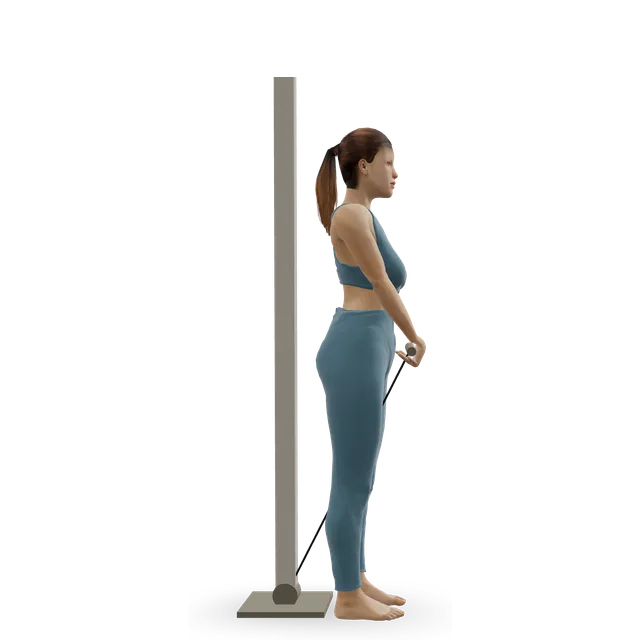
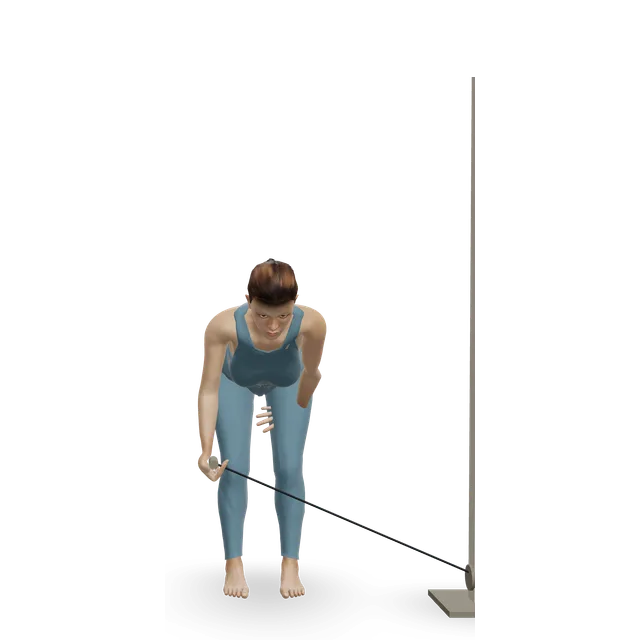
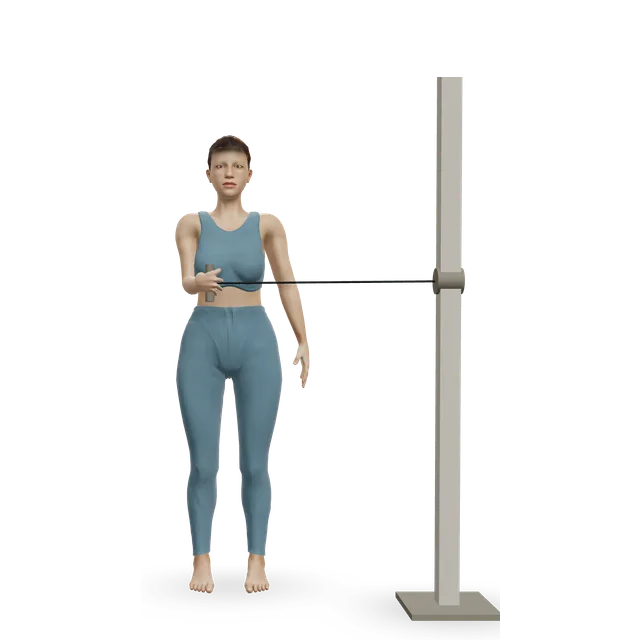
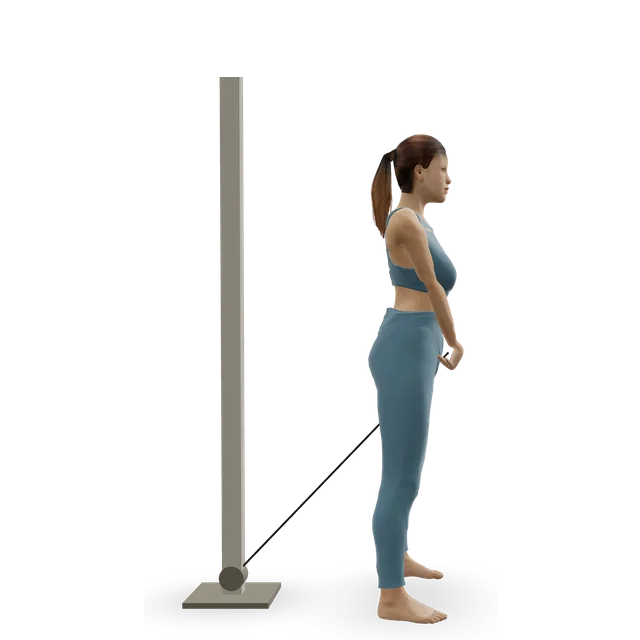
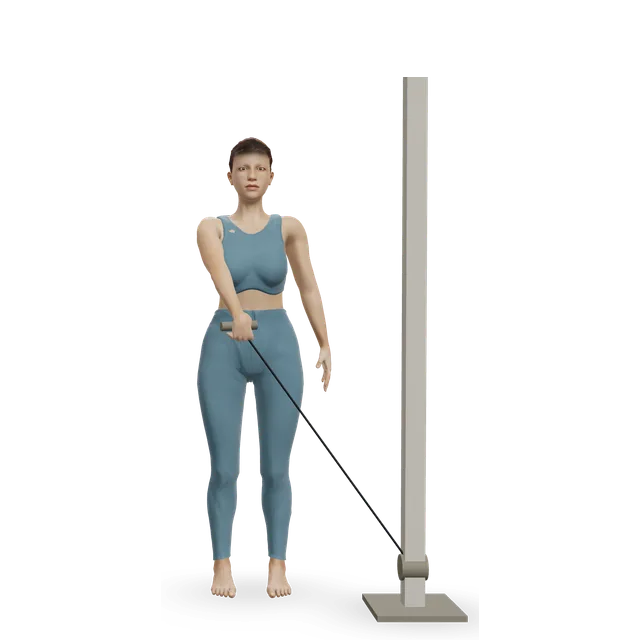
A cable lateral raise is a side raise against a cable from a low pulley: standing side-on to the machine, with the handle in your far hand so the cable runs across your body, you raise your arm out to shoulder height and lower it slowly. Set like that, the cable is hardest near the bottom of the lift, where a dumbbell is easiest, which is why where you set the pulley matters.

In the one trial so far, cable and dumbbell raises built the side of the shoulder equally in trained lifters, so the choice is about feel and small weight steps.

This guide shows the raise step by step on the 3D figure, the seated, behind-the-back and cuff versions, how heavy and how many, and how to keep your shoulders comfortable, with a cable shoulder workout to follow.

The short version

The move

Stand side-on to a low pulley, take the handle in your far hand so the cable runs across the front of your body, and raise your arm out to the side, elbow soft and leading, to shoulder height; lower slowly. The American Council on Exercise (ACE) rates the single-arm cable lateral raise a beginner exercise.

Source 1

Pulley height

Low, about the height of your hand as your arm hangs, up to waist height: the one trial set it level with the hand, and ACE says waist height. Set like that, the cable is hardest near the bottom, where a dumbbell is easiest. That's mechanics and one trial's set-up, our editorial reading rather than a measured result.

Sources 2, 1, 3

As good as dumbbells, not better

In 24 trained adults, cable and dumbbell raises grew the side delt alike, by 3.3 to 4.6% in 8 weeks. It's one short trial, funded by a company that sells resistance training equipment.

Source 2

Shoulder height, slightly forward, thumbs level

Raises above shoulder height went with signs of impingement in weight trainers, and thumbs down tipped the shoulder blade forward and pressed the tendon harder against the shoulder's roof. Raising slightly in front of your body changed side-delt activity by only about 5%, so it's a comfort choice.

Sources 4, 5, 6, 7

How many

2 or 3 sets of 12 to 20 each side, about 60 seconds' rest, the last set 0 to 2 reps short of failure, as our lateral raise guide says. Build towards about 10 hard side-delt sets a week, counting each set of overhead presses as half. Add weight in small steps: the trial used 0.25 kg.

Sources 8, 9, 2

Your shoulders

Keep pain to about 5 out of 10 or less, back to its usual level by your next session, and see our shoulder pain in lateral raises guide. Lateral raises can be part of the cure: daily band raises eased neck and shoulder pain in office workers.

Sources 10, 11

What a cable lateral raise is, and where it's hardest

The move

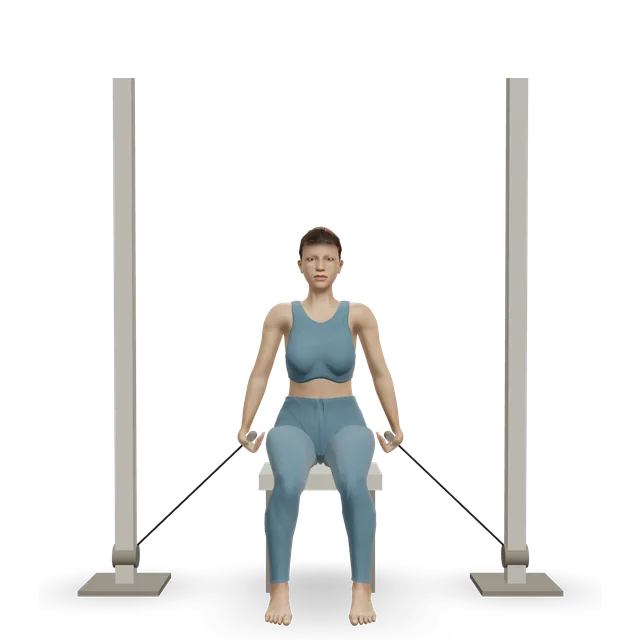
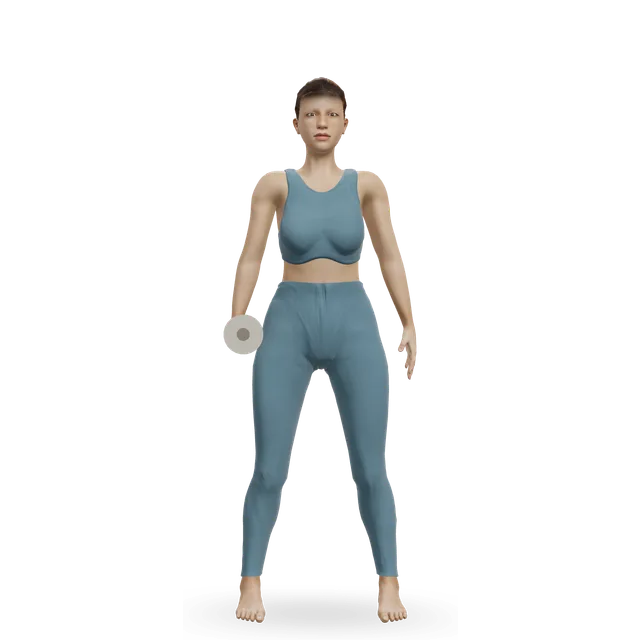
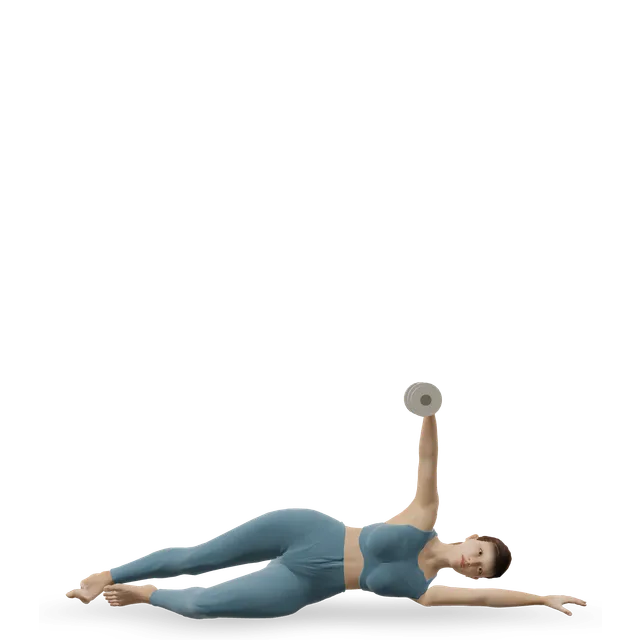
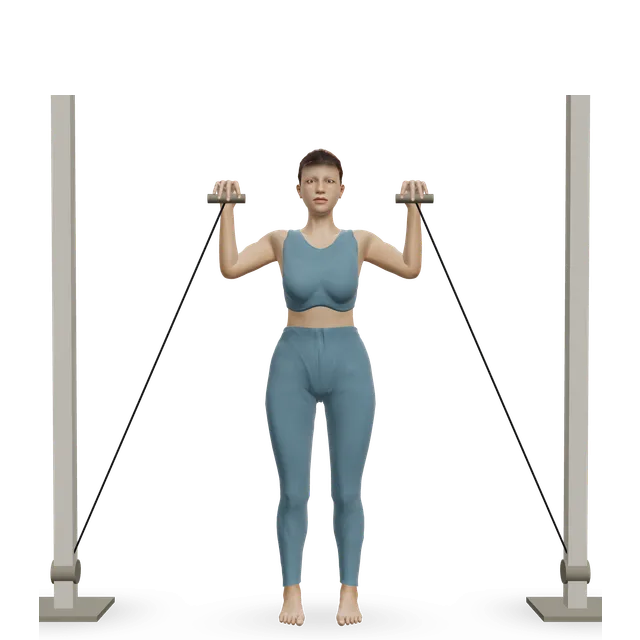
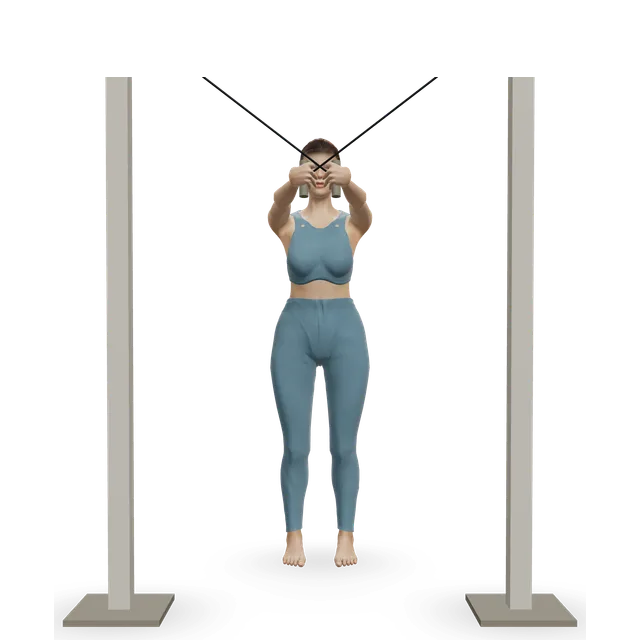
A lateral raise against a cable from a low pulley. The usual version is one arm at a time, standing side-on to the column with the handle in your far hand so the cable runs across the front of your body, as ACE describes it. You can also sit between two pulleys and raise both arms, run the cable behind your back, strap a cuff to your wrist instead of holding a handle, or lean away while holding the column.

Source 1

The muscles

The side (middle) deltoid does most of the work, helped by the front and back deltoids, the supraspinatus (a rotator cuff muscle on top of the shoulder) and the upper trapezius. The middle part of the deltoid is multipennate: its fibres run at angles into a central tendon.

Sources 12, 13, 14

Where it's hardest (our reading of the mechanics)

A dumbbell raise is hardest with your arm level, because gravity pulls straight down. A cable pulls along its own line, so from a low pulley on the far side it is hardest near the bottom, where the muscle is longest, and lighter at the top. The trial set the pulley level with the hand to put the peak load at the bottom, and a review notes that the pulley's height and your distance from it decide where the peak falls. A band under your foot behaves more like a dumbbell. This is our editorial reading of the mechanics and the trial's set-up; no study has measured it in a cable raise.

Sources 2, 3, 15

What you lift

The number on the stack depends on the machine's pulley ratio, as our cable machine guide explains, so expect a light pin and compare yourself only on the same machine. The trial changed loads in 0.25 kg steps.

Source 2

Who it suits

Anyone with a shoulder that raises to shoulder height comfortably: ACE rates it beginner. In the trial, people whose shoulders hurt in a strict side raise were allowed to raise partway towards the plane of the shoulder blade, slightly in front of the body.

Sources 1, 2

How to do a cable lateral raise, step by step

From our move page, ACE's single-arm cable lateral raise (a pulley at about waist height, the cable passing in front of the body), the trial's set-up, our lateral raise guide's height, thumb and angle cues and our cable machine guide's set-up. Keeping the plates just off the stack is coaching practice.

  1. Set the pulley low, at about the height of your hand as your arm hangs (up to waist height), clip on a single handle and set a light pin.
  2. Stand side-on to the column, feet hip-width apart, and take the handle in your far hand so the cable runs across the front of your body; hold the column with your near hand.
  3. Start with the handle in front of your near hip and your elbow soft.
  4. Breathe out and raise your arm out to the side, leading with your elbow and a little in front of your body, until it is level with your shoulder.
  5. Keep your thumb level or slightly up and your shoulders down, away from your ears.
  6. Lower slowly, over 2 to 3 seconds, back across your body, keeping the plates just off the stack.
  7. Finish the set, then turn round and work the other arm.

Loading the 3D figure…

Gets into position, then repeats the movement. Technical checks passed; qualified exercise review is pending.

The movement on the figure: Cable lateral raise

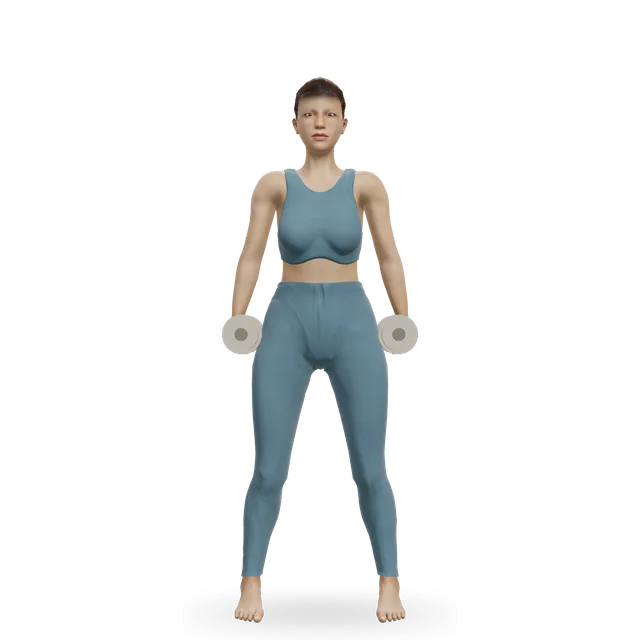
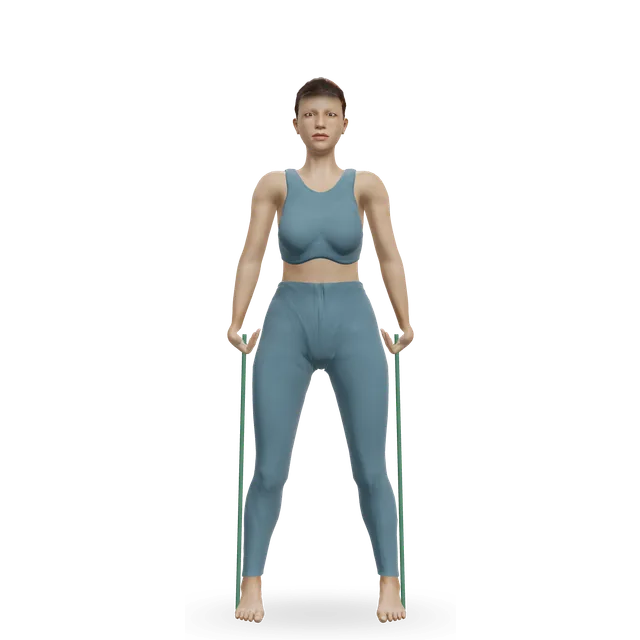
Seated, dumbbell, band and other versions

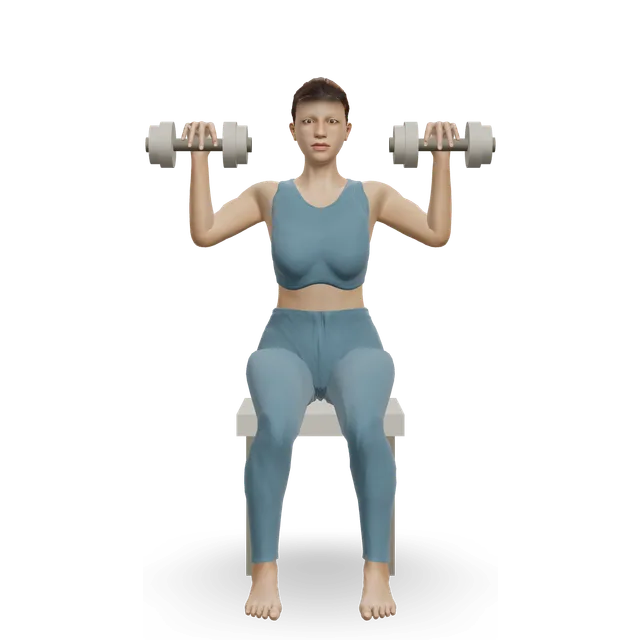
The one-arm cable raise at 2 or 3 sets of 12 to 20 each side (our lateral raise guide; push day B uses 3 sets of 12 to 20); the seated two-cable raise at 2 sets of 15 to 20 (our full-body machine workout); dumbbell and band raises at 2 or 3 sets of 12 to 20; the supported one-arm and side-lying incline raises at 2 to 3 sets of 10 to 15 each side, stopping 2 or 3 reps short (their move pages' dose). The behind-the-back, cuff, lean-away and Y-raise versions have no 3D demo: the cable lateral raise shows the arm path.

Cables or dumbbells? What the evidence says

Equal growth in the one trialEmerging evidence

24 trained men and women did cable raises with one arm and dumbbell raises with the other: 5 sets to failure twice a week for 8 weeks, 12 to 16 reps, adding 0.25 kg once a set passed 16. The side delt grew 3.3 to 4.6% with no difference between arms. Strength wasn't measured, there was no control group, the ultrasound's error was close to the size of the change, and a company that sells resistance training equipment funded it. A 2026 review reads it the same way: being hardest in the stretch didn't add growth here.

Sources 2, 3

Bands work tooEmerging evidence

At matched effort, elastic tubing and dumbbells drew similar activity in the main shoulder muscles (64 to 86% against 59 to 87% of maximum) in 16 women, in exercises including the lateral raise. A band under your foot gets harder as you rise, like a dumbbell.

Sources 16, 15

The untested versions

We found no study of pulley height, the cable in front or behind your body, cuffs against handles, leaning away, or seated against standing raises. One dumbbell study found a 30-degree forward lean made no difference to side-delt activity in 14 trained men. Choose by comfort.

Source 17

Muscle activity isn't growthStrong evidence

Most raise rankings come from EMG (electromyography: electrodes measuring how hard a muscle works) over a few reps, which doesn't predict what a muscle builds. The one growth trial matters more.

Source 18

Height, thumbs and the shoulder's plane

To shoulder heightEmerging evidence

In 77 men, 46 of them weight trainers, signs of shoulder impingement went with lateral raises and upright rows taken above 90 degrees. It's a snapshot study that can't show cause, but it's a good reason to stop with your arm level, as ACE describes.

Sources 4, 19

Thumbs level or slightly upMixed evidence

In 10 bodybuilders, turning the thumb down shifted work to the back of the shoulder and the upper trapezius; a fine-wire study found more side-delt activity thumbs down (77% against 52% of maximum). But thumbs down tipped the shoulder blade forward in 20 people, and with the arm fully turned in at shoulder height, the force under the shoulder's roof was about 21 newtons against 3 or less with it neutral or turned out. None measured pain, so level or slightly up is the sensible choice, as our lateral raise guide says.

Sources 12, 20, 5, 6

Slightly in front of your bodyEmerging evidence

Raising within 30 degrees of the plane of the shoulder blade changed side-delt activity by only about 5% of maximum in 14 adults. The trial allowed people with sore shoulders to raise partway towards that plane, so use it for comfort.

Sources 7, 2

A soft elbow

Keep your elbow slightly bent and leading: bending it to 90 degrees lowered side-delt activity in bodybuilders.

Source 12

Your trapsEmerging evidence

The upper trapezius worked at 97% of its maximum in raises with only 3 to 10 kg in 12 women with trapezius pain. Shoulders down, a lighter pin and stopping at shoulder height keep the side delt doing the work.

Source 21

How heavy and how many

Your first weight

A pin you can raise 12 to 20 times without swinging, shrugging or leaning, with 3 or 4 reps to spare in your first two weeks, as our plans advise.

Sets, reps and rest

2 or 3 sets of 12 to 20 each side, about 60 seconds' rest, the last set 0 to 2 reps short of failure, as our lateral raise guide and upper body workouts use. Light loads built as much muscle as heavy ones when sets were hard, across 28 studies.

Source 22

Sets a week

Build towards about 10 hard sets a week for your side delts across 2 sessions, counting each set of overhead presses as half, as our lateral raise guide works it out. The trial used 10 sets a week to failure: a study dose, not a starting point.

Sources 8, 9, 2

Moving up

Add reps to 20, then the smallest plate. If that's too big a jump, use a half-step or add-on weight, as our cable machine guide says.

Strict, not swungEmerging evidence

In a computer model of the lateral raise, a little momentum raised the load on the target muscles, but too much lowered it. Nobody has tested it in people, so lift under control and lower over 2 to 3 seconds (our advice, as in our lateral raise guide).

Source 23

Common mistakes and how to fix them

Standing too close

If the cable goes slack at the bottom, step out until the plates lift.

Swinging or leaning to start the rep

Use a lighter pin and keep your trunk still, holding the column.

Shrugging

Your upper trapezius takes over. Keep your shoulders down and go lighter.

Raising above shoulder height

Stop with your arm level, as our lateral raise guide says.

Thumbs down, "pouring the jug"

Keep your thumb level or slightly up.

Bending the elbow to 90 degrees

Keep it slightly bent and leading.

Letting the stack crash

Lower over 2 to 3 seconds and keep the plates just off the stack.

Cable lateral raises and your shoulders

The pain rule

Keep shoulder pain to about 5 out of 10 or less during the exercise, back to its usual level by your next session, as our shoulder guides advise. A sharp pinch means lower, lighter or stop.

A pinch near the top

A pinch on the outside or front of your shoulder as your arm nears shoulder height usually comes from the rotator cuff. Stop just below the pinch, raise slightly in front of your body with your thumb level, and go lighter. Our shoulder pain in lateral raises guide maps the other causes and has a three-stage plan, which uses the seated cable raise at 2 to 3 sets of 12 to 15, light, to just below shoulder height.

Raises can help shoulder and neck painStrong evidence

In 198 office workers with frequent neck and shoulder pain, 2 or 12 minutes a day of elastic band training, 5 days a week for 10 weeks, cut pain by 1.4 and 1.9 points out of 10 against health information. A later report from the same trial says the exercise was a lateral raise in line with the shoulder blade, at 8 to 12 reps, about 2 seconds up and 2 down.

Sources 10, 11

Where advice differsMixed evidence

An undated hospital handout says standing lateral raises should be avoided because of their effect on the rotator cuff, and suggests bent-over or face-down raises instead. The research links impingement signs to raises above shoulder height, ACE rates the raise beginner, and treatment trials use it, so we treat the handout as a cautious line for sore shoulders.

Sources 24, 4, 19

Shoulder injuries in liftersEmerging evidence

Up to 36% of documented resistance training injuries are at the shoulder, mostly from surveys, which is why the height and thumb rules above are worth keeping.

Source 25

The rest of the shoulder

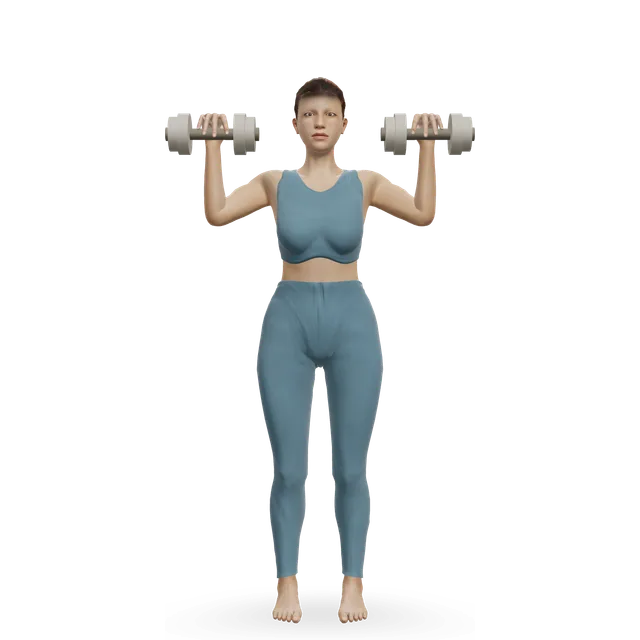
A press for the whole shoulder: the standing overhead press at 3 sets of 6 to 10 (our shoulders and arms workout) or the standing cable shoulder press at 3 sets of 8 to 12 (our cable shoulder workout); each set counts as about half a side-delt set. Face pulls at 3 sets of 12 to 15 and cable external rotation at 2 sets of 12 to 15 each arm, as our cable shoulder workout uses them; the standing cable reverse fly at 2 sets of 12 to 15 (editorial).

Workouts to follow

The cable shoulder workout trains the whole shoulder on one cable station: a standing press, one-arm cable raises, face pulls, reverse flys and rotator cuff work. Push day B uses one-arm cable raises at 3 sets of 12 to 20 each side, the cable machine workout pairs them with curls, and the full-body machine workout uses the seated cable raise. In the shoulder workouts, a cable raise can stand in for the dumbbell raise at the same dose.

Plans that use it

Cable raises come round in push-pull-legs through push day B, and in the beginner and full-body plans through the full-body machine workout.

Who should change it, and warning signs

Stop and get medical help

If you get chest pain or pressure, feel faint or dizzy, are unusually breathless, or your heart races or beats irregularly during exercise, as our plans advise. The American Heart Association says these need immediate medical evaluation.

Source 26

Call 999 (911 in the US)

For chest pain that feels tight, heavy or squeezing, or spreads to your arms, neck, jaw or back; a sudden, extremely painful headache, especially while straining; someone who faints while exercising; or palpitations that don't go away, or come with chest pain, breathlessness or feeling faint. Don't drive yourself to A&E.

Shoulder or arm pain with chest pain that feels tight or squeezing, especially with breathlessness, sweating or feeling sick, could be a heart attack, as our shoulder pain in lateral raises guide says: call 999.

Sources 27, 28, 29, 30, 31, 32

A headache with effort

Ask for an urgent GP appointment or get help from NHS 111 for a headache that's triggered or made worse by coughing, sneezing, bending down or exercising.

Source 29

Your shoulder

Ask for an urgent GP appointment or get help from NHS 111 for sudden or very bad shoulder pain, an arm you can't move, a shoulder that has changed shape or is badly swollen, pins and needles that don't go away, no feeling in your arm or shoulder, an arm or shoulder that's hot or cold to touch, pain after an injury or a fall, severe pain in both shoulders, or feeling feverish or unwell. Go to A&E if, after an injury, you can't move your arm or your shoulder looks out of place or has changed shape. See a GP if shoulder pain is getting worse or hasn't improved after 2 weeks.

Sources 33, 34

Sudden weakness, or a pop in the upper arm

Sudden weakness lifting the arm after a jerking heavy rep or a fall, or a pop with a bulge low in the upper arm, needs checking the same day through a GP or NHS 111, as our shoulder pain in lateral raises guide explains.

Your neck

Pins and needles or a cold arm with neck pain, or neck pain that hasn't gone after a few weeks: see a GP.

Source 35

Muscles far sorer than the session explains

After a big or unusual session, such as drop sets or a raise challenge, muscle pain, swelling or weakness far worse than the session explains, with dark pee, needs the same-day check through NHS 111, or A&E if you feel very unwell: it can be rhabdomyolysis, as our shoulder pain in lateral raises guide explains.

After heart, lung or breast surgery, or a dislocation

After heart surgery through the breastbone, or a heart or lung transplant, follow your surgeon's advice before pushing, pulling or lifting with your arms.

After breast cancer surgery or reconstruction, follow your surgical team's advice on when you can lift your arm above shoulder height, or push, pull or lift with it.

After a recent shoulder dislocation, or shoulder or elbow surgery, follow your surgical team's limits first.

Before you start

Speak to your GP first if you haven't exercised for some time or have medical conditions or concerns, as the NHS advises. Get advice before hard or straining work if your blood pressure is uncontrolled (140/90 or higher at a clinic, or 135/85 at home), or you have heart disease or chest pain when you're active, a pacemaker or defibrillator, diabetic eye disease, glaucoma, a hernia, recent eye or tummy surgery, or you're pregnant, as our breathing guide lists.

With a pacemaker or defibrillator, the American Heart Association asks you to check with your doctor before upper-body strength training, because repeated arm movements can damage or dislodge the leads.

Sources 36, 26

A cable or clip that fails

Check the cable, clips and pin before you start, and keep your face out of the cable's line. A frayed cable or a clip that won't close means another station.

Sore, or hurt?

Muscle soreness for a day or two after a new or harder session is common and fades. Sharp pain, or pain that builds during a set or lingers into the next day, isn't: swap to an easier version, and see a clinician if it persists, as our plans advise. The NHS says to stop exercising straight away if you feel any pain or become unwell, and to get help from 111 if symptoms worry you or don't go away.

Source 37
Myths

"Cables are better than dumbbells for shoulders"Emerging evidence

In the one trial, each person trained one arm with each, and they grew the side delt equally.

Source 2

"Cables give constant tension"Emerging evidence

The cable's pull is roughly steady, but the load on your shoulder changes with the angle: from a low pulley the raise is hardest near the bottom, as our cable machine guide explains.

Sources 2, 3

"Behind the back is the best way"

No study has tested behind the back, cuffs or leaning away against the standard raise. Use whichever feels better on your shoulder.

"Being hardest in the stretch makes cable raises build more"Emerging evidence

The trial set the cable to be hardest at the bottom, and growth was the same as with dumbbells.

Source 2

"Pour the jug: little finger up"Mixed evidence

Thumbs down shifts work to the back of the shoulder and the upper trapezius, and pressed the tendon harder against the shoulder's roof in lab studies. Keep your thumb level or slightly up.

Sources 12, 5, 6

"Lateral raises are bad for your shoulders"Mixed evidence

Raises above shoulder height went with impingement signs, but trials use lateral raises to treat neck and shoulder pain.

Sources 4, 10

Questions people ask

How do you do a cable lateral raise?

Stand side-on to a low pulley and take the handle in your far hand so the cable runs across the front of your body. Raise your arm out to the side, elbow soft and leading, to shoulder height, then lower it slowly. Hold the machine with your other hand.

What height should the pulley be for cable lateral raises?

Low: about the height of your hand as your arm hangs, up to waist height. That's how the one trial and the American Council on Exercise set it, and it makes the raise hardest near the bottom.

Are cable lateral raises better than dumbbells?

No better, no worse: in the one trial, cable and dumbbell raises grew the side of the shoulder equally in trained lifters over 8 weeks. Cables load the bottom of the raise and let you add weight in small steps.

Should the cable go in front of or behind my body?

Either. The trial and ACE ran it in front; behind the back is popular, but no study has tested it, and we don't have a 3D demo of it. Use whichever feels better on your shoulder.

Cuff or handle for cable lateral raises?

Either. A cuff on your wrist takes your grip out of it; the trial used lifting straps for the same reason. No study compares them.

What muscles do cable lateral raises work?

Mainly the side (middle) deltoid, which gives your shoulders their width, with the front and back deltoids, the supraspinatus and the upper trapezius helping.

How heavy should cable lateral raises be?

Light: a pin you can raise 12 to 20 times without swinging, shrugging or leaning. Add reps before weight; the trial moved people up in 0.25 kg steps.

How many sets and reps of cable lateral raises?

2 or 3 sets of 12 to 20 each side, about 60 seconds' rest, the last set 0 to 2 reps short of failure. Aim for about 10 hard side-delt sets a week across 2 sessions, counting each set of overhead presses as half.

Why do I feel cable lateral raises in my traps?

The upper trapezius works hard in any raise, and more if you shrug, lift above shoulder height or turn your thumb down. Keep your shoulders down, stop at shoulder height and keep your thumb level.

Why does my shoulder hurt doing cable lateral raises?

Usually the raise is too high, too heavy or done thumbs down. Stop at or below shoulder height, raise slightly in front of your body, go lighter and keep pain to about 5 out of 10, settled by your next session. Our shoulder pain in lateral raises guide has the full plan.

Should I lean away from the machine?

You can, holding the column, but no study shows it builds more, and we don't have a 3D demo of it. Standing tall is simpler to get right.

Can I do cable lateral raises at home?

With a resistance band, yes: stand on it or anchor it low beside you. A band under your foot gets harder as you rise, like a dumbbell, while a band anchored low on the far side behaves more like a cable (our reading).

Sources

  1. ACE · Single-arm lateral raise with a cable (exercise library, rated beginner, American Council on Exercise)
  2. Larsen 2025 · Cable against dumbbell lateral raises for 8 weeks in 24 trained adults (within-person trial, Front Physiol)
  3. Pedrosa 2026 · Muscle length, range of motion and exercise choice for muscle growth (review, Sports Med Int Open)
  4. Kolber 2014 · Signs of shoulder impingement in 77 men, 46 of them weight trainers (cross-sectional study, J Strength Cond Res)
  5. Thigpen 2006 · Shoulder blade movement in the full-can and empty-can exercises in 20 people (motion study, Am J Sports Med)
  6. Yanai 2006 · Force under the shoulder's roof in five arm positions in 13 adults (lab study, Clin Biomech)
  7. Reed 2016 · Raising the arm in different planes and shoulder muscle activity in 14 adults (muscle activity study, Man Ther)
  8. Currier 2026 · Resistance training prescription for muscle function, size and performance in healthy adults: an overview of 137 reviews (ACSM position stand, Med Sci Sports Exerc)
  9. Pelland 2026 · Weekly sets, training frequency, muscle growth and strength: 67 studies (meta-regressions, Sports Med)
  10. Andersen 2011 · Two or 12 minutes a day of elastic-tubing training for frequent neck and shoulder pain in 198 adults (randomised trial, Pain)
  11. Jay 2013 · The lateral raise used in a trial for neck and shoulder pain (secondary report of a randomised trial, Clin Physiol Funct Imaging)
  12. Coratella 2020 · Lateral raise variations and the front raise in 10 bodybuilders (muscle activity study, Int J Environ Res Public Health)
  13. Campos 2020 · Deltoid activity in the bench press, fly, shoulder press and lateral raise in 13 trained men (muscle activity study, J Hum Kinet)
  14. Rocha 2025 · Anatomy of the deltoid muscle (cadaver study, Clinics)
  15. Hughes 1999 · The resistance of elastic tubing during shoulder abduction, in 15 adults (lab study, J Orthop Sports Phys Ther)
  16. Andersen 2010 · Elastic tubing against dumbbells for shoulder muscle activity in 16 women (muscle activity study, Phys Ther)
  17. Demirtaş 2023 · Grip and range variations in deltoid exercises in 14 trained men (muscle activity study, Kinesiologia Slovenica)
  18. Vigotsky 2022 · Muscle activity measured in one session is not a validated predictor of muscle growth (review, Sports Med)
  19. ACE · Lateral raise (exercise library, rated beginner, American Council on Exercise)
  20. Reinold 2007 · Supraspinatus and deltoid activity in the full can, empty can and prone full can in 22 adults (fine-wire muscle activity study, J Athl Train)
  21. Andersen 2008 · Muscle activity in strength exercises in 12 women with neck muscle pain (muscle activity study, Phys Ther)
  22. Lopez 2021 · Light, moderate and heavy loads for muscle growth and strength: 28 studies, 747 adults (network meta-analysis, Med Sci Sports Exerc)
  23. Arandjelović 2013 · Momentum and the load on the target muscles in a lateral raise (computer model, Eur J Appl Physiol)
  24. Mass General Sports Medicine · Strength training for the shoulder (patient handout, undated)
  25. Kolber 2010 · Shoulder injuries from resistance training (review, J Strength Cond Res)
  26. Paluch 2024 · Resistance training with and without heart disease: 2023 update (American Heart Association scientific statement, Circulation)
  27. NHS · Chest pain (past its review date: reviewed August 2023, review due August 2026)
  28. NHS · Heart attack
  29. NHS · Headaches
  30. NHS · Subarachnoid haemorrhage
  31. NHS · Fainting
  32. NHS · Heart palpitations
  33. NHS · Shoulder pain (past its review date: reviewed May 2023, review due May 2026)
  34. NHS · Dislocated shoulder
  35. NHS · Neck pain and stiff neck (past its review date: reviewed April 2023, review due April 2026)
  36. NHS · Physical activity guidelines for adults aged 19 to 64
  37. NHS · How to warm up before exercising

Exercise education, not a personal prescription, and clinical review of these guides is pending. Check with a GP before starting hard training if you have a heart condition, chest pain, dizziness or breathlessness when active, and stop for sharp or increasing pain. Health disclaimer.