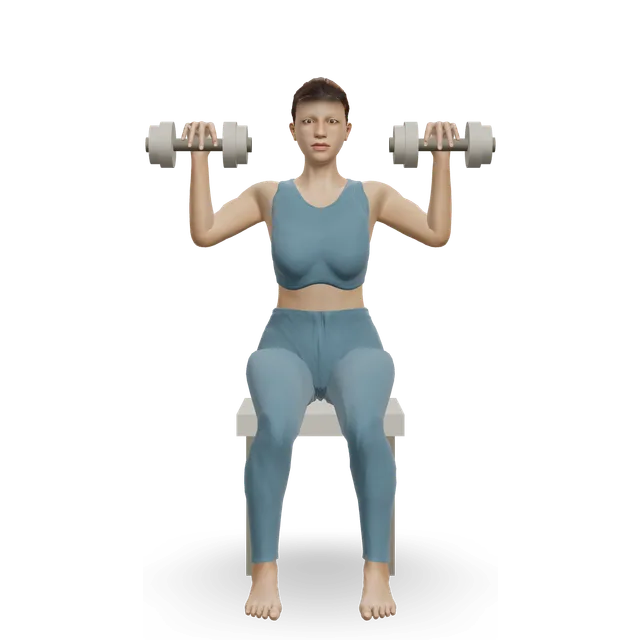
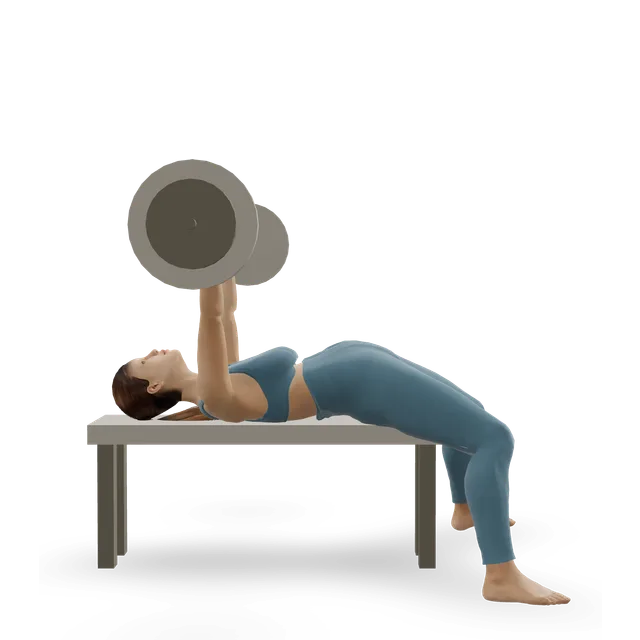
What it works
The front of your shoulder (the anterior deltoid) and the upper part of your chest, with a little help from the side of the shoulder. The back of the shoulder barely works.
Training guide
A front raise lifts a weight in front of you on nearly straight arms to about shoulder height. It works the front of your shoulders and your upper chest, and you can do it with dumbbells, a plate, a barbell, a cable or a band.
Presses already work the front of the shoulder hard: in one study the shoulder press beat the front raise for front-shoulder activity, and in a 10-week trial bench pressing grew the front of the shoulder on MRI. No trial has added front raises to presses, so if you press regularly, you may not need them; they're useful if you can't press comfortably or want a few extra sets.
This guide covers the front raise step by step on the 3D figure, the grip (thumbs up suits most shoulders), how high to go, each version, how heavy and how many, and your shoulders.
The front of your shoulder (the anterior deltoid) and the upper part of your chest, with a little help from the side of the shoulder. The back of the shoulder barely works.
The dumbbell shoulder press worked the front of the shoulder harder than the front raise (74% against 57% of maximum) in 16 men, the shoulder press beat the bench press, lateral raise and fly in 13 trained men, and 10 weeks of bench pressing grew the front of the shoulder on MRI.
No trial has added front raises to presses and measured the result, so this is an inference: if you press regularly, the front of your shoulder is already working hard, and your raise sets may do more for the side and back of your shoulder.
A hospital shoulder handout advises raising with your thumbs up, not your palms down. ACE starts palms down but turns the thumbs slightly up as the arms pass about 60 to 70 degrees.
Raise to about shoulder height, arms parallel to the floor, as ACE teaches; the main study stopped there too.
2 to 3 sets of 10 to 15 (our move pages) or 2 sets of 12 (our shoulder workout), resting 60 to 90 seconds, with the last set 0 to 2 reps short of failure. Light enough not to lean back or swing.
Source 8
Standing or seated, you raise one or two weights in front of you on nearly straight arms to about shoulder height, then lower them slowly. ACE rates it a beginner exercise.
Source 6
Mostly the front of the shoulder and the upper (clavicular) part of the chest; the side of the shoulder helps a little and the back of the shoulder barely works. Above shoulder height, the serratus anterior and trapezius work more as your shoulder blade turns upwards.
The researcher behind the ACE study put it bluntly: if you do front raises, shoulder presses and lateral raises, you've doubled up on the front of the shoulder and neglected the back. A front raise is an optional extra, not a staple.
Source 2
Most raise studies use EMG (electromyography: electrodes measuring how hard a muscle works over a few reps), which isn't a validated predictor of which exercise grows a muscle more. The bench press trial below measured growth itself.
Source 10
In 10 competitive bodybuilders doing seated raises with a weight they could lift 8 times, the front raise worked the front of the shoulder harder than every lateral raise version, and the upper chest by a wide margin; the side and back of the shoulder played a negligible part. In the ACE study of 16 men, the front raise drew 57% of maximum from the front of the shoulder, 36% from the side and 9% from the back.
The dumbbell shoulder press drew 74% of maximum from the front of the shoulder against 57% for the front raise, the highest of 10 exercises. In 13 trained men, the shoulder press drew 33% against 21% for the bench press and lateral raise and 19% for the fly. A review of 33 studies found pressing and fly movements, especially on an incline, worked the front of the shoulder hardest.
In 24 men, 10 weeks of bench pressing (3 sessions a week, 3 to 4 sets of 12) grew the chest, the front of the shoulder and the triceps more than in 11 men who didn't train, measured on MRI. In another 6-week trial in 18 men, the front of the shoulder thickened by about 2 to 3 mm; its summary names bench press and squat tests but not the whole programme.
No trial has added front raises to a pressing programme and measured the front of the shoulder, so this is an inference from the activity studies and the bench press trial. Front raises still make sense if you can't press comfortably, or want a few extra front-shoulder sets.
In 8 experienced lifters, a set of front raises before a heavy bench press didn't change how hard the front of the shoulder or the chest worked in the press.
Source 13
From ACE's front raise and our move pages; the thumbs-up grip follows a hospital shoulder handout. The demo raises one arm at a time with the thumb leading.
Loading the 3D figure…
The movement on the figure: Alternating hammer-grip front raise
A hospital physiotherapy handout says to raise with your thumb up, which it calls usually safer, and not to use a palm-down grip. An ACE continuing-education article says a palm-down grip turns the arm in, which can narrow the space at the front of the shoulder and pinch the biceps tendon there, and suggests palms facing in or raising in a V. ACE's exercise library starts palms down but turns the thumbs up past about 60 to 70 degrees. This is expert guidance rather than a trial.
ACE raises the arms to shoulder level, about parallel to the floor, and the main front raise study stopped at 90 degrees, the same point.
Raising the arms well above shoulder height works the serratus anterior and trapezius more. In 77 men, signs of shoulder impingement were linked with lateral raises and upright rows taken above 90 degrees; front raises weren't studied. Go higher only if your shoulders are happy there, as our raise-to-overhead move pages say.
Both arms together, one at a time (the alternating front raise), or with a hammer grip, thumbs leading. One dumbbell held by its head in both hands works too; use a fixed dumbbell or check the collars.
Hold it at the sides and raise it to shoulder height on nearly straight arms, as our move page does.
Stand with your back to a low pulley, the handle in one hand in front of your thighs, and raise your straight arm forward. A cable keeps the pull on at the bottom; in the side of the shoulder, cable and dumbbell raises grew the muscle equally in a 24-person trial.
Source 15
Stand on the middle of a band, an end in each hand, and raise as with dumbbells. Bands built strength about as well as weights across 8 studies. We have no 3D demo of a band front raise: follow the cable front raise's demo.
Source 16
Sitting, or lying face down on an incline bench, takes the swing out (our move pages).
An overhand barbell grip turns the arms in, so stop at shoulder height if it pinches. Raising all the way overhead needs a full, pain-free overhead reach without arching your back, as our move pages say.
The alternating hammer-grip front raise and the two-hand dumbbell front raise, 2 to 3 sets of 10 to 15 (each arm when alternating), stopping 2 or 3 reps short (their move pages); the two-dumbbell front raise, 2 to 3 sets of 10 to 15 within the pain rule (our shoulder impingement guide); the alternating front raise, 2 sets of 12 (our shoulder workout); the plate and cable front raises, 2 to 3 sets of 10 to 15 (our editorial starting points).
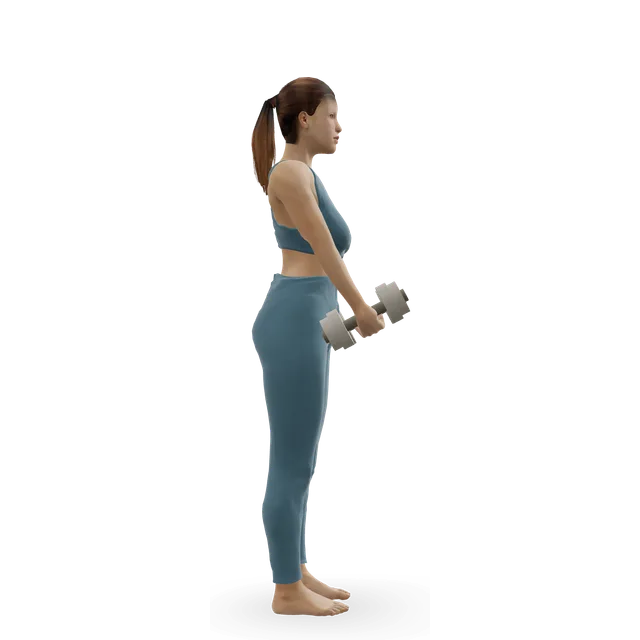 3D demoAlternating hammer-grip front raiseBeginner · A dumbbell
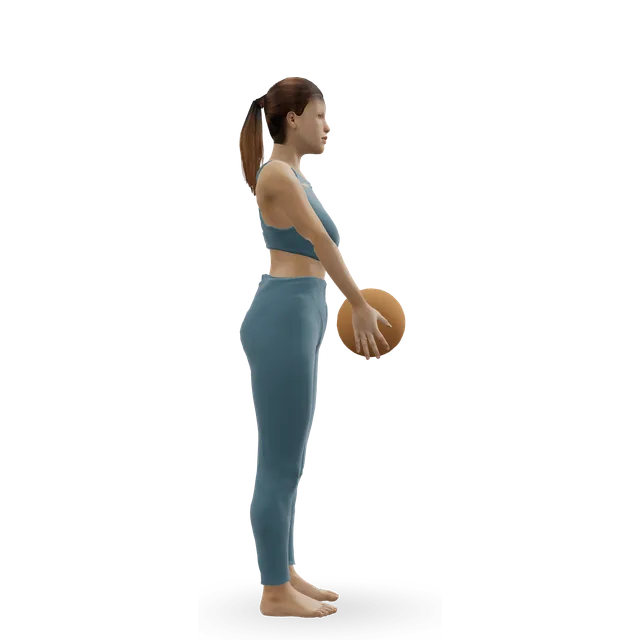 3D demoTwo-hand dumbbell front raiseBeginner · A dumbbell
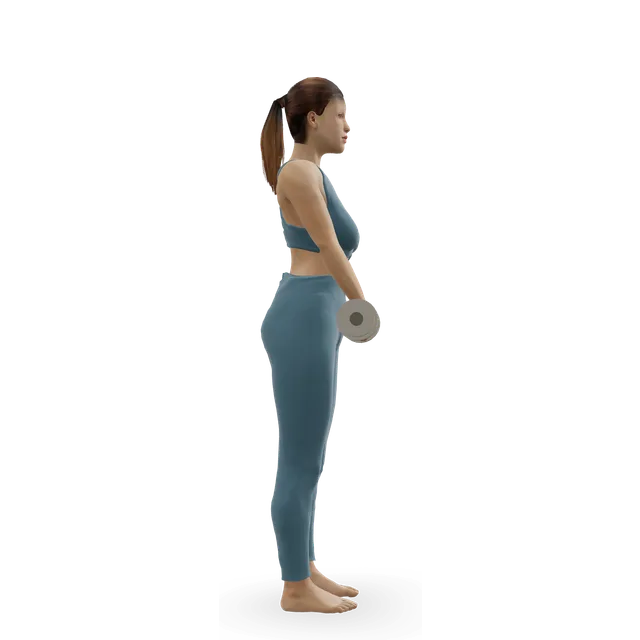 3D demoFront raiseBeginner · A dumbbell
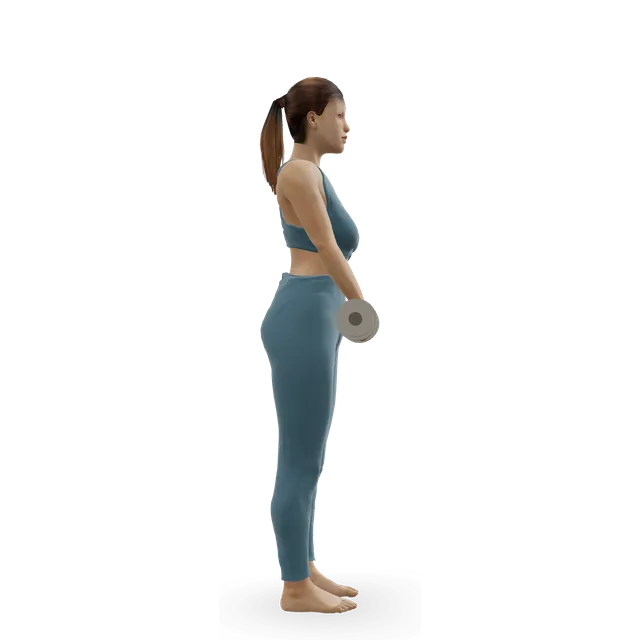 3D demoAlternating front raiseBeginner · A dumbbell
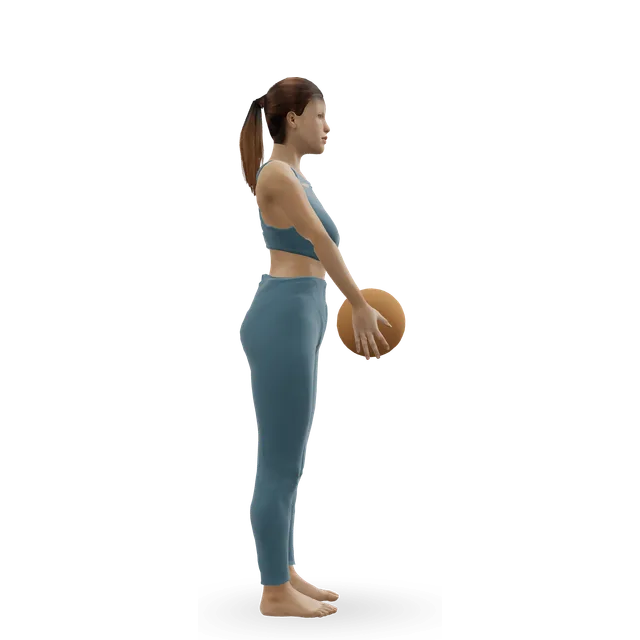 3D demoPlate front raiseBeginner · Weight plates + Medicine ball
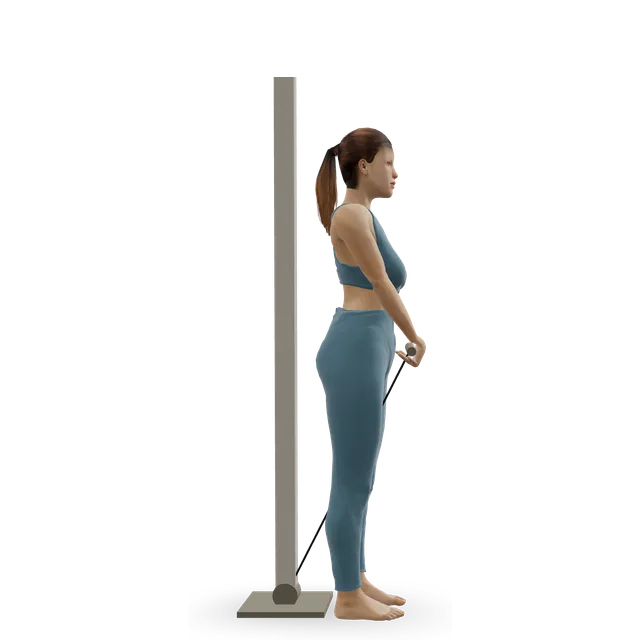 3D demoCable front raiseBeginner · A cable machine
The incline dumbbell front raise, the chest-supported barbell front raise and the raises to overhead, 2 to 3 sets of 10 to 15, stopping 2 or 3 reps short (their move pages); the scaption raise (a V-shaped raise, thumbs up), 3 sets of 15 (our shoulder impingement guide); the lateral raise to front raise, 2 sets of 10 to 12 (our editorial starting point).
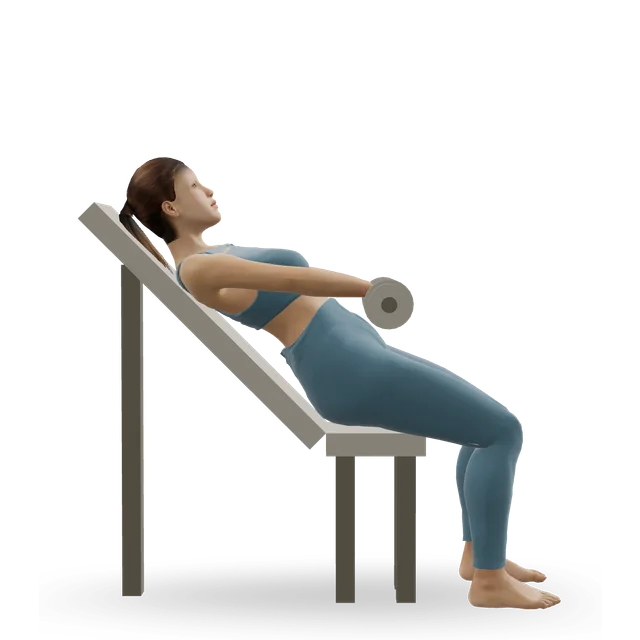 3D demoIncline dumbbell front raiseBeginner · A dumbbell + A bench or box
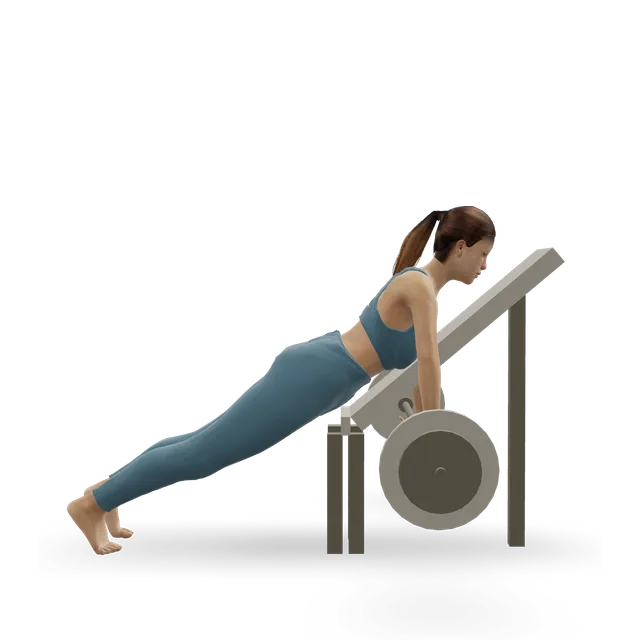 3D demoChest-supported barbell front raiseBeginner · A barbell + A bench or box
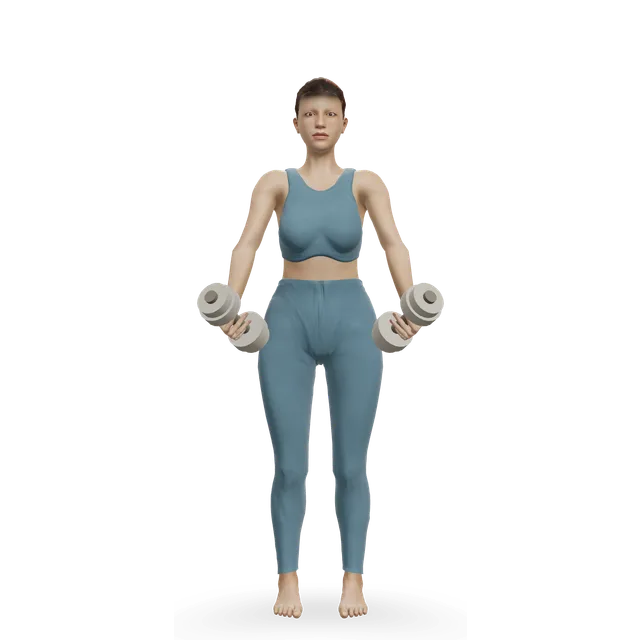 3D demoScaption raiseBeginner · A dumbbell
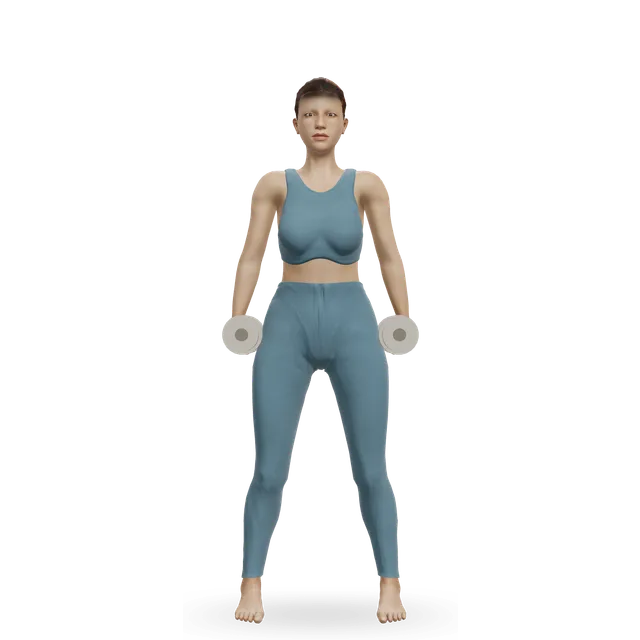 3D demoLateral raise to front raiseBeginner · A dumbbell
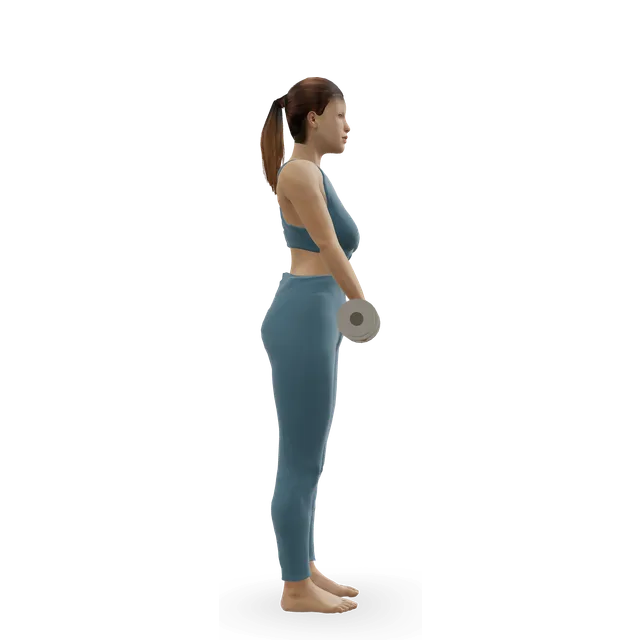 3D demoDumbbell front raise to overheadIntermediate · A dumbbell
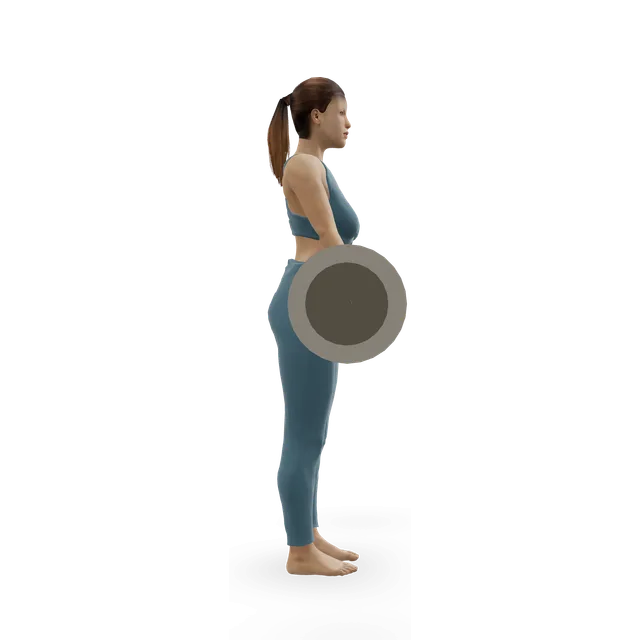 3D demoBarbell front raise to overheadIntermediate · A barbell
Presses worked the front of the shoulder harder than the front raise and train your triceps and chest too. Our overhead press and Arnold press guides teach them.
Lateral raises work the side of the shoulder, which the bench press and fly barely work (5% or less in one study) and the overhead press works a little less than a lateral raise. If you have room for one raise, make it the lateral raise.
Source 3
Upright rows taken above shoulder height were linked with signs of impingement in weight trainers; our upright row guide covers how to keep them shoulder-friendly.
Source 14
Lying face down and raising your arms in a Y works the lower trapezius and the back of the shoulder rather than the front: it's in our prone Y-T-W raises.
2 to 3 sets of 10 to 15 (our move pages) or 2 sets of 12 (our shoulder workout), with most sets 1 to 3 RIR (reps in reserve: how many more reps you could have done) and the last set 0 to 2, as our plans' notes say for small moves.
Light enough to lift without leaning back or swinging. People underestimate how many reps they have left by about 1, so stop when your trunk starts to move.
Source 17
60 to 90 seconds; a review found nothing clear for growth past about 90 seconds.
Source 8
Most people who press twice a week already give the front of the shoulder plenty of work. If you want more, 2 to 4 direct sets a week is a sensible add-on (our editorial starting point).
Source 18
Add reps before weight: for a small muscle, the next dumbbell up is a big jump.
Use a lighter weight, a split stance, or a seated or chest-supported version.
Keep your shoulders down and back as your arms rise.
Source 6
Turn your thumbs up.
Stop at shoulder height.
Source 6
Keep a slight bend (coaching practice).
Lower over about 2 seconds, as the main study's lifters did.
Source 1
Our shoulder impingement guide uses the front raise at 2 to 3 sets of 10 to 15, keeping pain to about 5 out of 10 or less and settled by your next session.
A palm-down grip may pinch the biceps tendon at the front of the shoulder: turn your thumbs up, and see our biceps tendinitis and front-of-shoulder pain guides.
Source 7
Raise with your thumbs up, to shoulder height or lower, with light weights. The NHS says not to make up your own strenuous exercises or use heavy gym equipment while your shoulder hurts.
Source 19
In backward-looking studies, up to 36% of weight-training injuries were at the shoulder, but injury rates in bodybuilding-style training were low, about 0.24 to 1 injury per 1,000 hours. No study has counted injuries from front raises.
Stay below shoulder height (our suggestion), and see our AC joint pain guide.
Use a seated or chest-supported version.
Breathe out as you lift and keep the weights moderate, as our breathing guide says. High blood pressure means readings of 140/90 or higher; with controlled blood pressure, the American Heart Association considers low- to moderate-intensity strength training with proper breathing safe.
Standing and seated versions suit; the NHS says strength training is fine if you already do it. Avoid long spells lying face down on an incline bench as your bump grows (our suggestion).
Source 24
The standing overhead press, 3 sets of 6 to 10, and lateral raises, 3 sets of 12 to 20 (our push day workout); bent-over reverse flys, 3 sets of 12 to 15 (our shoulder workout); band external rotations, 2 sets of 12 to 15 each arm (our shoulder workout at home); shoulder circles (CARs), 3 slow circles each way with each arm (their move page).
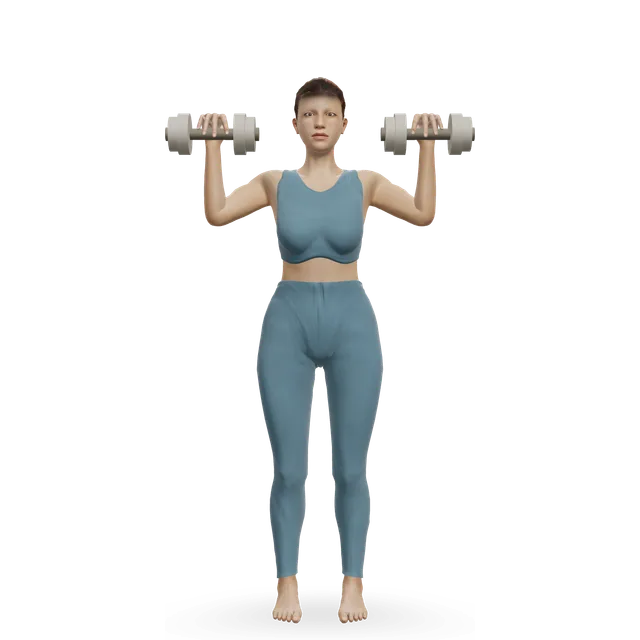 3D demoStanding overhead pressIntermediate · A barbell + A dumbbell
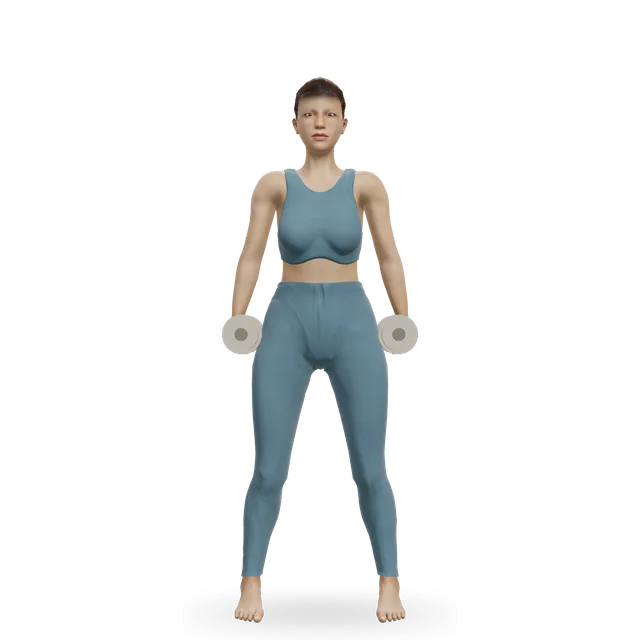 3D demoDumbbell lateral raiseBeginner · A dumbbell
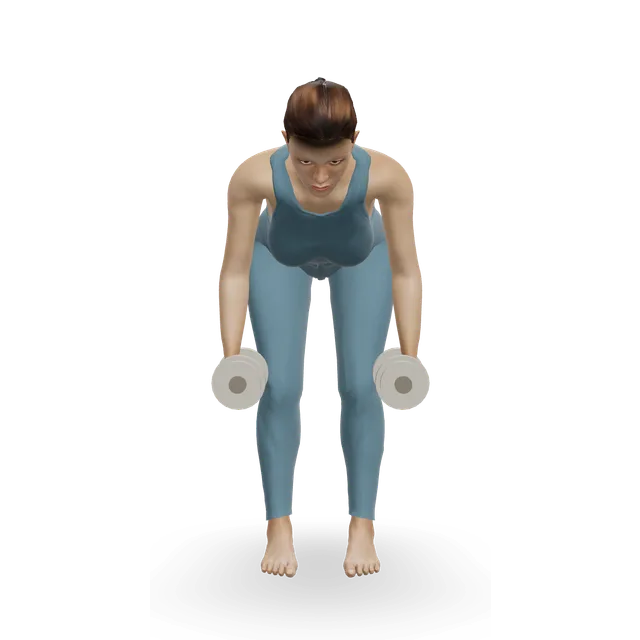 3D demoBent-over reverse flyIntermediate · A dumbbell
 3D demoStanding band external rotationBeginner · A band + An anchor point
 3D demoShoulder CARs (controlled articular rotations)Beginner · No equipment
Only our shoulder workout uses a front raise, 2 sets of 12. If you press twice a week, you can swap it for another set of lateral raises (our suggestion); the push day workout and the shoulders and arms workout show how much pressing already works the front of the shoulder.
A shoulder workout for all three heads: overhead press, lateral raises, reverse flyes, face pulls and rotations.
40 minIntermediate8 movesA band, A barbellA 30-minute home shoulder workout with dumbbells or a band: presses, lateral raises for the side of the shoulder, and rear-shoulder and rotator cuff work.
30 minBeginner8 movesA band, A dumbbellA push day workout for chest, shoulders and triceps: bench press, overhead press, incline dumbbell press, lateral raises and pushdowns.
55 minIntermediate10 movesA band, A barbellA 45-minute gym workout for shoulders and arms: overhead presses, lateral raises with face pulls, then two biceps and triceps pairs, with sets, reps and rest.
45 minIntermediate11 movesA band, A barbellThe bro split's shoulder day includes the front raise; the Arnold split pairs shoulders with arms.
The classic chest, back, legs, shoulders and arms week, built from our gym workouts, with what research says about training each muscle once.
5 training days45 minIntermediate6 days a weekA 6-day Arnold split: chest and back, shoulders and arms, then legs, each twice a week, with paired sets, weekly set counts and shorter 3 and 4-day versions.
6 training days55 minAdvancedIf you get chest pain or pressure, feel faint or dizzy, are unusually breathless, or your heart races or beats irregularly during exercise, as our plans advise. The American Heart Association says these need immediate medical evaluation.
Source 22
For chest pain that feels tight, heavy or squeezing, or spreads to your arms, neck, jaw or back; arm pain that comes on suddenly with pressure, heaviness or squeezing across your chest; a headache that starts suddenly and is extremely painful, especially while lifting or straining; someone who faints while exercising; palpitations that don't go away, or come with chest pain, breathlessness or feeling faint; severe difficulty breathing; or angina pain that doesn't stop after rest and your medicine. Don't drive yourself to A&E.
If you haven't exercised for some time or have a medical condition, speak to your GP first, as the NHS advises. Get advice before heavy lifting if your blood pressure is uncontrolled, or you have heart disease or chest pain when you're active, a pacemaker or defibrillator, diabetic eye disease, glaucoma, a hernia, recent eye or tummy surgery, or you're pregnant, as our breathing guide lists.
See a GP after any faint, and for dizziness that won't go away or keeps coming back.
If you have sudden or very bad shoulder pain, you can't move your arm, your shoulder has changed shape or is badly swollen, you have pins and needles that don't go away, no feeling in your arm, an arm that's hot or cold, pain after an injury or fall, severe pain in both shoulders, or you feel feverish or unwell. The NHS says these can be signs of something serious, like a broken or dislocated bone, or a torn ligament or tendon.
Source 19
If shoulder pain is getting worse or hasn't improved after 2 weeks of looking after it yourself, or it's very hard to move your arm. In many areas you can refer yourself to physiotherapy.
Source 19
Presses worked the front of the shoulder harder than front raises and grew it on MRI. No trial has added front raises to presses, so if you press regularly, you may not need them.
They work the front of the shoulder and the upper chest strongly, and they suit people who can't press comfortably. They're optional, not useless.
A hospital handout advises thumbs up and no palm-down grip, and ACE turns the thumbs up partway; expert guidance favours thumbs up or palms facing in.
ACE stops at shoulder height, as did the main study. Higher works the shoulder-blade muscles more and is optional for healthy shoulders.
The front of your shoulder (the anterior deltoid) and the upper part of your chest, with a little help from the side of the shoulder. The back of the shoulder barely works, which is why shoulder programmes pair raises with reverse flys or face pulls.
You may not. The shoulder press worked the front of the shoulder harder than the front raise, and bench pressing grew it in a 10-week trial. No trial has added front raises to presses, so if you press regularly, your raise sets may do more for the side and back of your shoulder.
No. They work the front of the shoulder and the upper chest strongly, and they suit people who can't press comfortably or want a few extra sets. They're optional if you press, not useless.
Thumbs up suits most shoulders: a hospital shoulder handout advises the thumb-up position and no palm-down grip, and an expert article says palms down may pinch the biceps tendon at the front of the shoulder. If you start palms down, turn your thumbs slightly up as your arms pass about 60 to 70 degrees.
To shoulder height, with your arms about parallel to the floor. Going higher works the shoulder-blade muscles more and is optional if your shoulders are happy there; stop lower if it pinches.
Light enough to lift without leaning back or swinging, for 10 to 15 controlled reps. Add reps before you add weight.
2 to 3 sets of 10 to 15, or 2 sets of 12, resting 60 to 90 seconds, with the last set 0 to 2 reps short of failure. If you press twice a week, 2 to 4 direct sets a week is plenty.
Lateral raises work the side of the shoulder, which bench presses barely work; front raises work the front, which presses already work hard. If you have room for one raise, make it the lateral raise.
All of them work. A plate or one dumbbell in both hands is simplest, a cable keeps the pull on at the bottom, and bands built strength about as well as weights in studies.
Common reasons are a palm-down grip, raising above shoulder height and swinging a heavy weight. Turn your thumbs up and lower the height and the weight; see a GP if shoulder pain is getting worse or hasn't improved after 2 weeks.
Yes, the upper part: in one study the upper chest worked harder in front raises than in any lateral raise. Presses and flys remain the main chest exercises.
Exercise education, not a personal prescription, and clinical review of these guides is pending. Check with a GP before starting hard training if you have a heart condition, chest pain, dizziness or breathlessness when active, and stop for sharp or increasing pain. Health disclaimer.