Pain guide · Hip pain

Groin pain when sitting: the hip joint, a strain, a hernia, the nerves, pelvic causes and what helps

Groin pain when you sit is common, and it usually comes from one of two places. A deep pinch in the groin crease, worse in low chairs, sitting cross-legged or on long drives, usually comes from the hip joint, such as hip impingement in younger adults or arthritis from mid-life. A burning, aching or numb pain between the legs, worse sitting and easier standing, can come from a nerve, the pelvic floor or, in men, the prostate. The NHS doesn't list sitting as a sign of a hernia, which usually shows itself as a lump.

This guide starts with the signs that need help today, from a 999 call or accident and emergency (A&E) to the National Health Service's 111 line (NHS 111) or a general practitioner (GP): numbness around the genitals or bottom with bladder or bowel changes, sudden testicle pain, a painful hernia and severe pelvic pain. It then sorts the causes by where it hurts, for men and women, explains what scans can and can't show, how to set up your chair, cushion, car and bike saddle, and gives a three-stage plan with a 3D demo of every move that ends with sitting through a working day or a long drive.

When to get help first

Exercise is for pain that has been checked or is clearly mild and settling.

Get urgent medical help if

  • Call 999 or go to A&E: severe hip pain after a fall or injury, or you cannot stand, walk or put weight on the leg. In an older adult this can be a broken hip; the leg may be at an odd angle or look shorter. Don't drive yourself.
  • Call 999 or go to A&E: tingling or loss of feeling in the hip or leg after an injury.
  • Call 999 or go to A&E: loss of feeling or numbness around the genitals or bottom, new trouble peeing or controlling your bladder or bowels, changes in genital sensation during sex or problems with erections or orgasm, or pain, tingling, weakness or numbness in both legs. These are signs of cauda equina syndrome, which needs treating in hospital urgently. Don't drive yourself.
  • Numbness around the genitals or bottom that doesn't go away soon after you stand up or get off a bike: call 999 or go to A&E, as in the cauda equina line above. Numbness that clears within a few minutes of standing, with none of those signs, is usually pressure from the seat or saddle (our suggestion), and a GP can check it if it keeps coming back.
  • Go to A&E or call 999 for sudden, severe pain in a testicle, testicle pain with feeling or being sick or tummy pain, or testicle pain that has lasted more than an hour or continues at rest. It can be a twisted testicle (testicular torsion), which needs treating straight away. Don't drive yourself. For aching or discomfort in your testicles that you're worried about, a lump, swelling or a change in a testicle's size, shape or feel, ask for an urgent GP appointment or get help from NHS 111.
  • Call 999 or go to A&E now if you have a femoral hernia (a small lump at the top of your thigh, in your groin) and very bad tummy pain, you feel sick or you're being sick, you cannot fart or poo, you have a high temperature or you feel hot, cold or shivery, or you've suddenly become confused. Do not drive to A&E. With any other hernia and pain in or around it, a bloated tummy, feeling or being sick, vomiting blood or vomit that looks like coffee grounds, constipation, a high temperature or feeling hot, cold or shivery, or sudden confusion, get help from NHS 111.
  • Call 999 or go to A&E: you have pelvic pain (pain low in your tummy) and it's severe, getting worse or hurts when you move or touch the area, or you feel faint, dizzy or lightheaded or pass out, have pain in the tip of your shoulder, have difficulty breathing, have heavy bleeding from your vagina, or suddenly feel confused. Don't drive yourself.
  • Get help from NHS 111: you have pelvic pain and you find it difficult to pee or poo, there's blood in your pee or poo, you have unusual discharge, fluid or bleeding from your vagina, pain when peeing or need to pee more than usual, a very high temperature or feel hot, cold or shivery, vomiting and diarrhoea or feel sick, or you are or may be pregnant. If you're 20 weeks pregnant or more, contact your midwife or maternity unit.
  • Call 999 or go to A&E immediately: a combination of a sharp, sudden and intense pain in your tummy, feeling very dizzy or fainting, feeling sick, or looking very pale, if there's any chance you could be pregnant. It could be an ectopic pregnancy that has split open (ruptured).
  • Contact your GP or call NHS 111 straight away: you might be pregnant, even without a positive pregnancy test, and you have a combination of tummy pain low down on one side, vaginal bleeding or a brown watery discharge, pain in the tip of your shoulder, or discomfort when peeing or pooing. It can be an ectopic pregnancy.
  • Same day (urgent GP appointment or NHS 111): severe pain that usually starts in the side of your tummy or your lower back, may spread to the area at the top of your inner thigh (groin), your testicles or the area around the opening of your vagina, and may come and go, or this pain with a high temperature or feeling hot, cold or shivery. It can be a kidney stone.
  • Ask for an urgent GP appointment or get help from NHS 111 if you think you may have a kidney infection (often pain in your lower back or side, with burning or stinging when you pee or needing to pee more often) and you have a very high temperature or feel hot, cold or shivery, a temperature below 36C, pain in the lower tummy or in the back just under the ribs, blood in your pee, you feel or are sick, you haven't had a pee all day, or you're pregnant. Call 999 or go to A&E if you're confused, drowsy or have difficulty speaking.
  • With symptoms of prostatitis (pain when peeing, difficulty peeing, needing to pee more often, pain in your penis, scrotum, testicles or bottom, pain when you ejaculate, or a high temperature): ask for an urgent GP appointment or get help from NHS 111 if you can't pee, or you've taken antibiotics for prostatitis for 48 hours and you're not better. Go to A&E or call 999 if you suddenly feel confused, have slurred speech, have blue, grey, pale or blotchy skin, lips or tongue, have a rash that doesn't fade when you roll a glass over it, or have severe difficulty breathing. These may mean a serious infection or sepsis.
  • Get an urgent GP appointment or call 111 if you have a lump in or around your vagina and it gets bigger and more painful within hours or days, there is pus in the lump, you feel unwell or have a high temperature, or the lump becomes tender, swollen, hot and red (redness may be harder to see on black or brown skin). These could be signs of an infected Bartholin's cyst (abscess).
  • Ask for an urgent GP appointment or get help from NHS 111 if you have severe hip pain that started suddenly but you've not had a fall or injured your hip, your hip is swollen and feels hot, the skin around your hip has changed colour, or you have hip pain, feel generally unwell and have a high temperature (or feel hot, cold or shivery). A hot, swollen hip with a high temperature can be a joint infection.
  • Call 999 or go to A&E if your child gets sudden pain in their hip, knee or thigh (hip problems can sometimes be felt in the thigh or knee) or cannot put any weight on their leg. If your child is limping, ask for an urgent GP appointment or get help from NHS 111 the same day. This applies to teenagers too, and in some children knee pain is the only sign.
  • Same day, and stop running now: groin or front-of-hip pain in a runner, sometimes felt in the thigh or knee, that builds with running, hurts with every step or at night, or hurts when the hip is turned to the end of its range. Keep weight off the leg, using crutches if you have them, and get an urgent GP appointment or help from NHS 111 the same day: a stress fracture of the hip (femoral neck) needs urgent imaging.
  • Call a doctor or NHS 111 straight away: new pain, weakness or discomfort in your thigh, hip or groin while you're taking a bisphosphonate bone medicine, such as alendronic acid. The NHS says this happens rarely but may be an early sign of a possible broken thigh bone, and the UK medicines regulator asks everyone taking these medicines to report thigh, hip or groin pain.

See a doctor or physiotherapist if

  • Hip pain that stops normal activities or disturbs sleep, keeps getting worse or keeps coming back, or has not improved after 2 weeks of looking after it at home.
  • Stiffness lasting more than 30 minutes after waking.
  • A lump in the groin, upper thigh or tummy, especially one that appears when you cough or strain and goes when you lie down: see a GP, as it may be a true hernia. A femoral hernia (a small lump at the top of the thigh, mainly in women over 50, though it can happen to anyone) needs treating in hospital.
  • Pain, burning or tingling in your genitals, bottom, anus or the area between them that is worse when you sit and isn't getting better: see a GP. It can be a nerve problem (pudendal neuralgia), and the GP can check for other causes.
  • Pain in your penis, scrotum, testicles or bottom, pain when peeing or ejaculating, or needing to pee more often: see a GP. It can be prostatitis.
  • A lump in or around your vagina: see a GP. It may be a Bartholin's cyst, which can cause discomfort or pain when you walk, sit down or have sex.
  • Pain or discomfort in your vulva that doesn't go away or keeps coming back, or that makes inserting a tampon or having sex painful: see a GP. You can ask to see a female GP and for someone else to be with you in the room.
  • Pain in your bladder, lower tummy or back that doesn't go away or keeps coming back, or peeing much more than you usually do: see a GP. It can be bladder pain syndrome, and the GP can check for other causes, such as an infection.
  • Groin pain with no clear link to sport: see a GP, as it's unlikely to be a sports injury. With blood in your pee, ask for an urgent GP appointment or get help from NHS 111. With pain or burning when you pee, a pharmacist can help first if you're a woman aged 16 to 64 and not pregnant or breastfeeding; ask for an urgent GP appointment or get help from NHS 111 if you're a man, you're pregnant or 65 or over, or you have a very high or low temperature or feel hot, cold or shivery, pain low in your tummy or in your back just under the ribs, or symptoms that get worse quickly or don't improve within 48 hours.
  • Tender lumps in the groin that are getting bigger or haven't gone down within a week, feel hard or don't move when you press them, or come with night sweats, a very high temperature or no other sign of infection: see a GP. They may be swollen glands.
  • Pain or numbness in the groin that lasts more than 3 months after a hernia repair: see your GP or your surgical team. The NHS lists it as a possible complication.
  • Burning, tingling or numbness in the groin or inner thigh, especially after a hernia repair, or inner thigh pain that comes on with exercise and spreads down the inside of the thigh: see a GP or sports physician. A nerve may be irritated or trapped (our suggestion).
  • Saddle numbness that keeps coming back on most rides despite standing more often, raising the bars and trying another saddle, or any change in erections or sexual sensation: see a GP (our suggestion).
  • Pelvic or groin pain that comes and goes or doesn't go away, with bloating, losing weight without trying, feeling full quickly, or constipation or diarrhoea that doesn't go away: see a GP.
  • Pain in your lower tummy and back (your pelvic area), severe period pain that stops you doing your normal activities, or pain when you poo or pee or during or after sex: see a GP if you think it could be endometriosis.
  • Call your midwife or GP if you have pelvic pain and it's hard for you to move around, it hurts to get out of a car or turn over in bed, or it's painful going up or down stairs.
  • Painful catching or locking deep in the groin, or a hip that gives way: get it assessed.
  • Hip or groin pain that hasn't settled after 6 weeks, especially with a normal X-ray, or new hip pain if you take high-dose steroids, drink heavily, or have sickle cell disease or lupus: ask your GP about an MRI (magnetic resonance imaging) scan and a hip specialist. It can be avascular necrosis, which an X-ray can miss early on.
  • Bone pain that is constant or worse at night, especially with a lump, unexplained weight loss, fever or tiredness, or a past history of cancer.

Where does it hurt?

Location narrows the likely causes; it does not diagnose.

A deep pinch in the groin crease in a low chair, a car seat, cross-legged or leaning forward, often in a younger active adult, sometimes clicking

Often hip impingement, where the ball and socket of the hip meet too early as it bends. Our hip impingement guide covers it.

Read: Hip impingement (FAI) →
Deep groin pain with catching, locking or painful clicking

Possibly a labral tear, though tears also show on scans of hips that don't hurt.

Read: Hip labral tear →
A deep ache in the groin or the front of the thigh from about 45, stiff getting up after sitting, socks and car seats hard

Often hip arthritis, which is diagnosed without a scan.

Read: Hip arthritis →
Groin, outer hip or buttock pain when you sit, and you're not sure which

Our hip pain when sitting guide sorts the hip joint, the buttock tendons and the back.

Read: Hip pain when sitting →
The inner thigh near the groin, worse squeezing the knees together, kicking or after sport

Usually the inner-thigh muscles (adductors), from sport rather than sitting.

Read: Groin strain →
Right on the pubic bone, in a kicking or turning sport

Possibly pubic-related groin pain.

Read: Osteitis pubis →
Just above the groin crease, worse coughing, sneezing or with sit-ups, with no lump

Possibly inguinal-related groin pain, sometimes called a sports hernia.

Read: Sports hernia →
A lump in the groin that gets bigger when you cough and smaller when you lie down, or a dragging feeling

Possibly a hernia: see a GP, and see the warning signs if it hurts. Our groin pain guide covers hernias.

Read: Groin pain →
A small lump at the top of the thigh, most often in women over 50

Possibly a femoral hernia: see a GP, as it needs treating in hospital. The warning signs say when it's an emergency.

Read: Groin pain in women →
Burning, shooting or numb pain in the genitals, the area between the genitals and the anus (the perineum) or around the anus, worse sitting and through the day, easier standing, lying or on a toilet seat

Possibly pudendal neuralgia, an irritated nerve, or a pelvic floor that doesn't relax: see a GP. This guide's written steps and plan suit both.

In men: pain between the scrotum and the back passage, in the testicles or penis, worse sitting or after ejaculating, sometimes pain peeing

Often chronic prostatitis (chronic pelvic pain syndrome), which is common and isn't an ongoing infection: see a GP. Our groin pain in men guide covers it.

Read: Groin pain in men →
In women: burning or soreness of the vulva, worse with pressure, tampons or sex; or a lump on one side of the vaginal opening

Vulval pain (vulvodynia) or a Bartholin's cyst: see a GP, and see the warning signs if a lump is hot and growing. Our groin pain in women guide covers both.

Read: Groin pain in women →
Pain low in the tummy or in the bladder, with needing to pee often, and no infection

Possibly bladder pain syndrome: see a GP.

Burning along a scar, the groin, inner thigh, scrotum or labia after a hernia repair or a Caesarean section

A groin nerve irritated after surgery: see your GP or surgical team, as the warning signs say.

Read: Inner thigh pain →
The bony point you sit on, worse on hard seats

Usually the hamstring tendon, not the groin.

Read: High hamstring tendinopathy →
Right at the base of the spine, worse sitting down, standing up or pooing

The tailbone (coccyx).

Read: Tailbone pain →
The pubic bone or the back of the pelvis in pregnancy or after the birth

Usually pelvic girdle pain.

Read: Pelvic girdle pain (SPD) →
Groin pain with back pain, or tingling or numbness down the leg

The back can cause groin pain, occasionally without back pain.

Read: Lower back and hip pain →
A burning, numb patch on the outer thigh

Usually a trapped skin nerve (meralgia paraesthetica), not the groin.

Read: Meralgia paresthetica →
Numbness between the legs on the bike that clears soon after

Usually saddle pressure; if it doesn't clear, see the warning signs. Our hip pain when cycling guide covers the fit.

Read: Hip pain when cycling →

Understand it

Sitting bends the hip and presses on the area between the legsEmerging evidence

Sitting does two things: it bends the hip, and it presses the buttocks and, on a hard or narrow seat, the area between the legs into the seat. At the front, the hip joint is the commonest cause: hip impingement and labral problems in adults in their 20s to 40s, and arthritis from about 45. In 52 hips of people waiting for impingement surgery (average age 35), sitting made the pain worse in 65%, 43% couldn't sit for more than 30 minutes, and changing position often helped. UK NHS leaflets and hip physiotherapists name low chairs, sitting cross-legged and long car journeys as triggers, because they bend the hip deeply and turn it in.

The inner-thigh muscles (adductors) and the pubic bone are the commonest groin problems in sport: in 207 athletes with long-standing groin pain, the adductors were the main problem in 58%. The agreed definitions of these problems don't mention sitting, and no study has measured sitting pain in them, so "sitting points more to the hip joint" is a reasonable reading, not a proven rule.

Sources 3, 2, 4, 5, 6, 7, 8, 9, 10

Between the legs: a nerve, the pelvic floor, the prostate and the vulvaEmerging evidence

The pudendal nerve supplies the genitals, the perineum and the anus. Pudendal neuralgia, where it is irritated or trapped, causes "sharp, shooting, burning or tingling pain (nerve pain) or numbness", and "The pain may be worse when sitting down and may get worse throughout the day", the NHS says. It's uncommon, more often in women, and linked with pelvic surgery, childbirth, long sitting, cycling and constipation. Specialists describe the pattern as worse sitting, easier standing, lying or on a toilet seat, and not waking you at night. A pelvic floor that doesn't relax (a tight or high-tone pelvic floor) is common in long-lasting pelvic pain: an expert consensus puts it at 60% to 90% of women with chronic pelvic pain.

In men, chronic prostatitis (chronic pelvic pain syndrome) affected about 8 in 100 men in 5 surveys of 10,617; its pain in the perineum, testicles, penis or low tummy "may be exacerbated by prolonged sitting", a US guideline says, and it isn't an ongoing infection. In women, about 16% of 4,915 women in one US survey had had long-lasting vulval pain and 7% had it at the time; the NHS says don't sit in the same position for long. A Bartholin's cyst, a lump beside the vaginal opening, can cause pain "when you walk, sit down, or have sex". Bladder pain syndrome causes pain low in the tummy with needing to pee often.

Sources 11, 12, 13, 14, 15, 83, 16, 17, 18, 19, 20

Is it a hernia?Emerging evidence

The NHS's clue for a hernia is a lump that "may get bigger when you cough, sneeze or cry, and get smaller when you lie down", sometimes with a heavy, dragging feeling or pain. Neither the NHS hernia pages nor the international hernia guideline lists sitting as a sign, and in 323 people with a groin hernia, severe pain was commoner moving (10.2%) than at rest (1.5%). Up to a third of hernias cause no symptoms at all.

Groin hernias are still common: 27% to 43% of men and 3% to 6% of women have one at some point, and femoral hernias are about 4 times commoner in women. So any lump needs a GP, and a femoral hernia needs treating in hospital. Nobody has counted how often people with a hernia feel it when they sit.

Sources 21, 22, 23, 24, 25

The testicles, groin nerves after surgery and the backEmerging evidence

Testicle pain alone "is not usually a sign of testicular cancer", the NHS says, which usually shows as a lump; sudden, severe testicle pain is the 999 sign. A varicocele, a swollen vein in the scrotum that about 15 in 100 men have, aches more after standing for a long time; only a few cause pain.

The nerves of the groin itself can burn from the lower tummy to the inner thigh and the scrotum or labia, usually after an operation: after a bikini-line Caesarean or similar cut, a third of 690 women had long-lasting pain at the scar, and 8.9% pain that limited daily life. No study links these nerves to sitting. The lower back can also cause groin pain: it came with a slipped disc low in the back in 4.1% of 512 people. The tailbone hurts at the base of the spine, not the groin.

Sources 26, 27, 28, 29, 30, 31

What a scan or test shows, and what it doesn'tStrong evidence

For the hip, X-rays come first, and a magnetic resonance imaging (MRI) scan only when more detail is needed, for example before surgery. NICE diagnoses arthritis from 45 without a scan. Scans find things in hips that don't hurt: labral tears in 54% of hips without pain across 29 studies, and a cam-shaped bump (one type of impingement) in 37%. A numbing injection into the hip can help a specialist judge whether the pain comes from inside the joint, though in one series the relief didn't predict how surgery turned out.

Pudendal neuralgia is diagnosed from the story and an examination, with a numbing injection of the nerve as a specialist test; the diagnosis "is essentially clinical", MRI is mainly to rule other things out, and nerve tests are often normal. A hernia is diagnosed by examination, with an ultrasound scan if it's unclear. A urine test matters for burning when you pee or a fever.

Sources 6, 7, 32, 33, 34, 14, 35, 36, 12, 23, 37, 38, 39

How it usually goesEmerging evidence

NHS inform expects new hip pain to begin to settle within 6 weeks, and an Oxford NHS impingement booklet says physiotherapy takes "three to six months" to show its full effect. Over 10 years, 76% of 495 people with suspected early hip arthritis had pain that stayed the same or eased. Long-standing adductor pain improved over 8 to 12 weeks of active training in most athletes in one trial.

About a third of men with chronic prostatitis were better within a year. Pudendal neuralgia can last a long time, though after childbirth it usually settles over months, and the NHS says "there are treatments that can help". Pain after a hernia repair usually eases over time. No one can promise a date.

Sources 40, 2, 41, 42, 15, 12, 23, 11
What helps, and how strong the evidence is

Chairs, breaks and uncrossed legs: consistent advice, not tested in trialsStrong evidence

The NHS says "do not sit in low chairs - this can put extra pressure on your hips"; an Oxford NHS impingement booklet advises "sitting with your hips higher than your knees such as on a higher chair", "avoiding sitting cross legged" and regular breaks; and the Health and Safety Executive (HSE) says "5 to 10 minutes every hour is better than 20 minutes every 2 hours". For pain between the legs, the NHS says "do not sit for long periods - get up regularly and move around", and Prostate Cancer UK suggests walking around every 30 minutes.

This is consistent health-service advice, but no trial has tested it for groin pain when sitting. Sitting itself isn't shown to harm the hip: in a review, people who sat at work had lower odds of hip arthritis, on low-certainty evidence.

Sources 1, 2, 43, 44, 45, 11, 46, 5, 47

Cushions: our suggestion, from what specialists observeEmerging evidence

No cushion has been tested in a trial for groin or pelvic pain. European and US urology guidelines describe sitting on a toilet seat as easier than a chair for pain between the legs; a cushion with a cut-out at the front or a U shape, or two folded towels under the thighs with a gap in the middle, takes pressure off the middle in a similar way. That is our suggestion, not a tested treatment. Prostate Cancer UK suggests "a soft or inflatable cushion during a flare-up".

For the hip, a firm cushion that raises the seat helps keep the hips higher than the knees. For the tailbone, a wedge or a cushion with a gap at the back, not a ring (doughnut), which can press on the tailbone. Keep whatever helps you.

Sources 12, 13, 46, 48, 31, 43, 49

Exercise for the hip joint: first-line, with modest gainsMixed evidence

An international consensus recommends at least 3 months of exercise-based treatment for hip-related pain in younger active adults. The UK trial physiotherapy programme used 6 to 10 sessions over several months, strengthening within a pain-free range and no painful hard end stretches. In two UK trials of 348 and 222 people with impingement, keyhole surgery did better on average than physiotherapy by 6.8 and 10 points out of 100, around the smallest change people notice, and both groups improved; across 21 trials the gap didn't reach that size.

For hip arthritis, NICE says offer exercise to everyone and warns that pain may go up at first. Exercise eased pain by about 7 points out of 100 against no exercise, a change judged unlikely to be noticed, on moderate-certainty evidence, though it also helps strength and function.

Sources 50, 51, 52, 53, 54, 55, 7, 56

The inner thigh: active training, not stretchingEmerging evidence

In 68 men with long-standing adductor-related groin pain, active training beat passive treatment: 23 against 4 went back to sport without pain. The programme started with squeezing a ball between the knees, 30 s, 10 times, and left out adductor stretching. In footballers, an adductor strengthening programme built around the Copenhagen exercise cut groin problems from 21.3% to 13.5% of players in a season. These are trials in men in sport, not in people whose pain is mainly on sitting.

Sources 42, 57, 58

A tight pelvic floor: relax it, don't squeeze itEmerging evidence

For a tight pelvic floor, an expert consensus says treatment should aim at relaxing, not strengthening, for at least 8 to 12 weeks, ideally with a pelvic health physiotherapist. In two small trials, hands-on relaxing physiotherapy helped more people than general massage: 57% against 21% of 47 men and women, and 59% against 26% of 81 women with bladder pain. A US guideline says pelvic floor strengthening (Kegels) "should be avoided" in bladder pain with a tender pelvic floor; some NHS pages still list strengthening for bladder pain. Squeezes do help leaking, so this is about pain, not about pelvic floor exercise in general.

Sources 16, 59, 60, 61, 12, 20

Pudendal neuralgia and chronic prostatitis: several treatments, none clearly bestMixed evidence

For pudendal neuralgia, the NHS lists physiotherapy, nerve-pain medicines, nerve blocks and, rarely, surgery. NICE recommends "a choice of amitriptyline, duloxetine, gabapentin or pregabalin" for nerve pain. In 32 people who hadn't improved with nerve blocks, surgery to free the nerve helped 50% at 3 months against 6.2% without it; across 37 mostly poor studies, surgery, injections and other procedures gave similar results, with more serious side effects after surgery.

For chronic prostatitis, a Cochrane review found that acupuncture (3 trials, 204 men) and shockwave (3 trials, 157 men) eased symptoms in the short term; a walking programme helped a little in one trial. Because it isn't an ongoing infection, repeated courses of antibiotics aren't the answer.

Sources 11, 62, 63, 64, 65, 66, 13

Hernias: repaired when they cause symptomsStrong evidence

A hernia that causes symptoms is usually repaired. Men with a hernia that causes few symptoms can safely wait, though most later have surgery, mainly for pain: 72% by 7.5 years in a UK trial of men aged 55 or over. The international guideline advises timely repair for women and for femoral hernias. After a repair, pain that matters lasts in about 10% to 12% of people, and the NHS lists groin pain or numbness beyond 3 months as a possible complication.

Sources 23, 25, 67, 68

Cycling: numbness is common, and the saddle and position helpMixed evidence

Genital numbness is common in riders: 50% to 91% in the studies one review found. But in the two largest surveys, cyclists' sexual function was no worse than that of swimmers and runners (3,932 men; 3,118 women), and more time standing on the pedals and higher handlebars went with less numbness. After a 540 km ride, 13% of 160 men had erection problems, lasting more than a month in 3.

Saddles without a nose more than halved the pressure between the legs in police riders, and after 6 months on them most riders' numbness and erection scores improved, at some cost to stability. Standing on the pedals for a few seconds every 10 minutes may also help. These are pressure studies and surveys, mostly in men.

Sources 69, 70, 71, 72, 73, 74, 75, 76

How much pain is OK while you exercise?

Up to about 5 out of 10 for the muscle and joint work; sit until just before the ache builds; nerve pain shouldn't spreadEmerging evidence

Borrowed from the hip hub for the exercises: pain up to about 5 out of 10 is acceptable, settling within an hour or so, with the hip no worse that night or the next morning; if it is, do less next time, not nothing. NHS inform uses the same band: "0 to 3 - minimal pain; 4 to 5 - acceptable pain; 6 to 10 - excessive pain", with pain "no worse the morning after you've exercised". The 5 out of 10 figure comes from a trial for outer hip tendon pain, not a hip joint trial; impingement programmes start within pain-free limits and avoid painful end stretches. With a pinch in the groin, work up to the pinch, not into it.

For sitting (our suggestion, as our hip pain when sitting guide puts it): sit until just before the ache starts to build, then get up; it should settle within about an hour of moving, and you should be no worse the next morning.

For burning, tingling or numbness between the legs (our suggestion): a position or exercise shouldn't make it spread or last more than a few minutes afterwards; if one does, leave it out. No source gives a number for pelvic or nerve pain; Prostate Cancer UK says "pace yourself and only do what is comfortable for you". Testicle pain, a painful lump, numbness that doesn't clear, a fever or burning when you pee are never pain-rule questions: see the warning signs.

Sources 79, 80, 5, 51, 81, 46

The exercise plan: 3 stages

Start at the first stage. Each move opens a full guide with a 3D demo.

Stage 1

Settle: break up the sitting, keep the hip moving, and let the pelvic floor go

About the first 2 weeks. The chair, cushion, break and toilet changes in the written steps below, short walks, gentle hip movement short of any pinch, and daily pelvic floor relaxation. With pain between the legs, a pelvic health physiotherapist's plan comes first if you can see one; this plan's relaxation and hip work suit alongside it. With pain at the sitting bone or the tailbone, those guides' plans suit better. With a lump, a testicle problem, a fever or any warning sign, get checked first.

Standing pelvic tilt demonstrated on the 3D figure3D demoStanding pelvic tiltBeginner · No equipment

5 to 10 slow tilts, up to 3 times a day, and as a break from sitting · The move page's dose, from a similar NHS standing pelvic tilt

Harder: Half lord of the fishes (Ardha Matsyendrasana)

Pelvic floor relaxation (reverse Kegel) demonstrated on the 3D figure3D demoPelvic floor relaxation (reverse Kegel)Beginner · No equipment

5 to 10 slow breaths, 1 to 3 times a day, lying, sitting or in child's pose with the knees wide · The move page's dose (an editorial starting point); relaxation-focused care is the first treatment for a tight pelvic floor in an expert consensus

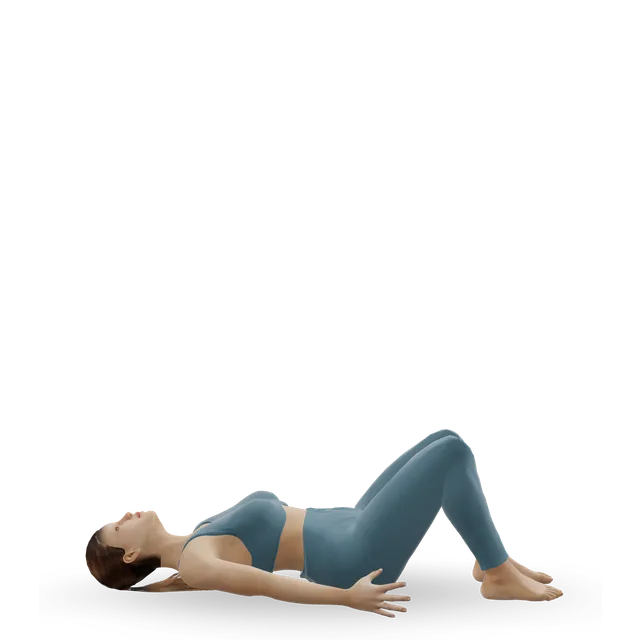
Supine heel slide demonstrated on the 3D figure3D demoSupine heel slideBeginner · No equipment

10 slow reps each side, once or twice a day, bending only to just before any pinch · The move page's dose (an editorial starting point); the pinch limit is our hip pain when sitting guide's

Harder: Hip windshield wipers

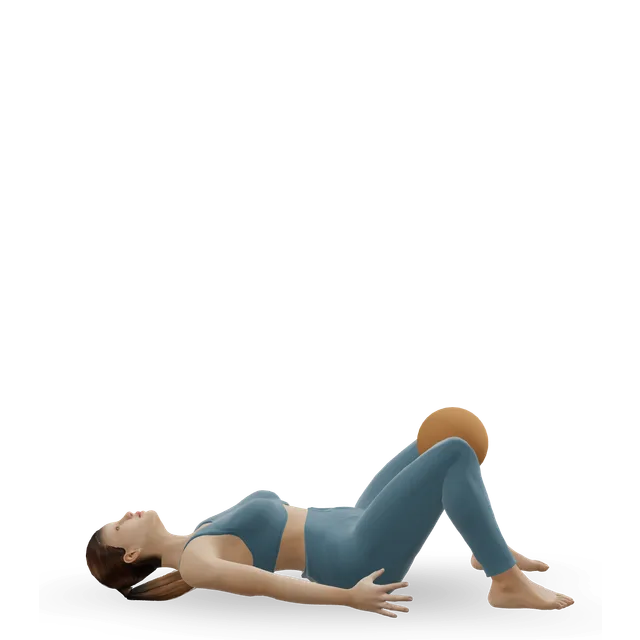
Lying adductor ball squeeze demonstrated on the 3D figure3D demoLying adductor ball squeezeBeginner · Other / check instructions

5 to 10 holds of 5 to 10 s, a ball or cushion between the knees · The hold is an Oxford NHS impingement booklet's (5 to 10 s); the number of holds is editorial

Harder: Copenhagen plank

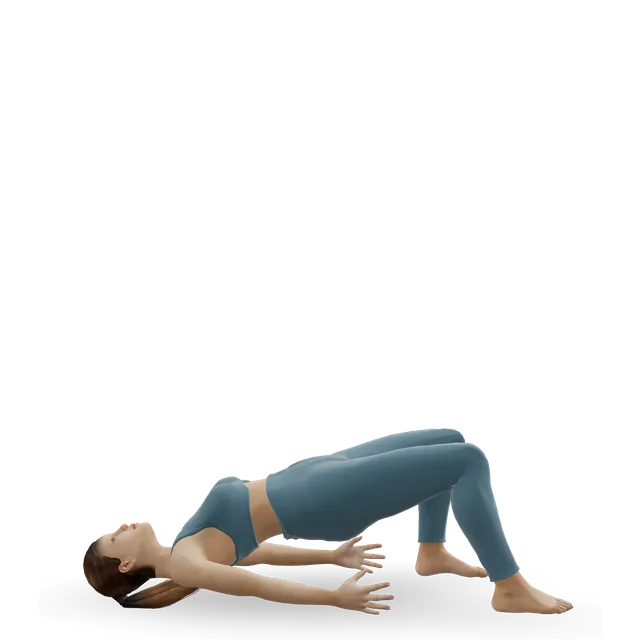
Glute bridge demonstrated on the 3D figure3D demoGlute bridgeBeginner · No equipment

Hold 5 s at the top, 8 to 10 reps, building towards 2 to 3 sets of 10 · The same booklet's bridge hold and its 2 to 3 sets of 10

Easier: Pelvic tilt into bridge · Harder: Single-leg glute bridge

Treadmill walking demonstrated on the 3D figure3D demoTreadmill walkingBeginner · Cardio machine

A few minutes at each break, building to 10 to 20 minutes most days · Editorial, as in our hip pain when sitting guide; the Oxford booklet suggests building towards 150 minutes a week in 10-minute spells

Harder: Treadmill jogging

Move on when: You can sit for your usual spell with breaks, any ache settles within about an hour of getting up, and you're no worse the next morning (the sitting rule).

Follow along: a timer, a cue and the next move, one step at a time.
Stage 2

Build: hip strength in and out of the bend, and the inner thigh

About weeks 2 to 6, 2 or 3 days a week, plus walking and daily relaxation.

Staggered-stance bridge (offset bridge) demonstrated on the 3D figure3D demoStaggered-stance bridge (offset bridge)Beginner · No equipment

5 slow reps each side once a day, building to 2 sets of 5 to 10 at a somewhat hard effort · The move page's dose, from the LEAP trial programme

Easier: Pelvic tilt into bridge · Harder: Single-leg glute bridge

Sit to stand from a chair demonstrated on the 3D figure3D demoSit to stand from a chairBeginner · A bench or box

A higher seat first, touching the seat without sitting down: start with 2 to 3 reps, building to 2 sets of 15 · NHS inform's hip exercise sit to stand and its maximum of 2 sets of 15

Easier: Sit to stand, pushing on the thighs · Harder: Bodyweight squat

Hip windshield wipers demonstrated on the 3D figure3D demoHip windshield wipersBeginner · No equipment

10 slow passes side to side, 2 rounds, stopping before any pinch · The move page's dose (an editorial starting point); check with your surgeon after a hip replacement, as the move page says

Easier: Supine heel slide · Harder: 90/90 switch

Lying adductor ball squeeze demonstrated on the 3D figure3D demoLying adductor ball squeezeBeginner · Other / check instructions

Building towards 10 holds of 30 s · The first step of the adductor trial programme: 30 s, 10 times

Harder: Copenhagen plank

Standing wall-press hip abduction demonstrated on the 3D figure3D demoStanding wall-press hip abductionBeginner · A wall

3 to 5 holds of 5 to 15 s each side, twice a day · The move page's dose, from the LEAP trial's standing hold

Easier: Supine isometric hip abduction (belt press) · Harder: Lateral band walk

Dead bug heel taps demonstrated on the 3D figure3D demoDead bug heel tapsBeginner · No equipment

2 sets of 6 to 8 each side, knees bent · Editorial, as in our hip impingement guide; the UK trial physiotherapy programme works the tummy muscles

Easier: Bent-knee fall-out · Harder: Forearm plank

Move on when: Every set stays within the pain rule, getting up from an ordinary chair is comfortable, and a long sit, such as a film or a meeting, with one or two breaks leaves you no worse the next morning.

Follow along: a timer, a cue and the next move, one step at a time.
Stage 3

Strengthen, and sit, drive and ride as long as you need to

From about week 6, then twice a week for the long term; give hip-related pain at least 3 months of exercise, as an international consensus recommends. Sitting time, drives and rides come back by the written steps below. How they come back is our suggestion.

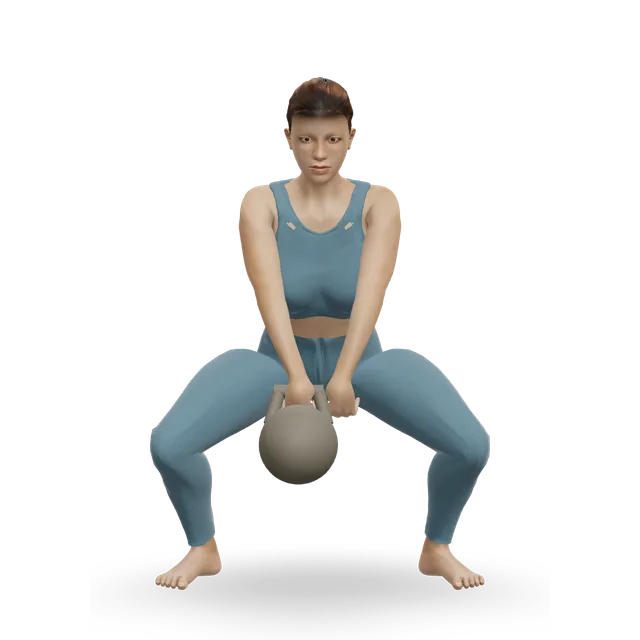
Dumbbell goblet squat demonstrated on the 3D figure3D demoDumbbell goblet squatIntermediate · A dumbbell

3 sets of 8 to 10, to a box or chair set above the depth where it pinches · Editorial, as in our hip pain when sitting and hip impingement guides

Easier: Bodyweight squat · Harder: Barbell front squat

Split squat demonstrated on the 3D figure3D demoSplit squatIntermediate · No equipment

3 sets of 6 to 10 each side · Editorial, as in our hip pain when sitting guide. Pad the back knee

Easier: Bodyweight squat · Harder: Reverse lunge

Dumbbell Romanian deadlift demonstrated on the 3D figure3D demoDumbbell Romanian deadliftIntermediate · A dumbbell

3 sets of 8 to 10 · Editorial, as in our hip pain when sitting guide

Easier: Hip-hinge practice · Harder: Single-leg Romanian deadlift

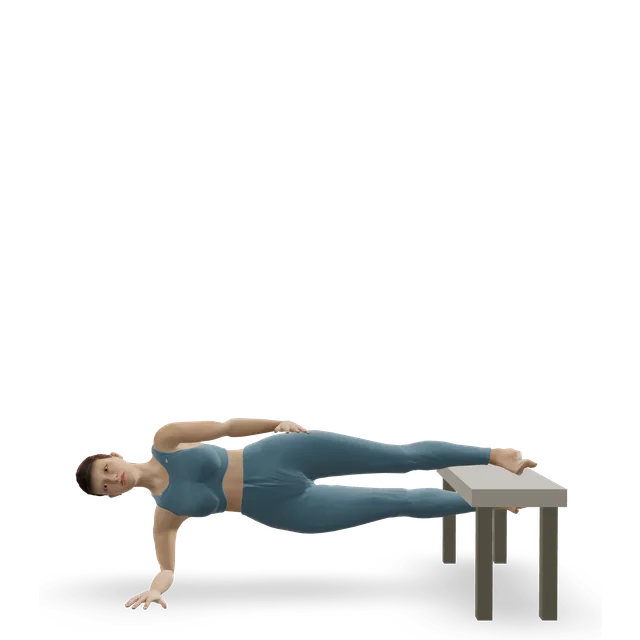
Copenhagen plank demonstrated on the 3D figure3D demoCopenhagen plankAdvanced · A bench or box

Short lever (knee on the bench) first, a few slow reps a side, building over the weeks · Editorial. Leave it out during acute groin pain, as the move page says; the footballers' programme built up gradually over the preseason

Easier: Hip adduction machine

Lateral band walk demonstrated on the 3D figure3D demoLateral band walkBeginner · A band

3 sets of 10 to 15 steps each way · Editorial, as in our hip impingement guide

Easier: Hip abduction machine · Harder: Lateral band walk, band at the feet

Single-leg glute bridge demonstrated on the 3D figure3D demoSingle-leg glute bridgeIntermediate · No equipment

2 to 3 sets of 8 each side · Editorial, as in our hip pain when sitting guide

Easier: Glute bridge · Harder: Barbell hip thrust

Move on when: Our suggestion: add sitting time, drives and rides by the written steps below; floor and cross-legged sitting come back last, if you want them, and only short of any pinch. Keep two strength sessions a week, and if it flares, go back to shorter spells and the stage 1 moves for a few days rather than stopping.

Follow along: a timer, a cue and the next move, one step at a time.

What to change for now

Chairs, cushions, breaks and the toilet (written steps)

Our 3D figure can't show these. They come from the NHS, an Oxford NHS impingement booklet, the HSE, Prostate Cancer UK and the urology guidelines; where a step is our suggestion, it says so. None has been tested in a trial for groin pain when sitting.

  • 1. The chair: not low; hips a little higher than your knees on a higher or firmer chair; feet flat, knees a little apart and legs uncrossed; your thighs supported, with a small gap behind the knees (the NHS, the Oxford booklet and the HSE).
  • 2. Breaks: stand, walk a few steps or do a few standing pelvic tilts every 30 to 45 minutes while it's sore (our suggestion); the HSE prefers 5 to 10 minutes every hour to longer, rarer breaks, and Prostate Cancer UK suggests walking around every 30 minutes.
  • 3. Pain between the legs: a cushion that takes pressure off the middle, such as one with a cut-out or U shape, or two folded towels under the thighs with a gap between them (our suggestion, from the guidelines' observation that a toilet seat is easier than a chair), or a soft or inflatable cushion in a flare-up (Prostate Cancer UK).
  • 4. Clothes: loose, cotton underwear and no tight trousers (the NHS).
  • 5. The tailbone: a wedge or a cushion with a gap at the back, not a ring (doughnut).
  • 6. The toilet: fibre and water to avoid constipation, and no straining (the NHS).

Sources 1, 2, 44, 45, 46, 12, 13, 11, 18, 48, 31

The car, the bike and getting your sitting time back (written steps)

Where a step is our suggestion, it says so.

  • 1. The car: raise the seat or use a firm cushion, sit down first and swing both legs in together (Arthritis UK), and stop for a short walk on long drives (our suggestion; an NHS leaflet names long car journeys as a trigger for impingement).
  • 2. Cycling: stand on the pedals for about 10 seconds every 10 minutes; set the bars level with or above the saddle; keep the saddle level or very slightly nose-down, never nose-up; try a saddle without a nose or with a cut-out; wear padded shorts without underwear for chafing (Cycling UK, the surveys and the pressure studies). The NHS says try a different saddle with pudendal neuralgia.
  • 3. A pinch at the front of the hip on the bike: raise the saddle or ride more upright (the Oxford booklet).
  • 4. Sitting time comes back: find how long you can sit before the ache builds, get up just before that, and add 5 to 10 minutes when you've been no worse the next morning for 3 or 4 days (our suggestion, as our hip pain when sitting guide paces it).

Sources 78, 4, 76, 77, 69, 75, 73, 2, 11

Positions to swap, and why

Habit or positionWhy it mattersInstead
Low chairs, deep sofas and low car seatsThe NHS says low chairs can put extra pressure on your hips.A higher, firmer seat, or a cushion, with your hips a little above your knees.
Sitting cross-legged, or on the floorIt bends the hip, turns it in and draws the knee across, the position UK hip physiotherapists name as a trigger.Feet flat and knees a little apart; gentle hip rotation short of any pinch.Try: Hip windshield wipers
Sitting for an hour or more without getting upThe NHS says don't sit for long periods with pudendal neuralgia, and the HSE prefers short, frequent breaks.Up every 30 to 45 minutes, with a few standing pelvic tilts.Try: Standing pelvic tilt
A ring (doughnut) cushion for tailbone painIt can press on the tailbone.A wedge or a cushion with a gap at the back.
A hard, narrow saddle with the nose up, seated for the whole rideA saddle with a nose put more than twice the pressure between the legs, and Cycling UK's physiotherapist says never nose up.A level saddle without a nose or with a cut-out, and standing every 10 minutes.
Extra pelvic floor squeezes (Kegels) with pelvic painThe muscles may need to relax instead; a US guideline says strengthening should be avoided in bladder pain with a tender pelvic floor.Relaxation breathing, and a pelvic health physiotherapist's check.Try: Pelvic floor relaxation (reverse Kegel)
Straining on the toiletSpecialists think straining may stretch the pudendal nerve, and constipation can make bladder pain worse.Fibre, water and time.
Tight underwear or trousersThe NHS says don't wear them with pudendal neuralgia.Loose, cotton underwear.
Stretching into a groin pinch, such as pigeon posePainful end-of-range stretches are left out of impingement programmes.Gentle hip rotation short of the pinch.Try: Hip windshield wipers
Lying low and resting for weeksArthritis UK says too much rest can increase stiffness and weaken the muscles.Short walks and the stage 1 moves.Try: Treadmill walking
Sitting it out with a groin lumpHernias are common, and femoral hernias need hospital treatment.See a GP; the warning signs say when it's urgent.

Routines to follow

More moves for this area

Questions people ask

Why does my groin hurt when I sit?

Sitting bends the hip and presses on the area between your legs. A deep pinch in the groin crease, worse in low chairs, cross-legged or in the car, usually comes from the hip joint. A burning or numb pain between the legs, easier standing, can come from a nerve or the pelvic floor.

Is groin pain when sitting a hernia?

Sitting isn't one of the hernia signs the NHS or the international hernia guideline lists, and hernia pain is usually worse when you're active than at rest. The usual clue is a lump that gets bigger when you cough and smaller when you lie down. Hernias are common, though, so see a GP about any lump, and see the warning signs if it hurts.

Why does my groin hurt when I sit, as a man?

Most often the hip joint or the groin muscles, as in women. Pain between the legs, in the testicles or the penis can be chronic prostatitis, which about 8 in 100 men have at some point and which long sitting can make worse. Sudden, severe testicle pain is a 999 call.

Why does my groin hurt when I sit, as a woman?

Often the hip joint. Between the legs it can be vulval pain, a Bartholin's cyst beside the vaginal opening, which can hurt when you sit, or a tight pelvic floor. Femoral hernias are commoner in women over 50, so a small lump at the top of the thigh needs a GP.

Why does it hurt to sit cross-legged?

Sitting cross-legged bends the hip, turns it in and draws the knee across, the position that brings on hip impingement pain. UK hip physiotherapists advise avoiding it while it's sore. Sit with your feet flat and knees a little apart for now.

Why does my groin hurt when I stand up after sitting?

Stiffness after rest that eases as you walk is typical of hip arthritis, especially from about 45. Getting up more often, a higher chair and the strengthening in the plan usually help.

Can sitting all day cause groin pain?

Long spells of sitting can aggravate an irritable hip and pain between the legs, though sitting at work hasn't been linked with hip arthritis. Short, frequent breaks help more than long, rare ones.

Could it be pudendal neuralgia?

Possibly, if the pain is burning, shooting or numb in the genitals, the area between the legs or around the anus, worse when you sit and easier standing, lying or on a toilet seat. It's uncommon and diagnosed by a doctor from the pattern and an examination, not from a scan alone. See a GP.

What cushion or chair helps?

For the hip, a higher, firmer seat with your hips a little above your knees. For pain between the legs, we suggest a cushion that frees the middle, such as a cut-out or U-shaped one, because specialists find a toilet seat easier than a chair; Prostate Cancer UK suggests a soft or inflatable cushion in a flare-up. No cushion has been tested in a trial, and for the tailbone a wedge is better than a ring.

Can cycling cause groin pain or numbness?

Numbness between the legs is common in riders and usually clears soon after a ride. Standing on the pedals every 10 minutes, raising the bars and a saddle without a nose or with a cut-out reduce the pressure. Numbness that doesn't clear needs checking urgently.

What exercises help groin pain when sitting?

Gentle hip movement short of any pinch, inner-thigh squeezes and bridges first, then hip and leg strength, giving hip-related pain at least 3 months. With pain between the legs, relaxing the pelvic floor helps more than squeezing it.

When should I see a doctor?

Call 999 for numbness around your genitals or bottom with bladder, bowel or sexual changes, sudden severe testicle pain, a femoral hernia with severe tummy pain or being sick, or if you can't put weight on the leg after a fall. Get help the same day for any other painful hernia, a fever with burning when you pee, or one-sided tummy pain if you might be pregnant. See a GP for a groin lump or pain that isn't improving. In the US, call 911 where this page says 999.

Related exercise guides

Other pain guides

Sources

  1. NHS · Hip pain in adults
  2. Oxford University Hospitals NHS Foundation Trust · Femoroacetabular impingement syndrome: physiotherapy advice and management (booklet, 2025)
  3. Clohisy 2009 · The symptoms of hip impingement in 51 people waiting for surgery (case series, Clin Orthop Relat Res)
  4. Essex Partnership University NHS Foundation Trust · Femoral acetabular impingement (patient leaflet, 2025)
  5. UK Hip Physiotherapy Network, British Hip Society · Physiotherapy as conservative treatment for impingement (guidance for NHS physiotherapists, 2024)
  6. Reiman 2020 · Classifying and diagnosing hip-related pain in young and middle-aged active adults (Zurich 2018 consensus, Br J Sports Med)
  7. NICE NG226 · Osteoarthritis in over 16s: diagnosis and management (2022)
  8. Weir 2015 · The Doha agreement on terms and definitions in groin pain in athletes (consensus, Br J Sports Med)
  9. Hölmich 2007 · Long-standing groin pain in 207 athletes, by cause (clinic study, Br J Sports Med)
  10. Taylor 2018 · 100 athletes with groin pain sorted by the Doha agreement (clinic study, Clin J Sport Med)
  11. NHS · Pudendal neuralgia
  12. European Association of Urology · Guidelines on chronic pelvic pain (2026)
  13. American Urological Association · Male chronic pelvic pain: chronic prostatitis and chronic scrotal pain (guideline, 2025)
  14. Labat 2008 · The Nantes criteria for diagnosing pudendal neuralgia (working party consensus, Neurourol Urodyn)
  15. Krieger 2008 · How common prostatitis is: 5 surveys, 10,617 men (review, Int J Antimicrob Agents)
  16. Torosis 2024 · Treating a tight (high-tone) pelvic floor (expert Delphi consensus, Obstet Gynecol)
  17. Harlow 2003 · Long-lasting vulval pain in 4,915 women in Boston (population survey, J Am Med Womens Assoc)
  18. NHS · Vulvodynia
  19. NHS · Bartholin's cyst
  20. NHS · Bladder pain syndrome (interstitial cystitis)
  21. NHS · Hernia
  22. NHS · Femoral hernia
  23. HerniaSurge Group 2018 · International guidelines for groin hernia management (guideline, Hernia)
  24. Page 2002 · Pain at rest and on moving in 323 people with an inguinal hernia (study, Br J Surg)
  25. Chung 2011 · Waiting or surgery for a painless inguinal hernia in 160 men aged 55 or more, 7.5 years on (RCT, Br J Surg)
  26. NHS · Testicle pain
  27. Paick 2019 · Varicocele and testicular pain (review, World J Mens Health)
  28. Cesmebasi 2015 · Genitofemoral neuralgia (review, Clin Anat)
  29. Loos 2008 · Long-lasting pain after a bikini-line (Pfannenstiel) incision in 690 women (cohort, Obstet Gynecol)
  30. Yukawa 1997 · Groin pain with a lower lumbar disc herniation in 512 people (clinical study, Spine)
  31. NHS · Tailbone (coccyx) pain
  32. Heerey 2018 · Hip scan findings in people with and without hip pain: 29 studies (systematic review and meta-analysis, Br J Sports Med)
  33. Register 2012 · MRI of 45 hips without symptoms (imaging study, Am J Sports Med)
  34. Frank 2015 · Impingement shapes in 2,114 hips without symptoms (systematic review, Arthroscopy)
  35. Wissing 2025 · Nerve tests in chronic pelvic pain: 14 studies, 432 people (systematic review, Pain Pract)
  36. Gaeta 2026 · MRI in 81 people with long-lasting pudendal neuralgia (imaging study, Diagnostics)
  37. Robinson 2013 · Ultrasound, CT and other imaging for a hidden inguinal hernia (meta-analysis, Surg Endosc)
  38. Byrd 2004 · Examination, MRI, MR arthrography and a numbing hip injection in 40 people (diagnostic study, Am J Sports Med)
  39. Krych 2016 · Relief from a numbing hip injection and the result of keyhole surgery in 96 people (cohort, Arthroscopy)
  40. NHS inform · Hip problems
  41. van Berkel 2022 · Ten-year course of hip pain in 495 people with suspected early hip osteoarthritis (cohort, Fam Pract)
  42. Hölmich 1999 · Active training against passive physiotherapy for long-standing groin pain in 68 athletes (RCT, Lancet)
  43. NHS inform · Osteoarthritis of the hip
  44. Health and Safety Executive · Good posture when using display screen equipment
  45. Health and Safety Executive · Display screen equipment: work routine and breaks
  46. Prostate Cancer UK · Prostatitis treatments (2024)
  47. Jahn 2024 · Work exposures and hip osteoarthritis: 24 articles (systematic review and meta-analysis, Scand J Work Environ Health)
  48. Lirette 2014 · Coccydynia: anatomy, causes and treatment of tailbone pain (review, Ochsner J)
  49. Cambridge University Hospitals NHS Foundation Trust · Seating and ergonomics (occupational therapy leaflet for back pain, 2024)
  50. Kemp 2020 · Physiotherapist-led treatment for hip-related pain in young and middle-aged active adults (Zurich 2018 consensus, Br J Sports Med)
  51. Wall 2016 · Personalised Hip Therapy: the physiotherapy programme of the UK FASHIoN trial (protocol, Br J Sports Med)
  52. Griffin 2018 · Hip arthroscopy against personalised hip therapy for impingement: UK FASHIoN (RCT of 348, Lancet)
  53. Palmer 2019 · Hip arthroscopy against physiotherapy and activity modification for impingement: FAIT (RCT of 222, BMJ)
  54. Ramadanov 2025 · Non-surgical care against keyhole surgery for hip impingement: 21 trials (meta-analysis, Bone Jt Open)
  55. Palmer 2025 · Keyhole surgery or physiotherapy for hip impingement: the FAIT trial at 38 months (RCT follow-up, Br J Sports Med)
  56. Hall 2026 · Exercise for osteoarthritis of the hip: 18 studies, 1,368 people (Cochrane review)
  57. Hölmich 2015 · Groin injuries in athletes, with the active training programme (doctoral thesis summary, Dan Med J)
  58. Harøy 2019 · The Adductor Strengthening Programme and groin problems in 652 footballers (cluster RCT, Br J Sports Med)
  59. FitzGerald 2009 · Pelvic floor physiotherapy against massage in 47 men and women with pelvic pain (feasibility RCT, J Urol)
  60. FitzGerald 2012 · Pelvic floor physiotherapy against massage in 81 women with bladder pain (RCT, J Urol)
  61. American Urological Association · Interstitial cystitis and bladder pain syndrome (guideline, J Urol 2022)
  62. NICE CG173 · Neuropathic pain in adults: pharmacological management (2013, updated 2020)
  63. Robert 2005 · Surgery to free the pudendal nerve, against no surgery, in 32 people (RCT, Eur Urol)
  64. Andiman 2025 · Treatments for pudendal neuralgia: 37 studies (systematic review and meta-analysis, Int Urogynecol J)
  65. Levesque 2022 · Recommendations on pudendal nerve entrapment (formal expert consensus, Eur J Pain)
  66. Franco 2018 · Treatments without medicines for chronic prostatitis: 38 trials, 3,290 men (Cochrane review)
  67. NHS · Inguinal hernia repair
  68. Franneby 2006 · Long-term pain after groin hernia surgery in 2,456 people (register study, Ann Surg)
  69. Awad 2018 · Cycling and sexual and urinary health in 3,932 men (cross-sectional study, J Urol)
  70. Gaither 2018 · Cycling and sexual and urinary health in 3,118 women (cross-sectional study, J Sex Med)
  71. Leibovitch 2005 · Cycling and urogenital problems: 62 articles (review, Eur Urol)
  72. Andersen 1997 · Numbness and erection problems after a 540 km ride in 160 men (survey, Acta Neurol Scand)
  73. Lowe 2004 · Saddle designs and pressure between the legs in 33 police cyclists (lab study, Med Sci Sports Exerc)
  74. Schrader 2008 · Six months on saddles without a nose in 90 police cyclists (study, J Sex Med)
  75. Litwinowicz 2021 · Ways to reduce saddle pressure on the perineum in healthy men: 22 studies (systematic review and meta-analysis, Sports Medicine)
  76. Cycling UK · Ask the expert: saddle sores, with physiotherapist Phil Burt (2020)
  77. Cycling UK · Guide to saddle comfort for women
  78. Arthritis UK · Hip pain
  79. NHS inform · Exercises for hip problems (including how to tell if you're exercising at the right level)
  80. Mellor 2016 · The LEAP trial protocol for outer hip tendon pain, source of the 5 out of 10 pain rule (trial protocol, BMC Musculoskelet Disord)
  81. Smith 2017 · Should exercises be painful in long-lasting muscle and joint pain? (meta-analysis of 7 trials, Br J Sports Med)
  82. Arthritis UK · Osteoarthritis
  83. NHS · Prostatitis
  84. NHS · Back pain
  85. NHS · Broken hip
  86. NHS · Pelvic pain
  87. NHS · Ectopic pregnancy (past its review date: reviewed August 2022, review due August 2025)
  88. NHS · Kidney stones
  89. NHS · Kidney infection
  90. NHS · Limping in children
  91. NHS · Hip pain in children (irritable hip)
  92. Robertson 2017 · Femoral neck stress fractures in sport (review, Sports Med Int Open)
  93. NHS · Side effects of alendronic acid
  94. Medicines and Healthcare products Regulatory Agency · Bisphosphonates: atypical femoral fractures (Drug Safety Update)
  95. NHS · Urinary tract infections (UTIs)
  96. NHS · Swollen glands (past its review date: reviewed September 2023, review due September 2026)
  97. NHS · Endometriosis
  98. NHS · Pelvic pain in pregnancy (past its review date: reviewed December 2022, review due December 2025)

Exercise education, not a diagnosis or treatment plan. It is written from the guidelines and studies listed above; review by a clinician is pending. If your pain follows an injury, is severe, is getting worse, or comes with any warning sign listed on this page, get it assessed. Health disclaimer.