Pilates on your period is fine
If it feels right, including on the first day. The NHS suggests gentle exercise for period pain, and on average your period makes only a trivial difference to how you perform.
Pilates guide
Gentle exercise can ease period pain, and the NHS suggests it alongside heat and painkillers. In small trials, mostly in young women in South Korea, Turkey and India, women who did mat or reformer Pilates twice a week for 6 to 12 weeks had less period pain than women who didn't exercise. The trials were small and the women knew which group they were in, so how much Pilates helps is uncertain.
This guide covers Pilates on your period (yes, including the first day, if it feels right), painful and heavy days, the moves to change, the upside-down question, and how Pilates compares with painkillers and yoga. It ends with a 25-minute class to do twice a week all month, with a short version for painful days, and the signs that period pain needs a GP, NHS 111 or 999.
If it feels right, including on the first day. The NHS suggests gentle exercise for period pain, and on average your period makes only a trivial difference to how you perform.
In small trials, mostly in students, women who did Pilates twice a week for 6 to 12 weeks had less period pain than women who didn't exercise. The trials were small, the women knew which group they were in, and none compared Pilates with another class, so the size of the effect is uncertain.
A Cochrane review found exercise may reduce period pain by about 25 points on a 100-point scale, from low-quality evidence. The trials used exercise about three times a week through the whole month, and relief showed after 4 to 8 weeks.
Use Pilates alongside them, not instead.
No study has tested it. The worry is blood flowing backwards, but that happens around a period in about 90% of women with open fallopian tubes anyway.
See a GP if period pain stops your usual activities or your periods become more painful, heavier or irregular: it can be endometriosis. Call 999 for sudden, severe tummy pain with dizziness or fainting if you could be pregnant.
The NHS describes pain in your tummy at the start of your period or just before it, cramps that can spread to your back and thighs, and "a sharp pain or a dull ache". It usually lasts up to 3 days. "Period pain happens when your womb tightens during your period. It's often a normal part of the menstrual cycle."
Source 1
The NHS lists endometriosis, adenomyosis, fibroids and pelvic inflammatory disease as causes of painful periods, and an intrauterine device (IUD) can cause period pain in its first 3 to 6 months. NICE (the National Institute for Health and Care Excellence) asks doctors to suspect endometriosis with "period-related pain (dysmenorrhoea) affecting daily activities and quality of life". Endometriosis UK puts the average time from first seeing a GP to a diagnosis at over 9 years, and a 2025 review found doctors were the main cause of the delay.
In 38 studies of 21,573 young women under 25, 71% had period pain, 1 in 5 had missed school or university because of it, and 41% said it affected their concentration or performance.
Source 17
The NHS signs of heavy periods include changing a pad or tampon every 1 to 2 hours, periods lasting more than 7 days, clots larger than about 2.5 cm, avoiding things like exercise because of your period, and feeling tired or short of breath a lot. Heavy periods were reported by 36% of London Marathon runners who answered a survey, and in 1,042 active women, heavy periods went with past iron deficiency. NICE asks doctors to offer a blood count to everyone with heavy periods.
The exercise trials tested regular exercise through the month, which a weekly or twice-weekly Pilates class gives you. Slow breathing and relaxation ranked well in a network of 29 exercise trials, and Pilates starts with breathing. Gentle rounding, side bending and back extension often feel good on a painful day, though no trial has tested single moves (our reading).
Most were students or young women with ordinary period pain. Women with endometriosis, fibroids, very heavy bleeding or anaemia weren't studied, so the results may not apply if your pain has another cause.
Small trials found less pain with Pilates; how much less is uncertain. Painkillers, the pill and heat have stronger evidence.
In South Korea, 30 women aged 19 to 39 did mat Pilates for 50 minutes twice a week for 12 weeks, or nothing. Pain fell from 7.6 to 2.4 on a 10 cm scale with Pilates and stayed about the same without, though the Pilates group started with more pain and painkillers were allowed. In Turkey, 45 women did reformer Pilates, mat Pilates or nothing, 60 minutes twice a week for 12 weeks. In India, Pilates beat gym ball exercises in 30 women, and in 28 schoolgirls Pilates and yoga both helped more than nothing. A Korean trial of 39 women found Pilates eased pain more than treadmill running.
Every trial points the same way, but they were small, the women knew which group they were in, and none compared Pilates with another class to rule out the effect of attention. Treat the size of the effect as uncertain.
In a Turkish trial of online Pilates in 22 women, menstrual symptom scores improved, but the summary reports no pain result although pain was a planned main measure, and a published letter criticised the lack of a comparison class and of painkiller records. The 45-woman trial's registry entry gives 56 women and 14 weeks, against 45 women and 12 weeks in the paper. A 2025 review pooled just 2 Pilates trials of 48 women, too few to give a reliable size. At least five more registered Pilates trials have no published results.
In the 45-woman trial, pain fell clearly with reformer Pilates (from 6.0 to 2.3) but not clearly with mat Pilates (5.9 to 4.9, p = 0.051), and the reformer beat the mat for pain and sleep. That's one small trial whose registry entry doesn't match the paper, so it doesn't show the reformer is better. Mat Pilates eased pain in other trials.
Source 4
In 24 women in India, chair aerobics 4 days a week for 8 weeks helped period symptoms more than Pilates. In schoolgirls, Pilates and yoga helped about equally. No trial shows Pilates beats other exercise.
The Cochrane review (12 trials, 854 women) found exercise may reduce pain by about 25 points on a 100-point scale, from low-quality evidence, at "about 45 to 60 minutes each time, three times per week or more, regardless of intensity". It included no Pilates trial. In networks of 29 and 49 trials, every type of exercise helped by about 8 weeks, and relaxation ranked best, with the fewest dropouts. Later reviews agree, at low to very low certainty.
In 80 trials, anti-inflammatory painkillers gave good relief to 45% to 53% of women, against 18% with a dummy pill, with more side effects. The combined pill reduced period pain in high-quality trials. In 57 trials, heat beat no treatment and worked about as well as anti-inflammatories, with fewer side effects. A TENS machine (mild electrical pulses on the skin) helped a little in low-certainty trials. Only one very low-quality trial has compared exercise with a painkiller.
Yoga reduced period pain in 4 small trials, and in 44 women it eased pain about as much as aerobic exercise. Our yoga for period pain guide covers it.
The NHS suggests gentle exercise for period pain, and a review of 78 studies found performance "might be trivially reduced" around your period, with advice to go by how you feel. US gynaecologists say "Exercising most days of the week can make you feel better". Some trials told women not to exercise during their period, but that was a trial rule, not a finding of harm.
If day 1 is your heaviest or most painful, choose the painful-day moves below or a shorter class, and use whichever period product you trust (our suggestion). Heavy periods can leave you tired or short of breath, so go gently on those days.
Source 18
Both are fine if you feel well. Skip hot Pilates on a heavy or faint day and drink plenty (our suggestion). Reformer Pilates eased pain in one trial; it isn't needed.
Lie on your side or sit down, and skip standing balances that day (our suggestion). If heavy periods often leave you tired or breathless, ask a GP about a blood test for iron deficiency anaemia; our exercise with anaemia guide covers training with it.
The Pilates moves that take your legs over your head (the roll-over, jack knife, control balance and boomerang) are the nearest thing to inversions. Our searches found no study that tested going upside down during a period. In women having keyhole surgery around their periods, blood was found in the pelvis in 90% of those with open fallopian tubes and 15% of those with blocked tubes, so backward flow happens anyway. If these moves feel fine, carrying on is your choice; if they don't, skip them. Their own cautions for the neck, the eyes and blood pressure apply on any day.
Do these about twice a week all month. Lateral breathing: "5 to 8 breaths at the start of every session" (the move page's dose). Cat-cow: "8 waves, slower than feels natural" (the move page's dose). Knee fold: "2 sets of 5 to 10 each side, every other day" (the move page's dose). Hundred: "50 beats to start, building to 100 (the classical count)" (the move page's dose); rest your head if your neck aches. Single-leg stretch: "6 to 10 each side" (the move page's dose). Double-leg stretch: "6 to 10 reps" (the move page's dose). Pelvic tilt into bridge: 8 to 10 slow lifts (our editorial starting point, for the trials' bridge). Single-leg circle: "5 circles each direction, each leg" (the move page's dose). Side kick: "8 to 10 each side" (the move page's dose). Swan: "5 to 6 reps" (the move page's dose). Swimming: 1 or 2 sets of 20 seconds (adapted from the move page's dose). Spine stretch forward: "3 to 5 reps" (the move page's dose). Mermaid: "3 each direction, each side" (the move page's dose).
 3D demoLateral breathing (Pilates breathing)Beginner · No equipment
 3D demoCat-cowBeginner · No equipment
 3D demoKnee foldBeginner · No equipment
 3D demoHundred (Pilates)Intermediate · No equipment
 3D demoSingle-leg stretch (Pilates one leg stretch)Intermediate · No equipment
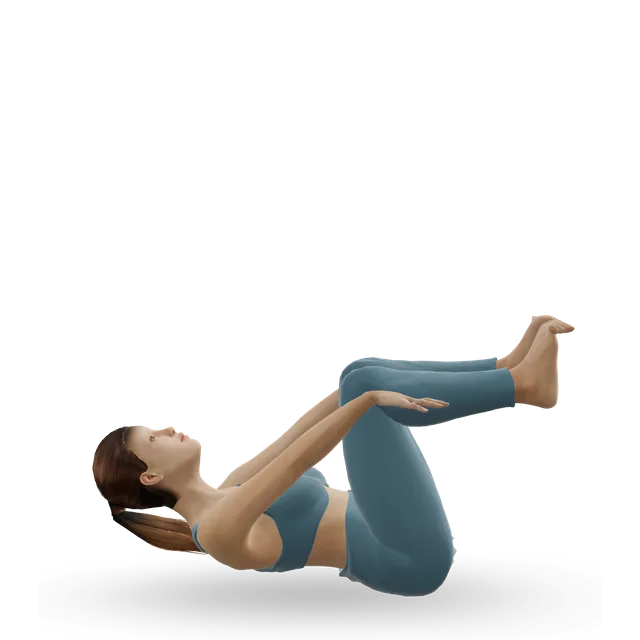 3D demoDouble-leg stretch (Pilates)Intermediate · No equipment
 3D demoPelvic tilt into bridgeBeginner · No equipment
 3D demoSingle-leg circle (Pilates one leg circle)Beginner · No equipment
 3D demoSide kick (Pilates side kick series)Beginner · No equipment
 3D demoSwan (Pilates swan dive)Intermediate · No equipment
 3D demoSwimming (Pilates)Intermediate · No equipment
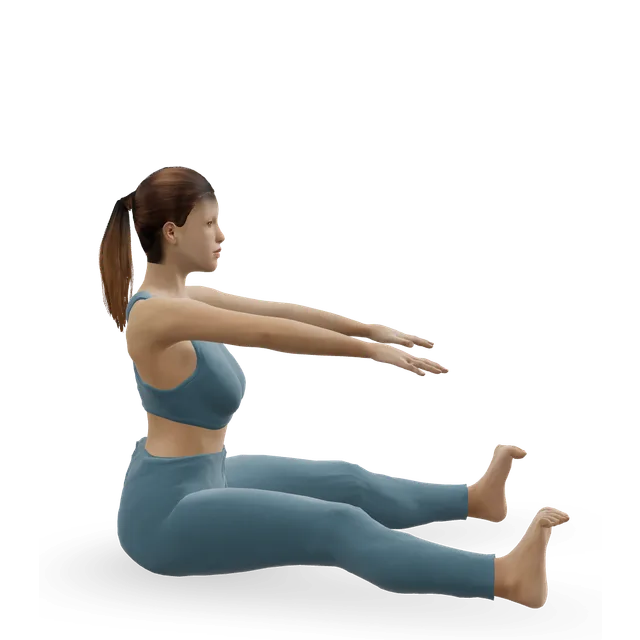 3D demoSpine stretch forward (Pilates spine stretch)Beginner · No equipment
 3D demoMermaid (Pilates seated side bend)Beginner · No equipment
No trial has tested a single session during cramps, so use these for comfort, with a heat pad on your tummy as the NHS suggests. Knees to chest: "Hold 20 to 30 seconds, 2 to 4 times" (the move page's dose). Lying twist: 30 to 45 seconds each side (our editorial starting point). Child's pose: "Hold 1 to 3 minutes, breathing into the back ribs" (the move page's dose), knees wide if your tummy feels full. Reclining bound angle: "Rest 2 to 5 minutes with a support under each thigh" (the move page's dose). Pelvic floor relaxation: "5 to 10 slow breaths, 1 to 3 times a day" (the move page's dose). Slow breathing: "At least 5 minutes" (the move page's dose). An easy 10 to 20 minute walk (our editorial starting point).
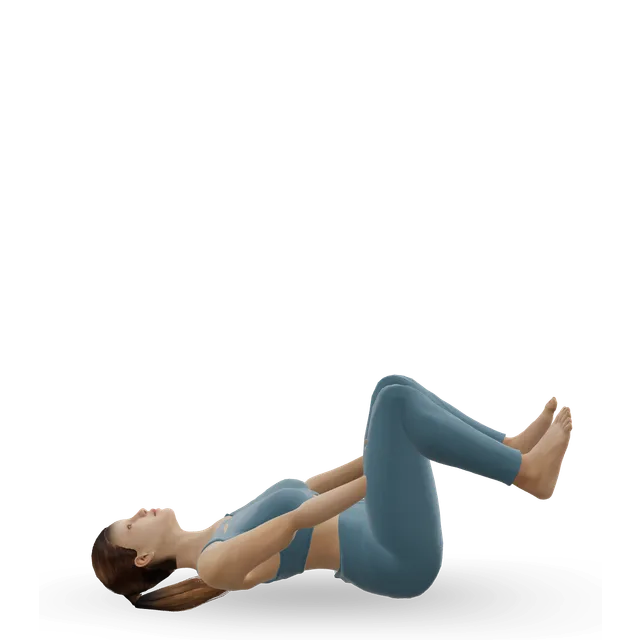 3D demoDouble knee-to-chest stretchBeginner · No equipment
 3D demoSupine spinal twist (Supta Matsyendrasana)Beginner · No equipment
 3D demoChild's Pose (Balasana)Beginner · No equipment
 3D demoReclining bound angle pose (Supta Baddha Konasana)Beginner · Firm cushion
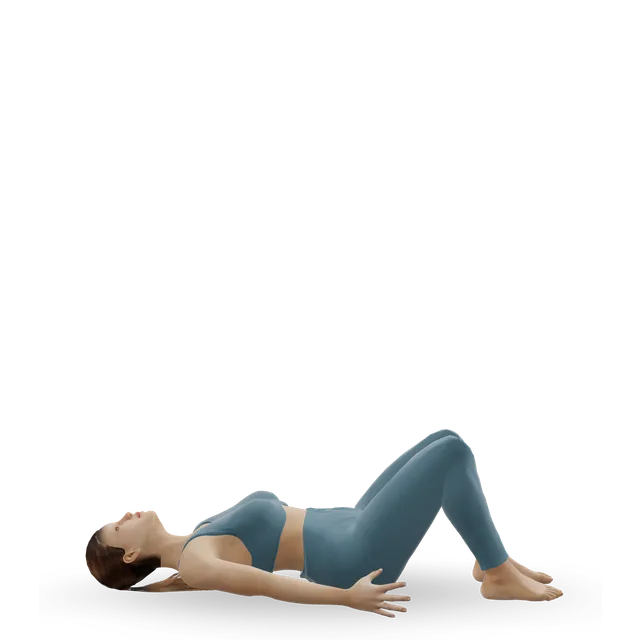 3D demoPelvic floor relaxation (reverse Kegel)Beginner · No equipment
 3D demoSlow breathing (6 breaths a minute)Beginner · No equipment
 3D demoTreadmill walkingBeginner · Cardio machine
None of these is harmful because of your period as far as anyone knows. These are comfort changes (our suggestions).
The roll-up, teaser, double straight-leg stretch and criss-cross can wait for a day you feel better; use the knee fold and other head-down moves instead. Our Pilates for endometriosis guide gives the same advice for pain: leave out curl-ups or long holds if they bring on pain.
Source 37
The swan, swimming and the single-leg and double-leg kicks press on your tummy. If that's uncomfortable, swap to cat-cow or the bird dog, as our exercise and the menstrual cycle guide suggests.
Let go rather than squeeze: try the pelvic floor relaxation breath instead of squeezes on a cramping day.
The roll-over, jack knife, control balance and boomerang: your choice on your period, but their own cautions apply on any day, including neck problems, osteoporosis, glaucoma, blood pressure that isn't controlled and pregnancy.
Our 25-minute class uses the kind of moves the Pilates trials used: do it twice a week through the month, and on a painful day do its last block on its own. No trial has tested this class: its order and doses are our editorial choice. The gentle period pain exercises are our yoga-based routine for painful days; the endometriosis and bloating classes suit those problems; the beginner and full-body mat classes are closer to the trials' 50 to 60 minutes; and walks or easy cardio count too.
A 25-minute mat Pilates class to do twice a week through your cycle, with the kind of moves used in period pain trials, and a 6-minute version for painful days.
25 minBeginner17 movesFirm cushionA gentle 20-minute routine for period pain: an easy walk, then cat-cow, cobra, supported fish, child's pose, bound angle, a twist and bridges.
20 minBeginner9 movesCardio machineA gentle 20-minute Pilates class for endometriosis, based on Endometriosis UK's pelvic exercises: breathe, let go, then light control work and stretches.
20 minBeginner14 movesNo equipmentA 20-minute Pilates class for a bloated day: upright movement first, rib breathing, then all-fours, side-lying and knees-bent moves, with no curls or face-down work.
20 minBeginner15 movesNo equipmentA 20-minute mat Pilates workout for complete beginners. It covers breathing, spine position and the foundation moves, each with an easier option.
20 minBeginner13 movesNo equipmentA 30-minute intermediate mat Pilates class that follows the classical order, from the hundred to the push-up, with prep versions of the hardest moves.
30 minIntermediate22 movesNo equipmentA slow 15-minute Pilates wind-down for the last hour before bed: slow breathing, small lying moves and a few minutes of stillness, with no effort or holds.
15 minBeginner9 movesFirm cushionA steady 30 to 45 minute cardio session at talk-but-not-sing pace: walk, cycle, row or cross-train, counting toward weekly activity guidelines.
40 minBeginner3 movesCardio machine, A wallThe 4-week beginner Pilates plan gives you three classes a week, close to the exercise trials' dose; the walking plan builds the everyday walking the NHS suggests.
A free 4-week, 3-day Pilates plan for complete beginners. Two mat days and one wall day, with clear rules for when to move each exercise to its harder version.
3 training days25 minBeginner6 days a weekA free 8-week walking plan for beginners: build to 150 minutes of brisk walking a week, with intervals, hills and two short strength sessions.
6 training days40 minBeginnerThese are our exercise and the menstrual cycle guide's lines and our Pilates for endometriosis guide's lines, word for word, and the heart lines from our other Pilates guides. This is general information, not a diagnosis. A&E means accident and emergency; in the US, call 911 for 999, and use your doctor's urgent line or urgent care for NHS 111.
The NHS says to call 999 for an ambulance or go to your nearest A&E immediately if you have a combination of:
The NHS says to call 999 or go to A&E if you have pelvic pain and:
Source 39
Call 999 or go to A&E if you have symptoms of premenstrual dysphoric disorder and are feeling suicidal. In the US, call 911, or call or text 988.
Source 40
Ask for an urgent GP appointment or contact NHS 111 if pelvic or period pain is severe or worse than usual, and painkillers haven't helped.
Contact your GP or call NHS 111 if you have a combination of symptoms such as a missed period, tummy pain low down on one side, vaginal bleeding, pain in the tip of your shoulder or discomfort when peeing or pooing, and you think you might be pregnant, even if you haven't had a positive pregnancy test: these can be signs of an ectopic pregnancy.
Get help from NHS 111 if you have pelvic pain and you find it difficult to pee or poo, there's blood in your pee or poo, you have unusual discharge, fluid or bleeding from your vagina, you have pain when peeing or need to pee more than usual, you have a very high temperature (or you feel hot, cold or shivery), you have vomiting and diarrhoea or feel sick, or you are pregnant or may be pregnant.
Stop a move that brings on sharp or worsening pelvic pain, and leave out pelvic floor squeezes, curl-ups or long holds if they bring on pain. Pain during or after pelvic floor exercises, or trouble emptying your bladder or bowel, is a reason to ask your GP about a pelvic health physiotherapist.
Call 999 or go to A&E (accident and emergency) straight away for severe difficulty breathing (gasping, choking or not able to get words out), a chest that feels tight or heavy, pain that spreads to your arms, back, neck and jaw, lips or skin turning very pale, blue or grey, or sudden confusion. If you're more short of breath than usual, or your heart is racing, fluttering or skipping beats, contact NHS 111.
Source 45
You feel any pain or become unwell, as the NHS advises for its Pilates videos, and especially for chest pain or pressure, unusual breathlessness, dizziness or fainting. If you have a health problem, an injury or any symptoms, get advice from a healthcare professional, such as a GP, before you start.
Source 46
The NHS advises getting advice from a healthcare professional first if you have a health problem, an injury or symptoms, or have recently had a heart attack or an operation.
Source 46
The NHS suggests gentle exercise for period pain, average changes in performance across the cycle are trivial, and no study shows harm. Do what feels right on the day.
No study has tested it, and backward flow happens around a period in about 90% of women with open tubes whatever they do.
The Pilates trials compared Pilates with doing nothing. Only one very low-quality trial has compared any exercise with a painkiller, while anti-inflammatory painkillers helped about half of women in 80 trials. Use Pilates as well as, not instead of, painkillers and heat.
The Pilates trials measured pain and symptoms, not hormones, so there's no evidence for it.
Period pain is common, affecting about 7 in 10 young women, and the NHS says it's often a normal part of the cycle. What needs a GP is pain that stops your usual activities or gets worse.
The trials judged regular exercise over 6 to 12 weeks; none tested a single session during cramps. A gentle session with a heat pad may still feel good on the day.
It may help. In small trials, women who did mat or reformer Pilates twice a week for 6 to 12 weeks had less period pain than women who didn't exercise, though how much it helps is uncertain. Use it alongside heat and painkillers.
Yes, if it feels right. The NHS suggests gentle exercise for period pain, and no study shows harm from exercising on your period. Choose a gentler session on a heavy or painful day.
Yes. If the first day is your heaviest or most painful, try the painful-day moves, such as knees to chest, a lying twist and a supported rest with a heat pad, rather than a full class.
No trial has tested a single session during cramps; the trials judged regular classes over 6 to 12 weeks. A gentle session with a heat pad may still feel good on the day.
The Pilates trials used 50 to 60 minutes twice a week for 6 to 12 weeks, all month rather than only on painful days. Our 25-minute class is a shorter version; give it two or three cycles.
In one trial of 45 women, reformer Pilates eased pain more than mat Pilates. That's one small trial whose registry entry doesn't match the paper, and mat Pilates helped in other trials, so the reformer isn't needed.
No study has tested whether they do harm, and blood flows back through the fallopian tubes around a period in most women anyway. Skip the roll-over and jack knife if they don't feel right, and keep their own cautions for your neck, eyes and blood pressure.
If you feel well, it's your choice, but skip it on a heavy day or if you feel faint or tired. Drink plenty, and stop if you feel dizzy.
No trial in adults has compared them head to head; in one trial in schoolgirls, both helped about equally. Choose the one you'll keep doing.
The Pilates trials measured pain and symptoms, not changes to the cycle, so there's no evidence either way for ordinary Pilates. The NHS lists doing too much exercise among the causes of a missed or late period, so see a GP if your periods stop.
No Pilates trial has been done in endometriosis; the period pain trials were in women without it. Our Pilates for endometriosis guide covers what's known.
See a GP if your periods become more painful, heavier or irregular, or the pain stops your usual activities. Ask for an urgent appointment or contact NHS 111 if the pain is severe and painkillers haven't helped, and call 999 for sudden severe tummy pain with dizziness or fainting if you could be pregnant.
Exercise education, not a personal prescription, and clinical review of these guides is pending. If you are pregnant, have a health condition or have had recent surgery, check with a doctor, midwife or physiotherapist before starting, and stop for sharp or increasing pain. Health disclaimer.










