Training guide

How to do a landmine press: one arm or two, standing or kneeling, and sore shoulders

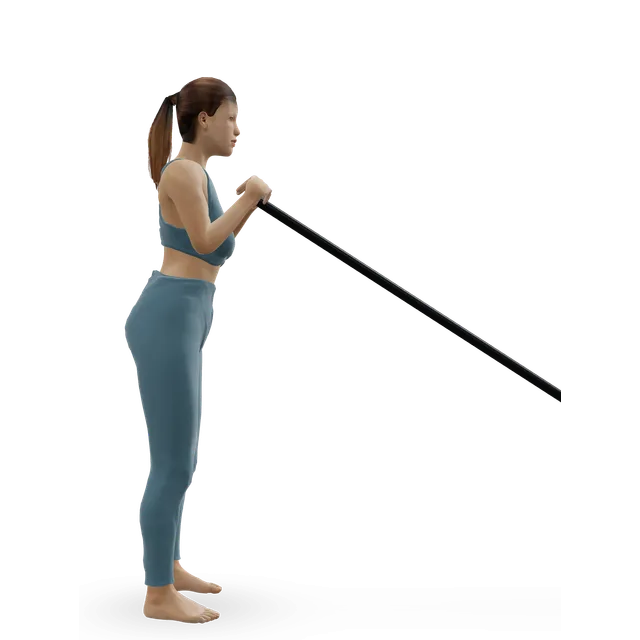
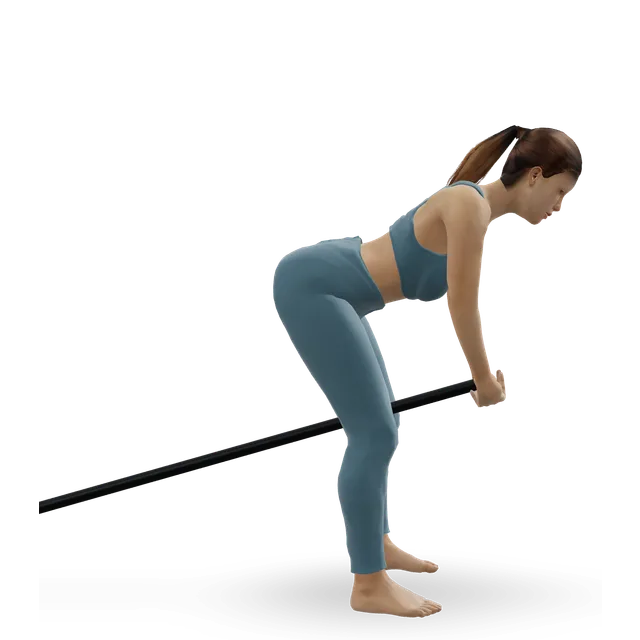
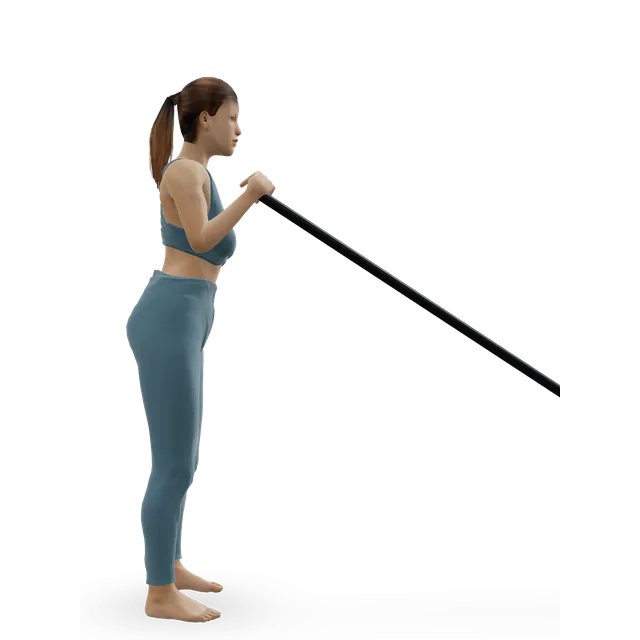
A landmine press is a press with one end of a barbell anchored in a landmine (a hinged holder on the floor) or wedged into a corner. You hold the other end at the front of your shoulder and press it up and forward along its arc to a straight arm. You can press with one arm or two, standing or kneeling, and with a quick dip of your legs it becomes the landmine jammer, a power exercise.

No study has measured the landmine press itself. Its path sits between an incline press and an overhead press, and our shoulder guides use it as the step between a band press and a dumbbell press, though no trial has tested it in shoulder pain.

This guide covers the set-up with or without a landmine, the press step by step with a 3D demo, what it works, why it suits many sore shoulders but not every one, how heavy it really is, how many, the jammer, and the warning signs.

The short version

A press along an arc

One end of a barbell is anchored to the floor, in a landmine or a corner, and you press the other end from the front of your shoulder up and forward until your arm is straight. Because the bar pivots, it travels in an arc rather than straight up. One arm or two, standing or kneeling.

Source 1

The front of the shoulder, the upper chest and the triceps

No study has measured the landmine press itself. Its path sits between an incline press, where the upper chest worked hardest at a 30 degree bench, and an overhead press, which works the front and side of the shoulder. Pressing with one arm makes your trunk work to stop you twisting.

Sources 2, 3, 4

Why our shoulder guides use it

Your arm rises in front of you, not out to the side above shoulder height or behind your head, the positions linked with shoulder problems in weight trainers. Our shoulder guides and an expert exercise template put it between a band press and a dumbbell press. No trial has tested it in shoulder pain: it suits many sore shoulders, not every one.

Sources 5, 6, 7

How heavy and how many

You lift only part of the bar's weight, because its other end rests in the landmine or corner, so judge the load by the reps you have left, not by the plates. Start with 2 to 3 sets of 8 to 12 each arm, stopping 2 or 3 reps short (our editorial starting point), or 3 sets of 8 to 12 if you're following one of our shoulder guides.

Sources 8, 9

The jammer is the power version

Add a quick dip and drive of the legs and it becomes the landmine jammer: 3 to 5 sets of 2 to 5, resting fully (its move page's dose). The push press, with the same dip and drive, produced as much peak power as a jump squat in 17 trained men.

Source 10

What training with landmines did

In 18 professional women volleyball players, 16 weeks of weights plus landmine exercises raised jump height more than weights alone, but the landmine group also trained more. A standing landmine punch throw was the test that best separated harder-hitting fighters in 36 elite mixed martial artists. Neither tested the press on its own.

Sources 11, 12

What a landmine press is, and what it works

The set-up

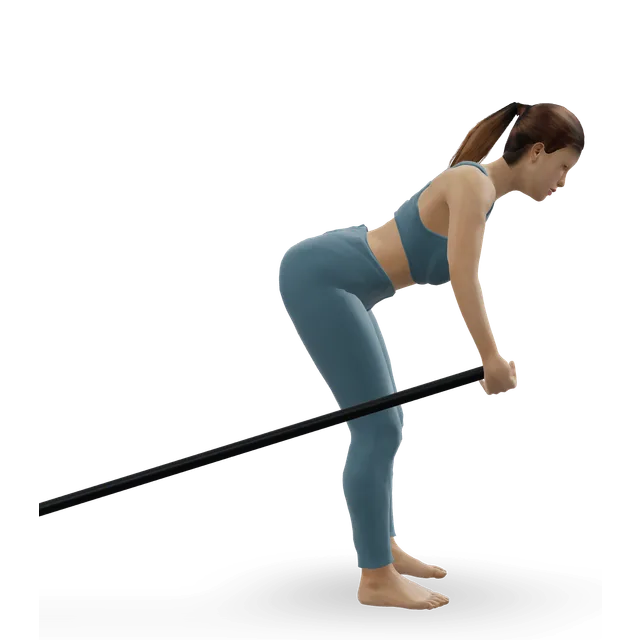
A landmine is a sleeve on a hinged base that holds one end of a barbell on the floor. The free end, usually with a plate or two on it, moves up and forward in an arc as you press it. A corner of a room, with a towel round the bar's end, does the same job, as our T-bar row guide shows.

Source 1

What it works

The front of your shoulder (the anterior deltoid), your upper chest and your triceps press the bar, and the muscles that turn your shoulder blade up and round your ribs move it as you reach. In 30 trained adults, the upper chest worked hardest at a 30 degree bench and the front of the shoulder at 60 degrees, and in 13 trained men the shoulder press worked the front of the shoulder most of four exercises. One-arm shoulder presses worked the back's stabilising muscles harder than two-arm presses in 11 adults.

These are EMG (electromyography: electrodes measuring how hard a muscle works over a few reps) and movement studies of other presses. They show effort, not what a muscle will build.

Sources 2, 3, 13, 4, 14

What you need first

A comfortable band or machine press, or reaching to shoulder height without pain, as our shoulder guides start. The jammer needs a steady landmine press with your legs still first, as its move page says.

How people differ

The bar's angle depends on your height, where you stand and the bar's length. Taller people, and people standing closer to the anchor, press more steeply, nearer an overhead press; kneeling or standing further back, you press more forward, nearer an incline press (our geometry). People with sore shoulders often start half-kneeling and one-armed, with a small range.

Setting up, with or without a landmine

With a landmine

Push one end of the bar fully into the sleeve and check it can't slip out before you load the other end, as the move page warns. Start with the empty bar or one small plate.

Without a landmine

Wedge one end of the bar into the corner of a room, with a towel wrapped round it so it can't slide or mark the walls, as our T-bar row guide sets up its rows. Use a corner that won't let the bar skid sideways.

A handle

A handle that slides over the bar's end gives a palm-in grip; holding the sleeve's end works just as well (our view).

How to do a landmine press, step by step

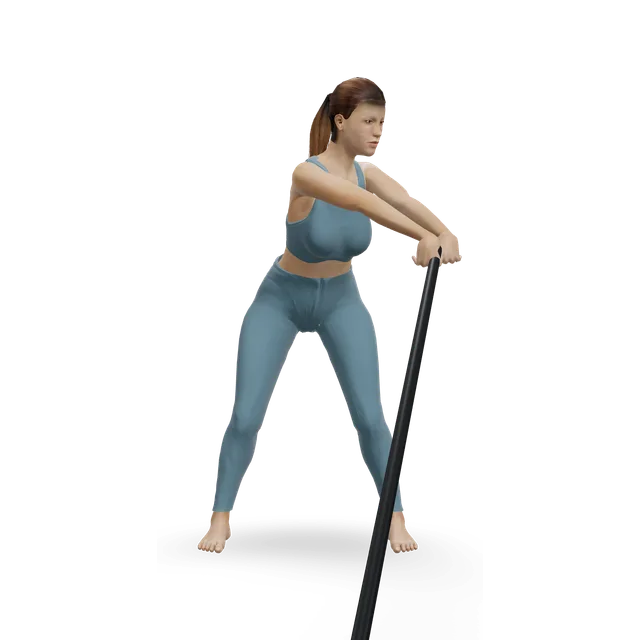
The figure shows the one-arm landmine jammer, standing with a quick dip of the legs; for the landmine press, kneel or stand and leave out the dip. Securing the bar, lowering under control, keeping square and switching sides follow the jammer's move pages. The half-kneeling position, the grip and the brace are our editorial suggestions; coaches differ on which knee goes down.

  1. Put one end of a barbell in a landmine, or wedge it into a corner with a towel round the end, and check it can't slip out before you load the other end. Start light.
  2. Kneel facing the loaded end with a pad under your knee: the knee on the same side as your pressing arm down, the other foot forward, both knees at about right angles.
  3. Lift the end of the bar to the front of your shoulder with both hands, then hold it in one hand near the end, palm facing in or slightly forward, elbow in front of your ribs.
  4. Brace: ribs down, squeeze the glute of your kneeling leg, and kneel tall.
  5. Breathe out and press the bar up and forward along its arc until your arm is straight, keeping your shoulder down and not letting the bar pull it forward.
  6. Lower it under control to the front of your shoulder.
  7. Keep your hips and shoulders square and your legs still: no twist and no dip.
  8. Finish the set, then switch sides.

Loading the 3D figure…

Gets into position, then repeats the movement. Technical checks passed; qualified exercise review is pending.

The movement on the figure: One-arm landmine jammer

One arm or two, standing or kneeling

Half-kneeling, one arm

The usual place to start: kneeling takes your legs out and makes it hard to lean back, and one arm lets the shoulder find its own path (our view).

Standing, one arm

Feet hip-width apart, or staggered with the opposite foot forward. The same steps; you can handle a little more weight and your hips have to stay square.

Two hands

Hold the end at your chest with both hands, one over the other or with your fingers laced, and press up and forward. The jammer's move page shows it: without the dip, the arms alone pressing, it's the plain landmine press.

Tall-kneeling

Both knees down: the hardest position to stay upright in, with the least help from your legs.

Rotational press and the landmine punch

Turning your hips and trunk into the press, as in a half-kneeling rotation press, a volleyball programme's exercise, or the landmine punch throw tested in fighters. For athletes, once the plain press is steady; our figure shows the landmine 180 for the turn on its own.

Sources 11, 12

Squat to press and the viking press

A squat into a two-hand landmine press is close to a thruster, which our thrusters guide teaches. A viking press uses a two-handled attachment pressed overhead; our figure doesn't show it.

Sore shoulders

No trial in shoulder pain

We found no study of the landmine press in people with shoulder pain or impingement. What follows is indirect evidence and the way our shoulder guides use it.

Why it may suit a sore shoulderEmerging evidence

In 77 men, signs of shoulder impingement went with lateral raises and upright rows above shoulder height, and in 159 men, signs of instability went with the "high-five" position of behind-the-neck presses and pulldowns; strengthening the muscles that turn the arm outwards went with fewer signs in both. The landmine press uses neither position. A light military press turned the shoulder blade up and tilted it back more than lifting the arm alone, which its authors suggest suits rehab if pain allows.

Sources 5, 6, 13

The step our shoulder guides use

Our shoulder impingement guide brings pressing back as a band press, then a landmine press without the dip at 3 sets of 8 to 12 (an editorial dose in that guide), then a dumbbell shoulder press, and our rotator cuff guide uses the same landmine dose after the band press. An expert template for exercise in cancer care uses the same order: a bodyweight overhead press, then the landmine press, then dumbbell or kettlebell presses.

Source 7

The pain rule

During the press, shoulder pain up to about 5 out of 10 is acceptable, and by your next session it should be back to where it was before. If it isn't, use a lighter load or a smaller range next time, not nothing, as our shoulder guides say.

Not every shoulder

Your arm still rises to and past shoulder height at the top, where some shoulders hurt. Press only as high as is comfortable, and if it still hurts, go back to the band press and follow the shoulder guide that fits.

What the evidence says

No study of the landmine press itself

We found no muscle activity, joint load or training study of the landmine press on its own, half-kneeling or standing. The notes below come from other presses and from landmine programmes and tests.

Shoulder presses work the front and side of the shoulderEmerging evidence

In 13 trained men, the shoulder press drew the most activity from the front of the shoulder of four exercises (33.3% of a maximal effort) and nearly as much from the side as a lateral raise (27.9% against 30.3%). In 15 men, standing dumbbell presses worked the shoulder hardest and lifted the least, about 7% less than a standing barbell press.

Sources 3, 15

The angle shifts work between chest and shoulderEmerging evidence

In 30 trained adults pressing at five bench angles, the upper chest worked hardest at 30 degrees and the front of the shoulder at 60 degrees; above 45 degrees the shoulder took over from the chest. The landmine's path falls between these, depending on your set-up (our reading).

Source 2

One arm works the trunkEmerging evidence

In 11 adults, a one-arm shoulder press drew more activity from the back's stabilising muscles than a two-arm press.

Source 4

A landmine programme in volleyball playersEmerging evidence

In 18 professional women volleyball players randomised to weights or weights plus 16 weeks of landmine exercises (including landmine shoulder presses for 3 sets of 15 in the first month), both groups got stronger, and jump height rose from 46.7 to 54.2 cm with landmine work against 45.2 to 47.0 cm without. The landmine group trained more in total, so the landmine's own share can't be separated.

Source 11

Landmine tests in fighters and rugby playersEmerging evidence

In 36 elite male mixed martial artists, a standing landmine punch throw's speed-load profile tracked striking force (r = 0.64) and best separated the harder and softer strikers. In 22 rugby players, speed in a jammer push press tracked tackles in the season (r = 0.53); the paper doesn't say whether that jammer was a landmine. A video method measured landmine press speed reliably in 24 athletes. These are tests, not training trials.

Sources 12, 16, 1

How heavy: the weight you actually hold

You lift only part of the bar

You lift only part of the bar's weight, because its other end rests in the landmine or the corner, and the press gets easier as the bar rises and steepens (our reading of the mechanics). So the plates on the bar don't tell you what your shoulder is lifting.

Choose the load by reps in reserve

Pick a load you could press 2 or 3 more times at the end of each set, or 3 or 4 in your first two weeks, as our plans advise. Going to failure adds little muscle, and people underestimate the reps they have left by about 1.

Sources 8, 9

Don't compare it with your dumbbell press

The numbers don't translate, and landmine weight calculators can't know your bar, your height or where you stand (our view). Compare this week's landmine press with last week's.

Learn it in steps: from the band press to the dumbbell press

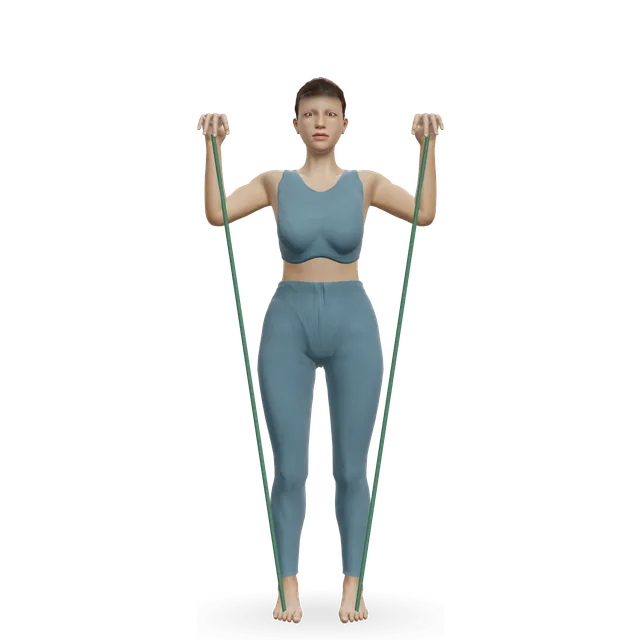
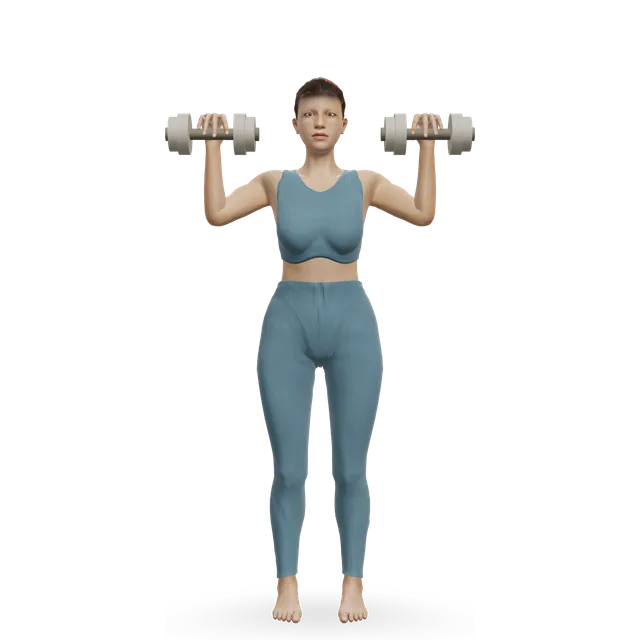
The band shoulder press, 2 sets of 10 (our overhead press technique workout); the half-kneeling one-arm landmine press, 3 sets of 8 to 12 each side (the dose our shoulder impingement guide uses for the landmine press), shown by the one-arm jammer without its dip; the standing two-hand landmine press, 2 to 3 sets of 8 to 12 (our editorial starting point), shown by the jammer without its dip; then the standing dumbbell shoulder press, 2 to 3 sets of 8 to 12 with 2 or 3 reps to spare (its move page's dose), and the barbell overhead press in our overhead press guide.

The landmine jammer

The dip and drive

The jammer starts with a quick dip of the hips and knees, then a hard drive of the legs that sends the bar up and forward, the arms finishing the press. It's the landmine version of the push press, whose power matched a jump squat's in 17 trained men, peaking at about 75% of their best push press.

Source 10

How many

3 to 5 sets of 2 to 5, resting fully between sets, at the start of the session while you're fresh (its move page's dose, which it labels editorial). Power improved most with moderate loads and few reps in the ACSM's (American College of Sports Medicine) overview of 137 reviews.

Source 17

Press first

Learn the landmine press with your legs still before you add the dip, as the jammer's move page asks; our push press guide teaches the dip and drive with a barbell.

Common mistakes and how to fix them

Leaning back or twisting to finish

Go lighter and keep your hips and shoulders square, as the one-arm jammer's cue says: don't twist to push the bar out.

The bar dragging your shoulder forward or up to your ear

Stop the press where you still control your shoulder, as the jammer's move page warns.

Pressing straight up instead of along the arc

Let the bar's path guide you, your elbow travelling forward as you press.

The elbow flaring out wide

Keep it in front of your ribs at the start of each rep.

An unsecured bar end

Check the end is seated and can't slip before you load it.

A sneaky dip

That's a jammer. Keep your legs still when you mean to press.

Holding your breath

Breathe out as you press. Heavy lifts to failure with a held breath sent blood pressure very high in bodybuilders.

Source 18

How many, and how often

For strength

2 to 3 sets of 8 to 12 each arm, stopping 2 or 3 reps short, resting 90 seconds to 2 minutes, or pair it with a landmine row to save time (our editorial starting point, the same as our standing dumbbell press page's dose; the rest as our plans give).

For a sore shoulder

3 sets of 8 to 12, with the shoulder guides' pain rule; the dose and schedule in the pain guide you're following come first.

For power

The jammer, 3 to 5 sets of 2 to 5, resting fully (its move page's dose).

How often

Once or twice a week as one of your presses; strength rose more with two or more sessions a week in the ACSM's overview.

Source 17

Progressing

Add reps up to 12, then the smallest plate, as our plans do. Move from kneeling to standing once 3 sets of 12 feel comfortable (our suggestion).

Moves that go with it

Landmine rows: the one-arm row, 2 to 3 sets of 8 to 12 each side, and the two-hand row, 2 to 3 sets of 8 to 12 (their move pages' doses); landmine 180s, 2 to 3 sets of 8 to 12 each side (its move page's dose); the half-kneeling Pallof press, 2 sets of 10 each side (our martial arts strength workout); face pulls, 2 sets of 15 (our overhead press technique workout), and band external rotations, 2 sets of 12 to 15 each arm (our strength workout for boxers), for shoulder care; and shoulder circles (3 slow circles each way with each arm) and thoracic rotations (6 each side) to warm up (their move pages' doses).

No landmine? Presses that do a similar job

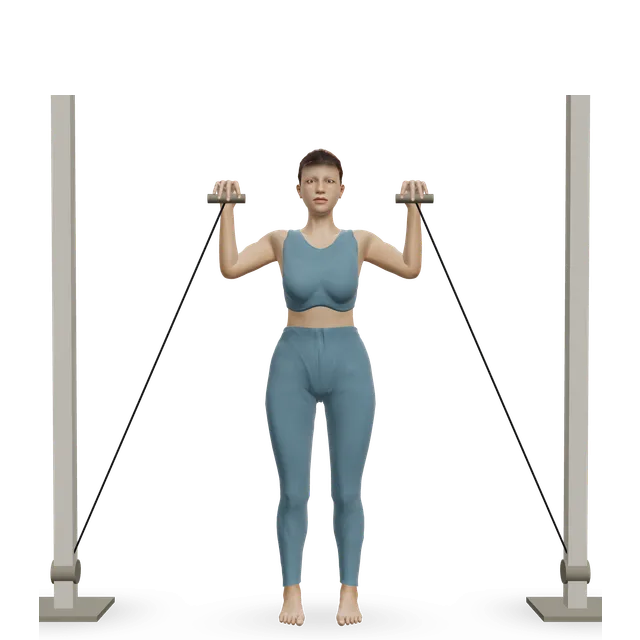
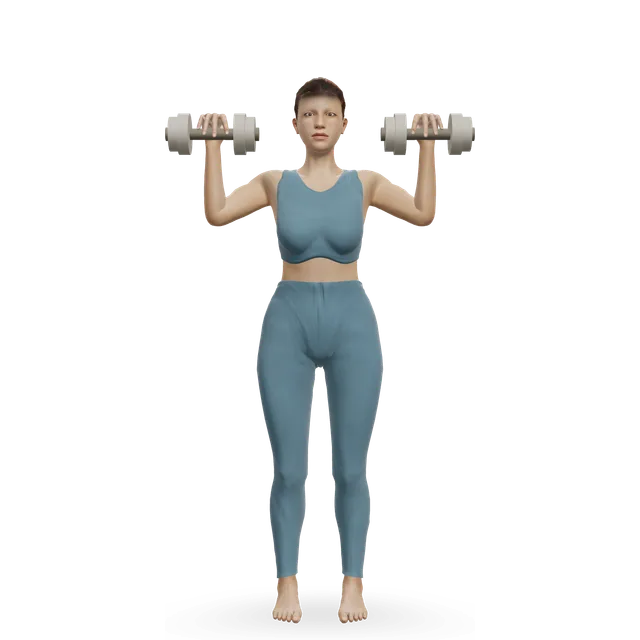
The standing palms-in dumbbell press, the one-arm dumbbell shoulder press, the band shoulder press and the standing cable press, at the same sets and reps as the landmine press (our suggestion). A corner and a towel also make a landmine.

Workouts to follow

Our landmine workout is built around the half-kneeling and standing presses with landmine rows and 180s. The overhead press technique workout starts with the band press, the shoulder workout can swap its overhead press for a landmine press, and the shoulder mobility routine covers shoulder care.

Plans that use it

The bro split uses our shoulder workout, where a landmine press can replace the overhead press on sore-shoulder days.

Who should change it

A shoulder that slips, or after a dislocation

Follow our shoulder dislocation guide, which uses the landmine press without the dip at 3 sets of 8 to 10.

After shoulder surgery

Follow your surgical team's limits first; our shoulder stabilisation surgery guide uses a plain landmine press before the jammer.

High blood pressure, heart disease, eye conditions or a hernia

Breathe out through every press and keep the weight moderate, as our breathing guide says. People with controlled blood pressure can do moderate strength training with proper breathing, the American Heart Association says.

Source 19

Pregnancy

The NHS says strength training is fine if you already do it, and not to start new vigorous activity in pregnancy. Half-kneeling or standing presses keep you off your back; stop if you feel uncomfortable, too hot or unwell.

Source 20

A sore knee

Kneel on a thick pad, or press standing instead.

Warning signs

Stop and get medical help

If you get chest pain or pressure, feel faint or dizzy, are unusually breathless, or your heart races or beats irregularly during exercise, as our plans advise. The American Heart Association says these need immediate medical evaluation.

Source 19

Call 999 (911 in the US)

For chest pain that comes on suddenly and doesn't go away, feels tight or like squeezing, or spreads to your arms, neck, jaw, stomach or back; shoulder or arm pain with chest pain; a sudden, extremely painful headache, for example during a heavy lift; someone who faints while exercising; palpitations that don't go away, or come with chest pain, breathlessness or feeling faint; or signs of a stroke, even if they've stopped. Don't drive yourself to A&E.

Sources 21, 22, 23, 24, 25, 26, 27

Check before you start

If you haven't exercised for some time or have a medical condition, speak to your GP first, as the NHS advises. Get advice before heavy lifting if your blood pressure is uncontrolled, or you have heart disease or chest pain when you're active, a pacemaker or defibrillator, diabetic eye disease, glaucoma, a hernia, recent eye or tummy surgery, or you're pregnant, as our breathing guide lists.

Source 28

A shoulder out of place

Call 999 or go to A&E if, after a fall or injury, or after your shoulder slipped during a press, your shoulder looks out of place or has changed shape, or you can't move your arm. Don't drive yourself, and don't try to put it back in.

Source 29

A sudden shoulder problem

Ask for an urgent GP appointment or get help from NHS 111 for sudden or very bad shoulder pain; an arm you can't move; a badly swollen or misshapen shoulder; pins and needles that don't go away; no feeling in the arm; an arm that's hot or cold to the touch; pain after an injury; or severe pain in both shoulders.

Source 30

A pop at the front of the shoulder, chest or upper arm

Get help the same day from NHS 111 or an urgent treatment centre for a pop or tearing at the front of the armpit or chest during a lift, then bruising into the chest or upper arm, a change in the shape of your chest or armpit, or weakness pushing: it can be a torn pec tendon, and repairs done within about 6 weeks did better than later ones. A sudden pop or snap with pain at the shoulder or upper arm, with or without a bulge low in the upper arm, needs a GP or NHS 111 the same day. The NHS says to get help from NHS 111 if you think you've ruptured a tendon.

Source 31

Shoulder pain that doesn't settle

See a GP or physiotherapist if pain is getting worse or hasn't improved after 2 weeks of looking after it yourself, or it's very hard to move your arm, or if your shoulder has partly or fully come out of joint, or you worry it might. In many areas you can refer yourself to physiotherapy.

Source 30

A new lump or bulge

See a GP if you think you have a hernia, and get help from NHS 111 if a hernia becomes painful or you feel sick. Call 999 or go to A&E for a femoral hernia (a lump at the top of the thigh) with very bad tummy pain, sickness, being unable to fart or poo, a high temperature or sudden confusion.

Sources 32, 33
Myths

"The landmine press is safe for every shoulder"

No trial has tested it in shoulder pain. It avoids the positions linked with shoulder problems in weight trainers and it's the step our shoulder guides use, but your arm still rises to and past shoulder height at the top. Follow the 5 out of 10 rule.

Sources 5, 6, 7

"It's a chest exercise" or "it's a shoulder exercise"Emerging evidence

Both. In a bench-angle study the upper chest worked hardest at 30 degrees and the front of the shoulder at 60; the landmine path sits between them, so it works the front of the shoulder, the upper chest and the triceps together.

Sources 2, 3

"The plates are what you're lifting"

You lift only part of the bar's weight, because its other end rests in the landmine or corner, and the press gets easier as the bar rises. Judge it by reps in reserve.

"Half-kneeling is always better for a bad back"

Kneeling takes your legs out and makes leaning back harder to hide, which many people find easier (our view), but no study has tested it in back pain.

"You need overhead presses to build your shoulders"Emerging evidence

Bench pressing grew the front of the shoulder over 10 weeks, and lateral raises grew the side of the shoulder in trained adults. A landmine press is a good shoulder exercise in its own right.

Sources 34, 35

Questions people ask

What is a landmine press?

A press with one end of a barbell anchored in a landmine or a corner: you press the other end from the front of your shoulder up and forward along its arc. You can press with one arm or two, standing or kneeling.

How do you do a landmine press without a landmine?

Wedge one end of the bar into the corner of a room with a towel wrapped round it, so it can't slide or mark the walls, and check it can't slip before you load the other end. Then press as normal.

Single-arm or two-arm landmine press?

One arm makes your trunk work to stop you twisting and lets each shoulder find its own path; two hands let you handle more weight. Most people start with one arm, half-kneeling.

Kneeling or standing landmine press?

Half-kneeling takes your legs out and makes it harder to lean back, so it's a good place to start. Standing lets you use more weight, and with a dip it turns into the jammer. No study has compared them.

Does the landmine press work the chest or the shoulders?

Both. It hasn't been measured, but its path sits between an incline press, which works the upper chest most at 30 degrees, and an overhead press, which works the front of the shoulder most. Expect the front of the shoulder, the upper chest and the triceps.

Is the landmine press good for shoulder pain or impingement?

It's the step our shoulder guides use between a band press and a dumbbell press, at 3 sets of 8 to 12 with pain no higher than about 5 out of 10. It avoids the positions linked with shoulder problems in weight trainers, but no trial has tested it, and your arm still rises above shoulder height at the top.

Landmine press or overhead press: which is better?

They do different jobs. The overhead press loads your shoulders through their full range and lets you add weight steadily; the landmine press is a forward, more forgiving press that suits sore shoulders and home set-ups. Many people use both.

How much weight am I actually lifting in a landmine press?

Only part of the bar's weight, because its other end rests in the landmine or corner, and the press gets easier as the bar rises. So choose the load by how many reps you have left, not by the number on the plates.

How many sets and reps of landmine presses should I do?

2 to 3 sets of 8 to 12 each arm, stopping 2 or 3 reps short and resting 90 seconds to 2 minutes, or 3 sets of 8 to 12 if you're following one of our shoulder guides. Pair it with a landmine row to save time.

What is a landmine jammer or landmine push press?

The same press started with a quick dip and drive of your legs, for power. Do 3 to 5 sets of 2 to 5, resting fully, once the press itself is steady.

What can I do instead of a landmine press?

A standing palms-in dumbbell press, a one-arm dumbbell press, a band press or a standing cable press, at the same sets and reps. A corner and a towel also turn any barbell into a landmine.

Is the landmine press good for boxing or other sports?

A standing landmine punch throw was the test that best separated harder-hitting fighters in a study of elite mixed martial artists, and adding landmine work helped volleyball players' jump in a trial, though they trained more overall. Neither shows the press itself makes you hit harder.

Sources

  1. Zhao 2026 · Landmine press speed and power measured by video in 24 male athletes (measurement study, Sensors)
  2. Rodríguez-Ridao 2020 · Chest and shoulder muscle activity at five bench angles in 30 trained adults (EMG study, Int J Environ Res Public Health)
  3. Campos 2020 · Front, side and rear shoulder activity in four exercises in 13 trained men (EMG study, J Hum Kinet)
  4. Behm 2005 · Trunk muscle activity in unstable and one-arm exercises in 11 adults (EMG study, JSCR)
  5. Kolber 2014 · Shoulder impingement signs and exercise choice in 77 men, 46 of them weight trainers (cross-sectional study, JSCR)
  6. Kolber 2013 · Shoulder instability signs and exercise choice in 159 men, 123 of them weight trainers (cross-sectional study, JSCR)
  7. Fairman 2024 · A practical framework for designing resistance exercise in oncology research, with the landmine press in its pressing progression (narrative review, Front Sports Act Living)
  8. Refalo 2023 · Training to failure against stopping short, for muscle growth: 15 studies (meta-analysis, Sports Med)
  9. Halperin 2022 · How accurately people predict the reps they have left: 12 studies, 414 people (meta-analysis, Sports Med)
  10. Lake 2014 · Power and impulse in the push press, against the jump squat, in 17 trained men (lab study, J Strength Cond Res)
  11. Park 2025 · A 16-week programme with landmine exercises in 18 professional women volleyball players (randomised trial, Phys Act Nutr)
  12. Yan 2026 · A standing landmine punch throw and other tests in 36 elite mixed martial arts athletes (cross-sectional study, J Strength Cond Res)
  13. Ichihashi 2014 · Shoulder blade movement in the military press and arm raising in 16 men (kinematics study, J Shoulder Elbow Surg)
  14. Vigotsky 2022 · Muscle activity measured in one session isn't a validated predictor of muscle growth (review, Sports Med)
  15. Saeterbakken 2013 · Seated and standing, barbell and dumbbell shoulder presses in 15 men (EMG and strength study, JSCR)
  16. Heather 2023 · Force-velocity profiles, including a jammer push press, and match performance in 22 rugby players (correlational study, Front Sports Act Living)
  17. Currier 2026 · Resistance training for muscle function, size and performance in healthy adults: 137 reviews (ACSM position stand, MSSE)
  18. MacDougall 1985 · Blood pressure during heavy lifting to failure in 5 bodybuilders (lab study, J Appl Physiol)
  19. Paluch 2024 · Resistance exercise training with and without cardiovascular disease: 2023 update (American Heart Association scientific statement, Circulation)
  20. NHS · Exercise in pregnancy
  21. NHS · Chest pain (past its review date: reviewed August 2023, review due August 2026)
  22. NHS · Heart attack
  23. NHS · Headaches
  24. NHS · Subarachnoid haemorrhage
  25. NHS · Fainting
  26. NHS · Heart palpitations
  27. NHS · Symptoms of a stroke
  28. NHS · Physical activity guidelines for adults aged 19 to 64
  29. NHS · Dislocated shoulder
  30. NHS · Shoulder pain (past its review date: reviewed May 2023, review due May 2026)
  31. NHS · Tendonitis (past its review date: reviewed June 2023, review due June 2026)
  32. NHS · Hernia
  33. NHS · Femoral hernia
  34. Lanza 2024 · Muscle growth from 10 weeks of bench pressing in 24 men, including the front of the shoulder (randomised trial, J Bodyw Mov Ther)
  35. Larsen 2025 · Dumbbell against cable lateral raises for 8 weeks in 24 trained adults (within-person trial, Front Physiol)

Exercise education, not a personal prescription, and clinical review of these guides is pending. Check with a GP before starting hard training if you have a heart condition, chest pain, dizziness or breathlessness when active, and stop for sharp or increasing pain. Health disclaimer.